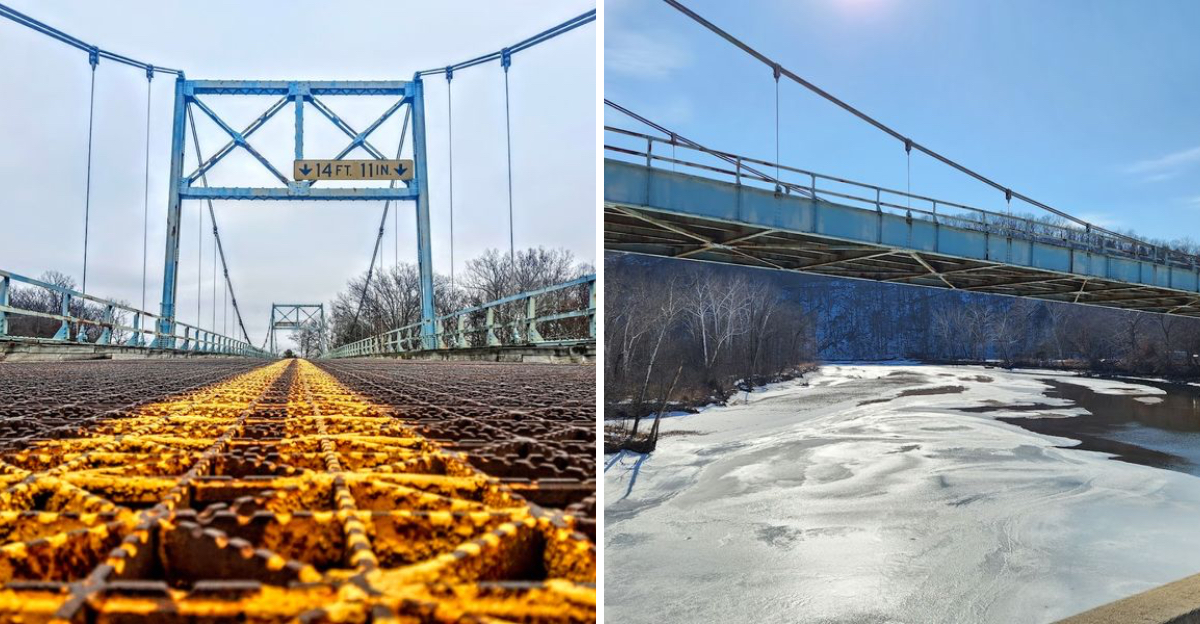
Hold on tight because this bridge has a mind of its own. This Missouri suspension bridge sways and bounces with every step, turning a simple walk into a tiny adventure.
The river rushes right below your feet, close enough to make your stomach do a little flip, and the whole narrow span feels like it might have been built by someone with a healthy sense of humor.
Locals cross it for fun, visitors cross it for the photo, and everyone holds the railings just a little tighter than they expected.
So if you are cruising the Show Me State and spot a skinny bridge that seems to wiggle when you look at it, go ahead and take a walk. Just maybe do not jump.
The bridge is sensitive.
The Bridge That Time Almost Forgot
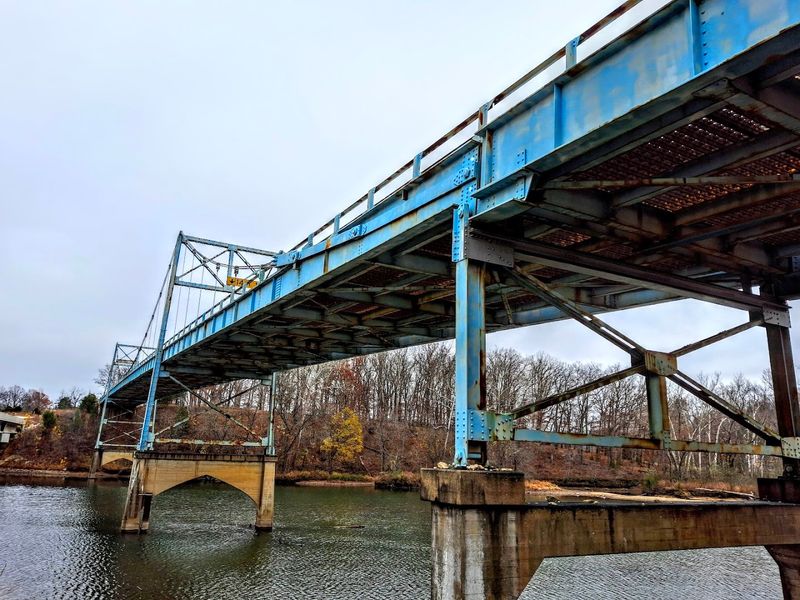
Most roadside stops in rural Missouri offer a parking lot and maybe a faded sign. The Little Niangua Suspension Bridge offers something far more memorable: a real, walkable, steel-wire suspension bridge that still spans the Little Niangua River along State Hwy J in Roach, MO 65787.
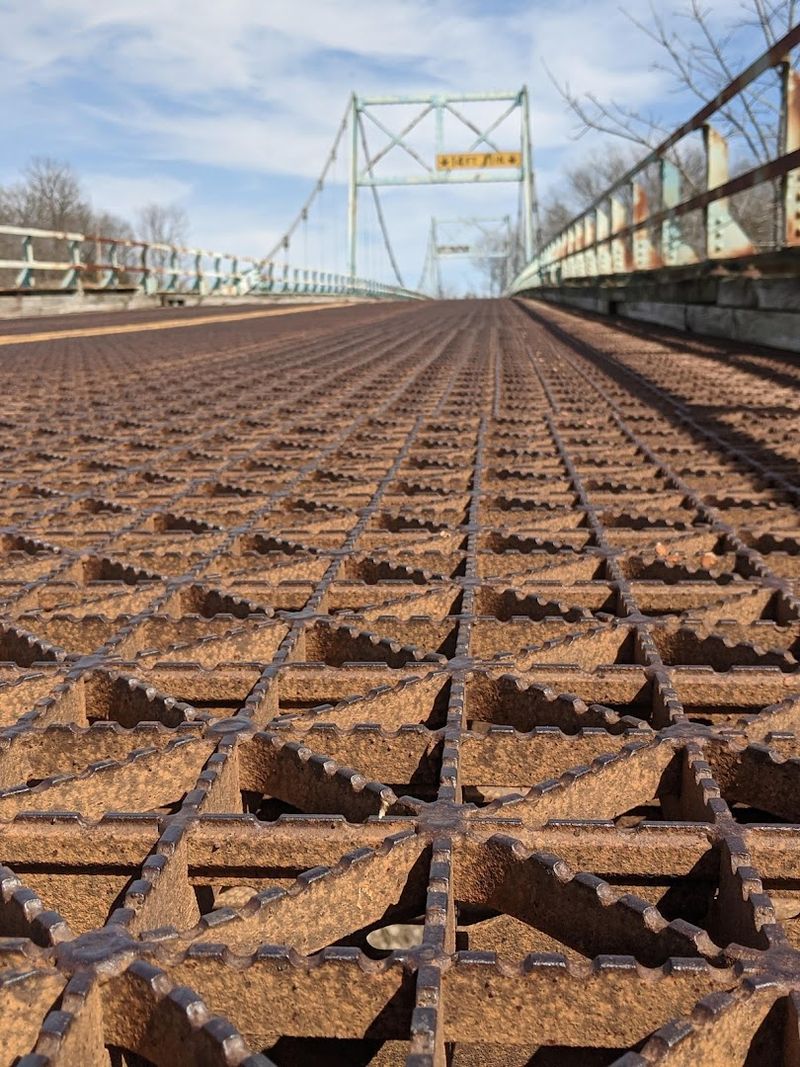
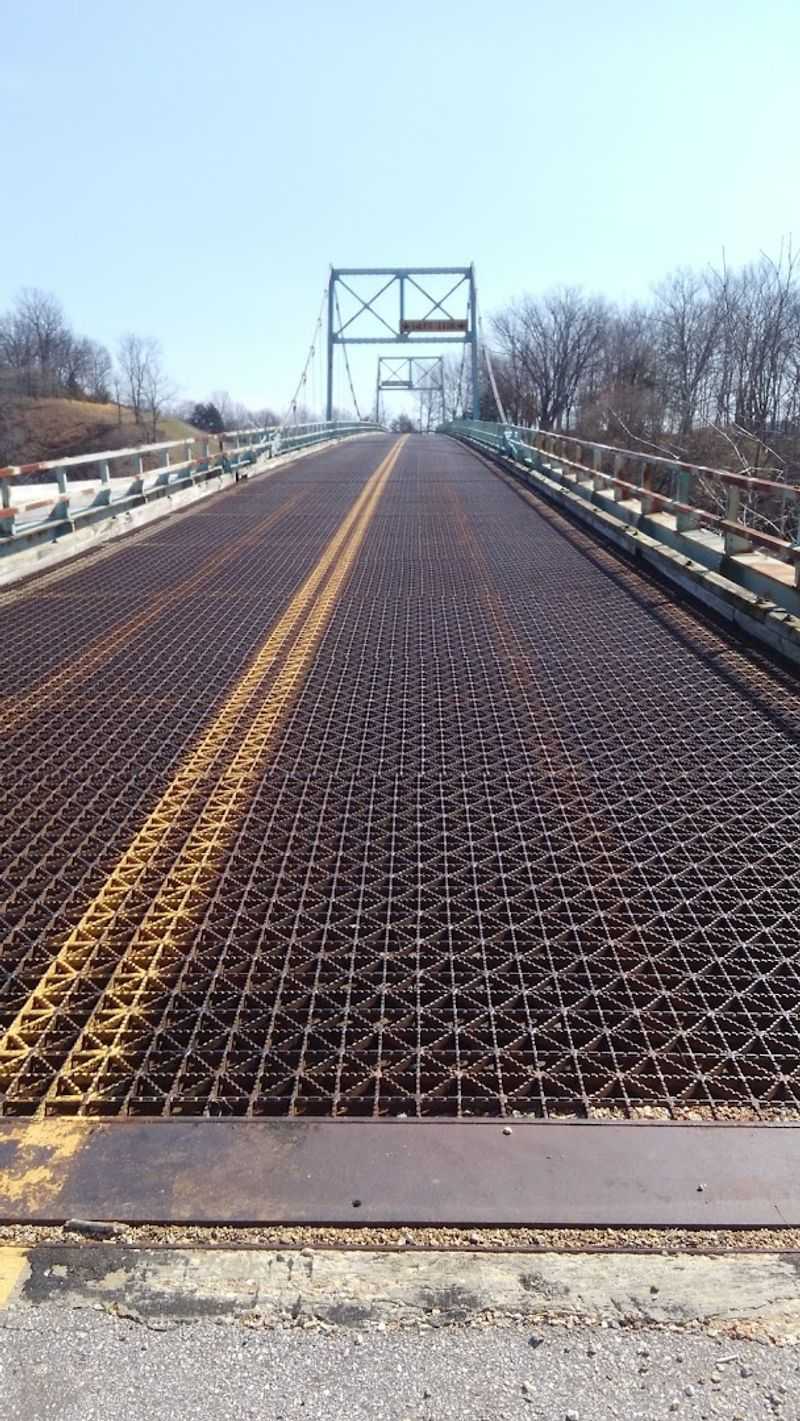
The bridge is a steel beam structure with a wire suspension system and an open steel grate deck. That last detail matters a lot once you are standing on it.
Looking straight down through the grating at the river rushing below is one of those experiences that wakes up every nerve in your body. The structure has aged gracefully, and its industrial bones give it a rugged, no-nonsense look that fits perfectly in the Missouri Ozarks landscape.
There is no grand entrance, no ticket booth, and no crowd. You simply pull off the road, step out of your car, and walk onto a piece of living history.
Missouri has plenty of scenic drives, but very few include a spontaneous encounter with a swaying suspension bridge that feels this raw and this real. It is the kind of stop that turns an ordinary road trip into a story worth telling.
Standing on Open Grating Above Moving Water
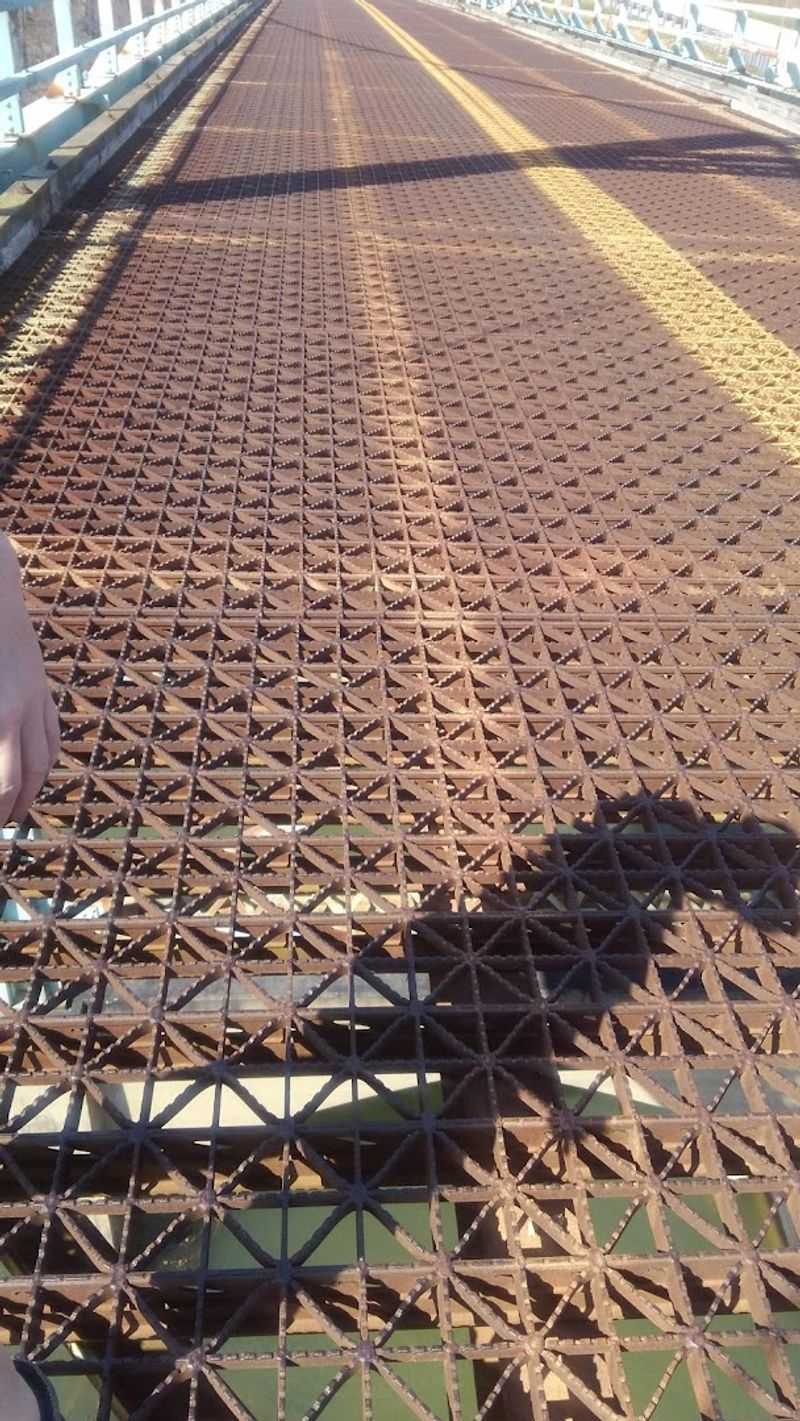
Step onto the bridge and the first thing your brain does is object. The deck beneath your feet is not solid.
It is an open steel grate, and through every square of that grid, you can see the Little Niangua River moving below you.
Your feet know they are supported. Your eyes keep sending a different message.
That disconnect is exactly what makes crossing this bridge such a vivid physical experience.
The water below is not far away. The bridge sits close enough to the river surface that you can hear it clearly and feel the cool air rising from it on warm days.
Missouri rivers have a way of sounding alive, and this one is no exception.
Holding on to the wire cable railings while looking down through the grate is genuinely thrilling in a way that no theme park ride quite matches. It is unscripted, unpolished, and completely real.
A practical tip: secure your phone and keys before you step onto the grate deck. Small items can slip through the openings easily.
Wear shoes with closed toes for a more comfortable crossing, and take your time, because rushing through this experience would be a waste. Pro-Tip: Since this is still a functioning one-lane vehicle bridge, always look and listen for oncoming cars before stepping onto the grate.
There is no separate sidewalk, so you’ll want to ensure the span is clear before you head out to enjoy the view.
How the Bridge Moves and Why That Feeling Stays With You
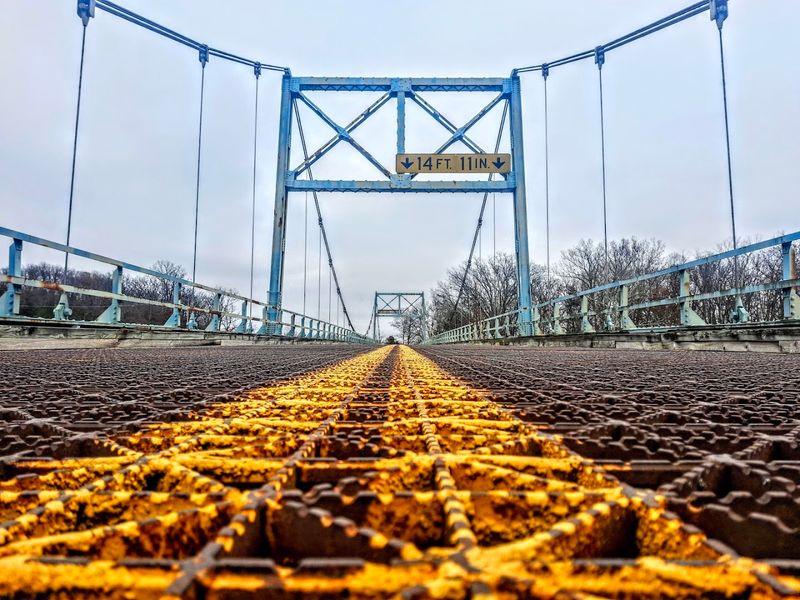
Suspension bridges are built to move. That is not a flaw; it is physics doing its job.
The Little Niangua Suspension Bridge has a gentle sway to it that you feel the moment you take your first few steps across.
It is not violent or alarming. It is more like the bridge is breathing.
Each step you take sends a small ripple of motion through the cables and deck, and you become aware very quickly that you are part of a dynamic system rather than standing on solid ground.
That sensation is hard to describe to someone who has not experienced it. Words like wobbly or shaky do not quite capture it.
It is more of a gentle, rhythmic give that reminds you the structure is alive with engineering.
Missouri does not have many places where you can feel that kind of connection between your body and a piece of infrastructure. Most modern bridges are built to eliminate all feeling of movement.
This one keeps it.
The experience stays in your memory long after you drive away. Something about crossing a swaying bridge over a rushing river on a quiet Missouri road just sticks with you in the best possible way.
The Setting: Rural Missouri at Its Most Honest
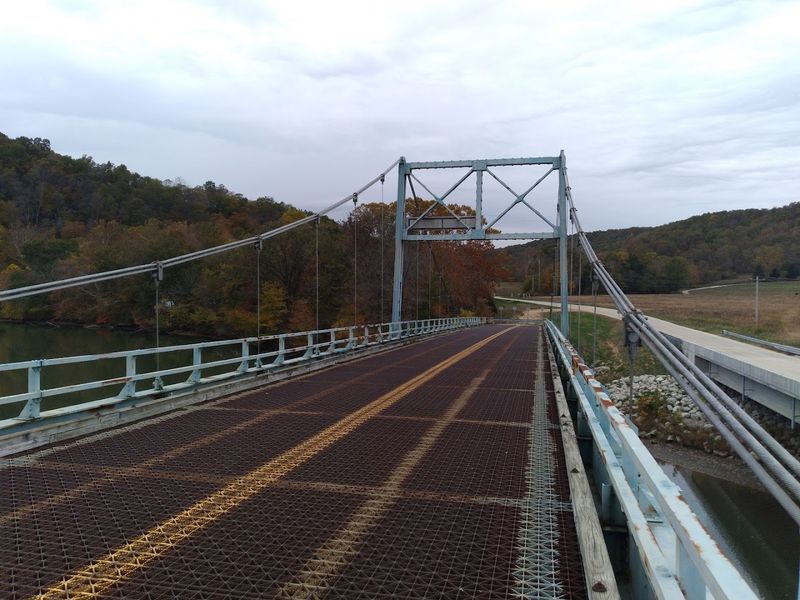
Roach, Missouri is not a town that announces itself loudly. It sits quietly in Camden County, deep in the Missouri Ozarks, where the roads narrow and the trees close in on both sides.
Getting to the Little Niangua Suspension Bridge means driving through some genuinely beautiful countryside.
The bridge sits right off State Hwy J, which winds through a landscape of wooded hills, open fields, and small creek crossings. There is no urban noise here.
No traffic hum, no construction sounds, no background city buzz.
What you get instead is birdsong, wind in the trees, and the constant sound of the river. Missouri has a lot of natural beauty, but the Ozarks region around Roach has a particular quietness that feels almost rare these days.
Parking is easy. There is ample space near the bridge to pull off safely and get out without worrying about traffic.
The area around the bridge is open enough to feel welcoming without feeling developed or commercialized.
Arriving at this spot feels like stepping into a version of Missouri that exists outside of time. No shops, no signs, no infrastructure beyond the bridge itself and the road that brought you here.
Just nature and one remarkable piece of engineering.
Wildlife and Natural Wonders Around the River
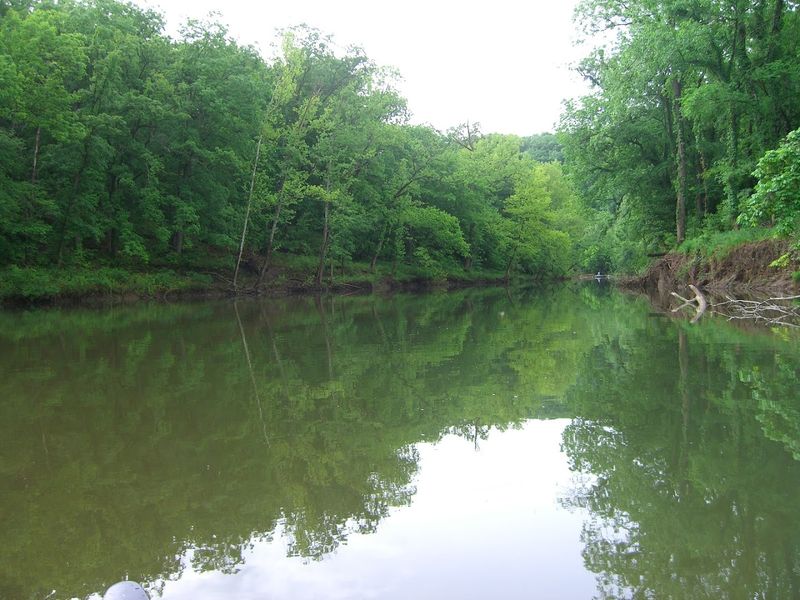
The Little Niangua River corridor is not just a pretty backdrop. It is a functioning wildlife habitat, and if you spend even thirty minutes near the bridge, you are likely to spot something worth stopping for.
Bald eagles are known to frequent this stretch of river. Missouri has a healthy eagle population, especially near waterways in the Ozarks, and the Little Niangua River is exactly the kind of habitat they prefer.
Seeing one soar over the water from the bridge deck is an experience that lands hard.
Great blue herons are also common here. They stand motionless in the shallows with an almost theatrical stillness, waiting for the right moment to strike.
Watching one from above, through the grating of the bridge, gives you a perspective you rarely get on these birds.
The river itself supports fish populations, and the clear water makes it easy to spot them from the bridge on calm days. Missouri rivers in the Ozarks tend to run clear and cold, and the Little Niangua is a fine example of that.
Bring binoculars if wildlife is your focus. The open view from the bridge center gives you a long sightline up and down the river that is hard to match from the bank.
Stargazing From a Bridge With No Light Pollution
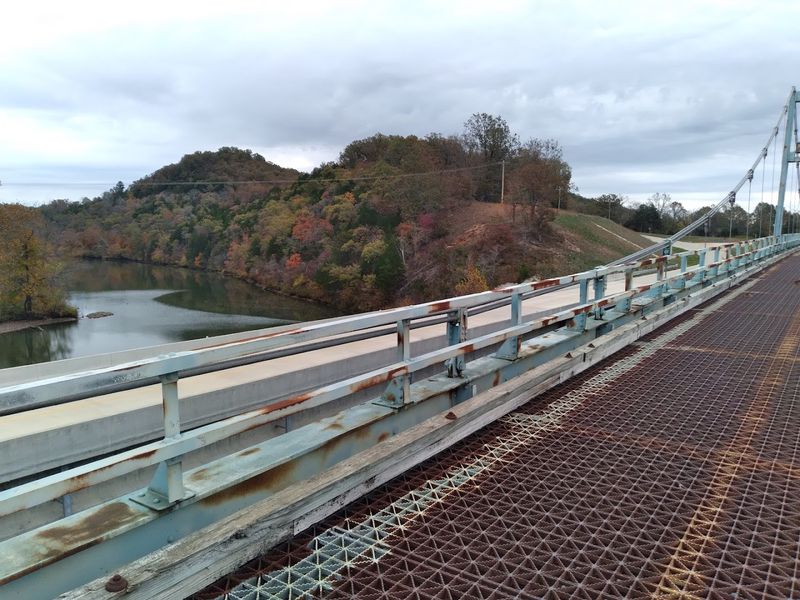
Once the sun goes down over the Missouri Ozarks, the sky above Roach becomes something special. The area around the Little Niangua Suspension Bridge has almost no artificial light pollution, which means the stars come out in full force after dark.
Standing on the bridge at night is a completely different experience from a daytime crossing. The river sounds louder in the dark.
The cables and deck disappear into shadow. Above you, the Milky Way stretches across the sky in a way that is genuinely hard to process the first time you see it.
Missouri has several designated dark sky areas, but you do not need official certification for a great view. The rural character of Camden County and the surrounding Ozarks means that light pollution is naturally low across a wide area.
The bridge offers an unobstructed view of the sky in multiple directions, which makes it better for stargazing than most spots surrounded by trees. Lying down on the grate deck to look straight up is an option, though admittedly a commitment.
If you are planning an evening visit, bring a red-light flashlight to preserve your night vision, and give your eyes at least fifteen minutes to adjust before you start looking up.
Photography Opportunities That Are Hard to Replicate
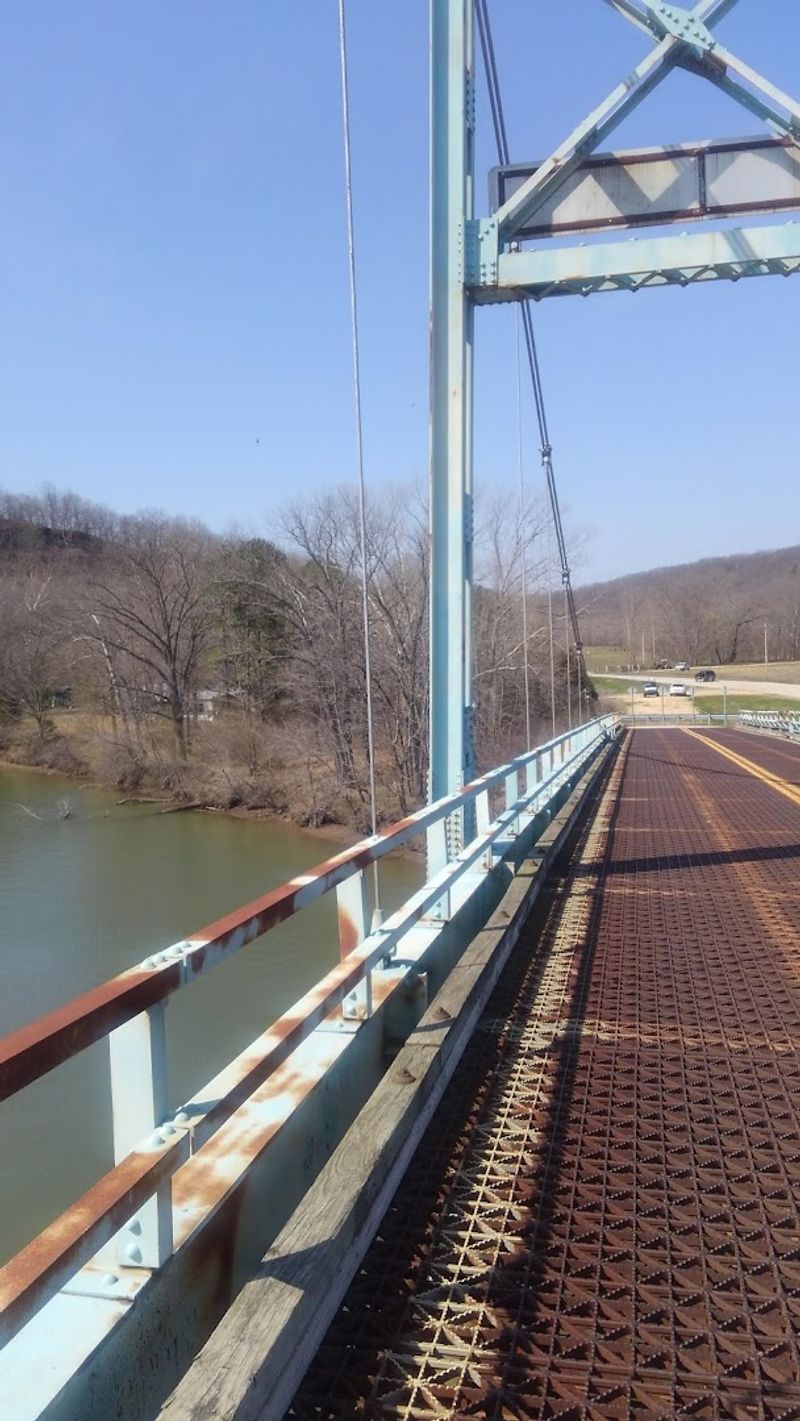
Few roadside stops in Missouri offer the kind of photographic variety that the Little Niangua Suspension Bridge delivers in a small space. The structure itself is visually striking from every angle.
From the bank, the bridge reads as a classic wire suspension silhouette framed by trees and sky. The steel cables converge toward the towers in a geometry that looks intentional and clean even in casual snapshots.
From the deck, the downward shots through the grate are unlike anything you can capture on a standard bridge. The river rushing below, framed by the diamond pattern of the steel grating, creates a layered composition that works beautifully in both color and black and white.
Golden hour light hits this location particularly well. The warm tones of late afternoon bounce off the river surface and light up the cable work in a way that feels almost cinematic.
Missouri sunsets have a soft, hazy quality in summer that adds atmosphere to every frame.
Wide-angle shots from the center of the bridge capture both river banks simultaneously, giving a strong sense of place and scale. For portrait photography, the industrial texture of the bridge provides a backdrop that feels genuinely interesting rather than generic.
The History Behind the Steel and Wire
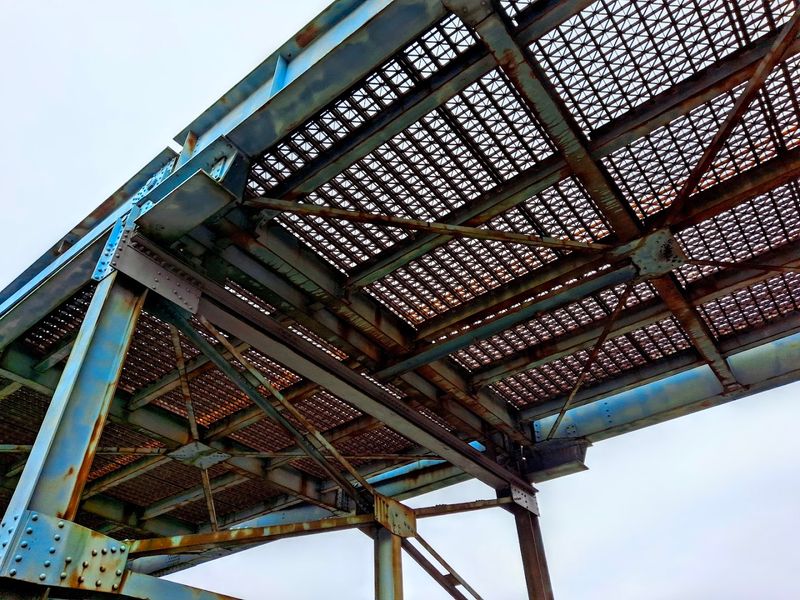
The Little Niangua Suspension Bridge is a steel beam, steel grate deck, and wire suspension structure that represents a style of rural bridge engineering that was once common across Missouri but has largely disappeared. Most bridges like this were replaced decades ago with concrete and asphalt.
The fact that this one still stands and remains accessible is genuinely unusual. Missouri has a rich history of small river crossings built to serve farming communities and rural residents who needed reliable ways to get livestock, equipment, and people across waterways.
Wire suspension designs were practical and relatively affordable for rural counties with limited budgets. They were strong enough for the traffic of their era, and many were built to last.
The Little Niangua bridge has done exactly that.
There is currently no signage at the site explaining its history, which is one of the few things the location is missing. Knowing the construction date, the engineering decisions behind it, and the communities it served would add enormous depth to the experience of crossing it.
Missouri has worked to preserve several historic bridges, and structures like this one deserve that attention. For now, the bridge speaks for itself through its design, its materials, and the simple fact that it is still here.
Best Times to Visit for the Full Experience
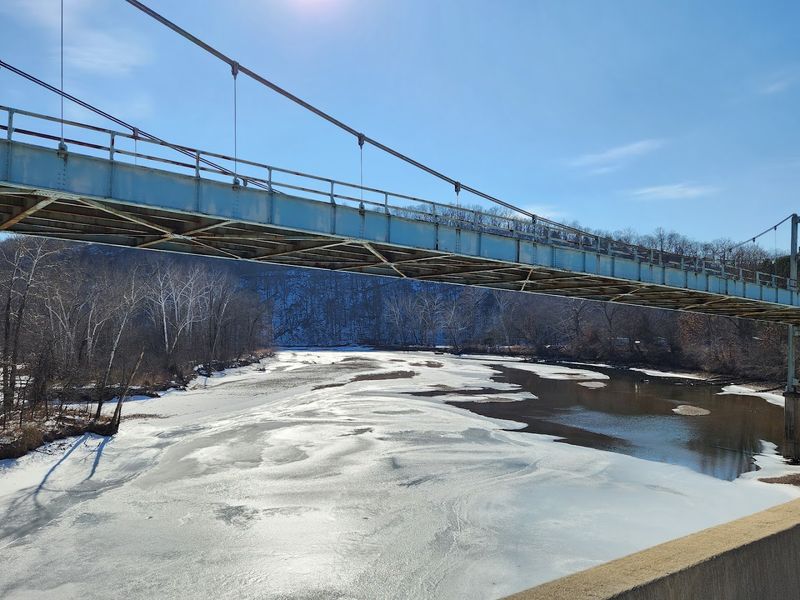
The Little Niangua Suspension Bridge is accessible year-round, but certain times of year sharpen the experience considerably. Spring and fall are the standout seasons for a visit to this part of Missouri.
Spring brings higher water levels to the Little Niangua River, which makes the view from the bridge deck more dramatic. The rush of water below the grating is louder and more immediate when the river is running full.
Wildflowers along the banks add color to the surrounding landscape through April and May.
Fall transforms the Ozarks around Roach into a display of orange, red, and gold that frames the bridge beautifully. Missouri fall foliage typically peaks between mid-October and early November, and the drive along State Hwy J during that window is worth the trip on its own.
Summer visits are warm and can be humid, but the shade from the tree canopy near the bridge helps. Early morning visits in summer are particularly pleasant before the heat builds.
Winter offers a stripped-down version of the landscape that has its own appeal. Without leaves on the trees, the bridge structure stands out more clearly against the sky, and the river takes on a steely, reflective quality that photographs well in flat winter light.
Practical Tips for Your Visit
Getting to the Little Niangua Suspension Bridge is straightforward once you know where to look. The bridge sits along State Hwy J near Roach, MO 65787, and there is a clear pull-off area with enough space for several vehicles to park comfortably.
The bridge is open to foot traffic, and crossing it costs nothing. Missouri has a generous tradition of keeping historic sites like this accessible to the public, and this bridge fits that spirit completely.
A few practical notes before you go: wear closed-toe shoes. The open grate deck is stable but the metal surface can feel uneven underfoot, especially if you are not expecting it.
Sandals or flip-flops make the crossing less comfortable than it needs to be.
Secure small items before stepping onto the bridge. Phones, keys, and coins can slip through the grate openings.
A zipped pocket or small bag solves this entirely.
There are no restroom facilities at the site, so plan accordingly. The nearest services are in Camdenton or other nearby towns.
Cell service in this part of Missouri can be limited, so download offline maps before you leave.
The site has no formal hours, but daylight visits are strongly recommended for first-timers who want to fully appreciate the view through the grate deck.
Why This Bridge Deserves a Spot on Your Missouri Road Trip
Missouri road trips tend to follow predictable routes: the Katy Trail, the stretch of Route 66 through St. Louis, the drive along the Current River. The Little Niangua Suspension Bridge offers something off that beaten path entirely.
Adding it to a Missouri Ozarks road trip requires almost no extra effort. State Hwy J connects to the larger road network around Lake of the Ozarks, which means you can work the bridge into a drive that also takes in the lake, the Ozark hills, and the small towns scattered through Camden County.
The stop itself takes between fifteen and forty-five minutes depending on how long you linger. That is a tiny investment for an experience that is genuinely hard to find anywhere else in Missouri.
Not many states have a walkable wire suspension bridge with an open grate deck still standing over a live river.
There is something satisfying about discovering a place that has not been polished for tourism. No gift shop, no entrance fee, no interpretive panels with corporate sponsorship logos.
Just a bridge, a river, and the Missouri sky above it.
Missouri keeps surprising travelers who are willing to turn off the main highway, and the Little Niangua Suspension Bridge is one of the better arguments for doing exactly that.
