I have hiked a lot of trails in Missouri. Woods, hills, the usual stuff.
But this one felt different from the very first step. Like I had wandered into somewhere ancient and untouched.
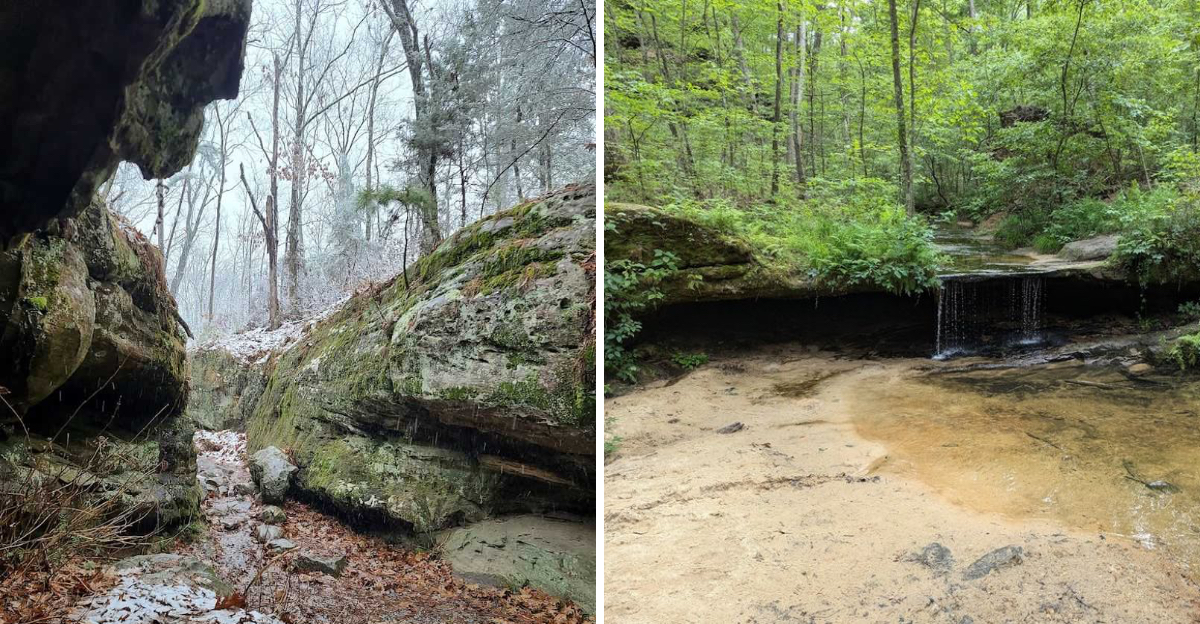
The canyons are the first thing that got me. Deep cuts in the rock that make you feel small.
Then the waterfalls started appearing around every corner. Not huge dramatic ones, but the kind that trickle down mossy rock walls and make you want to just stand there and listen.
Someone called it a frozen lost world, and that is exactly right. The rock formations look like they have been sitting there for millions of years.
Because they have. I kept stopping to just stare.
Missouri, where have you been hiding this?
The Trail Through Time Loop Explained
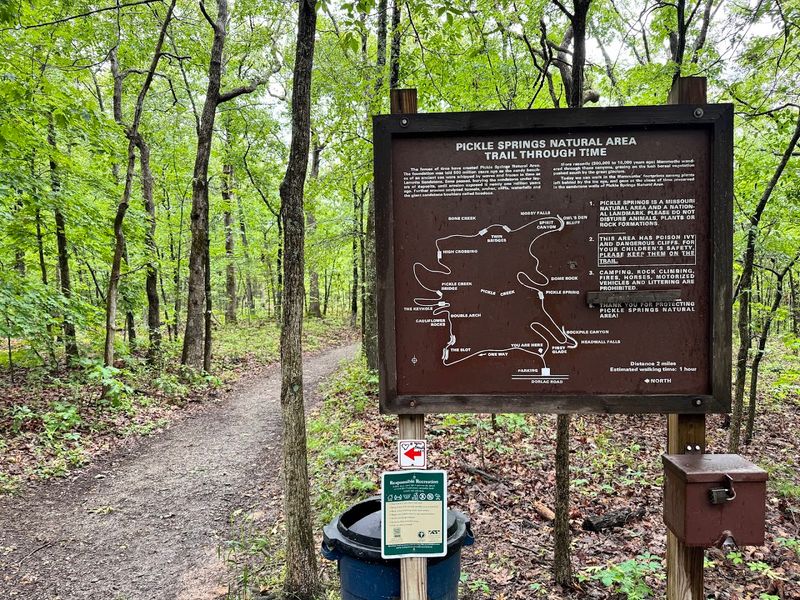
Before you even lace up your boots, it helps to know what you are getting into. The Trail Through Time at Pickle Springs Natural Area in Missouri is a roughly two-mile loop that packs an extraordinary amount of scenery into a short distance.
The path is marked with red arrows and white squares, which makes navigation manageable even if the terrain gets a little confusing. Sandy soil, bare rock, and occasional wooden staircases make up much of the trail surface, so mud is rarely a major issue.
Plan for about one and a half to two hours if you want to stop for photos and take your time. The trail opens at 8 AM daily and closes at 7 PM, so there is plenty of daylight to work with on most visits.
Starting early, around 8 or 9 AM, keeps crowds thin and the forest quiet. Missouri has no shortage of beautiful parks, but this particular loop delivers a density of geological wonders that feels almost unfair for just two miles of walking.
Ancient Sandstone Formations Line Every Step
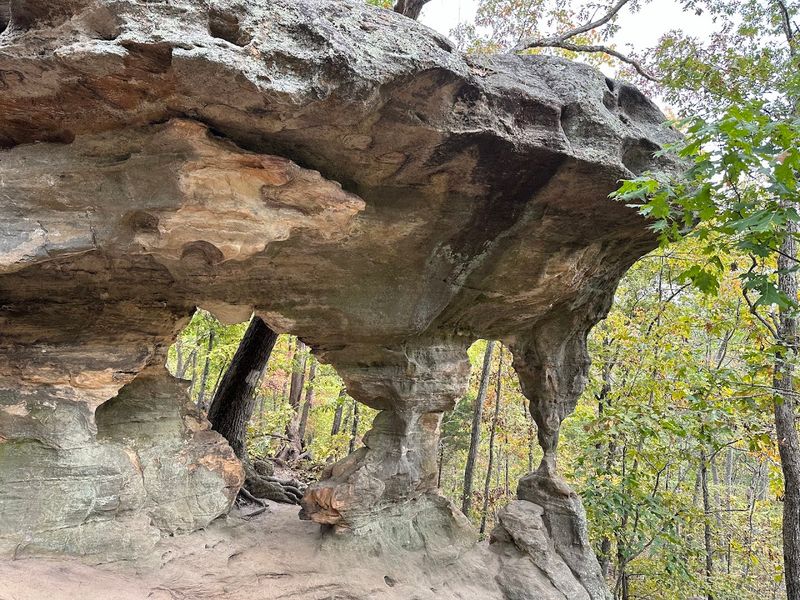
The rock formations at Pickle Springs Natural Area are the main event, and they do not disappoint. Carved over millions of years by wind and water, the sandstone here has developed shapes that look almost sculpted by hand.
Arches, overhangs, and narrow passages push up from the earth in ways that make you stop mid-step and stare. Some of the boulders are enormous, with smooth, rounded surfaces that glow amber and rust in the afternoon light.
Missouri geology rarely gets the attention it deserves, but the St. Francois Mountains region where Pickle Springs sits is one of the oldest exposed rock surfaces in the entire Midwest. These formations are not just pretty.
They are genuinely ancient chapters of Earth history written in stone.
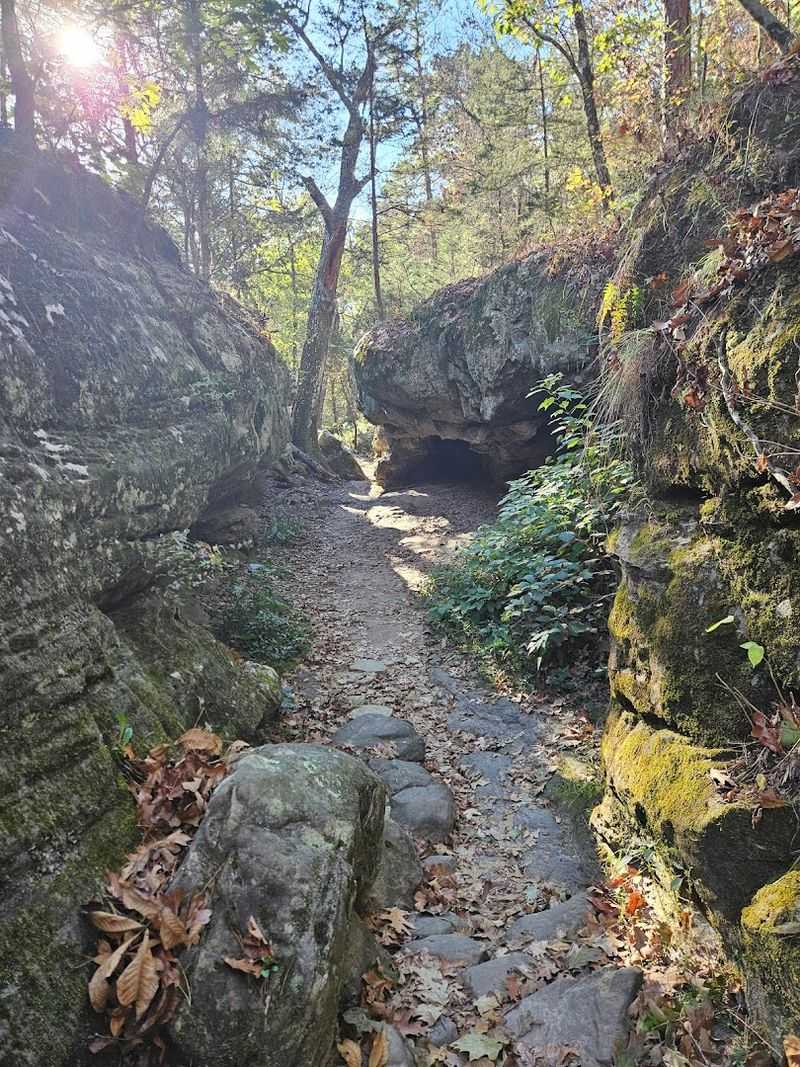
Walking through narrow canyon walls that rise above your head on both sides is one of those physical experiences that a photo cannot fully capture. You have to feel the cool air dropping around you and hear the silence change to understand what makes this place so remarkable.
The Canyons Feel Impossibly Deep for Missouri
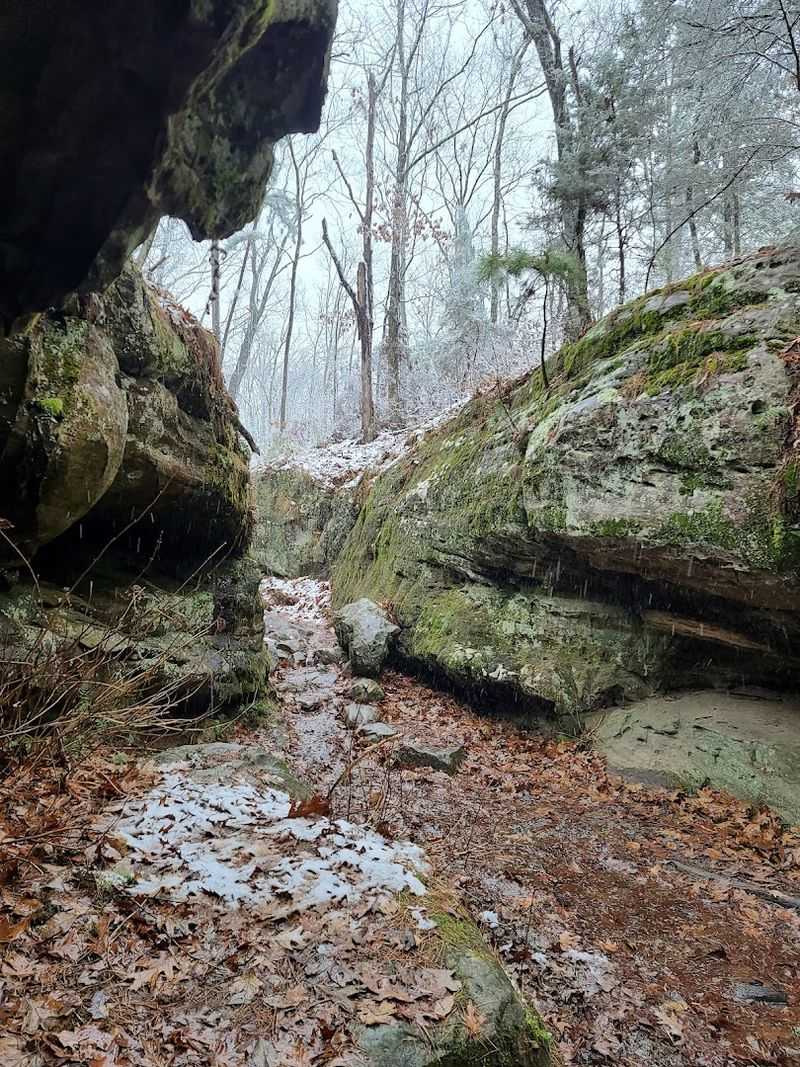
Missouri is not exactly famous for its canyons, which is exactly what makes Pickle Springs such a surprise. The narrow slot-like passages here drop you between walls of sandstone that rise well above your head, creating a canyon atmosphere that feels borrowed from the American Southwest.
One of the most striking sections is a passage so narrow you have to turn sideways and squeeze through. The rock presses close on both sides, cool and slightly damp, and the light above narrows to a thin strip of sky.
This kind of terrain is called a slot canyon in geological terms, and finding one in southeastern Missouri is genuinely rare. The formations were shaped by water cutting through softer sandstone layers over an enormous stretch of time.
Standing inside one of these passages and looking straight up at the layered rock walls above you is a moment that tends to stay with you long after the hike ends. Missouri keeps surprising people who assume the state is flat and uneventful, and this canyon is one of its best arguments.
Small Waterfalls Bring the Landscape to Life
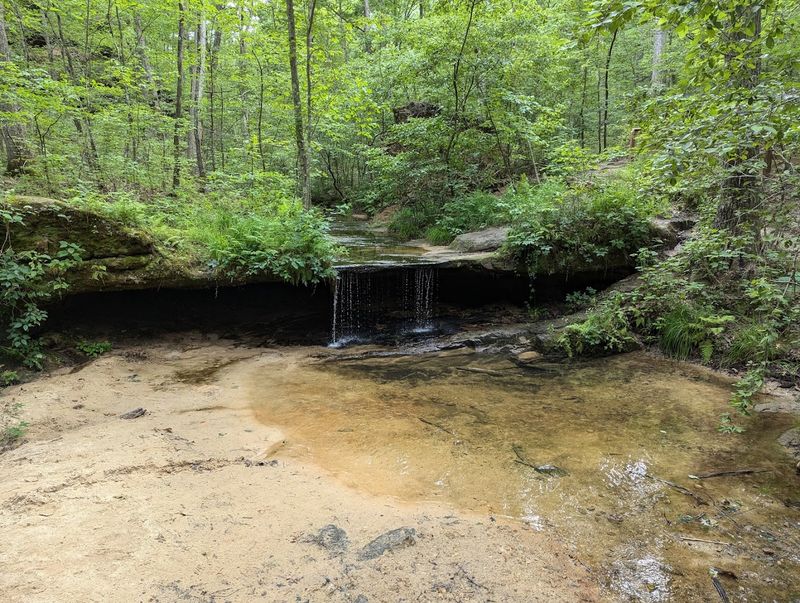
Water is the storyteller at Pickle Springs Natural Area, and after a good rain, it performs at its best. Several small waterfalls appear along the trail, spilling over sandstone ledges and pooling in shallow basins before continuing downstream.
They are not towering falls by any measure, but that almost makes them better. Each one feels intimate, like a secret the forest is sharing just with you.
The sound of moving water follows you through a good portion of the loop, which adds a calming rhythm to the whole experience.
Spring is peak waterfall season in Missouri, and Pickle Springs rewards early-season hikers with the most impressive flow. After summer sets in, some of the smaller trickles slow down or stop, so timing your visit around recent rainfall makes a real difference.
The creek crossings are charming even when the water is low, with stepping stones and small wooden bridges connecting the path. Watching water move through the layered canyon rock in real time gives you a live demonstration of how these formations were carved in the first place.
Caves and Overhangs Invite Exploration
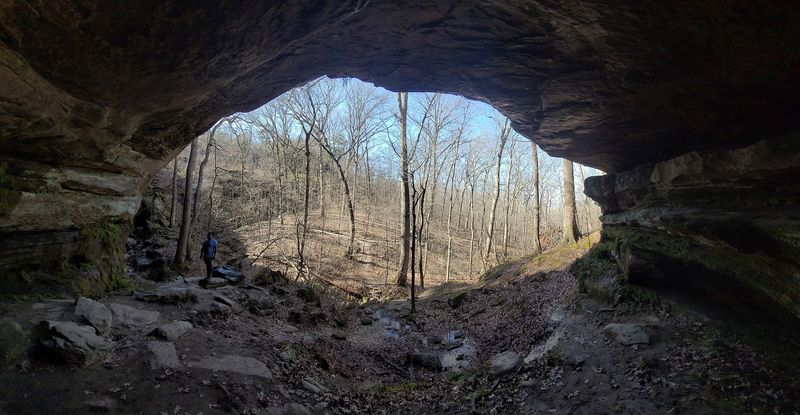
Pickle Springs Natural Area is loaded with cave-like formations and dramatic overhangs that beg you to step inside and look around. These are not deep caves requiring gear or permits.
They are shallow alcoves and natural shelters carved into the cliff faces by centuries of erosion.
Ducking under a low sandstone ceiling and looking out at the forest from inside the rock is one of those experiences that feels oddly ancient. The air inside these alcoves is noticeably cooler, and the walls are often covered in lichens, moss, and delicate ferns that thrive in the shade.
Children especially love scrambling around these formations, though close supervision near cliff edges is a must. The trail itself passes directly through and under several of these overhangs, so you do not have to leave the main path to enjoy them.
Missouri has a rich cave culture, with many famous caverns open to the public across the state. But the raw, unimproved cave features at Pickle Springs feel different from those tourist attractions.
Here, the rock just does what it wants, and you are simply along for the ride.
The Forest Canopy Creates a World of Its Own
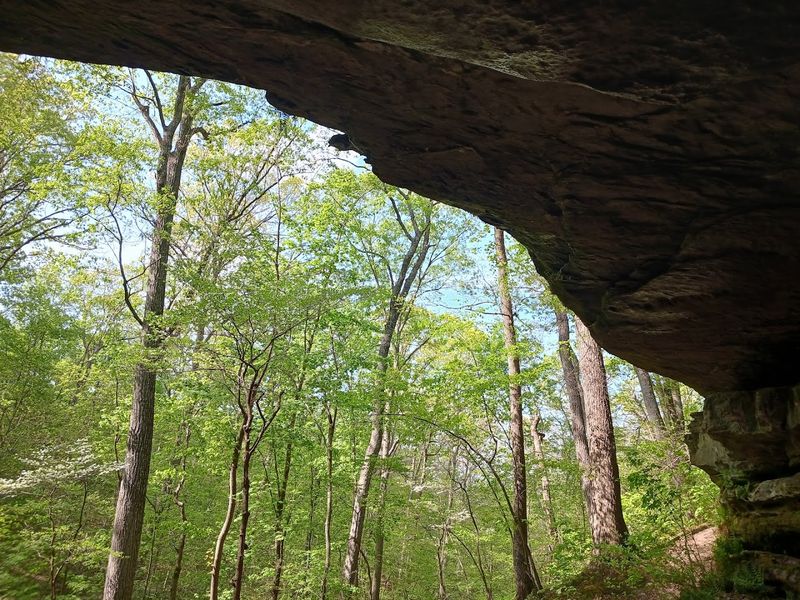
Step beneath the tree cover at Pickle Springs and the temperature drops noticeably, even on a warm Missouri afternoon. The forest here is a mix of hardwoods and evergreens, and the canopy stays thick enough through most of the year to create a shaded, almost cathedral-like atmosphere.
Mosses coat the rocks and roots in vivid green, ferns spread across the forest floor, and the occasional wildflower pushes up through the sandy soil. In spring, the understory blooms with color before the canopy fills in completely.
Fungi enthusiasts will find plenty to photograph, with a wide variety of mushroom species appearing throughout the warmer months. The biodiversity packed into this small natural area is genuinely impressive for a two-mile stretch of trail.
Early morning light filtering through the canopy creates the kind of soft, layered glow that makes every photo look like it was taken with a professional setup.
Missouri forests are at their most atmospheric in that first hour after the park opens, when mist still hangs low near the creek beds and everything feels freshly rinsed.
Trail Difficulty and What to Realistically Expect
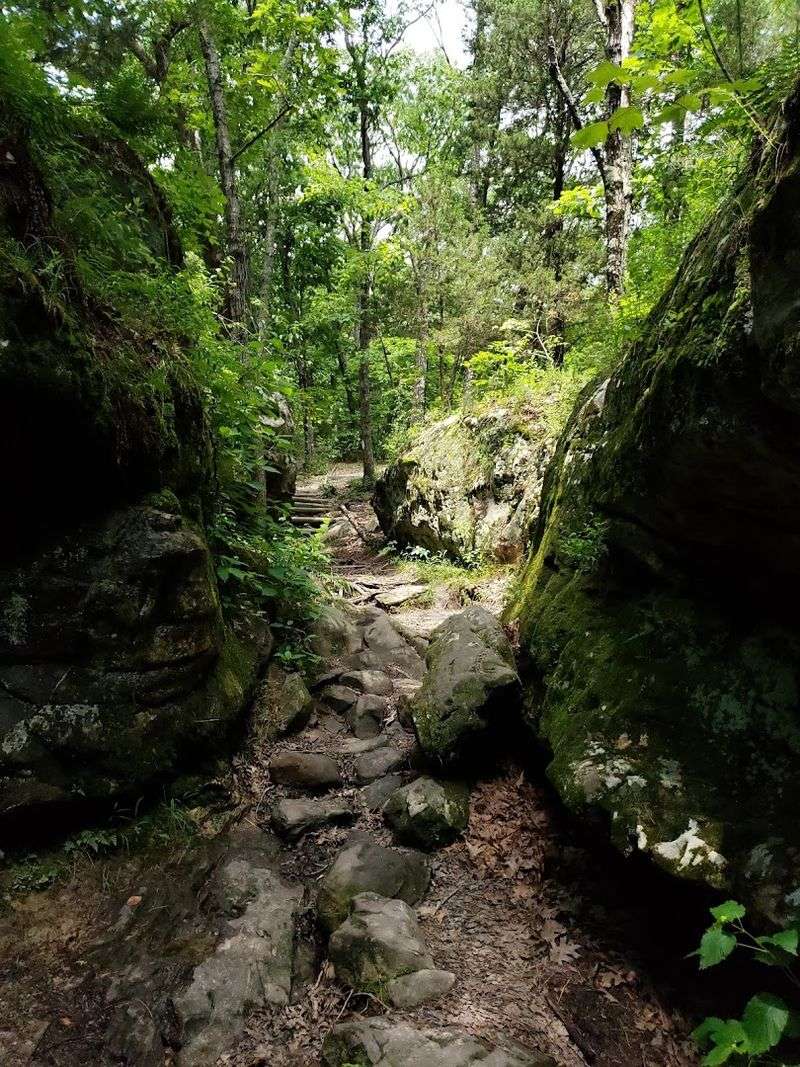
Let’s be honest about the difficulty here, because Pickle Springs is not a casual stroll. The trail is rated moderate, and that rating earns its keep.
There are steep sections, uneven rock surfaces, exposed roots, and a few spots where you genuinely need to use your hands to steady yourself.
Sturdy closed-toe shoes or hiking boots are a non-negotiable. Sandals and flip-flops will make your afternoon miserable and potentially dangerous.
Trekking poles can help on the steeper descents, especially if your knees tend to complain on downhills.
The trail is not ADA accessible, and it is not suitable for strollers. Younger children can absolutely handle it with proper footwear and a little patience, but it requires active supervision the whole way around.
Missouri summers bring heat and humidity, so carrying water is essential even for a two-mile loop. Bug spray is a smart addition from late spring through early fall, and long sleeves can help protect against poison ivy, which grows along sections of the trail.
Going prepared turns a challenging hike into an excellent one.
Best Seasons to Visit Pickle Springs
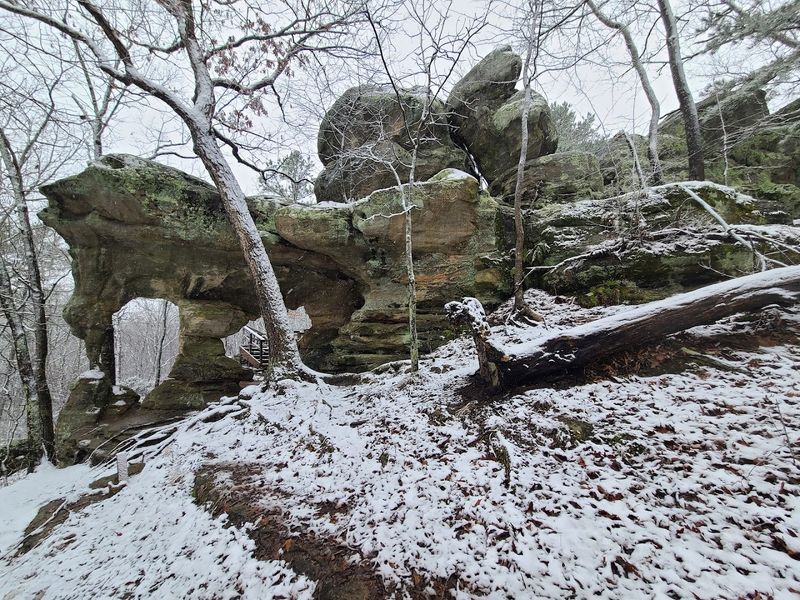
Every season brings something different to Pickle Springs Natural Area, and honestly, each one makes a reasonable argument for itself. Spring is the clear frontrunner for waterfall lovers, since snowmelt and April rains push the most water through the creek beds and over the sandstone ledges.
Fall is a close second, when Missouri hardwoods ignite in orange, red, and gold against the grey sandstone. The contrast between warm foliage and cool rock is visually stunning, and the air temperature makes hiking far more comfortable than the humid summer months.
Winter visits are underrated and surprisingly rewarding. Ice forms along the cliff faces and around the small falls, creating frozen curtains and delicate formations that transform the canyon into something out of a fantasy setting.
The leafless trees open up views that are hidden the rest of the year.
Summer works too, especially if you start early to beat the heat and the crowds. The dense canopy keeps the trail shaded for most of the morning, and the green forest is at its most lush and alive.
Each season repaints this landscape in a completely different palette.
Getting There and Parking Details
Finding Pickle Springs Natural Area takes a little intention, but it is not difficult once you know where to look. The address is Dorlac Rd, New Offenburg, MO 63670, and the park is managed by the Missouri Department of Conservation.
From St. Louis, the drive runs about an hour and a half south into the St. Francois Mountains region. The roads leading to the trailhead are rural and winding, so giving yourself a few extra minutes is a good idea.
Parking has been expanded in recent years to accommodate the growing number of visitors, with a second lot added to handle busy weekend traffic. Even so, arriving early on Saturday or Sunday mornings is wise if you prefer a quieter start.
Weekday visits are consistently less crowded, and a Wednesday or Thursday morning hike can feel almost private. There are no restroom facilities on site, so plan accordingly before leaving the car.
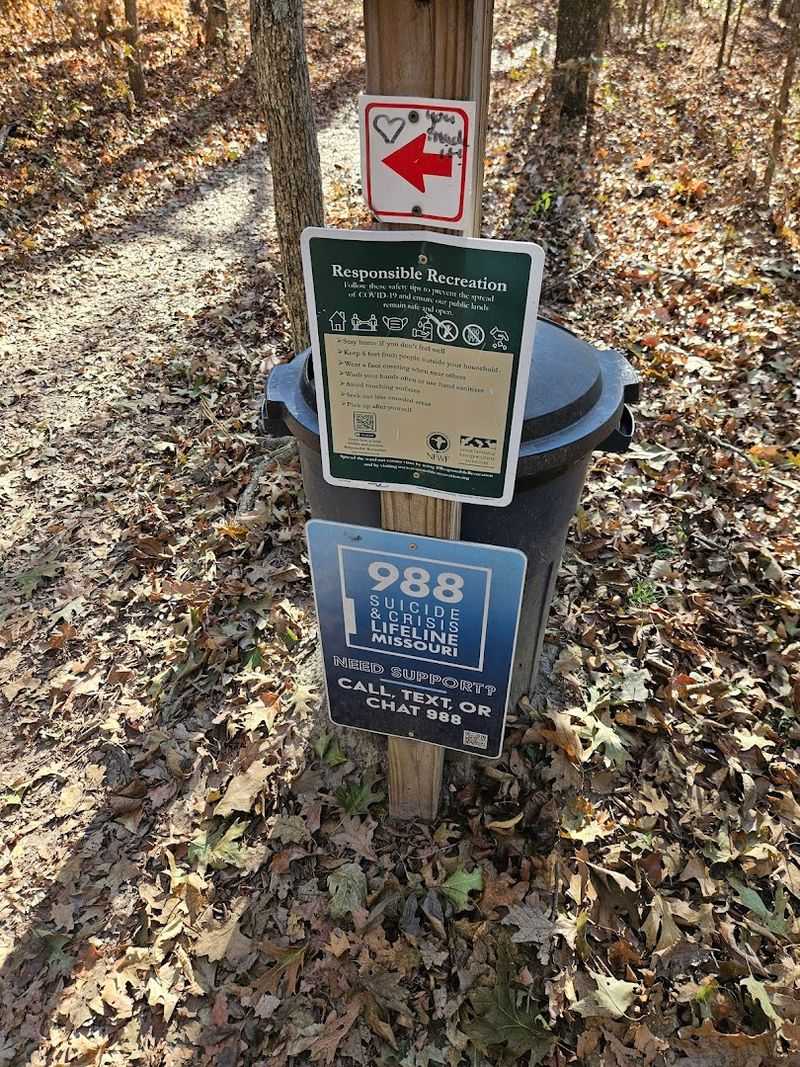
The trailhead itself is easy to find once you reach the parking area, with a clear entrance and signage marking the start of the Trail Through Time loop.
Why This Trail Stays With You Long After You Leave
There is something about Pickle Springs Natural Area that lingers in your memory in a way that most hikes simply do not. It is not just the rock formations or the waterfalls or the canyon passages, though all of those are genuinely impressive on their own.
It is the combination of all of them packed into two miles of Missouri forest that creates the feeling of stepping into a completely different world. The landscape shifts constantly as you move around the loop, from open forest to tight canyon to creek crossing to wide overlook.
Missouri has a long list of beautiful natural areas worth exploring, and Pickle Springs belongs near the top of that list for anyone who enjoys outdoor adventure with serious visual payoff. The trail is free, accessible from a major city, and rewarding for hikers at almost any experience level.
Long after the drive home, the image of those amber sandstone walls closing in around you tends to resurface. It is the kind of place that earns a second visit almost automatically, because one loop through this landscape never quite feels like enough.
