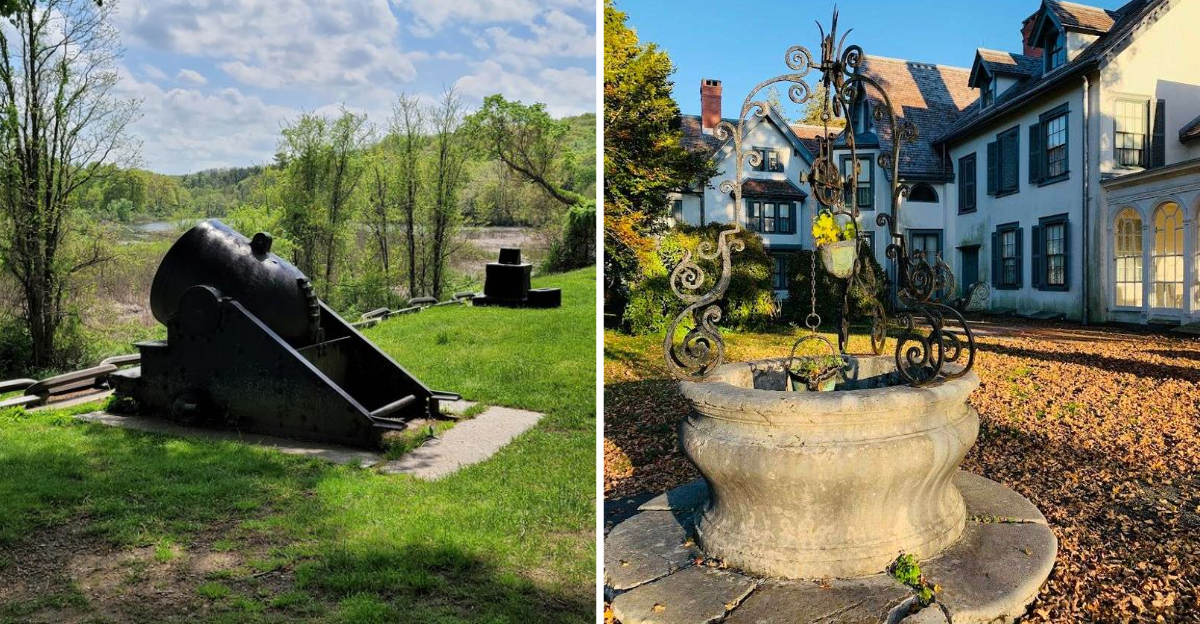
The ironmasters who fueled the American Revolution once stood on these porches.
You can practically hear the clang of their forges echoing through the hills as you crunched up the gravel drive.
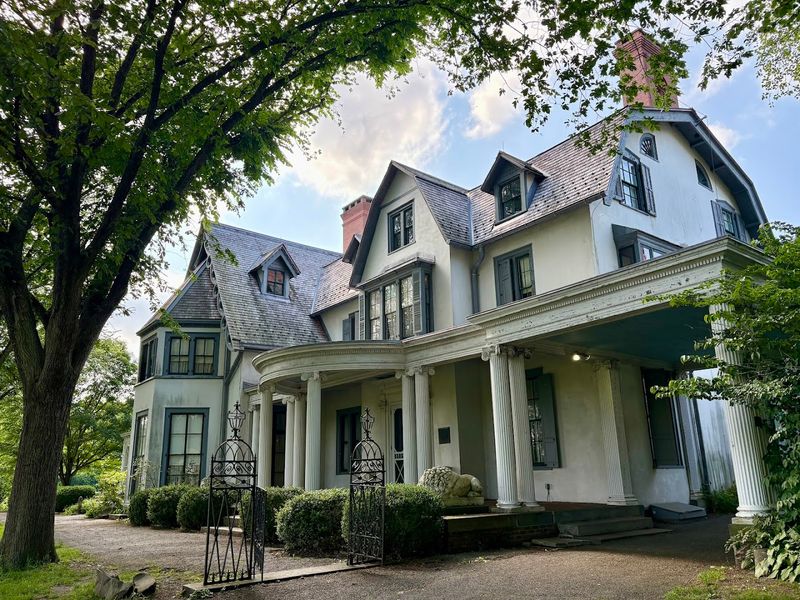
This 51-room mansion spans 582 acres of manicured lawns and wooded trails, a toy box for Gilded Age titans who threw parties while their factories belched smoke.
The Hewitts and Coopers owned half the mines in North Jersey, and they built this estate to prove it.
Thirty miles from Manhattan, you can still wander through the formal gardens or peek into the old carriage house.
Bring a picnic and pretend you are a robber baron for the afternoon.
No steel production required.
The 582-Acre National Historic Landmark District
Few places in the northeastern United States carry the kind of layered significance that this property holds.
Ringwood Manor sits within a 582-acre National Historic Landmark District in Ringwood, New Jersey, and the sheer scale of the place hits you the moment you turn off the road and cross the little bridge at the entrance.
The designation as a National Historic Landmark is not just a fancy plaque on a fence post. It reflects centuries of documented history, from Native American presence through colonial ironworking, revolution-era industry, and Gilded Age grandeur.
Every trail, garden path, and crumbling outbuilding tells a piece of that story.
Walking the grounds feels less like visiting a museum and more like stepping into a living document of American history. The forested hills of the Ramapo Mountains wrap around the estate, giving it a sense of natural isolation that makes the whole experience feel genuinely cinematic.
Bring comfortable shoes and plan to stay longer than you think you will.
The Iron Industry Roots That Built A Nation
Long before the mansion existed, the real story here was iron. The Ramapo Mountains surrounding the property are packed with magnetite iron deposits, and by 1742 the first blast furnace had already been fired up on this land by the Ogden family.
That makes this one of the earliest iron-producing sites in colonial America.
The operation grew considerably when Peter Hasenclever arrived in 1764 and rebuilt the ironworks for the British-owned American Company. It was a serious industrial enterprise, not a quaint little forge.
The scale of production here shaped the economic backbone of the region for generations.
What makes this history feel personal rather than textbook is standing near the old forge sites and imagining the heat, the noise, and the sheer labor that went into producing iron in the 18th century. The forest has reclaimed much of it, but remnants still whisper if you know where to look.
This is where American industrial ambition truly began to take shape.
Robert Erskine And The Revolutionary War Connection
Here is a detail that genuinely stopped me in my tracks during a tour: the man who managed these ironworks during the American Revolution was also George Washington’s first official Geographer and Surveyor-General.
Robert Erskine ran the Ringwood operations and simultaneously produced maps that the Continental Army depended on to navigate the northeastern landscape.
Erskine supplied the Continental Army with far more than maps.
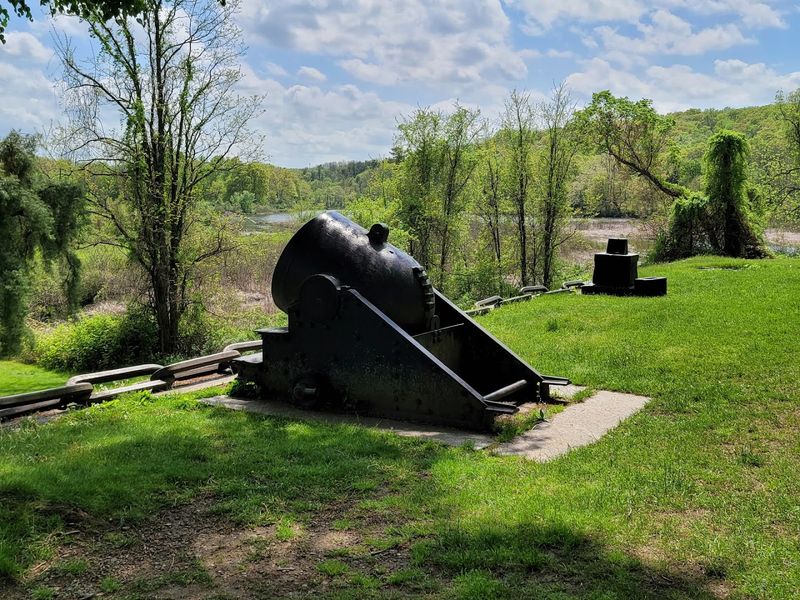
The ironworks at Ringwood produced camp ovens, tools, and iron components that contributed to the famous Hudson River Chain, a massive barrier stretched across the river to block British naval vessels.
That chain is one of the most audacious engineering feats of the entire war.
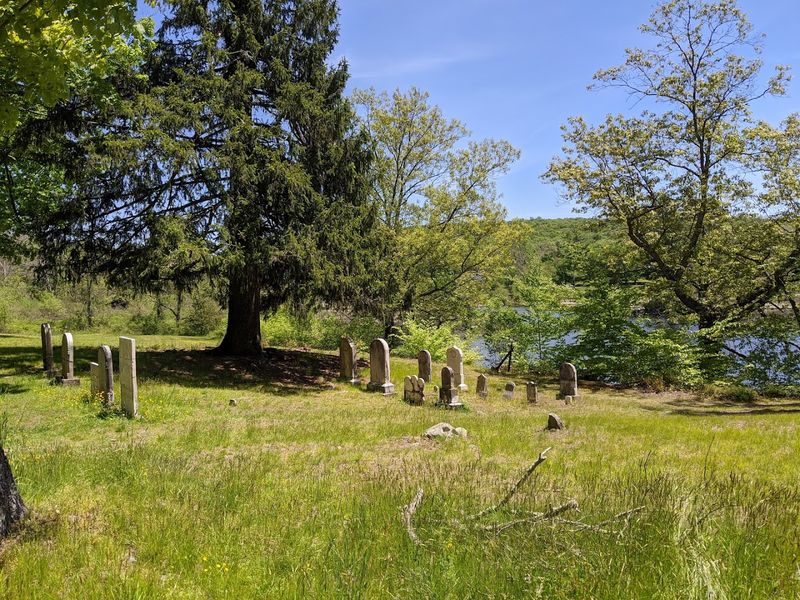
Erskine died in 1780 and is buried on the property, which adds a quietly somber layer to a walk through the grounds. His grave sits within the estate cemetery, a spot that feels genuinely meaningful rather than performative.
History feels personal when you are standing a few feet from someone who helped shape it.
Martin J. Ryerson And The Birth Of The Manor House
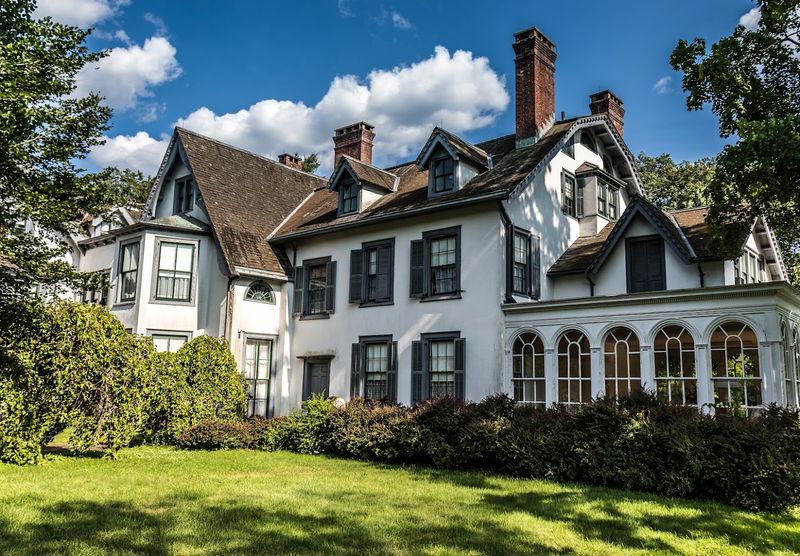
The physical manor house as we know it today has its origins in 1807, when Martin J. Ryerson purchased the ironworks and began building the first section of the structure around 1810.
That original ten-room Federal-style house was modest by later standards, but it established the architectural foundation for everything that followed.
Ryerson continued operating the iron mines and forges for the next five decades, making the estate both a working industrial site and a family residence simultaneously. That dual identity is part of what makes Ringwood so unusual.
Most historic properties are either industrial ruins or decorative mansions, not both at once.
Stepping into the oldest sections of the manor carries a particular kind of atmospheric weight. The proportions are different from the later Gilded Age additions, more restrained and functional in feeling.
You can almost sense the shift in ambition between the early Federal-era rooms and the later Victorian expansions that swallowed the original structure whole. It is architectural storytelling without a single word of explanation needed.
Peter Cooper And Abram S. Hewitt Transforming The Estate
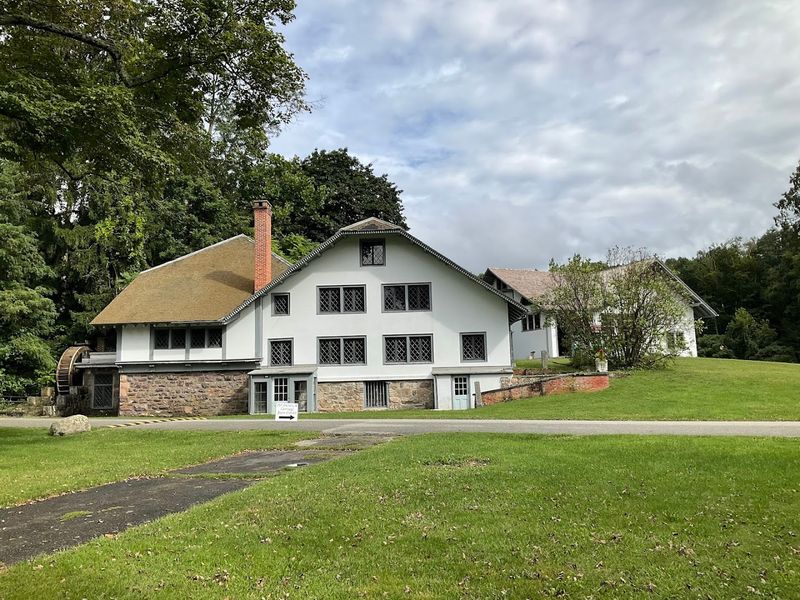
Peter Cooper purchased this property in 1853, bringing with him the kind of wealth and cultural ambition that would permanently transform the estate. Cooper was an inventor and industrialist best known for building the Tom Thumb locomotive and founding Cooper Union in New York City.
His acquisition of Ringwood was not just a business move but a lifestyle statement.
His son-in-law, Abram S. Hewitt, took over in 1857 and pushed the estate even further into Gilded Age grandeur.
Hewitt ran a company that manufactured iron rails, structural beams, wire, and gun barrels, and his industrial success funded the elaborate expansions that gave the manor its current form.
He was also a congressman and mayor of New York City, which tells you something about the social orbit these walls once occupied.
The combination of Cooper’s inventive spirit and Hewitt’s industrial muscle produced one of the most fascinating private estates in American history.
Their fingerprints are everywhere in the architecture and collections, and touring the rooms feels like reading a biography written in furniture and wallpaper.
The 51-Room Mansion And Its Gilded Age Interiors
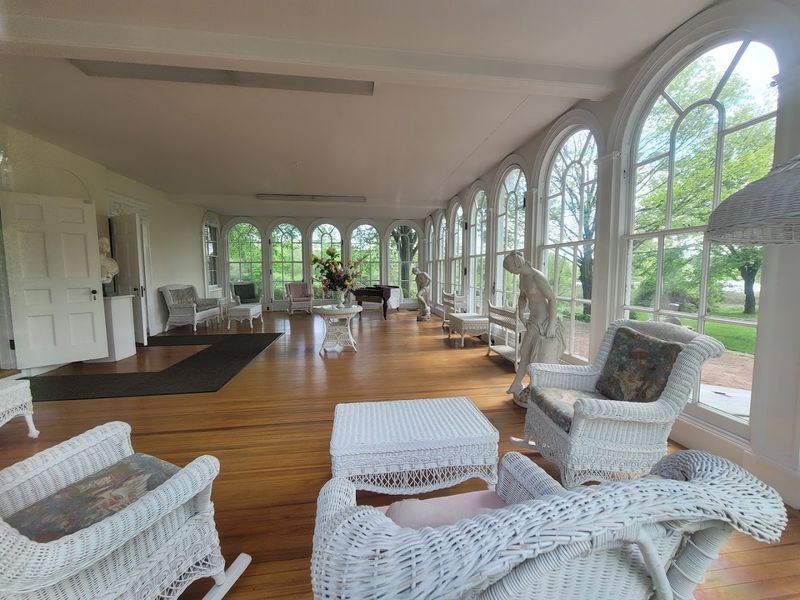
What started as a ten-room Federal-style house eventually grew into a 51-room mansion through additions built in 1864, 1875, 1900, and 1910.
Each expansion reflected the changing tastes and growing prosperity of the Hewitt family, and the result is a layered architectural patchwork that feels genuinely alive with personality rather than rigidly uniform.
The interiors are where things get truly spectacular. The music room features hand-painted wallpaper imported from France, depicting sweeping Mediterranean scenes that feel almost surreal in a New Jersey mountain estate.
The furnishings throughout reflect the Hewitts’ extensive travels and serious appetite for collecting, with pieces from multiple continents and periods sharing space in a way that feels curated but not sterile.
With 28 bedrooms and 13 bathrooms, the scale of domestic life here was extraordinary by any era’s standards. The house was donated to the State of New Jersey in 1938 with all its original contents intact, which is genuinely rare.
Most historic houses have been stripped over time. This one arrived as a complete, fully furnished time capsule.
The Formal Gardens And Grounds Worth Exploring
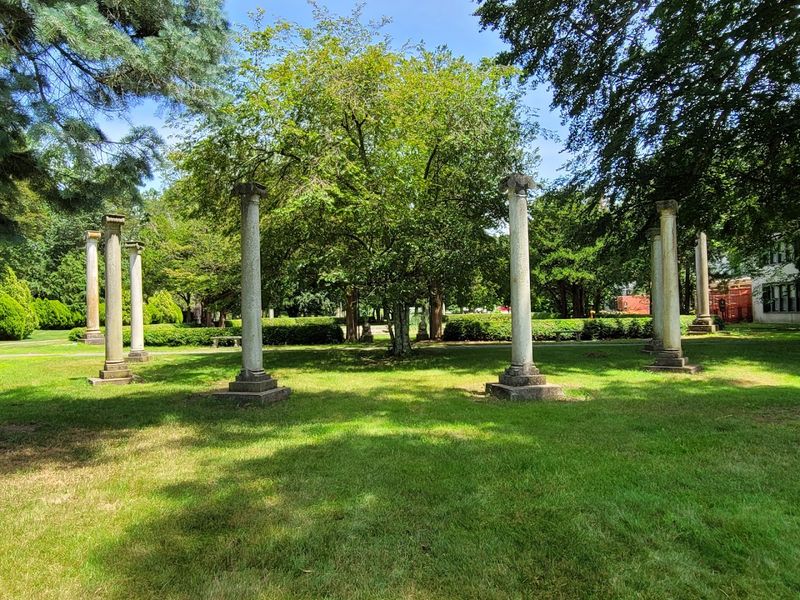
The gardens at this estate are the kind that make you slow down without even realizing it.
Visitors consistently rave about the open pillar garden in particular, a beautifully structured space that has developed a wonderful sense of age and permanence over the decades.
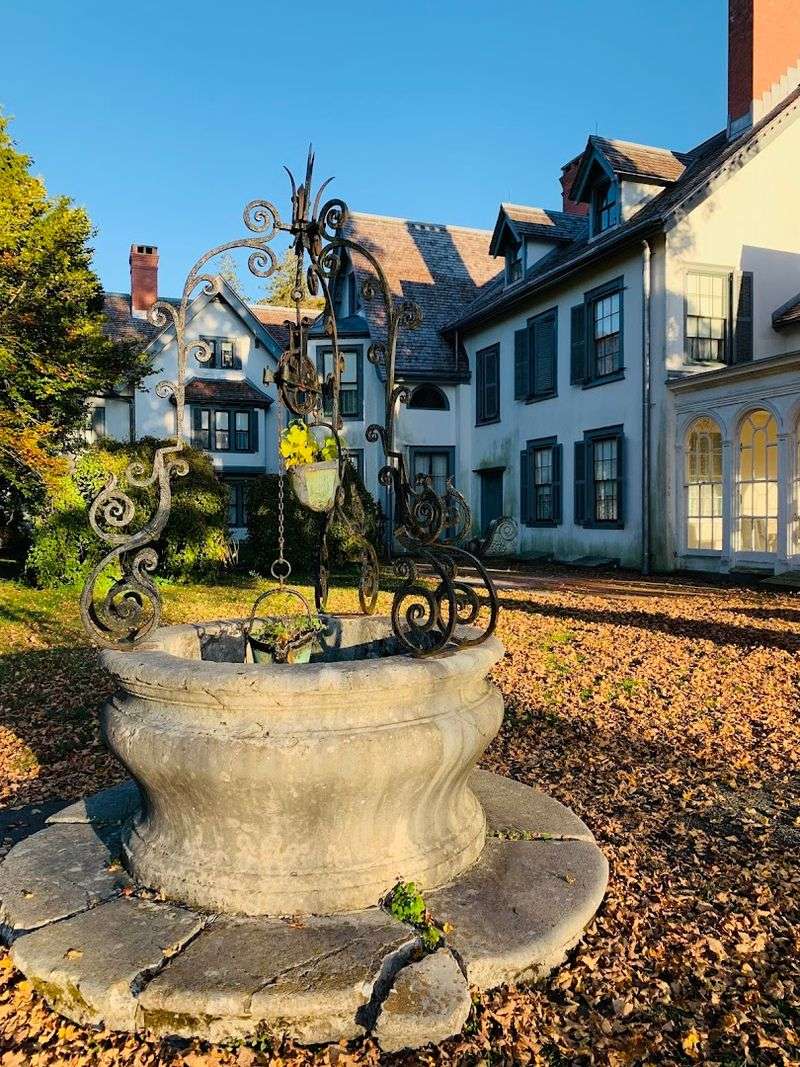
The iron decorations at the front of the manor add a fitting industrial elegance to the whole composition.
Fall is an especially rewarding time to visit. The surrounding Ramapo Mountain foliage turns the landscape into something almost theatrical, with rich amber and red tones framing the stone and brick of the manor buildings.
Bring a picnic and claim a spot on the grass because the grounds are genuinely designed for lingering.
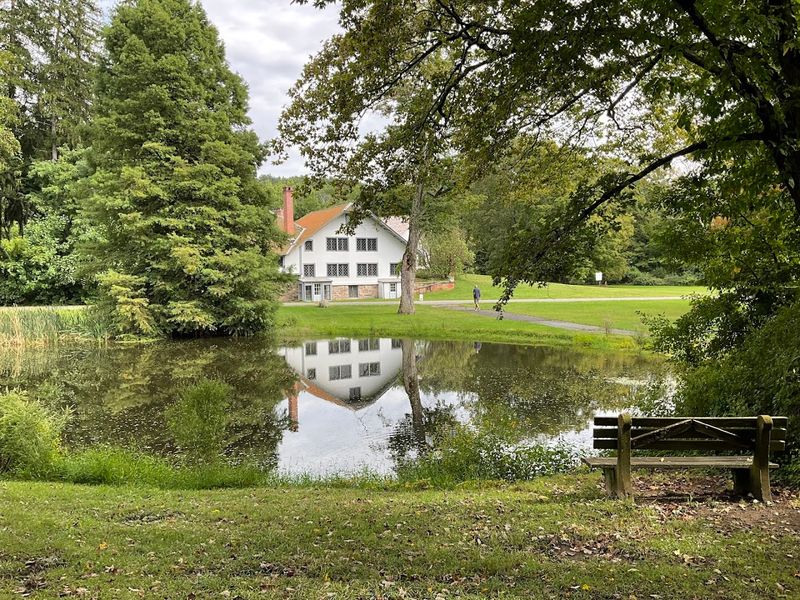
Beyond the formal garden, the property opens up into trails, open fields, and gravel paths that meander through woods and past water features. There are streams, a lake, and enough natural variety to make a full afternoon of exploration feel completely natural.
The grounds are pet-friendly too, which makes this an easy yes for anyone traveling with a dog.
Seasonal Events And Tours That Bring History To Life
Visiting the grounds is rewarding any time of year, but attending one of the seasonal events here takes the experience to a completely different level.
The Halloween haunted tour with lantern-lit walks through the estate cemetery has developed a genuine reputation among visitors.
The combination of real history and atmospheric nighttime setting creates something far more memorable than a typical haunted attraction.
Victorian Christmas events transform the interior into a decorated period showcase that feels authentically festive rather than commercially staged.
The manor is decorated with period-appropriate ornaments and arrangements, and musical performances in the historic rooms add a warmth that is hard to replicate anywhere else in the region.
Guided interior tours run during the regular season and typically last about an hour and fifteen minutes. The guides are knowledgeable and enthusiastic, covering both the architectural history and the personal stories of the families who lived here.
For anyone interested in American history, decorative arts, or simply beautiful old rooms, the tour is absolutely worth planning your visit around. Check the official website before you go to confirm current scheduling.
Planning Your Visit And Making The Most Of Your Trip
Getting to the estate is straightforward once you know to look for the sign and not second-guess the access road.
Cross the small bridge, pass the guardhouse, and follow the road to the main parking area, which is large, well-organized, and conveniently located near the manor buildings and garden entrance.
Parking fees apply during summer months but remain very reasonable.
Pack a lunch. Seriously.
The grounds are so beautiful and spacious that eating a picnic here feels like the natural thing to do, and multiple reviewers have mentioned doing exactly that with great satisfaction. There are clean, large restrooms on-site, which is a practical detail that makes a long visit much more comfortable.
The manor itself is currently undergoing renovation and may have limited interior access depending on when you visit, so checking the official website at ringwoodmanor.org before your trip is genuinely useful.
Even with the mansion temporarily closed for restoration, the grounds, gardens, trails, cemetery, and art center offer more than enough to fill a full, deeply satisfying day outdoors.
Address: 1304 Sloatsburg Rd, Ringwood, NJ
