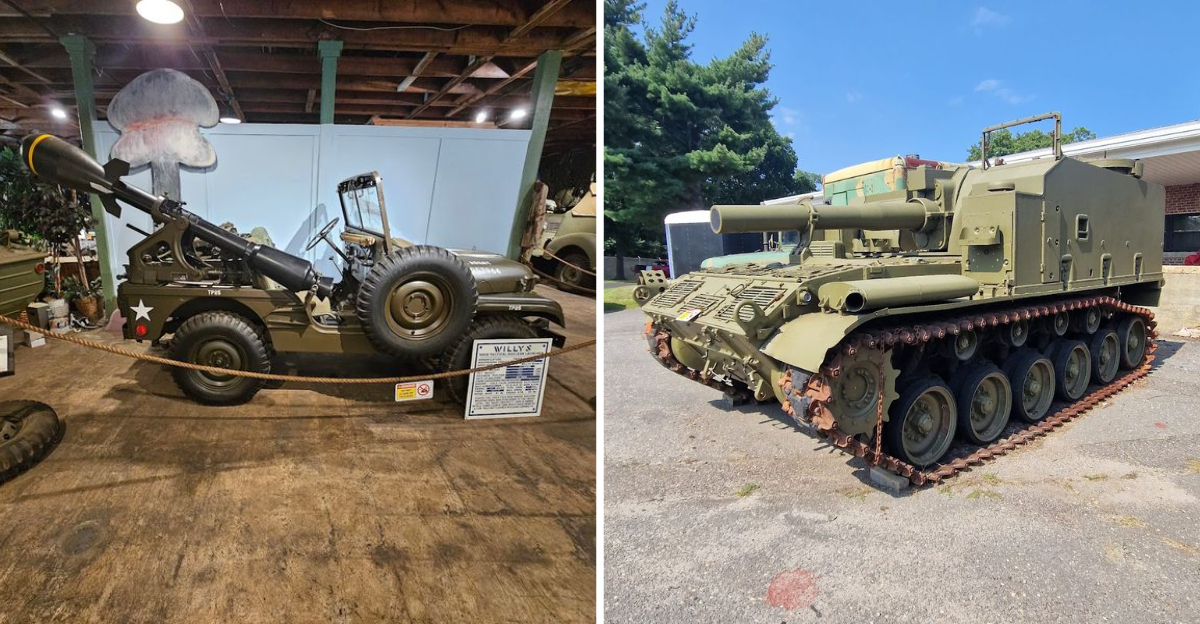
History class never had wheels like these. This New Jersey museum hides one of the state’s largest collections of working WWII vehicles plus secret Cold War gadgets that actually function.
Tanks rumble. Radars spin.
You can practically hear the whispers of old spy missions.
No dusty dioramas here. Just metal giants with real stories and buttons you wish you could push.
Perfect for curious minds who like their history loud, greasy, and surprisingly touchable.
Your inner child will thank you.
Camp Evans: The Secret Campus Behind the Museum
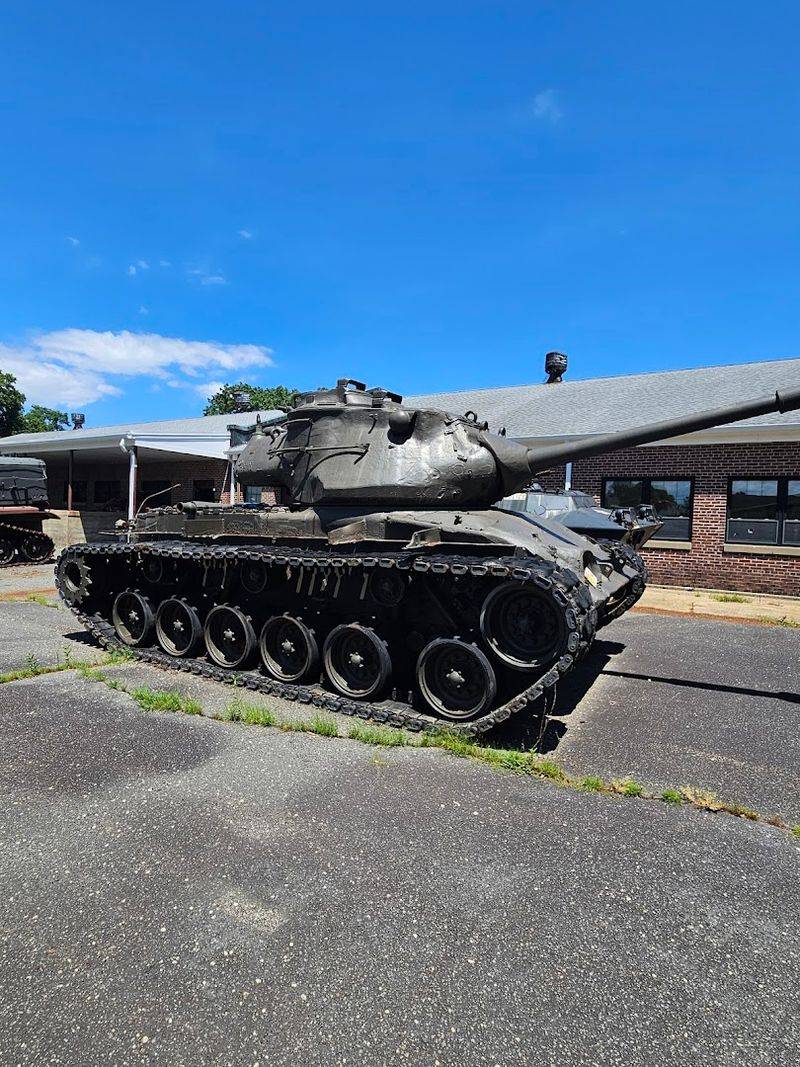
Not every museum gets to sit on top of an actual government secret, but this one does. The Military Technology Museum of New Jersey is located on the grounds of Camp Evans, a former top-secret federal research site in Wall Township.
Before it became a public destination, this campus was home to some of the most sensitive technological work in American history, including early radar development and nuclear weapons research.
Walking the grounds gives you a real sense of how serious this place once was. The buildings still carry that quiet, purposeful energy of somewhere that mattered deeply to national security.
It is not a replica or a recreation. It is the actual site, preserved and repurposed for public education.
That context makes everything inside the museum feel more meaningful. You are not just looking at artifacts in a generic exhibit hall.
You are standing in the same space where engineers and scientists once worked on technology that shaped the modern world. That is a rare and genuinely powerful feeling.
A Hundred Military Vehicles Under One Roof
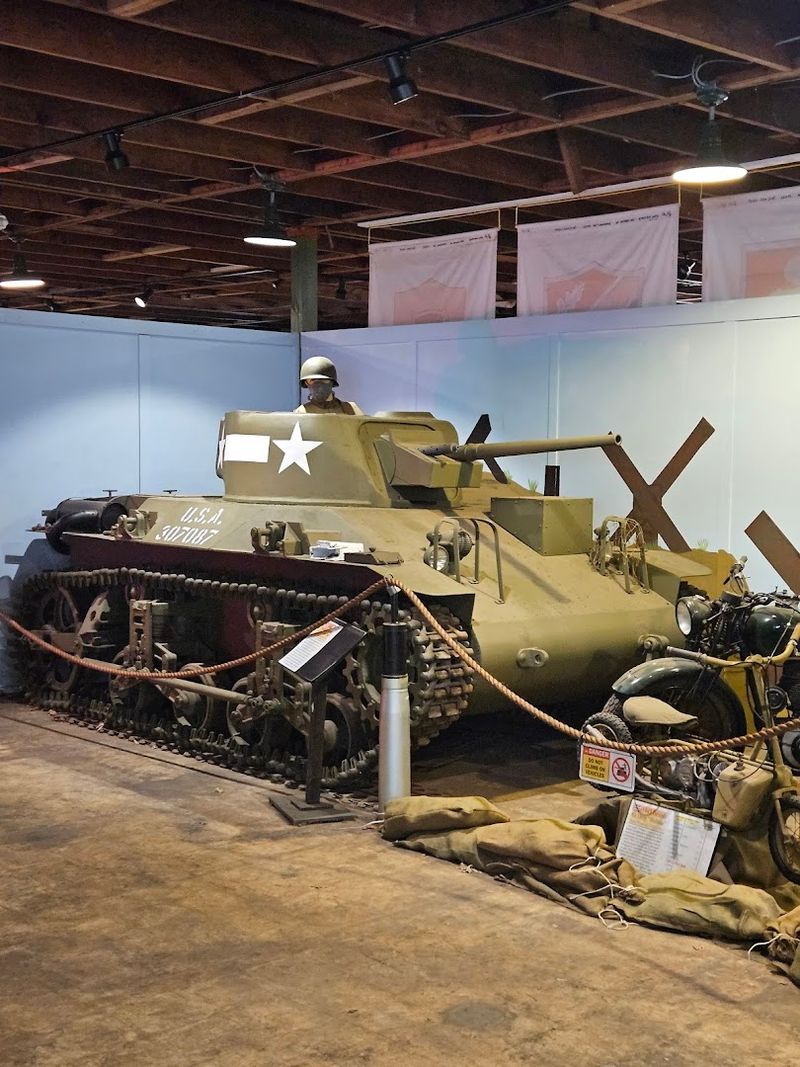
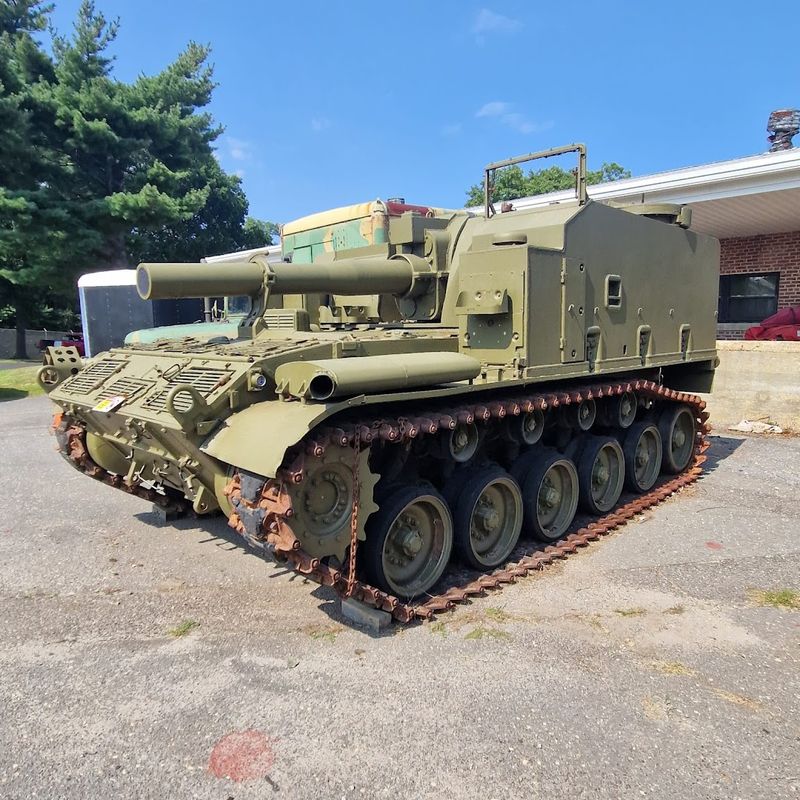
Stepping into the vehicle building feels a little like accidentally walking onto a film set. There are approximately 100 U.S. and foreign military vehicles packed into the collection, and the sheer variety of them is almost hard to process at first.
Jeeps, half-tracks, tanks, amphibious vehicles, and more stretch across the floor in every direction.
What makes this collection genuinely special is that most of these vehicles are not just sitting there looking pretty. Many of them actually run.
The museum uses several of them in live reenactment displays on the grounds, which means they are maintained in real working condition, not just cosmetically restored for appearances.
Some pieces in this collection are so rare they cannot be found anywhere else, including the Smithsonian. That is not a small claim.
It is the kind of detail that stops you mid-step and makes you reconsider what you are actually looking at. For anyone who loves military history or mechanical craftsmanship, this building alone is worth the entire trip.
The Jeep History Display That Goes Surprisingly Deep
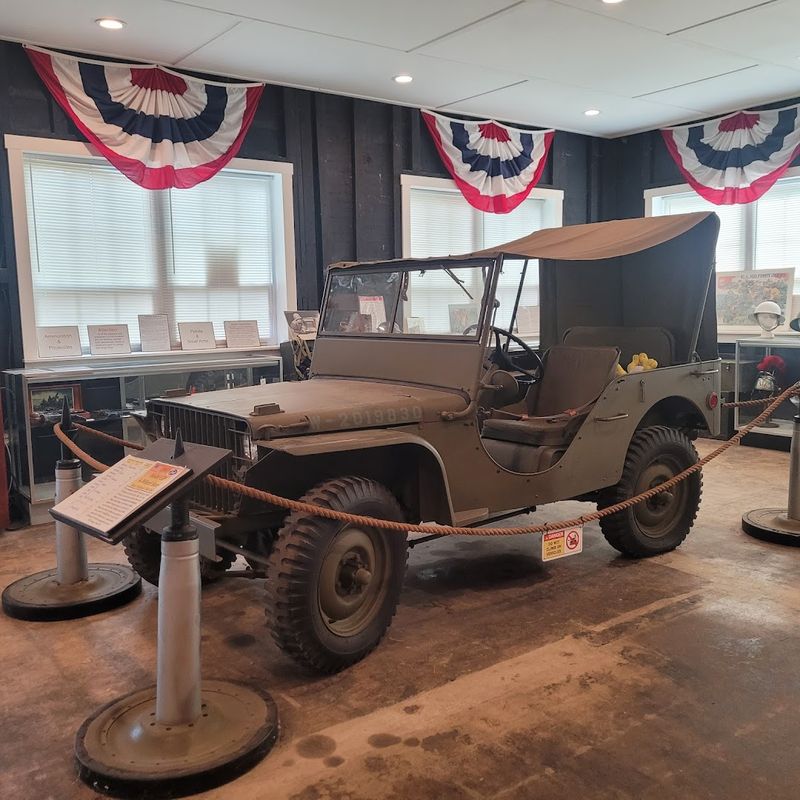
Few vehicles carry as much history in four wheels as the military Jeep, and this museum treats that legacy with real seriousness. The main focus of the vehicle collection is the history and development of the Jeep across different eras of American military service.
It is more detailed and more thorough than anything most visitors expect going in.
From early prototypes to battlefield-ready production models, the progression is laid out in a way that actually tells a story. You get a sense of how engineers responded to real wartime needs, adjusting designs based on what soldiers experienced in the field.
Each vehicle represents a specific chapter in that ongoing conversation between necessity and invention.
The condition of the Jeeps on display is remarkable. Several examples are in better shape than most vehicles you would see at a standard car show.
For enthusiasts, there is serious depth here, but even casual visitors tend to linger longer than they planned. Something about seeing these machines in person just hits differently than reading about them online.
Rare Prototypes You Will Not Find Anywhere Else
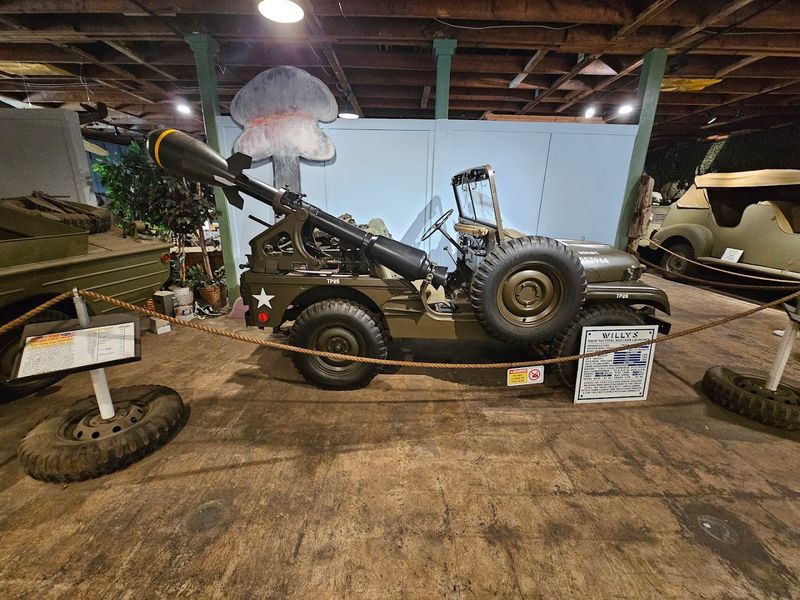
Most museums can show you standard-issue equipment. This one goes further.
Among the highlights of the collection is a 1943 Chevrolet Cel prototype, one of only two known to exist anywhere in the world. That level of rarity puts it in a category that even major national institutions cannot match.
The AquaCheetah, an early amphibious vehicle prototype, is another standout. Seeing something that was designed to move seamlessly between land and water, built during an era when that concept was still experimental, gives you a new appreciation for wartime engineering creativity.
These were not mass-produced items. They were ideas being tested under pressure.
Knowing that some of these pieces were never replicated, never mass-manufactured, and exist only in this building adds a weight to the visit that is hard to describe. You are not looking at a copy or a recreation.
You are looking at the original object, the actual thing that engineers built with their hands during one of the most consequential periods in modern history. That feels significant every time.
Cold War Electronic Warfare Exhibits
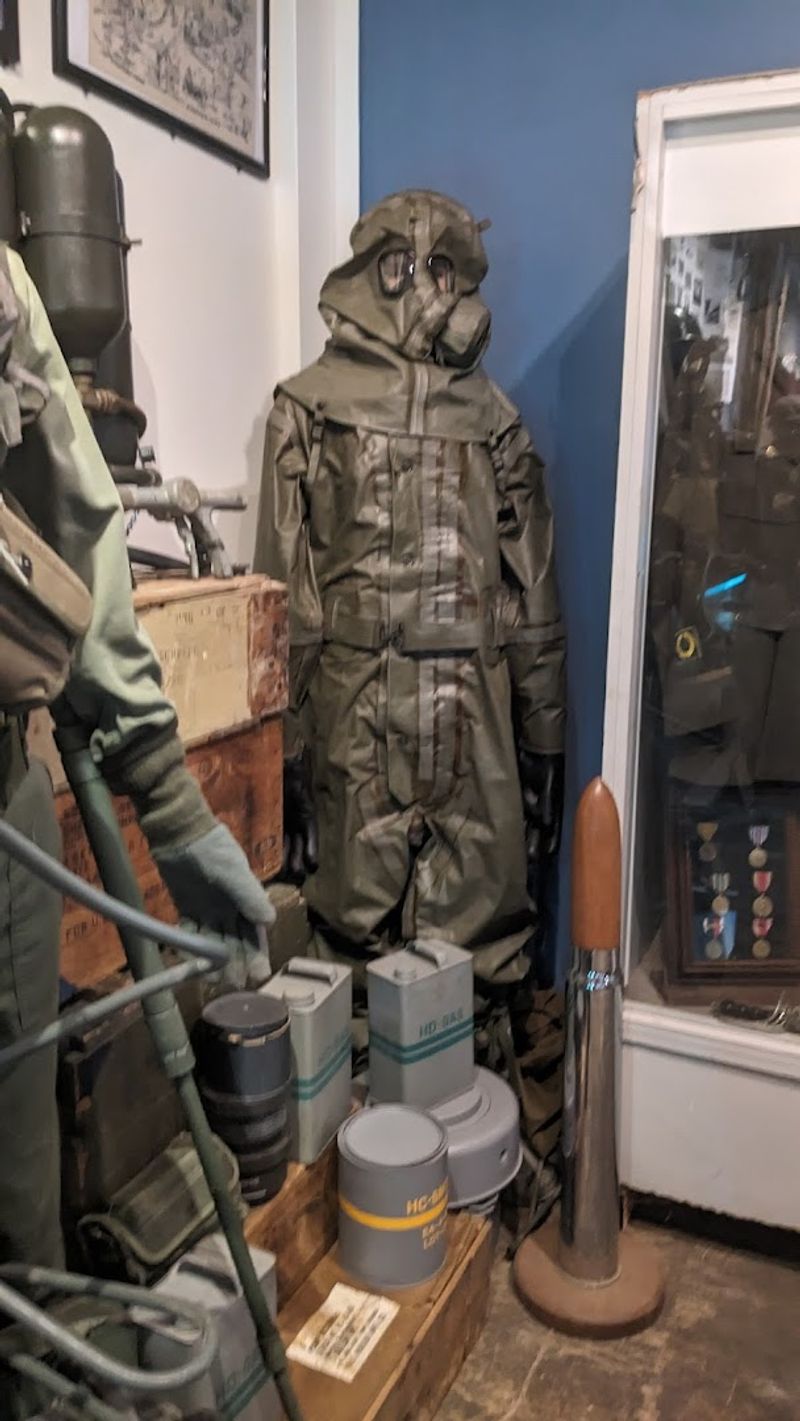
The Cold War section of the museum pulls back a curtain on technology that most people have never heard of, and for good reason. Some of it was classified for decades.
The electronic warfare exhibit includes systems that were designed specifically to protect high-value targets from missile attacks, including the jamming system used to defend the President’s helicopter.
There are also displays covering the technology used to defeat roadside IEDs, which connects Cold War era research directly to conflicts that happened within living memory. That thread between past innovation and present-day application is one of the things the museum does particularly well.
It never lets the history feel disconnected from the world you actually live in.
Standing in front of equipment that once existed in total secrecy, now explained with clear and accessible signage, is a genuinely unusual experience. The museum presents this material without sensationalizing it, letting the technology speak for itself.
For anyone curious about how modern warfare is shaped by decades of invisible research, this exhibit is quietly one of the most fascinating stops in the building.
Secret Radios, Canteen Spies, and WWII Communications
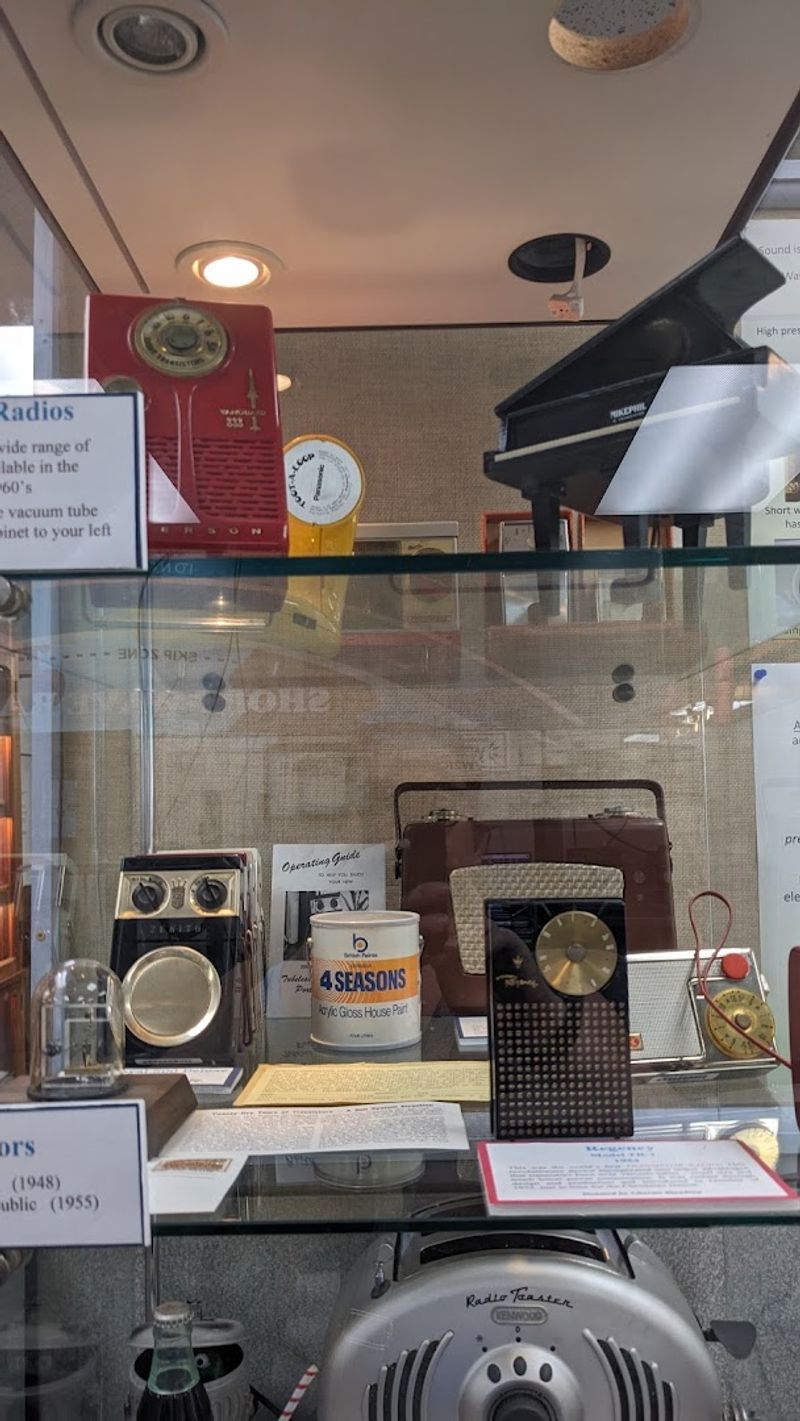
There is a particular kind of thrill that comes from learning a secret that has been hiding in plain sight for decades. The communications section of the museum delivers exactly that.
Among the exhibits are WWII jungle radios and canteen radios that were secretly used by prisoners of war to stay connected with the outside world.
The idea that a functioning radio could be concealed inside something as ordinary as a canteen is the kind of detail that sounds too creative to be true, but it was real and it worked. These objects represent the ingenuity of people operating under extreme pressure, finding ways to communicate when communication itself was forbidden.
The broader communications collection spans an impressive range, from early telegraph equipment to military field radios to more sophisticated systems developed later in the century. Each piece represents a problem that needed solving and a human being clever enough to solve it.
Walking through this section feels less like browsing a museum and more like reading a very well-paced thriller, one where the stakes were completely real.
Interactive Vintage Technology That Still Actually Works
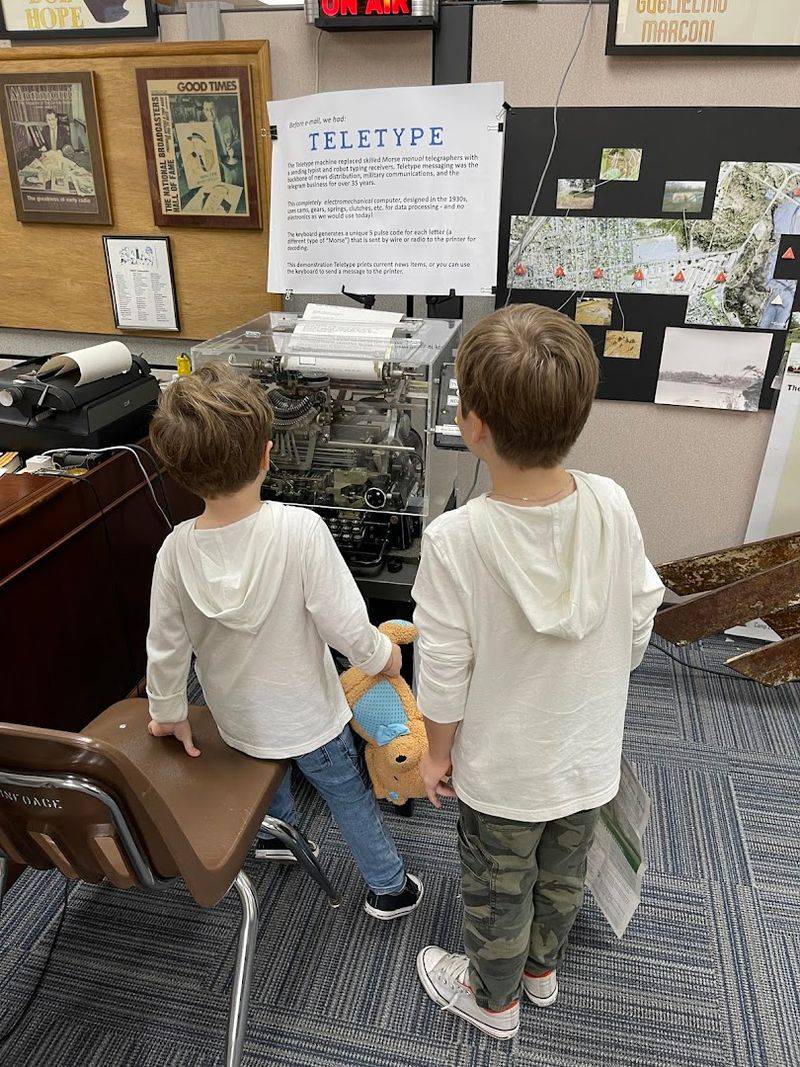
Most museums ask you not to touch anything. This one practically dares you to pick things up.
The interactive technology exhibits include old phones that are over a hundred years old and still fully operational. You can pick up the receiver and make a call to a modern cell phone, which is a genuinely disorienting experience in the best possible way.
Vintage computers are also set up for hands-on use, and yes, Oregon Trail is available. There is something deeply satisfying about sitting down at an Apple IIe and rediscovering just how unforgiving that game actually is.
The museum has clearly put thought into making these moments accessible and fun for visitors of all ages, not just those with a technical background.
This approach to interactivity sets the museum apart from more passive collections. Instead of simply displaying technology behind glass, it puts the experience in your hands.
That tactile connection to history makes everything more memorable. Kids tend to love it, but adults are usually the ones who linger the longest at the old phone stations, quietly amazed that these things still work.
Military Dioramas and Field Battle Displays
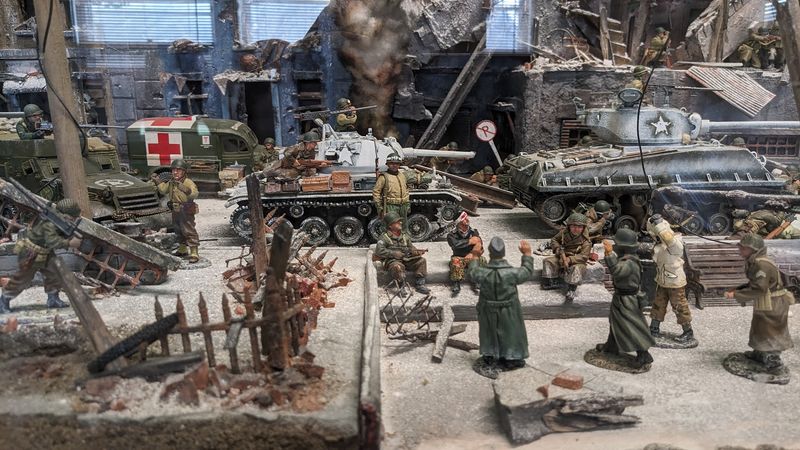
Walking into the first building and coming face to face with a full diorama of a field battle is one of those museum moments that catches you completely off guard. The detail in these displays is serious.
Miniature soldiers, vehicles, terrain features, and equipment are arranged to recreate specific military engagements with a level of care that clearly took considerable time and research.
The dioramas cover a range of American military history, not just WWII, giving visitors a broader sense of how U.S. forces have operated across different conflicts and environments. Each scene is paired with contextual information that helps place it in a larger historical narrative without overwhelming you with dates and statistics.
For younger visitors, these displays have a way of making abstract historical events feel suddenly tangible and real. For adults who already know the history, they offer a new visual angle that adds texture to familiar stories.
The craftsmanship involved is easy to appreciate regardless of your background, and the sheer variety of scenes means there is always something new to look at no matter how long you spend in the room.
Planning Your Visit: What to Know Before You Go
Planning ahead makes a real difference at a place this size. The museum is open Wednesday, Saturday, and Sunday from 1 to 5 PM, so checking the schedule before heading out is worth the thirty seconds it takes.
Budget at least four hours for a full visit because there is genuinely that much to see across the multiple buildings on the campus.
Bringing water is a practical tip worth taking seriously. Some buildings have air conditioning and some do not, and moving between them in warmer months means staying hydrated keeps the experience comfortable rather than exhausting.
The museum is part of the larger InfoAge Science and History Museums campus, which adds even more to explore including vintage trains and additional science exhibits.
The cost is very affordable, and donations are warmly welcomed by the team that keeps this collection running. The museum is located at Camp Evans in Wall Township, easy to reach from many parts of central New Jersey.
It rewards curious visitors of every age and background, and it tends to leave people planning a return trip before they have even finished the first one.
Address: 2201 Marconi Rd Building 9010-A, Wall Township, NJ
