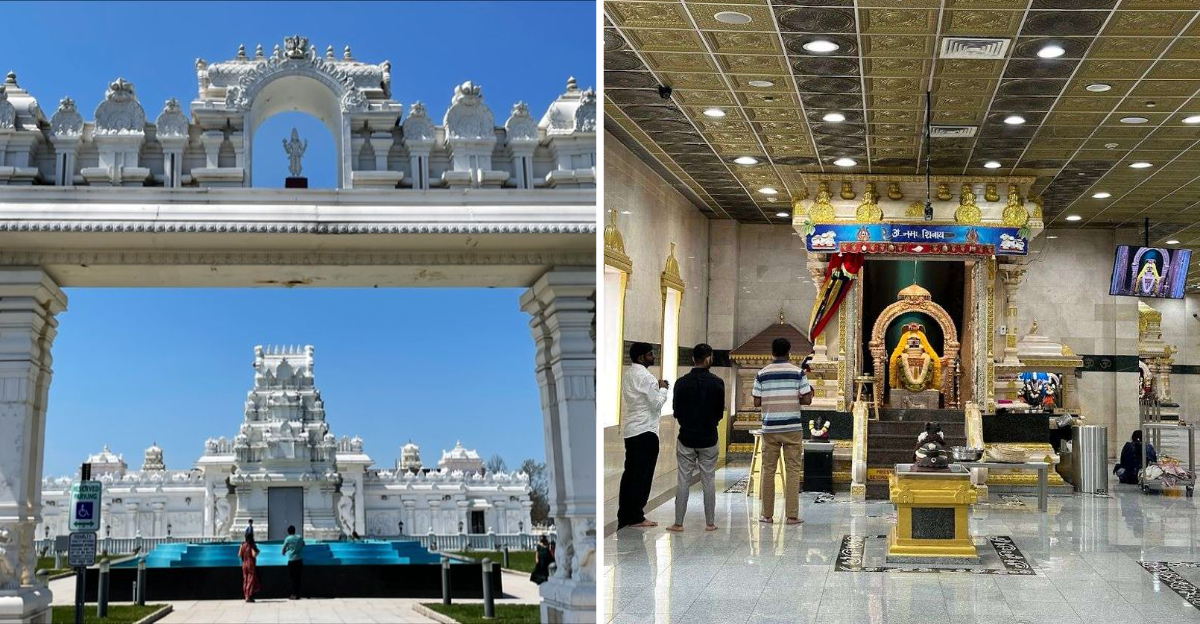
Let us talk about jaw-dropping architecture that makes you do a double take.
This temple is not just a place of worship, it is a stunning work of art that transports you straight to southern India without ever leaving the state.
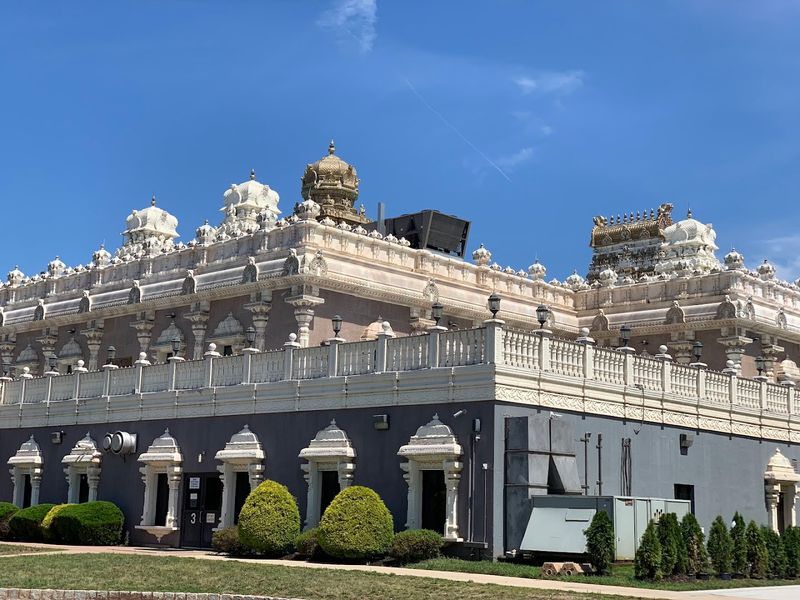
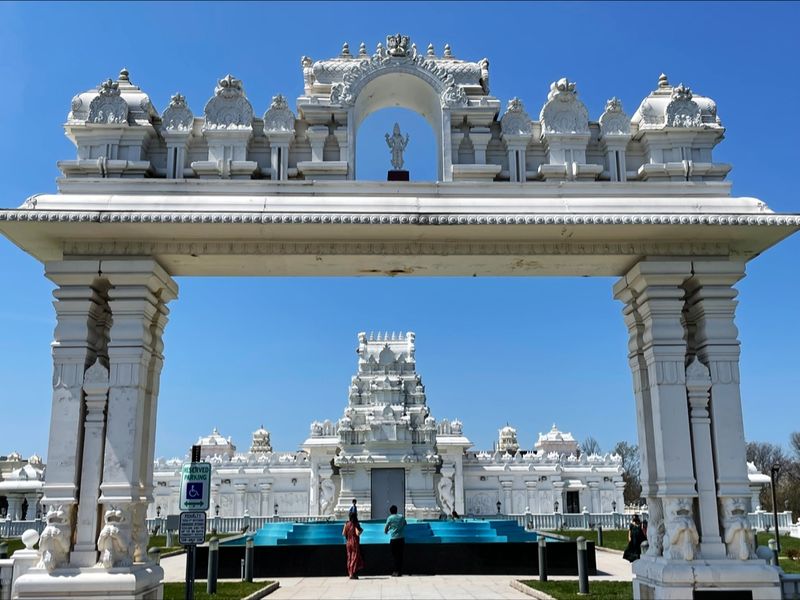
The gopuram, or entrance tower, rises dramatically with layer upon layer of colorful, hand-carved figures depicting gods, goddesses, and mythological scenes.
It is vibrant, intricate, and absolutely mesmerizing.
The peaceful energy inside invites you to slow down and just breathe.
Even if you know nothing about Hindu traditions, you cannot help but feel the care and devotion poured into every detail.
It is proof that New Jersey holds surprises far more beautiful than anyone expects.
The Dravidian Architecture That Stops You Cold
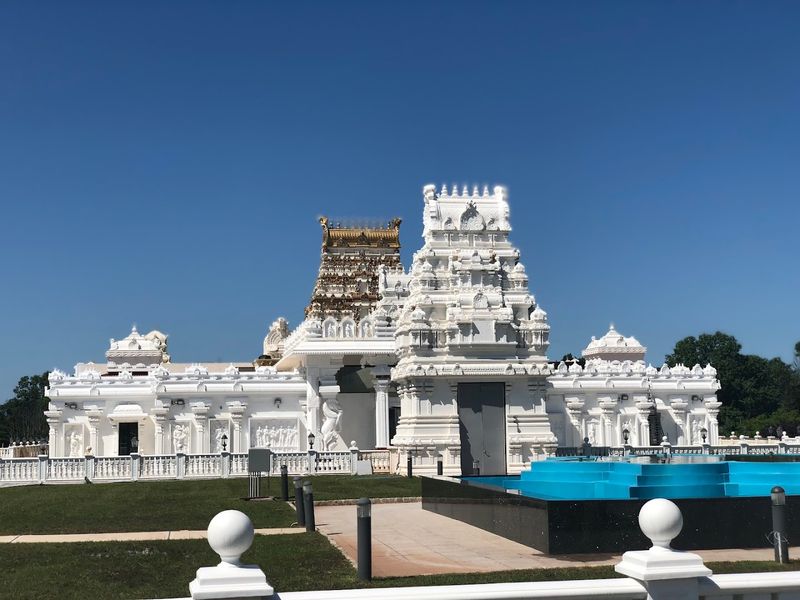
Pulling into the parking lot and seeing those golden gopurams rise against a New Jersey sky is a moment that genuinely rewires your brain.
The temple follows authentic Dravidian architecture, the same ancient South Indian style found in thousand-year-old temples across Tamil Nadu.
Every surface tells a story.
Architect Shri Ganapatisthapati from Madras designed the plans starting in 1994, and the attention to historical accuracy is remarkable. Components were crafted using pre-cast molds with glass-reinforced concrete, some produced in Bahrain, then assembled here with extraordinary precision.
The result is a structure that feels both ancient and alive.
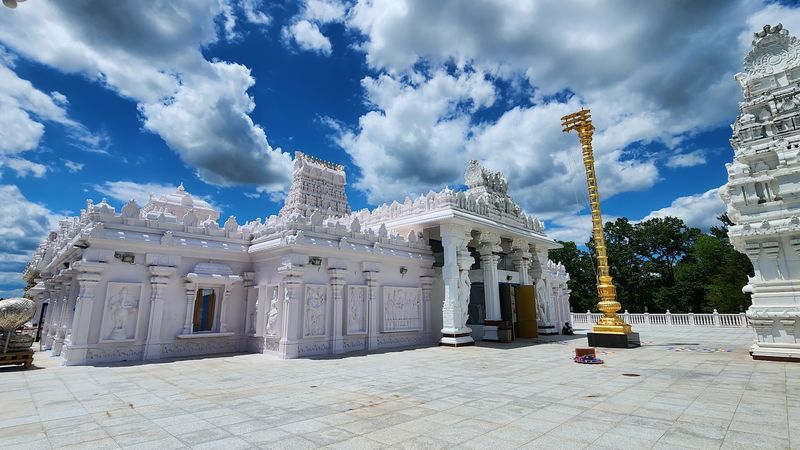
The ornate pillars, layered towers, and sculpted panels create a visual rhythm that pulls your eyes upward and outward all at once. Standing at the entrance, the sheer detail carved into every inch of stone feels almost impossible to take in during a single visit.
It rewards slow looking. Come back twice, and you will still find something new carved into a corner you missed the first time around.
A History Rooted in Community and Devotion
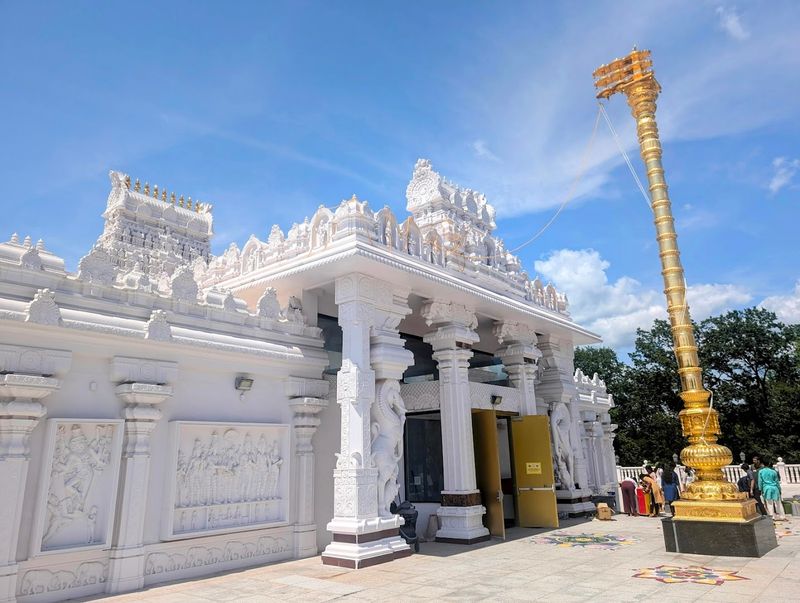
Back in September 1989, a group of practicing Hindus in New Jersey came together with a shared dream that felt enormous at the time.
They wanted to build a real, traditional stone temple, not a converted warehouse or a rented hall, but something that would stand for generations.
That dream took serious patience.
The Hindu Temple and Cultural Society of USA Inc. purchased land in Bridgewater in February 1992. Planning for the authentic South Indian temple began in 1994, the groundbreaking happened in 1995, and construction following ancient Vastu Shastras began in May 1996.
The 11,000-square-foot stone temple was finally inaugurated in 1998.
The consecration ceremony, known as Kumbhabhishekam, was officiated by Chinna Jeeyar Swami and a team of priests. The Rajagopuram tower over the main gate received its own Kumbhabhishekam in July 1999.
What started as a community wish became one of the most significant Hindu temples on the entire East Coast of the United States. That origin story adds something invisible but real to every visit.
Lord Venkateswara, the Heart of the Shrine
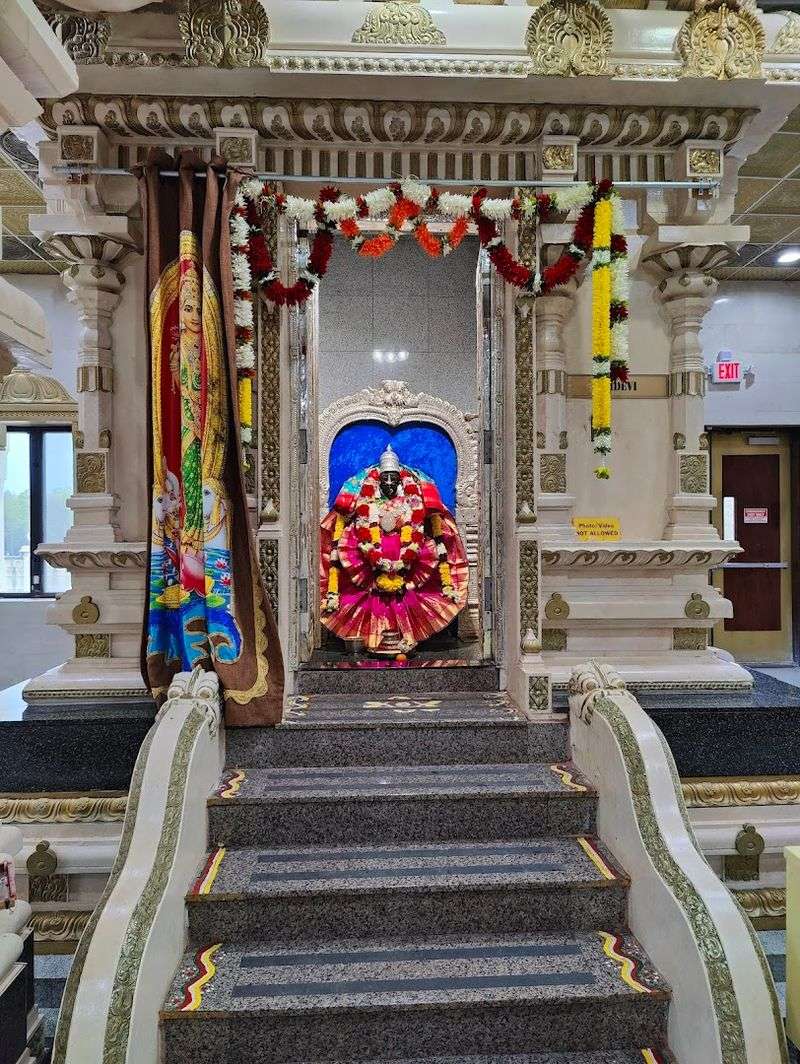
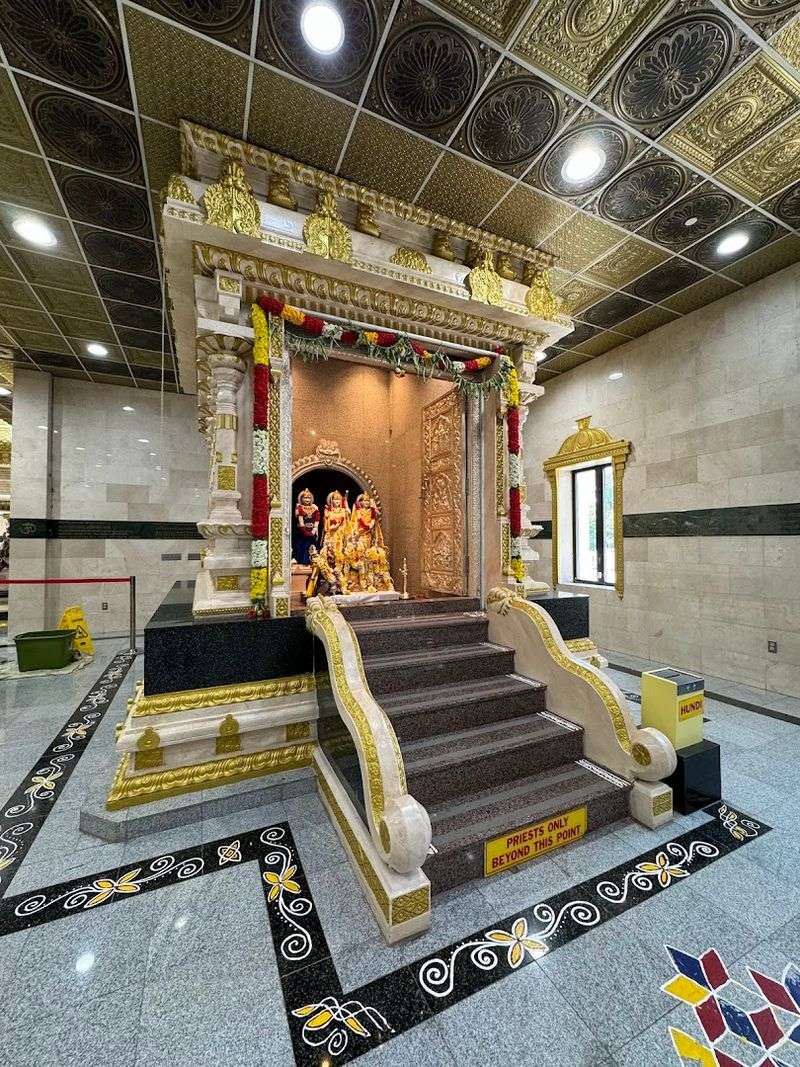
The primary deity enshrined here is Lord Venkateswara, also known as Lord Balaji, a beloved form of Lord Vishnu worshipped across South India. The idol is noted for its striking resemblance to the famous main deity at the Tirupati temple in Andhra Pradesh, India.
That comparison is not made lightly.
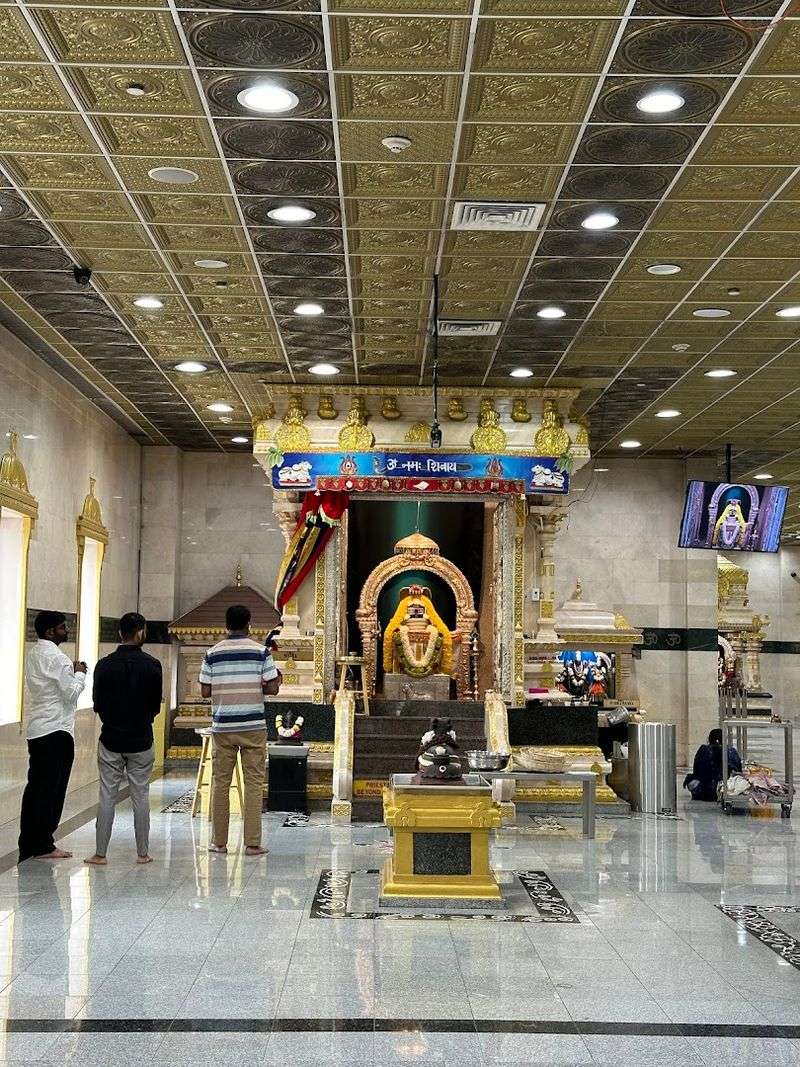
Seeing the deity adorned with care and surrounded by the soft glow of lamps creates a feeling that is hard to put into words. Devotees travel from across the northeastern United States specifically for this darshan.
The spiritual pull of the space is something even first-time visitors feel immediately upon entering the inner sanctum.
Archana rituals are performed at scheduled times throughout the day, giving every visitor a chance to participate in traditional worship. The priests are knowledgeable and guide devotees through the process with patience.
Whether you come from a Hindu background or are simply curious about the tradition, the experience of standing before this beautifully decorated deity leaves a calm, lasting impression that stays with you long after you leave.
Sixteen Shrines Worth Exploring Slowly
One visit is honestly not enough time to fully appreciate everything housed within this temple complex. There are sixteen separate shrines, each dedicated to a different deity from the Hindu tradition.
The lineup reads like a who’s who of sacred figures.
Ganesha, Durga, Saraswati, Lakshmi, Radha Krishna, Lord Rama, Anjaneya, Subrahmanya, Ayyappa, and Navagraha are among the many sacred images present. Each shrine has its own distinct energy and aesthetic, with carvings and decorations that reflect the specific character of the deity housed there.
Moving from one to the next feels like a slow, meditative walk through an entire spiritual universe.
Near the prasadam counter, there is even a small Shiva Lingam where visitors can offer water directly. That small, accessible ritual adds a hands-on dimension to the visit that many find deeply meaningful.
The Dhwajastambham, or sacred flag staff, stands prominently within the complex as well. Plan at least two hours if you want to visit each shrine without rushing.
Take it slow, and the temple will reward you.
Prasadam and Temple Sweets Worth the Trip Alone
There is something deeply special about food that has been prepared as an offering before it reaches your hands. The prasadam at this temple carries that quality, and regulars will tell you it is part of why they keep coming back.
The laddoos here have earned a devoted following all on their own.
Soft, sweet, and fragrant, these laddoos are available for purchase at the temple counter along with freshly made vada. The pongal served as prasadam after aarti is another highlight, warm and lightly spiced with just the right amount of ghee.
These are not afterthoughts. They are made with intention.
Taking prasadam home feels like carrying a small piece of the temple’s warmth with you. Many families visit specifically on weekends to stock up on laddoos for the week.
The ritual of receiving prasadam connects the physical act of eating to something larger and more meaningful. Even visitors who are unfamiliar with Hindu traditions tend to find the experience touching.
Good food shared in a sacred space has a way of transcending background entirely.
Festivals That Transform the Entire Experience
If visiting on a regular weekday feels peaceful and manageable, arriving during a major festival is a completely different adventure.
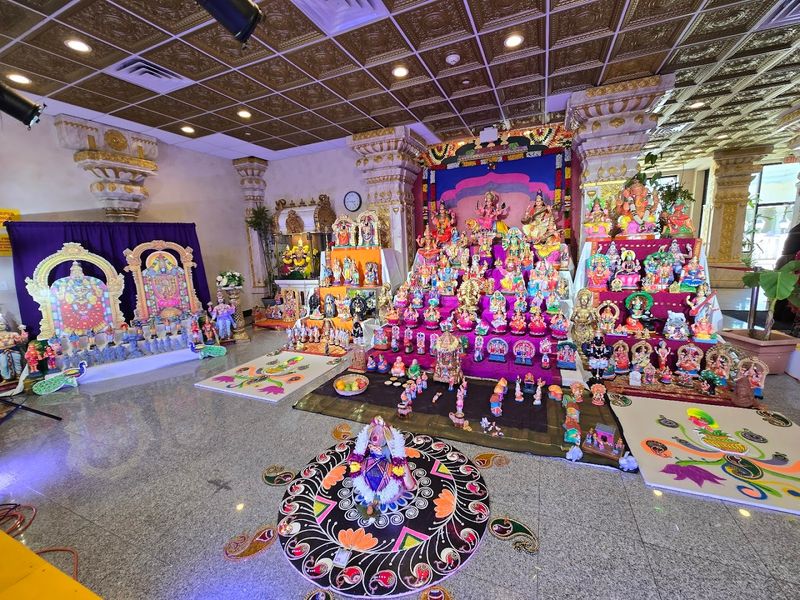
The temple celebrates Diwali, Vaikunta Ekadasi, Navaratri, Sri Rama Navami, and Ramanuja Jayanti with a level of grandeur that fills every corner of the complex with color, sound, and energy.
The Great Prayer Hall can seat around 1,000 people, and during major festivals, that capacity gets tested. The courtyard fills with devotees, the air carries the layered scent of flowers and incense, and the rhythmic chanting creates an atmosphere that is genuinely transporting.
It feels less like an event and more like a living tradition.
Festival days do bring larger crowds, so arriving early helps. The parking is well-organized and can handle the volume, which is a relief when hundreds of families are arriving at once.
Even if the lines are longer on those days, most visitors agree the heightened energy is worth every extra minute of waiting. There is a collective joy during festival time that a regular visit simply cannot replicate.
The Community Center and Cultural Programs
The temple is far more than a place of worship on Sunday mornings. The complex spans four floors and includes a community center, an auditorium, a marriage hall, a youth activities center, and an exhibition dedicated to Indian history and culture.
That is a lot of ground to cover, in the best possible way.
Cultural programs, spiritual counseling, and priestly services for life events like weddings, Upanayanam ceremonies, car pujas, and birthday celebrations are all offered here. The community center functions as a genuine hub for the Indo-American population across the region.
Families have marked some of their most important milestones within these walls.
The exhibition space is particularly worth exploring for anyone curious about the broader context of Hindu tradition and Indian cultural history. It adds an educational layer to the visit that goes beyond the spiritual.
The youth activities center brings younger generations into the fold, ensuring the traditions continue. Whether you come for a ceremony, a cultural event, or simply to explore, the facilities here are thoughtfully designed and genuinely welcoming to all.
The Gift Shop and Souvenir Store
Tucked within the temple complex is a small but well-stocked gift shop that has a way of making you linger longer than planned.
The shelves carry religious items, pooja supplies, small deity statues, incense, and cultural keepsakes that make for meaningful gifts or personal mementos.
It is the kind of shop where everything feels purposeful.
Picking up a small Ganesha figurine or a packet of sandalwood incense to bring home extends the experience of the visit in a tangible way. Many visitors grab pooja items here before heading into the temple, which makes the whole process feel seamlessly connected.
The shop is practical and devotional at the same time.
For those who want to remember the visit or share something meaningful with family who could not make the trip, the gift shop delivers without being overwhelming or touristy. Everything available feels consistent with the spirit of the place.
It is a small detail that adds real value to the overall experience. Stop in on your way out, and you will almost certainly leave with something worth keeping for a long time.
Planning Your Visit for the Best Experience
Weekdays offer a quieter, more contemplative visit with shorter wait times and a calmer atmosphere throughout the complex.
The temple is open Monday through Friday from 8:30 AM to 12:30 PM, while Saturdays and Sundays run from 8:30 AM all the way to 8:30 PM.
Weekend hours make it easy to spend a full half-day here without feeling rushed.
Photography and videography are generally not permitted inside the main temple, so leave the camera in your bag and simply be present. Dress modestly and remove shoes before entering, as is customary in Hindu temples.
The staff and volunteers are helpful and will guide first-time visitors through the process comfortably.
Parking is ample and well-organized, which makes a real difference during busy periods. The cafeteria runs a fuller menu on weekends, so plan accordingly if food is part of your agenda.
Address: 1 Balaji Temple Dr, Bridgewater, NJ.
