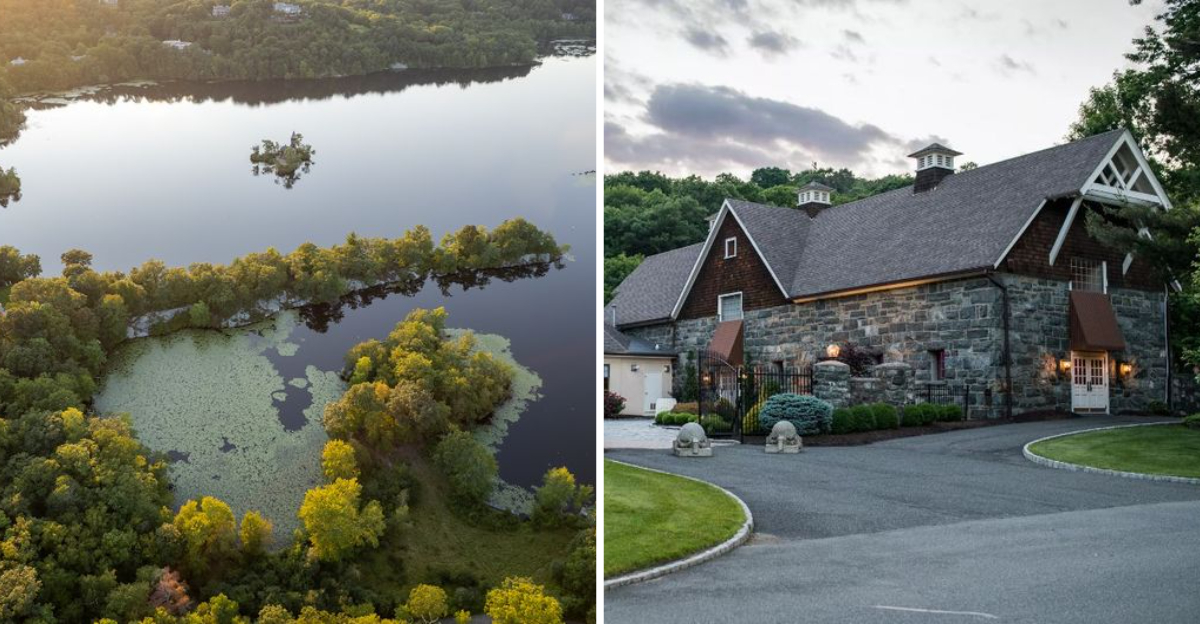
Imagine building your own private island chapel simply because you could.
That is exactly what happened here, when a wealthy industrialist decided to create his own spiritual sanctuary on a tiny patch of land surrounded by water.
The town that eventually grew around this estate carries his name, a permanent tribute to his ambitious vision.
Today, that chapel still stands, a quiet, picturesque structure that looks like it belongs in a fairy tale rather than suburban New Jersey.
The surrounding lakes and wooded hills add to the dreamlike atmosphere. It is the kind of place that makes you wonder about the stories hidden within its stone walls.
Have you ever stumbled upon a slice of history that felt completely out of time?
This charming town is full of such surprises.
The Industrialist Who Left His Name on a Borough
Francis S. Kinney was not the kind of man who did things halfway.
He built a 5,000-acre estate in the Morris County hills of New Jersey and simply called it Kinnelon, a stylish blend of his own surname. That estate eventually became the foundation of a whole borough.
When the borough was formally incorporated on February 20, 1922, the name stuck. Some accounts suggest the name honored his son Morris Kinney, while others say it was a tribute to his wife, carried forward by his sons Warren and Morris.
Either way, the legacy is woven into every street sign in town.
What makes this story so compelling is how personal it feels. A family name etched permanently into a map, a reminder that behind every quirky place name, there is usually a surprisingly human story.
Kinnelon is proof that New Jersey history rewards the curious traveler who digs just a little deeper than the surface.
St. Hubert’s Chapel and the Island That Holds a Secret
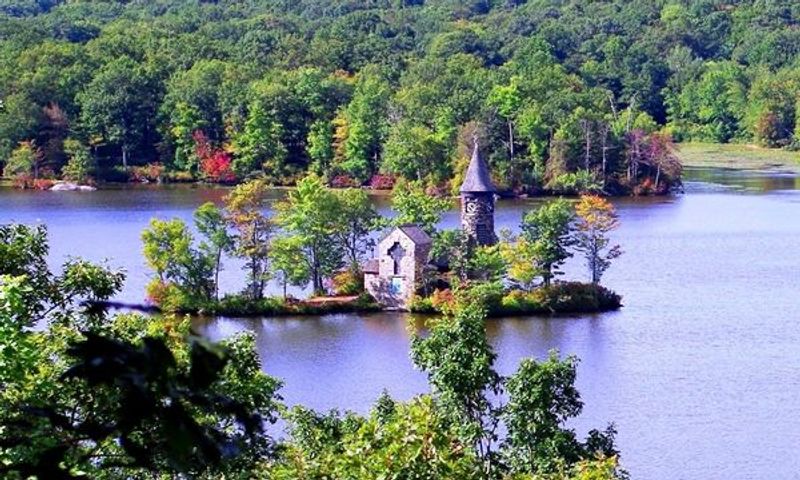
Built in 1886 and consecrated in 1889, St. Hubert’s Chapel is one of those places that seems almost too extraordinary to be real. Francis S.
Kinney constructed it on a small island within Lake Kinnelon, specifically for his wife Mary, a devout Catholic who would otherwise have needed to travel seven miles just to attend church.
The chapel is only accessible by boat. That detail alone transforms a visit into a genuine experience rather than a simple sightseeing stop.
You have to earn it a little, and that effort makes the reward feel even more meaningful.
Kinney did not cut corners on design, either. He brought in one of the most celebrated artistic minds of the era to handle the interior.
The result was a chapel that became historically significant far beyond its modest island footprint. Today, it sits within the private gated community of Smoke Rise, making it a rare and protected piece of New Jersey heritage that few outsiders ever get to see up close.
Louis Comfort Tiffany’s First Big Ecclesiastical Project
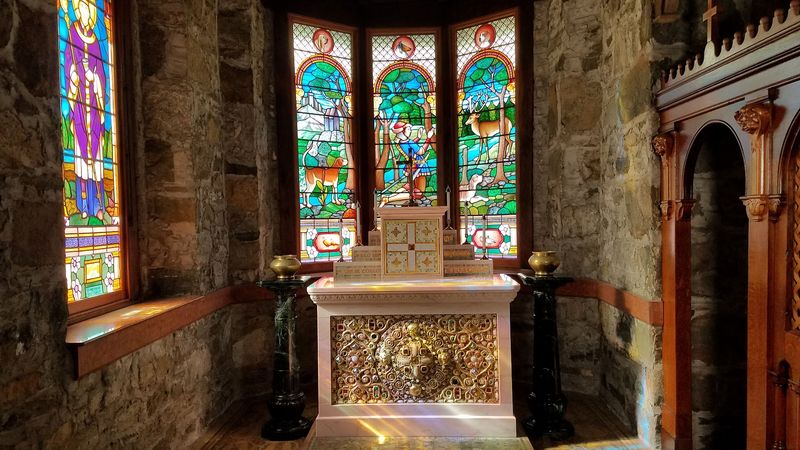
Here is a fact that genuinely stops people mid-sentence: Louis Comfort Tiffany, son of Tiffany and Co. founder Charles Tiffany, used St. Hubert’s Chapel as his first fully integrated ecclesiastical interior design project. That is not a small footnote.
That is a landmark moment in American art history, tucked away on a private island in New Jersey.
The chapel features a bold stained-glass window shaped like a Celtic cross, which alone would make the space worth visiting. Add a Tiffany-signed mosaic floor, and you begin to understand why preservationists care so deeply about this little building.
Tiffany went on to become one of the most recognized names in decorative arts worldwide. But this chapel was where that extraordinary vision first took full shape in a religious space.
Knowing that history while standing near Lake Kinnelon gives the whole area a completely different weight. It is the kind of artistic origin story that belongs in a museum exhibit, yet here it sits quietly in a gated New Jersey community.
A Name Rooted in Native American History
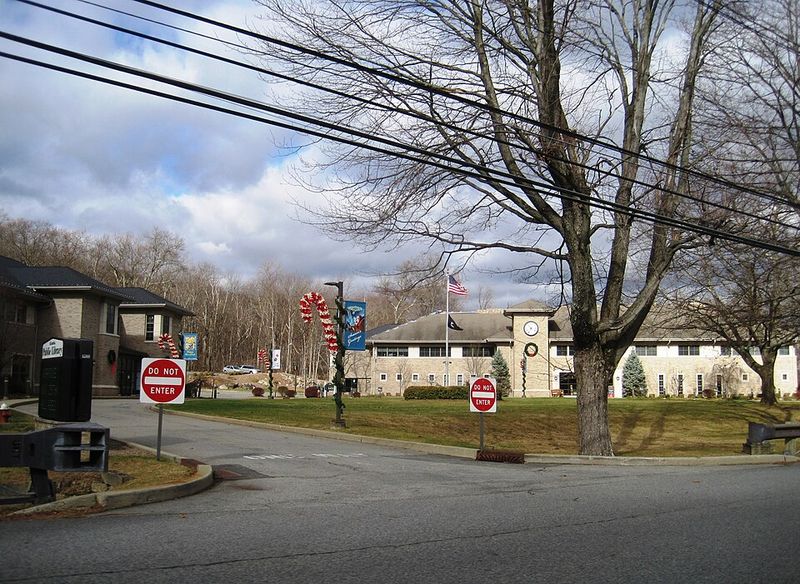
The name Smoke Rise carries a poetic weight that most people miss entirely. It comes from a Pequannock Native American term for the mountainous area where mists rise at sunset.
Kinney adopted it as the name for his large summer cottage on the estate, and the name eventually transferred to the gated community that now occupies the land.
Standing near those hills at dusk, it becomes easy to picture exactly why the name made sense to the people who lived there first. The mist genuinely does rise from the forested ridges in a way that feels almost theatrical.
Nature doing its own quiet storytelling.
After Morris Kinney passed away in 1945, the estate transferred to John Talbot Sr., who developed it into the Smoke Rise community.
The development preserved much of the original landscape, including the chapel and the lake, which means the atmosphere Kinney loved so much still exists in recognizable form today.
That continuity between past and present is rare and genuinely worth appreciating.
The Food Scene That Matches the Charm of the Landscape
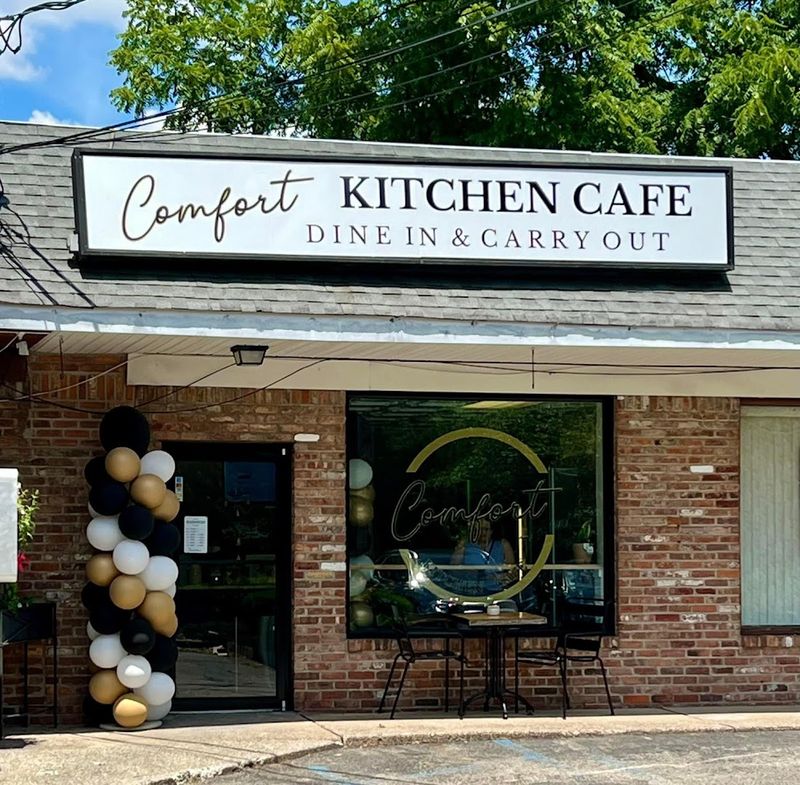
Kinnelon sits in a part of Morris County where the food culture feels personal rather than mass-produced. Small restaurants and local spots tend to reflect the community’s character, which here means unpretentious quality with a genuine sense of place.
You are not going to find generic chain energy dominating every corner.
The surrounding area rewards explorers who prefer a meal that feels earned. After spending time near the lake or exploring the historic landscape, settling into a local spot with something warm and satisfying feels exactly right.
The food becomes part of the experience rather than just fuel.
Morris County in general has a strong tradition of farm-to-table thinking, and that ethos shows up in the kitchens near Kinnelon. Fresh ingredients, thoughtful preparation, and portions that respect the appetite of someone who has spent the day outdoors.
It is the kind of eating experience that reminds you food is always better when the setting earns it. Kinnelon’s landscape earns it without even trying.
Lake Kinnelon and the Quiet Power of Still Water
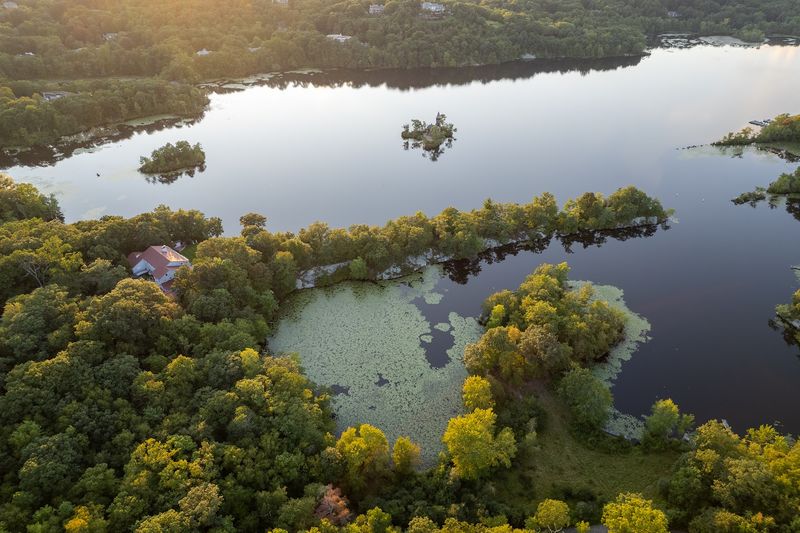
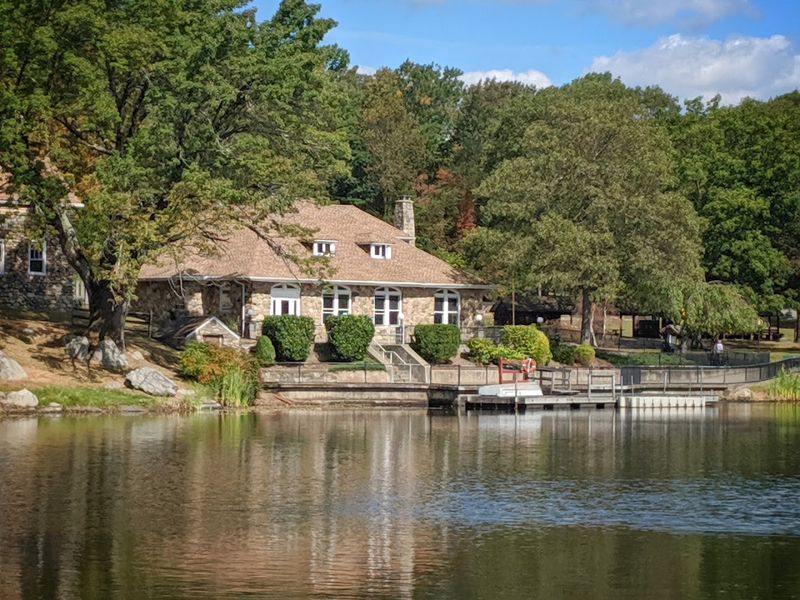
Lake Kinnelon is the kind of water that makes you slow down without even meaning to. It sits at the heart of the Smoke Rise community, framed by forested hillsides that feel untouched by the pace of the modern world.
The chapel island sits within it like a small architectural daydream.
For a town just 33 miles from New York City, the contrast is almost comedic. You half-expect to hear traffic, and instead you get birdsong and the gentle movement of water.
That kind of stillness is genuinely hard to find this close to a major metropolitan area.
The lake has shaped the identity of Kinnelon in ways that go beyond scenery. It anchored Kinney’s original vision for the estate, gave Tiffany a dramatic setting for his chapel work, and continues to define the mood of the community today.
Some places are built around their geography. Kinnelon is one of them, and the lake is the quiet reason why everything here feels a little more intentional.
The Broader Context That Makes Kinnelon Shine
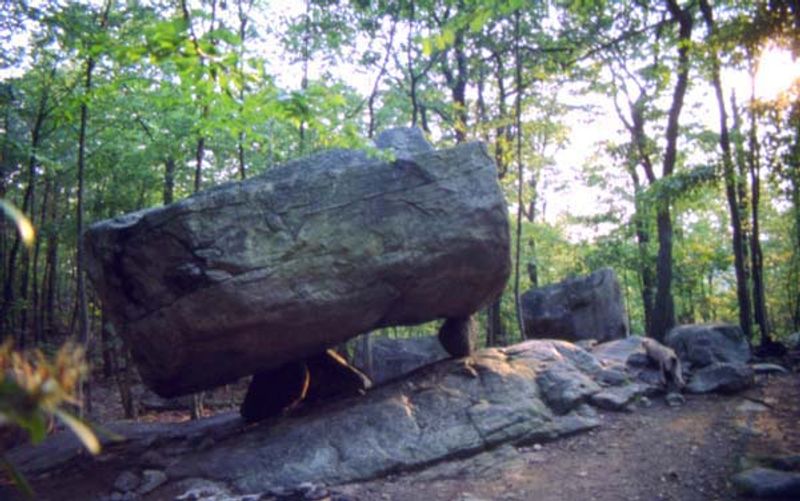
Morris County has one of the richest historical landscapes in New Jersey, and Kinnelon fits naturally into that tradition.
The county is filled with preserved estates, Revolutionary War sites, and communities that managed to hold onto their character even as development pushed outward from New York City over the decades.
Kinnelon occupies the northwestern edge of the county, which gives it a slightly more rural feel than towns closer to major highways. The forested terrain here is not just backdrop.
It is the reason the borough exists in the form it does, because Kinney chose this specific landscape for his estate.
Exploring Morris County with Kinnelon as a base opens up a genuinely rewarding travel loop. Historic sites, scenic drives, farm stands, and local eateries create a full itinerary without ever feeling rushed.
The county rewards slow travel in a way that fast itineraries miss completely. Kinnelon sits at the quieter, more contemplative end of that spectrum, which is exactly what makes it worth the detour from the more well-known destinations nearby.
The Architecture of the Estate Era Still Visible Today
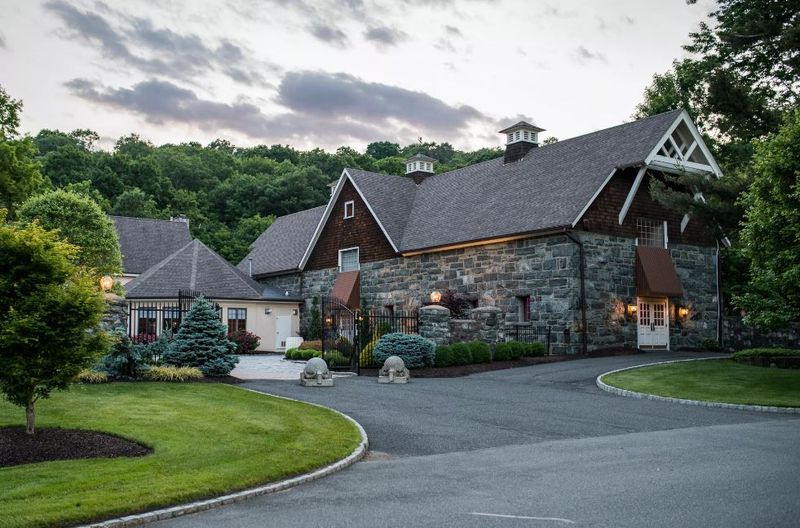
Kinney did not just acquire land. He built on it with ambition and aesthetic intention.
The estate architecture from his era reflected the Gilded Age preference for grand, European-influenced design, and traces of that sensibility survive in the structures and community layout that remain today.
Walking through Smoke Rise, you get the sense that the original vision for the place was never entirely abandoned. The roads curve in ways that suggest they were designed for carriage travel through a carefully considered landscape.
The mature trees are not accidents. They are the legacy of deliberate planting decisions made over a century ago.
That kind of layered history gives a place texture that newer developments simply cannot replicate. Every stone wall and mature oak feels like a document.
The chapel is the most dramatic example, but the broader estate landscape tells its own quieter version of the same story. For anyone who appreciates architecture as a form of autobiography, Kinnelon offers a genuinely compelling read from start to finish.
Seasonal Eating Near Kinnelon

The Morris County area surrounding Kinnelon comes alive seasonally in ways that food lovers genuinely appreciate.
Autumn brings farm stands loaded with local produce, apple varieties you will not find in any supermarket, and the kind of honest, straightforward flavors that remind you why seasonal eating matters.
Spring and summer shift the focus toward fresh greens, local berries, and outdoor dining that takes advantage of the landscape.
The region has a long agricultural tradition that predates its suburban development, and pockets of that tradition still survive in farms and markets scattered throughout the hills.
For a traveler treating Kinnelon as a destination rather than a drive-through, building meals around local sourcing adds a dimension that guidebooks rarely capture. A wedge of sharp local cheese, a jar of wildflower honey, fresh bread from a small bakery nearby.
These small edible souvenirs carry the memory of a place in ways that photographs sometimes cannot. Kinnelon and its surroundings offer exactly this kind of quietly satisfying, deeply local food experience.
Why Kinnelon Deserves a Spot on Your New Jersey Travel List
Most people drive past Kinnelon without knowing what it holds. That is honestly part of its appeal.
There is no oversaturated social media presence, no tourist infrastructure pushing you toward the highlights. The place simply exists, quietly confident in its own remarkable story.
A medieval chapel designed by Tiffany, sitting on a private island, in a borough named after a 19th-century industrialist, just over 30 miles from Manhattan. That sentence alone should be enough to reroute anyone’s weekend plans.
The food nearby, the landscape, the layered history all combine into something that feels genuinely earned.
Kinnelon rewards the kind of traveler who reads historical markers and takes the slower road on purpose. It is a place where curiosity is the best navigation tool.
Whether you are drawn by the chapel, the lake, the farm stands, or simply the pleasure of discovering a place most people overlook, Kinnelon delivers something real.
Address: Kinnelon, New Jersey 07405.
