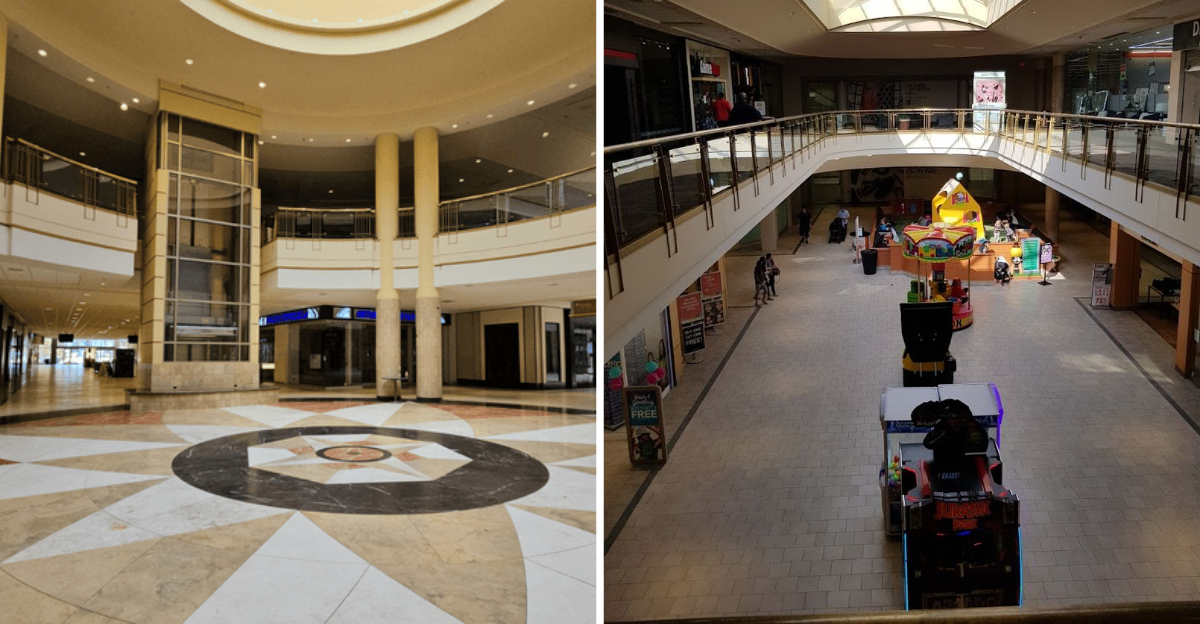
The first thing you notice is the quiet. The kind of silence that echoes off empty storefronts and makes footsteps sound louder than they should.
This New Jersey mall opened with grand ambitions, a once-thriving hub that drew crowds from all directions.
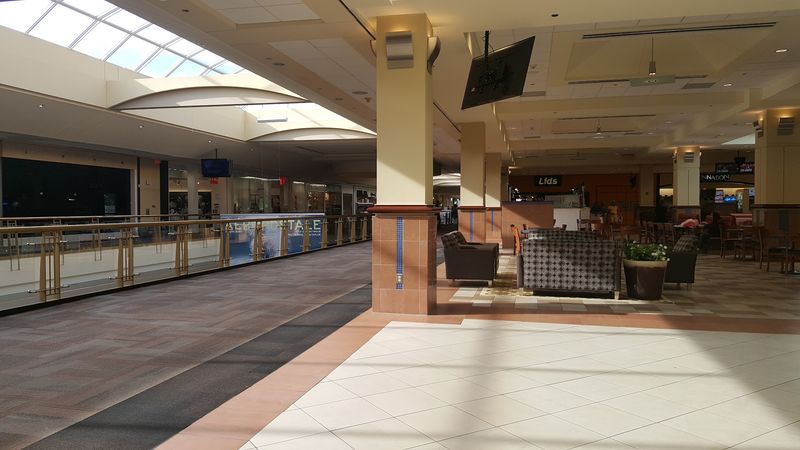
Today, metal gates cover most entrances and a single food court counter waits patiently for customers who rarely come.
The remaining stores are slowly packing up, leaving behind a building that feels more like a museum of retail history than a shopping destination.
It is a strange, haunting place that tells the story of how even the busiest spaces can be left behind.
New Jersey has watched this once-thriving hub fade into a quiet relic.
A First Impression That Stops You Cold
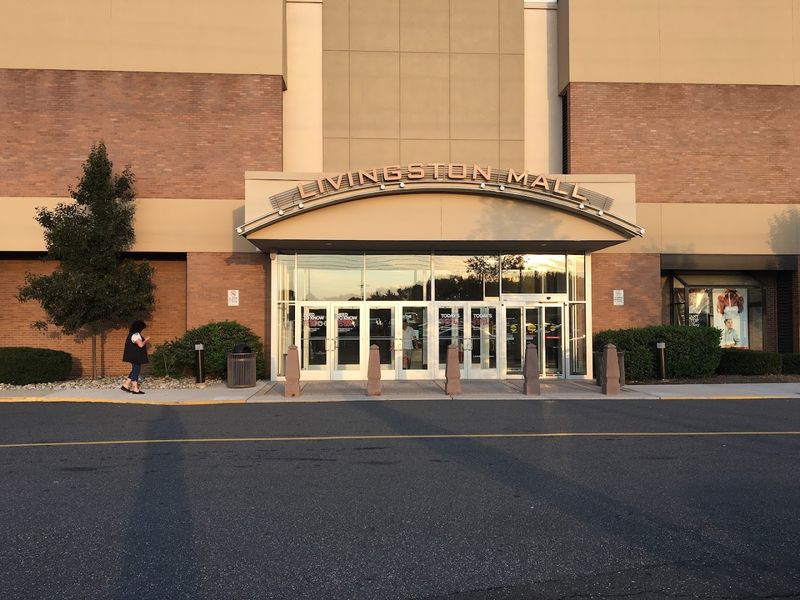
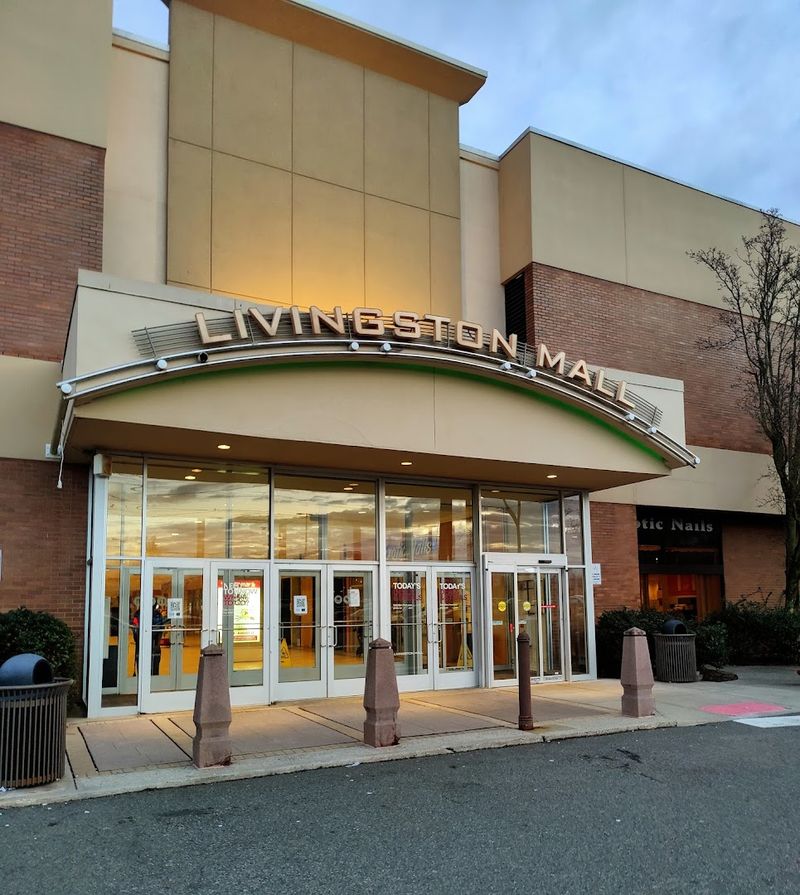
Pulling into the parking lot at Livingston Mall is the kind of moment that makes you double-check if you have the right address.
The lot is massive and mostly empty, with cracked asphalt and a silence that feels a little too complete for a Tuesday afternoon.
It genuinely looks like the set of a post-apocalyptic film, except the lights inside are still on.
Once you step through the entrance, the scale of the emptiness hits you immediately. Long stretches of corridor open up on both sides, lined with darkened storefronts and metal security gates pulled shut.
A few hand-lettered signs cling to windows, leftover from sales that ended months ago.
What makes it fascinating rather than simply sad is the detail still frozen in place. Old directory boards, faded mall maps, and dusty display cases all remain standing like exhibits in a museum nobody curated.
The whole first impression is a strange mix of nostalgia and disbelief that lands somewhere between eerie and genuinely memorable.
The Food Court Situation Upstairs
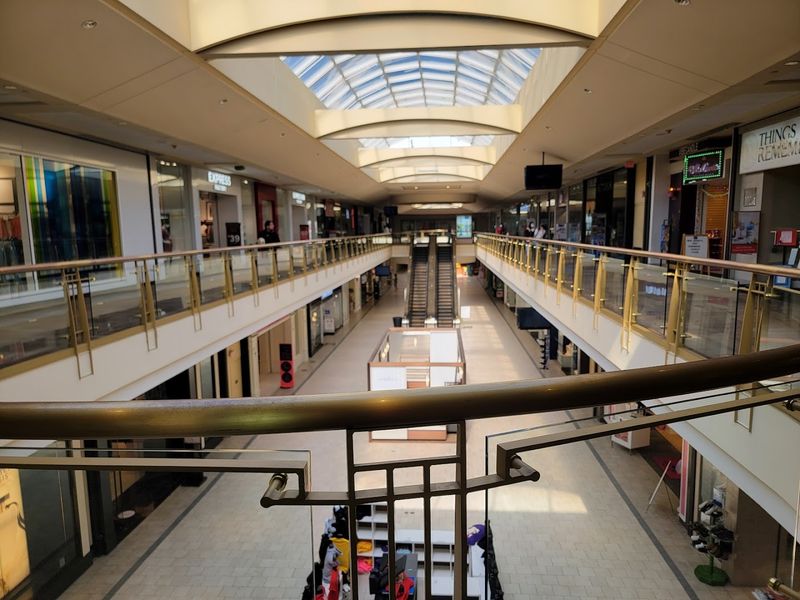
Food courts are usually the loudest, most chaotic part of any mall. At Livingston Mall, the second floor food court rewrites that expectation entirely.
Most of the vendor stalls are shuttered, with menus still posted above counters that no longer serve anything.
The seating area is still fully set up, rows of chairs and tables arranged as if expecting a lunch rush that stopped coming years ago. Sitting there, you get the surreal feeling of being in a cafeteria on a holiday when the whole building forgot to close.
The quiet is remarkable in its completeness.
What did survive the exodus was a handful of spots on the lower level, including Popeyes, which became something of a beacon for anyone still making the trip out. Master Wok was also holding on for a stretch, giving the food court a faint heartbeat.
Finding a hot meal in a space this quiet feels oddly triumphant, like discovering a working vending machine at the end of the world.
Macy’s Final Chapter as an Anchor Store
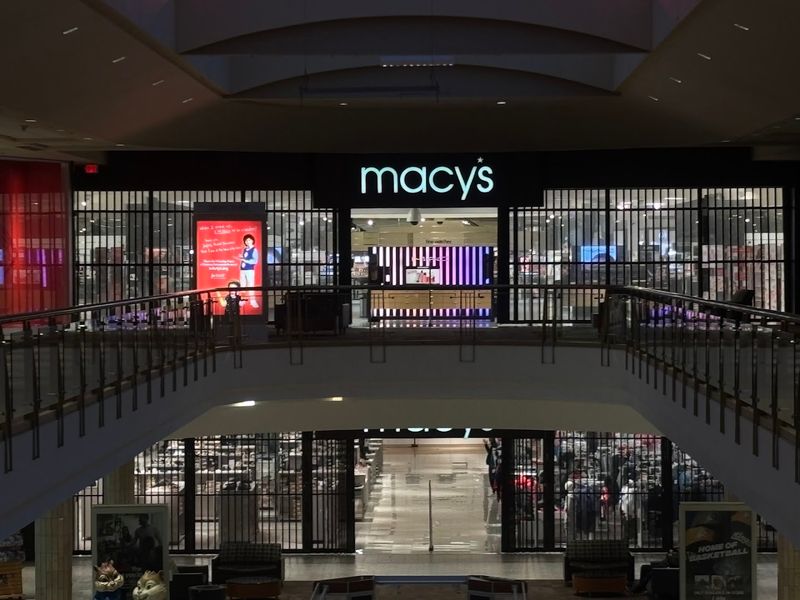
For decades, Macy’s served as one of the anchors that gave Livingston Mall its shape and purpose. Department stores like this one were the reason people drove out, planned their Saturdays around, and left with bags full of things they did not know they needed.
Its presence meant the mall was still a mall in the traditional sense.
When Macy’s finally closed in April 2026, it marked a turning point that felt less like a business decision and more like a farewell ceremony. The clearance sales in the weeks before drew curious visitors who came as much to say goodbye as to shop.
Empty shelves and relocated fixtures told the story of a long wind-down that had been coming for some time.
Walking through those final weeks, the sheer size of the Macy’s space became obvious in a way it never was when full. High ceilings, wide aisles, and fitting rooms still intact gave the impression of a grand hall being quietly decommissioned.
Its closure left a gap in the mall that no amount of creative redevelopment talk could immediately fill.
The Bookstore That Became a Lifeline
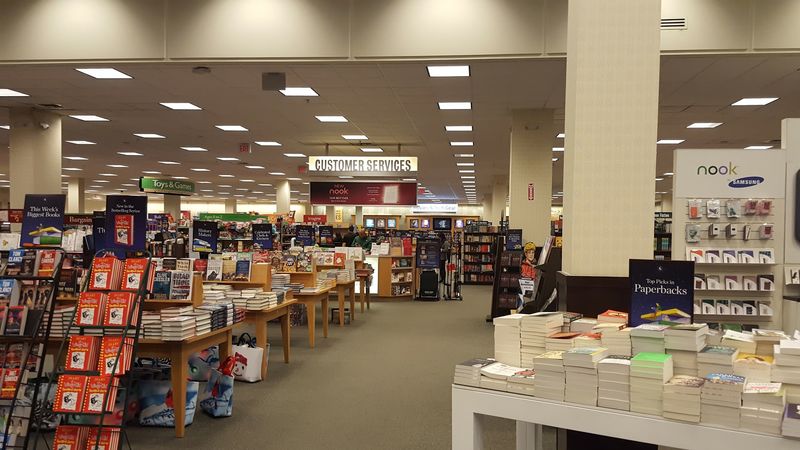
Ask anyone who still had a reason to visit Livingston Mall in its final stretch, and Barnes and Noble comes up almost immediately. The bookstore was more than just a retail tenant.
It became the single most compelling reason to make the drive, and for many regulars, it was the entire destination.
Stepping inside felt like crossing into a different world. Warm lighting, organized shelves, the smell of new books, and the quiet hum of people actually browsing created an atmosphere completely disconnected from the hollow corridors just outside.
It was a pocket of normalcy tucked inside something much stranger.
The announcement that Barnes and Noble would relocate by July 15, 2026, and open a new standalone location in August 2026 brought mixed feelings. Relief that the store would survive, and a genuine sense of loss for what its departure meant for the mall.
It was the last functioning anchor, the last reason for casual foot traffic, and its exit essentially closed the final chapter on Livingston Mall as a shopping destination.
The Smaller Shops That Held On
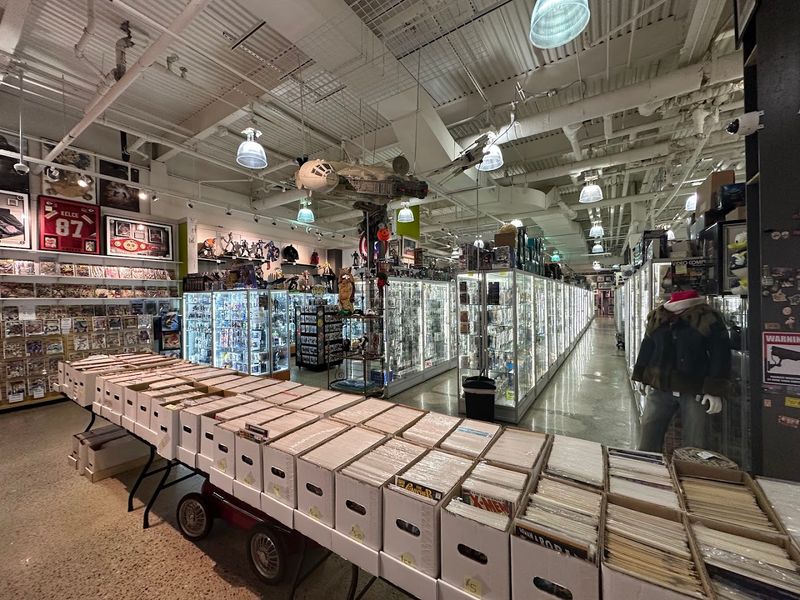
Beyond the big anchors, a small cluster of independent and chain stores kept showing up to work even as the mall emptied around them.
Aeropostale, Claire’s, a jewelry store, and a few clothing boutiques maintained their hours and their displays with a quiet determination that was genuinely admirable.
Shops like Quails, a men’s suit store, and a couple of collectible shops gave the remaining retail floor a personality that felt more curated than commercial. Browsing through those spaces had a different energy than typical mall shopping.
Less pressure, more conversation, and a sense that the people working there actually cared about what they were selling.
There was also Nai the Tea Lady, a tea spot that brought a warm, handcrafted feel to the otherwise sparse offerings. Whether open or closed on any given visit depended on the day, but its presence added something genuinely charming to the mix.
These smaller tenants created a version of community inside a building that had largely stopped functioning as one, and that made them worth seeking out on any visit.
The Roller Skating Rink That Surprised Everyone
Hidden inside the mall, a roller skating rink became one of the more unexpected bright spots of the Livingston Mall experience. Open skate sessions ran by the hour, and the floors were described as remarkably smooth, beginner-friendly, and genuinely fun to use.
For a mall that had lost so much, a working skating rink felt like a gift nobody expected to find.
The staff there earned real appreciation for being attentive and helpful, especially toward first-time skaters who needed a little guidance before finding their footing. Skate rentals were available on-site, though plenty of regulars brought their own gear.
The rink operated with the kind of energy that the rest of the mall desperately lacked.
Finding a skating rink tucked inside a building that had become better known for vacancy than vitality was the kind of detail that made a visit genuinely worthwhile. It reframed the whole trip from a sad tour of closed stores into something that had actual joy built into it.
That rink stood as proof that not every corner of Livingston Mall had given up on being fun.
The Architecture Frozen in Time
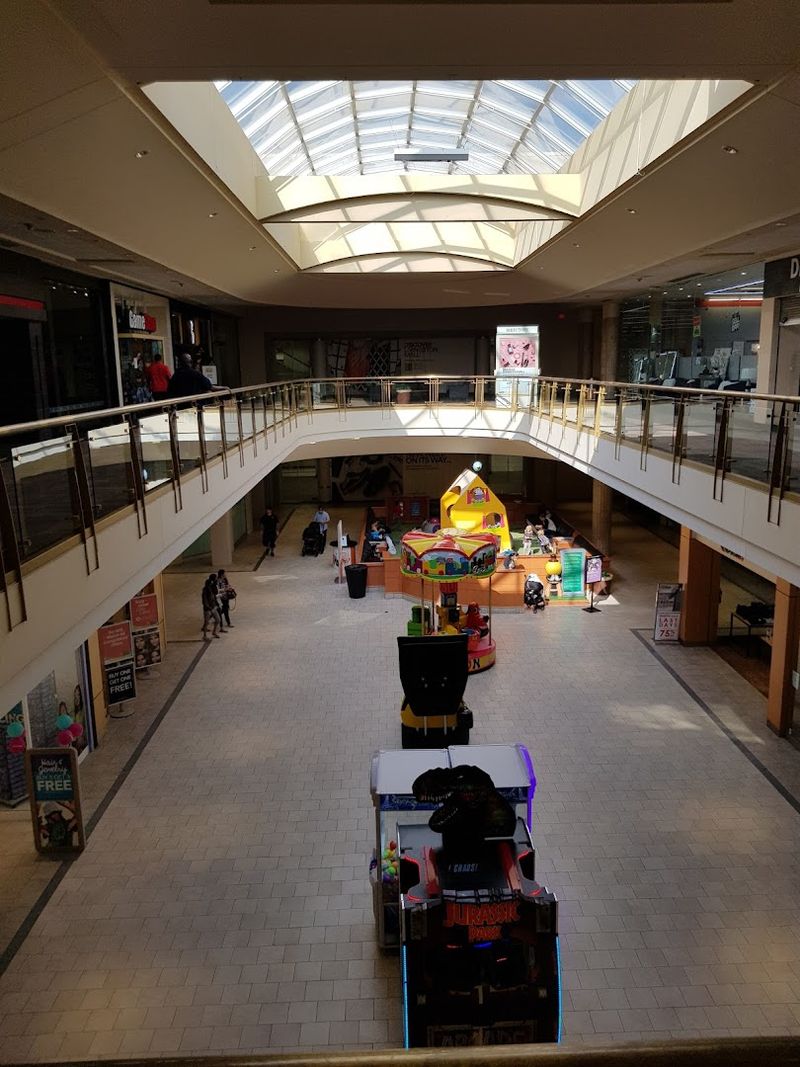
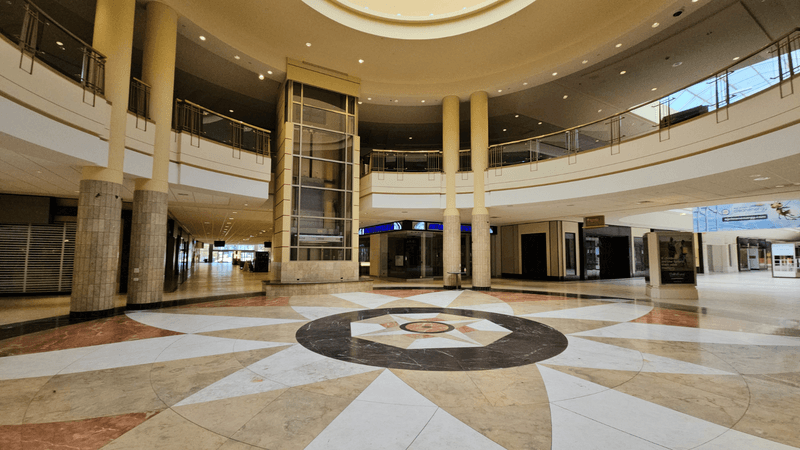
Opened in 1972, Livingston Mall carries the architectural DNA of an era when shopping centers were designed to feel grand and permanent.
Wide corridors, high ceilings, and the kind of tile work that screams mid-century retail ambition are all still visible beneath the current state of things.
The bones of the building are genuinely impressive.
Walking through, it is easy to imagine what this place looked and sounded like at its peak. The layout was built for crowds, for families pushing strollers, for teenagers hanging out after school, for Saturday afternoon errands that turned into two-hour adventures.
That scale makes the emptiness even more noticeable now.
Vintage signage, original fixtures, and design elements untouched since the mall’s earlier decades give the space an unintentional museum quality.
Urban explorers and faded mall enthusiasts have taken notice, and local police have had to remind people that the building is still technically private property.
The architecture tells a story that no exhibit could improve on, and simply walking through it feels like reading a chapter of New Jersey retail history that nobody got around to archiving.
Redevelopment Plans and What Comes Next
Livingston Township has not been sitting still while the mall wound down. In October 2024, the township council officially designated the entire mall property as an Area in Need of Redevelopment, a legal step that opens the door to eminent domain and structured planning.
That decision set a serious and hopeful tone for what the 59-acre site could eventually become.
A redevelopment plan for the 16-acre former Sears site has already been approved, authorizing 376 housing units that include both apartments and townhouses.
Twenty percent of those units are designated as affordable housing, which adds a layer of community focus to what could otherwise be a purely commercial transformation.
That is a meaningful commitment for a township navigating a complicated redevelopment conversation.
The remaining 43 acres are still being shaped by community input, with aerial renderings already created based on early feedback. The township has been actively engaging residents to gather ideas about what should replace the mall beyond the housing component.
Whatever comes next, the process feels grounded and intentional, which is exactly the kind of energy a site this significant deserves as it moves into its next chapter.
Why Fading Mall Tourism Is Actually Worth Your Time
There is a growing community of people who specifically seek out places like Livingston Mall, not out of morbid curiosity, but out of a genuine appreciation for what these spaces represent.
Faded mall tourism has become a real thing, with enthusiasts documenting everything from faded signage to the specific quality of silence that only an empty retail space can produce.
Visiting Livingston Mall with that mindset transforms the experience completely. Instead of feeling disappointed by what is missing, you start paying attention to what remains.
The layout, the ghost of the directory board, the food court chairs still arranged for a crowd that stopped coming years ago. Each detail becomes a small story worth sitting with.
The mall officially closed on February 10, 2026, following a burst pipe, with notices posted at the entrances marking it as temporarily closed.
That chapter may be finished, but the conversations it sparked about community, redevelopment, and the life cycle of American retail are very much ongoing.
Livingston Mall, for all its vacancy, turned out to be one of the most thought-provoking stops in New Jersey.
Address: 112 Eisenhower Pkwy, Livingston, NJ
