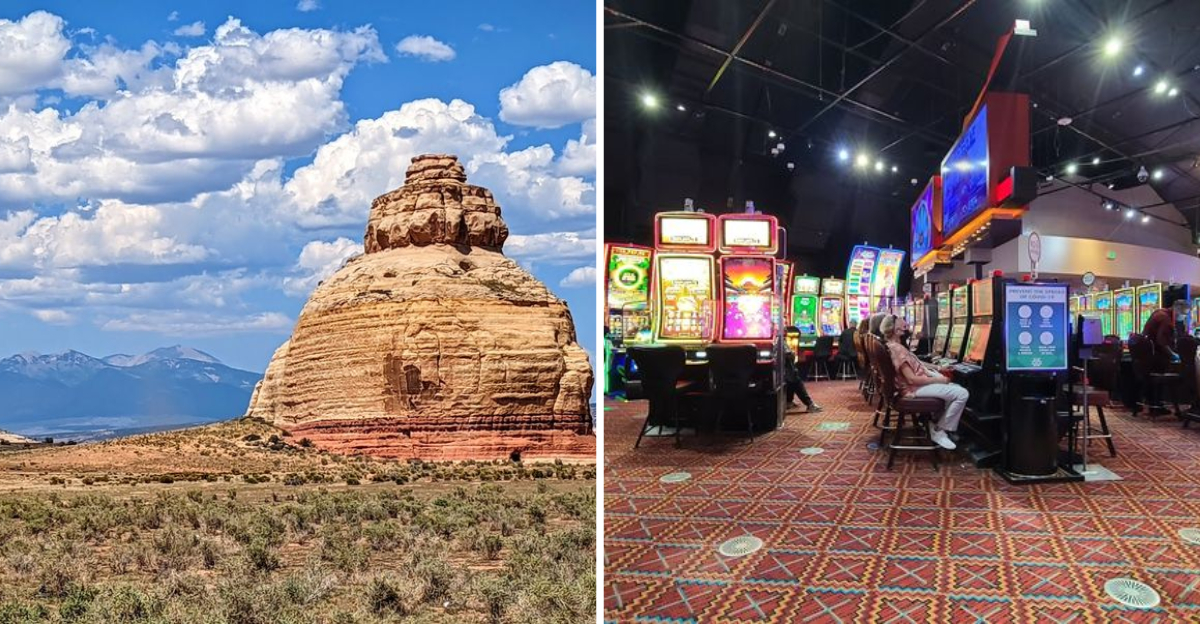
The lights are bright. The slot machines chime.
People laugh and drink and chase wins. But underneath all that noise, something else lingers.
This casino in New Mexico was built on land that local tribes consider sacred. Burial ground, some say.
Ceremonial land, others insist. And from the day it opened, strange things have happened. Equipment fails for no reason.
Workers report cold spots in the middle of summer. Guests have walked out in the middle of the night claiming they felt something brush past them.
I talked to an employee who shrugged and said “the spirits are not happy.” He was not joking. You can feel it if you pay attention.
Even over the sound of jackpots.
The Land Beneath Fire Rock Navajo Casino
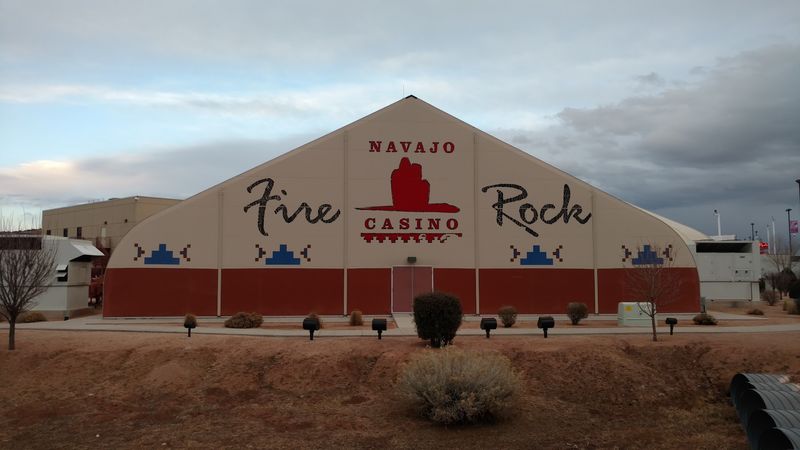
Red rock country has a way of humbling you fast. The terrain surrounding Fire Rock Navajo Casino near Church Rock, New Mexico is not just scenery.
It is ancestral Navajo land that has been considered sacred for generations, holding stories that stretch back far longer than any modern structure built upon it.
The Navajo people have always understood land as a living relationship, not a resource to be managed. Certain areas carry what elders describe as spiritual energy, places where ceremonies were held, where ancestors walked, and where the boundary between the physical and spiritual worlds felt thin.
When development began on what would become Fire Rock, community members raised concerns about disturbing that connection. The ground in this part of the Navajo Nation near the Gallup corridor has seen enormous disruption over the decades, from mining operations to infrastructure projects.
Each one left a mark.
Visitors who arrive expecting just another casino often feel something unexpected here. The landscape itself seems to push back a little.
Whether you chalk that up to atmosphere, geology, or something older and harder to name, the feeling is real enough to make you pause before you walk through the front door.
Church Rock and Its Complicated History
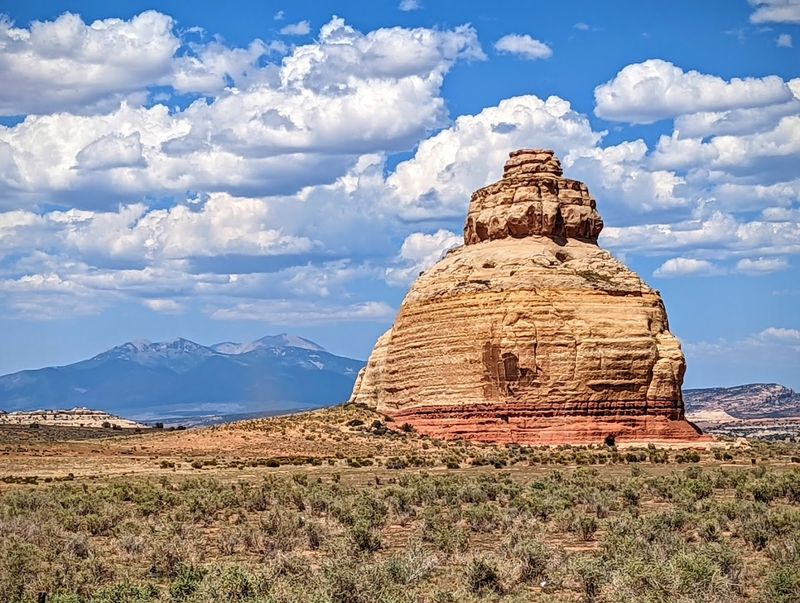
Church Rock is one of those place names that sounds peaceful until you learn its full story. The small community sits just east of Gallup, New Mexico, and is perhaps most known outside the Navajo Nation for the 1979 Church Rock uranium mill tailings spill, one of the largest releases of radioactive material in United States history.
That disaster contaminated the Puerco River and affected Navajo families for years afterward. The land absorbed something that day that could not simply be cleaned up and forgotten.
Many Navajo residents believe the environmental wounds of Church Rock are inseparable from its spiritual wounds.
Building a major entertainment venue in this specific area was always going to carry symbolic weight. The decision to place a casino here was not made lightly by the Navajo Nation, which operates Fire Rock as part of its broader economic development strategy.
Jobs, revenue, and community investment were all part of the calculation.
But the history underneath that calculation is layered and complicated. The elders who grew up near Church Rock carry memories of what this land was before the roads widened and the neon lights arrived.
That living memory does not simply disappear when a parking lot gets paved over it.
Navajo Spirituality and the Concept of Sacred Space
To understand why spirits might be unhappy, you first need to understand what sacred space means within Navajo tradition. It is not a metaphor or a poetic expression.
Sacred land is understood as a living participant in Navajo life, connected to the Holy People, to ceremony, and to the ongoing balance called hozho.
Hozho is often translated as harmony, balance, or beauty, but those English words fall short. It describes the right relationship between all things, human, natural, and spiritual.
When that balance is disrupted, whether by environmental damage or careless development, the consequences are felt across generations.
Navajo spiritual leaders known as hataali, or medicine people, hold knowledge about which sites carry particular power. Some locations are tied to specific ceremonies.
Others mark places where significant events in Navajo oral history unfolded. Disturbing those places is not just culturally insensitive.
It is believed to invite genuine spiritual consequence.
I am not here to tell you what to believe about any of that. What I can tell you is that when you spend time around people who hold this worldview, the weight of it is undeniable.
The land near Church Rock has absorbed a lot of disruption. Whether the spirits are unhappy or not, the people certainly have reason to be.
What Fire Rock Navajo Casino Actually Offers
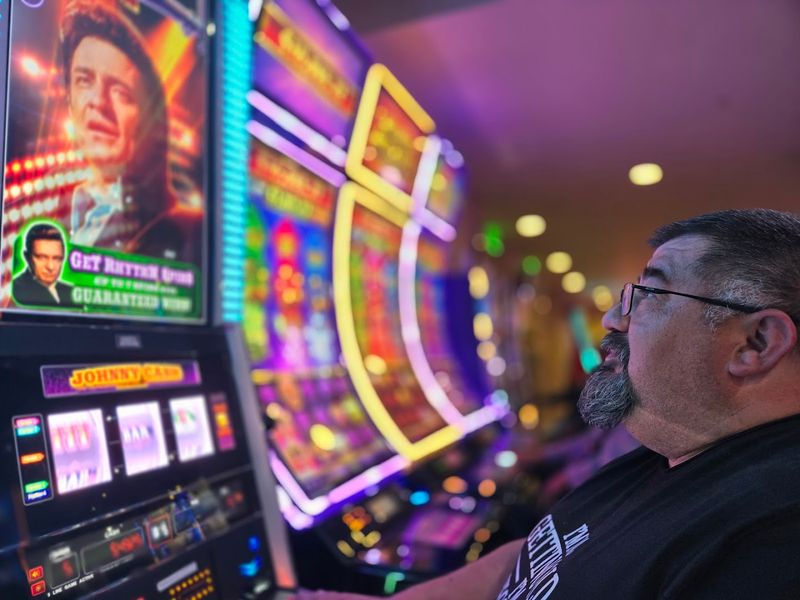
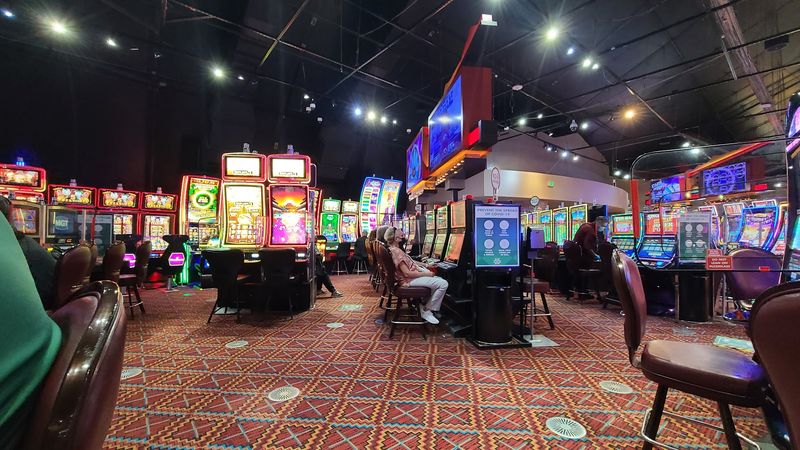
Setting aside the deeper layers for a moment, Fire Rock Navajo Casino is a fully functioning entertainment venue that draws visitors from Gallup and beyond. The gaming floor is spacious and well-maintained, featuring hundreds of slot machines along with table games that keep things lively on weekend evenings.
The casino is operated by the Navajo Nation Gaming Enterprise, which manages several properties across the region. Fire Rock sits right off Historic Highway 66, making it easily accessible for travelers passing through the Gallup corridor.
The location itself is part of its appeal, surrounded by that signature New Mexico sky that turns extraordinary colors at sunset.
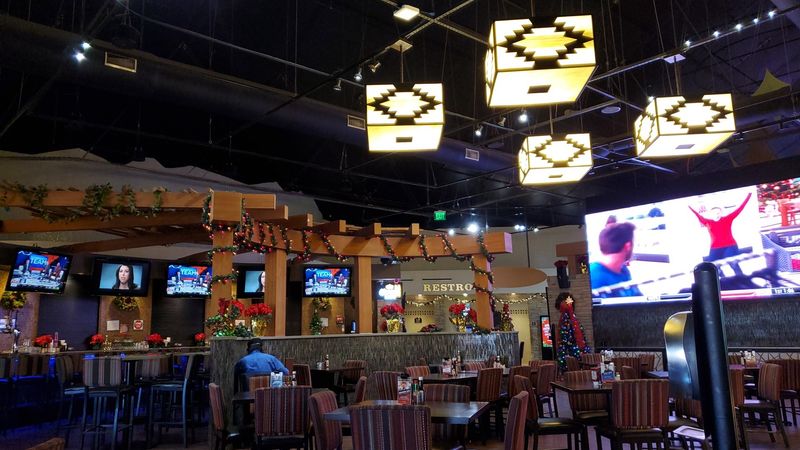
Inside, the design incorporates elements of Navajo artistry, with geometric patterns and earthy tones that nod to the culture of the Nation. It does not feel generic the way some regional casinos do.
There is an effort to root the space in its specific place and people, even if the broader question of that place carries some weight.
The facility also includes dining options and event space, giving it more of a community hub feel than a purely transactional gambling stop. For many Navajo Nation members, this casino represents economic opportunity in an area that has historically lacked it.
That part of the story matters too.
Stories That Circulate Among Staff and Visitors
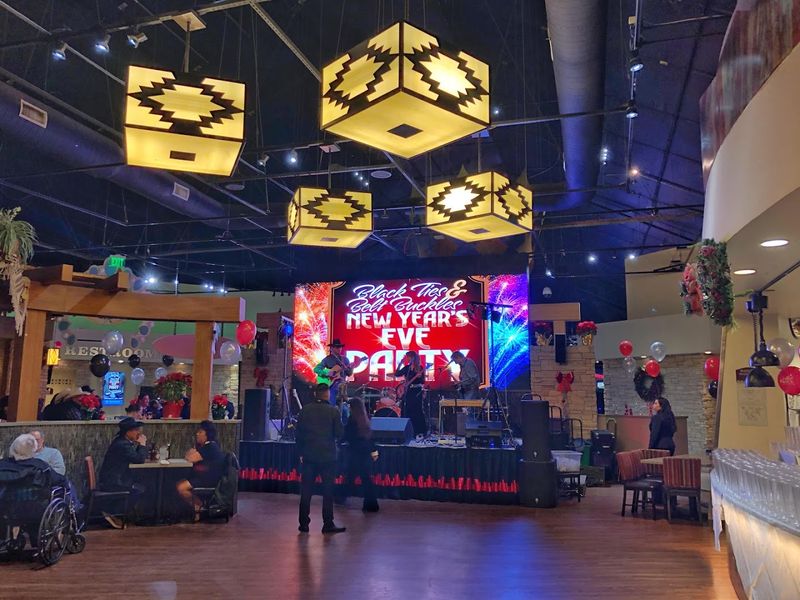
Every place with a complicated history eventually grows its own collection of unexplained stories. Fire Rock is no exception.
Among staff and longtime visitors, there are accounts that get passed around quietly, the kind of stories people tell after hours when the gaming floor thins out and the desert outside gets very dark and very still.
Some involve lights flickering in areas of the building that have no electrical explanation. Others describe an unsettling feeling in certain corners of the property, a sense of being watched or accompanied by something that is not visible.
A few involve sounds that do not match any obvious source.
I want to be careful here, because it would be irresponsible to invent specifics or put words in anyone’s mouth. What I can say is that places with the kind of history Church Rock carries tend to generate these kinds of narratives organically.
People who spend a lot of time there pick up on something.
Whether you interpret those experiences through a spiritual lens or a psychological one, they reflect a real tension between the land’s past and its present use. That tension does not resolve itself just because a building went up.
Sometimes it finds ways to make itself known in the quiet hours.
The Broader Debate Over Tribal Gaming on Sacred Land
The question of whether to build casinos on tribal land is never simple, and Fire Rock sits squarely inside a debate that plays out across Native America. Economic sovereignty is real and important.
Tribal nations have the legal right to develop their land, and gaming revenue has funded schools, healthcare, and infrastructure in communities that were historically denied those resources.
At the same time, not every tribal member agrees on where and how that development should happen. Within the Navajo Nation, as in many Indigenous communities, there are ongoing conversations about balancing economic necessity with cultural and spiritual preservation.
Those conversations are not always comfortable, and they do not always end in consensus.
The Fort Sill Apache situation in New Mexico from 2008 is one example of how layered these disputes can get, with tribal identity, traditional territory, and gaming rights all tangled together. The Fire Rock situation is different in specifics but shares the same underlying tension between progress and preservation.
What makes this debate worth following is that it is not abstract. Real families live near this casino.
Real elders hold knowledge about what this land once was. Real young people are weighing tradition against opportunity every day.
That human dimension is what gives the whole conversation its urgency and its ache.
Visiting Fire Rock With Eyes Wide Open
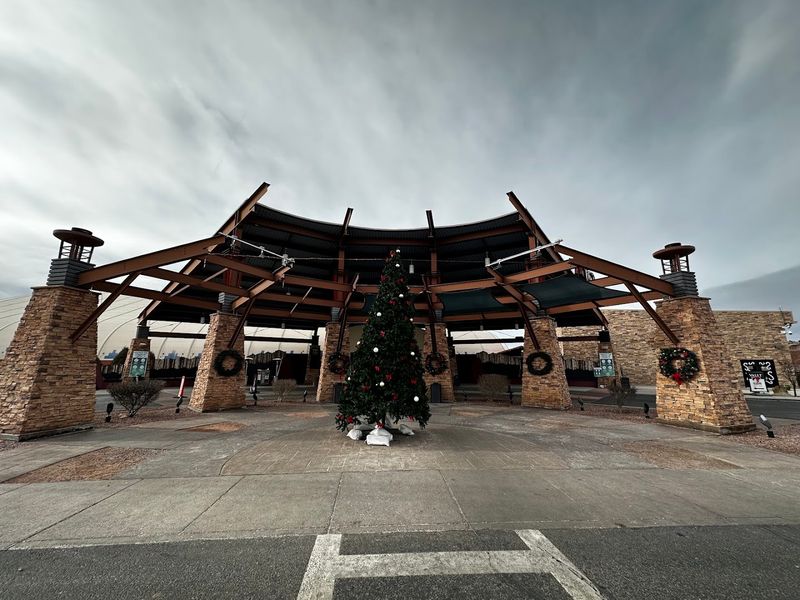
If you are going to visit Fire Rock Navajo Casino, go with some awareness of where you are standing. That does not mean you need to feel guilty or avoid the place.
It means taking a moment to acknowledge that the ground beneath the parking lot has a story that predates the building by centuries.
The drive out on Historic Highway 66 is genuinely beautiful. Red rock formations rise on either side of the road, and the light in the late afternoon does something extraordinary to the color of the land.
Pull over once before you get to the casino. Just look around for a minute.
Inside, the staff are friendly and the atmosphere is relaxed. The Navajo Nation Gaming Enterprise has created a space that functions well as a community and tourism destination.
Enjoying what it offers does not require you to be ignorant of its context.
Responsible travel means holding two things at once, appreciating what a place offers while staying curious about its full story. Fire Rock is a place where those two things sit in particularly close proximity.
The spirits may or may not be unhappy. But the land itself has plenty it could say if you are willing to listen.
Address: 249 Historic Hwy 66, Church Rock, NM 87311
