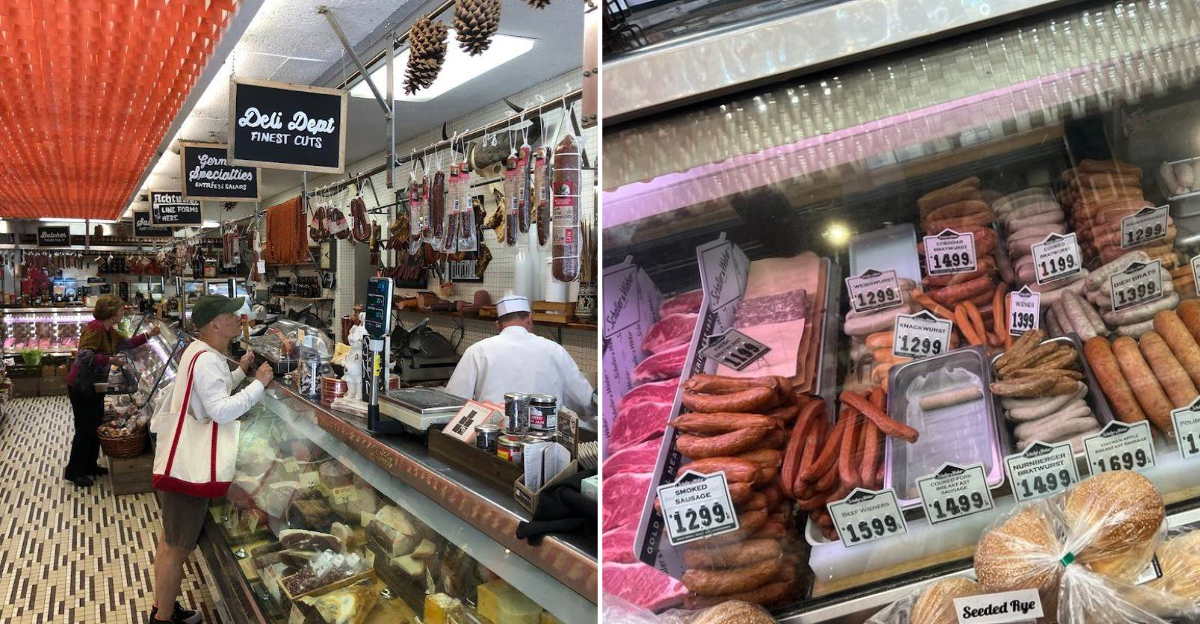
A narrow storefront in New York holds a world of old-world German flavor, a place where the scent of smoked meat and spice has been drifting since the nineteen thirties.
This family-run sausage shop feels like a hidden market transplanted from a Bavarian village, with sawdust on the floor, hanging sausages in the window, and a counter worn smooth from decades of service.
The recipes came from the old country and have never been written down, passed instead from one generation of butchers to the next.
You can watch them slice landjaeger, pack bratwurst in brown paper, and hand?tie links with string, all while answering questions about the dozens of varieties they offer.
Locals line up before Oktoberfest and the holidays, and visitors who stumble upon it often walk out with a bag full of smoked sausages, mustards, and a new appreciation for what real craftsmanship tastes like.
New York hides some true culinary treasures, and this shop is one of its most delicious secrets. Bring cash and an empty cooler.
The Feeling Starts At The Door
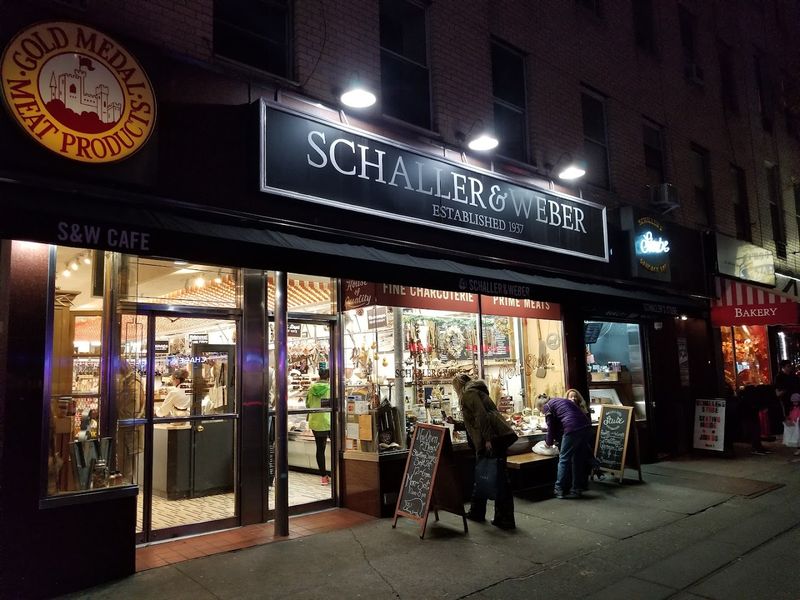
The funny thing is, you can feel this place before you really take it in, because the storefront already hints at a much older New York. It has that steady, unbothered confidence that comes from a business knowing exactly what it is.
Nothing about it seems dressed up for attention, and that is honestly why it pulls you closer.
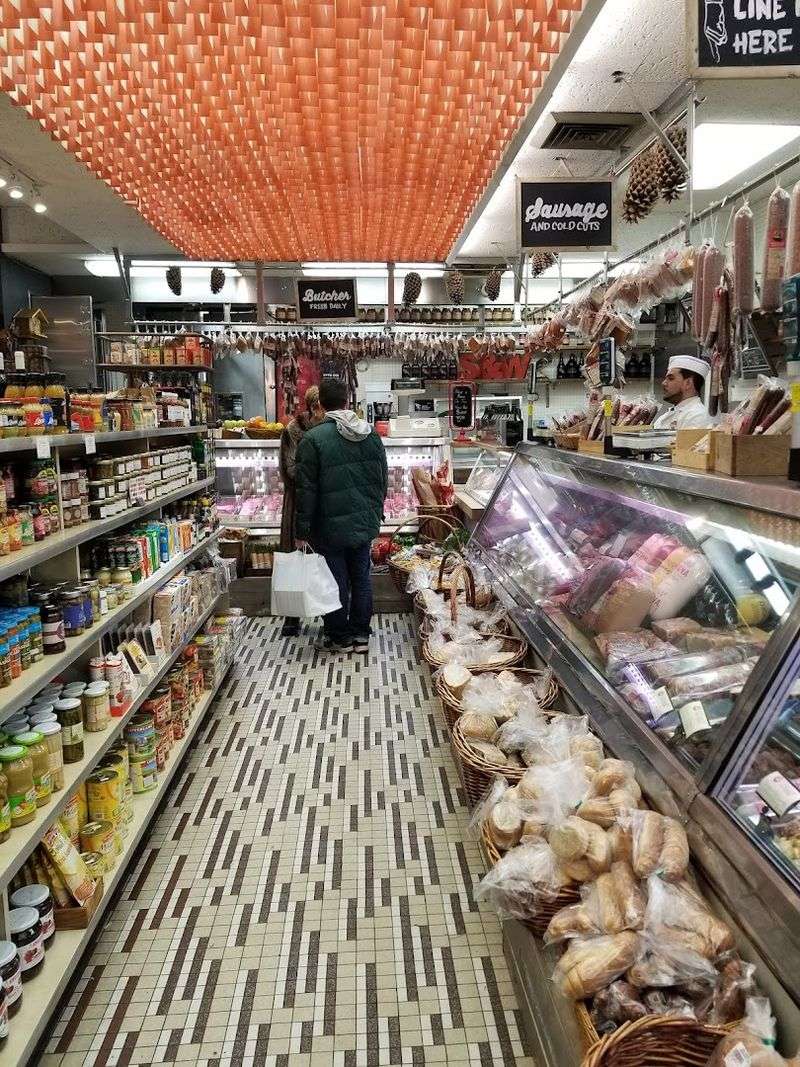
Once you step inside, the mood shifts in a way that feels almost physical, like the city noise got turned down and the room started speaking for itself. The cases, shelves, and little visual cues all work together to suggest a market with roots, not a concept with branding.
You are still in Manhattan, of course, but for a minute the space feels connected to another rhythm entirely.
What stayed with me most was how natural that atmosphere felt, because nobody is trying too hard to sell you nostalgia. The shop simply carries its history in a very lived-in way, and you pick up on that almost immediately.
In a city that changes its face all the time, finding a place in New York that still feels this grounded is surprisingly moving.
Where Yorkville Still Feels Close
Here is what really got me: the shop does not feel dropped into the neighborhood, it feels grown out of it. Schaller & Weber sits at 1654 2nd Ave, New York, NY 10028, right in Yorkville, and that location matters more than you might expect.
This part of Manhattan still carries traces of its German past, and the store makes those traces feel alive instead of decorative.
Walking around the area first helps, because you start noticing how the shop fits the block rather than interrupting it. There is a continuity between the street outside and the counters inside that makes the whole visit feel grounded.
You are not just entering a store, you are stepping into a piece of neighborhood memory that still has practical use.
I think that is why the place lands so well with people who care about cities and their stories. It gives you a small but convincing sense of how immigrant New York once looked and how some of it still survives.
In New York state, places like this matter because they show that heritage can stay ordinary, useful, and fully part of daily life.
The Butcher Counter Does The Talking
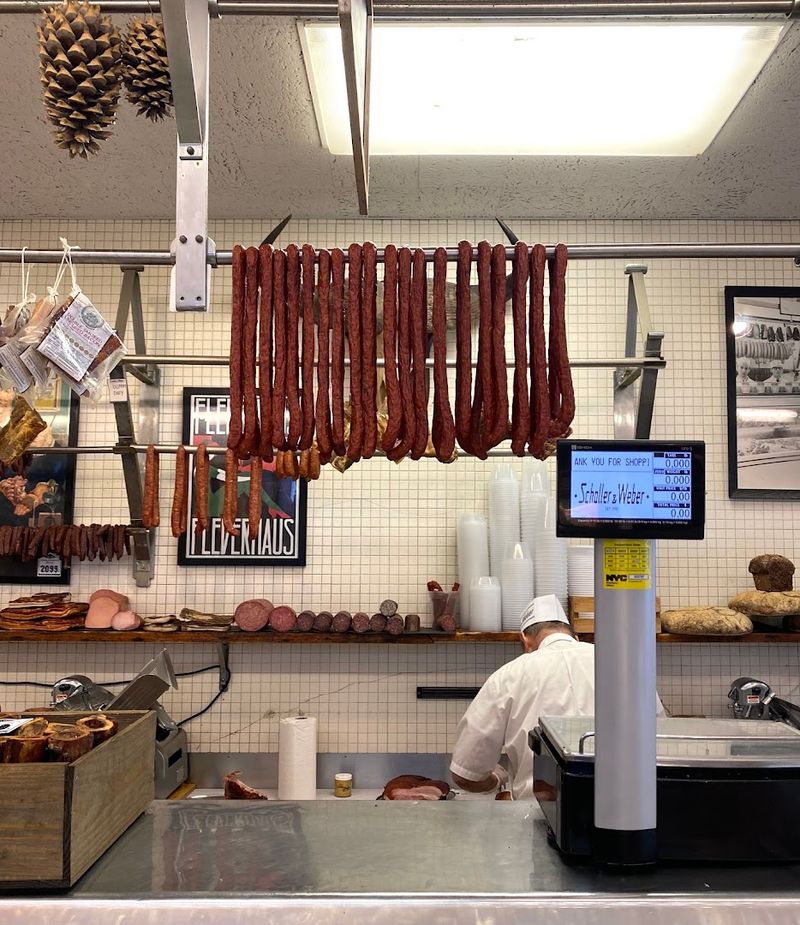
You know that feeling when a counter tells you everything before anyone says a word? That is exactly what happens here, because the butcher case looks serious in the most reassuring way.
It is tidy, abundant, and deeply specific, which makes you trust the place almost on instinct.
Schaller & Weber built its name on sausage and butcher craft, and that legacy still comes through clearly when you stand in front of the display. Nothing feels random or generic, and the selection has the kind of focus that usually comes from long practice.
Even if you are not an expert on German foods, you can sense that these products belong to a tradition with real standards.
What I appreciated most was how the counter invites curiosity without making the whole experience feel intimidating. You can come in knowing exactly what you want, or you can simply look around and let the visual details guide you.
That balance is rare in New York, where specialty spots sometimes feel like they expect you to already know the script, and here the shop seems happy to let the food do the explaining.
The Shelves Make It Feel Like A Market
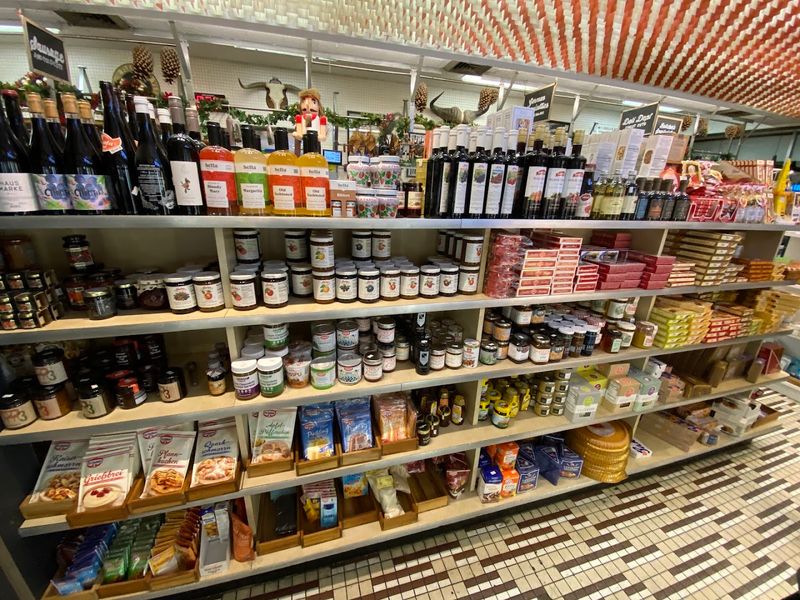
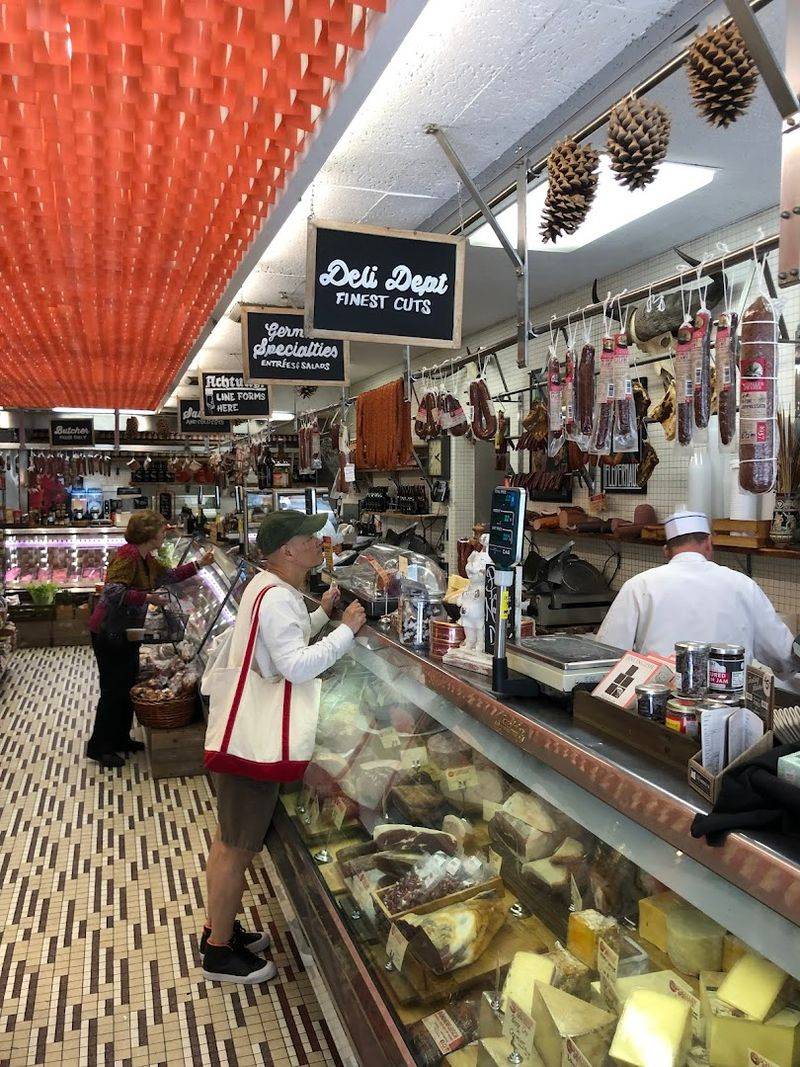
What makes the place especially fun is that it does not stop at the meat case and call it a day. The shelves pull you deeper into the visit, because they are stocked with the kinds of German pantry items that turn a butcher shop into a full market experience.
You start browsing a little casually, then suddenly you are reading labels and imagining your kitchen at home.
There are mustards, sauerkrauts, sweets, and baking staples that give the room a more domestic feeling than you might expect. Instead of functioning like accessories, those goods help tell the story of how people actually cook, snack, and live with these flavors.
That is where the shop begins to feel less like a stop and more like a cultural space with everyday purpose.
I loved that the shelves invite wandering without making the store feel cluttered or theatrical. Everything seems to belong there, which is probably why the market atmosphere comes across as genuine rather than curated.
In New York state, where specialty food shops can sometimes lean hard on novelty, this place feels refreshingly rooted in habit, memory, and the practical pleasures of bringing good things home.
Family History Feels Present
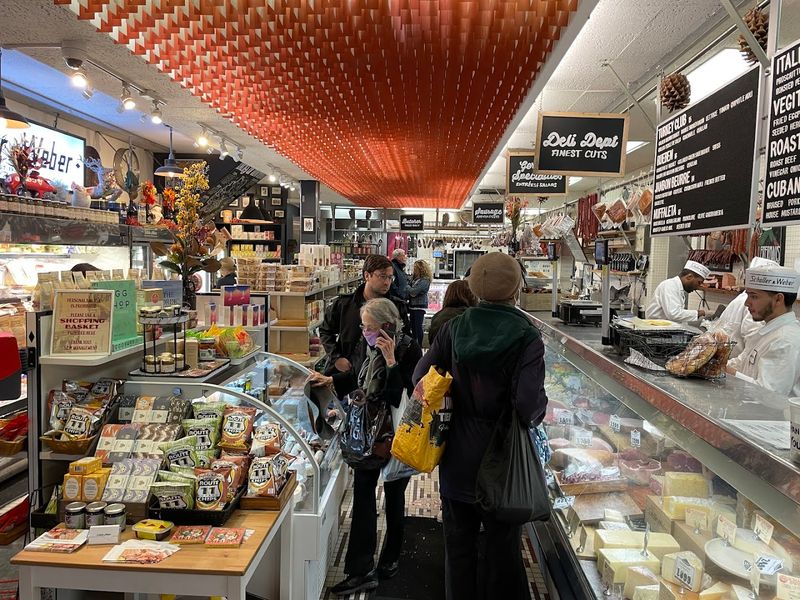
Some places tell you they are family-run, and you nod politely, then move on. Here, that lineage actually feels present in the room, because the whole shop carries a sense of care that seems accumulated rather than manufactured.
You get the impression that the standards were handed down, protected, and kept useful instead of framed as a marketing story.
Ferdinand Schaller founded the business after coming from Stuttgart as an apprentice butcher and sausage maker, and that origin still shapes how the place reads today. The family connection continued through later generations, and that continuity gives the store a human scale I really liked.
It feels less like a brand expanding itself and more like a legacy being looked after day by day.
That distinction matters when you are standing in a city as fast-moving as Manhattan, where businesses often reinvent themselves just to stay visible. Schaller & Weber seems calmer than that, almost as if it understands that consistency can be its own kind of welcome.
I walked away feeling that the family story was not just background information, but part of why the place still feels steady, specific, and emotionally convincing.
Craft Comes Through In The Details
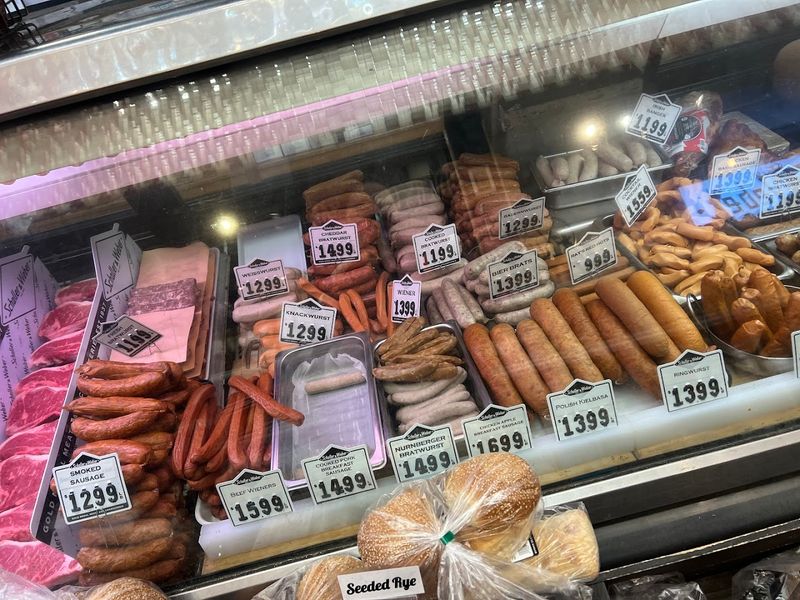
What impressed me more than anything flashy was the sense of precision, because the shop communicates craftsmanship in quiet, almost stubborn ways. The arrangement of the products, the care of the displays, and the focus of the selection all suggest that quality here is a daily habit.
You can feel that someone has paid attention for a very long time.
Schaller & Weber has earned recognition beyond New York for its products, including honors in Germany and Holland, and that makes sense once you spend time in the space. The shop has the calm assurance of a place that knows its standards are real.
It does not need to announce excellence every few feet, because the overall impression already tells you plenty.
I liked that this craft never comes off as stiff or self-congratulatory, which can happen at heritage food businesses. Instead, the care feels practical, like it is there to serve the food and the customer rather than inflate the mood.
That makes the experience warmer and more approachable, and it also makes the old-world atmosphere feel earned, because the details are supporting something genuine instead of merely decorating it.
Next Door, The Story Keeps Going
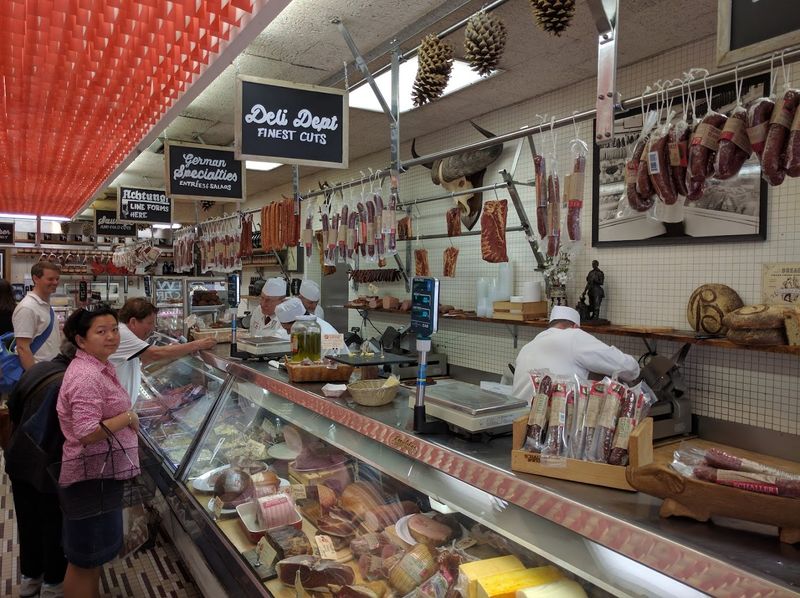
One thing I genuinely enjoyed is that the experience does not stop at the main shop’s door. Right next door, Schaller’s Stube extends the feeling of the place in a way that seems natural, almost like one conversation continuing in another room.
It adds a little energy to the block without breaking the old-world thread that makes the original market so memorable.
What I appreciate is that this neighboring spot reinforces the shop’s identity instead of distracting from it. You still get the sense of German food culture being expressed through everyday pleasure and routine, not through some exaggerated theme.
That continuity helps Schaller & Weber feel like the center of a living food tradition rather than a single standalone business surviving on reputation.
For a visitor, it means the whole stop feels more layered and more human. You can take in the market atmosphere, notice the neighborhood, and understand that the legacy here has room to keep moving.
In New York, where old institutions often seem boxed into preserving themselves, there is something refreshing about seeing a place honor its roots while still letting the surrounding experience feel active, current, and comfortably social.
Why This Place Stays With You
By the time I left, what stayed with me was not just the food or the history, but the feeling that the place still knows how to be useful. That sounds simple, though it is actually rare, especially in a city where older businesses can start feeling preserved instead of lived in.
Schaller & Weber still feels fully occupied by its purpose, and that gives it unusual emotional weight.
The market atmosphere, the family story, the neighborhood setting, and the butcher craft all come together in a way that feels coherent from start to finish. Nothing seems added just to impress you, and that honesty is probably the shop’s strongest quality.
You walk in curious, then walk out feeling like you briefly touched a part of New York that has managed to hold onto itself.
If you like places with texture, continuity, and a real sense of local inheritance, this one is hard to shake off afterward. It reminds you that great city experiences are not always loud or elaborate, and sometimes they are tucked inside a room that has simply kept doing things well for a long time.
Honestly, that is exactly why this shop feels less like a stop and more like a memory in progress.
