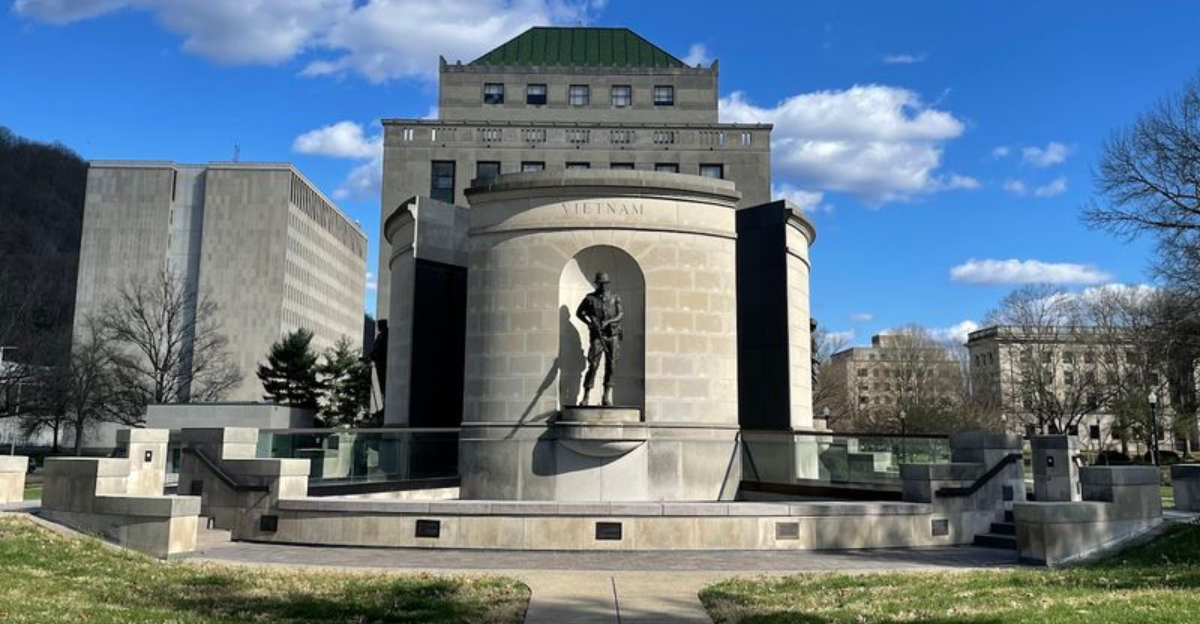
Some monuments shout, but this one chooses to speak in whispers and reflections.
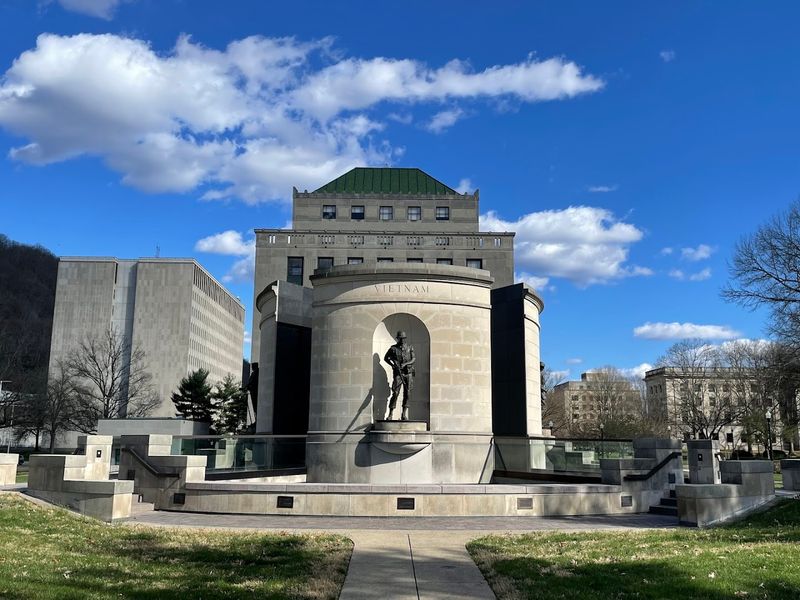
It is a two-story oval structure composed of four limestone monoliths surrounded by a reflecting pool, with interior walls faced in polished black granite.
That is where the power of the place truly hits.
Etched into that smooth, dark stone are the names of more than ten thousand West Virginians who made the ultimate sacrifice in twentieth century conflicts.
Four bronze sculptures stand guard, representing each of the major wars and branches of service.
It is a space designed for quiet contemplation and remembrance, a place where the silence is not empty but full of meaning.
West Virginia ensures the sacrifices of its heroes are never forgotten.
The Oval Design That Wraps You In History
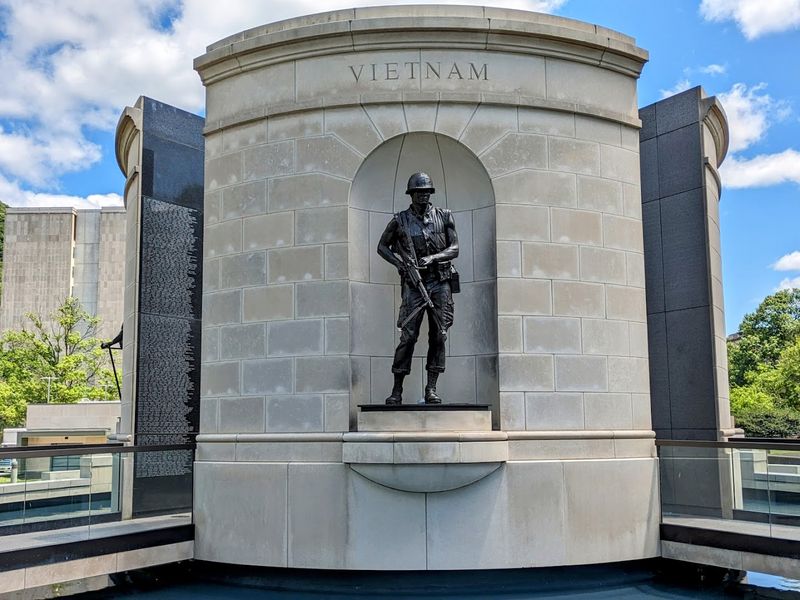
Walking up to the memorial for the first time, the oval shape catches you off guard in the best way. Most monuments feel flat, like something you look at from one fixed angle.
This one pulls you around it, almost like it wants you to see every side before you make up your mind about it.
Architect P. Joseph Mullins completed the structure in 1999 after winning a design competition back in 1987.
That is over a decade of vision turning into limestone and granite. The two-story form feels both grand and grounded, never trying too hard to impress.
The oval layout creates a gentle, circular flow for visitors. You naturally move around the space rather than rushing through it.
That physical movement becomes part of the experience, slowing you down just enough to actually feel where you are.
The whole structure cost approximately $3.8 million, and every dollar of it shows in the craftsmanship and thoughtful proportions that make this place feel unlike any other memorial around.
Four Limestone Monoliths Standing Guard
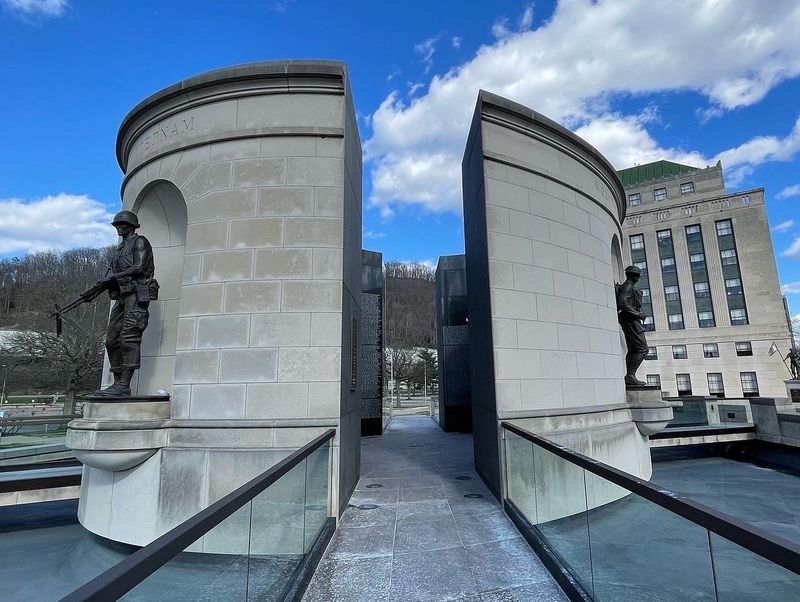
Limestone does something interesting in afternoon light. It glows a little, almost warm, like it has been holding onto the sun all day just to share it with whoever shows up.
The four monoliths at this memorial do exactly that, standing tall and deliberate around the reflecting pool like quiet sentinels.
Each monolith is part of the overall architectural language Mullins designed to communicate permanence without arrogance. They do not tower over you in an aggressive way.
Instead, they frame the space, giving your eyes somewhere to rest while your mind processes the weight of what surrounds you.
Limestone was a smart material choice here. It weathers gracefully, developing character rather than crumbling, which feels fitting for a monument dedicated to endurance and sacrifice.
The four pillars also create a subtle sense of enclosure, making the interior feel like its own world separated from the busy boulevard just beyond the grounds.
Stepping between them feels like crossing a threshold into something more serious and more sacred than everyday life.
The Reflecting Pool And What It Actually Reflects
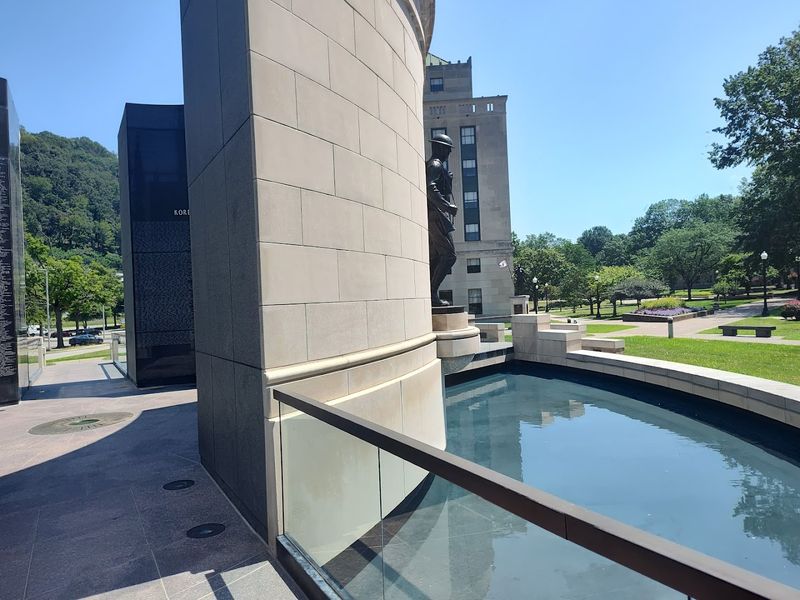
Reflecting pools at memorials are not a new idea, but this one earns its place. The still water mirrors the limestone and granite above it, doubling the visual impact without adding a single extra stone.
On a calm day, the reflection is almost perfect, and that symmetry feels intentional in a deeply meaningful way.
Water has long been used in memorial design to encourage stillness. You cannot rush past a reflecting pool without at least glancing down.
That brief pause is exactly the point. The pool invites you to stop, breathe, and acknowledge something bigger than your afternoon plans.
There is also something philosophically fitting about water at a veterans memorial. It is always moving slightly, never truly static, yet it holds an image faithfully for anyone willing to look.
The names etched in granite above are permanent. The reflections below shift with every breeze.
Together they suggest both the fixed nature of sacrifice and the ongoing ripple it creates through generations. That combination is quietly, unexpectedly profound in a way that sneaks up on you.
Polished Black Granite And Over 10,000 Names
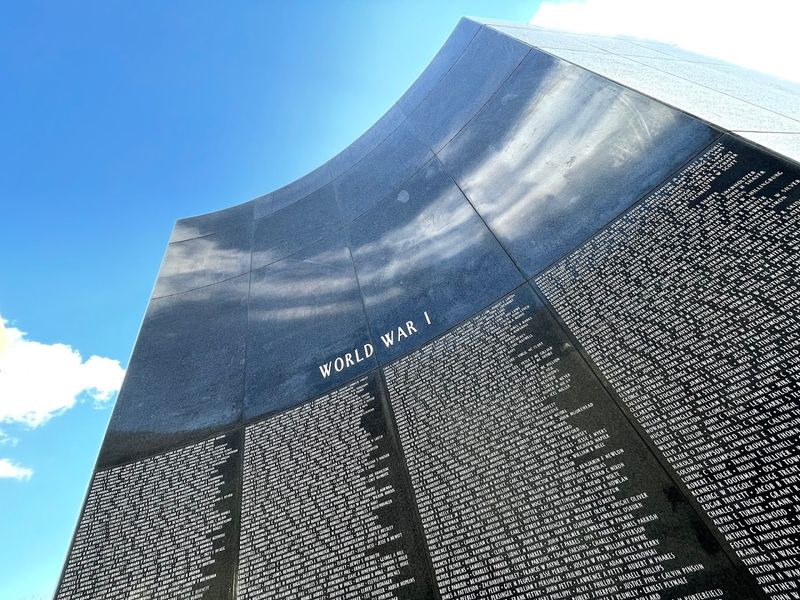
Black granite has a way of holding light and grief in equal measure. The interior walls of this memorial are covered in it, polished to a mirror finish, and etched with the names of more than 10,000 West Virginians who gave their lives in 20th-century conflicts.
Reading even a fraction of those names changes something in you.
Each name is small by itself. Together, they become overwhelming in the most important sense of that word.
The sheer number forces you to reckon with the fact that each entry represents a full human life, a family, a story that ended too soon. That is not abstract history.
That is personal, even for a stranger passing through.
Mullins spent years researching for this memorial, interviewing combat veterans and studying war history before a single stone was placed. That preparation shows in how the names are presented, with dignity and care rather than as a simple list.
Running a finger along the cool granite surface while reading is an almost involuntary response. The memorial seems to expect that, and welcomes it without judgment or ceremony.
Bronze Figures That Tell Four Wars In One Glance
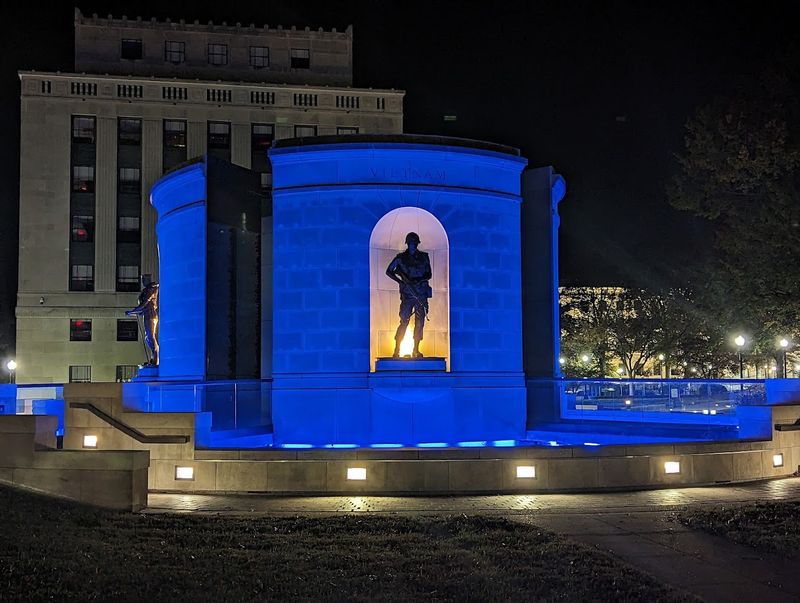
Four bronze figures stand inside the memorial, each one representing a different conflict and a different branch of military service. There is a World War I infantryman, a World War II sailor, a Korean War airman, and a Vietnam War marine.
Together, they compress an entire century of American military history into a single, walkable space.
Mullins sculpted each figure after extensive research, including traveling to Vietnam to better understand the terrain, the weight, and the emotional reality of what he was depicting. That dedication comes through in the posture and expression of every piece.
These are not generic soldier shapes. They carry specific gravity.
Standing near the Vietnam marine feels especially immediate, maybe because that conflict is within living memory for many visitors. The figure does not look heroic in a storybook way.
It looks tired and determined, which is probably closer to the truth than any triumphant pose could be.
Each bronze piece rewards close attention, and moving from one to the next feels like flipping through a chapter of history that never gets easier to read, no matter how many times you visit.
The Quiet Atmosphere That Does All The Heavy Lifting
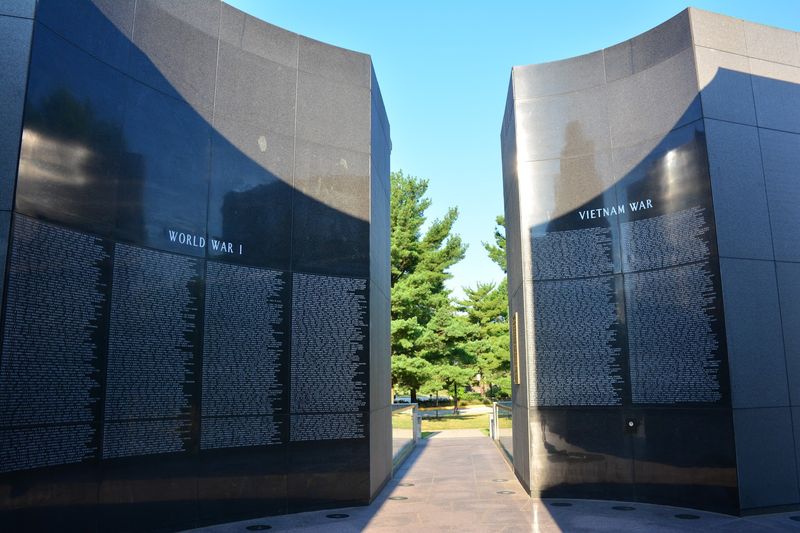
Some places earn their silence. This memorial is one of them.
The architecture itself seems designed to absorb noise, or maybe it just makes noise feel inappropriate, the way a library does without anyone having to say a word. Visitors tend to lower their voices automatically upon entering.
Benches are placed throughout the space, and people actually use them. Not to check their phones or eat a snack, but to sit quietly and think.
That is a rare thing in a world that rarely stops moving. The memorial creates a pocket of genuine stillness in the middle of a state capital city, and that stillness carries real emotional weight.
The design philosophy here aligns with the broader tradition of memorials that prioritize reflection over spectacle. Mullins specifically aimed for architecture that fosters quiet contemplation rather than display, and he succeeded completely.
Visitors consistently describe the experience as humbling, which is a word that gets overused but genuinely applies here. Feeling small in the presence of collective sacrifice is not a bad feeling.
It is, in fact, exactly the right one to take home with you afterward.
How Private Funding Turned A Dream Into Stone
Behind every great memorial is a story of how it got built, and this one is worth knowing. The project was initially funded privately, driven by the determination of individuals who believed West Virginia’s veterans deserved something lasting and significant.
State lottery revenues eventually supplemented the effort starting in 1994, helping push the project toward its 1999 completion.
That funding journey took over a decade from the original 1987 design competition to the finished structure. Patience and persistence are built into this memorial’s DNA just as much as limestone and granite are.
The final cost came to approximately $3.8 million, which for a project of this scale and quality is remarkably efficient.
Knowing that community effort drove this project forward makes visiting feel slightly different. This was not a top-down government mandate handed off to a contractor.
People cared enough to raise money, push through bureaucratic timelines, and see it through to the end. That human investment is invisible in the finished stone but very present in the overall spirit of the place.
It feels earned, which makes it feel more meaningful than something simply commissioned and delivered on schedule.
A Tribute To Women In Service Worth Seeking Out
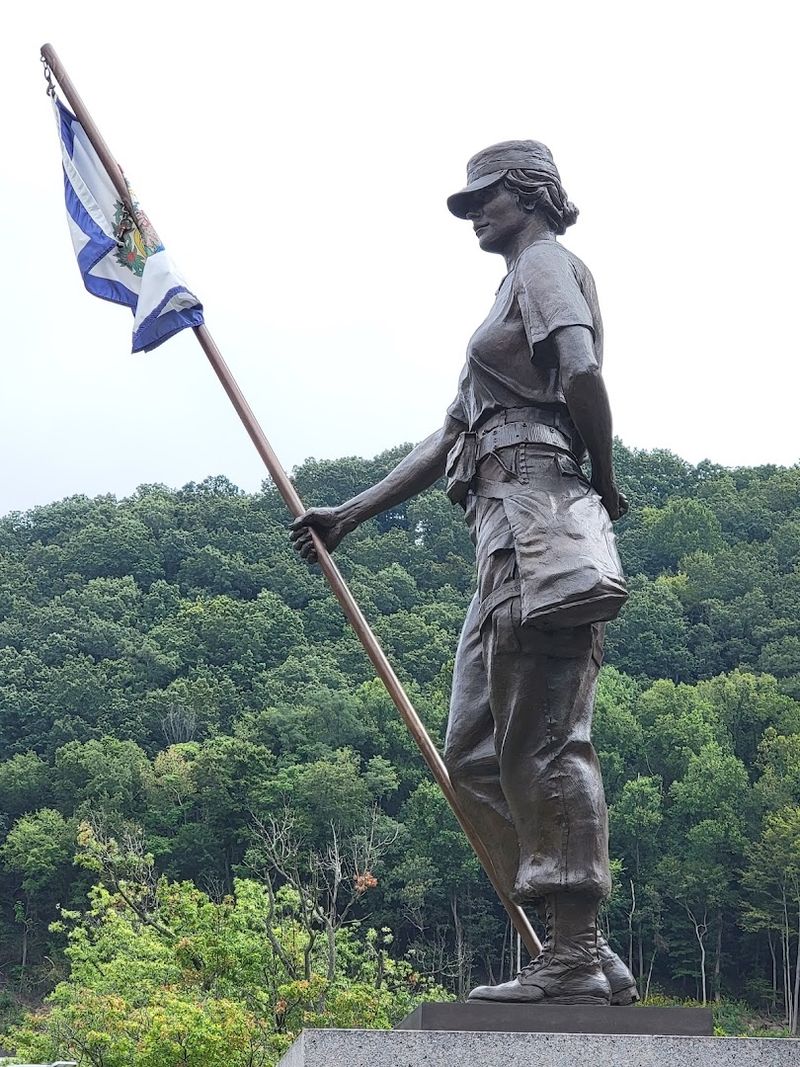
Just across from the main memorial sits another tribute that deserves its own moment of attention. The Female Veterans Memorial honors the women of West Virginia who served in the military, and it holds its own with quiet confidence.
A graceful bronze figure holds a state flag, standing on a base decorated with relief panels that tell a layered story.
The statue is described as gracefully simplistic, which is a perfect way to put it. There is no clutter, no over-explanation, just a clear and dignified acknowledgment that women have always been part of West Virginia’s military legacy.
That simplicity gives the piece tremendous strength.
Visiting both memorials together creates a fuller picture of service and sacrifice than either one alone could provide. The main memorial honors conflicts and numbers.
This one honors a specific and often underrepresented group with focused intention. Together, they make the Capitol grounds feel like a genuinely comprehensive place of remembrance.
Taking the extra few minutes to walk between them is absolutely worth it, especially for families with children who are learning what military service actually looks like across history.
Why This Memorial Stays With You Long After You Leave
Some places you visit and forget by dinner. This is not one of those places.
The West Virginia Veterans Memorial has a way of following you home, not in a heavy or haunting way, but in the quiet way that meaningful experiences tend to linger.
You find yourself thinking about a name you read, or the weight of a bronze figure’s expression, days later.
Part of what makes it stick is the honesty of the design. There is no attempt to make war look glorious or sacrifice look easy.
The memorial simply presents the facts, carved in stone, surrounded by stillness, and lets visitors draw their own conclusions. That respect for the visitor’s intelligence and emotional capacity is rare and refreshing.
Open every single day, around the clock, at no cost, the memorial is as accessible as it is impactful. There are no barriers between you and the experience, which feels like its own kind of statement.
Some of the most important things should be free and available to everyone. This monument absolutely qualifies.
Address: Bldg 19, 1900 Kanawha Blvd E, Charleston, WV.
