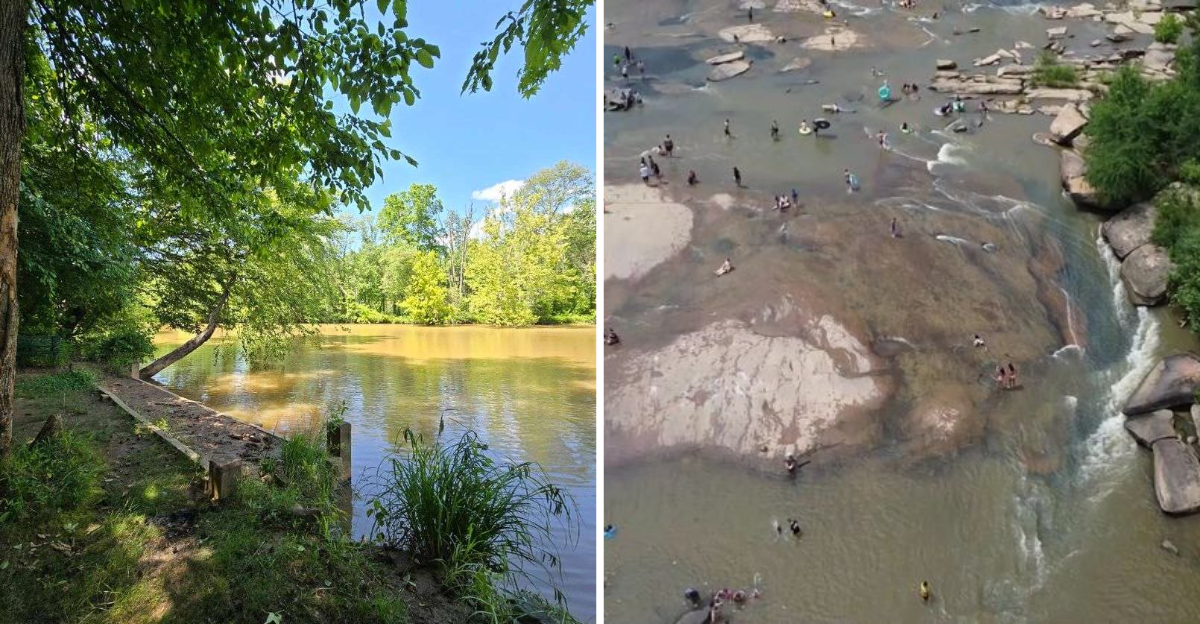
Water smells like cool summer and sun-warmed sand along a North Carolina river, and every visit feels like the first time.
Locals have called that spot by the same name for generations, a name that carries a kind of mystery you want to see for yourself.
The beach shifts, the water changes, the trees swap colors like they are putting on new outfits.
I have been there in the thick of summer heat and on quiet winter afternoons.
Both visits felt completely their own.
I sat on a fallen log watching the current move slow and steady, noticing how the light hit the water differently than it had months before.
Each time I go back, something looks different, a fallen tree, a new sandbar, a perspective I had not noticed before.
That place rewards curiosity and never lets you feel like you have seen everything it offers.
Where History Flows with the River
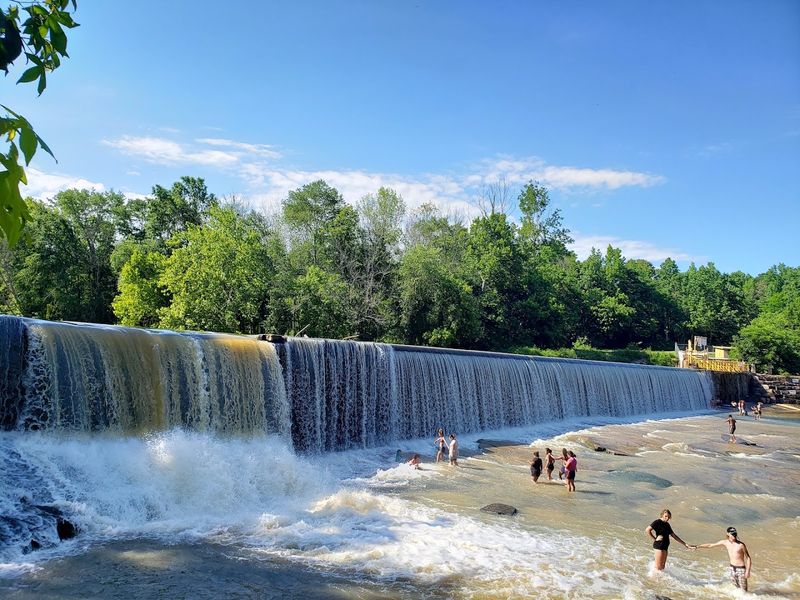
The stone dam at RiverPark at Cooleemee Falls, North Carolina is one of those structures that makes you stop and actually think about the people who built it.
Constructed around the turn of the 20th century, it once generated electricity for the Erwin Textile Mill in the nearby town of Cooleemee.
The dam stopped producing power in 1969, but it never stopped being impressive.
What is even more remarkable is how much older the story of this place really is.
Archaeological evidence suggests that Native Americans gathered along this stretch of the South Yadkin River as far back as 10,000 BC.
That is a long line of people drawn to the same water, which says something powerful about this spot.
The name “Bullhole” itself comes from a local legend about a bull ox that was lost to the river’s churning currents while hauling timber during the mill’s construction.
It is the kind of story that sticks with you.
After the mill era ended, the area fell into neglect for a while, but a determined community effort in the late 1990s changed everything.
The park officially reopened in November 2003, reclaiming its identity as a place worth protecting.
Every time I walk near that old dam, I feel the weight of those layers of history beneath my feet, and it makes the whole visit feel richer and more meaningful than just a day at the river.
The Ever-Shifting Sandy Beach
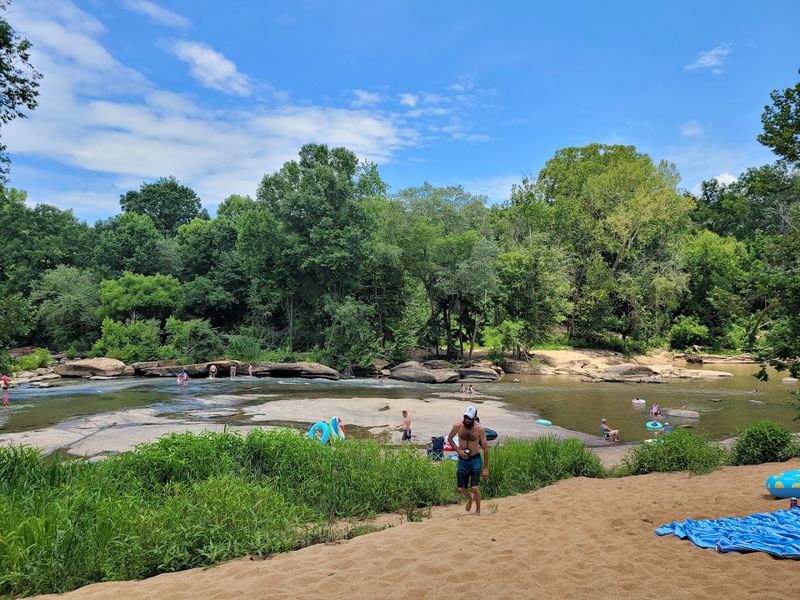
One of the most surprising things about The Bullhole is that the beach is never quite the same twice.
The South Yadkin River is always rearranging things, depositing sand in new places after heavy rains and pulling it back during drier stretches.
It is genuinely exciting not knowing exactly what you will find when you get there.
This is not the kind of beach you find at a coastal resort.
The sand here is coarser, earthier, and mixed with smooth river pebbles that catch the light in an interesting way.
It has a raw, honest quality that reminds you this is a working river, not a theme park.
I have spread a blanket on a wide, generous stretch of sand one summer and returned the following spring to find a much narrower bank with new rock formations visible near the water’s edge.
That unpredictability is actually a big part of the charm.
Kids love it because there is always something new to poke at or explore along the shoreline.
Adults appreciate it because it keeps the place from ever feeling stale or routine.
Bringing sand toys is genuinely a good idea here, and a beach chair or blanket is essential if you want to settle in for a few hours.
The river sounds fill the air constantly, and the combination of moving water, shifting sand, and open sky makes this little beach feel much bigger than it actually is.
A Symphony of Seasons at the Falls
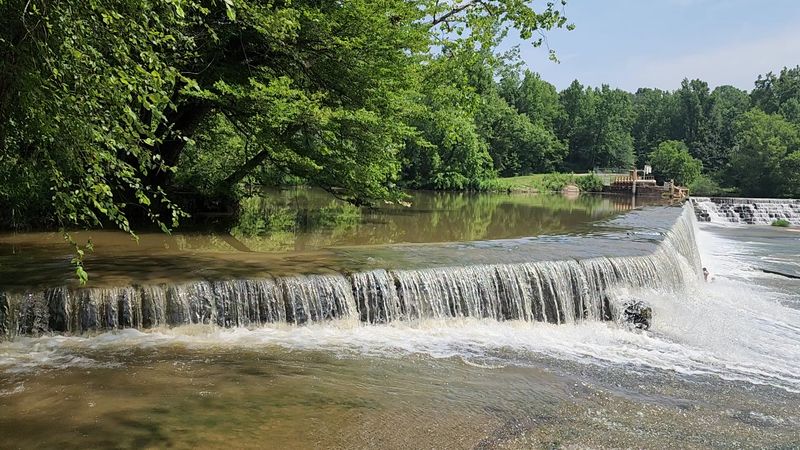
Summer at The Bullhole is pure, joyful chaos in the best possible way.
Families arrive early with tubes and chairs, kids shriek as they hit the cool water, and the natural rock slides below the dam become the most popular attraction in the park.
The energy is contagious, and even if you planned on just watching, you will probably end up wading in before long.
Autumn transforms everything.
The wooded trails that wind through the park burst into golds and deep reds, and the air carries that distinct crisp smell of fallen leaves meeting damp river stone.
The crowds thin out, and the falls take on a quieter, almost meditative quality.
This is honestly my favorite time to visit, because you can hear the water clearly without competing noise.
Spring brings birdsong and new green growth pushing through the trail edges, and the fishing tends to pick up noticeably as the river warms.
Winter is its own reward for anyone willing to make the trip during cooler months.
The park stays open Friday through Sunday from November through March, and the falls often run higher after seasonal rains, creating a more dramatic cascade than you see in summer.
Each season offers a genuinely different experience here, which is rare for a park this size.
The place earns its reputation as a year-round destination not through amenities alone, but through the river’s own natural rhythm.
Adventures on the Water and the Trails
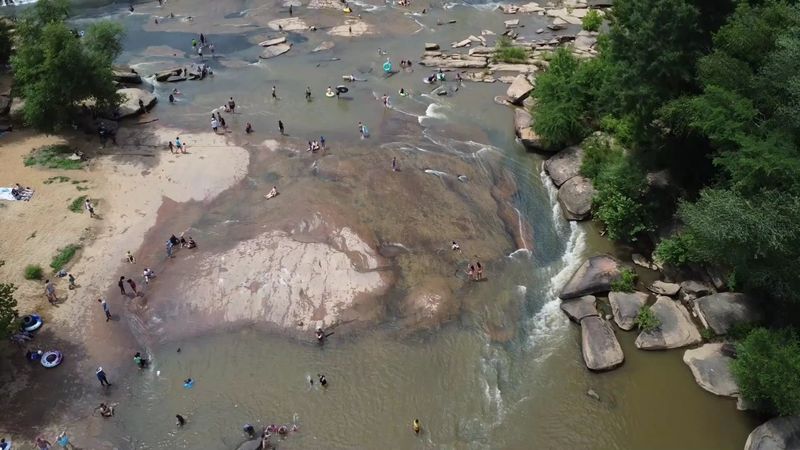
The rock slides just below the dam are the kind of thing that sounds modest until you actually see people riding them.
The natural granite formations channel the river into fast, shallow chutes that work surprisingly well for tubing and just plain sliding on your own.
Bringing your own tube is strongly recommended, and there is even an air-filling station at the main shelter if yours needs a top-up.
Beyond the slides, the river offers solid opportunities for canoeing and kayaking, with portage areas built into the park to help paddlers navigate around the dam.
Fishing is popular here too, particularly in spring and fall when the water conditions are ideal.
I have watched patient anglers set up along the banks early in the morning, and the park clearly has the kind of river habitat that supports a healthy fish population.
The trail network is modest but genuinely pleasant.
A short gravel path connects the parking area to the water, and additional wooded trails branch off for those who want a bit more of a hike.
The trails feature some interactive art installations, which add a quirky and unexpected layer to the walk.
Picnic tables are scattered at various points along the route, so you can stop and eat wherever feels right.
The main shelter near the parking area has grills available for rent, making it easy to organize a proper outdoor meal.
Wearing water shoes with good grip is one of the most important practical tips for this park, as the algae-covered rocks near the falls are genuinely slippery.
Wildlife, Birdsong, and Quiet Moments
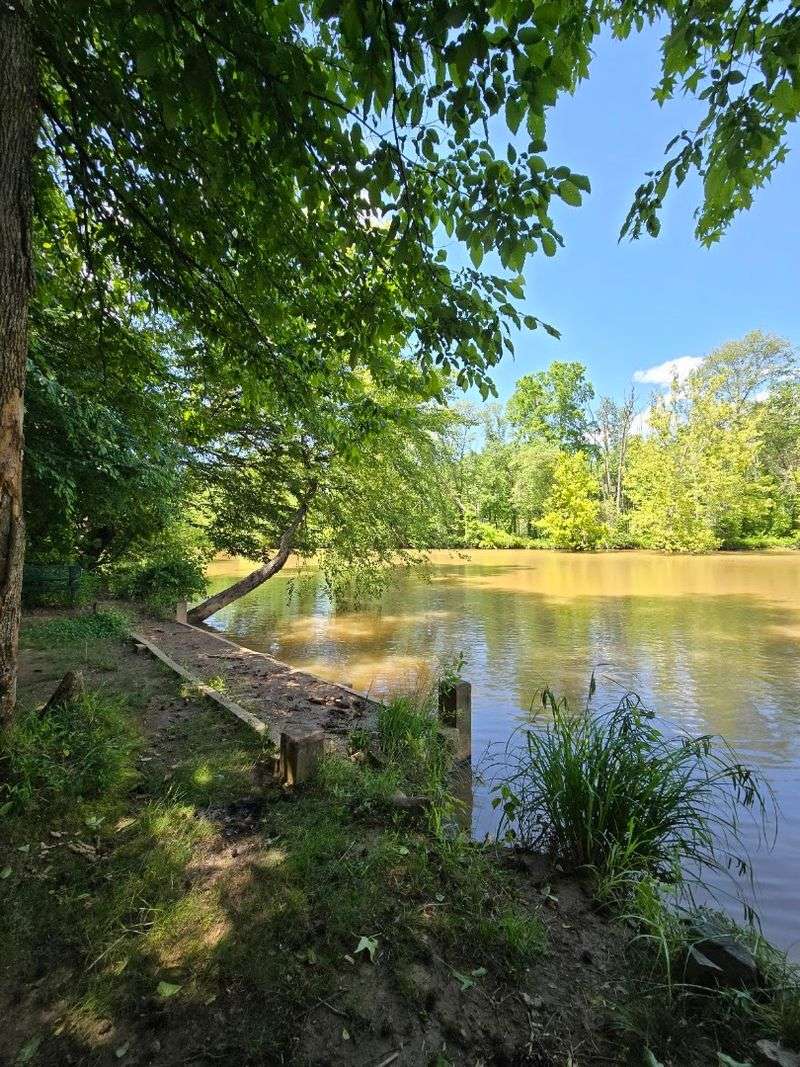
Not every visit to The Bullhole needs to revolve around splashing and sliding.
There is a quieter version of this park that reveals itself if you slow down a little, especially in the early morning or on a weekday when the crowds are smaller.
The river has its own soundtrack, and once you tune into it, you start noticing everything else around you.
Blue herons are a fairly common sight along the riverbanks here.
Egrets make appearances too, picking their way carefully through the shallows with that unhurried elegance they always seem to carry.
Turtles are visible on warm days, sunning themselves on rocks near the water’s edge, and the wooded trail sections are alive with birdsong that shifts depending on the season.
It is a genuinely good spot for casual birdwatching without any special equipment.
Dogs are welcome in the park as long as they are kept on a leash, which makes this a popular destination for people who want to give their pets a real outdoor experience rather than just a walk around the block.
The river itself is shallow enough in many areas for dogs to wade comfortably.
I find that some of the most memorable moments at The Bullhole happen away from the main falls area, along a quieter section of trail where the only sounds are water, wind, and whatever birds happen to be passing through.
That sense of stillness is harder to find than it sounds, and this park delivers it reliably.
Practical Tips for Your Visit to The Bullhole
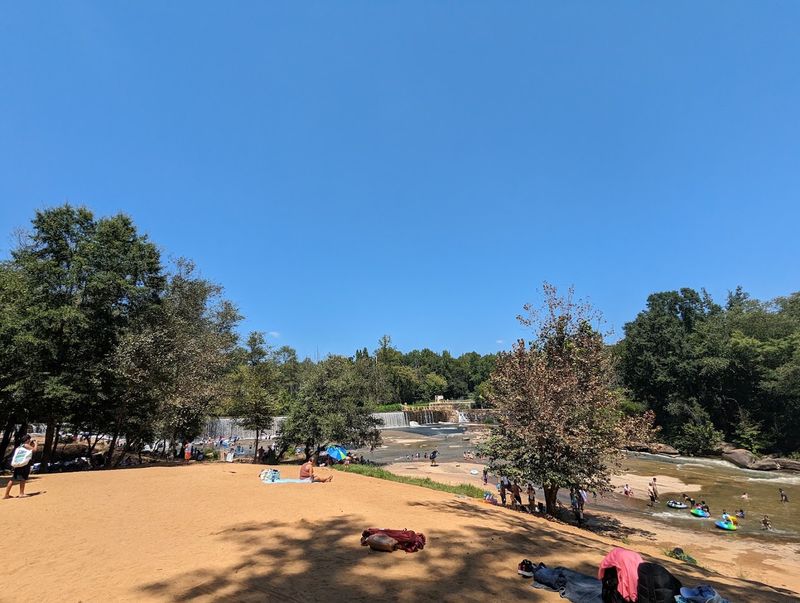
Getting the most out of a trip to RiverPark at Cooleemee Falls starts with a little advance planning.
The park operates on seasonal hours, generally open Wednesday through Sunday from 10 AM to 6 PM during the warmer months of April through October.
From November through March, hours shift to Friday through Sunday, 10 AM to 4 PM, with closures on Christmas Day and New Year’s Day.
There is an entrance fee during peak seasons, and the park operates on a cash payment system, so bringing cash is genuinely important.
Cell service can be unreliable in the area, so do not count on mobile payment options working smoothly.
Arriving early on weekends is a smart move, both for parking and for finding a good spot on the beach before things get busy.
Water shoes are not optional here, they are essential.
The rocks throughout the river area are covered in algae and moss that make them extremely slippery, even for experienced waders.
Socks worn over water shoes have reportedly worked well for some visitors who found grip to be an issue.
Checking the park’s website at cooleemee.org/riverpark before your visit is a good habit, especially to review current water quality conditions during summer.
Glass containers are not permitted in the park.
There are restrooms and changing stations near the main parking area, and a food truck is sometimes present during peak season.
The walk from the parking lot to the falls is about a quarter mile on a gravel path, manageable for most ages but worth knowing in advance.
Address: 645 Erwin Temple Church Road, Woodleaf, North Carolina
