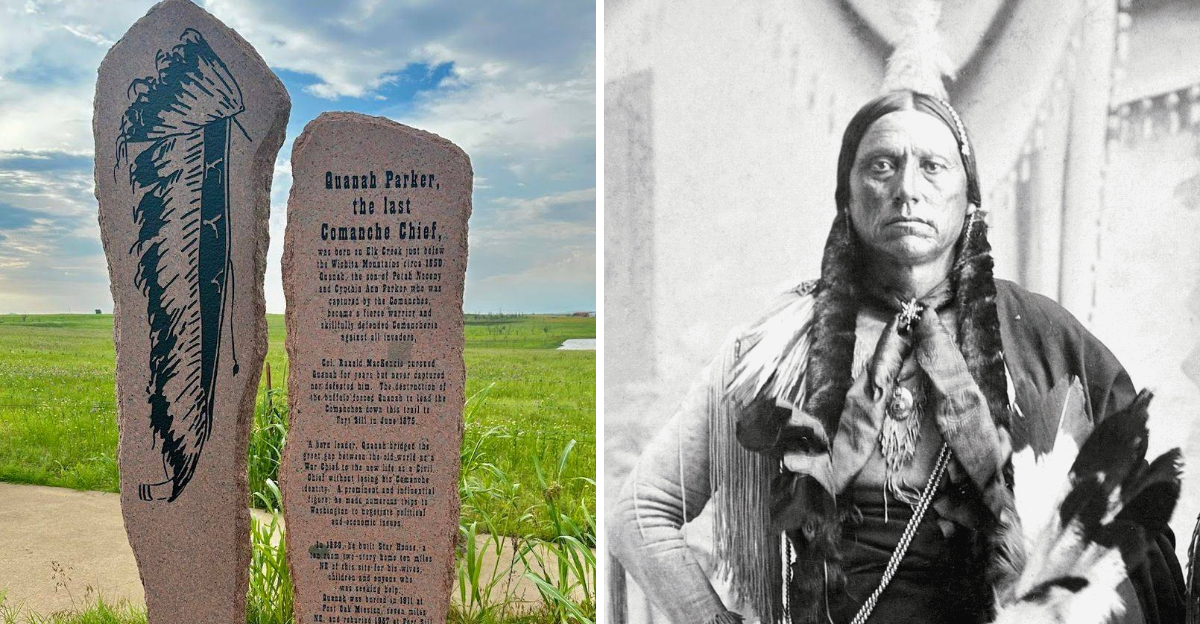
Standing roadside in southwest Oklahoma, a granite monument quietly commands the landscape with a story too powerful to ignore. It honors one of the most remarkable leaders in American history and the vast territory his people once called home.
He was the last principal chief of the Comanche Nation, a figure who moved between two worlds with uncommon strength and resilience. Set against open plains near the Wichita Mountains, the surroundings make the history feel immediate and real.
It is the kind of place where the land itself adds weight to the story, turning a simple stop into something you actually feel.
The Story of Quanah Parker, Last Chief of the Comanche Nation
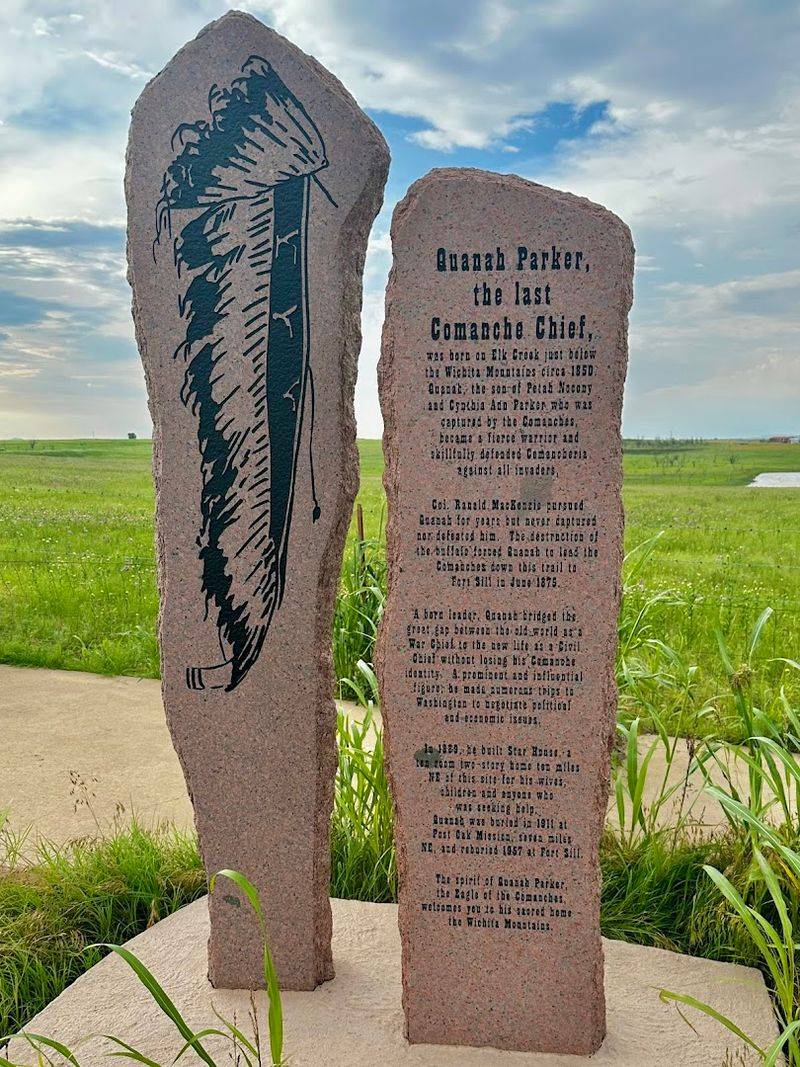
Few figures in American history carry a story as layered and compelling as Quanah Parker. Born around 1845 to a Comanche war chief named Peta Nocona and Cynthia Ann Parker, a white woman taken captive as a child, Quanah grew up straddling two very different worlds.
His early life was shaped entirely by Comanche traditions. He became a fierce warrior and a skilled leader on the southern plains long before the U.S. government forced the Comanche bands onto reservations.
After the Red River War of 1874 ended Comanche resistance, Quanah did not retreat into bitterness. He adapted.
He became the principal chief of the Comanche Nation and worked to guide his people through an era of enormous change.
He learned English, embraced ranching, and became a respected figure among both Native Americans and U.S. leaders, including President Theodore Roosevelt.
His ability to move between cultures without abandoning his Comanche identity made him one of the most influential Native leaders of the late 19th century.
The historical marker in Indiahoma, Oklahoma, honors this extraordinary life with a presence that feels both solemn and proud.
What Comancheria Actually Was and Why It Mattered
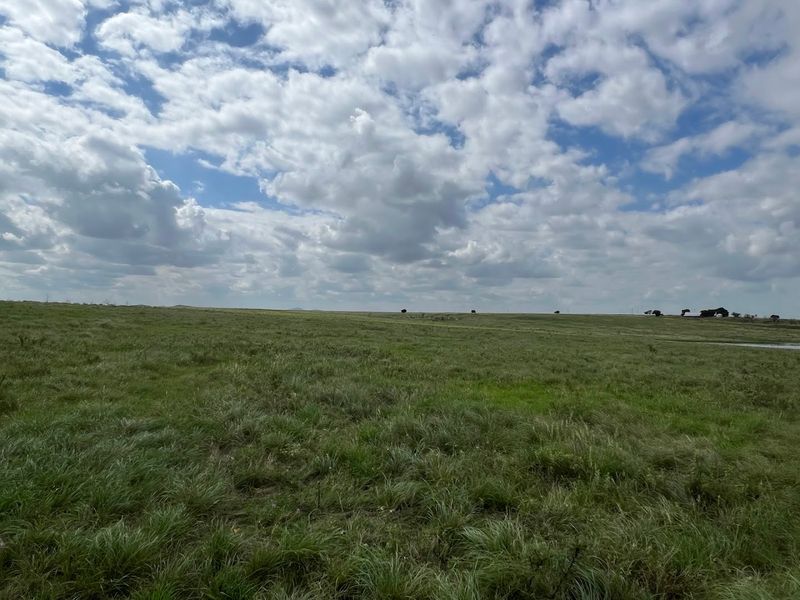
At its peak, Comancheria was one of the most powerful and expansive Native territories in North American history. The Comanche people dominated a region that stretched across present-day Texas, Oklahoma, New Mexico, Colorado, and Kansas, covering hundreds of thousands of square miles.
This was not simply land the Comanche occupied. It was a homeland they actively controlled and defended for over a century.
They were arguably the most dominant military force on the southern plains during the 18th and 19th centuries.
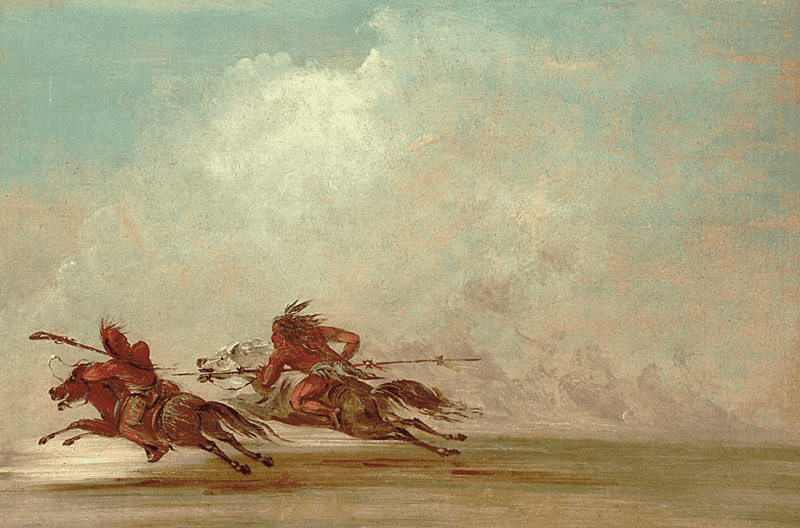
The Comanche mastered horsemanship at a level that gave them a decisive advantage over both rival tribes and European colonial forces. Their ability to move quickly across vast distances made Comancheria nearly impossible to penetrate for generations.
Spanish, Mexican, and American governments all attempted to break Comanche power and failed repeatedly. The territory was not just geographic, it was a statement of sovereignty that shaped the entire political landscape of the American Southwest.
Understanding Comancheria is essential to understanding why this historical marker in Oklahoma carries such deep meaning. The land around Indiahoma was part of that vast, proud homeland.
The Granite Monument Itself and What It Looks Like Up Close
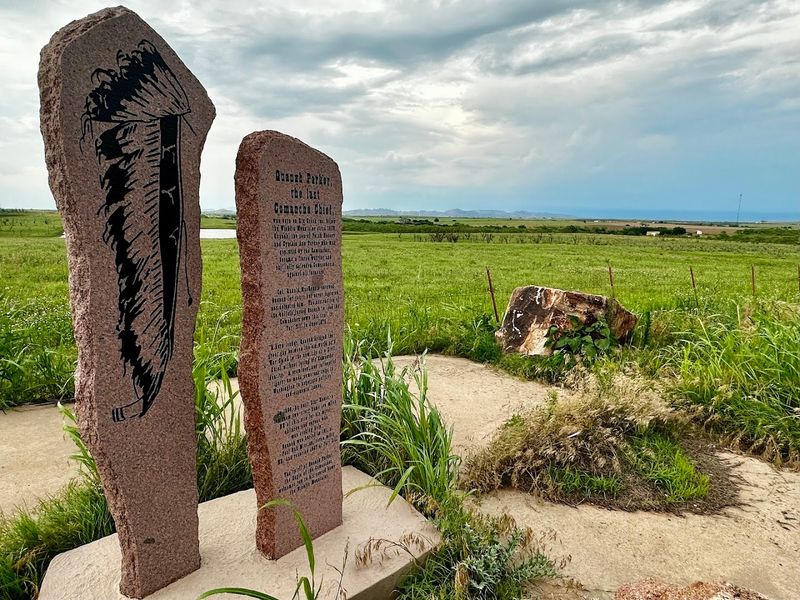
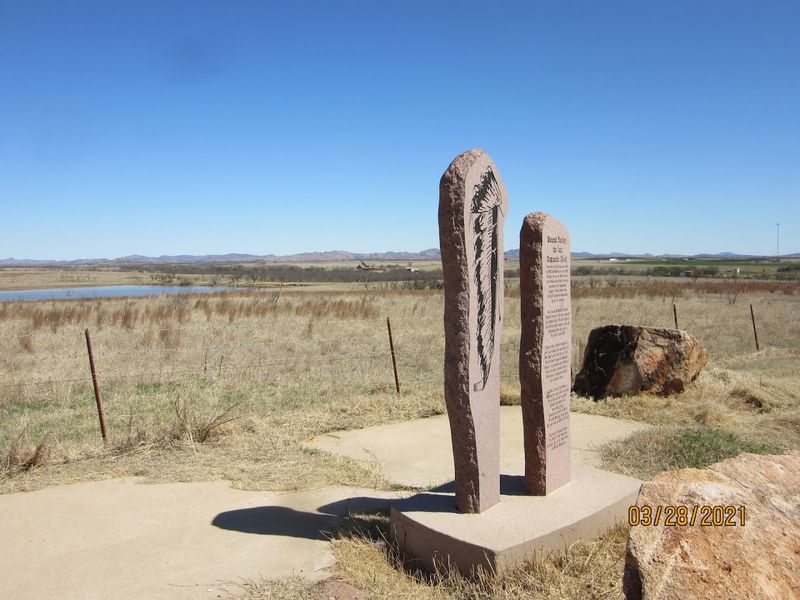
The physical monument at this site is a polished granite marker, and it earns every bit of the attention it receives. Granite was a fitting choice for this tribute.
It is a material that communicates permanence, and permanence is exactly what this story deserves.
The marker is both aesthetically striking and informative. The engraved text covers the history of Quanah Parker and the broader story of Comancheria in a way that is accessible without being oversimplified.
Standing in front of it, you get a clear sense of the care that went into its design. The monument does not feel like a generic roadside stop.
It feels like a deliberate act of recognition.
The surrounding landscape amplifies the experience. Open plains stretch out around the marker, and on clear days the Wichita Mountains are visible to the east.
That combination of stone, sky, and open land creates a setting that is hard to replicate anywhere else.
The site is open 24 hours a day, every day of the week, which means you can visit at sunrise or sunset and catch the light hitting that granite in a way that makes everything feel even more significant.
The Location Near Indiahoma and the Surrounding Landscape
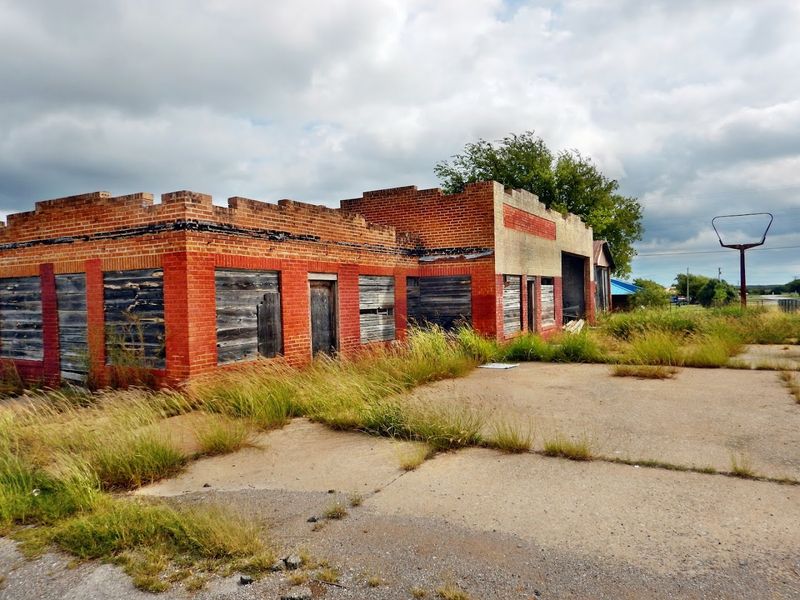
Indiahoma, Oklahoma, is a small community in Comanche County, and its location near the base of the Wichita Mountains gives it a landscape that feels genuinely cinematic. The plains here are wide and unhurried, the kind of terrain that makes you slow down without meaning to.
The marker sits along a roadside that offers unobstructed views in multiple directions. There are no tall buildings or commercial distractions.
Just sky, grass, and the mountains rising in the distance.
That setting is not accidental. This region was part of the heart of Comancheria, and the landscape around Indiahoma still carries a feeling of openness that connects you to what life on these plains must have felt like centuries ago.
Oklahoma as a state holds an enormous amount of Native American history, and Comanche County is one of its most historically significant areas. The proximity to Fort Sill, where Quanah Parker eventually settled, adds another layer of historical context to the visit.
Getting there requires a short drive through rural Oklahoma, but that drive is part of the experience. The approach to the marker feels earned, and the landscape rewards your attention every mile of the way.
Quanah Parker’s Role as a Bridge Between Two Cultures
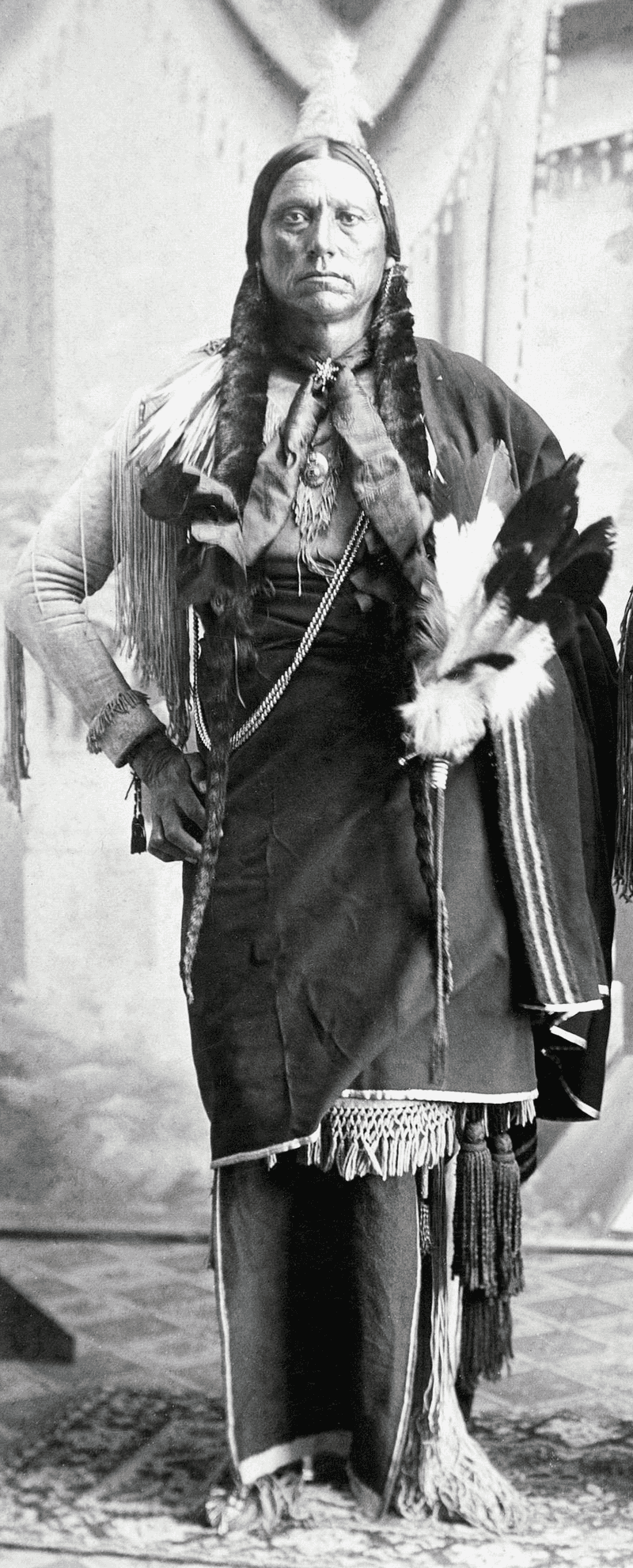
One of the most remarkable things about Quanah Parker was his ability to exist authentically in two very different cultural worlds without abandoning either one. After the Comanche bands were moved to the reservation in southwestern Oklahoma, Quanah did not simply disappear into history.
He became a diplomat, a rancher, and a political figure. He built a large home near Fort Sill, Oklahoma, known as the Star House, which became a gathering place for both Comanche community members and prominent American leaders.
He maintained multiple wives in the Comanche tradition while also engaging with American legal and political systems on behalf of his people. He negotiated land leases with Texas ranchers, generating income that supported the Comanche community during an extremely difficult period of transition.
Quanah Parker also worked to preserve Comanche spiritual practices. He was a central figure in the spread of the Native American Church, which incorporated peyote ceremonies as a form of spiritual expression and healing.
His life challenges any simple narrative about the era. He was not a man who surrendered his identity.
He was someone who used every tool available to protect and sustain his people in Oklahoma and beyond.
The Red River War and the End of Free Comanche Life on the Plains
The Red River War of 1874 was the conflict that effectively ended the free-roaming life of the Comanche people on the southern plains. The U.S.
Army launched a coordinated campaign across the Texas panhandle designed to force the remaining Comanche, Kiowa, and Cheyenne bands onto reservations permanently.
General William Sherman authorized a strategy that targeted not just warriors but the entire foundation of plains life. Army columns destroyed camps, food supplies, and most critically, the vast horse herds that gave the Comanche their famous mobility.
The Battle of Palo Duro Canyon in September 1874 was the decisive blow. Although casualties were relatively low, the destruction of supplies and horses left the Comanche bands with no realistic option but to surrender.
Quanah Parker led his band, the Quahadi Comanche, to Fort Sill in the summer of 1875. It was the last Comanche group to surrender, and Quanah arrived not in defeat but with a composed dignity that would define his leadership for the next three decades.
It acknowledges this turning point with appropriate gravity. The plains around Indiahoma feel like a fitting place to reflect on what was lost and what somehow endured.
Fort Sill’s Connection to Quanah Parker and the Comanche Reservation
Fort Sill in southwestern Oklahoma played a central role in the final chapter of Comanche independence on the plains. Established in 1869 by General Philip Sheridan, the fort served as the military anchor for the Kiowa-Comanche-Apache Reservation in what is now Comanche County, Oklahoma.
After the Red River War, Fort Sill became the place where the Comanche people were required to settle. For Quanah Parker, it became home in a much deeper sense.
He built the Star House just north of the fort and made it the center of his political and social life.
The fort is still an active military installation today, which makes it one of the oldest continuously operating Army posts in the United States. Its museum and historic district are open to the public and contain extensive materials related to Comanche history.
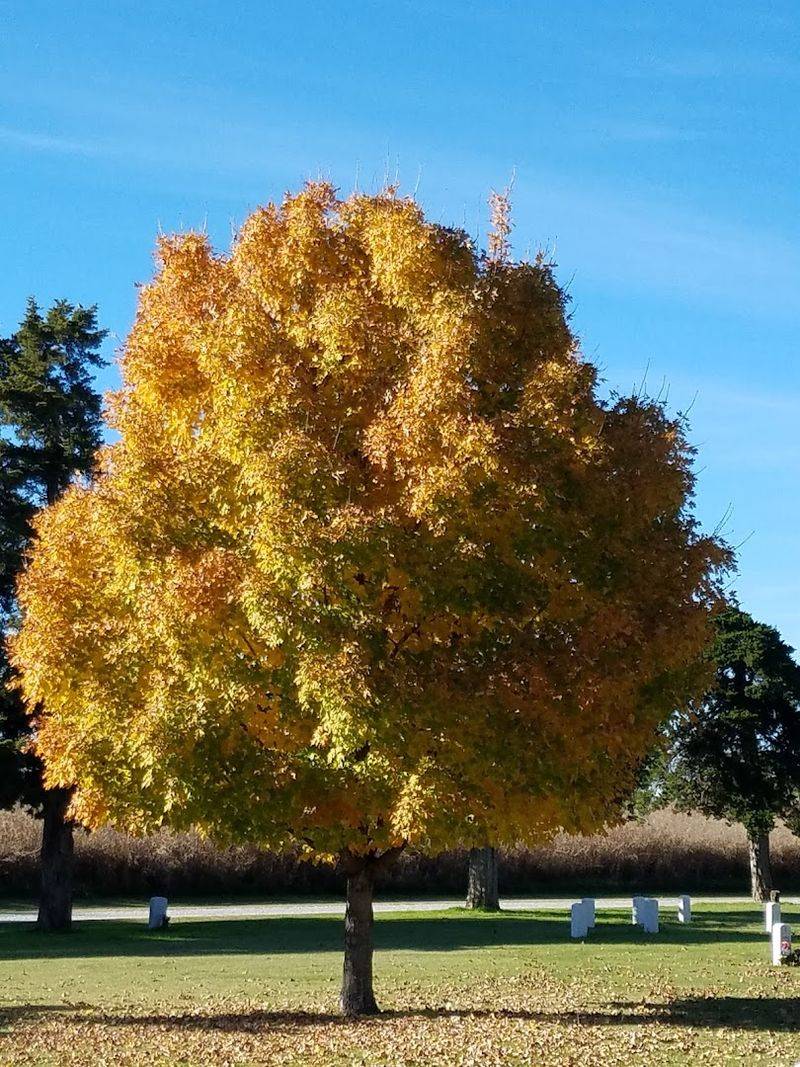
Quanah Parker is buried at Fort Sill, along with his mother Cynthia Ann Parker and sister Prairie Flower. Their graves are part of a cemetery that has become one of the most visited sites in Oklahoma for those interested in Native American history.
A visit to the Comancheria marker in Indiahoma pairs naturally with a trip to Fort Sill, since both sites are within a short drive of each other.
Cynthia Ann Parker and the Family Story Behind the Chief
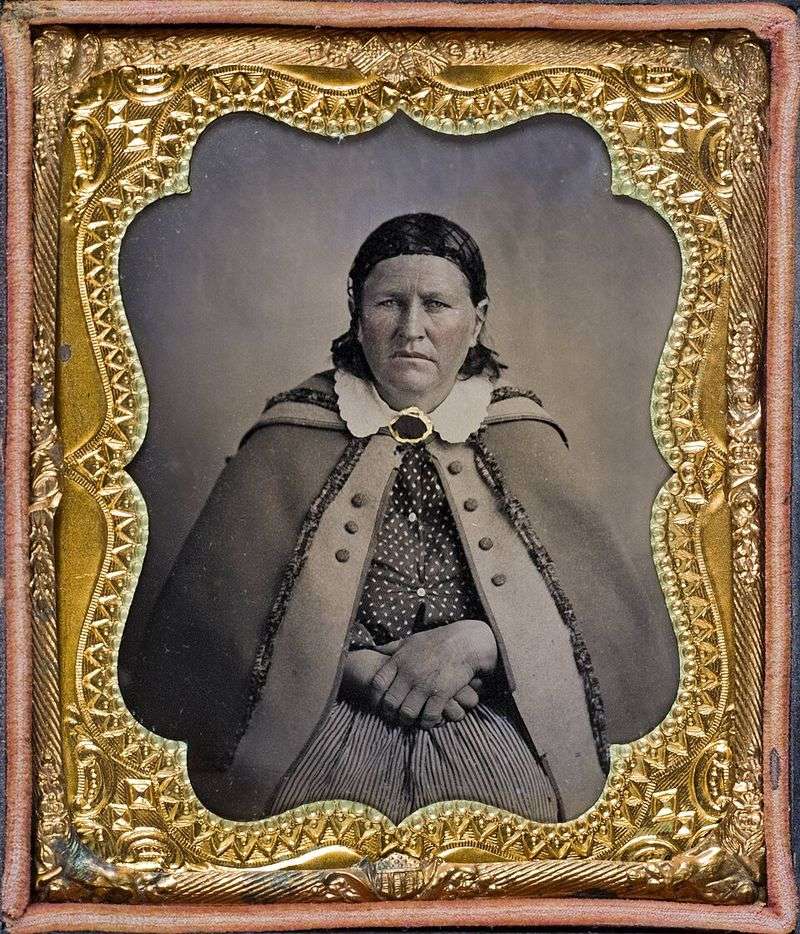
To understand Quanah Parker fully, you have to know the story of his mother, Cynthia Ann Parker. She was born around 1827 and was taken captive by Comanche raiders at age nine during the attack on Parker’s Fort in Texas in 1836.
Rather than remaining a prisoner, Cynthia Ann was adopted into the Comanche community and fully integrated into Comanche life. She married the war chief Peta Nocona, had three children, and by all accounts lived as a Comanche woman in every meaningful sense.
In 1860, Texas Rangers forcibly recaptured her during a raid. She was returned to her biological family, but she never readapted to Anglo-American life.
She passed away in the early 1870s, reportedly of grief after the loss of her daughter.
Quanah Parker carried this complicated family history throughout his life. His dual heritage gave him an unusual ability to communicate across cultural lines, but it also meant he was never entirely claimed by either world without reservation.
The Comancheria historical marker near Indiahoma, Oklahoma, represents not just a chief but an entire family story that stretches across two very different Americas and refuses to fit neatly into any single narrative.
How the Wichita Mountains Frame This Historical Experience
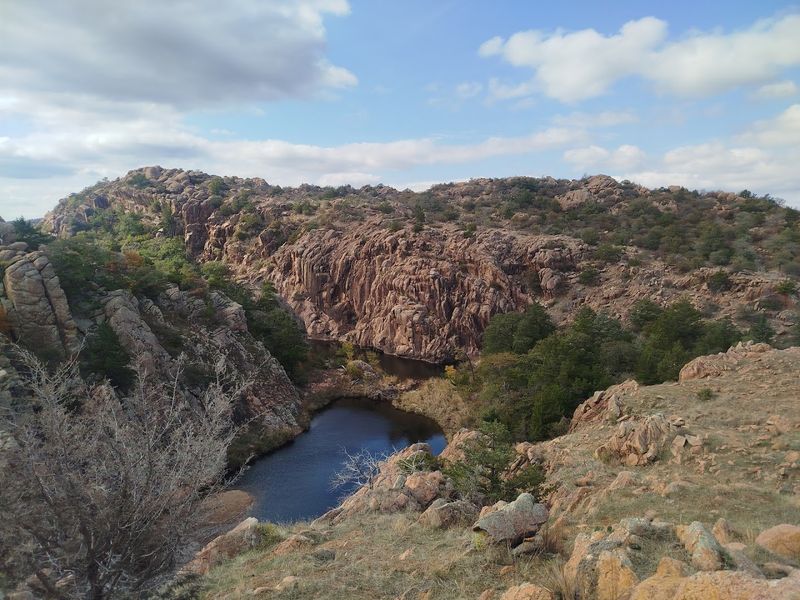
The Wichita Mountains rise from the Oklahoma plains with a kind of quiet authority that makes them impossible to ignore.
From the location of the Comancheria historical marker near Indiahoma, the mountains are visible on the eastern horizon, and that view adds enormous depth to the experience of standing at the site.
The Wichita Mountains Wildlife Refuge covers over 59,000 acres and is one of the oldest federal wildlife refuges in the United States. It protects bison, elk, longhorn cattle, and dozens of other species in a landscape that has changed remarkably little since Comanche bands roamed these plains.
Seeing bison in the refuge while knowing you are standing in the heart of former Comancheria creates a powerful sense of continuity. These animals were central to Comanche life, and their presence today feels like a small but meaningful restoration.
The mountains themselves are composed of ancient granite, some of the oldest exposed rock in Oklahoma, and their rugged texture contrasts beautifully with the flat plains surrounding them.
A drive through the Wichita Mountains after visiting the historical marker rounds out the experience in a way that no indoor museum exhibit could replicate. Oklahoma surprises you here.
Visiting the Site Practically: What to Know Before You Go
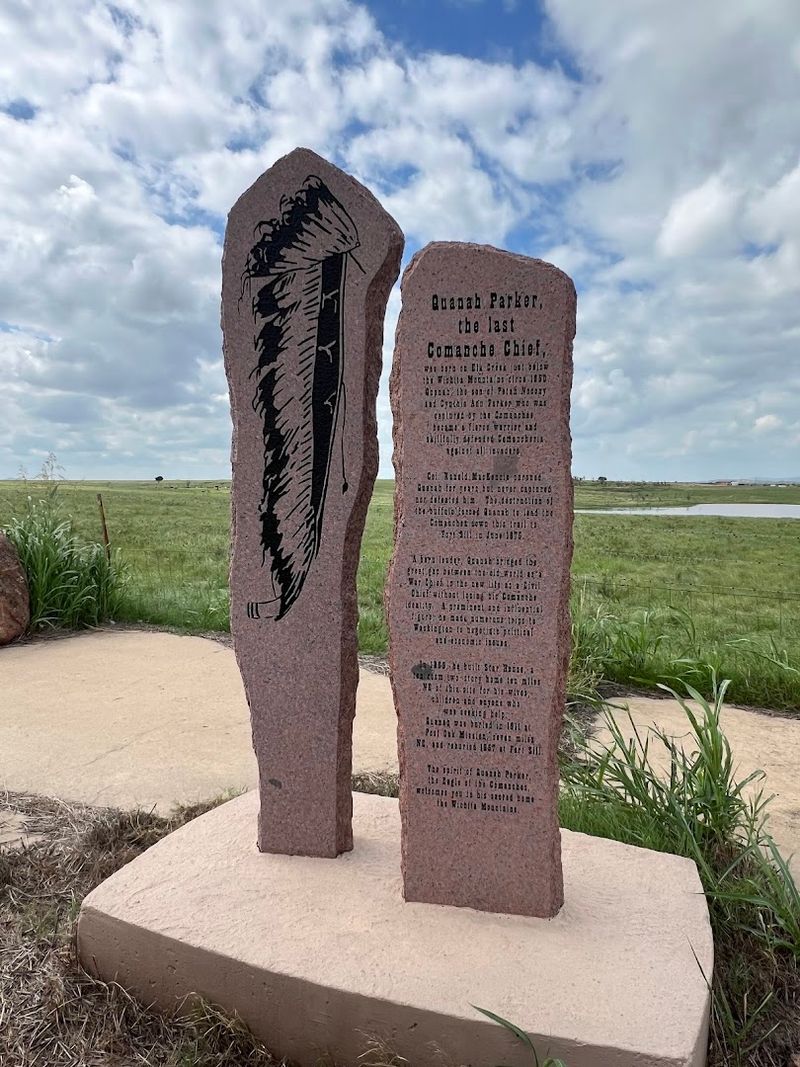
Planning a visit to the Quanah Parker and Comancheria Historical Marker is straightforward, but a few practical details will make your trip more comfortable. The site is located in Indiahoma, Oklahoma, at coordinates that place it along a rural road in Comanche County.
The marker is open 24 hours a day, seven days a week, with no admission fee. That kind of accessibility is genuinely appreciated when you are planning a road trip through southwestern Oklahoma and want to stop without worrying about hours or costs.
There are no restrooms, running water, or waste facilities at the site, so plan accordingly before you arrive. The nearest services are in Lawton, Oklahoma, which is roughly 20 miles to the east and offers all the amenities you might need.
The best times to visit are early morning or late afternoon, when the light is softer and the temperature is more forgiving, especially during Oklahoma summers, which can be genuinely intense.
Cell service in the area can be limited, so downloading offline maps before you leave is a smart move. The phone number listed for the site is 580-581-3500 if you need more information ahead of your visit.
The Broader Legacy of Comanche History in Oklahoma
The Comanche Nation is still very much present in Oklahoma today. The tribal headquarters are located in Lawton, Oklahoma, and the Comanche people maintain a vibrant cultural identity that continues to evolve while honoring its deep historical roots.
The tribe holds an annual homecoming celebration that draws Comanche people from across the country. Traditional dance, language preservation efforts, and community gatherings are central to Comanche cultural life in Oklahoma today.
The Comanche National Museum and Cultural Center in Lawton offers an in-depth look at Comanche history, art, and traditions. It is a natural complement to the roadside marker in Indiahoma and provides context that enriches everything you see at the monument.
Oklahoma holds the largest concentration of Native American tribal nations of any state in the country, and the Comanche Nation is one of its most historically significant. Recognizing that living legacy is part of what makes a visit to the Comancheria marker so meaningful.
The story that the granite monument tells is not finished. The Comanche people are still here, still shaping their future in Oklahoma, and that ongoing presence is the most powerful tribute to everything Quanah Parker worked to protect.
Why This Roadside Marker Deserves More Attention Than It Gets
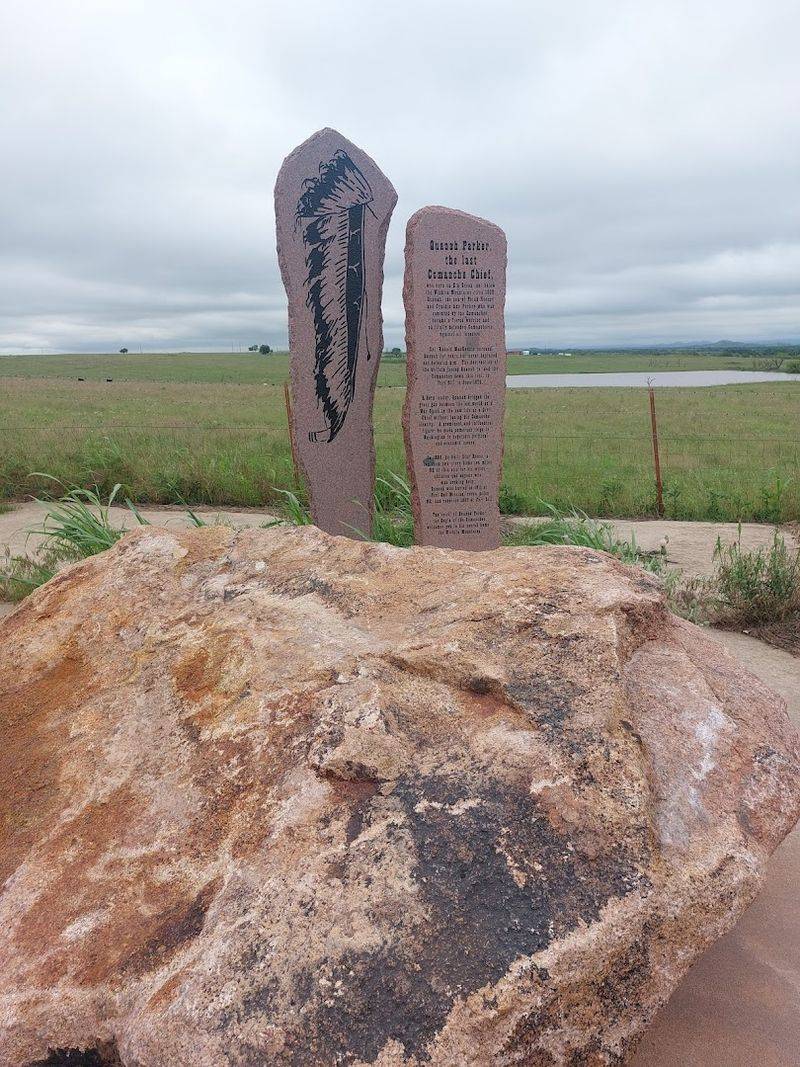
Roadside historical markers rarely stop traffic. Most people drive past them without a second glance.
The Quanah Parker and Comancheria Historical Marker near Indiahoma, Oklahoma, is the kind of site that genuinely rewards the decision to pull over.
The combination of the monument’s physical quality, the depth of the history it represents, and the raw beauty of the surrounding Oklahoma landscape makes this stop feel different from the average historical marker.
There is something about standing in a place where history actually happened that no book or documentary can fully replicate. The open plains around Indiahoma were part of Comancheria.
Quanah Parker and his people knew this land intimately.
The site asks very little of you. There is no entry fee, no guided tour requirement, and no schedule to follow.
You arrive, you read, you look out at the plains, and you leave with something you did not have before.
For anyone traveling through southwestern Oklahoma, this marker is an easy addition to a road trip itinerary and a deeply worthwhile one. Some places earn their significance quietly, without fanfare, and this is one of them.
Oklahoma has a way of doing that to you.
