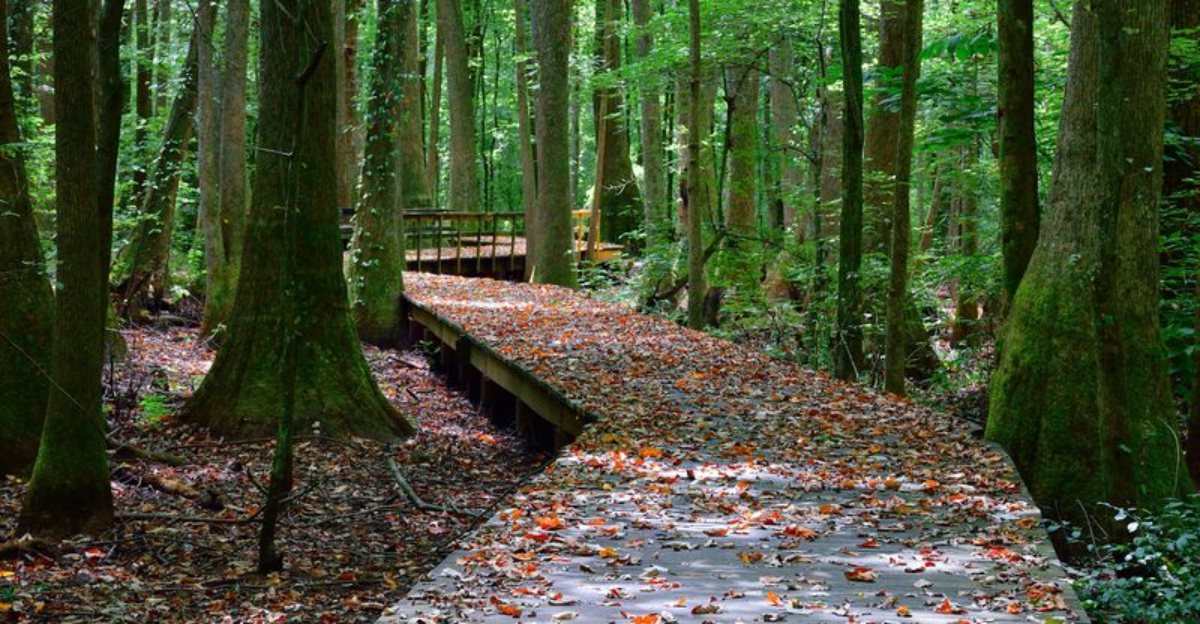
Most people blow past it on the interstate without a second glance. But just off the highway in North Alabama, this quiet boardwalk trail waits for anyone willing to make the turn.
A short path winds through a genuine swamp ecosystem that feels completely removed from the nearby road noise. Towering water tupelo trees rise out of dark, still water, while the sounds of wildlife create a steady natural backdrop that replaces everything you left behind at the highway.
It is a simple, easy walk, but that is part of what makes it special. For anyone looking for a quick, peaceful escape without planning a full-day hike, this hidden stretch of boardwalk and gravel trail delivers a surprisingly immersive slice of North Alabama nature.
A National Natural Landmark Most Hikers Have Never Heard Of
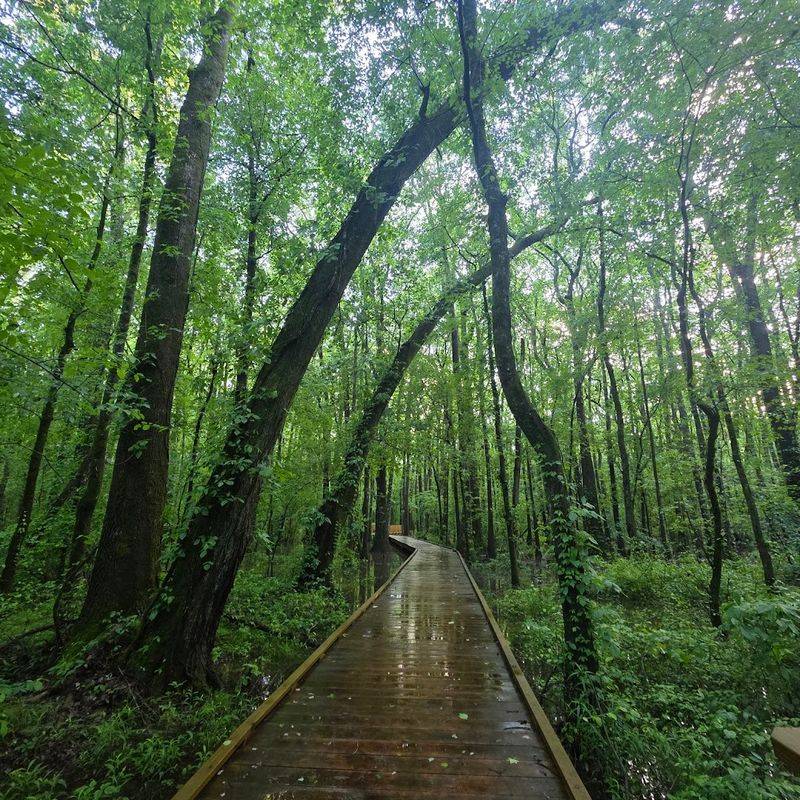
Not many one-mile trails carry the distinction of passing through a National Natural Landmark. The Beaverdam Creek Swamp earned that designation back in 1974, recognized for its remarkable stand of water tupelo trees.
This is the largest water tupelo forest in all of North Alabama, and that is not a small claim.
What makes this even more fascinating is that the ecosystem here is more typical of the Gulf Coastal Plain, which sits much further south. Finding it this far north is genuinely unusual.
Scientists and naturalists have long noted that this swamp represents a habitat that simply should not be this far inland or this far north by geography alone.
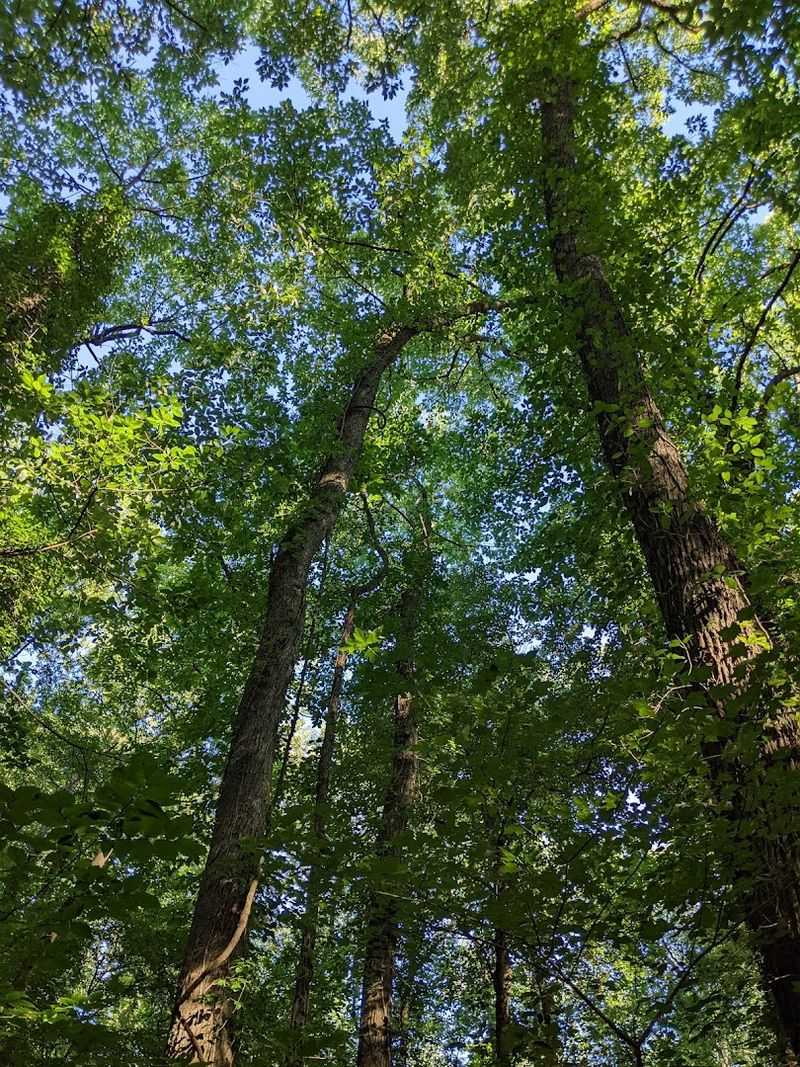
Walking through the boardwalk section, you start to feel the weight of that history. The trees here are old, wide, and draped in an atmosphere that feels prehistoric.
Their knobby roots push up through the water like natural sculptures. Interpretive signs along the trail do a solid job of explaining what you are looking at, which helps even casual visitors appreciate the significance of the place.
You do not need a biology degree to understand that this swamp is something rare. You just need to slow down, read the signs, and look around.
For nature lovers, history buffs, or anyone who appreciates genuinely unique landscapes, this landmark status alone makes the short drive worth every minute.
Wildlife Encounters That Catch You Off Guard
There is something thrilling about rounding a curve on a boardwalk and suddenly locking eyes with a great blue heron just a few feet away. That kind of moment happens regularly at Beaverdam Creek.
The swamp supports a surprisingly wide range of wildlife, and many of it shows up without any warning.
Bird watchers will want to know that this trail is listed as Site 25 on the North Alabama Birding Trail. Herons, owls, and various waterfowl are common sightings.
Frogs and turtles are easy to spot along the water’s edge, especially in warmer months. Beaver lodges are visible from the boardwalk, and yes, alligators have been spotted here too, particularly during spring and summer.
Snakes also make appearances, so staying on the path is genuinely good advice rather than just a rule. Cotton mouth sightings have been reported by visitors in the past.
None of this should scare you away. It should actually excite you.
This is a living, breathing swamp with a full food chain operating in plain sight. Photographers especially love this trail for that reason.
The combination of still water, dense canopy, and abundant wildlife creates shot opportunities that are hard to replicate anywhere else in the region. Bring a zoom lens if you have one, and move quietly for the best results.
Flat, Easy, and Open to Everyone
Not every great nature trail requires boot camp-level fitness. Beaverdam Creek Boardwalk is proof of that.
The entire route is flat, with zero elevation gain, making it one of the most accessible outdoor experiences in North Alabama.
Half the trail is light gravel, and the other half is an elevated wooden boardwalk with no incline or decline. Strollers move through it without trouble.
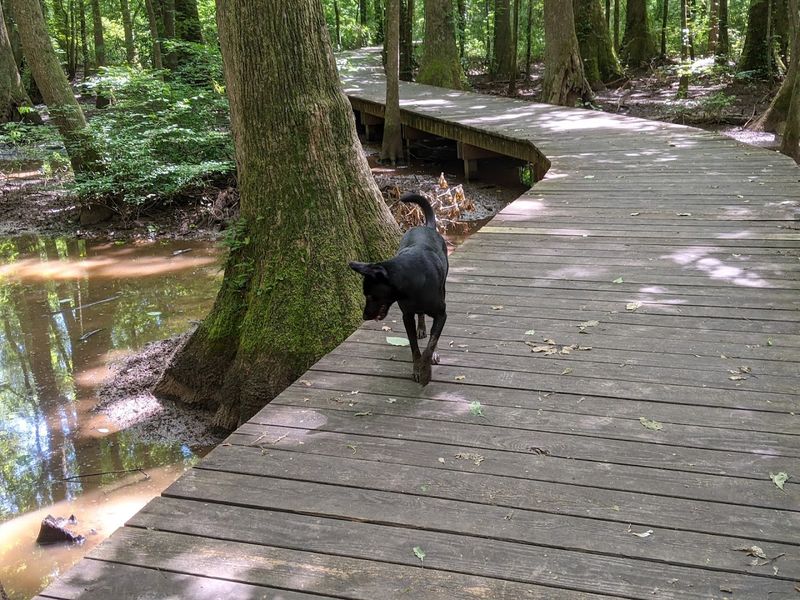
Wheelchairs navigate the gravel section easily, and the boardwalk portion is fully raised and stable. Leashed dogs are welcome too, which makes it a solid option for a family outing that includes the four-legged members.
Multiple benches are placed along the route, so anyone who needs to rest can do so without cutting the walk short.
The address for the trailhead is AL-20, Madison, AL 35756, and parking is located at the end of Jolley B Road. There is no entry fee, and no facilities are available on-site, so plan accordingly.
Bring water, sunscreen, and bug spray depending on the season. The simplicity of the setup is actually part of the appeal.
You park, you walk, you experience something genuinely beautiful, and then you leave feeling refreshed rather than exhausted. For families with young kids, older adults, or anyone recovering from an injury, this trail offers real access to nature without demanding anything extreme in return.
Photography Conditions That Are Hard to Beat
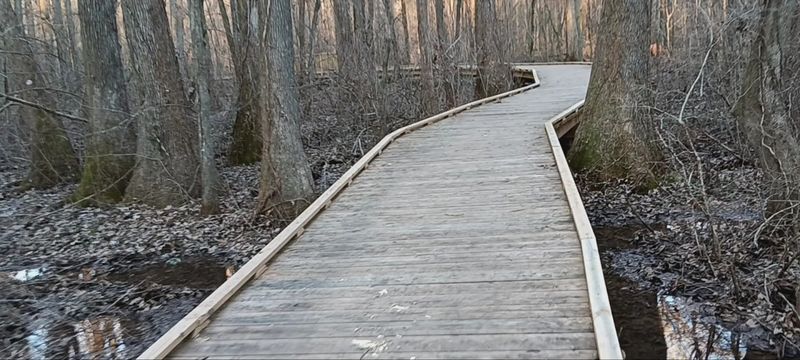
Photographers have a quiet obsession with this place, and once you see it for yourself, the reason becomes obvious. The still water acts like a mirror, reflecting the canopy above in a way that makes every shot feel composed rather than accidental.
Light filters through the trees in long, soft columns during early morning and late afternoon, creating a mood that is genuinely hard to manufacture.
Sunrise visits reward early risers with fog sitting low over the water and almost no other visitors around. Fall brings a color shift in the foliage that transforms the whole palette of the trail.
Even overcast days produce a moody, dramatic quality that experienced photographers often prefer over harsh midday sunlight. The dense canopy keeps direct sun off the water for most of the day, which helps with exposure balance.
The boardwalk itself provides stable footing for long exposures, which matters if you are shooting in low light without a tripod. Wildlife often moves close enough for detailed shots without needing extreme zoom.
Beaver lodges, roosting birds, and water surface textures all offer compelling subjects within a short walk. Whether you shoot on a phone or a professional camera, this trail delivers material that translates well in any format.
Many photographers return multiple times across different seasons just to see how dramatically the same stretch of boardwalk can change its personality throughout the year.
A Quiet Escape That Sits Just Off the Interstate
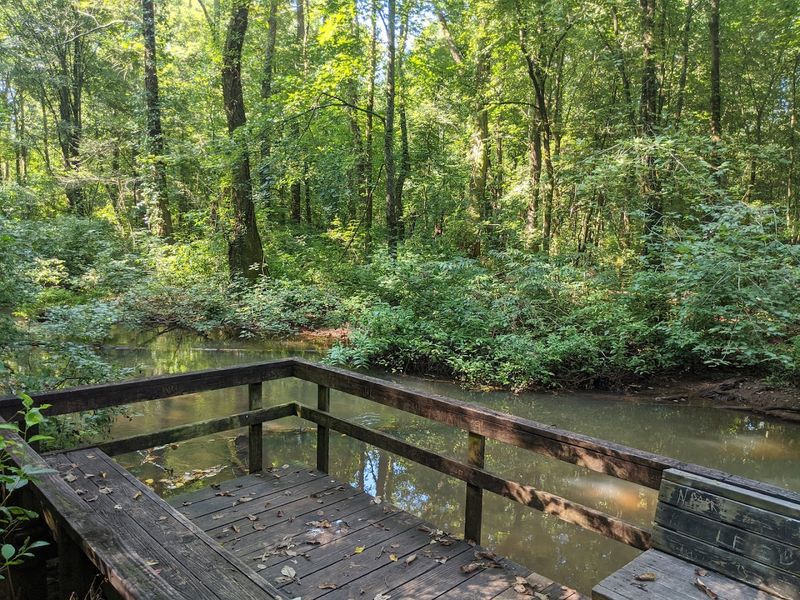
There is something almost paradoxical about this place. You can hear highway noise when you first arrive at the trailhead.
Within a few minutes of walking, that sound fades into the background and the swamp takes over completely. The density of the tree canopy and the natural acoustics of the wetland do a remarkable job of absorbing the outside world.
That contrast is part of what makes Beaverdam Creek so appealing for road trippers and locals alike. It sits just off I-565, accessible via a turn onto Old Highway 20 that leads down a quiet stretch sometimes described as a road to nowhere.
The trail dead-ends at the parking area, which keeps through traffic nonexistent. Visitor numbers stay relatively low compared to busier regional trails like Monte Sano or Green Mountain, so a peaceful experience is far more likely here.
Weekday mornings are especially quiet. Even on weekends, the small parking lot naturally limits crowd size.
Benches placed at intervals along the trail and at the observation deck at the end give you places to simply sit and absorb the atmosphere. Many visitors describe it as one of the few spots in the area where you can genuinely feel alone with nature for a little while.
That kind of stillness is rare near a major highway, and it makes this trail a genuinely unexpected find for anyone passing through North Alabama.
Seasonal Changes That Make Every Visit Feel New
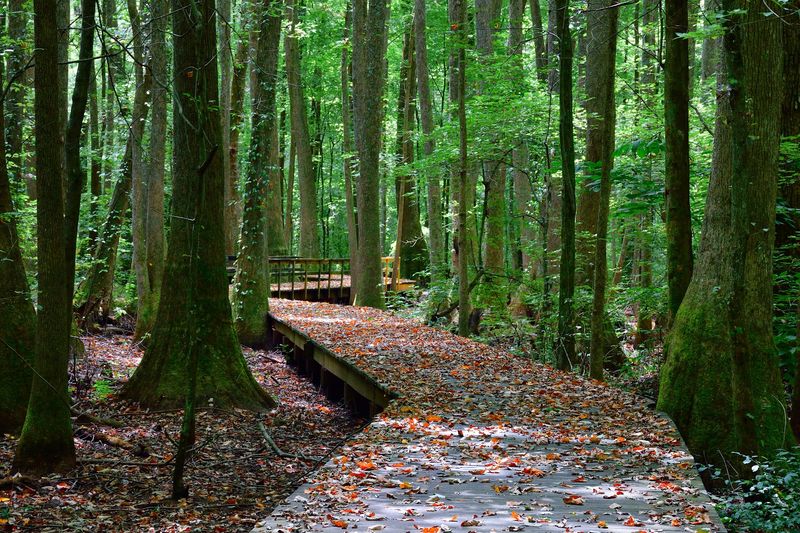
One visit to Beaverdam Creek is genuinely not enough. The trail transforms so dramatically across the seasons that returning visitors often say it feels like a completely different place depending on when they show up.
That kind of range is unusual for a one-mile walk.
Spring brings the swamp back to life with fresh green growth, active wildlife, and water levels that fill the tupelo forest with the dark, reflective pools the trail is known for. Fall delivers rich color shifts in the canopy, with amber and gold tones that photograph beautifully.
Winter strips things back to bare branches and quiet water, creating a stark, almost meditative atmosphere that some visitors actually prefer for its simplicity and solitude.
Summer is the most intense season here, and that comes with a caveat. Mosquitoes are aggressive during the hot months, so bug spray is not optional, it is essential.
The canopy provides shade that keeps the temperature a few degrees cooler than open trails, which helps on particularly hot days. After heavy rain, the gravel sections can get muddy, but the boardwalk remains walkable throughout.
Checking conditions before a summer or rainy-season visit is a smart move. Despite the bugs, summer also brings the most active wildlife period, with frogs, turtles, and water birds at their most visible.
Each season has something worth seeing.
A Well-Maintained Trail With a Thoughtful Layout
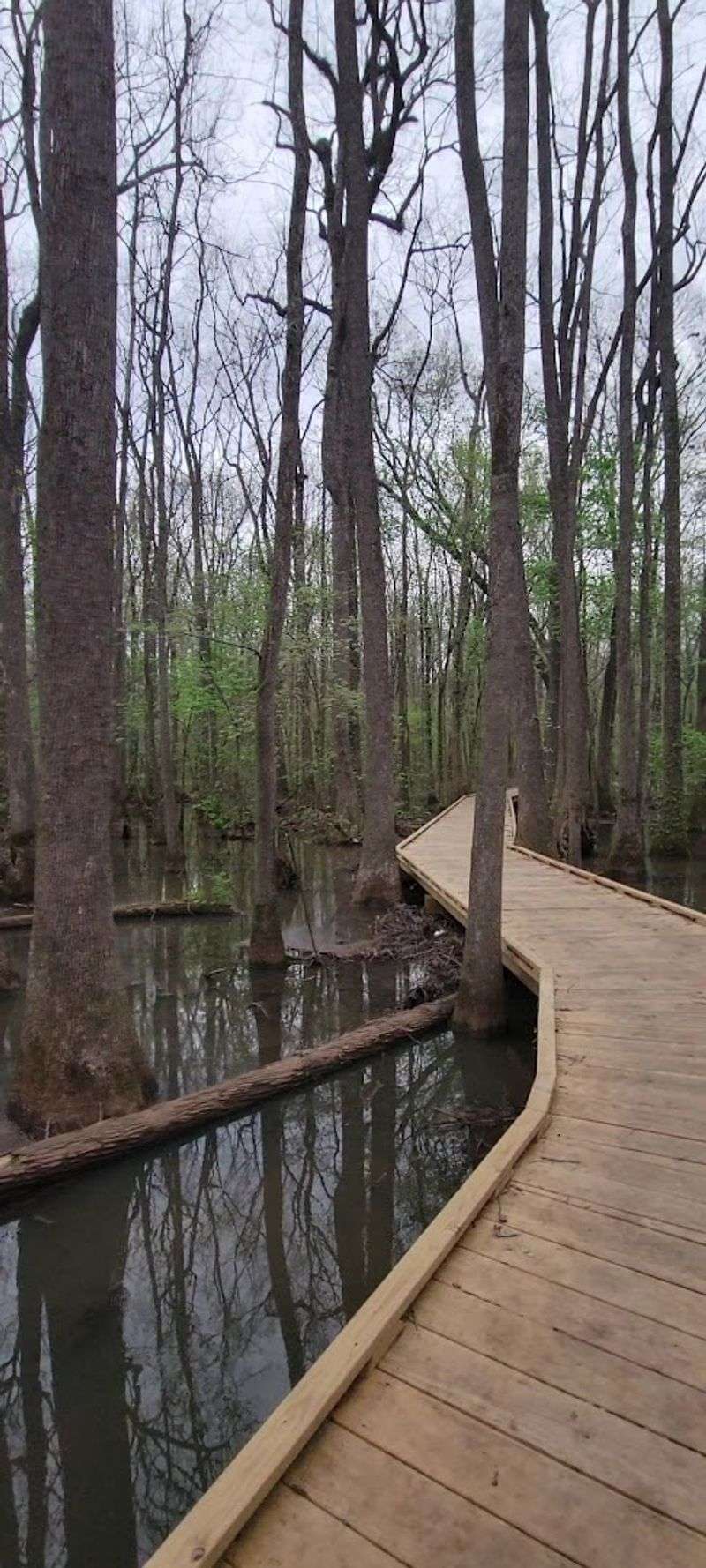
A trail is only as good as its upkeep, and Beaverdam Creek holds up well on that front. The boardwalk section was recently reconstructed, and the overall condition of the path reflects regular maintenance attention.
That matters more than people realize until they show up somewhere expecting a nice walk and find rotting planks or overgrown sections instead.
The layout is thoughtfully designed for the experience rather than just the destination. The first half of the trail uses light gravel, which is firm and easy underfoot.
Then the terrain transitions to the elevated wooden boardwalk as you move deeper into the swamp. That shift in surface marks a shift in atmosphere too.
The moment you step onto the boardwalk, the swamp opens up around you and the whole feel of the walk changes.
At the far end sits an observation deck positioned right at the edge of Beaverdam Creek itself. Benches there give you a place to sit and watch the water, listen to the birds, or just decompress for a few minutes before heading back.
Informational signs placed at the trailhead and along the route explain the ecology of the area without being overwhelming. The whole experience feels intentional.
Someone clearly put thought into how visitors would move through this space and what they would notice along the way. For a free, no-frills trail, the quality of the experience it delivers is well above average.
