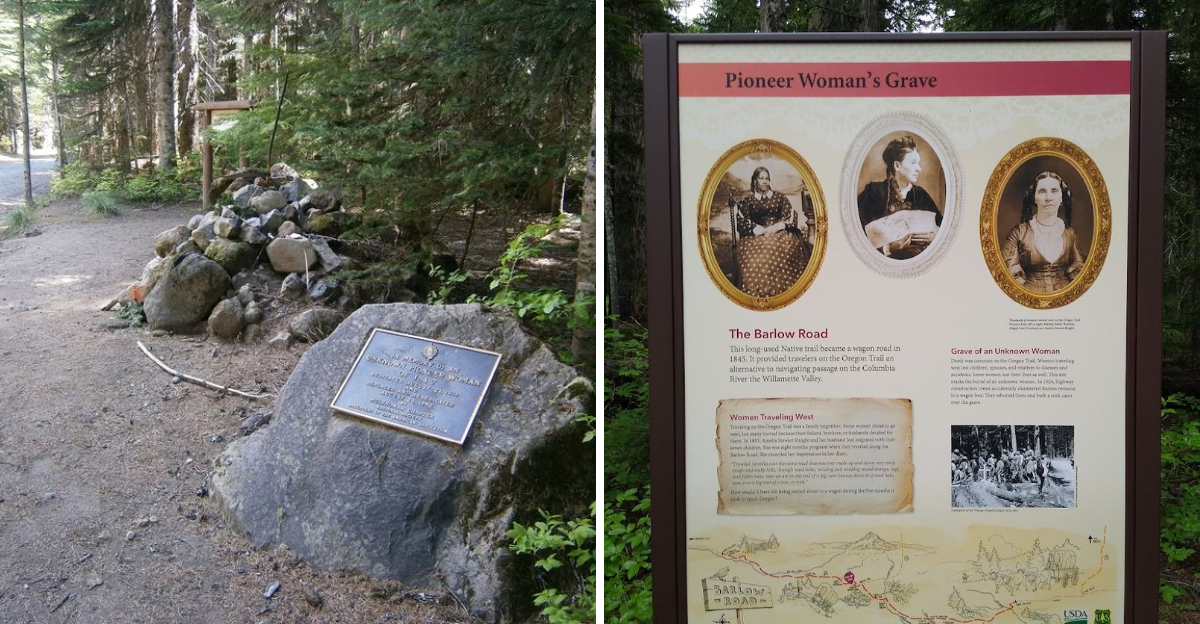
A simple wooden marker, a pile of stones, and a name that time has completely swallowed. This quiet spot holds the remains of a woman who never made it to the end of the Oregon Trail, and nobody knows her name anymore.
The forest has grown thick around her final resting place, with moss and ferns slowly reclaiming the ground. She was buried in the 1840s, hidden by brush until road workers stumbled upon her grave in 1924.
Her husband had lost her to sickness and was left with two small children, both under five years old. He placed her in a crude wagon box and made a simple fence before continuing his journey westward.
Today, visitors leave small offerings on the stone pile, tokens of respect for a story that no one can fully tell. The location is quiet, just off an old highway route near the mountain.
Oregon holds countless stories like this one, remnants of the hardship and courage that built this state. It is a reminder that not every pioneer got to see the promised land.
Some were simply left behind, remembered only by strangers who stop to pay their respects.
The Barlow Road: A Trail Paved with Desperation
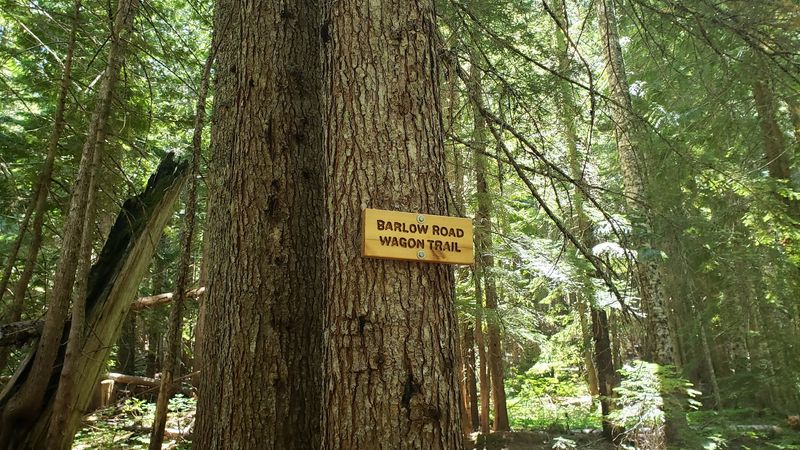
Long before paved highways existed, the Barlow Road was a lifeline for thousands of pioneers. Samuel Barlow carved this toll road through the Cascade Mountains in 1846.
It gave Oregon Trail travelers an alternative to the deadly Columbia River raft route.
The road wound through rugged terrain at elevations that punished wagon wheels. Oxen collapsed under the strain, and supplies ran dangerously low.
Families pushed forward because turning back felt like dying slower.
Today, portions of the original road still exist inside Mt. Hood National Forest.
You can actually walk where those wagon wheels once carved deep grooves into the earth. Ruts from the 1840s and 1850s remain visible in certain sections.
Standing on that trail, it becomes impossible to imagine the weight of that journey. Every step forward meant leaving something behind, comfort, safety, maybe even a loved one.
The Barlow Road is not just a path through trees. It is a physical record of human stubbornness and survival carved into Oregon soil.
A Pile of Rocks That Carries More Weight Than Stone
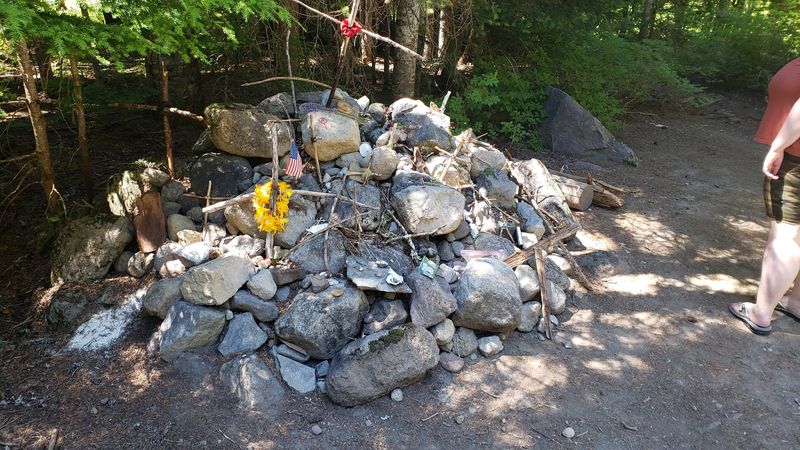
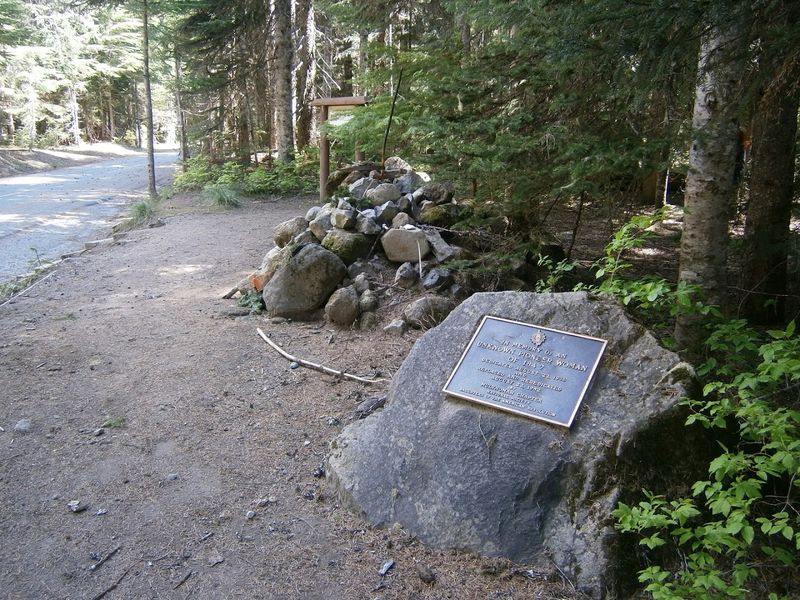
Most graves have headstones with names, dates, and maybe a verse. This one has rocks, just a simple mound of stones stacked by hands that cared enough to mark a moment.
The grave of the Pioneer Woman sits quietly just off the road, almost shy in its simplicity.
Visitors often leave small tokens near the rocks, flowers, coins, handwritten notes. People feel compelled to acknowledge her even without knowing her name.
That instinct to honor a stranger says something beautiful about human nature.
The rocks themselves are unremarkable in appearance, but their meaning is enormous. Someone took time, during an exhausting and desperate journey, to stop and build this marker.
That act of grief in the wilderness still resonates nearly two centuries later.
I stood there longer than I expected to. The forest around the grave is dense and green and completely indifferent to history.
But the rocks hold a kind of gravity that the trees do not. Something about their permanence in that wild place feels almost defiant.
Her Name: The Mystery That Refuses to Fade
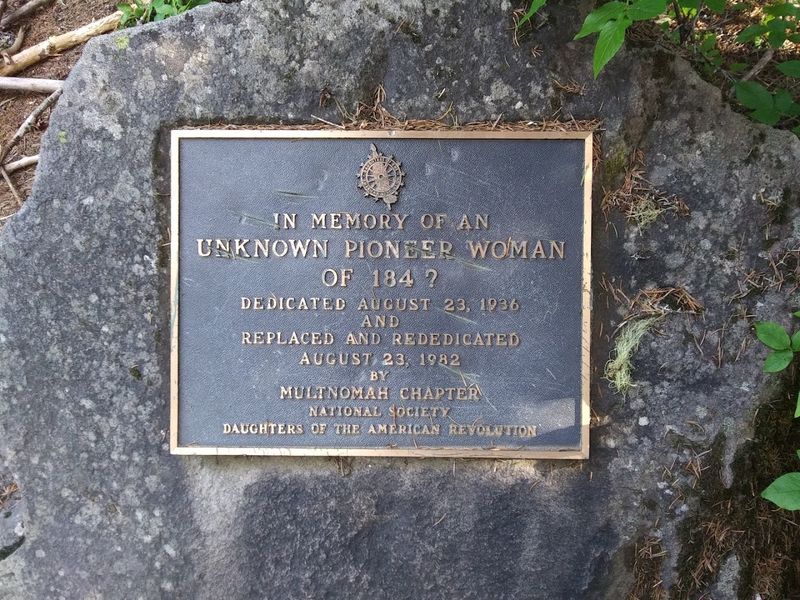
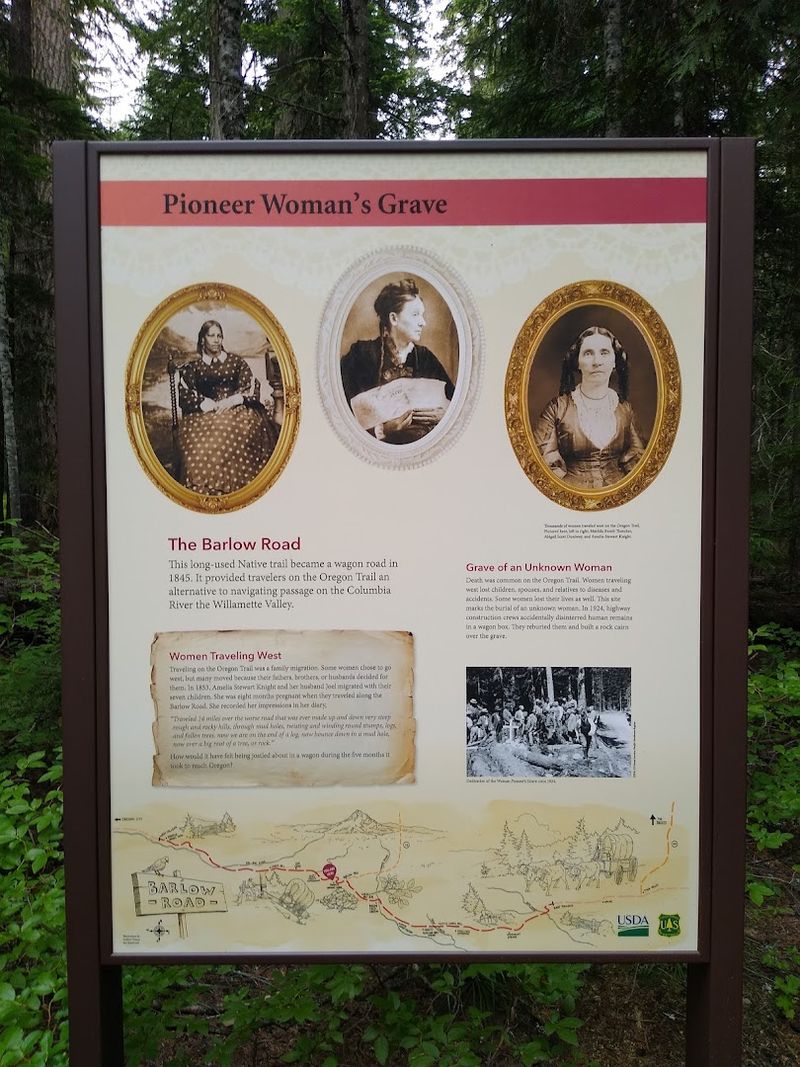
One visitor left a comment suggesting her name might have been Mrs. Channey, but no official record confirms this. The plaque near the grave offers fragments of her story without filling in the most important blank.
Her name remains officially unknown.
Historians have searched wagon train records, diaries, and emigrant journals for clues. Oregon Trail documentation from the 1840s and 1850s was inconsistent at best.
Women were often listed only as wives or mothers, not as full individuals with their own identities.
That erasure feels especially painful standing at her grave. She crossed half a continent on foot and by wagon.
She survived things most people today cannot imagine, and history still could not be bothered to remember her name.
Some visitors have given her names of their own, private acts of tribute that feel both touching and heartbreaking. Naming someone after their death is a strange kind of kindness.
It will not restore what was lost, but it proves that people still care about the woman beneath those rocks.
Mt. Hood National Forest: A Landscape That Dwarfs Everything
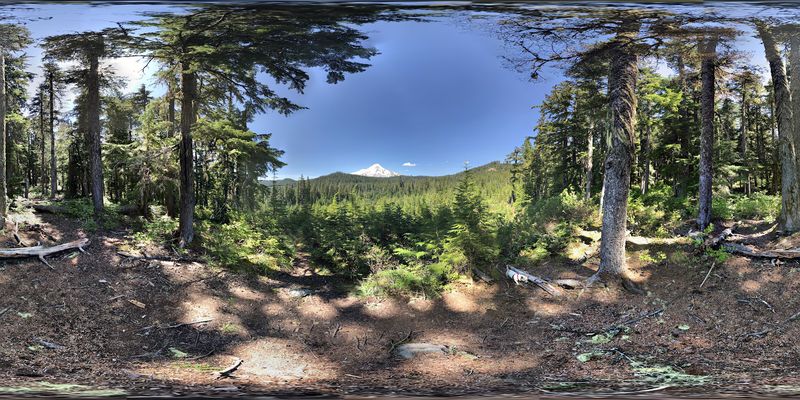
Mt. Hood National Forest covers over one million acres of Oregon wilderness.
It is a place of volcanic peaks, ancient forests, and rivers that run cold and fast year-round. The forest feels enormous in a way that reshapes your sense of scale.
Driving through it, especially along the historic Barlow Road corridor, you begin to understand what pioneers faced. The trees are tall enough to block sunlight in thick stretches.
The terrain rolls and drops in ways a wagon would have struggled to navigate.
Wildlife moves through here constantly, elk, black bears, deer, and birds that call from places you cannot see. The forest is not passive scenery.
It is an active, living system that existed long before humans tried to cross it.
For modern visitors, the forest offers hiking, camping, and scenic drives that feel genuinely remote. The Pioneer Woman’s Grave sits within this vast green world, a tiny human marker inside something impossibly large.
The Oregon Trail: Context That Makes the Grave Mean More
The Oregon Trail stretched roughly 2,000 miles from Missouri to the Willamette Valley. Pioneers began making the journey in large numbers during the early 1840s.
By the time the trail peaked in the mid-1800s, hundreds of thousands had attempted it.
Estimates suggest that around 20,000 people died along the trail between the 1840s and 1860s. Disease, accidents, starvation, and exhaustion claimed lives at every stage.
Many were buried in unmarked graves just like the one near Barlow Road.
The Pioneer Woman’s grave represents all of them in a way. She is the unnamed face of a massive human migration that shaped the American West.
Her story is both singular and universal at the same time.
Learning even a little about the Oregon Trail before visiting this grave changes the experience completely. You stop seeing a pile of rocks and start seeing the end of a journey that began thousands of miles away.
Getting There: What the Drive Feels Like
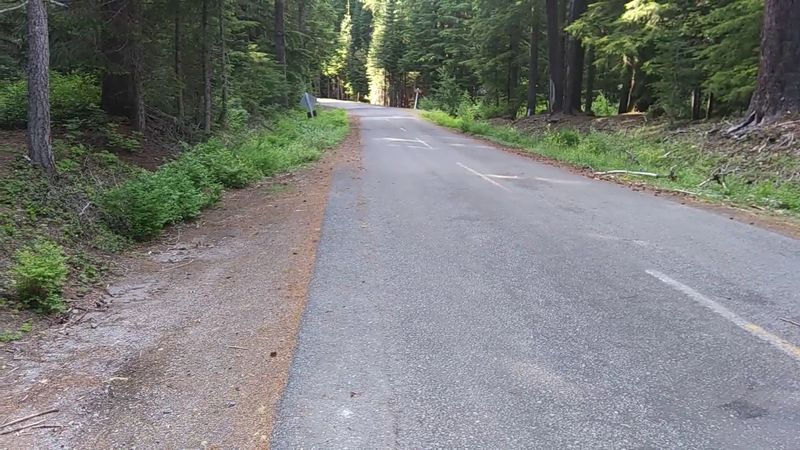
The Pioneer Woman’s Grave sits near Government Camp, Oregon, along the historic Barlow Road route inside Mt. Hood National Forest.
Getting there involves driving through some genuinely beautiful mountain scenery. The road narrows and the forest thickens as you get closer.
There is roadside parking near the site, nothing fancy, just a gravel pullout that gives you enough room to stop safely. The grave is visible from the road, which means you can pay your respects without a long hike.
That accessibility makes it easy to include in a broader Mt. Hood road trip.
The drive itself prepares you emotionally for what you find. Tall firs press close on both sides of the road.
The light changes as the canopy shifts, and the whole place starts to feel layered with time.
Morning visits offer the quietest experience, with mist still clinging to the lower branches and almost no traffic. Arriving early means you might have the site entirely to yourself.
The Plaque: Small Words That Carry Enormous Sadness
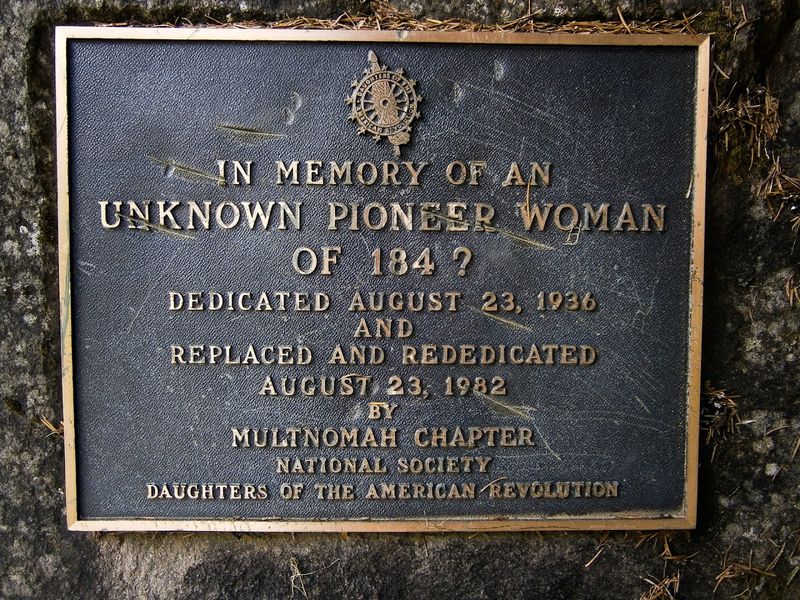
Near the rock pile, a plaque offers what little information exists about the woman buried there. It does not give a name.
It acknowledges that a pioneer woman died here, likely in the mid-1800s, while traveling toward a new life in Oregon.
Reading it takes about thirty seconds. The impact lasts much longer.
There is something about the brevity of that text that hits harder than a lengthy epitaph would. The plaque says so little because so little is known.
Plaques like this one are common along the Oregon Trail corridor, but they rarely feel routine. Each one marks a real person who made a real sacrifice.
This particular marker feels especially poignant because the anonymity is so complete.
Visitors often photograph the plaque, as if capturing it preserves something important, and maybe it does. Sharing her story, even without her name, keeps something of her alive.
Eerie Encounters: When the Forest Starts to Feel Different
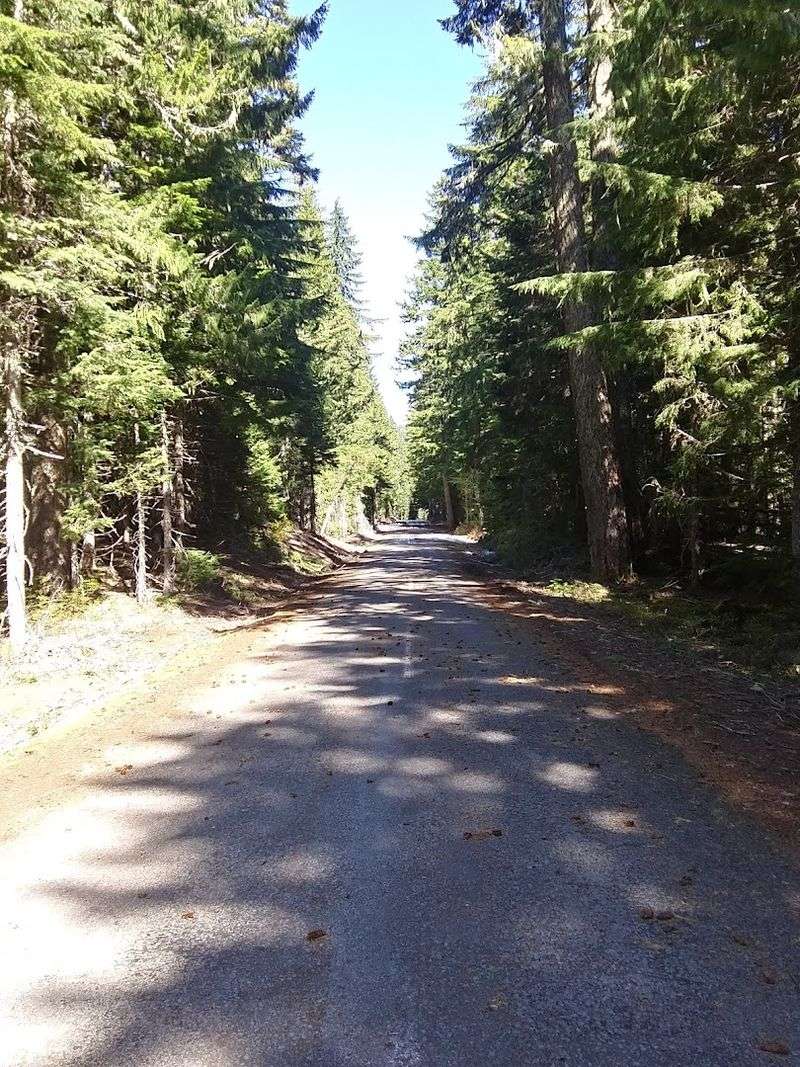
One visitor described spending a night parked near the grave while on an elk hunting trip. He and his brother both heard what sounded like children playing on a playground throughout the night.
In the morning, they found no house, no playground, and no explanation.
That story is impossible to verify, and this article is not making any claims about the supernatural. But the forest around this grave does have a particular atmosphere that visitors consistently notice.
Something about the place feels charged, attentive, like the trees are listening.
Dense forests carry natural sounds that can be disorienting after dark. Wind through the canopy, animals moving through brush, and the settling of old timber all create unexpected noises.
The human mind, especially in an unfamiliar place, fills in the gaps with pattern and meaning.
Whether or not you believe in anything beyond the physical, the mood of this site is undeniable. It is peaceful and unsettling at the same time.
Honoring a Stranger: Why People Leave Offerings
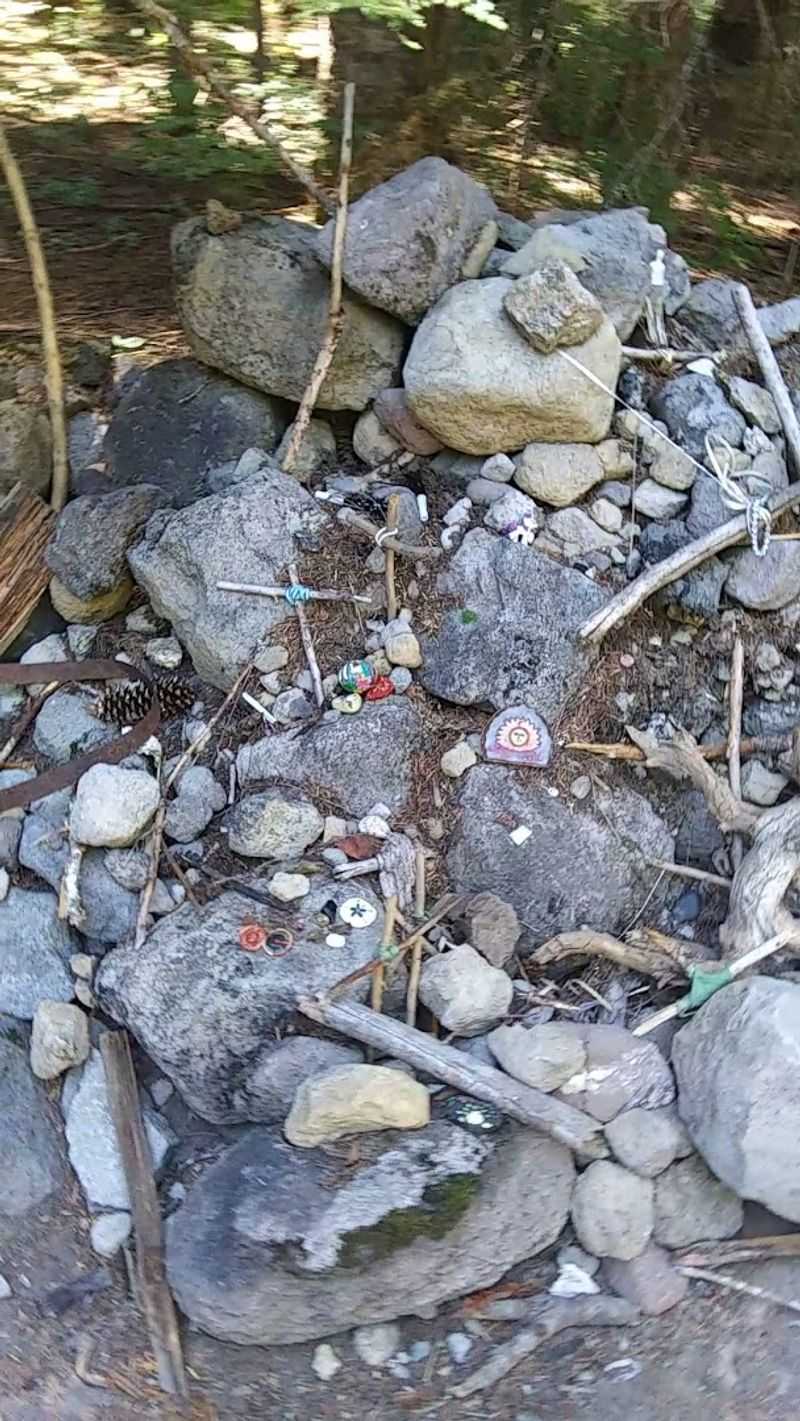
People leave things at the Pioneer Woman’s grave even though they never knew her. Flowers appear and disappear with the seasons.
Small stones get added to the pile by visitors who want to contribute something to her monument.
One visitor wrote that she was so moved by the story that she wrote a full tribute and gave the woman a name. That kind of response speaks to something deep in how humans relate to loss and anonymity.
We need to personalize grief to process it.
Leaving an offering at a stranger’s grave is an ancient human behavior. It appears across cultures and centuries as a way of saying: you mattered, and someone passing through remembered you.
At this particular grave, that impulse feels especially strong.
The site stays clean, which suggests that visitors treat it with genuine respect. Nobody has vandalized the rocks or removed the plaque.
The community of people who visit seems to understand instinctively that this place deserves care.
Why This Stop Deserves a Place on Your Oregon Road Trip
Oregon is full of dramatic landscapes and well-marked tourist destinations. The Pioneer Woman’s Grave is neither dramatic nor well-marketed, and that is exactly what makes it worth stopping for.
It offers something that scenic overlooks and visitor centers cannot: genuine emotional weight.
The stop takes maybe fifteen minutes if you linger. It costs nothing.
It requires no special gear, no reservation, and no prior planning beyond knowing where to pull over. Yet it tends to stay with people far longer than more elaborate attractions.
Traveling through Mt. Hood National Forest already puts you in a reflective mood.
The trees are old and the road feels removed from modern noise. Adding this stop layers in a human story that makes the landscape feel inhabited by more than just wildlife.
Road trips through Oregon often chase waterfalls and mountain views, which are absolutely worth chasing. But the Pioneer Woman’s Grave offers a different kind of reward.
It reminds you that the land you are admiring was crossed by real people at enormous personal cost.
Address: Pioneer Woman’s Grave, Government Camp, OR 97028
