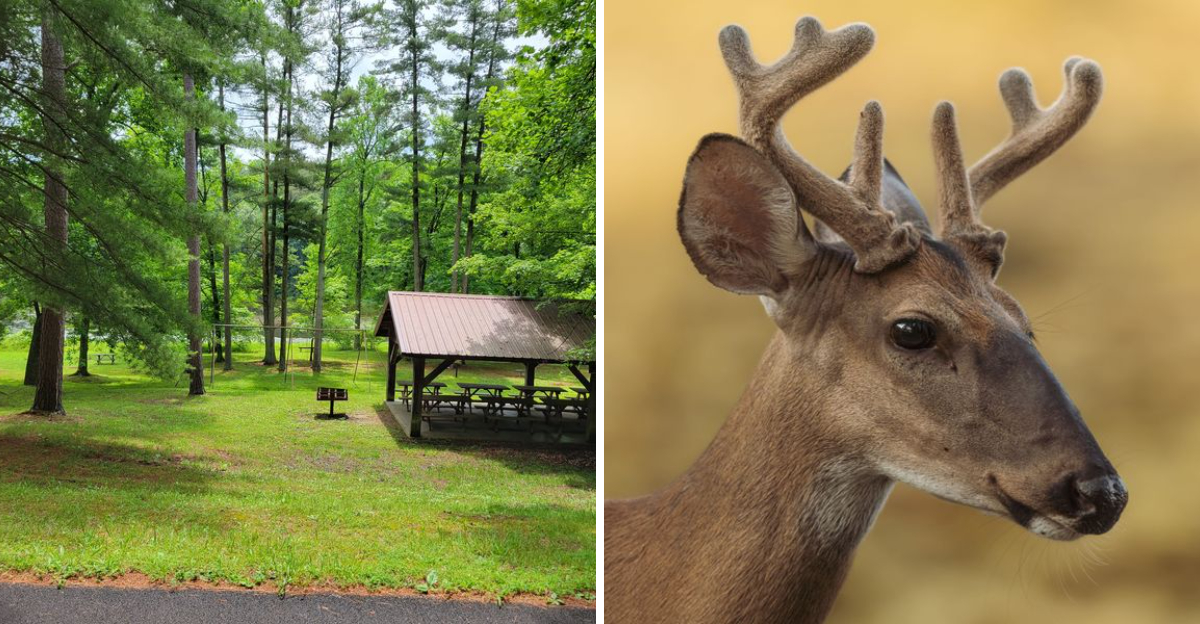
You pull off a narrow country road in southern Indiana expecting a quick stretch of the legs, and end up staying most of the day. This state forest sits in the rolling hills near a small town, holding that rare quality of feeling both cared for and forgotten at the same time.
The first thing you notice is the sound, or rather the lack of it, just wind moving through pines and the occasional splash from a lake you cannot yet see. Then a fire tower rises above the treetops, and you already know exactly how your afternoon is going to end.
You climb it, and the view knocks the words right out of you. Ever had a moment like that stop you mid-sentence?
If you like your nature quiet, hilly, and a little old-fashioned, this state has a spot on the map worth finding.
The Fire Tower Climb That Steals The Whole Day
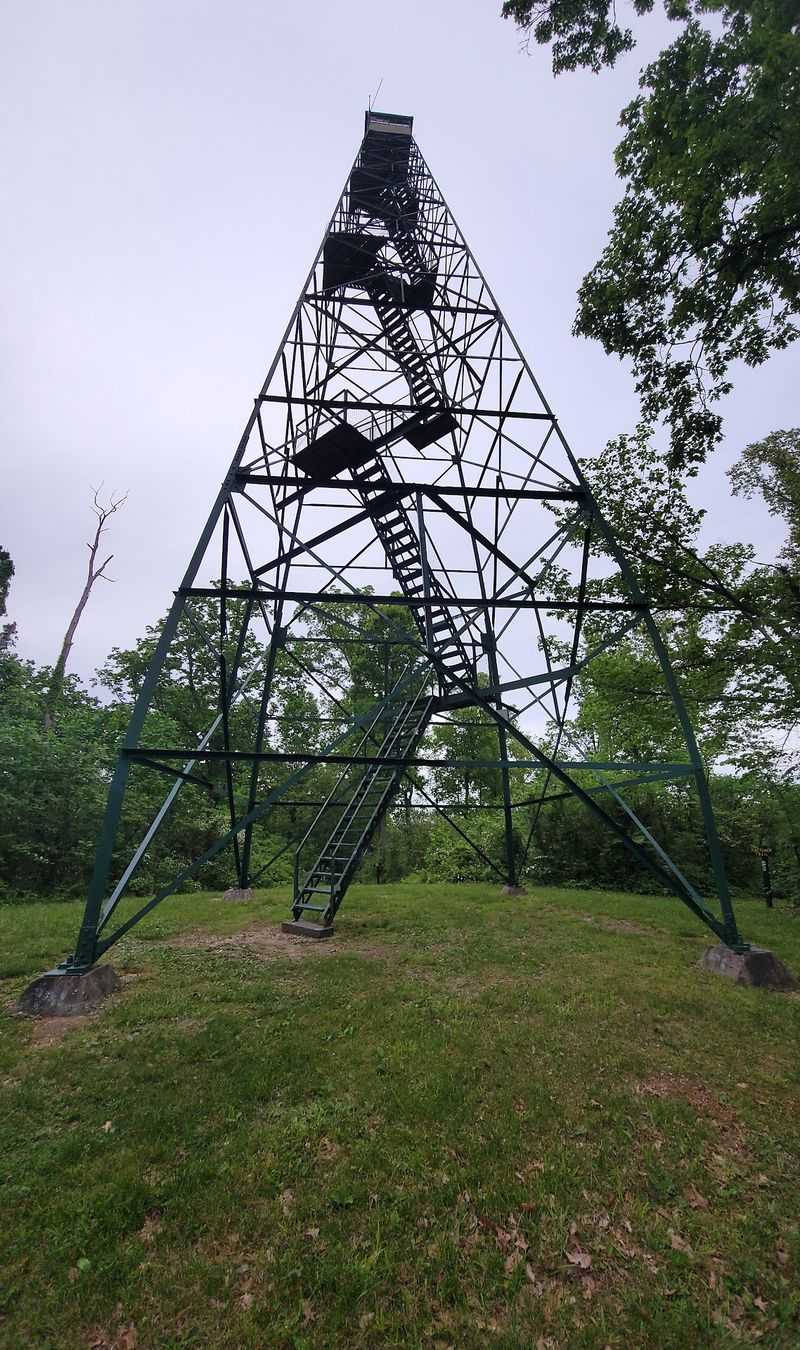
Halfway up those open steel steps, I stopped pretending I wasn’t gripping the rail a little tighter than necessary. The tower is the star of Ferdinand State Forest, and honestly, it earns that title.
Built by the Civilian Conservation Corps in the 1930s, it was made for spotting smoke, not tourists, which is part of why the climb feels so raw and unpolished.
The Firetower Trail leads there on a moderate route marked with red rectangular blazes, and the walk warms you up nicely before the vertical part begins. Each landing gives you a little more sky and a little less forest floor.
At the top, the whole thing opens up. Waves of hardwood canopy roll off toward the horizon in every direction, broken only by the dark green patches of pine plantation.
I stood up there for a solid stretch, letting the wind do its thing, watching hawks ride the air below eye level. That part still sticks with me.
A tip from experience: wear shoes with real grip, since the steps can hold moisture after rain. Bring a friend if heights make you uneasy, because having someone chatting behind you helps more than you would think.
Go in late autumn or winter and the bare branches give you an even wider view across the ridges and hollows.
Trails That Take Their Time Winding Through The Hills
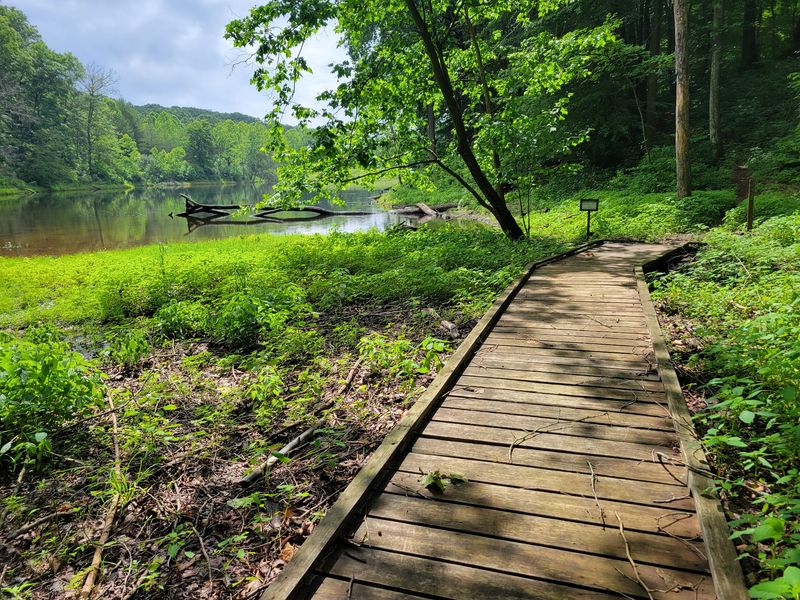
My favorite hours here were spent with no destination at all, just following whichever blaze looked interesting at the next junction. Around ten miles of trail thread through the forest, and they range from easy strolls to genuinely leg-burning climbs.
The Kyana Trail became my pick of the bunch. It rolls past the quiet outlines of old home sites, skirts a pond that always seems busy with frogs, and drops into a valley where a small footbridge crosses the water.
Spring is something else on these paths. Bloodroot, Dutchman’s breeches, trillium, and wild ginger pop up across the forest floor, and I found myself crouching every few minutes to look closer.
The Twin Lake Trail runs a different mood entirely, linking Coyote Hollow Lake and Fossil Lake while cutting through those planted pine sections. The needles underfoot muffle every step.
Be honest with yourself about the terrain. Some stretches get steep, and after heavy rain a few creek crossings turn into small wading exercises since bridges are scarce.
Waterproof boots solve most of that. So does checking the forecast the night before.
Benches show up in useful spots along the lake loops, which I appreciated more than I expected. Sitting on one, watching turtles surface, felt like the whole point of coming.
Four Lakes And A Beach Nobody Seems To Fight Over
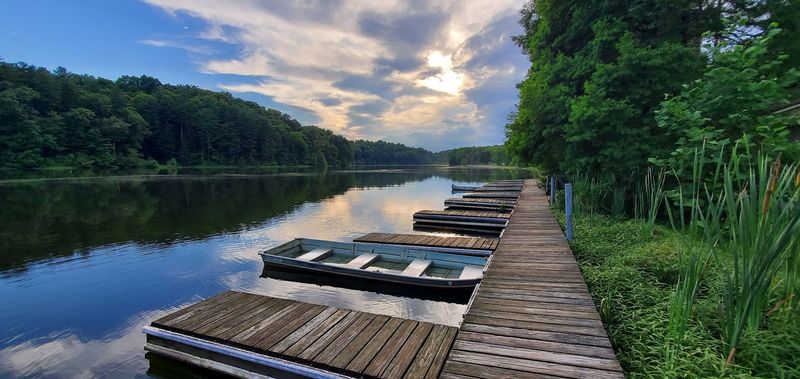
Water shows up everywhere in this forest, and it changes the whole feel of a visit. Four lakes sit tucked into the hills, and the biggest one, Ferdinand Lake, anchors most of the recreation.
The CCC crews shaped these lakes back in the 1930s, and they picked their spots beautifully. Shorelines curve into the trees so you rarely see the entire lake at once.
Anglers do well here. Largemouth bass, bluegill, and channel catfish all live in these waters, and I watched a couple of folks working a shoreline with the unhurried patience that fishing seems to require.
Rowboat and canoe rentals run on Ferdinand Lake from mid-April through October, and paddling out is the best way to see the coves. Small boats with electric motors are welcome too.
The swimming beach opens from Memorial Day weekend through Labor Day, with restrooms, dressing facilities, and a shower nearby. Families spread out along the sand without anybody feeling crowded.
What surprised me most was the wildlife traffic right at the water’s edge. Geese, ducks, turtles sunning on logs, tree frogs starting up at dusk.
Picnic tables and three shelter houses sit near the lake, plus a couple more back in the woods. Pack a lunch and claim a bench.
Walking Through Work The CCC Left Behind
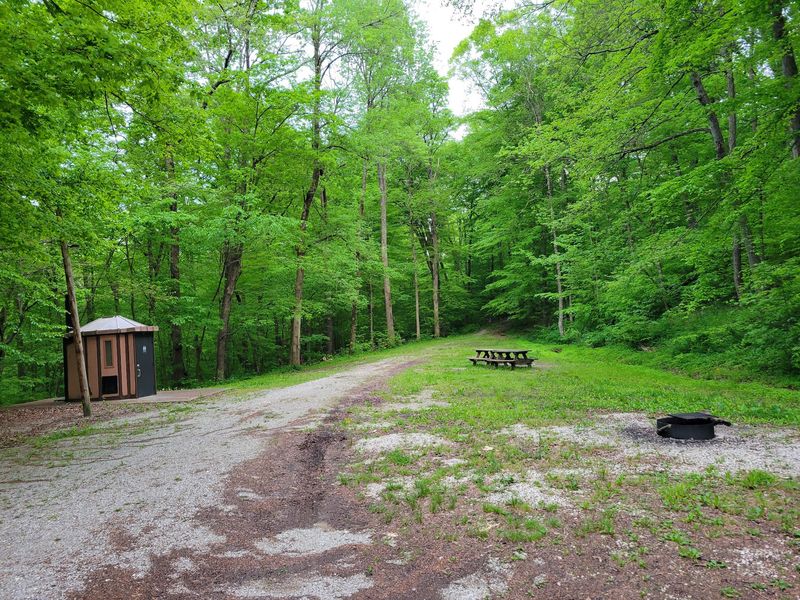
Old craftsmanship has a way of announcing itself, and here it shows up in stonework, roadbeds, and that unmistakable tower. Ferdinand State Forest was established in 1934 after a local conservation club pushed for professional management under the Indiana Department of Conservation.
Then came the Civilian Conservation Corps. Young men, many from nearby communities, spent the 1930s carving roads, raising service buildings, and creating the lakes I had just been sitting beside.
What they inherited was not this. Much of the land was cutover hillside, tired and stripped, and they turned it into a working forest that now spans thousands of acres of connected hardwood.
I kept thinking about that while hiking. Every switchback and culvert was somebody’s long summer.
You do not need a guided tour to notice it either. Look for the way certain slopes were graded, or how the pine plantations march in deliberate rows that nature never would have arranged.
That layered history gives the place weight. It stops being just a pretty woods and becomes something people built on purpose, for strangers they would never meet.
If history interests you, take the tower trail slowly and read the landscape instead of rushing it. The forest keeps its own records, written in trees and terrain rather than plaques.
Nine Miles Of Singletrack For Riders Who Like Hills
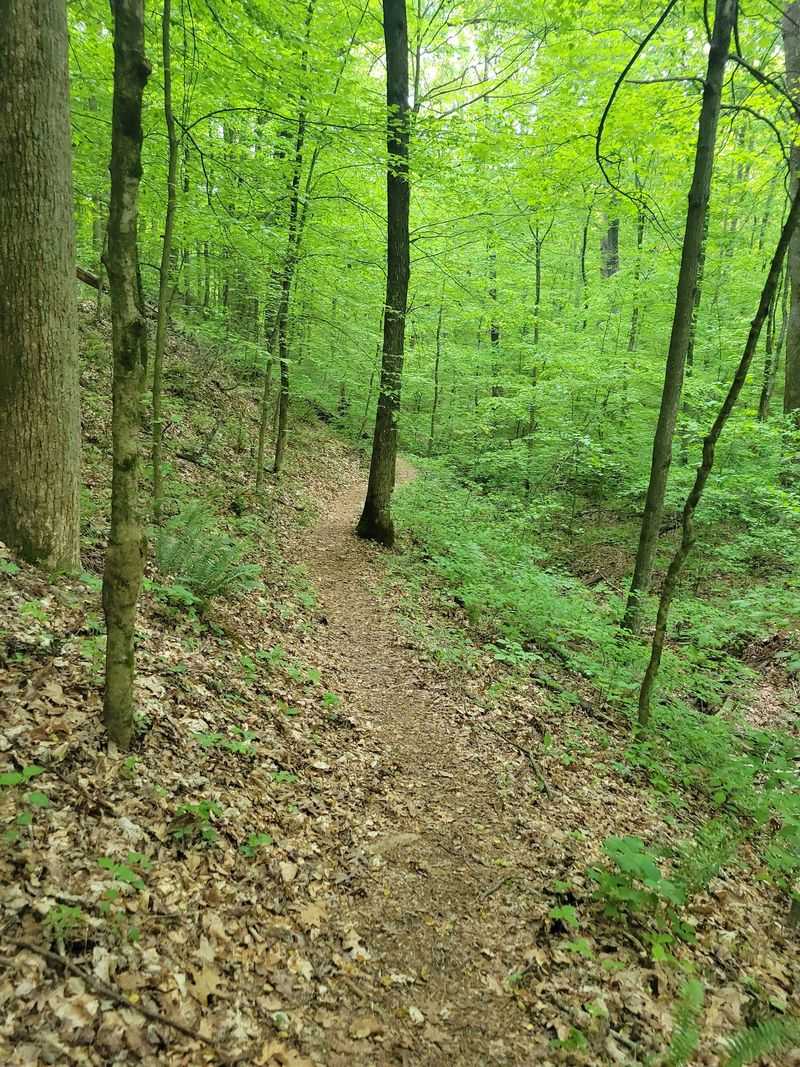
Bikes belong here too, which was a pleasant discovery. Roughly nine miles of designated mountain bike trail wind through the forest, kept separate from the main hiking routes so nobody has to dodge anybody.
The terrain does the heavy lifting. Riders get rolling climbs, ridge lines with real drop-offs beside them, and descents into ravines that come up faster than expected.
Because the trails are dedicated, the tread stays reasonably consistent. That matters when you are picking a line through roots and loose leaf litter at speed.
Speed is the appeal, obviously. There is a specific joy in covering ground quickly enough that the forest blurs at the edges while still catching the smell of pine as you pass through a stand of it.
A few practical notes worth remembering. Ride after a dry spell if you can, since southern Indiana clay turns greasy and rutted following storms, and riding wet trails chews them up for everyone else.
Bring more water than you think you need. The climbs are short but they stack up, and there is no shop waiting at the trailhead.
Beginners can handle sections of it at a relaxed pace, though I would call the overall network moderate rather than gentle. Confident intermediates will have the most fun out here.
Wildlife Sightings In A Forest That Never Really Goes Quiet

Something rustles constantly out here, and after a while you stop startling and start looking. The forest covers well over 7,600 acres of mostly connected hardwood, which gives animals the kind of room they need.
White-tailed deer are everywhere. I watched one lift its head, decide I was boring, and go right back to browsing about thirty feet off the trail.
Oak-hickory stands keep fox and gray squirrels busy overhead, and their chattering follows you like an alarm system. Wild turkey, fox, and raccoon all live here too, though those sightings take more patience or better luck.
Birders will stay occupied. Songbirds fill the understory, woodpeckers hammer away at standing dead timber, and hawks circle the ridge lines where the air rises.
The plant life deserves attention as well. Dogwood, redbud, sassafras, pawpaw, and spicebush crowd the lower layers, shifting color and texture through the seasons in a way that makes the same trail feel new in October.
Down near the lakes, the cast changes completely. Waterfowl, turtles, frogs, and the occasional snake sunning itself on a warm rock.
Move slowly and stop often, ideally early morning or the last hour before dusk. Sitting still on one of those shoreline benches produced more sightings for me than any amount of walking did.
Primitive Camping, Picnics, And The German Heritage Town Down The Road
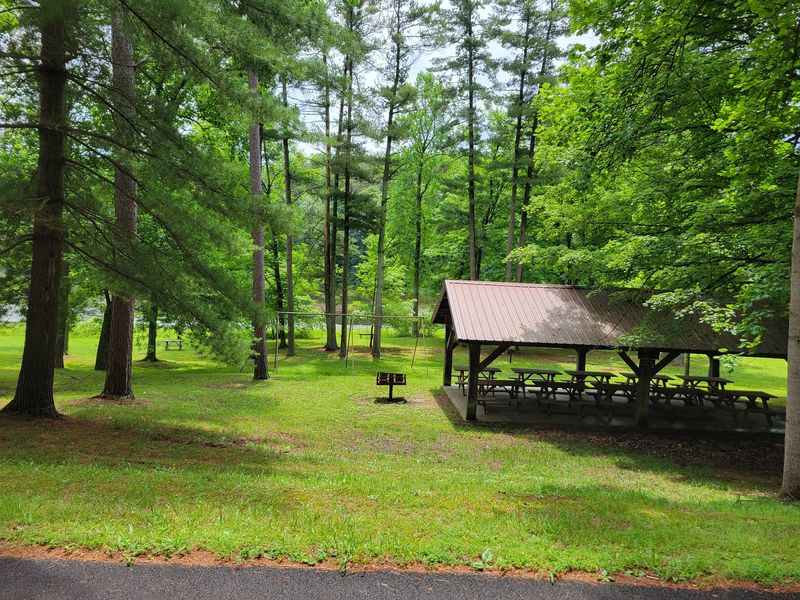
Sleeping here is delightfully simple. The campgrounds are primitive, meaning vault toilets, water spigots near many sites, and no electric hookups to tempt you into staying plugged in.
There is an RV dump station and a boat launch, plus a kayak launch for anyone hauling their own gear. Sites stay quiet, and the darkness at night is the real kind.
Daytime visitors do just as well. Picnic tables scatter through the grounds, shelter houses handle bigger groups, and restrooms are easy enough to find.
What rounds out a trip, though, is the drive into town. Ferdinand sits just a few miles away and was founded in 1840 by Father Joseph Kundek, who brought German settlers in to build a Catholic community.
That heritage never faded. The Monastery Immaculate Conception, home to Benedictine sisters since 1867, still stands as an active community above the town.
A short drive further reaches St. Meinrad Archabbey, founded in 1854 by Benedictine monks from Switzerland and still a center of study and worship. The architecture alone is worth the detour.
Hike in the morning, climb the tower, then go find lunch in town. That combination of hills, water, and small-town history is exactly why I keep recommending this corner of Indiana.
Address: 6583 East State Road 264, Ferdinand, IN 47532.
