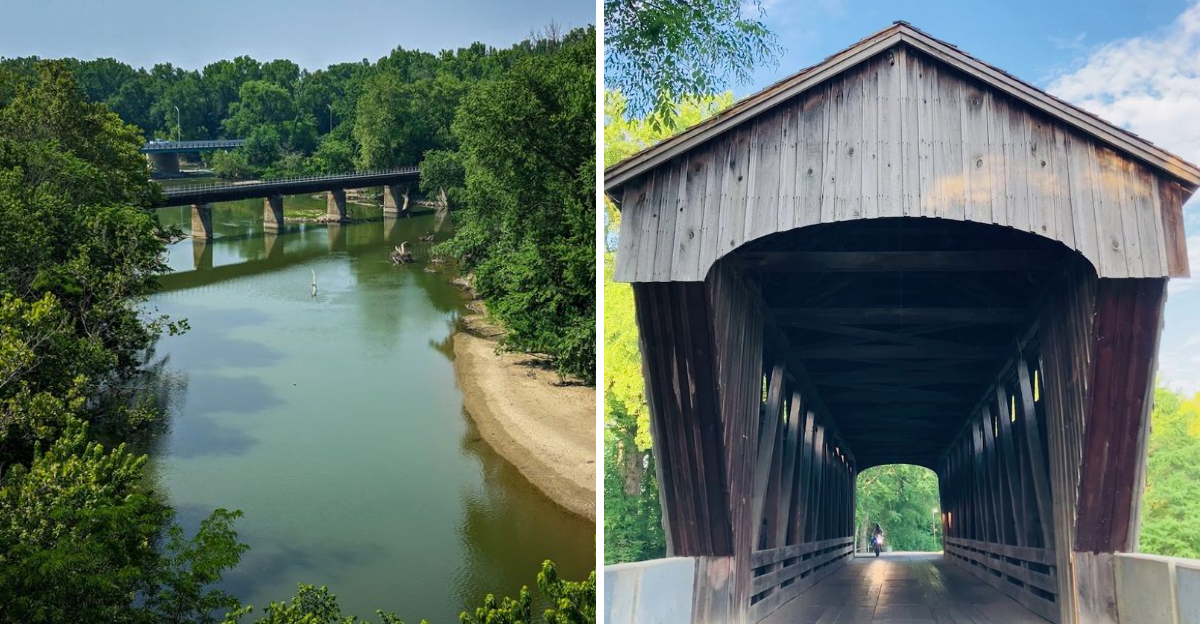
There is something genuinely different about this nature park in urban Bartholomew County, Indiana that is hard to put into words until you actually experience it. Spread across more than 80 acres, it feels like a world set apart from the busier, flatter landscapes many people associate with the Midwest.
The moment you step onto its winding trails, the noise of everyday life fades quickly. Forested paths, open natural spaces, and seasonal scenery create an environment that feels calm, immersive, and quietly expansive.
Whether you are a seasoned hiker, a family exploring outdoors, or someone simply looking for a quiet afternoon in nature, it is the kind of place that leaves you with a strong sense of having discovered something rare and worth preserving.
A Neighborhood Once Called Death Valley
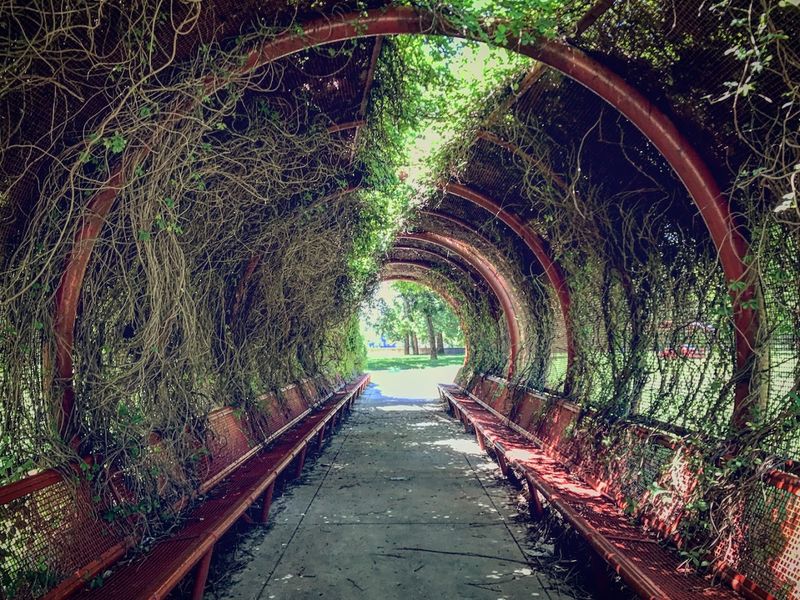
Before the trails and picnic shelters existed, this land carried a name that told a very different story. From the 1930s through the early 1960s, the area now known as Mill Race Park was a struggling neighborhood in Columbus, Indiana, called Death Valley.
It earned that grim nickname honestly, shaped by poverty, disease, rodent infestations, and homes that flooded so often residents could barely keep up.
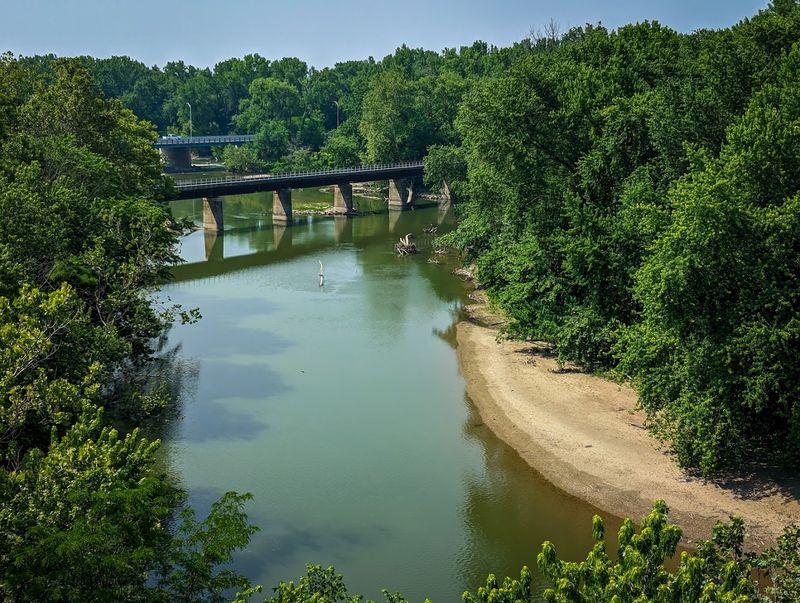
The land sits at the confluence of the Flat Rock and Driftwood rivers, which form the east fork of the White River. That location made it naturally beautiful but dangerously flood-prone.
Families who lived there did not have much choice, and the conditions were widely considered among the worst in the city.
The city of Columbus finally purchased the land in 1963 and began clearing it out. It was briefly called Tipton Park before eventually becoming Mill Race Park.
Learning this history before your visit gives the whole place a different weight. You are not just walking through a park.
You are walking through a place that survived something genuinely hard and came out on the other side as something worth celebrating. Plaques throughout the park offer glimpses into this past, and they are worth stopping to read.
Flood-Smart Design That Actually Works
Most parks try to keep water out. Mill Race Park was designed to welcome it.
After a major redesign in 1993 by the firm Michael Van Valkenburgh Associates, the park was rebuilt around the reality of its floodplain location rather than against it. Up to sixty percent of the park can go underwater during heavy flooding, sometimes reaching depths of ten feet or more.
Instead of fighting that natural cycle, the designers worked with it. Restrooms were elevated so they stay usable even when the surrounding ground is submerged.
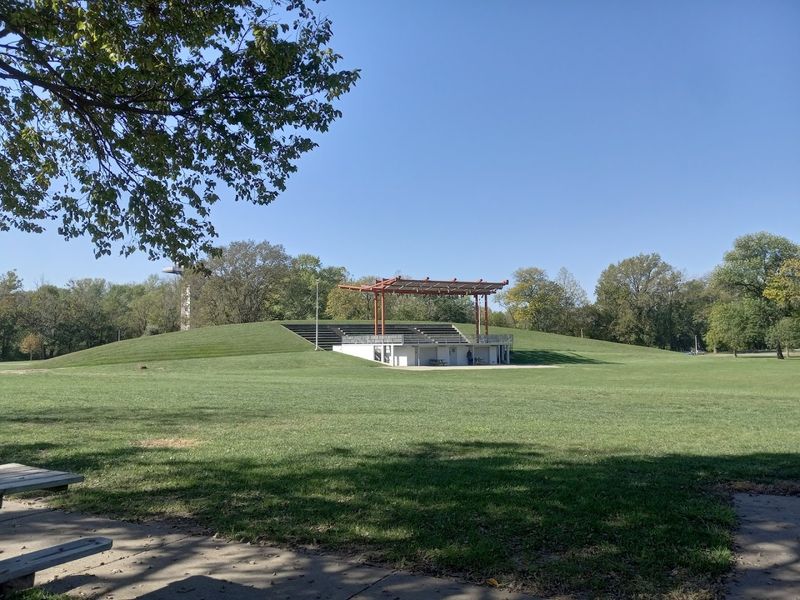
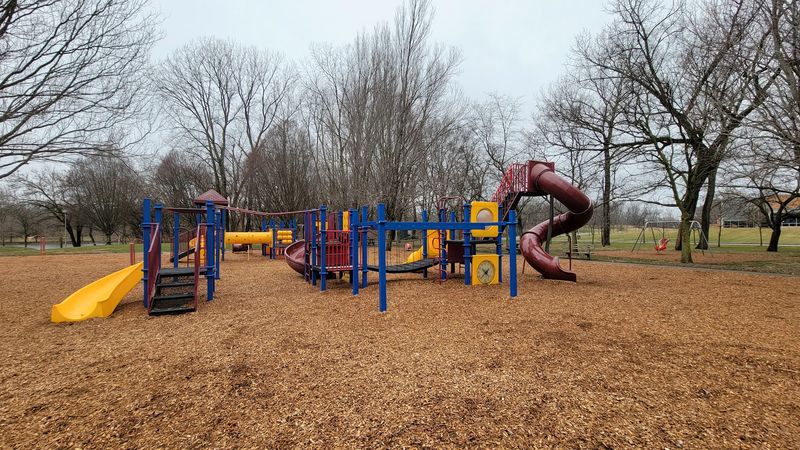
The amphitheater was built on a berm, keeping it above the waterline during most flood events. The playground equipment was also raised to remain accessible and safe.
Materials throughout the park were chosen specifically for their ability to handle repeated flooding without breaking down.
The 2008 floods put the design to a serious test, and the park held up better than many expected. That resilience is not accidental.
It reflects years of careful planning by people who understood that you cannot separate this land from its relationship with water. Visiting after a flood event, when the water recedes and the park slowly returns to normal, is actually one of the more fascinating ways to experience how intentional and thoughtful the entire design really is.
The park at 50 Carl Miske Drive, Columbus, IN 47201, is open daily from 7 AM to 10 PM.
The 84-Foot Observation Tower View
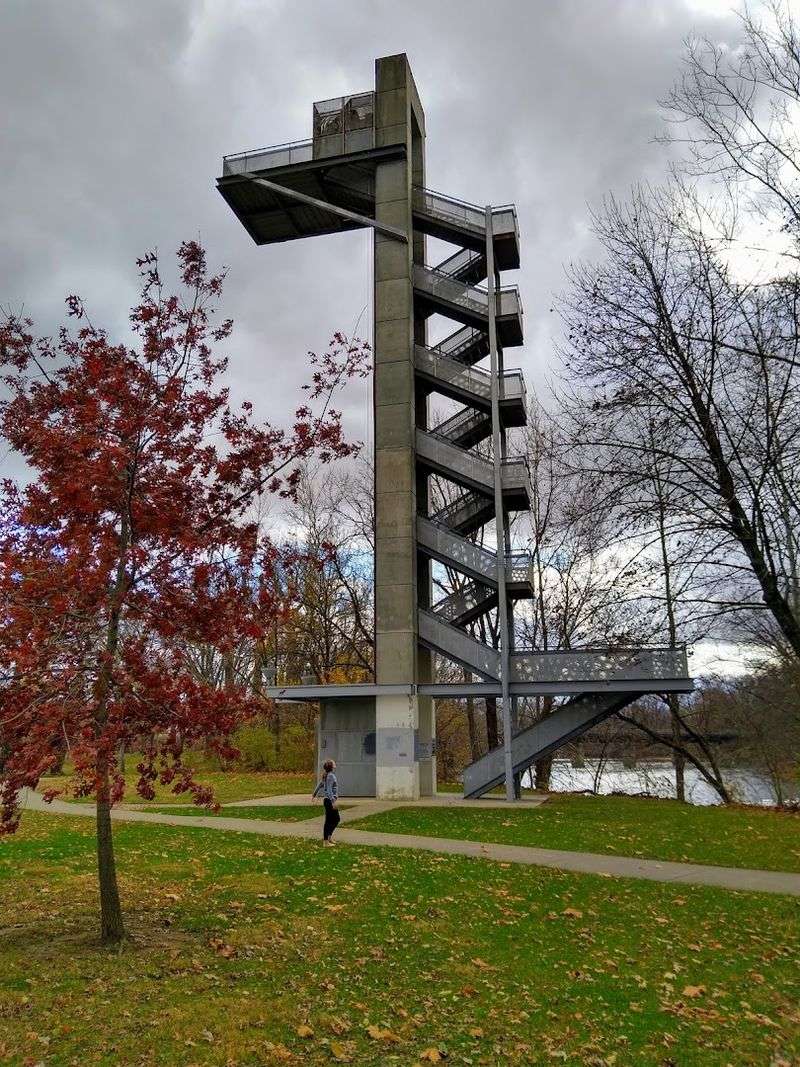
Climbing the observation tower at Mill Race Park is one of those simple experiences that ends up being more rewarding than you expect. The tower stands 84 feet tall, and getting to the top requires climbing a set of stairs that wind upward through open air and tree canopy.
It is a bit of a workout, but the view waiting at the top makes every step worth it.
From up there, you can see the rivers meeting below, the park spreading out in every direction, and parts of downtown Columbus stretching toward the horizon. On a clear autumn day, the colors from that height are genuinely striking.
Visitors who have made the climb often mention that the perspective changes how they see the whole park, turning a flat trail map into something three-dimensional and alive.
The tower is accessible during regular park hours, and there is no fee to climb it. Kids tend to love it, and adults who make it to the top usually feel a quiet sense of accomplishment.
It is also one of the best spots to understand just how the rivers wrap around the park and why flooding has always been such a defining part of this land. Bring a camera, because the view from the top is genuinely worth capturing.
The park itself is well-maintained and easy to navigate once you arrive.
The Brownsville Covered Bridge and Its Complicated History
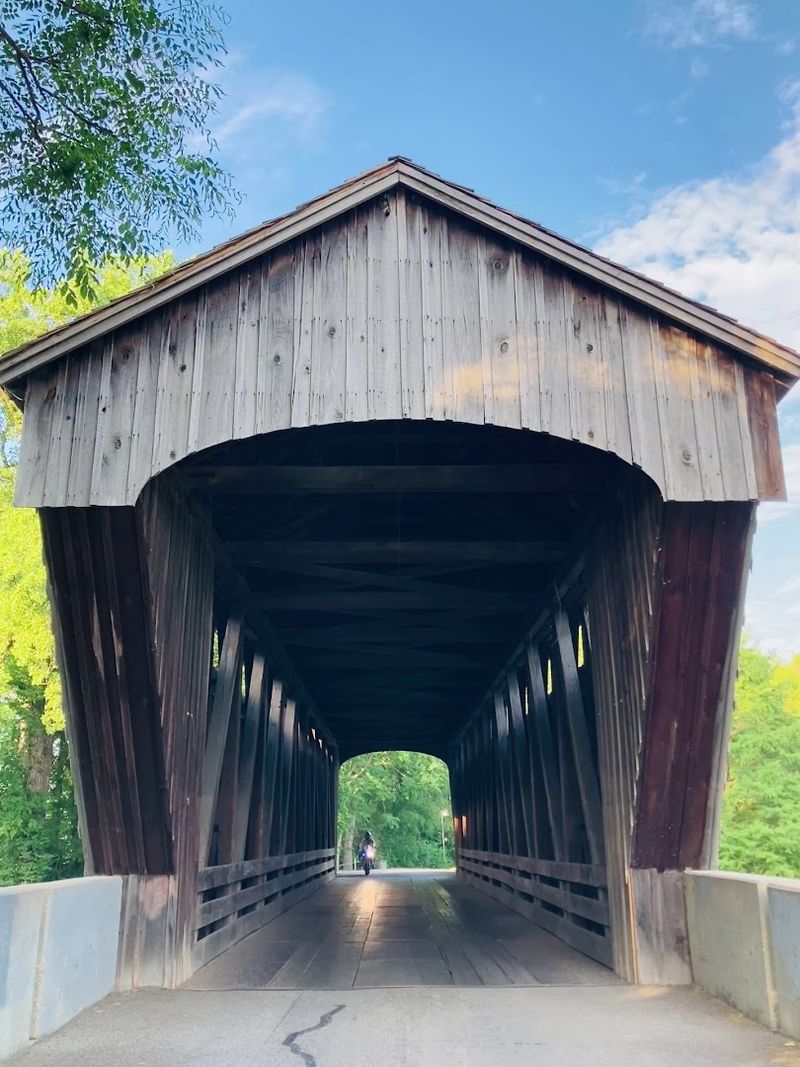
The covered bridge inside Mill Race Park looks like it has stood peacefully in that spot for well over a century. The real story is a little more complicated and honestly more interesting.
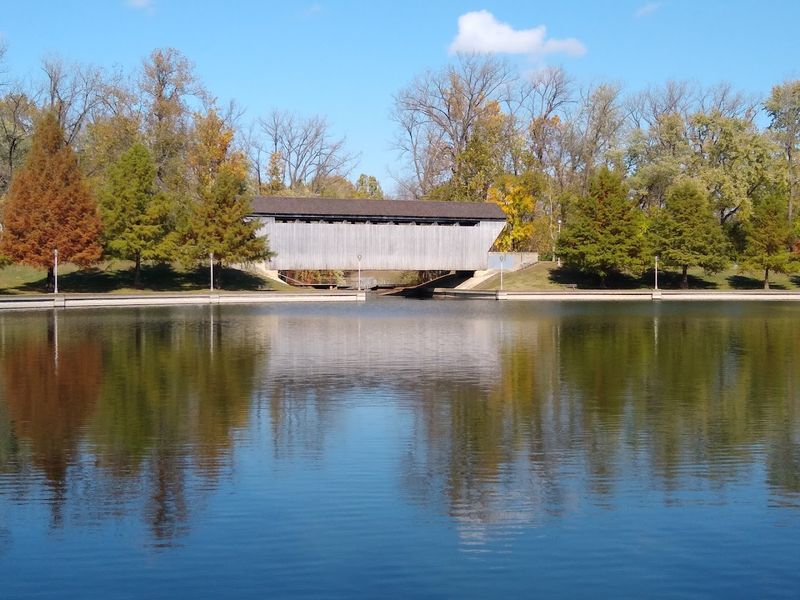
The original Brownsville Covered Bridge was destroyed by arson in 1985, a loss that hit the community hard. The bridge was rebuilt and reassembled in 1986, and it has been a centerpiece of the park ever since.
Covered bridges carry a certain nostalgic weight that is hard to explain but easy to feel. Standing on or near this one, with the river moving underneath and trees framing the scene, it is easy to understand why so many visitors mention it as a highlight of their time at Mill Race Park.
Photographers, families, and couples regularly use it as a backdrop, and it photographs beautifully in every season.
The bridge is also driveable, which adds a fun, old-fashioned quality to the experience. Rolling through a wooden covered bridge in the middle of a city park feels pleasantly out of time.
Some visitors say they almost missed it while focused on other parts of the park, so it is worth making a specific point to find it. The Brownsville Covered Bridge is one of those details that makes Mill Race Park feel less like a generic urban green space and more like a place with a genuine, layered identity worth exploring slowly.
The Mill Race Monster Legend of 1974
In November 1974, Mill Race Park became the center of one of the strangest local news stories in Columbus history. A series of reported sightings of a large, unknown creature near the park sent the community into a genuine frenzy.
Witnesses described something monstrous, similar in description to Bigfoot, that reportedly attacked cars and terrified people who came near the area at night.
The reports were serious enough that police temporarily shut down the park to keep curious crowds from flooding in. The story spread quickly and took on a life of its own.
Decades later, the Mill Race Monster was featured on the television program Monsters and Mysteries in America, bringing the 1974 episode back into public conversation and giving Columbus a piece of folklore that locals still talk about with a mix of amusement and genuine curiosity.
Whether you believe in the creature or not, the legend adds a layer of personality to Mill Race Park that most urban parks simply do not have. It is the kind of local story that gets passed down and retold with a grin.
Visiting the park in the early evening, when the light drops low over the river and the trees get quiet, it is easy to see why someone might let their imagination run a little wild. The Mill Race Monster is now as much a part of this park’s identity as the covered bridge or the observation tower.
Trails, Fishing, and Family-Friendly Features
Mill Race Park covers somewhere between 83 and 85 acres, and the park fills that space with an impressive range of things to do. Paved people trails wind through the property, making it easy to walk or bike without worrying about rough terrain.
The trails run alongside the rivers, through open lawn areas, and past the park’s various landmarks, creating a loop that takes most visitors well over a mile to complete comfortably.
Two lakes within the park offer fishing access, making it a solid option for anyone who enjoys spending a quiet hour or two with a line in the water. The park also has picnic shelters, playground equipment, horseshoe pits, and basketball courts spread across the property.
There is genuinely something for every age group, which is part of why families return here repeatedly throughout the year.
The amphitheater hosts concerts and performances during warmer months, turning the park into a community gathering space that feels lively and welcoming. Events held here tend to draw a mix of longtime Columbus residents and visitors passing through.
If you are planning a trip, checking the city’s event calendar ahead of time is a smart move.
A Nationally Recognized Park Worth the Trip
Not many urban parks get recognized on a national level, but Mill Race Park earned that distinction. Landscape Management named it one of the top 100 parks in the nation, citing its design, reputation, and accessibility.
That recognition reflects years of thoughtful investment by the city of Columbus and the ongoing care that keeps the space functional and welcoming across all seasons.
Columbus itself is a city with an outsized reputation for architecture and public art, and Mill Race Park fits right into that identity. The park features sculptural elements, artfully designed restroom structures, and landscaping that reflects serious design thinking rather than generic municipal planning.
Visitors who arrive expecting a simple neighborhood park often leave genuinely impressed by the level of craft on display throughout the grounds.
For anyone exploring southern Indiana, Mill Race Park makes a strong case for a dedicated stop rather than a quick detour. The combination of natural beauty, flood-adaptive design, local folklore, and layered history creates an experience that stays with you.
Nearby, visitors can also explore the Columbus Area Visitors Center at 506 Fifth Street, Columbus, IN 47201, which offers maps and information about the city’s famous architectural landmarks. Spending a morning at Mill Race Park and an afternoon exploring downtown Columbus makes for a full and genuinely satisfying day in a city that rewards curiosity and slow, attentive exploration.
