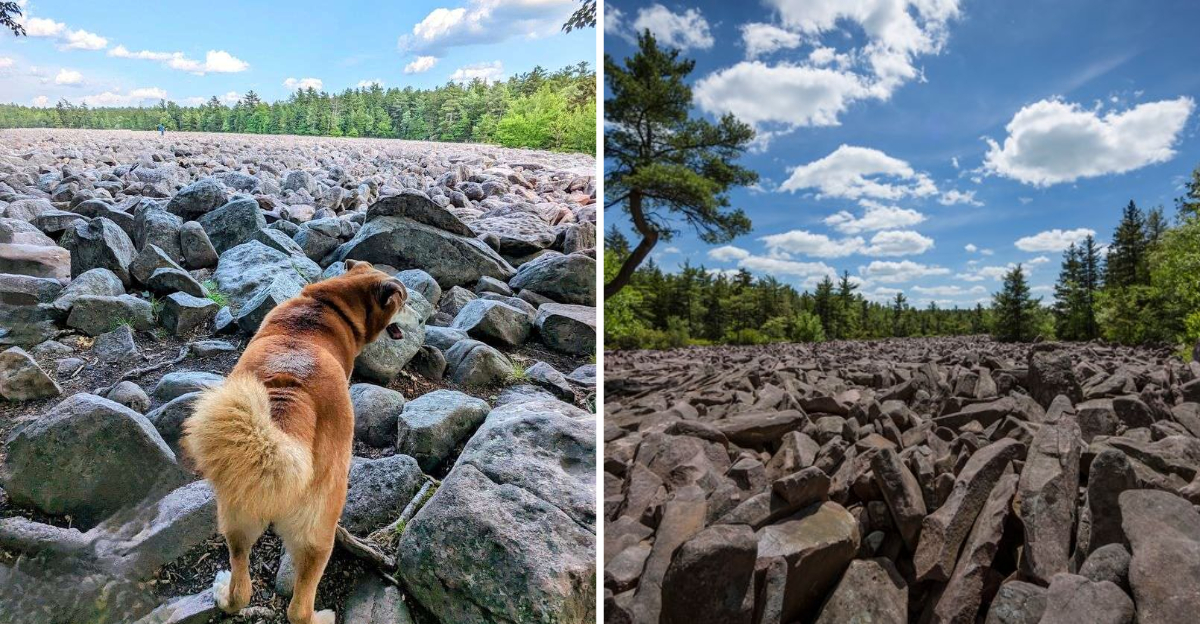
That silence felt strange for a place that looks so violent. Sixteen acres of sandstone blocks sit in a wide open clearing in the woods, ringed by trees, with nothing growing between the rocks at all.
I had seen photos before I drove out to this Pennsylvania spot, but photos flatten it, and they never warn you that the ground shifts under your sneakers. My friend and I spent almost an hour hopping from stone to stone and barely made it a third of the way across.
Somewhere below our feet we could hear water moving through the gaps, which honestly gave me chills.
The boulder field is a geological marvel born of ice and time, left behind by a glacier that melted thousands of years ago. The boulder field is a relic of the last Ice Age, when glacial melt deposited these house-sized chunks of sandstone over thousands of years ago.
Water still flows through hidden channels beneath the rocks, and no matter how hard it rains, the field never floods. This is the largest boulder field of its kind in the eastern United States.
If you want a Pennsylvania stop that feels genuinely ancient, this one is hard to beat.
A 16-Acre Sea of Stone That Stops You Mid-Sentence
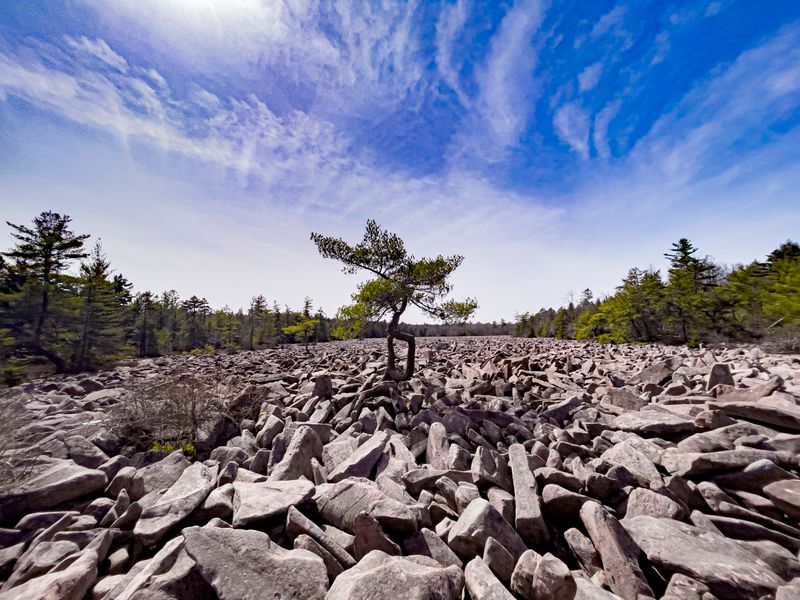
My first reaction was to laugh, because the scale just does not compute. The field runs roughly 1,800 feet from end to end and about 400 feet across, and from the viewing area you cannot see the far side clearly.
It is the largest boulder field of its kind in the Appalachian region, which explains why it earned National Natural Landmark status back in 1967.
What makes it look so unnatural is what is missing. There is no sand, no clay, no soil packed between the stones, so nothing grows out there except one lonely tree and a small island of scrappy vegetation near the middle.
Standing timber crowds the edges and then simply stops, like someone drew a line.
Depth surprised me too. In the center the rocks pile at least 12 feet deep, meaning you are walking on top of a loose stack, not a paved surface.
Visitors often describe it as an ocean of rock, and that comparison lands the moment you look out and see stone rolling toward the treeline in every direction with no clear path through it.
Ice Age Forces Built It, Not a Landslide
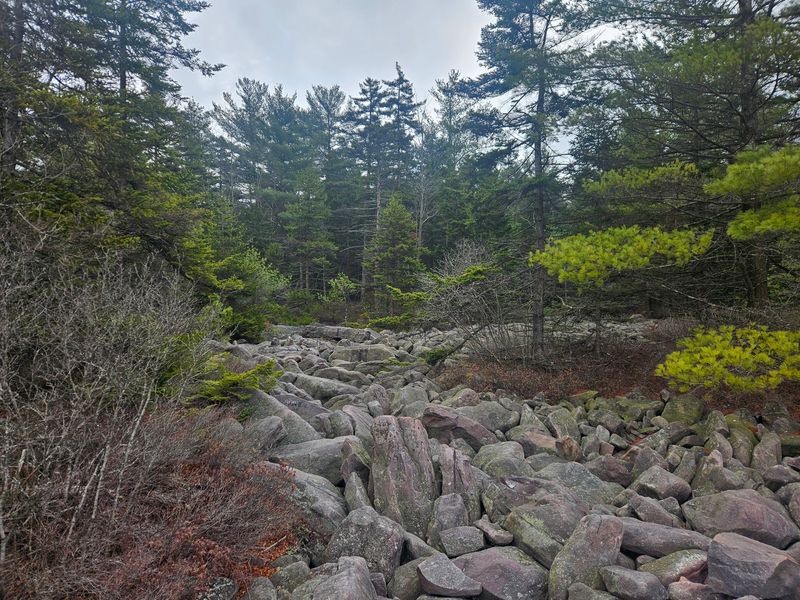
Plenty of people assume a mountainside collapsed here. The real story is slower and stranger, stretching back about 80,000 years to the last ice age.
Glaciers never actually rolled over this spot, but they crept within a mile of it, and that was close enough to turn the local climate into something resembling Greenland today.
Ground stayed permanently frozen. During cool summers, water seeped into natural cracks in the sandstone of the nearby ridges, froze again, expanded, and pried whole blocks loose from the bedrock.
Those blocks then crawled downhill across saturated, thawed soil sitting on top of the frozen layer beneath.
Grinding against each other during that slow migration wore down their sharp edges, which is why so many stones look oddly smoothed.
Then everything stopped. The climate warmed, the movement ended, and the field has sat essentially untouched for more than 20,000 years.
Reading the interpretive signs helped me appreciate that I was looking at frozen motion, a landscape caught mid-slide and held there since before anyone farmed, wrote, or built cities.
Reading the Rocks, Angular on One End, Rounded on the Other
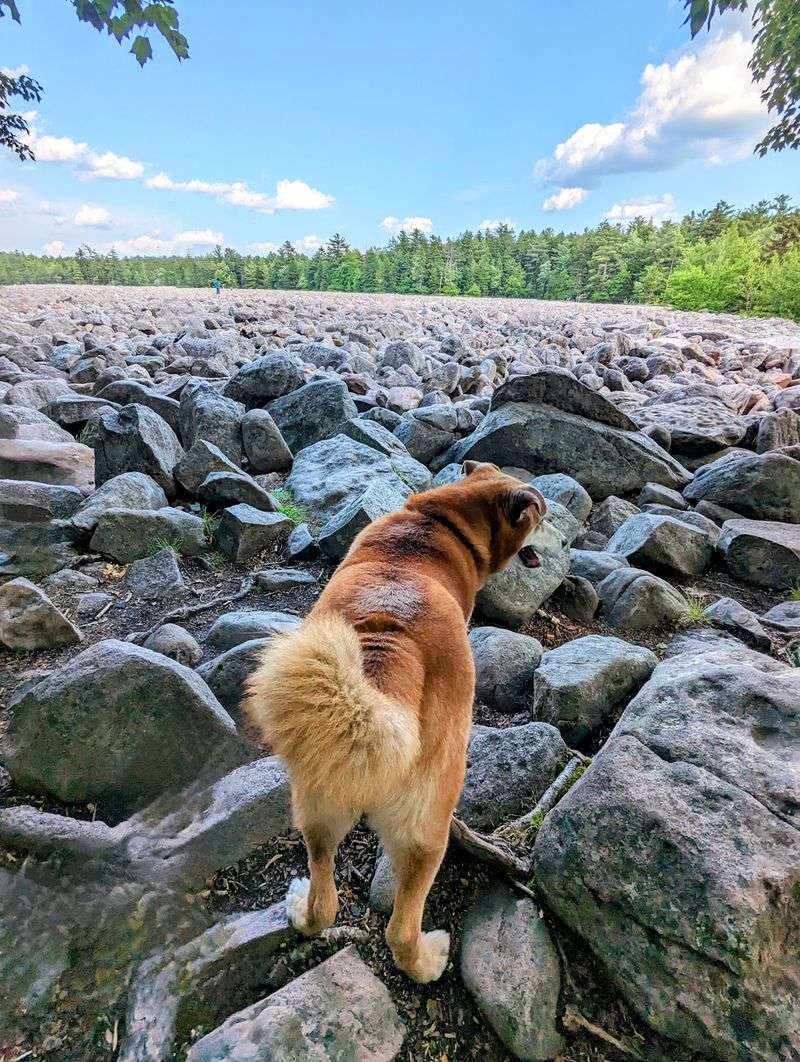
Here is a detail I would have walked right past without knowing. The boulders at the northeastern, upslope end of the field are noticeably more angular, while the ones downslope to the southwest are rounder and smoother.
That difference is a record of how far each stone traveled and how much grinding it took along the way.
Composition is consistent throughout. Nearly everything out there is hard, gray-red, medium-grained sandstone and conglomeratic sandstone from the Catskill Formation, the same rock that forms the ridgelines framing the clearing.
Run your hand over a surface and you can feel the grit of individual sand grains cemented together.
Sizes swing wildly, from stones under 3 feet to monsters stretching more than 30 feet long, with plenty in the 20-foot range scattered farther out.
Some visitors expect uniformly huge blocks and are surprised that most are just big enough to be awkward underfoot.
My favorite move was picking a large flat boulder, sitting down, and studying the color shifts and lichen patterns instead of rushing across.
Getting There Means a Gravel Road or a Long Trail
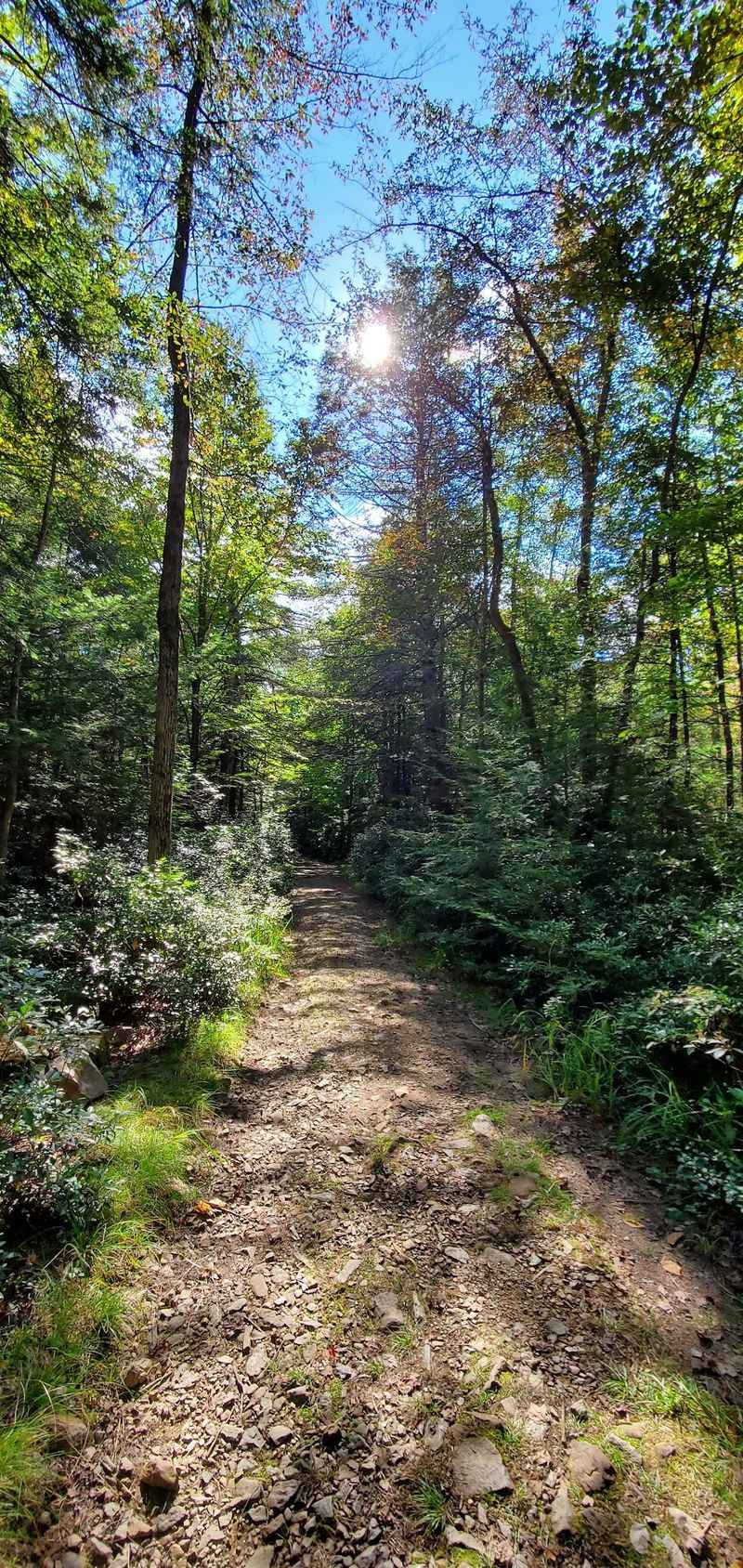
Two options, both with a bit of commitment attached. Driving is the easy one, along unpaved Boulder Field Road, a roughly 3-mile gravel stretch that takes about 11 to 15 minutes at a sensible crawl.
Regular cars handle it fine, though the surface gets dusty, bumpy, and pitted, and lowered vehicles or worn tires will not enjoy the experience.
Sections narrow to essentially one lane with two-way traffic, so I kept my speed low and my window down to listen for oncoming cars. That road closes in winter, which matters if you are planning a snowy visit.
Hikers can take the Boulder Field Trail from State Route 534 instead, a 3.5-mile one-way route that makes for a 7-mile round trip over rocky Pennsylvania terrain the whole way.
It is not a loop, so you return the way you came.
One tip worth repeating: do not hike out on the access road to get back to the trailhead, because it is far longer than it looks and cars move through there. Parking at the field itself is roomy and well marked.
Watch Your Ankles, Seriously
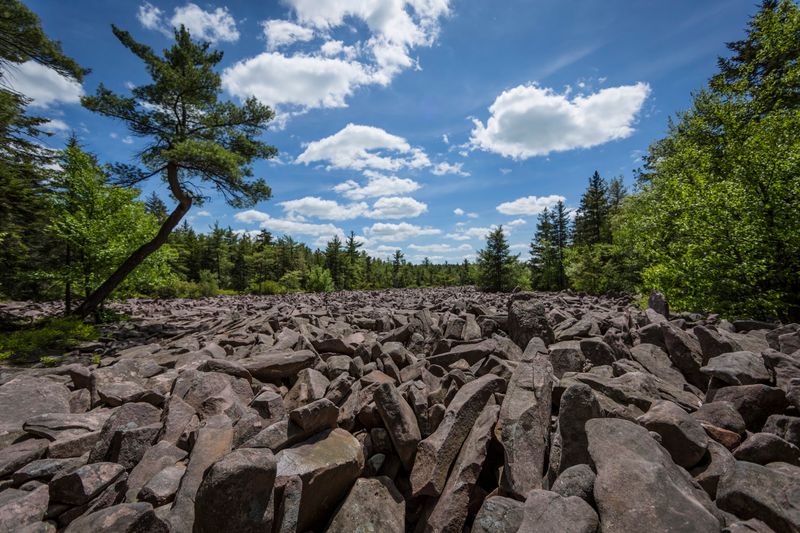
Flat from a distance, brutal up close. That is the honest summary of walking out onto the field, where the gap between one boulder top and the next can drop as much as 4 feet.
Not every rock is stable either, and a few rocked slightly when I put weight on them, which taught me to test before committing.
Those crevices between stones deserve real respect. Because the pile runs 10 to 12 feet deep in places, a phone or set of keys that slips from your pocket is likely gone permanently.
I zipped everything into a bag before stepping out.
Sturdy sneakers or hiking shoes are the minimum. Sandals are a bad idea, and several visitors mention grabbing a fallen branch from the woods near the entrance to use as a balance stick, which is genuinely useful.
Kids love the challenge of hopping across, but younger ones need close supervision and a clear talk about slow, deliberate steps.
Progress is measured in feet, not minutes, and that is part of the fun.
Hidden Water, Sunbathing Snakes, and Other Surprises
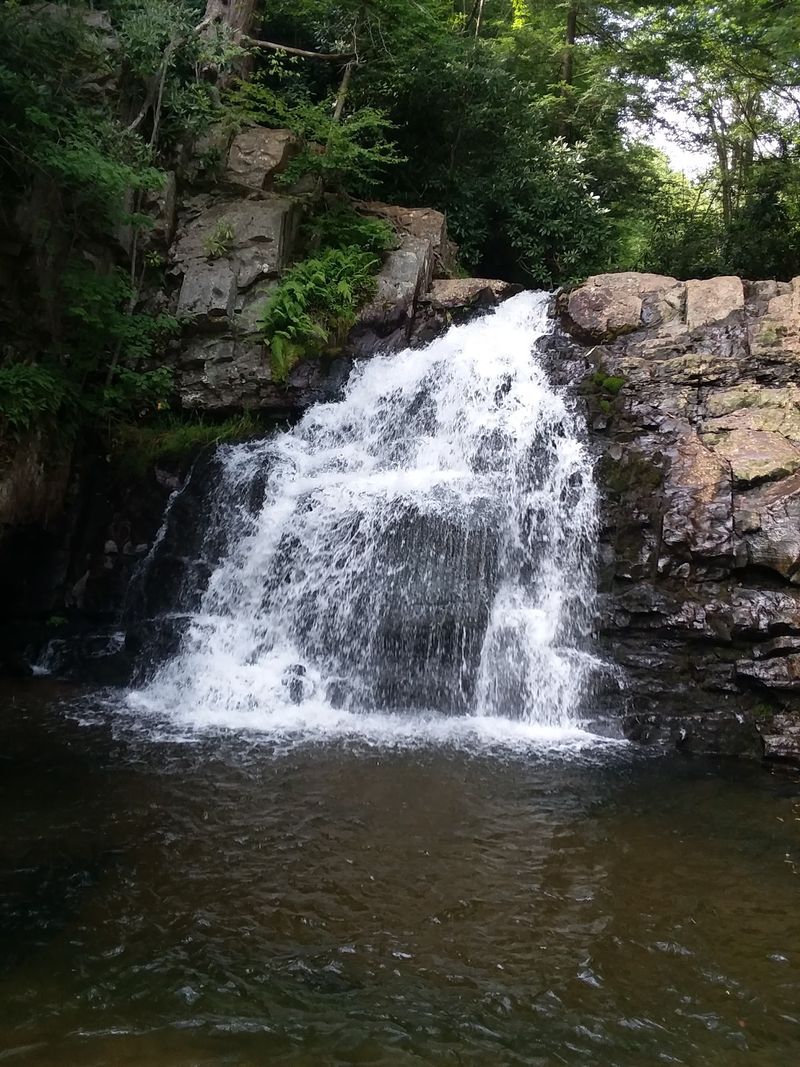
Crouch down, stay quiet, and you may hear it. Somewhere beneath the stacked stone, water trickles through the voids, and that flow forms the headwaters of Hickory Run, the creek the entire park is named after.
Hearing a stream you cannot see is one of the odder sensory moments I have had outdoors.
Wildlife shares the field too. Timber rattlesnakes sometimes stretch out on the warm rocks to soak up sun, so scanning ahead before you place a hand or foot is smart practice.
Spiders tuck into shaded crevices, and the surrounding forest is black bear country.
Sun exposure catches people off guard. With no shade whatsoever out on the stone, the rocks radiate heat and a summer afternoon turns punishing fast, so carry water even for a short visit.
Bug spray helps on the trail approach, where ferns and mushrooms crowd the path.
Also worth mentioning: the rocks are a protected landmark, so leave them exactly as you found them, no paint, no carving, no stacking.
Pairing the Boulders With the Rest of Hickory Run State Park
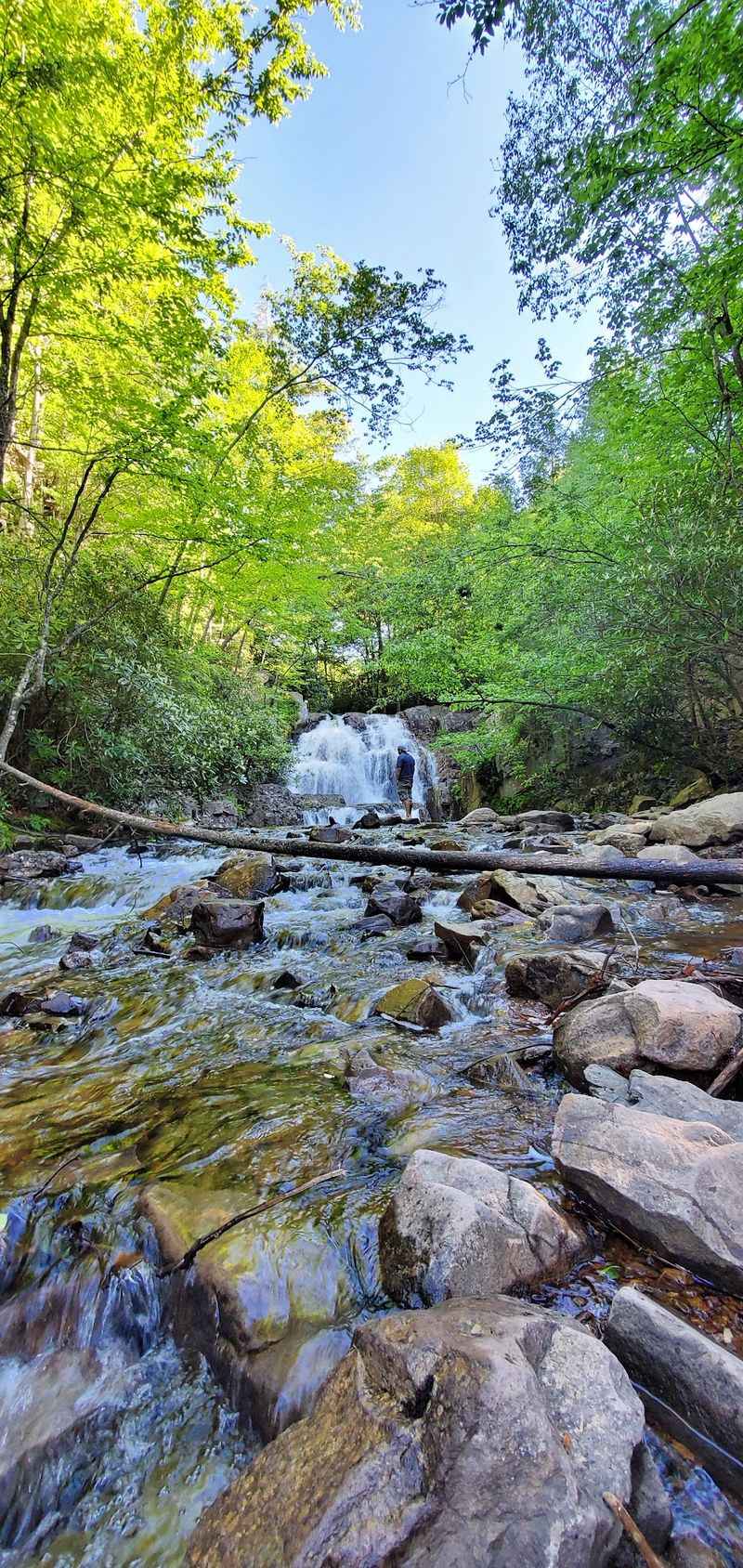
Honestly, the field itself does not take all day, so I built a bigger loop around it. Hickory Run State Park spreads across 15,990 acres in Carbon County, deep in the Pocono Mountains, with more than 40 miles of trails ranging from easy strolls to rocky scrambles.
The visitor center is spacious and worth a stop for maps and background on the geology.
Hawk Falls Trail is my top pairing, a 0.7-mile walk to a genuinely photogenic waterfall. The 1.5-mile Shades of Death Trail follows Sand Spring Run past small dams through thick rhododendron, rooty and rocky but short.
Sand Spring Lake has a sand beach for summer swimming, and the frozen surface draws ice skaters in winter.
Fishing in trout streams, disc golf, picnicking, and wildlife watching round out the options, with seasonal hunting in designated areas.
Timing tip: weekends get busy at the boulders, so early morning or late afternoon gives you that quiet, still atmosphere people rave about. Autumn color around the rim is spectacular, and snow-covered stones in winter look like a frozen painting.
Address: 3 Family Camp Road, White Haven, Pennsylvania 18661
