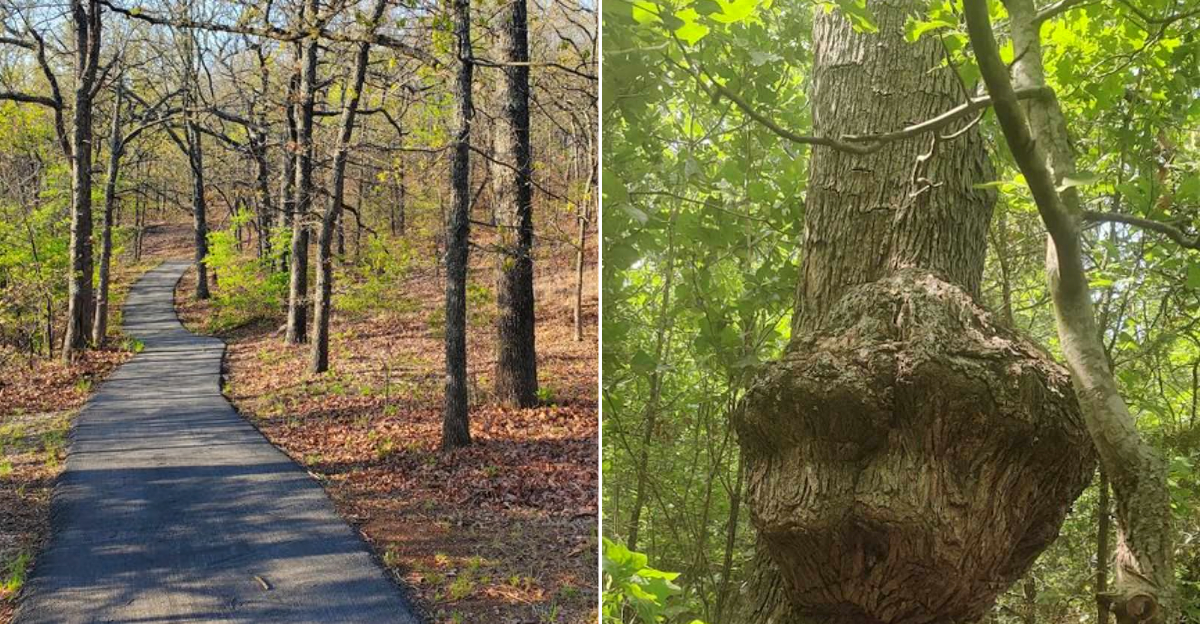
The trail ducks under a canopy of post oaks and cedars that have been standing for centuries, twisting their gnarled branches toward an Oklahoma sky.
You are walking through the Cross Timbers, a rugged woodland belt that once stretched from Texas to Kansas, and this preserve protects one of the last large, intact remnants of that ancient ecosystem.
Named a “living archive,” this place offers a profound connection to the past, where the trees themselves are the main attraction. The path winds through rocky terrain, and the silence is broken only by birdsong and the rustle of leaves.
It is a place that feels ancient and alive, a quiet corner of the state that rewards the curious traveler with a glimpse into a world that has been largely lost to time.
First Glimpse Of The Cross Timbers
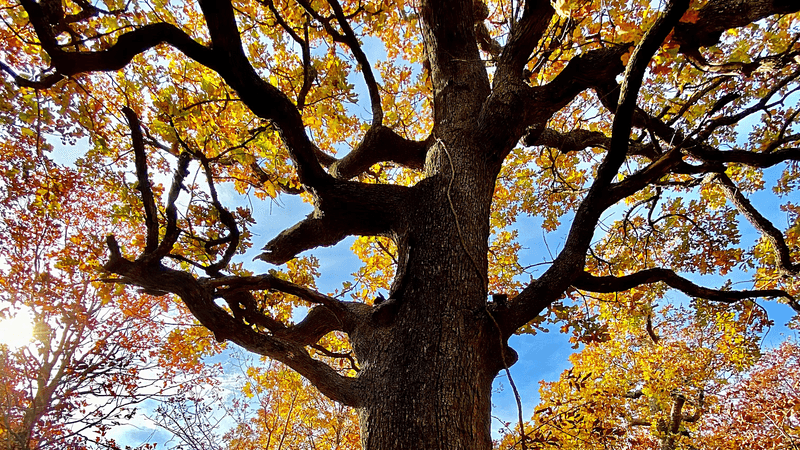
The first thing that hits you here is how different the woods feel from the usual picture people carry around of Oklahoma. Nothing looks soft or neatly arranged, and that is exactly why it feels so memorable.
The trees lean, twist, and spread in odd directions like they have been arguing with wind and drought for ages and somehow enjoyed the challenge.
This forest sits inside the Cross Timbers, which is one of those landscapes that really makes sense only when you are standing in it. You see patches of oak woodland, openings that feel almost prairie-like, and rough stony ground that explains why these old trees were never easily pushed aside.
Early travelers called stretches like this a cast-iron forest, and once you see the dense growth and hard terrain, that old description suddenly feels pretty accurate.
What I like most is that the place does not try to impress you all at once. It sort of unfolds slowly, which makes every bend in the trail feel more personal and a little more surprising.
By the time you settle into the rhythm of walking, you are not just looking at scenery anymore, you are stepping through one of the oldest living landscapes left in Oklahoma.
Getting There Feels Like A Shift
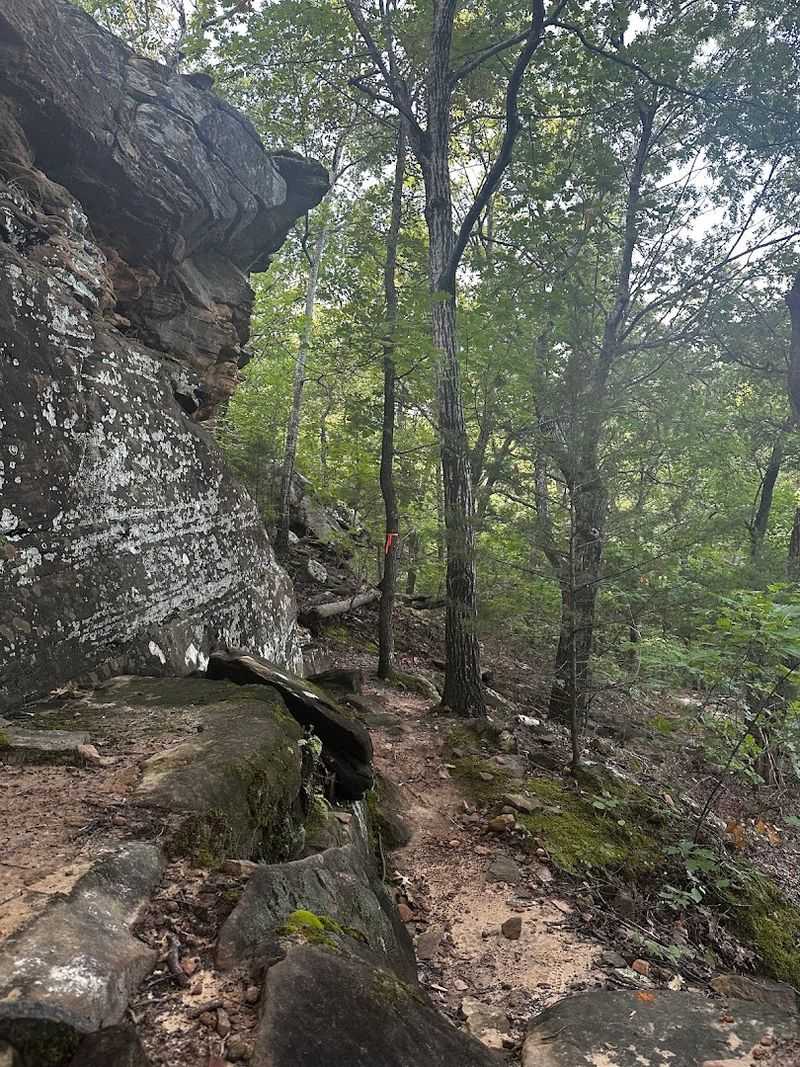
You know that feeling when a place starts changing your mood before you even get out of the car? That is what happens on the way here, because the approach feels like a quiet handoff from regular life to something older and more self-contained.
Keystone Ancient Forest is at 160 Ancient Forest Dr, Sand Springs, OK 74063, and the last part of the drive makes the preserve feel tucked away without being difficult to reach.
I like that it does not arrive with a big dramatic reveal or some overdone gateway moment. Instead, the surroundings gradually narrow into woodland, the air seems to settle, and you start noticing how rocky and textured everything looks.
It is a small transition, but it works on you fast, especially if you have spent the morning in town and suddenly find yourself at the edge of this ancient patch of Oklahoma.
Once you step out, there is this immediate sense that you should lower your voice a little. Not because anyone tells you to, but because the place seems to ask for it on its own.
That kind of arrival always sticks with me more than flashy scenery, because it feels honest and completely earned.
The Trees Steal The Whole Show
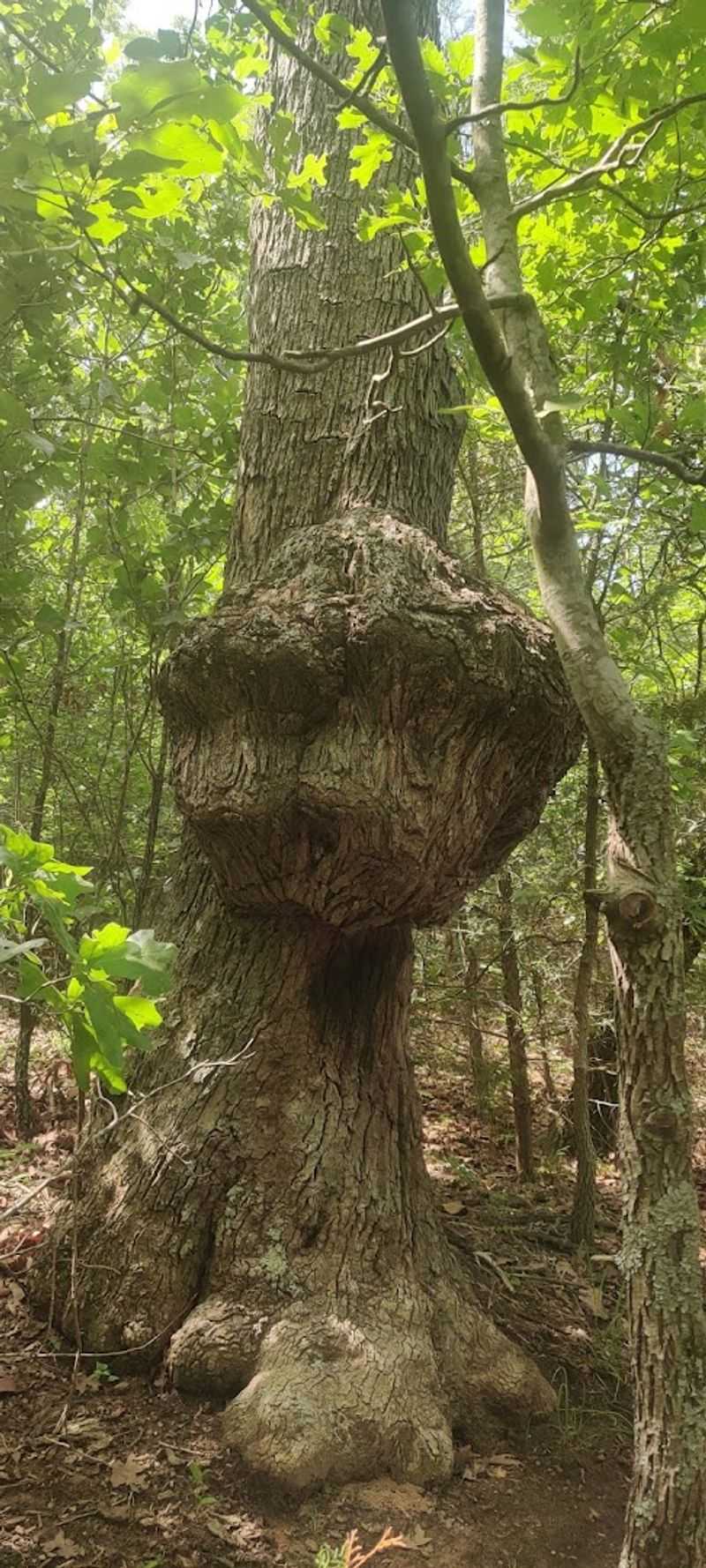
Honestly, the trees are the reason you will keep stopping even when you meant to just keep walking. They are not tall in that grand, cathedral-forest way, but they have far more personality than plenty of bigger trees I have seen.
Their trunks are bent, muscled, scarred, and shaped by time so visibly that you almost start reading them like faces.
The big stars here are ancient post oaks and old eastern red cedars, and they look like they have survived by refusing to be hurried. The rough ground, thin soils, and stubborn climate of the Cross Timbers kept this area from being cleared in the same way other forests were, which means these trees are still standing where so many others disappeared.
That is a quiet miracle, and you feel it most when you pause beside one that seems to have twisted itself into a full conversation with the elements.
What surprised me is how intimate the experience feels. These are not trees you admire from a distance and then move on from politely.
You notice the bark, the angles, the low branching shapes, and the way each one seems to occupy its own space with total confidence. In Oklahoma, that kind of old-growth presence feels rare enough to really stay with you.
Trails That Meet You Where You Are
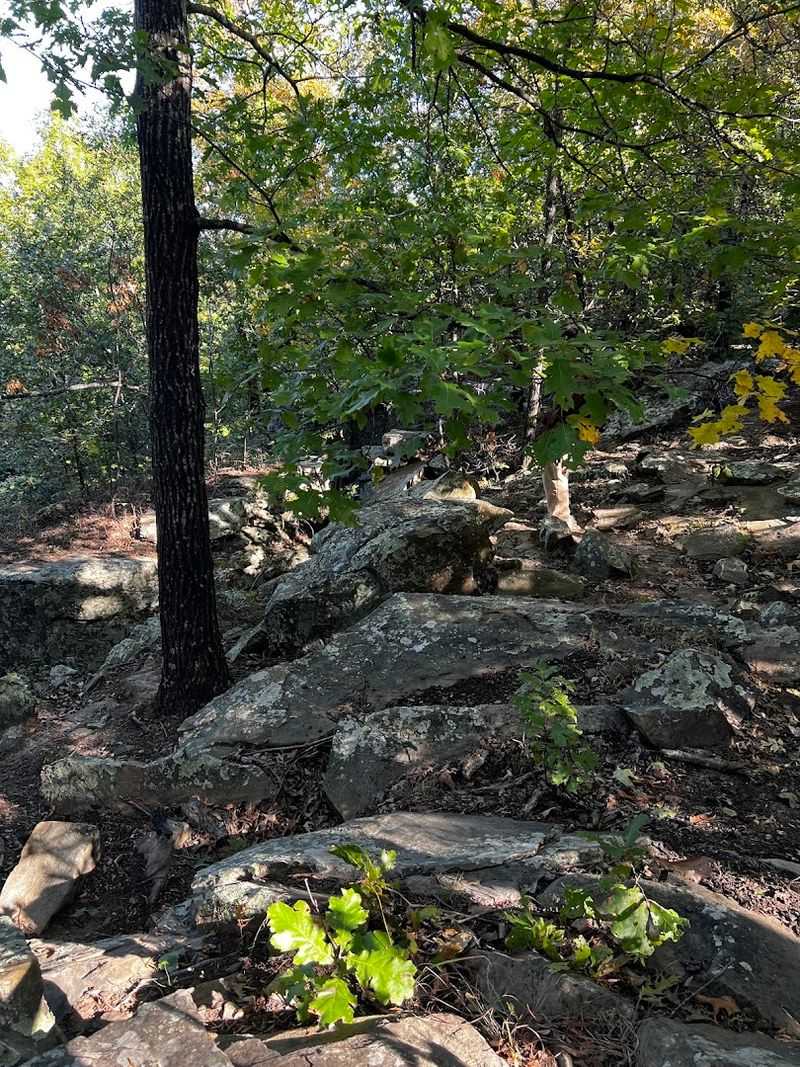
What I appreciate here is that the trails do not assume everyone wants the exact same kind of day. If you are in the mood for an easy walk where you can look around without watching every step, there is an accessible paved route that makes the forest feel welcoming right away.
If you want a longer ramble with rockier ground and more uneven footing, you can have that too.
The Childers Trail is the one people often mention first because it opens up this landscape without making the experience feel watered down. Then there are routes like the Frank Trail, the Wilson Trail, and the Falls Trail, which let the terrain show more of its rough side.
That mix matters, because a place like this should feel available to different kinds of walkers, not reserved only for people chasing a hard climb.
I would still tell a friend to take their time no matter which path they choose. The best parts are rarely about covering ground quickly, and this is definitely not a forest that rewards rushing.
You start noticing the shape of the stone, the way the light lands on cedar, and the odd little turns in the woods that make Oklahoma feel older and wilder than you expected.
Wildlife Keeps You Looking Up
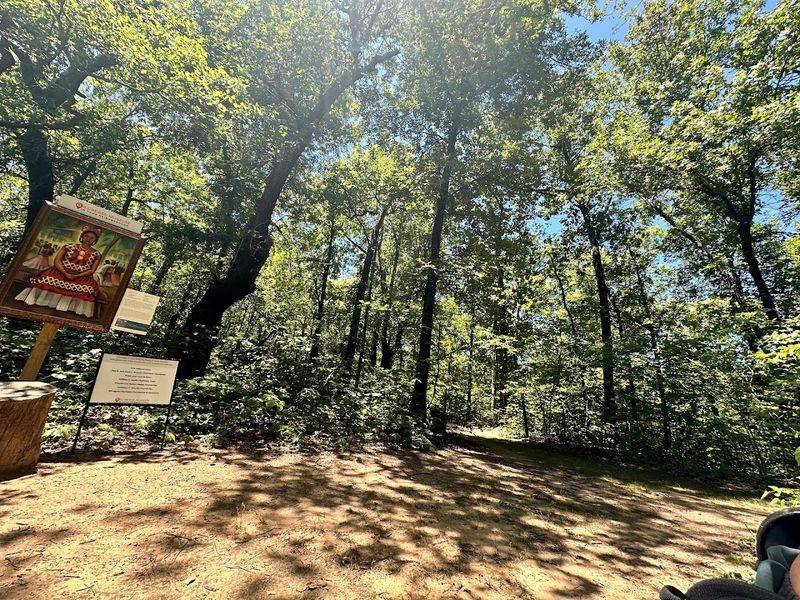
You can walk here for the trees alone and still end up distracted every few minutes by movement in the brush or sound overhead. That is part of the fun, because the forest never feels empty even when it is quiet.
There is always some rustle, wingbeat, or flicker at the edge of your vision that pulls you out of your own thoughts.
Deer are the kind of sighting that can turn an ordinary stretch of trail into something softer and more memorable, especially when they slip between the trunks like they belong to another pace of time. Birdwatchers have plenty to pay attention to here as well, since the preserve supports a wide range of resident and migratory species.
Butterflies add another layer entirely, and the developing butterfly savanna makes sense in a place that already feels like a meeting point between woodland and open country.
I would not come expecting some staged wildlife spectacle, and that is exactly why the experience works. Everything feels appropriately unscripted, which suits the character of the forest.
In Oklahoma, where landscapes can shift so much from one region to the next, this preserve gives animals a setting that feels both sheltered and untamed, and you notice that balance almost immediately.
The Overlook Adds A Bit Of History
One thing I did not expect to enjoy so much was the historical thread running through the preserve. There is something about standing in an old landscape and realizing other travelers were trying to make sense of it long before you showed up in trail shoes.
That connection adds depth without turning the place into a history lesson you have to force yourself through.
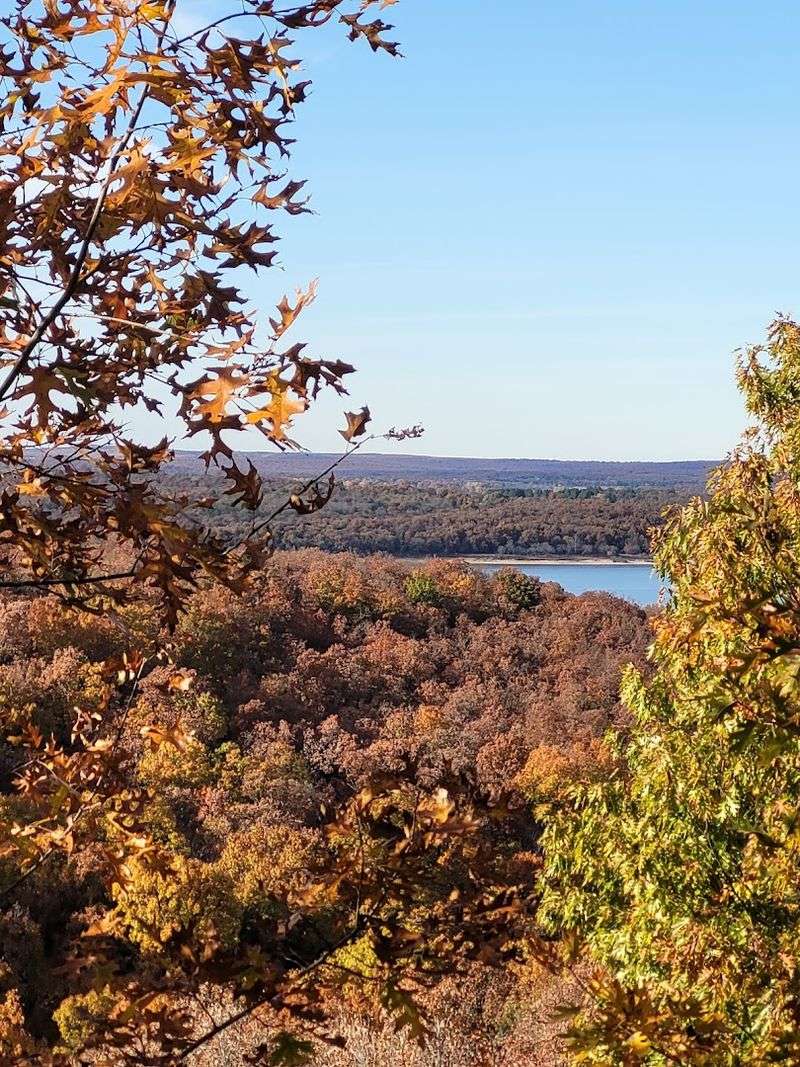
The Washington Irving overlook is a good example of that balance. Irving traveled through this region when it was still widely described as Indian Territory, and his writing helped record impressions of land that many eastern readers could barely imagine at the time.
When you pause at the overlook now, the point is not to reenact some grand literary moment, but to recognize that this difficult, beautiful stretch of country has been leaving an impression on visitors for a very long time.
I like moments like that because they make a walk feel layered rather than merely scenic. You notice the terrain, the density of the woods, and the way the horizon opens in places, and you can understand why someone would remember it.
In Oklahoma, where land and memory are tied together so tightly, that sense of continuity feels especially strong here.
Why This Forest Was Able To Last
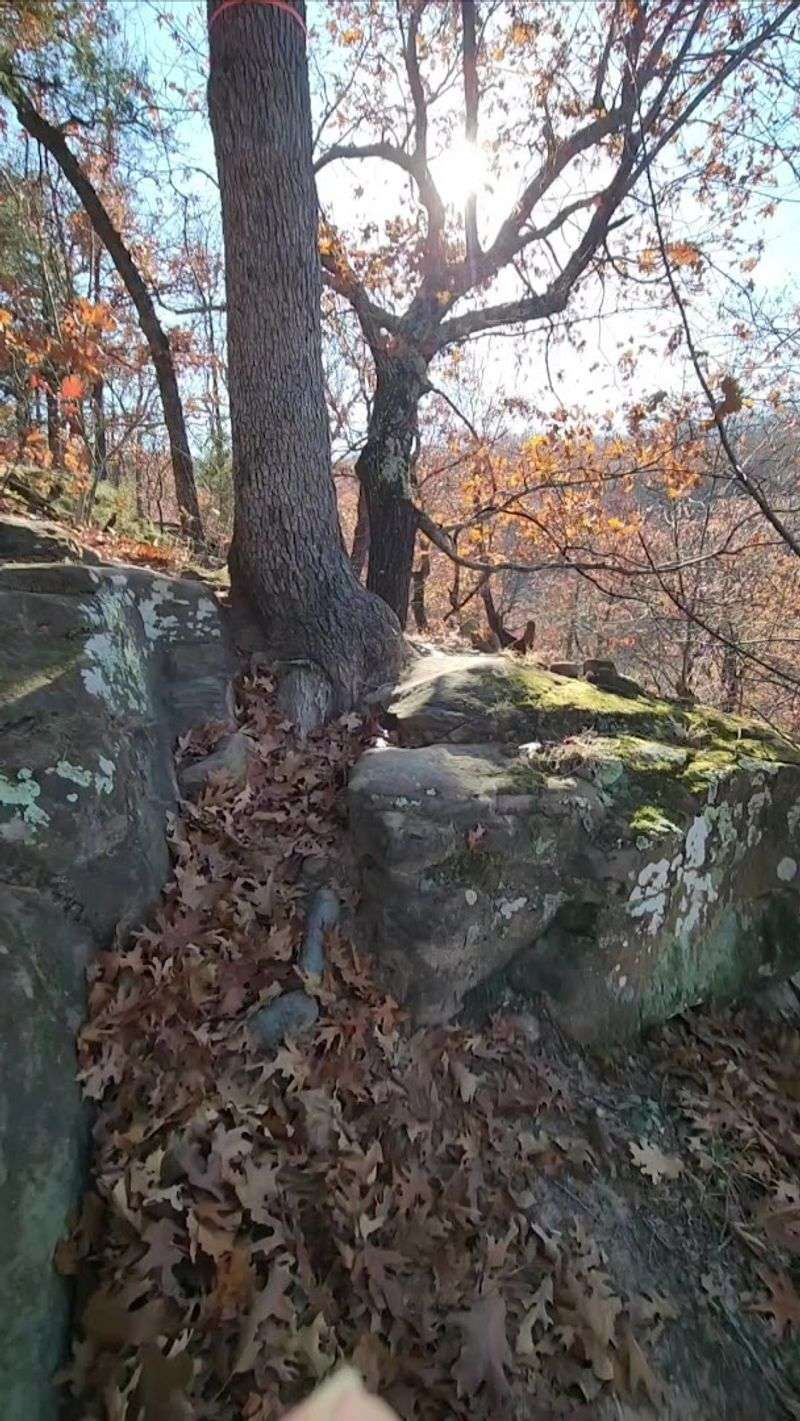
It is worth talking about why this forest still exists, because old places do not survive by accident for this long. The rocky ground and stubborn growing conditions made the area difficult to farm and hard to clear, which gave these woods a kind of protection that came from inconvenience as much as intention.
That may sound unromantic, but sometimes the land hangs on because it was too tough to conquer neatly.
Later protection turned that accidental survival into something more deliberate. The preserve covers a large swath of Cross Timbers habitat, and it has been recognized for its ecological value as one of the most important remaining old-growth forests in the region.
It is also part of the Old-Growth Forest Network, which helps frame what you are seeing not just as local scenery, but as a living remnant of a much older Oklahoma.
I find that easier to appreciate here than in places where conservation language can feel abstract. You walk a trail, look at a bent post oak that has clearly endured more than most people ever will, and the argument for protection becomes obvious.
The forest does not ask for admiration in a flashy way, but it absolutely earns respect once you spend time inside it.
The Quiet Does Most Of The Work
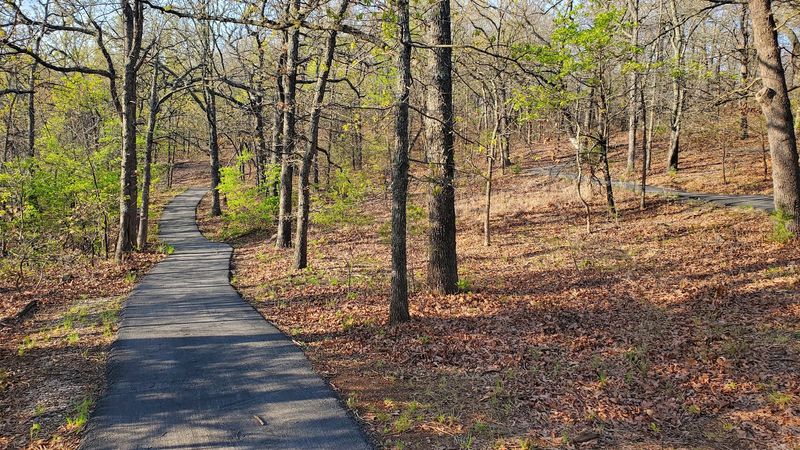
Some places entertain you, and some places settle you down enough that you start noticing things you usually miss. This forest definitely belongs in the second group.
After a little while the soundscape narrows to leaves shifting, birds calling from deeper in the woods, and your own footsteps finding a slower rhythm than they had when you started.
That kind of quiet is not empty, which is why it feels so restorative. It has texture to it, especially when the wind moves through cedar and the branches answer back in different tones.
Even the pauses feel alive, and if you are coming in with a busy brain, the place has a funny way of smoothing the edges without asking anything dramatic from you.
I think that is one reason this preserve lingers in your mind more than bigger-name hiking spots sometimes do. The experience is not built around spectacle, and it does not need to be.
In Oklahoma, where open sky often gets most of the attention, stepping into a forest this old and this inward-looking feels like entering a completely different conversation with the land, and it is one that stays with you long after the drive home.
