You could drive hours into the mountains of other states to find a view like this. Or you could take this short hike in Minnesota and save yourself the gas money.
The trail is not long, maybe a mile or so, with a gentle climb that barely makes you break a sweat. But at the top, the world opens up. A valley stretches below you, carved by water over thousands of years, with a river cutting through the middle like a silver thread.
I sat on a rock at the edge, caught my breath, and watched a hawk circle below me. That is the magic of this place.
A big payoff for almost no effort. Minnesota has its share of hidden gems. This one is for people who want the view without the suffering.
The Falls That Rewrote My Expectations
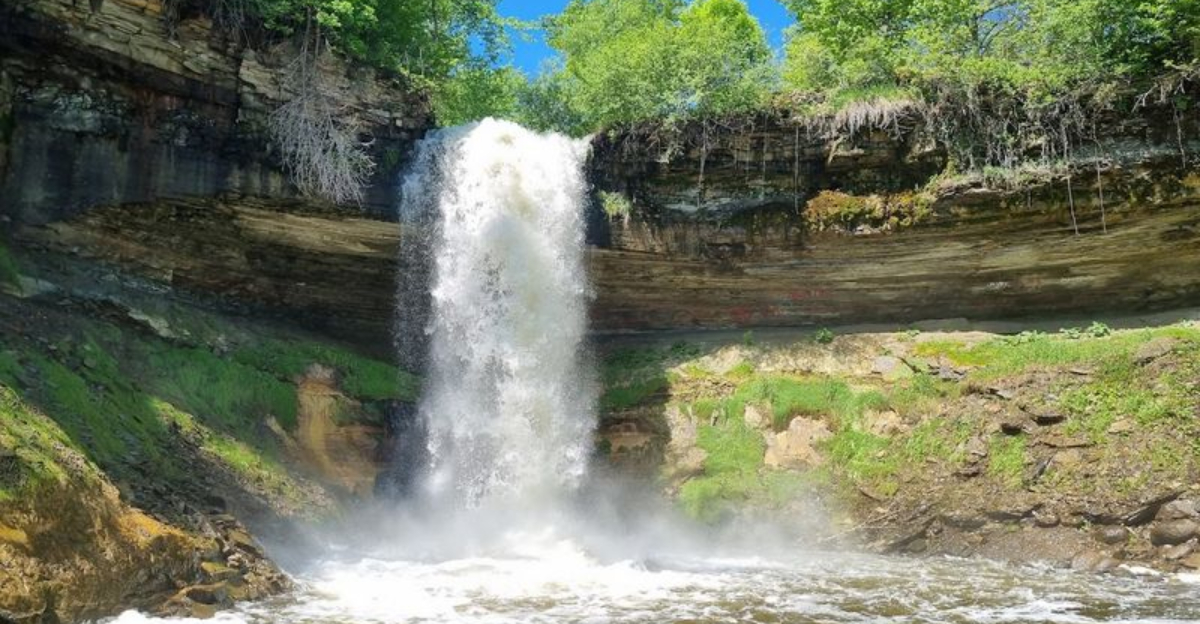
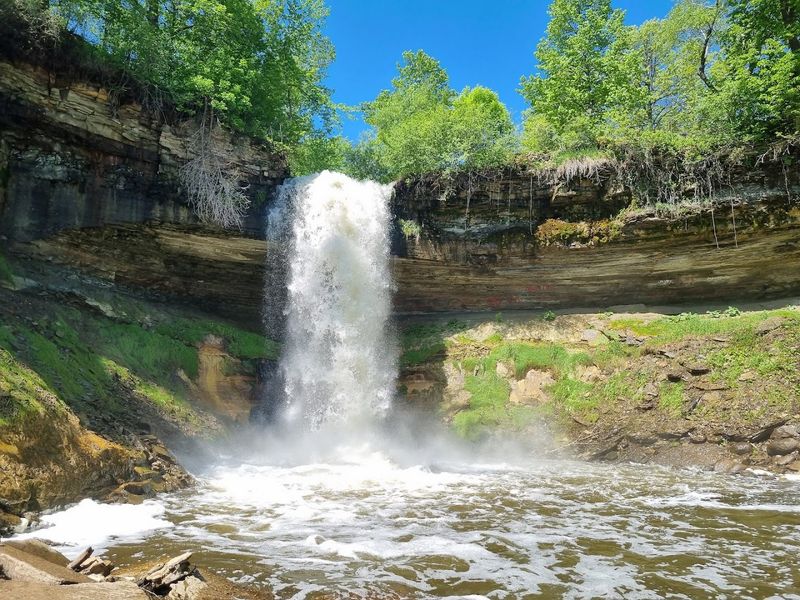
Nothing quite prepares you for the moment Minnehaha Falls comes into view. The creek ambles along peacefully, and then suddenly the ground just disappears and water launches itself over a 53-foot drop in a gorgeous half-moon arc.
It is loud, it is beautiful, and it is completely free to see.
The upper trail brings visitors right to the edge of the falls without requiring any serious hiking experience. You are not scrambling over boulders or reading trail maps with a headlamp.
The path from the parking area is paved and approachable, making the payoff feel almost unfairly easy.
What really surprised me was how powerful the falls look even outside of spring. In warmer months, the surrounding greenery frames the cascade like a painting.
The mist drifts up and cools your face on a warm day, which feels like a small gift from the universe.
Minnehaha is one of Minnesota’s most iconic natural landmarks, and standing at the brink makes that reputation feel completely earned. The half-moon shape of the waterfall edge is genuinely unique, and no photograph fully captures the scale of it.
You simply have to show up and let it impress you in person.
A Name Rooted in Dakota History
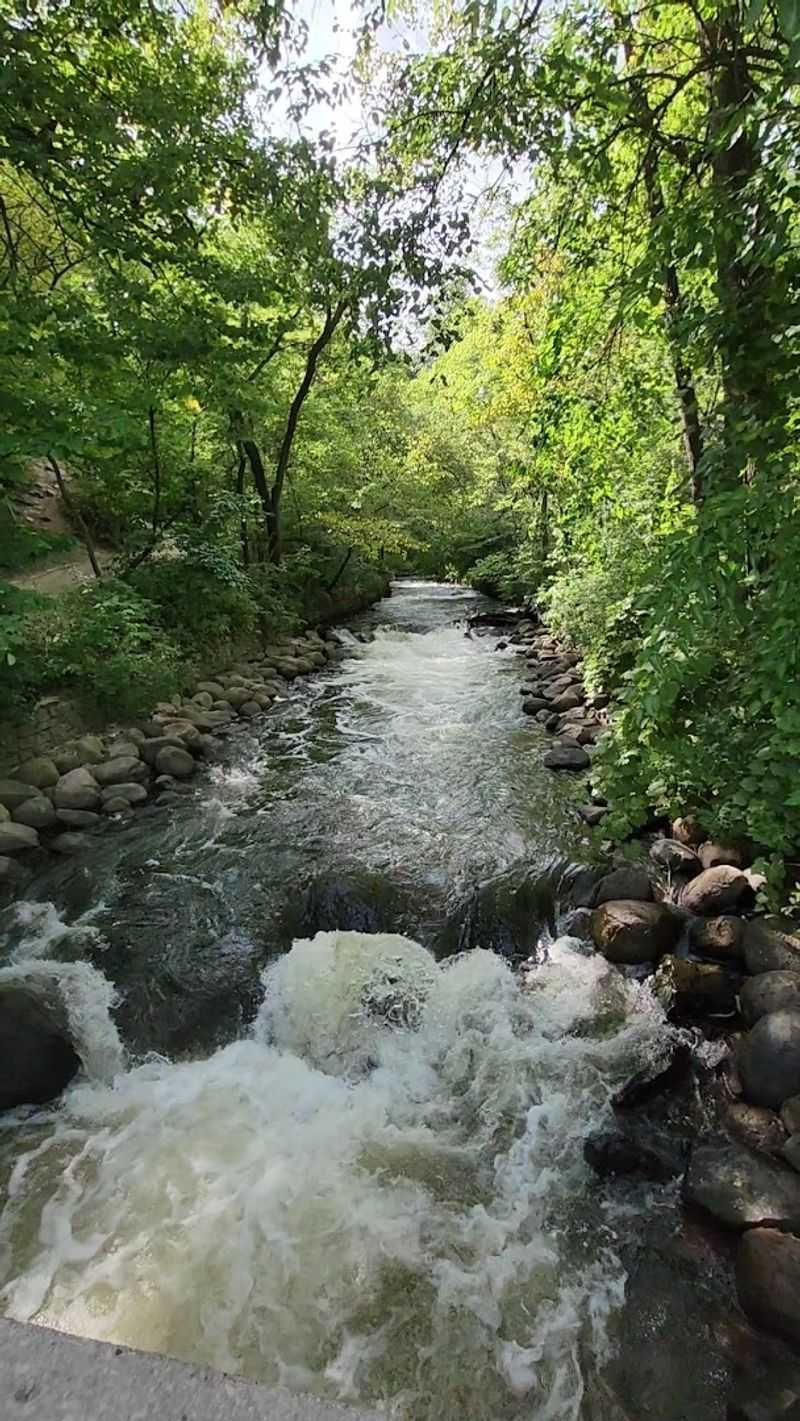
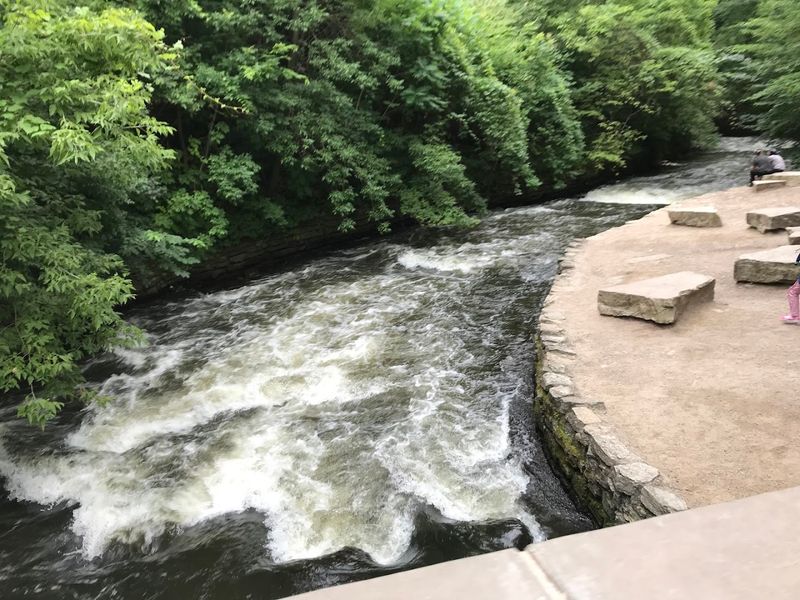
The word “Minnehaha” comes from the Dakota language, roughly translating to “waterfall” or “curling water.” That meaning feels perfectly accurate the moment you hear the creek tumbling over the edge. The Dakota people held a deep and sacred relationship with water, and this site carries that history quietly but meaningfully.
Long before the park had parking lots and picnic areas, this waterfall was a place of cultural importance. Recognizing that history adds a layer to the experience that a simple nature walk usually does not offer.
It shifts the visit from a casual outing into something that feels a little more grounded.
Henry Wadsworth Longfellow made Minnesota’s Minnehaha famous across the country through his epic poem “The Song of Hiawatha,” published in 1855. Interestingly, he never actually visited the falls himself, writing the poem entirely from descriptions and illustrations.
A statue of Hiawatha and Minnehaha stands in the park today as a nod to that literary legacy.
The park was listed on the National Register of Historic Places in 1969, which tells you everything about how seriously this place is taken beyond its natural beauty. History and nature rarely overlap this cleanly in an urban setting.
Minnehaha manages both without making either feel like an afterthought.
Winter Transforms Everything Here
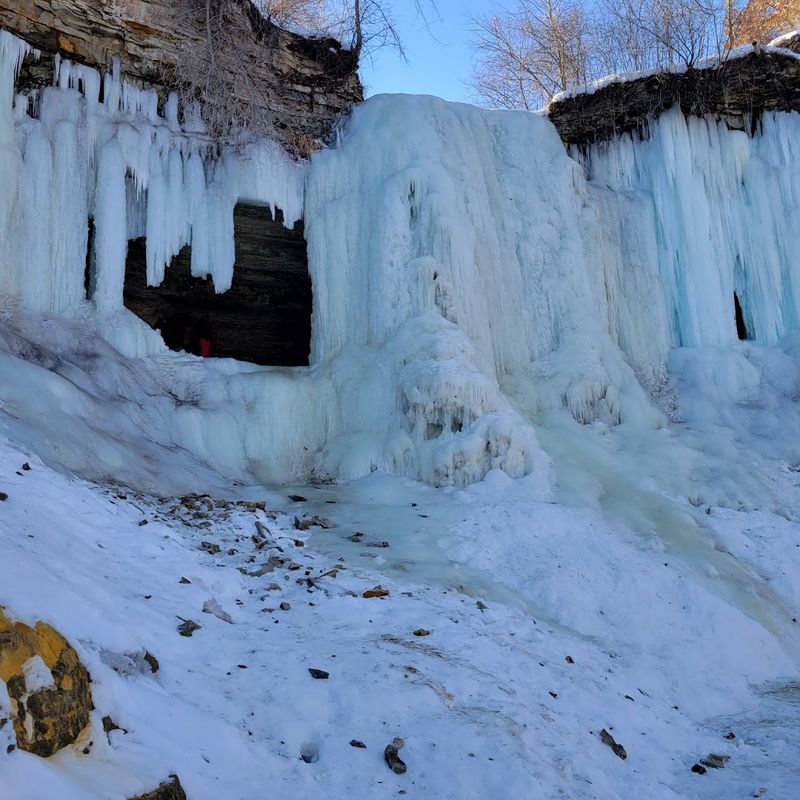
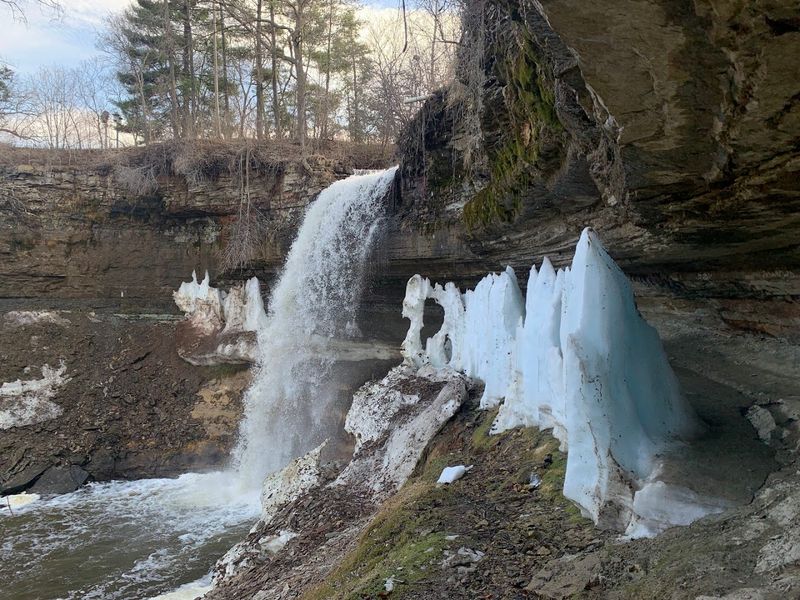
Visiting Minnehaha Falls in winter is a completely different experience from any other season, and that is not an exaggeration. The cascading water freezes into towering ice formations that cling to the rock face and build outward in jagged, glittering columns.
It looks like something out of a fantasy film set.
During a deep freeze, the ice can build up enough to create what some visitors describe as a natural ice cave near the base of the falls. Access behind the frozen falls can be tricky and is sometimes restricted by posted signs, so it is worth paying attention to those before you try to get closer.
Safety matters more than the photo.
The upper trail in winter has its own quiet magic too. Snow muffles the usual city sounds, and the gorge below takes on a dramatic, almost cinematic quality.
Footprints in fresh snow and bare tree branches framing the frozen falls make for a scene that feels genuinely remote, even though you are still very much inside Minneapolis.
Dressing in layers and wearing boots with solid grip is non-negotiable in the colder months. Some reviewers have noted slipping on icy patches, so traction matters.
But if you show up prepared, winter might actually be the most visually spectacular season to visit Minnehaha.
The Upper Trail Walk Itself
The upper trail at Minnehaha is genuinely one of those walks where the effort-to-reward ratio feels almost unfair in the best way. From the main parking area off South Minnehaha Drive, the falls are visible within minutes.
The path is paved, well-maintained for most of the route, and accessible to a wide range of visitors.
There are multiple vantage points along the way, and each one offers a slightly different angle on the falls. The upper edge overlook gives you the wide, dramatic view of the brink.
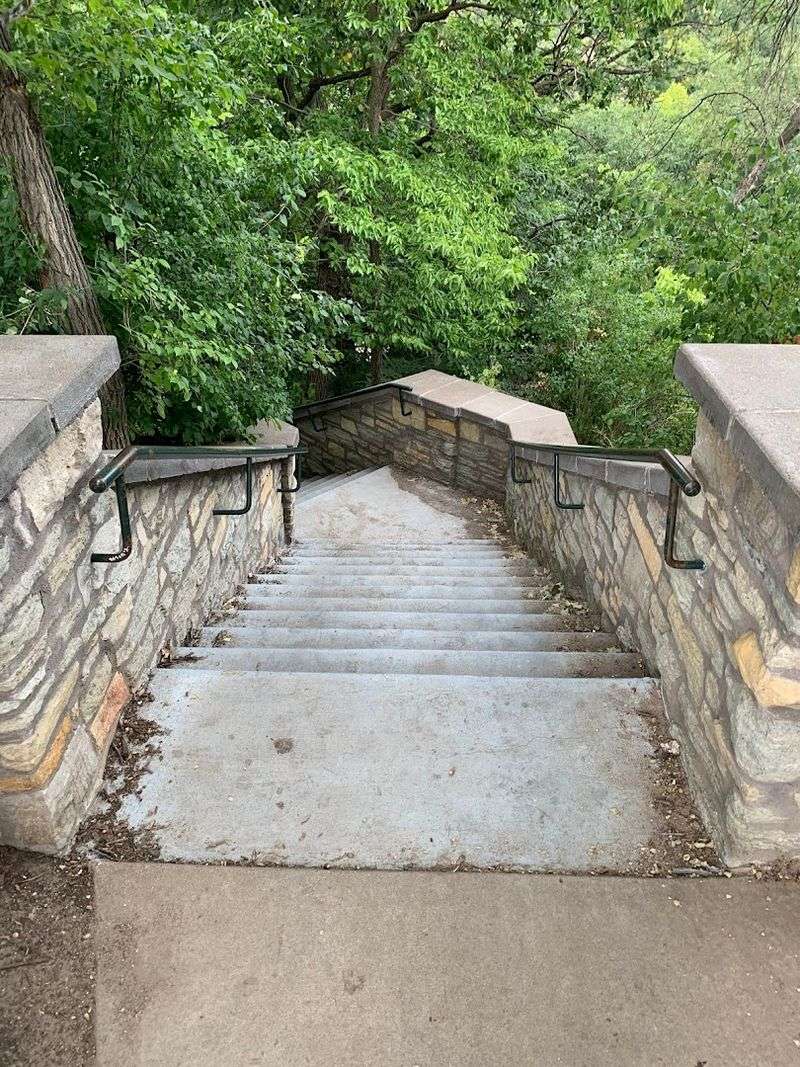
A staircase leads down into the gorge where a halfway point offers what many consider the most rewarding perspective of the full cascade.
The Minnehaha Creek Trail, at just 0.8 miles, is an easy option for families or anyone who wants a relaxed pace. For those wanting more ground to cover, the Lower Glen Trail loops 2.1 miles from the base of the falls all the way to where Minnehaha Creek meets the Mississippi River.
That trail ends at a sandy beach, which is a genuinely satisfying conclusion to a longer outing.
Going early in the morning on weekdays tends to mean fewer people on the path. The park opens at 6 AM, and the hour right after sunrise has a calm, almost meditative quality that midday visits simply cannot match.
Historic Landmarks Hidden in Plain Sight
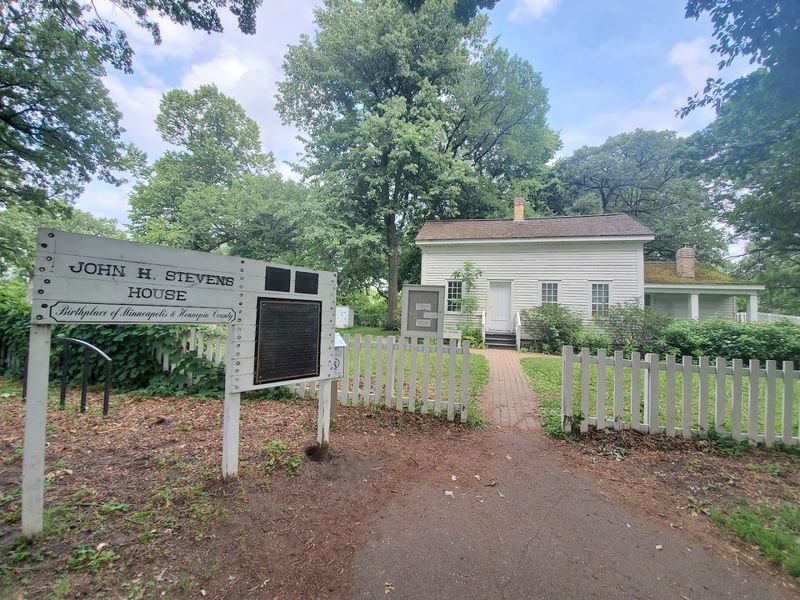
Most visitors come for the waterfall and leave without realizing the park holds a small collection of genuinely interesting historic structures. The Longfellow House, a replica of Henry Wadsworth Longfellow’s actual Cambridge home, sits within the park as a tribute to the poet who made these falls famous without ever visiting them.
It is a quirky detail that makes the whole story feel more layered.
The Princess Depot is another standout. Built in the 1870s, this Victorian-era train depot once served passengers arriving specifically to see the falls during a time when Minnehaha was already drawing visitors from across the region.
The idea that people were making a trip here over a century ago for the same reason you are today is oddly comforting.
The John H. Stevens House is also located within the park and holds its own significance in Minneapolis history.
These buildings are not roped off museum pieces sitting behind velvet barriers. They exist alongside the trails and picnic areas in a way that feels organic rather than staged.
Together, these landmarks help explain why the park earned its spot on the National Register of Historic Places in 1969. A waterfall alone could justify a visit.
A waterfall with this much layered history attached to it justifies coming back more than once.
Practical Tips for Getting the Most Out of Your Visit
Parking at Minnehaha Regional Park is available in a lot off 46th Avenue South, which several regulars consider the best access point. The park is open daily from 6 AM to 10 PM, so there is plenty of flexibility around timing.
Arriving early on weekends dramatically reduces how many people you will share the trail with.
Wearing comfortable walking shoes is enough for the upper trail, but if you plan to take the staircase down into the gorge, something with a bit more grip will serve you better. The steps can be slick after rain, and the lower sections of trail near the creek involve uneven terrain.
A little preparation goes a long way.
Sea Salt Eatery is located within the park and is a genuinely good spot to grab food after your walk. It is a seasonal restaurant with a casual outdoor setup that fits the vibe of the park perfectly.
The picnic areas are also plentiful if you prefer to bring your own food and sit near the creek.
Families with young kids will find the playground and open green spaces useful for burning off energy after the falls. The park also has disc golf and gardens to explore.
Minnehaha is the kind of place where you can plan a two-hour visit and accidentally stay for four without noticing.
Why This Place Sticks With You Long After You Leave
There is something about Minnehaha Falls that does not let go easily after the visit ends. It might be the contrast of finding something this dramatic tucked inside a major American city.
It might be the sound, which lingers in your memory the way certain songs do, present and vivid even when you are back in traffic a mile away.
The park draws close to 850,000 visitors each year, and that number makes sense once you experience it. People come back in different seasons specifically to see how the falls change.
A summer visit and a January visit feel like two entirely separate places sharing the same address.
What makes Minnehaha genuinely special is that it does not ask much of you. No long drive, no gear list, no trail maps to study the night before.
The falls are right there, accessible and generous, ready to deliver the kind of moment that usually requires a lot more planning to find.
Minneapolis is not a city people typically associate with dramatic natural scenery, and Minnehaha seems almost aware of that reputation. It shows up anyway, 53 feet of falling water in the middle of the metro, quietly being one of the most memorable spots in the entire state.
Once you see it, you will understand why people keep coming back.
Address: 4801 S Minnehaha Dr, Minneapolis, MN 55417
