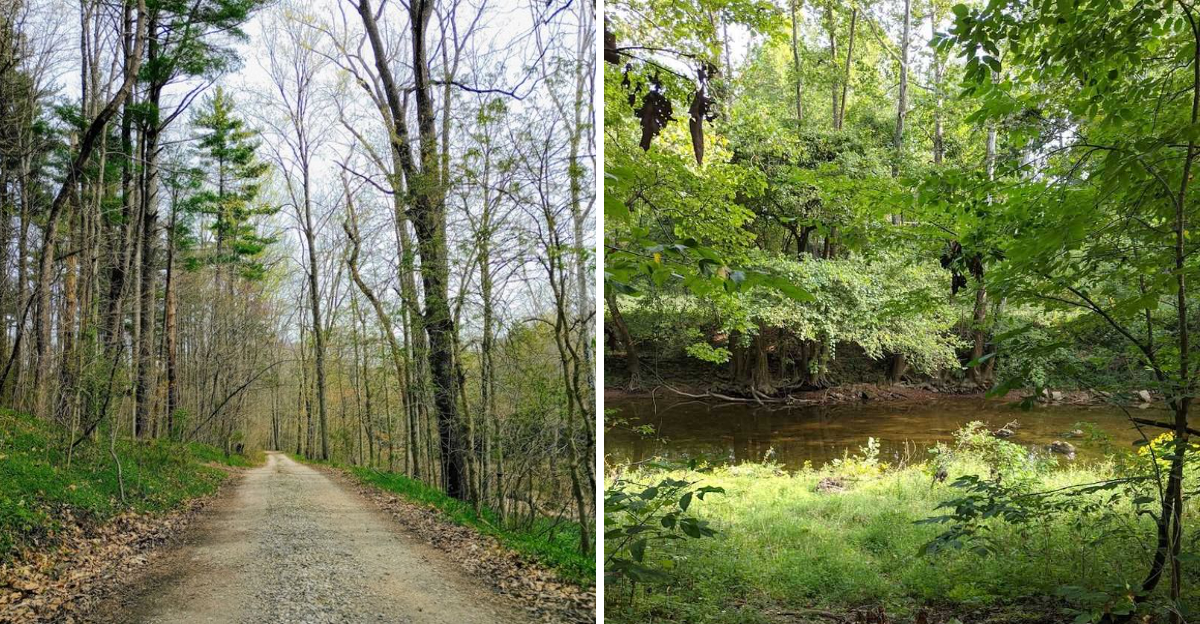
I have spent time in plenty of Indiana’s outdoor spaces, but this small state forest outside North Vernon has a quality that keeps pulling me back. It sits just a short distance from town, yet the moment you step onto its gravel firebreak roads and ridge trails, the everyday noise fades fast.
At only a few hundred acres, it feels personal and unhurried in a way that bigger parks sometimes cannot match. The hardwood canopy creates a steady kind of shade, and the trails weave through it without demanding anything from you except a slower pace.
It is the kind of place where you do not need a plan, just enough curiosity to keep walking and noticing what changes as you go.
Firebreak Roads That Double As Quiet Walking Paths
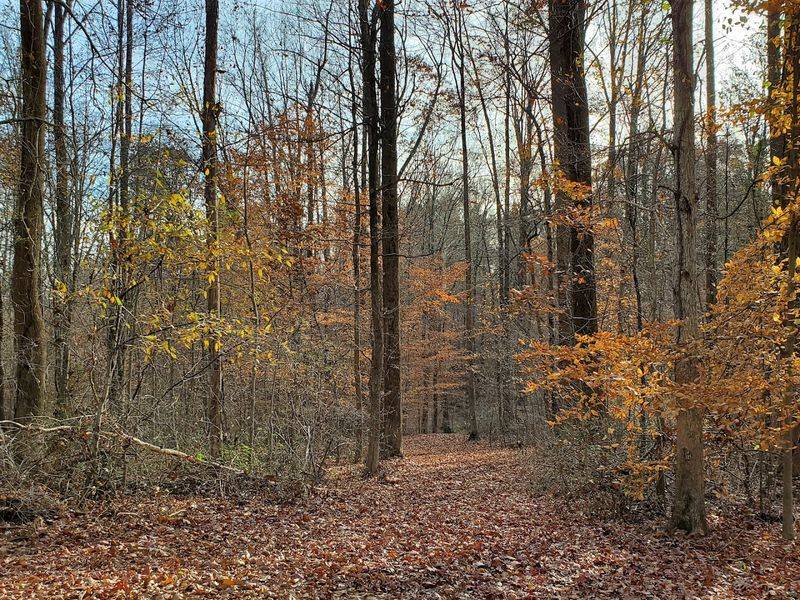
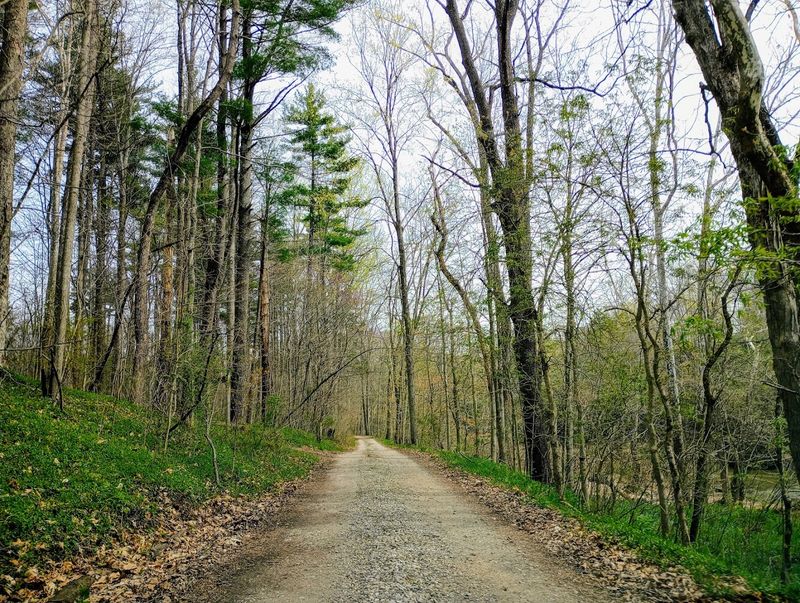
One of the first things you notice at Selmier is the network of gravel firebreak roads that cut through the forest. Originally designed to help manage and contain wildfires, these wide paths have become some of the most enjoyable walking routes on the property.
The footing is solid and easy, making them accessible for most fitness levels and even manageable for younger kids.
What makes these roads special is the perspective they offer. Walking a firebreak gives you a wide, open corridor through otherwise dense hardwood stands, and the contrast between the bright open path and the shaded forest walls on either side is genuinely striking.
In autumn, that contrast becomes almost painterly as the canopy changes color above you.
Visitors have logged around four miles of combined walking using the firebreak roads and connecting trails, and the layout is flexible enough to shorten or extend your route depending on how long you want to be out. Dogs are welcome on leash, and the gravel surface holds up well even after rain.
If you are someone who wants a peaceful walk without technical terrain, these roads deliver exactly that. The quiet here is real, and on a weekday morning, you may have the whole place to yourself.
Ridge Trails With Real Character Through The Hardwoods
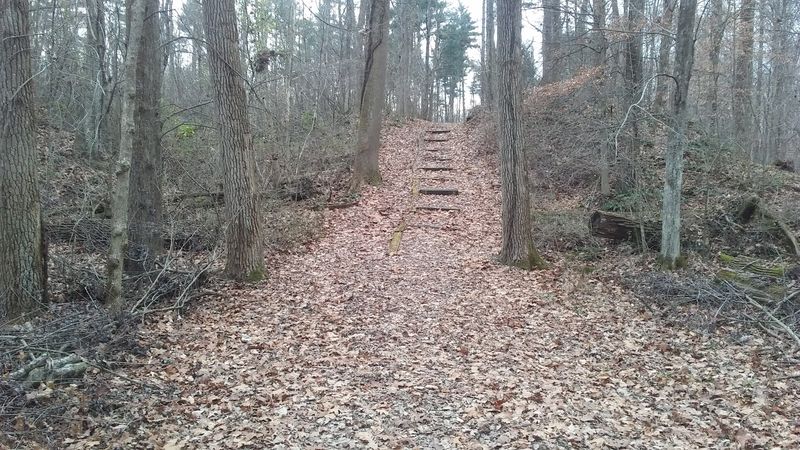
Beyond the firebreak roads, Selmier offers ridge trails that feel more like traditional woodland hiking. These paths follow the natural contours of the land, rising and dipping through mixed hardwood stands that include oak, hickory, and the tulip trees Frank Selmier planted decades ago.
The canopy here is thick enough in summer to keep things cool even on warm days.
What I appreciate most about the ridge trails is how they reward slow walking. There is no single dramatic overlook or landmark moment demanding your attention.
Instead, the forest reveals itself gradually, through shifting light, bird calls, and the occasional glimpse of the Muscatatuck River valley below. That kind of quiet discovery is harder to find than people expect.
Trail markings are generally straightforward, and the forest is small enough that getting seriously lost is unlikely. A few visitors have noted that a consolidated trail map would help, so downloading the Indiana DNR map before you arrive is a smart move.
Benches are scattered along the route, which makes the trails genuinely comfortable for older visitors or anyone who wants to stop and sit in the shade. The ridge trails at Selmier are not dramatic, but they are honest and beautiful in the way that only old Indiana hardwoods can be.
The Self-Guided Forest Management Trail Teaches As You Walk
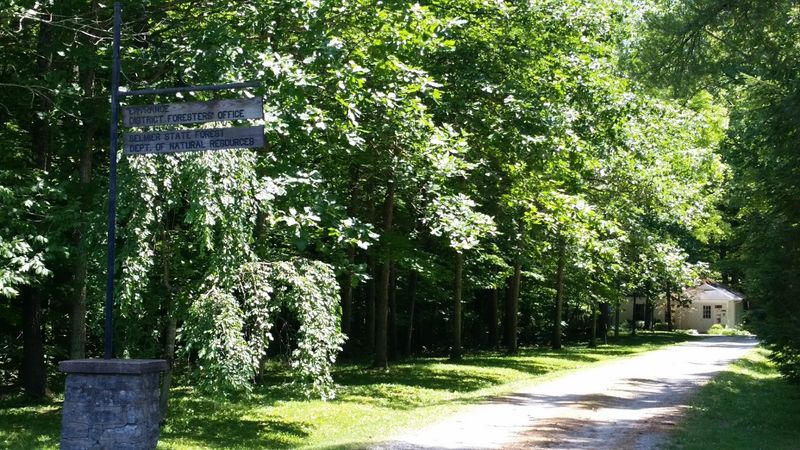
Not every forest walk has to be just exercise. The one-mile Self-Guided Forest Management Trail at Selmier turns a short loop into a genuine learning experience, and it does it without feeling like a classroom.
Numbered markers along the route correspond to information about tree identification, successional areas, and timber stand improvement practices used across the property.
For families with school-age kids, this trail is a natural fit. The markers are clear and written to be understood by everyday visitors, not just foresters.
You will learn why certain tree species were chosen, how forests change over time without intervention, and what active management looks like on a working state forest. It is the kind of hands-on education that sticks better than any textbook.
Adults find it just as engaging. If you have ever walked through a forest and wondered why some areas look dense and tangled while others feel open and mature, this trail answers those questions directly.
The loop is short enough to complete in under an hour at a relaxed pace, making it a perfect first stop before exploring the rest of the property. Selmier State Forest, located at 2900 N 90 E, North Vernon, IN 47265, keeps this trail well maintained and it is one of the most underrated educational outdoor experiences in Jennings County.
Fishing And Wildlife Along The Muscatatuck River
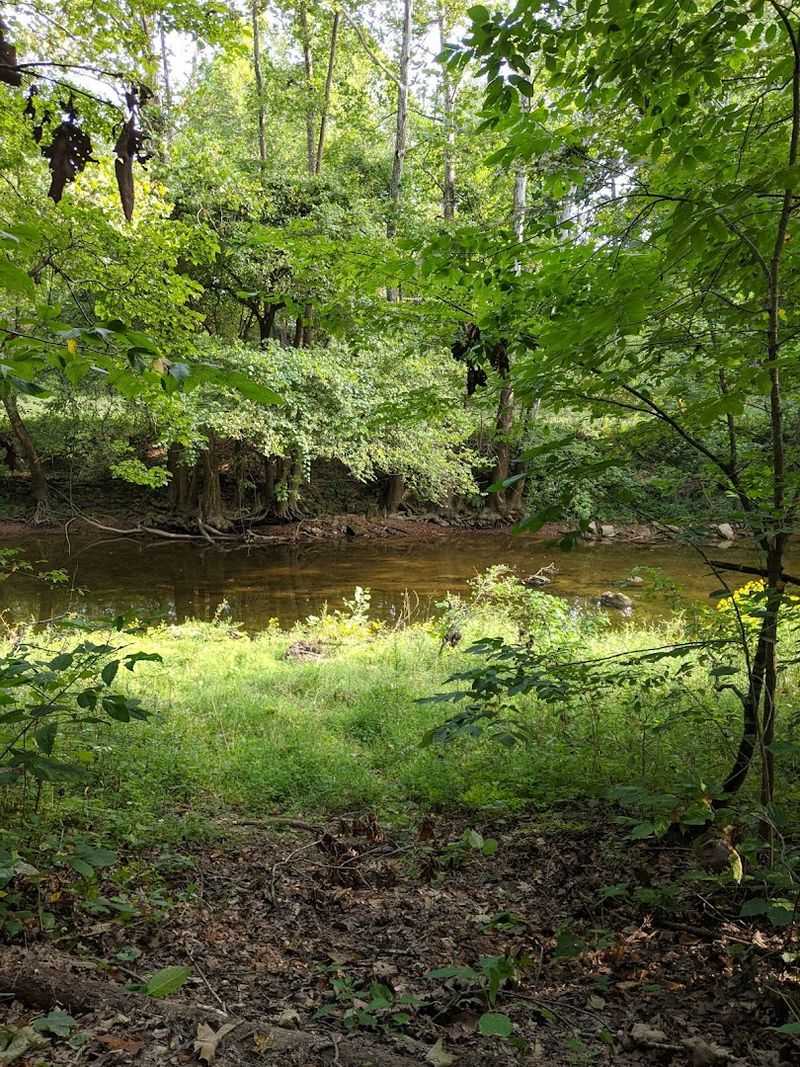
The Muscatatuck River runs along the edge of Selmier State Forest, and access to it is one of the property’s most appealing features. Anglers can work the banks for largemouth bass, smallmouth bass, bluegill, perch, and catfish, all species that thrive in this stretch of southern Indiana river.
A valid Indiana fishing license is required, so make sure you have yours before heading out.
Even if fishing is not your thing, the river corridor is worth exploring on foot. The views from the main gravel road looking down toward the water are genuinely beautiful, especially in early morning when mist hangs low over the surface.
Sycamore trees lean out over the bank, and the combination of moving water and hardwood canopy creates the kind of scene that makes you want to just stand still for a while.
Wildlife sightings along the river are common. Herons, kingfishers, and various waterfowl use this stretch regularly, and deer often move through the bottomland near the water at dawn and dusk.
The remains of an old dam are also visible from the trail, adding a bit of local historical texture to the natural scenery. For anyone who enjoys combining outdoor recreation with a little quiet exploration, the Muscatatuck River access at Selmier is one of the forest’s best-kept draws.
A Founding Story Worth Knowing Before You Go
Some places carry a story in their roots, and Selmier State Forest is one of them. Stella Selmier donated this land to Indiana in 1944 in memory of her husband Frank, a man who genuinely loved the outdoors and spent years shaping the land himself.
Between 1921 and 1934, Frank personally planted a wide variety of tree species across the property, turning open ground into layered woodland.
The species he chose tell you a lot about his vision. You will find pine stands, black locust, black walnut, sycamore, and towering tulip trees spread across the 355 acres.
Walking through, it feels less like a managed forest and more like a living tribute to one person’s quiet passion for the land.
That personal history adds a layer of meaning to every trail you walk here. Knowing that the trees above you were intentionally planted by someone who loved this ground makes the experience feel different from a typical state forest visit.
It is a rare thing to walk through someone’s life’s work and still feel its care decades later. For Indiana locals who appreciate history woven into nature, that backstory alone makes Selmier worth the trip.
Hunting Seasons That Make Full Use Of The Forest
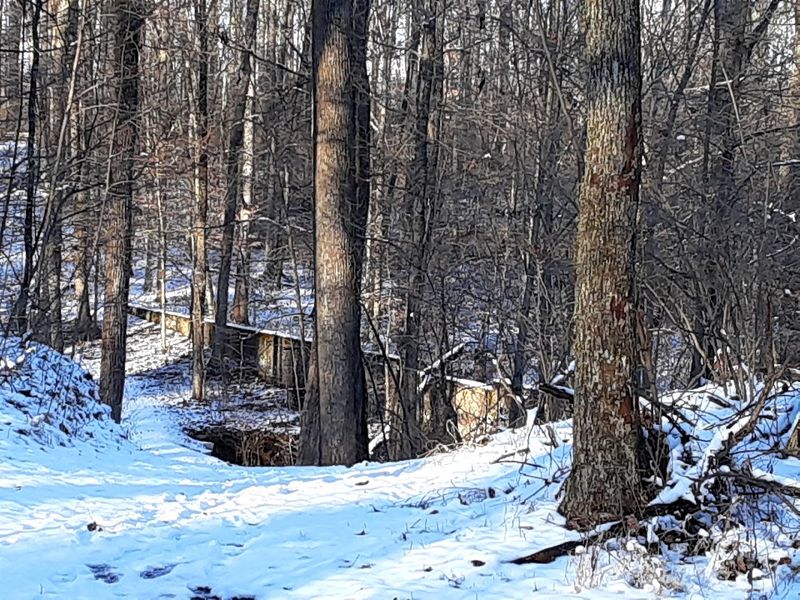
Selmier State Forest is not just a hiking destination. For hunters, the property offers regulated hunting for white-tailed deer, turkey, squirrel, and raccoon throughout the appropriate seasons.
The mixed hardwood and pine habitat across the 355 acres creates solid cover and food sources that support healthy wildlife populations year after year.
Hunting here requires a valid Indiana license and compliance with all state regulations, which is standard for any public land in Indiana. The relatively compact size of the forest means you need to be thoughtful about positioning, but that same compact footprint makes scouting the land much easier than it would be on a larger property.
Deer trails are visible along the ridge lines, and the river corridor provides natural funnels that experienced hunters will recognize immediately.
Fall is the most popular season at Selmier, and for good reason. The leaves turn brilliantly in October, the air cools down, and the forest takes on a completely different character than it has in summer.
One visitor noted that the fall colors had really started turning noticeably in mid-October, and that the scenery during that window is worth a trip even without a hunting license. Whether you come to hunt or simply to experience the forest at its most vivid, autumn at Selmier is hard to beat anywhere in Jennings County.
History, Cemeteries, And Nearby Spots Worth Adding To Your Day
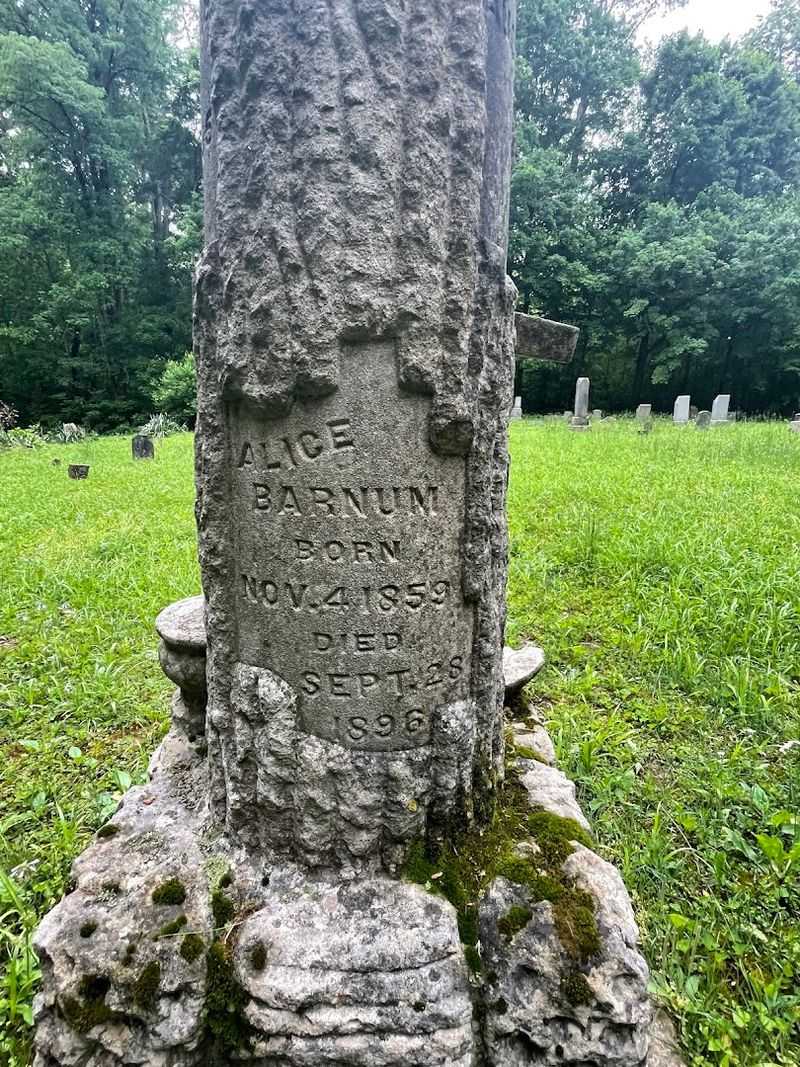
Selmier State Forest holds more history than most visitors expect from a small property. Summerfield Cemetery sits within the forest boundary, and its headstones date back well into the 1800s.
Some of the graves belong to soldiers from the War of 1812, which gives the site a quiet, sobering weight that is hard to describe until you are standing there reading the names yourself.
The old ruins of a dam are also visible along the river trail, remnants of an earlier era of land use in this part of Indiana. A reflection pond area sits near one of the trails, and while it has aged considerably over the years, the setting around it is still peaceful.
Small details like these are what turn a simple walk into something that stays with you.
When you are ready to extend your day, the surrounding area has options worth knowing about. Muscatatuck County Park offers additional trails and picnic areas nearby.
Crosley State Fish and Wildlife Area provides expanded hunting and fishing access just a short drive away. The Muscatatuck National Wildlife Refuge, located at 12985 E US Hwy 50, Seymour, IN 47274, is one of the premier birding destinations in the entire state and pairs beautifully with a Selmier visit.
For a meal before or after, North Vernon’s local restaurants along State Road 7 are just minutes away from the forest entrance.
