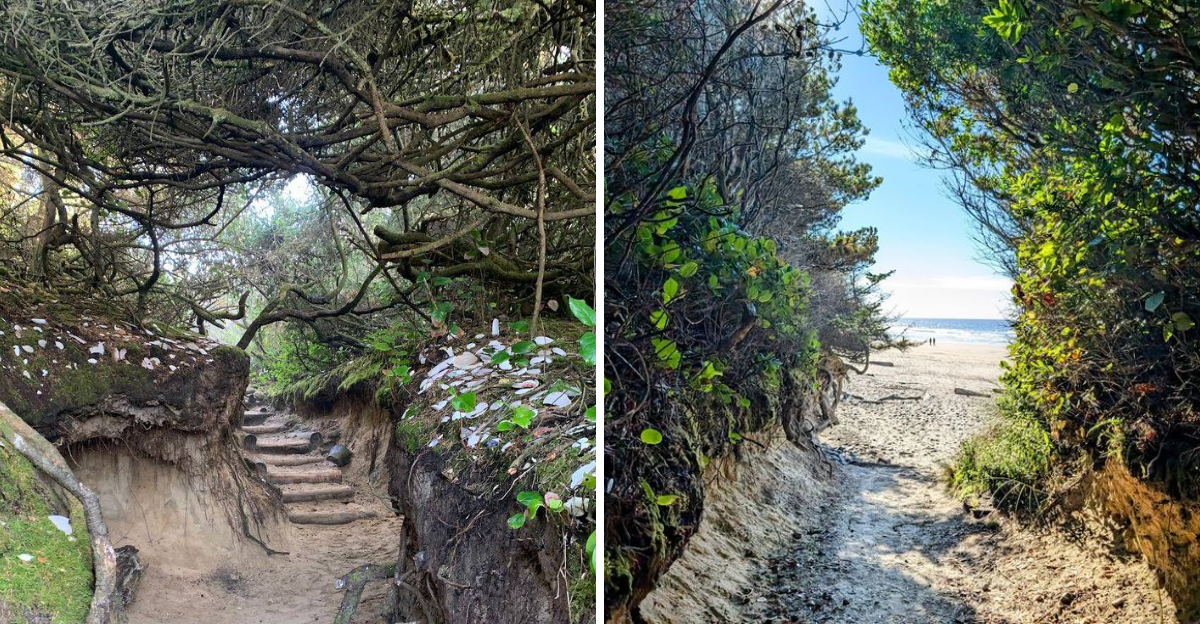
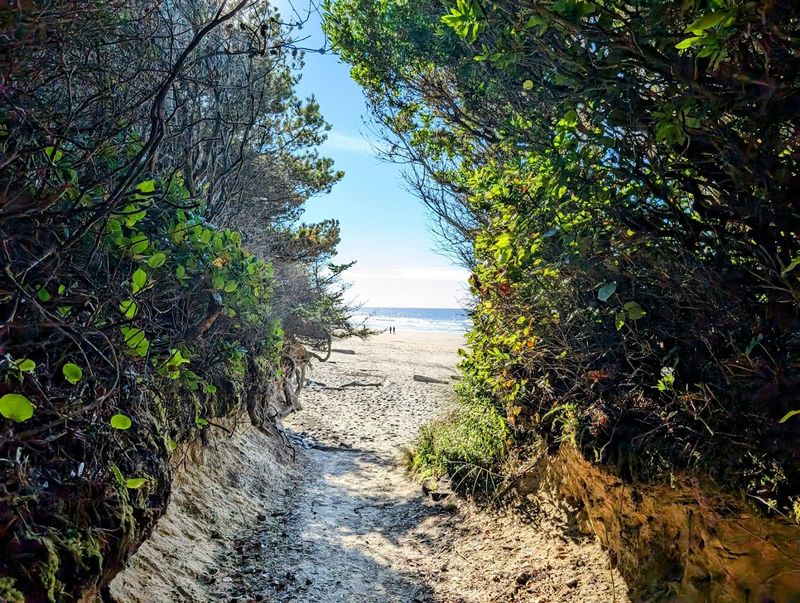
The trail starts like a green tunnel, branches overhead blocking out the sky. You feel like you are walking into a story.
Oregon has a short path through a natural arch of Sitka spruce trees that opens up to a beach most people never find. The branches twist together so tightly that the light turns soft and golden, even on a cloudy day.
Your footsteps are quiet on the soft ground, muffled by years of fallen needles. Then the tunnel ends and suddenly the ocean is right there, wide and gray and endless.
The beach feels private, tucked away from the main tourist crowds. You will probably have it almost to yourself if you go at the right time.
Driftwood logs make perfect benches for staring at the waves. Just remember to turn around and appreciate the tunnel on the way back too.
The Hobbit Trail: Where the Magic Begins
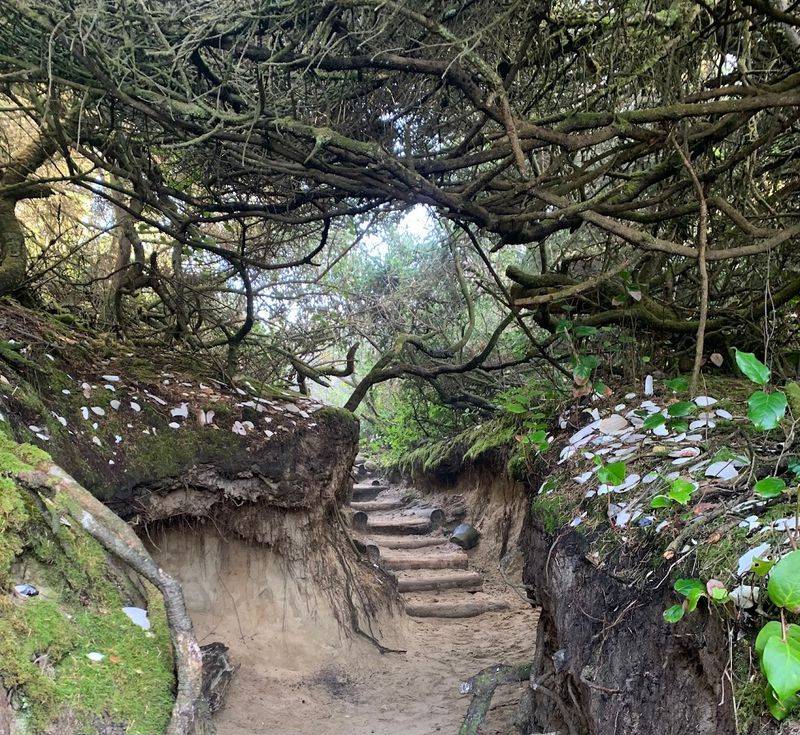
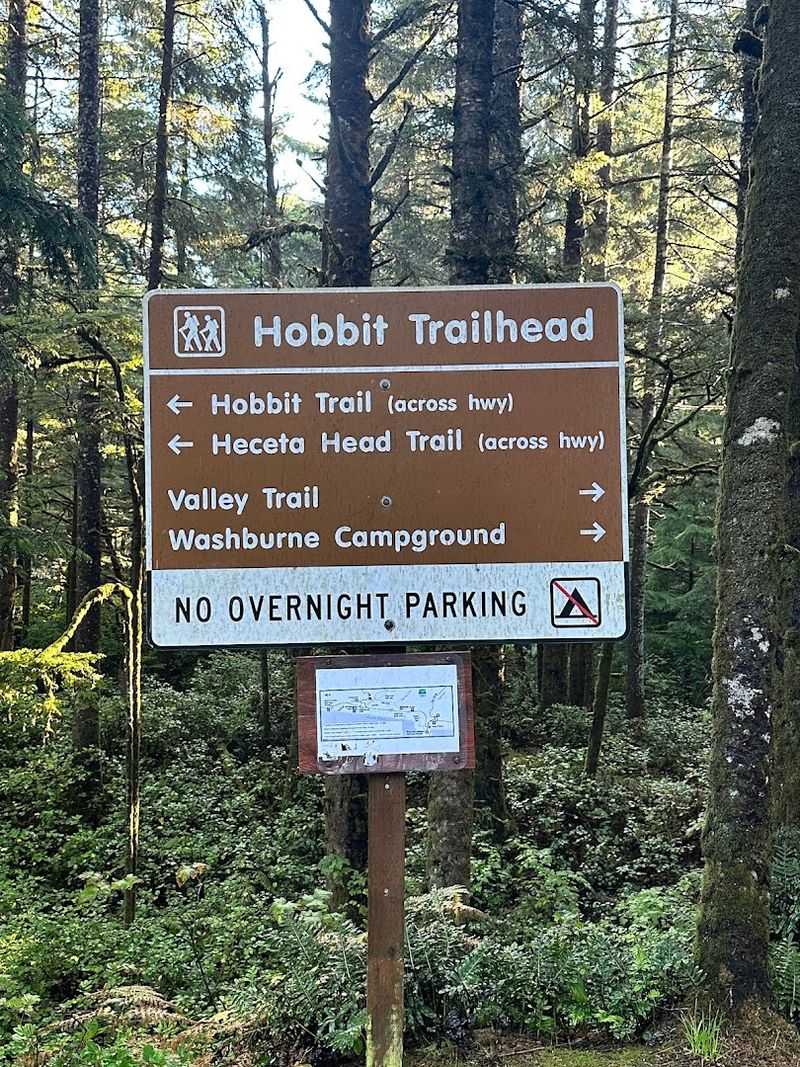
Walking onto the Hobbit Trail feels like crossing a threshold. The trailhead sits along the Oregon Coast Highway, easy to miss if you blink.
A small sign marks the entrance, and then the forest swallows you whole.
The path is narrow and soft underfoot. Roots weave across the ground like a natural obstacle course.
The canopy closes in quickly, and suddenly the outside world disappears.
The Hobbit Trail is located within the Carl G. Washburne Memorial State Park area near Florence, Oregon.
It stretches roughly 0.9 miles one way. That short distance feels full and rich, not rushed.
Every step rewards you with something new. A mossy boulder here, a twisted root there.
The trail earns its name honestly because nothing about it feels ordinary or modern.
First-time visitors often stop just a few feet in, turning slowly to take it all in. That pause is completely understandable.
The forest here has a presence that is hard to describe but impossible to ignore.
Sitka Spruce Trees: Giants of the Oregon Coast
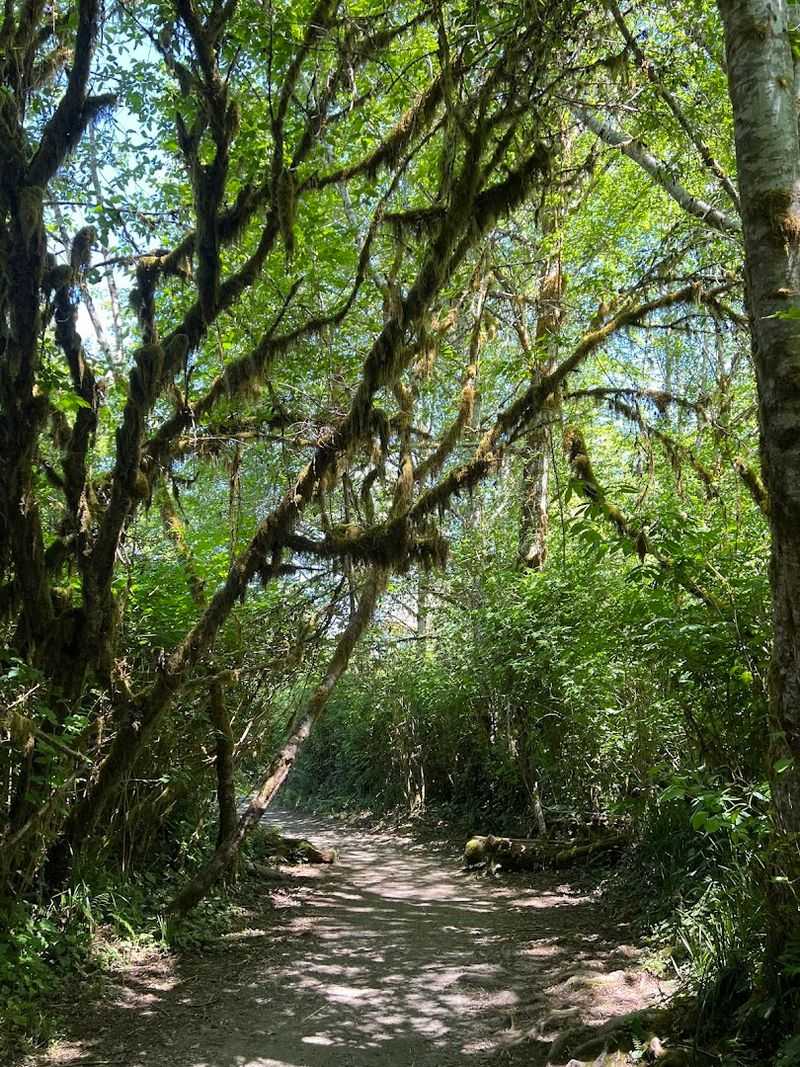
Sitka spruce trees are the backbone of the Oregon coastal forest. They grow fast and tall, sometimes reaching over 200 feet.
Their trunks become enormous over centuries, wide enough to make a person feel very small.
The bark is scaly and silvery-gray, almost armor-like. Up close, it has a texture that looks almost ancient.
Running a hand along it feels like touching something that has outlived generations of people.
Sitka spruce thrive in the wet, foggy conditions of the Pacific Northwest coast. They love salt air and heavy rainfall.
This stretch of Oregon coast gives them exactly what they need to grow massive and old.
Their roots spread wide and shallow across the forest floor. This creates the knotted, lumpy terrain that makes the Hobbit Trail so visually dramatic.
Those roots are part of what gives the path its storybook look.
Sitka spruce wood is surprisingly strong and lightweight. Historically it was used to build aircraft frames.
Today, the trees are treasured more for their beauty and ecological importance.
The Natural Tree Tunnel: A Living Canopy Overhead
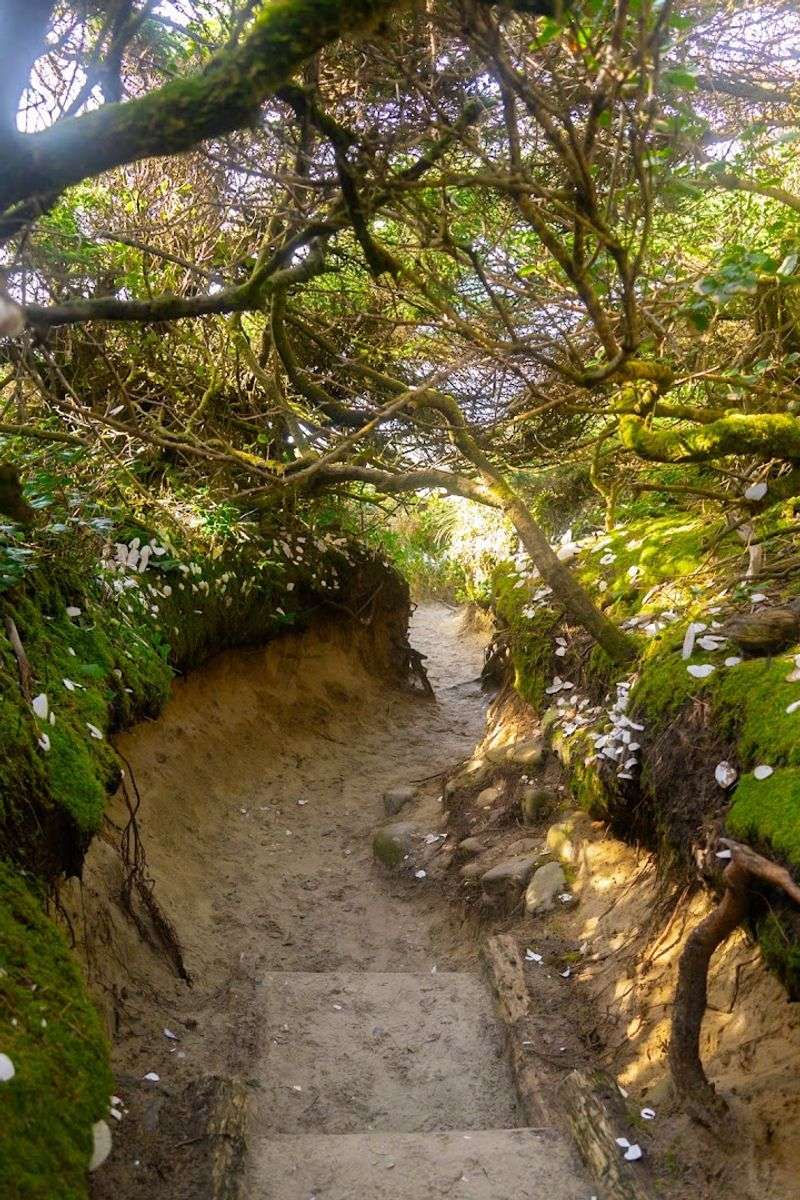
The tree tunnel effect on the Hobbit Trail is not accidental. Years of growth have pushed the branches inward from both sides.
The result is a curved, living ceiling that stretches the entire length of the path.
Light filters through in shifting patterns. On sunny days, the tunnel glows golden-green.
On overcast days, it turns a deep, moody emerald that feels almost theatrical.
Shore pines mix with the spruce here, adding variety to the canopy overhead. Their twisted shapes contrast with the straighter spruce trunks.
Together they create an irregular, organic roof that no architect could replicate.
Walking through it feels genuinely quiet. Sound gets absorbed by the moss and the needles.
Even on busy weekends, the tunnel has a hushed, almost reverent atmosphere.
Photographers love this section of the trail. The natural framing created by the trees is ready-made for dramatic shots.
Morning light especially turns the tunnel into something that looks almost painted rather than real.
The Hidden Beach at the Trail’s End
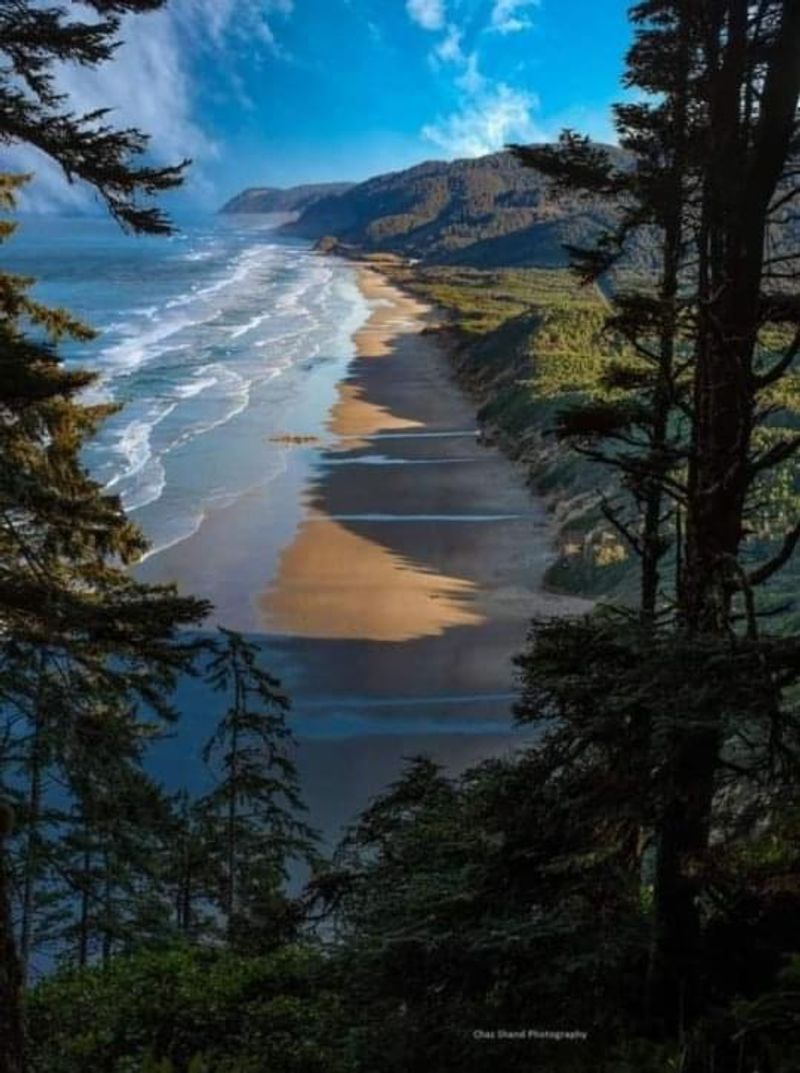
Nothing quite prepares you for the moment the trees end and the ocean begins. One second you are surrounded by forest.
The next, a wide stretch of wild Pacific beach opens up in front of you.
This beach does not have a formal name on most maps. Locals sometimes call it Hobbit Beach.
It sits just north of the more popular Heceta Beach, tucked away and easy to overlook.
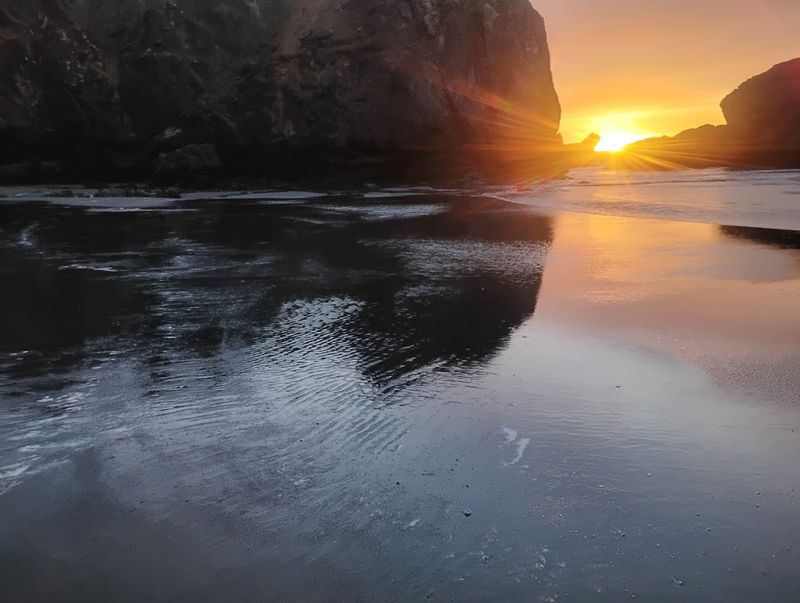
The sand here is fine and pale. Sea stacks rise from the water offshore, draped in mist on foggy mornings.
The waves come in strong and consistent, crashing with a sound that fills the whole space.
Very few people make it out here on any given day. The short hike filters out casual visitors.
Those who arrive feel like they have earned the view, and the beach rewards that effort generously.
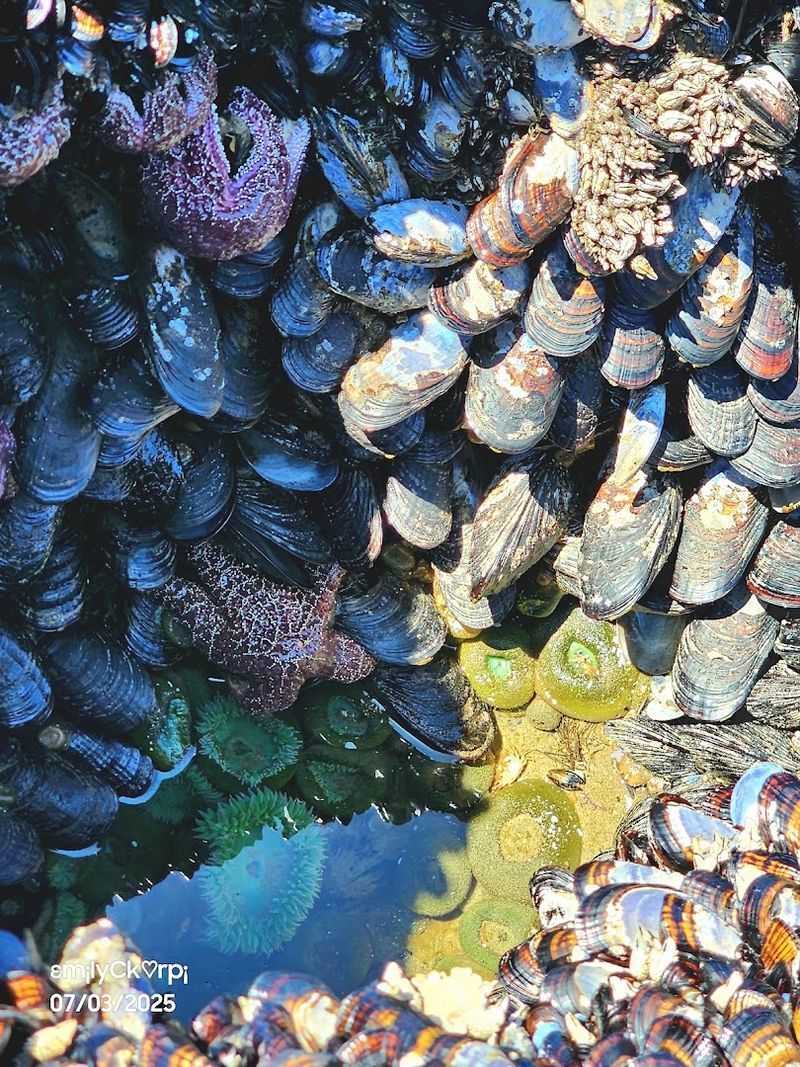
Tidepools form at the rocky edges during low tide. Small crabs and sea anemones fill the shallow pools.
Spending time crouched over those pools is one of the quietest, most absorbing things you can do here.
Carl G. Washburne Memorial State Park: The Bigger Picture
The Hobbit Trail runs through Carl G. Washburne Memorial State Park.
The park sits about 14 miles north of Florence on Highway 101. It covers a wide range of coastal terrain, from forest to beach to wetlands.
The park is not as famous as some of Oregon’s bigger coastal parks. That lower profile works in its favor.
Crowds stay manageable, and the trails feel personal rather than crowded.
Campgrounds within the park offer sites close to the forest. Staying overnight means waking up surrounded by spruce and pine.
The morning sounds of birds and wind through the trees are worth setting an alarm for.
Several trails connect within the park system. The Valley Trail links to the Hobbit Trail and the beach.
Mixing trails on a visit gives a fuller sense of the landscape beyond just the famous tunnel section.
Wildlife sightings are common here. Roosevelt elk sometimes move through the forest edges at dawn or dusk.
Spotting one of those massive animals in the misty morning light adds a whole other dimension to the visit.
Best Time to Visit the Hobbit Trail
Spring and early fall are the sweet spots for visiting the Hobbit Trail. Summer brings more visitors and warmer temperatures.
But the forest feels most alive during shoulder seasons when the crowds thin out.
Rain is a constant companion on the Oregon coast. Embracing that rather than avoiding it changes everything.
A light rain actually makes the moss glow brighter and the air smell richer.
Mornings are the best time to hit the trail. The light is softer and the forest is quieter.
Fog sometimes drifts through the trees in early hours, adding a dreamy quality to the walk.
Summer fog, called marine layer, is common along this stretch of coast. It burns off by midday most days.
Arriving early lets you catch that atmospheric mist before it disappears.
Winter visits are possible and surprisingly peaceful. The trail stays open year-round.
Fewer people means more solitude, though the beach wind in January can be sharp and bracing enough to make ears ache.
What to Bring on the Hobbit Trail Hike
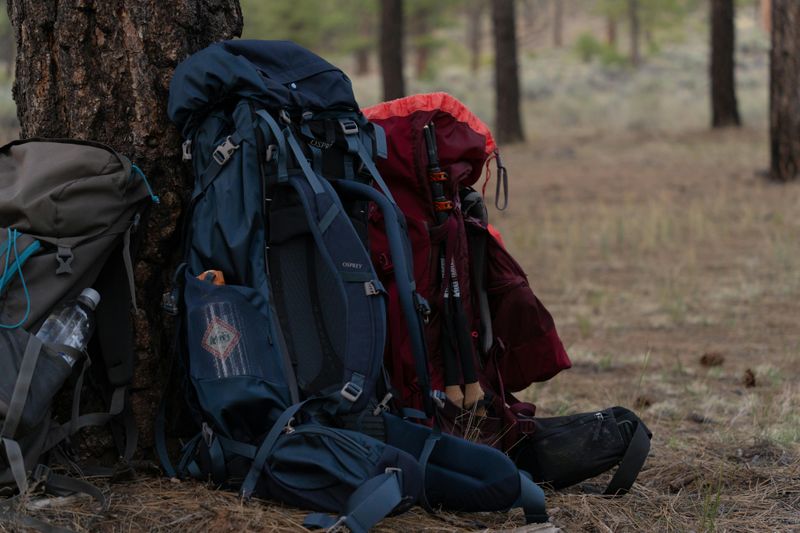
The Hobbit Trail is short, but the Oregon coast weather demands respect. Layering is essential.
Temperatures can drop quickly when clouds roll in off the ocean.
Waterproof footwear makes a real difference here. The trail can be muddy after rain, and the roots become slippery when wet.
Sturdy shoes with grip are a smarter choice than casual sneakers.
A light rain jacket stuffed into a small daypack is a must. Even on clear mornings, conditions shift fast.
Being caught without one on the exposed beach stretch is uncomfortable at minimum.
Bring water and a snack. The hike itself is not strenuous.
But time on the beach tends to stretch, and having something to eat while sitting on driftwood makes the whole outing feel more complete.
A camera or a phone with a decent camera is worth having ready. The light changes constantly in the tunnel section.
Some of the best shots happen in the first five minutes on the trail, so keep it accessible from the start.
The Moss and the Forest Floor: A World Underfoot
The forest floor on the Hobbit Trail deserves as much attention as the trees above. Thick moss blankets every root and log.
It grows in shades of green that range from pale lime to deep forest tones.
Ferns fill the spaces between the roots. They grow in dense clusters, their fronds arching outward.
In the filtered light, they look almost luminous against the darker soil and bark.
Fallen logs become entire ecosystems. Fungi, moss, and small plants colonize every decaying trunk.
The process of one tree feeding the next is visible everywhere on this trail.
Walking slowly pays off here. Rushing through to reach the beach means missing the details.
A cluster of tiny mushrooms on a mossy stump can be as interesting as any sea stack on the shore.
The moisture that feeds all this growth comes from coastal fog and rainfall. The forest captures water from passing clouds even without rain.
This process, called fog drip, keeps the understory lush even during drier stretches of summer.
Wildlife Along the Hobbit Trail and Beach
The Hobbit Trail is genuinely alive with wildlife if you slow down enough to notice. Steller’s jays call loudly from the spruce branches overhead.
Their bright blue color flashes against the green like a small burst of sky.
Banana slugs are a coastal forest staple. They move slowly across the trail, bright yellow against the dark soil.
Watching one navigate a root takes patience, but it is oddly satisfying.
The beach section opens up birdwatching opportunities considerably. Brown pelicans sometimes glide low over the surf in formation.
Their prehistoric look fits perfectly with the ancient feel of the surrounding landscape.
Harbor seals occasionally haul out on the rocks near the tidepools. Keeping a respectful distance is important.
Watching them from a few yards back is still a genuinely thrilling experience.
Shorebirds work the wave edges constantly, darting in and out with the surf. Sanderlings are common here, tiny and quick.
Their constant motion along the waterline is one of those small pleasures that makes a beach walk feel full.
Getting There and Practical Tips for First-Time Visitors
The Hobbit Trail trailhead is located along Highway 101, approximately 14 miles north of Florence, Oregon. A small parking area sits off the highway.
The turnoff is easy to miss at highway speed, so slow down when approaching.
Parking fills up on summer weekends by mid-morning. Arriving before 9 a.m. almost guarantees a spot.
Arriving later means circling or parking along the highway shoulder a short walk away.
The trail itself is free to access. Oregon State Park day-use fees apply if you use the main Washburne State Park facilities.
The Hobbit Trail trailhead is separate and does not require a day-use pass.
Cell service is limited along the trail and beach. Download an offline map before leaving.
Knowing the basic layout in advance means less fumbling and more enjoying.
Dogs are welcome on the trail and beach. Keeping them leashed protects both wildlife and other visitors.
Picking up after them is basic courtesy in a place this beautiful, and it keeps the trail pleasant for everyone who follows.
Address: Seaside, OR 97138
