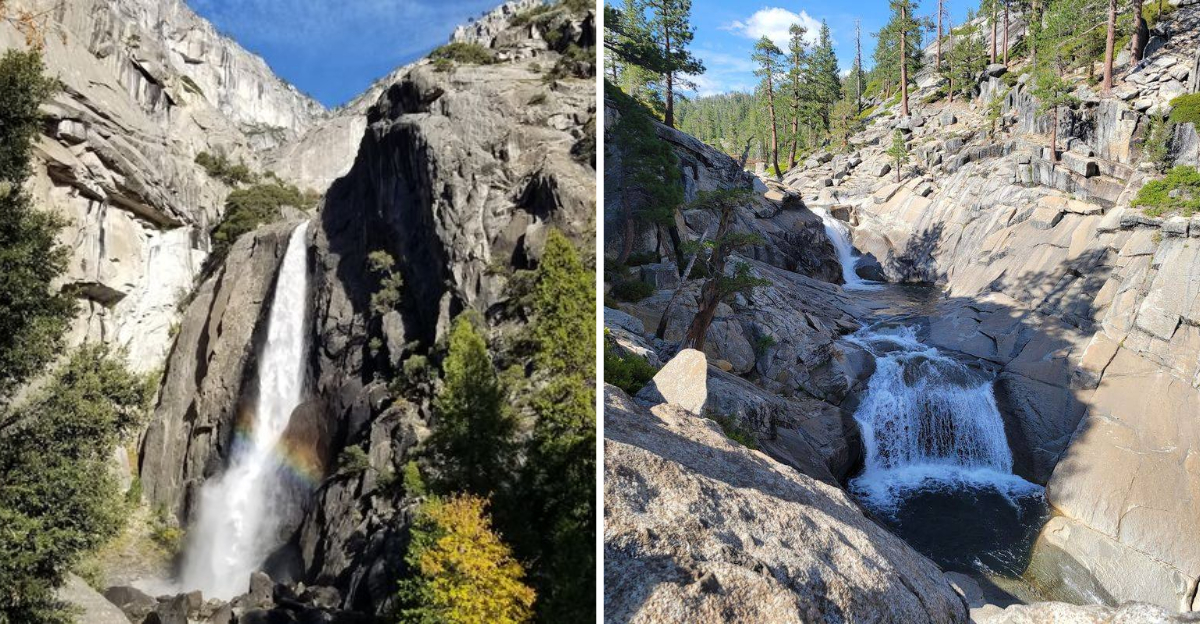
Yosemite has superstars. Yosemite Falls.
Bridalveil. Vernal.
The ones that show up on postcards and Instagram feeds. But Three Chutes Falls is different.
You will not find it on most maps. The trail is not marked.
And most visitors walk right past the turnoff without ever knowing it exists. That is a shame, because the 80 foot waterfall is stunning. The water splits into three distinct chutes as it crashes over polished granite, and the pool below is cold and clear.
I sat on a rock eating a sandwich, completely alone, listening to the falls do their thing. No crowds.
No noise. Just water and rock and a secret that Yosemite keeps for the people willing to look a little harder.
What Makes Three Chutes Falls So Special
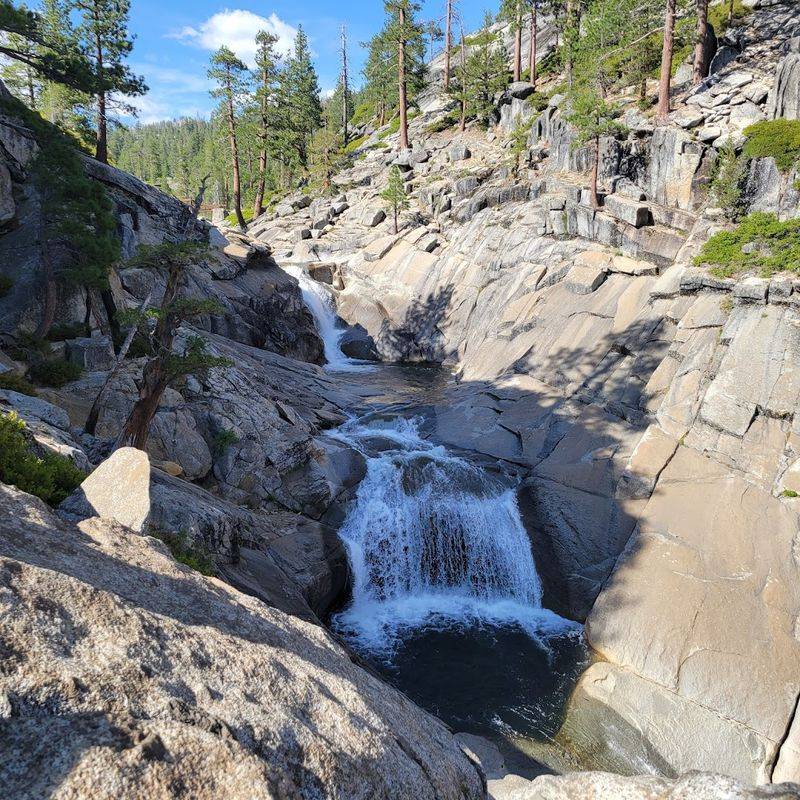
There is something genuinely rare about a waterfall that most park visitors have never heard of. Three Chutes Falls sits on Tenaya Creek in lower Tenaya Canyon, roughly half a mile upstream from Mirror Lake.
It goes by a few other names too, including Hidden Falls and Tenaya Creek Falls, which tells you everything about how well-known it really is.
The falls drop around 80 feet, but what makes them visually striking is the way Tenaya Creek behaves just before the plunge. The water spreads across a broad granite slab and divides into three separate chutes or channels before tumbling downward.
That fanned-out, multi-channel look is not something you see at every waterfall.
Most of Yosemite’s famous waterfalls draw enormous crowds throughout spring and early summer. Three Chutes Falls stays quiet almost year-round because it requires a bit of extra effort to reach.
That effort, though, is a big part of what makes arriving there feel so satisfying. You earn the view in a way that standing on a paved overlook never quite gives you.
Getting to the Trailhead at Mirror Lake
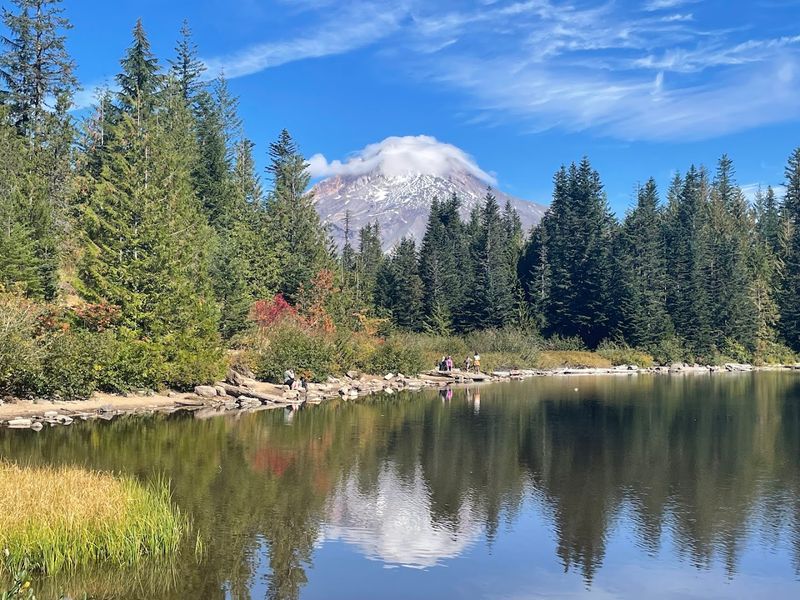
The journey to Three Chutes Falls begins at Mirror Lake Trailhead in Yosemite Valley, located at the end of Shuttle Stop 17. Getting there is straightforward since the Yosemite Valley Shuttle runs regularly during peak season.
Parking in Yosemite Valley is notoriously limited, so the shuttle is genuinely the smarter move.
From the trailhead, the path to Mirror Lake itself is flat, paved in sections, and very popular with families and casual walkers. You will pass through a cool, shaded forest of black oaks and pines before the lake opens up ahead of you.
Mirror Lake is beautiful on its own, especially on calm mornings when the water reflects the surrounding granite cliffs.
Once you reach Mirror Lake, the paved trail continues around the lake’s edge before transitioning to a dirt footpath. Most visitors loop around the lake and head back.
To reach Three Chutes Falls, you keep going upstream along Tenaya Creek, following the trail further into the canyon. The transition from popular day-hike territory to quieter, more rugged terrain happens quickly once you pass the lake.
Pay attention to where the maintained trail ends.
The Off-Trail Challenge Beyond the Footbridge
Past Mirror Lake, the trail continues upstream until it reaches a footbridge near the end of the maintained path. Beyond that footbridge, the experience shifts noticeably.
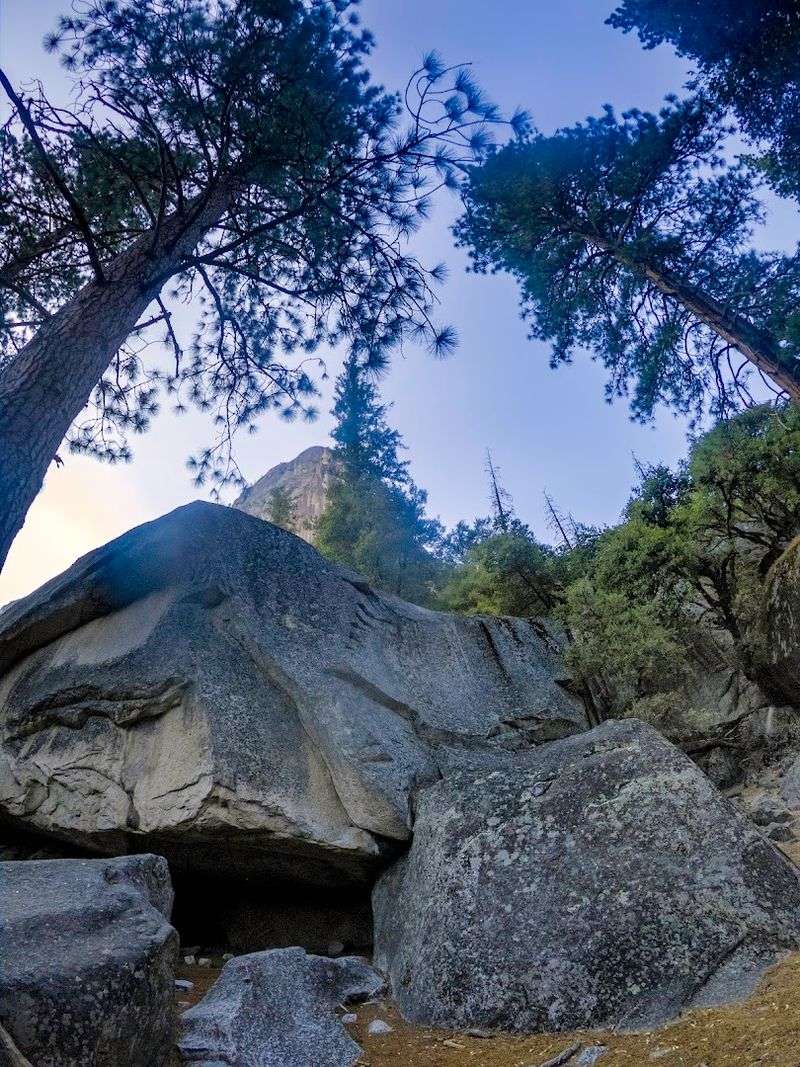
The trail becomes unofficial, unmarked, and in many places completely obscured by boulders, roots, and dense brush.
Reaching Three Chutes Falls from this point involves boulder hopping and light scrambling along the creek banks. It is not a technical climb, but it does require steady footing, some physical confidence, and a willingness to problem-solve your route in real time.
Wet rocks near the creek can be surprisingly slick, even on warm days.
I found myself pausing frequently to read the terrain, figuring out which boulders offered a stable step and which ones looked deceptively solid. It takes a good eye and a patient pace.
Rushing through this section is where people run into trouble. The scramble adds roughly half a mile to your total distance, but it feels longer because of the concentration required.
Trekking poles can help on the return trip when tired legs meet uneven ground. Sturdy hiking shoes with real grip are not optional here, they are essential.
Safety Warnings You Should Take Seriously
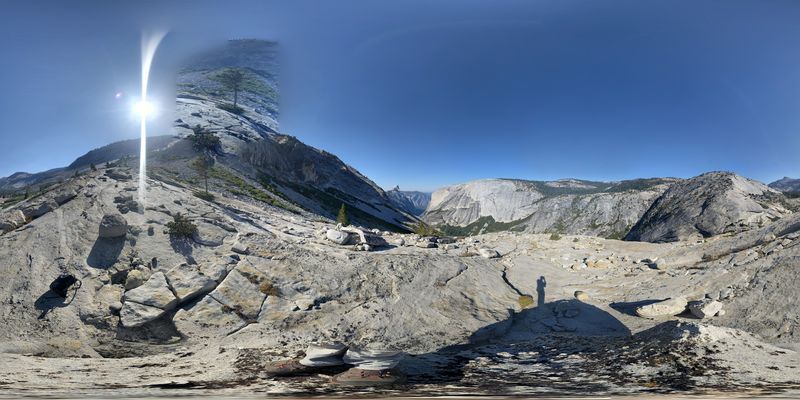
Three Chutes Falls is genuinely beautiful, but the area around it comes with real hazards that deserve honest attention. Rockfall is a known risk in Tenaya Canyon, and the canyon walls above the creek can shed loose granite without much warning.
The canyon’s tight geography means there is not always a lot of room to move out of the way quickly.
The area beyond the top of the falls has earned a sobering reputation. Tenaya Canyon above the falls is sometimes referred to locally as a kind of navigational trap, a place where the terrain becomes disorienting and route-finding extremely difficult.
There have been past fatalities connected to hikers who ventured too far beyond the falls and became lost or fell on the steep granite above.
The strong advice from experienced hikers and park staff is to stop at the base of the falls and not attempt to climb above them. The view from below is spectacular on its own.
Going higher adds risk without adding much reward. Carry plenty of water, tell someone your plans before heading out, and turn back well before daylight fades.
This is not a place to be casual about timing or preparation.
Best Time of Year to Visit for Peak Flow
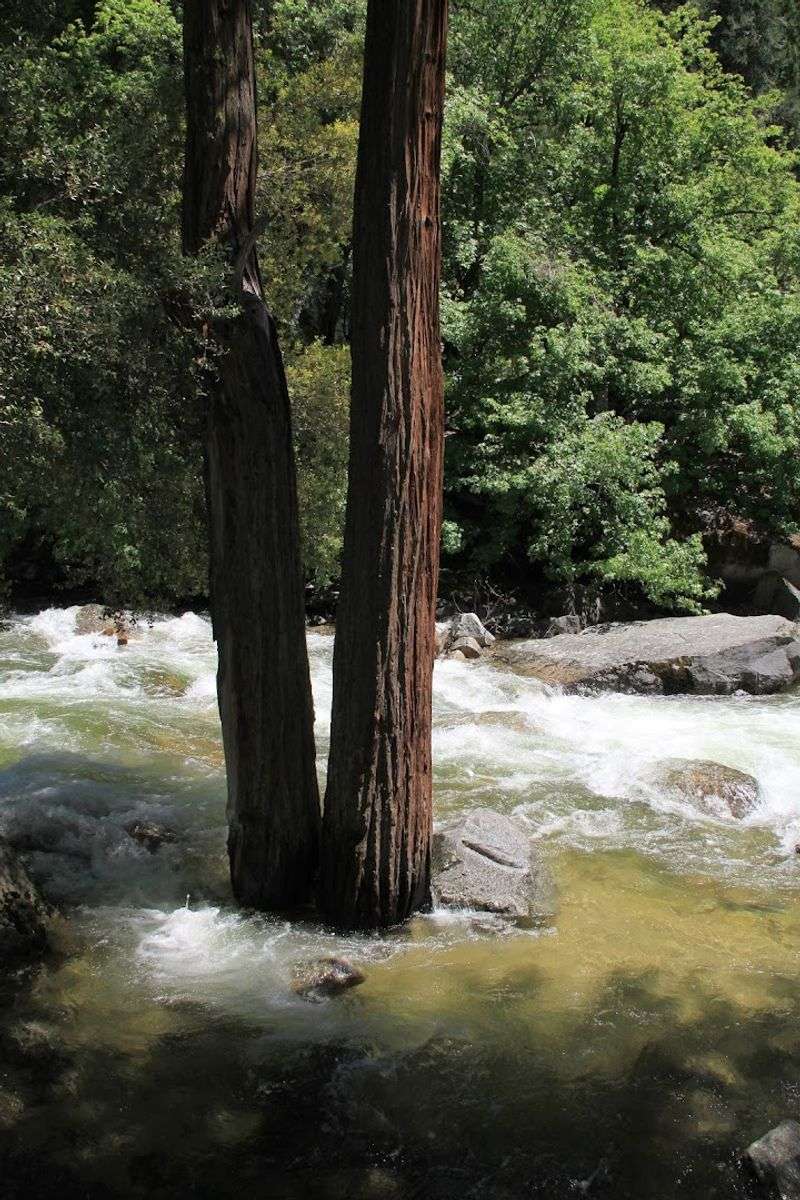
Timing your visit to Three Chutes Falls makes a significant difference in what you actually see. The falls are fed by Tenaya Creek, which draws its water from snowmelt higher up in the Sierra Nevada.
That means late spring, roughly late April through early June, is when the falls run at their most dramatic and powerful.
During peak snowmelt, the three chutes fill out completely and the sound of the water carries well before you even see the falls. The creek itself runs fast and full, which also makes the boulder-hopping approach more challenging and requires extra caution near the water’s edge.
High water is stunning but demands more respect.
By midsummer, the flow drops considerably as snowmelt tapers off. The falls do not disappear entirely, but they become noticeably quieter and the three-channel effect is less visually dramatic with reduced volume.
Visiting in early fall means an even quieter trickle, though the canyon light and golden foliage can make the hike beautiful in a completely different way. Winter access is generally not recommended due to icy conditions and unpredictable snow on the approach trail.
Spring remains the clear winner for anyone chasing the full visual impact of the falls.
What to Pack for This Hike
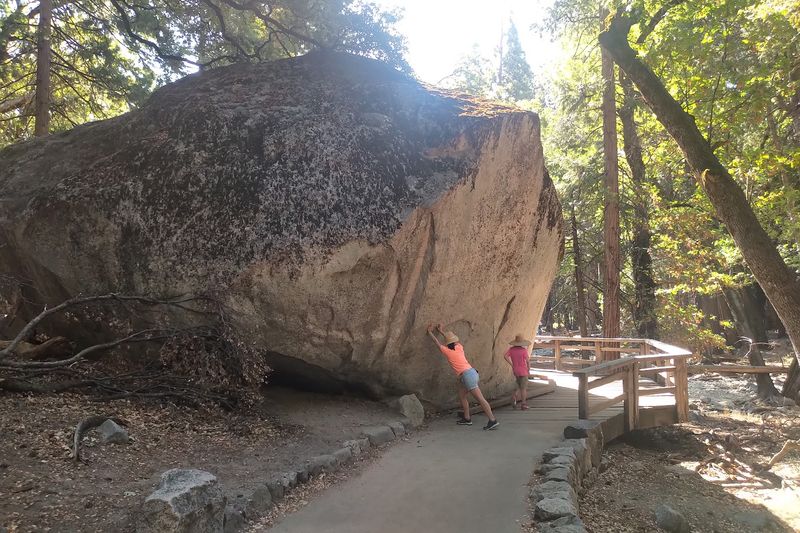
Packing smart for this hike matters more than it might for a typical Yosemite day walk. The total round trip from Mirror Lake Trailhead to Three Chutes Falls and back covers roughly four to five miles, depending on your exact route along the creek.
Add the scrambling terrain and the mileage feels longer than the number suggests.
Footwear is the single most important gear decision. Trail running shoes or low hiking boots with aggressive rubber soles will serve you much better than sneakers or sandals.
Wet granite is notoriously unforgiving, and one slipped step near the creek can turn a fun adventure into a serious problem quickly.
Carry at least two liters of water per person since there is no reliable potable water source along the way. A small first aid kit, sunscreen, and a light snack go a long way.
Trekking poles earn their weight on the return scramble when your legs are fatigued and the boulders feel less cooperative. A fully charged phone with an offline Yosemite map downloaded beforehand gives you a useful backup if the unofficial trail becomes unclear.
Leave extra gear in the car to keep your pack light and your movement easy.
Why This Waterfall Is Worth Every Extra Step
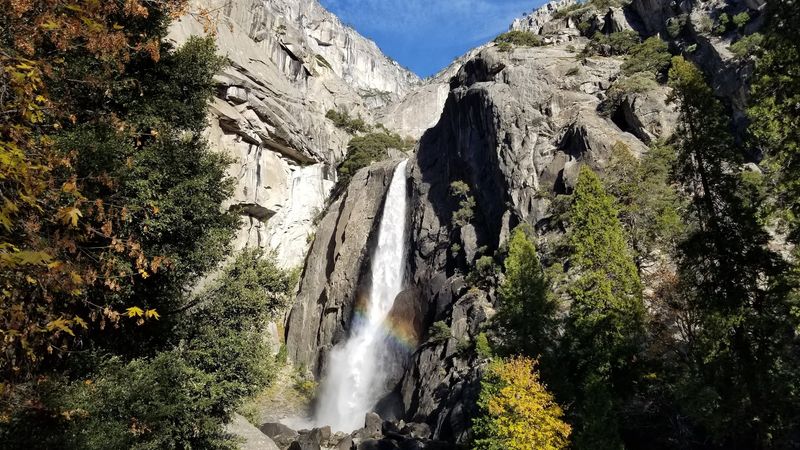
There is a specific kind of quiet that settles over you once you reach Three Chutes Falls. The canyon narrows, the sound of the creek fills the air, and the 80-foot drop of water spread across that wide granite face comes into full view.
It feels genuinely earned, not just photographed and moved on from.
Most Yosemite waterfalls are experienced from designated viewpoints with other visitors nearby. Three Chutes Falls often gives you a completely different situation.
On a weekday visit in late spring, you might have the entire area to yourself for long stretches. That kind of solitude in a national park as popular as Yosemite is increasingly rare and worth seeking out.
The nearby Pywiack Cascade, located further upstream on Tenaya Creek, reaches an impressive 600 feet in height, but it is far less accessible than Three Chutes Falls. For most hikers, Three Chutes is the perfect balance of achievable challenge and genuine reward.
The falls remind you that Yosemite still holds surprises for people willing to look a little harder. Address: Mirror Lake Trailhead, Yosemite Valley, CA 95389.
