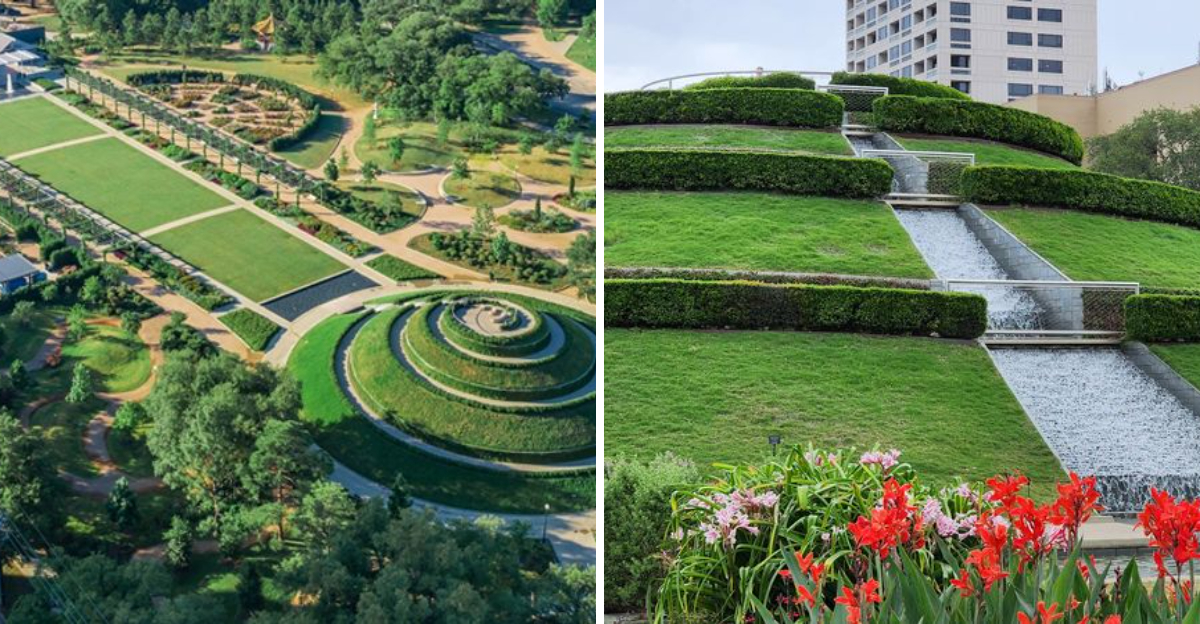
You expect flowers and walking paths from a botanical garden. You do not expect a giant grassy mountain in the middle of it.
This place has a fifteen foot tall mound with a spiral path winding all the way up. Most people walk right past it, too busy looking at the roses.
Big mistake. The view from the top gives you the whole garden at once, blooming patches, open lawns, and sculptures hidden into corners.
It is the best photo spot nobody thinks to find.
The Hawkins Sculpture Walk and Its Remarkable Busts
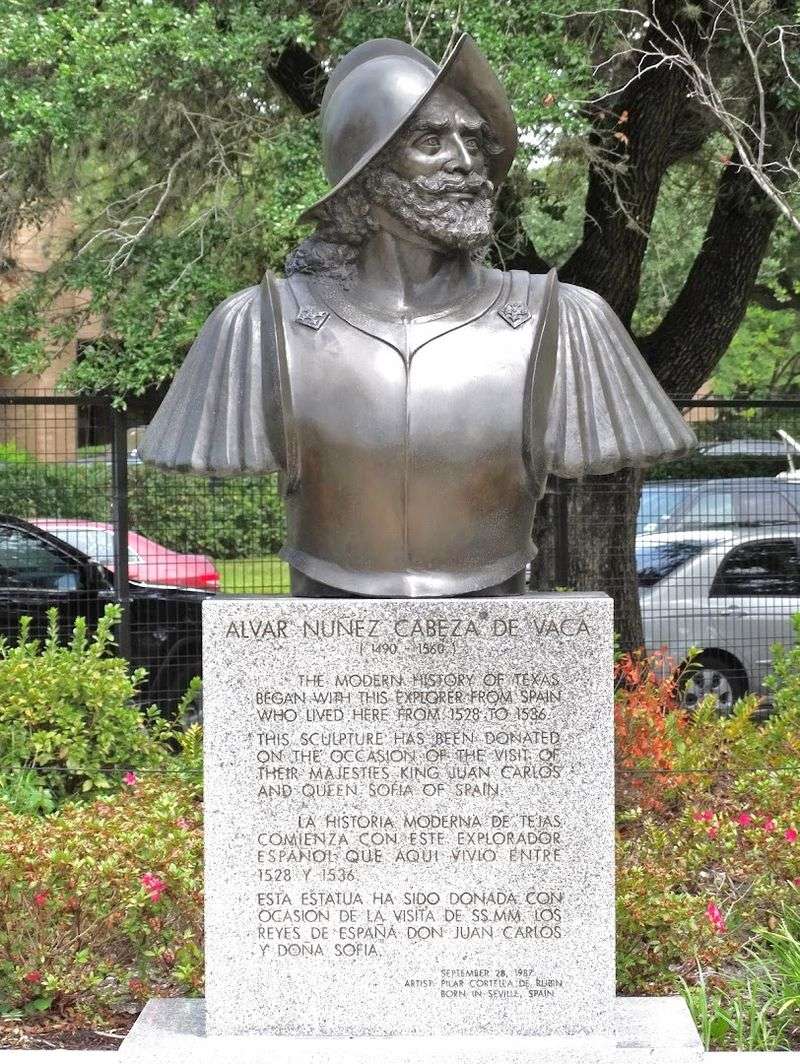
There is a quiet power to the Hawkins Sculpture Walk that sneaks up on you as you stroll along it. The busts are not clustered together like a museum exhibit but spaced thoughtfully along the path, each one inviting you to slow down and actually look.
You find yourself reading names you recognize and some you might not, which honestly makes the whole experience feel more like a discovery than a tour.
The collection includes busts of Simón Bolívar, Robert Burns, Álvar Núñez Cabeza de Vaca, Ramón Castilla, José Martí, Bernardo O’Higgins, José Rizal, Vicente Rocafuerte, Benito Juárez, and José de San Martín.
These are figures from Latin America, Scotland, Asia, and beyond, all brought together in one Houston garden.
It is a remarkably international lineup for a city that prides itself on diversity.
Beyond the historical weight, the walk itself is beautiful. Bordered by dense greenery and dappled shade, it feels like a reflective corridor between the busier areas of the garden.
Kids and adults alike tend to stop and read each plaque, which makes it one of the more unexpectedly educational corners of the whole space.
Full Statues of Confucius, Gandhi, and Martin Luther King Jr.
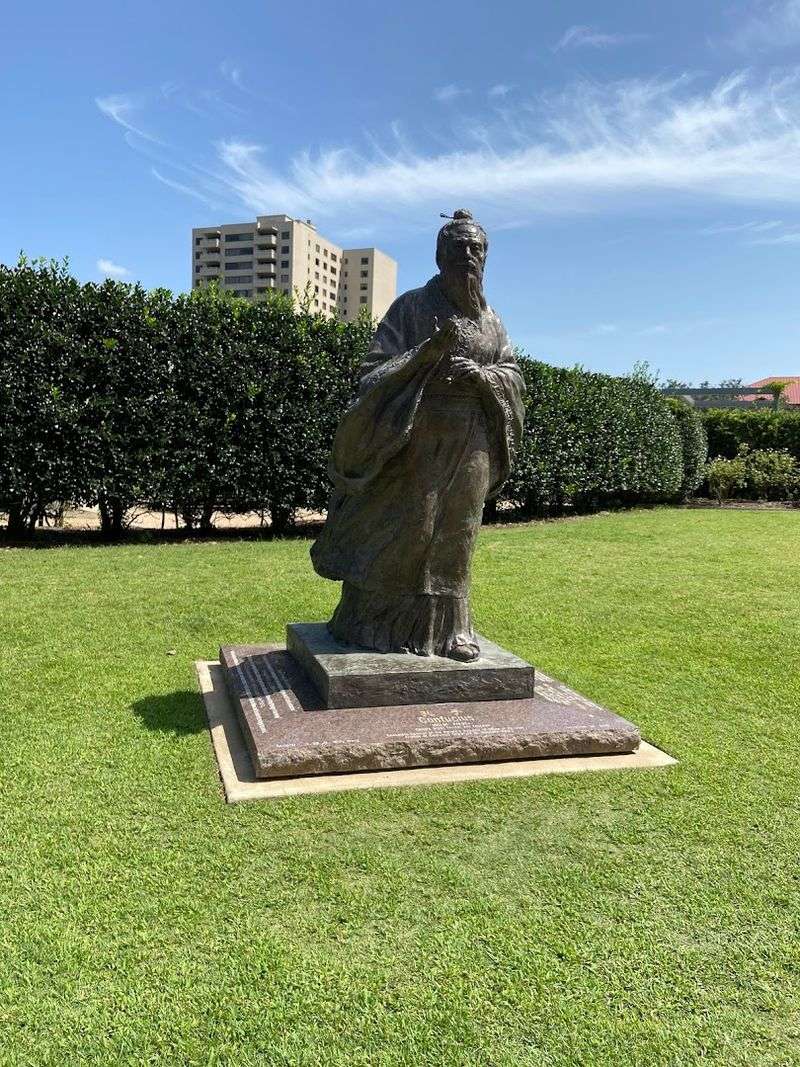
Some garden features are decorative. These three are something else entirely.
The full statues of Confucius, Mahatma Gandhi, and Martin Luther King Jr. carry a presence that genuinely changes the atmosphere around them, making the surrounding greenery feel like more than just scenery.
Each statue is positioned with care, not crammed into a corner or treated as an afterthought. Visitors tend to linger near them longer than expected, taking photos but also just standing quietly for a moment.
There is something about seeing these particular figures rendered in full scale outdoors, surrounded by blooming plants and open sky, that feels both grounding and inspiring.
The choice to include all three speaks to the garden’s broader vision. This is not just a place to admire plants; it is a space designed to reflect human history, values, and global connection.
Gandhi stands for peace, King for justice, and Confucius for wisdom, three themes that feel surprisingly at home in a botanical garden. If you visit with kids, these statues offer a natural starting point for conversations that go well beyond horticulture.
They are among the most memorable spots in the entire garden.
The Rose Garden With Heirloom Varieties and Climbing Archways
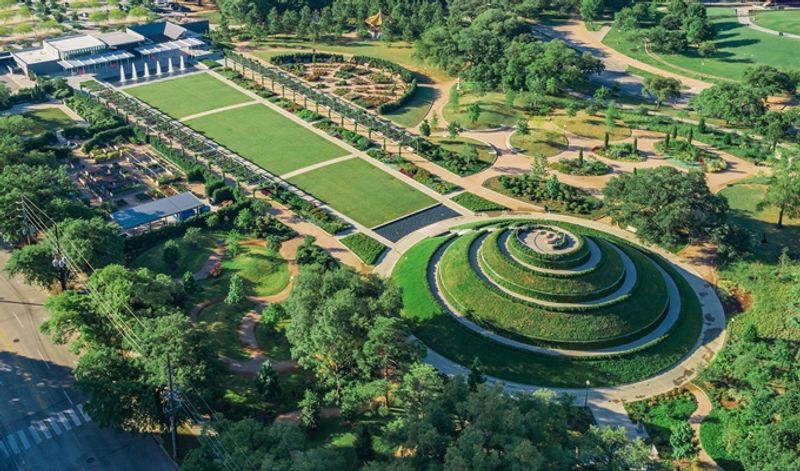
The rose garden has a slightly old-fashioned charm that feels refreshing rather than dated. Formal beds of heirloom roses stretch out in neat arrangements, their colors ranging from deep crimson to soft blush, while climbing varieties curl their way up and over arching structures that frame the paths beautifully.
Hidden within this garden is the bronze sculpture “Dawn” (1971) by Helen Journeay, depicting a nude woman and a fawn. It sits naturally among the roses as if it has always belonged there, which somehow makes the whole garden feel more alive.
The combination of formal plantings and a softly figurative sculpture gives this section a mood that is both elegant and a little dreamlike.
Heirloom roses are worth seeking out specifically because they tend to carry stronger fragrance than modern hybrids. On a warm Houston morning, that scent can be genuinely overwhelming in the best way.
The archways draped in climbing roses create natural photo spots, but more than that, they create a sense of moving through something beautiful rather than just looking at it. This garden room rewards slow exploration and is best visited when the blooms are at their peak in spring.
The Garden Mount With Its Granite Waterfall and Panoramic Views
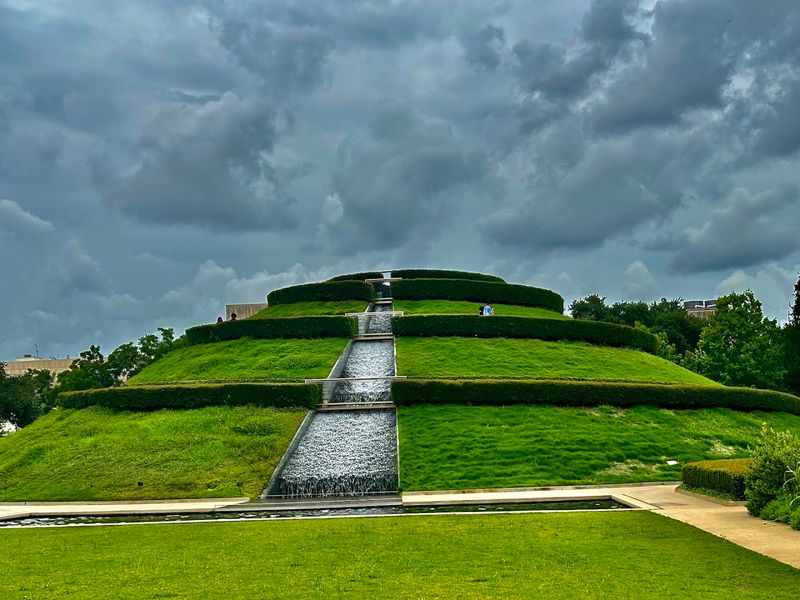
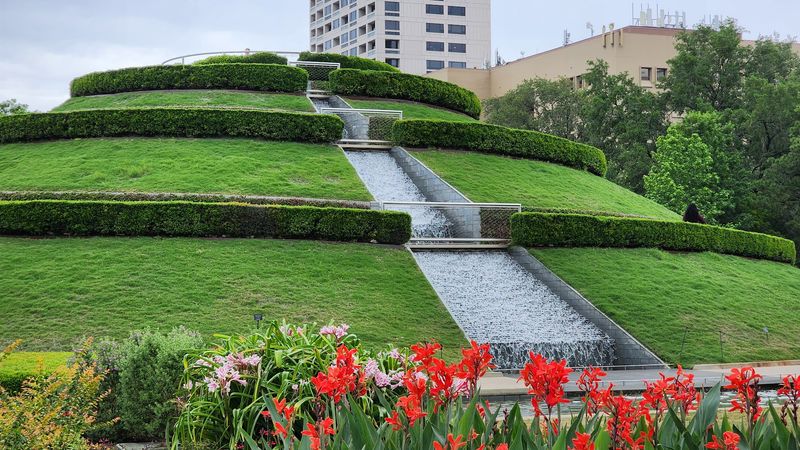
The Garden Mount is genuinely one of the most unexpected features in any urban botanical garden I have visited. Rising 30 feet above the surrounding landscape, it is not a subtle presence.
The granite waterfall on its face cascades down into a reflection pool at the base, and the sound of moving water follows you as you make your way up.
An ADA-accessible spiral path winds to the summit, which means the view from the top is available to everyone. And that view is worth the climb.
On a clear day, you can see across the entire garden layout and catch the Houston skyline rising beyond the treetops. It is one of those moments where a city and its green spaces feel genuinely connected rather than in competition.
Three sculptures with inscriptions sit at the summit, adding a contemplative note to an already memorable spot. The reflection pool at the base is calm and mirror-like on still mornings, making it a favorite spot for photographers.
Whether you go up for the view, the waterfall, or just to get a sense of the garden’s full scale, the mount delivers. It is the kind of feature that makes a place feel designed with real ambition.
The Centennial Green and Its Football-Field-Length Lawn
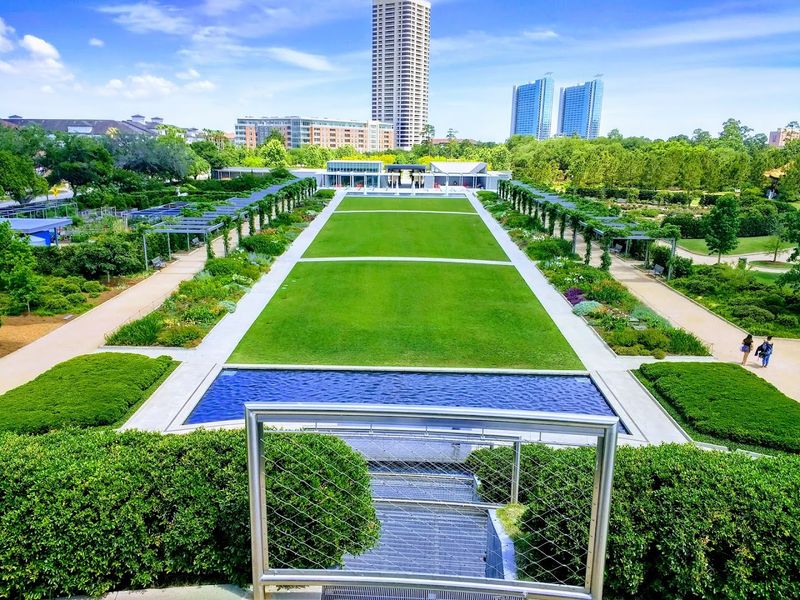
Open space in a botanical garden might sound like an odd selling point, but the Centennial Green earns its place. Stretching roughly the length of a football field, this central lawn is the breathing room the whole garden is built around.
It gives visitors a place to spread out, sit down, and simply exist without feeling like they need to be doing something.
The green is bordered by dense plantings, gravel walkways, and pergolas, which frame the space without closing it in. The Pergola Walk along the edges showcases colorful blooms that shift with the seasons, so the lawn always feels framed by something lively.
Families often use this area for picnics, and it is easy to see why; the scale of it makes even a busy weekend feel uncrowded.
There is also something visually satisfying about standing at one end of the Centennial Green and looking down its full length. The symmetry is calming, and the way the plantings gradually thicken toward the far end creates a natural sense of depth.
The garden incorporates 4.5 acres of grass overall, and this central stretch is the heart of that. It is the kind of open space that makes you want to stay longer than planned.
The Woodland Garden With Azaleas and Camellia Shade
On a hot Houston afternoon, the Woodland Garden becomes the most popular spot in the whole place, and honestly, that makes complete sense. The tree canopy drops the temperature noticeably, and the dappled light filtering through the branches gives everything a softer, quieter quality.
It feels genuinely separate from the rest of the garden, like a different room in a house.
Azaleas and camellias are the stars here, and when they bloom, the effect is almost theatrical. Deep pinks and bright whites pop against the dark trunks and shadowy undergrowth in a way that feels almost too vivid to be real.
These plants thrive in Houston’s climate, which means they tend to look their absolute best in late winter and early spring.
The paths through the Woodland Garden are narrower and more winding than elsewhere in the gardens, which adds to the sense of exploration. You round a corner and find a cluster of blooms you did not expect, or a shaft of light hitting a mossy patch of ground just right.
It is one of the more sensory sections of the garden, less about grand vistas and more about small, close-up moments that stay with you. Bring a camera and take your time.
The Arid Garden Showcasing Drought-Tolerant Texas Plants
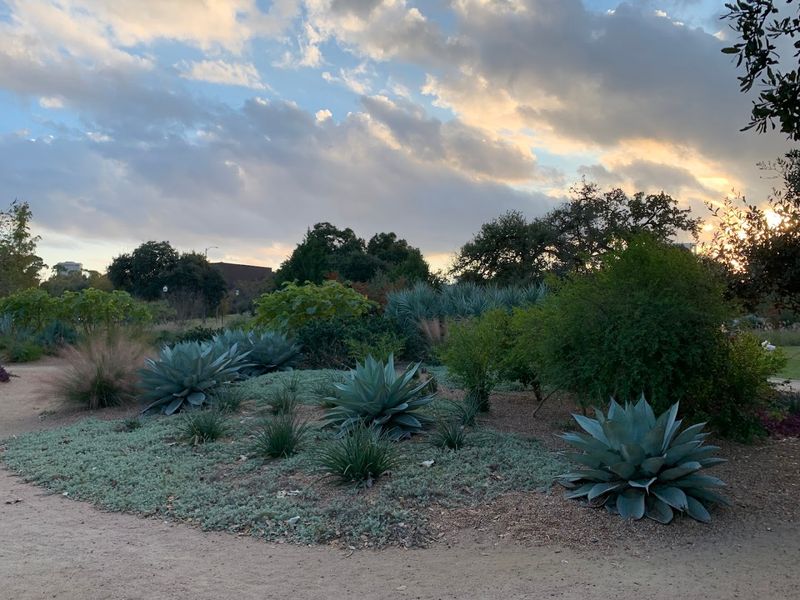
The Arid Garden might be the most underrated section of McGovern Centennial Gardens. It sits a little apart from the lush, floral areas, and first-time visitors sometimes walk past it quickly.
That is a mistake worth correcting.
Succulents, ornamental grasses, and sage shrubs are arranged with a real eye for texture and contrast. The plants here are all drought-tolerant, which in a Texas context is not just a design choice but a practical one.
Summers in Houston are brutal, and these plants handle the heat without complaint, looking structured and intentional even in the middle of August when other gardens start to wilt.
A Japanese Stone Lantern carved from white marble sits between the Arid Garden and the Rose Garden, serving as a quiet transition piece between two very different visual worlds. The lantern is elegant without being showy, and it grounds the space in a way that feels considered rather than decorative.
The Arid Garden also works as a great teaching moment about native and adaptive plants, showing that drought-tolerant landscaping can be genuinely beautiful rather than just practical. If you are thinking about your own garden at home, this section offers real inspiration for low-maintenance planting ideas.
The Family Garden With Seasonal Vegetables, Herbs, and Fruit Trees
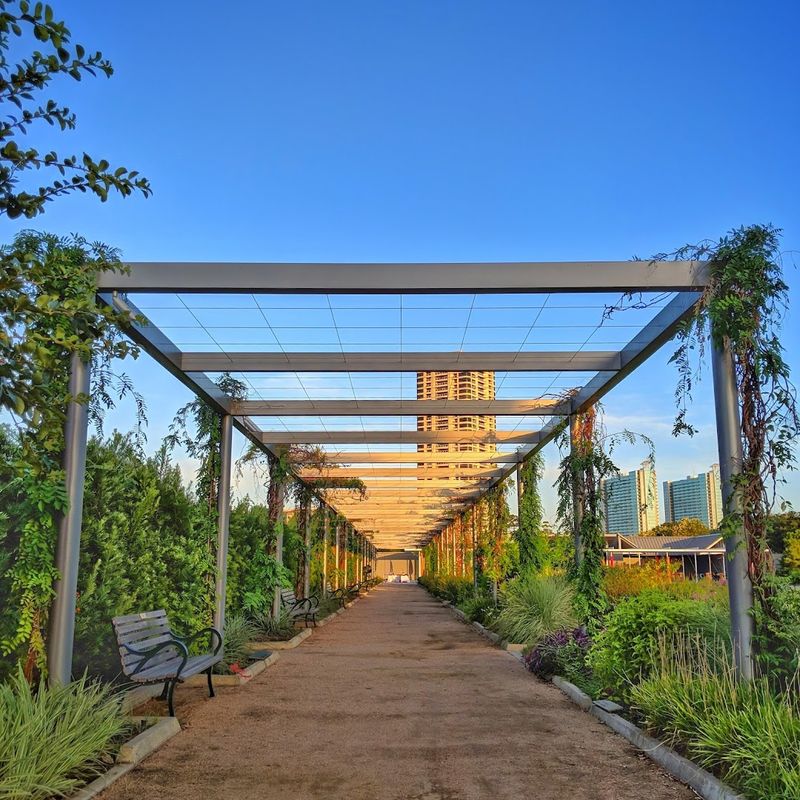
The Family Garden is the most hands-on section of the entire park, and it shows. Unlike the more formal areas, this space has an intentional looseness to it, a sense that it was designed to be touched, examined, and explored rather than just admired from a distance.
Kids especially respond to it differently than the rest of the garden.
Seasonal vegetables, herbs, and fruit trees are cultivated here throughout the year, which means the plantings change depending on when you visit. A spring visit might reveal tomatoes and basil starting to climb their supports, while a fall trip could bring leafy greens and root vegetables.
That rotating cast of plants keeps the garden feeling current and alive rather than static.
There is something grounding about seeing food growing in the middle of a city park. It connects the garden to everyday life in a way that purely ornamental spaces sometimes miss.
The fruit trees provide shade and structure, while the herb beds carry fragrance that drifts across the whole area on warm days. This section also works well as an educational stop for school groups, making concepts like seasonality and plant growth tangible and immediate.
It is the kind of garden feature that makes you want to go home and plant something.
The Cherie Flores Garden Pavilion and Its Architectural Welcome
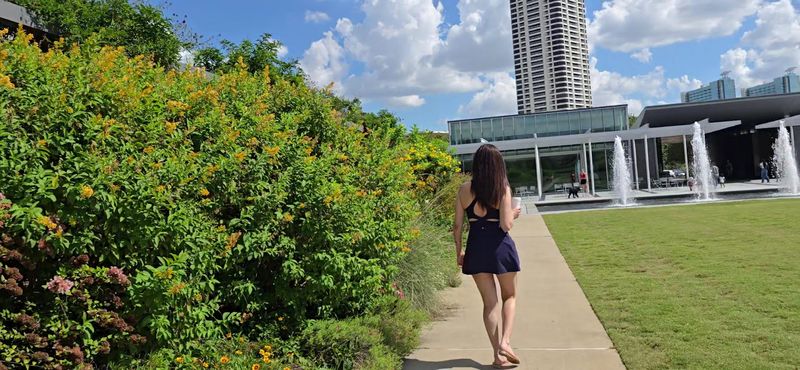
Your first impression of McGovern Centennial Gardens is shaped almost entirely by the Cherie Flores Garden Pavilion, and it sets a high bar.
Designed by architect Peter Bohlin, the structure is clean and modern without feeling cold, a glass and steel composition that lets the garden beyond it remain the main event.
You see the green through it before you are even fully inside.
The pavilion serves as the main entrance and acts as an architectural threshold between the busy park outside and the more deliberate world of the gardens. It is well-maintained and genuinely lovely, the kind of entryway that signals to visitors that what follows has been carefully thought through.
That anticipation it creates is part of what makes the first few steps inside feel so satisfying.
Beyond its practical function, the pavilion also hosts events and gatherings, making it a community space as much as an entrance. The design allows natural light to flood through, keeping the interior bright and airy even on overcast days.
It is worth pausing here at the start of your visit to take in the view before heading deeper into the garden. A good entrance shapes the whole experience that follows, and this one does that job exceptionally well.
The Pine Hill Walk and Relocated Chinese Pavilion
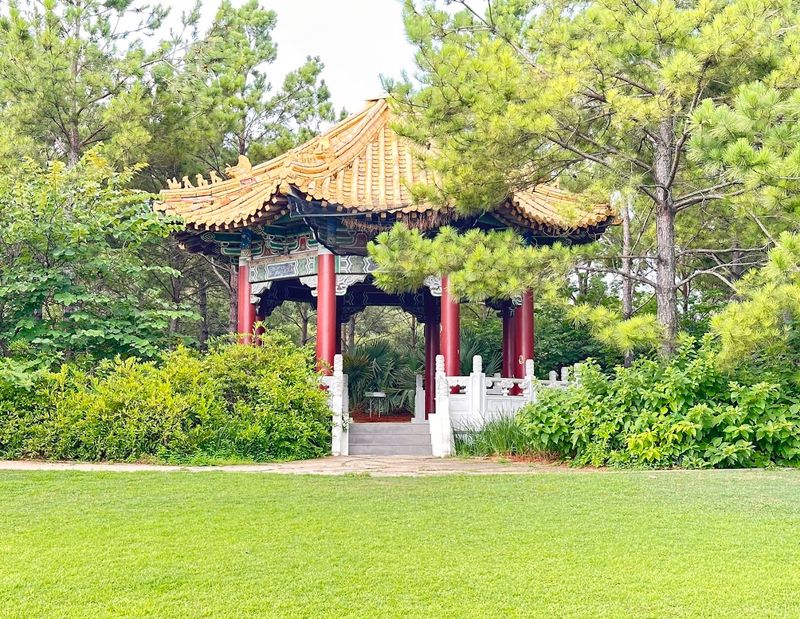
The Pine Hill Walk has a completely different energy from the rest of the gardens. Mature pine trees line the path, their height and density creating a corridor that feels older and more established than much of the surrounding landscape.
The scent of pine in warm air is one of those sensory details that sticks with you long after a visit.
Along this walk, you will find a relocated Chinese Pavilion that adds an unexpected architectural element to the natural setting.
The pavilion has the kind of detailed craftsmanship that rewards close inspection, with carved elements and traditional proportions that contrast beautifully against the informal pine canopy overhead.
It is a quiet spot, often less crowded than the central areas of the garden.
The combination of the walk and the pavilion creates one of the more contemplative stretches in the entire garden. It is a good place to slow down if the main paths start to feel busy.
The pine trees also provide consistent shade, which is a real asset during Houston summers. McGovern Centennial Gardens holds over 490 trees across more than 50 species, and the pines along this walk represent some of the most visually dramatic of the bunch.
This path is easy to miss on a first visit, but it is absolutely worth seeking out.
Address: 1500 Hermann Dr, Houston, TX 77004
