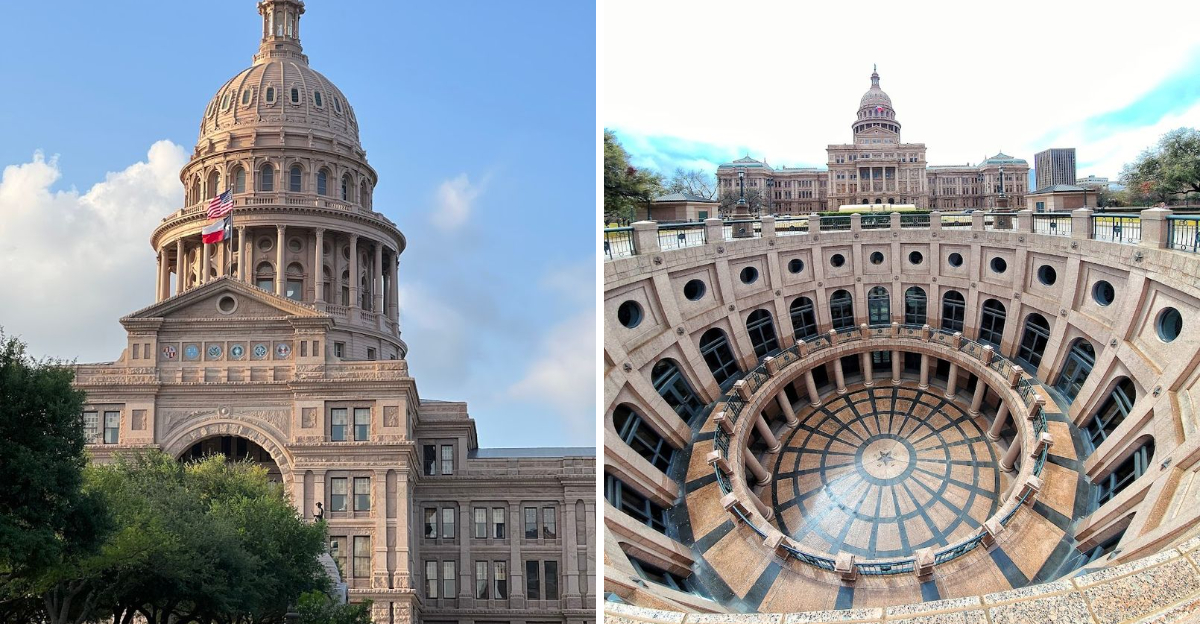
The Texas Capitol is not just a government building. It is a statement.
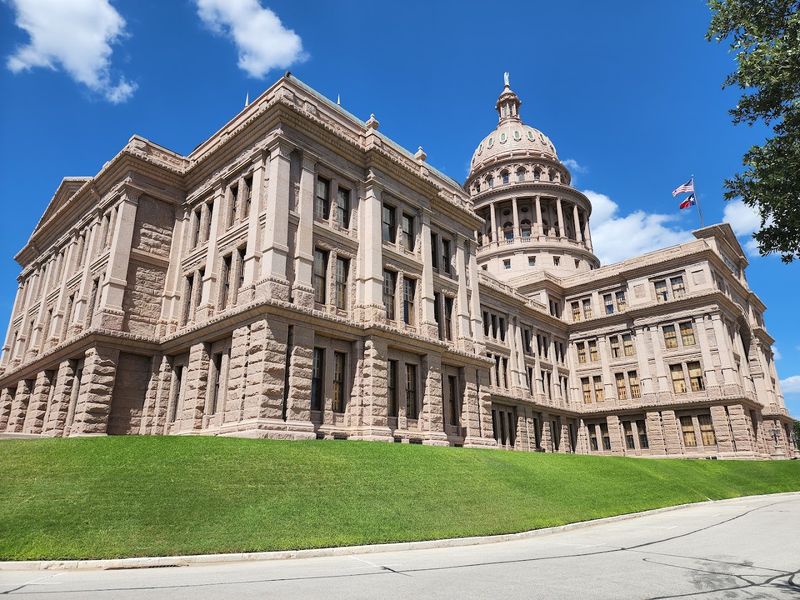
Completed in the 1880s at a cost of over three million dollars, it remains the largest state capitol in the United States by square footage. The pink granite exterior catches the light in ways that change throughout the day, and the dome has become an iconic part of the Austin skyline.
The building was constructed largely by convict labor, a detail that adds a complicated layer to its history. Visitors can tour the grounds, walk through the rotunda, and stand beneath the dome that has seen over a century of Texas politics.
The Capitol holds a sense of gravity and presence that is hard to explain. Texas has plenty of impressive landmarks, but the Capitol is where the state’s history feels alive.
The Staggering Cost That Built a Texas Legend
Numbers can be dry, but the price tag behind the Texas Capitol is anything but boring. The total construction cost came to $3,744,630.60, a figure that sounds enormous even by today’s standards, let alone in the 1880s.
What makes the funding story even more fascinating is how the state actually paid for it.
Texas did not simply write a check. The 1876 Texas Constitution had set aside three million acres of public land out in the Texas Panhandle as payment for the project.
That land was handed over to the contractors, brothers John V. and Charles B. Farwell, who were known as the Capitol Syndicate.
They accepted the deal and eventually turned that vast stretch of earth into the legendary XIT Ranch, one of the largest ranches in American history.
The state itself contributed roughly $500,000 in cash to the total. The rest was essentially traded in land value, estimated at $1.5 million in 1882.
It is a uniquely Texan solution, bold, creative, and enormous in scale. The whole arrangement showed that Texas was willing to think big even when money was tight.
That pioneering spirit is baked right into the foundation of this building. Every time you walk through its doors, you are stepping into a place that was literally bought with the land of Texas itself.
That is not just history, that is a story worth telling.
Elijah E. Myers and the Architectural Vision Behind It All
Not every architect gets to leave their mark on a landmark that outlives generations, but Elijah E. Myers did exactly that.
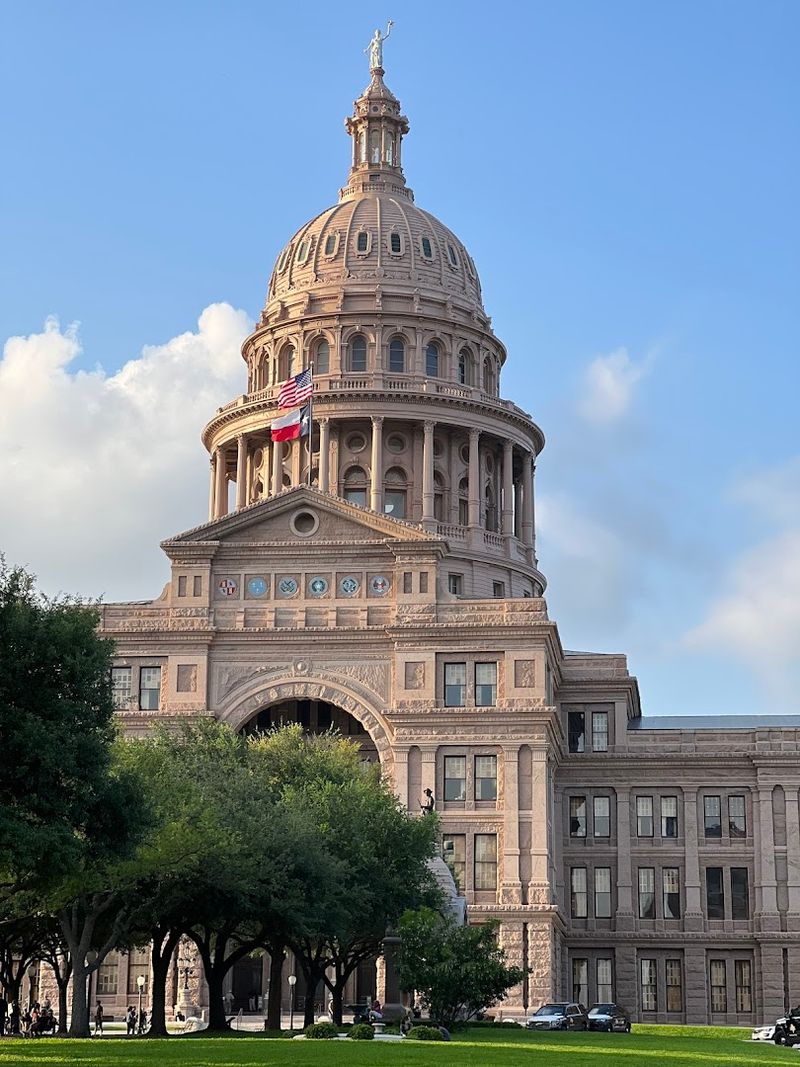
He was the designer behind the Texas Capitol, and his vision drew heavily from Italian Renaissance Revival style. The result is a building that feels both classic and commanding, the kind of structure that makes you tilt your head back just to take it all in.
Myers modeled the Capitol after the United States Capitol in Washington, D.C., but Texas being Texas, the building ended up taller. The dome of the Texas Capitol rises to approximately 302 feet, beating the U.S.
Capitol dome in height. That detail alone tends to make Texans smile a little wider when they share it.
The exterior is clad in what is officially called Texas Sunset Red Granite, though most people call it pink granite. It was quarried from Granite Mountain in Burnet County and donated to the state, which kept costs from spiraling even higher.
Up close, the stone has a warm, rosy tone that catches the afternoon light beautifully. Myers designed a building meant to project power and permanence, and he absolutely succeeded.
The proportions feel balanced, the detailing is precise, and the overall effect is one of dignified authority. It is the kind of architecture that does not try too hard, it simply stands there and lets you come to your own conclusions.
Most people’s conclusion is awe.
Pink Granite Walls and the Story of Burnet County’s Gift
Run your hand along the exterior wall of the Texas Capitol and you will feel something genuinely special. The stone is smooth in places and slightly rough in others, and its pinkish-red hue shifts subtly depending on the light.
This is Texas Sunset Red Granite, and it came from Granite Mountain in Burnet County, about 65 miles northwest of Austin.
What makes this material remarkable is not just how it looks, it is where it came from and how it got here. The granite was donated to the state, meaning the quarry owners essentially gave away millions of pounds of stone to help build the Capitol.
Convicts helped quarry and transport the material, and a temporary railroad was constructed just to haul it to Austin. The logistics alone were a massive undertaking for the era.
Granite Mountain is still there today, and it remains the largest known deposit of pink granite in the United States. Visiting Burnet County and seeing the mountain gives you a new appreciation for just how much material went into this building.
The color of the stone also has a practical benefit: it ages beautifully. Unlike some building materials that fade or stain over time, this granite has maintained its distinctive warmth across more than a century.
The 1995 restoration helped clean and preserve the facade, but the stone itself has done most of the work on its own. It is a reminder that good materials, chosen thoughtfully, can last a very long time.
The Dome That Stands Taller Than Washington D.C.
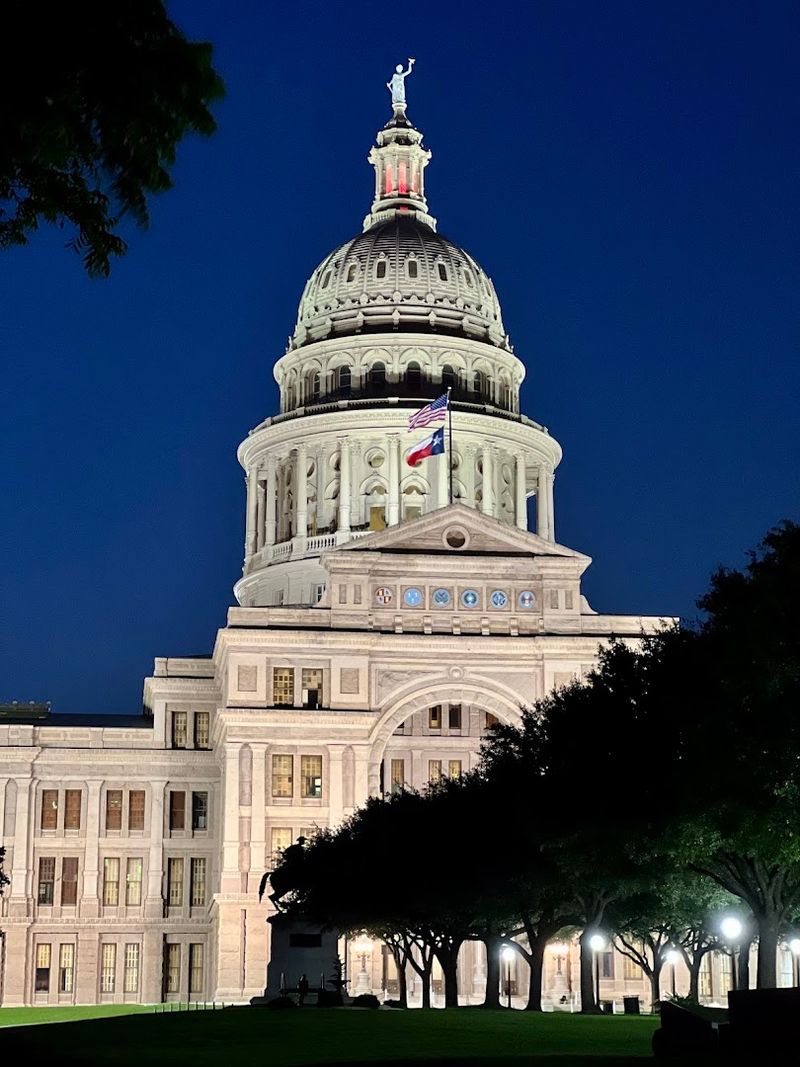
There is a running joke in Texas that everything here is bigger, and the Capitol dome is one piece of evidence that the joke has some truth to it. The dome reaches approximately 302.64 feet above the ground, which places it higher than the dome of the United States Capitol.
That is not an accident, it is a point of quiet Texan pride that has been celebrated since the building opened in 1888.
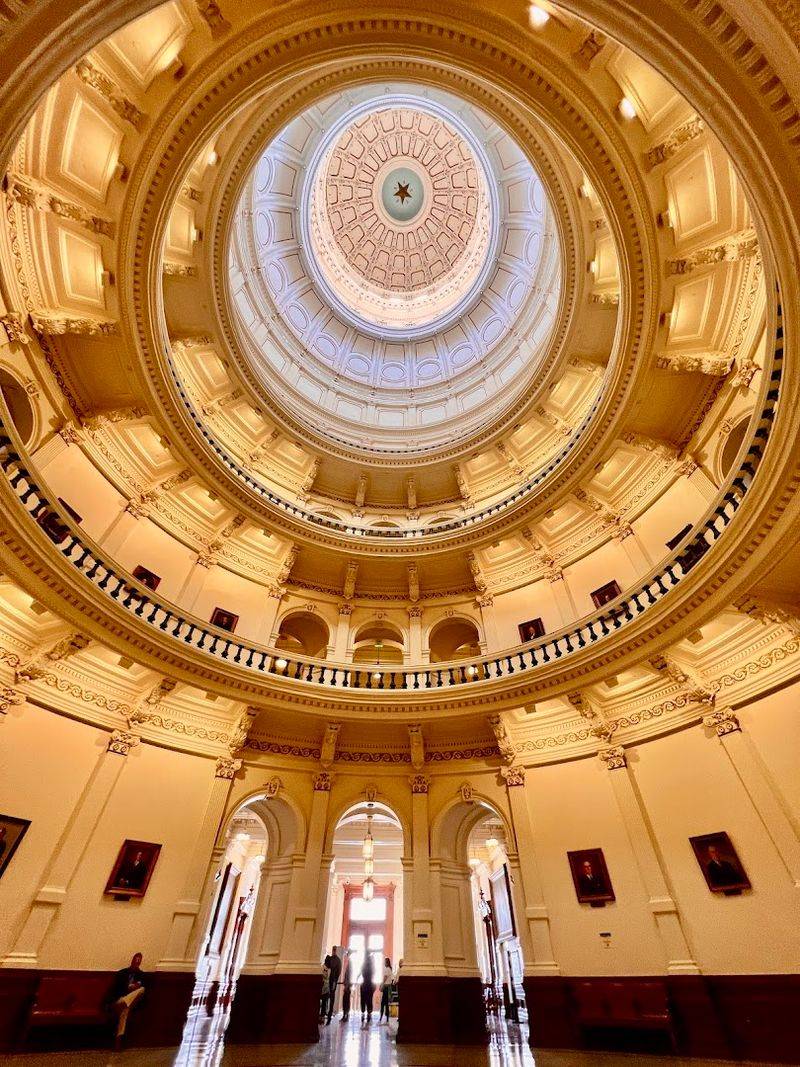
Looking up at the dome from inside the rotunda is one of those genuinely breathtaking moments. The circular opening at the top frames a painted star, and the light that filters down from above gives the entire space a cathedral-like quality.
The dome is topped by the Goddess of Liberty statue, a zinc figure holding a lone star that has become one of Austin’s most iconic silhouettes.
The original Goddess of Liberty was replaced in 1986 with an aluminum replica, and the original now lives in the Capitol Visitors Center nearby. The scale of the dome is hard to fully appreciate until you are standing beneath it.
The rotunda stretches upward through multiple floors, and the acoustic effect inside is remarkable. Whisper near one wall and someone standing across the room can hear you clearly, a feature that delights visitors of every age.
The dome is not just a design element, it is the soul of the building. Everything else in the Capitol seems to orbit around it, drawing you back to the center again and again.
392 Rooms, 924 Windows, and a Building That Never Feels Finished
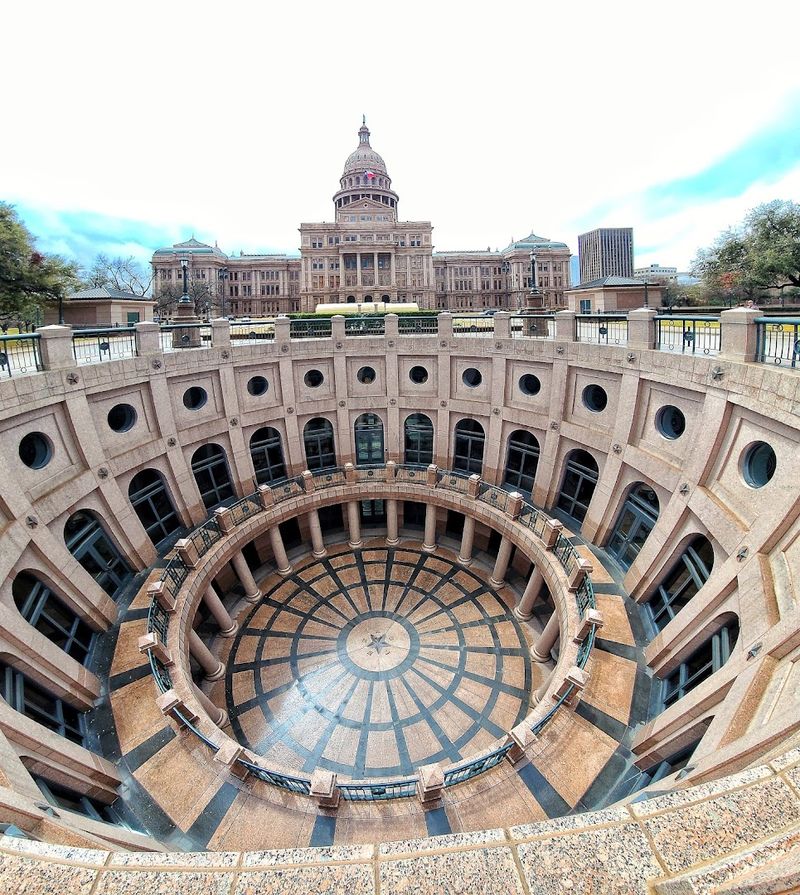
Some buildings feel like they reveal everything at once. The Texas Capitol is the opposite.
The more time you spend inside, the more you realize how much there is to find. The building contains 392 rooms, 924 windows, and 404 doors, and that count does not even include the underground extension added in 1993.
The terrazzo mosaic floors are one of the first things that catch your eye inside. The patterns are intricate and detailed, and they stretch through corridors and chambers in a way that feels almost like walking through a living museum.
Portraits of every governor of Texas and every president of the Republic of Texas line the walls, and the sheer number of faces staring back at you creates an unexpected sense of depth and continuity.
Getting a little lost in the Capitol is actually one of the better things that can happen to you here. Side corridors lead to smaller rooms, staircases open onto unexpected balconies, and every doorway seems to have something worth stopping for.
The building was designed to function as a working government space, and it still does. The Texas Legislature meets here, and on active session days you can feel the hum of real civic life moving through the halls.
That combination of historical grandeur and present-day purpose gives the Capitol an energy that most museums simply cannot replicate. It is alive in a way that feels earned rather than staged, and that makes all the difference when you are exploring it.
The Whispering Gallery, a Hidden Acoustic Gem
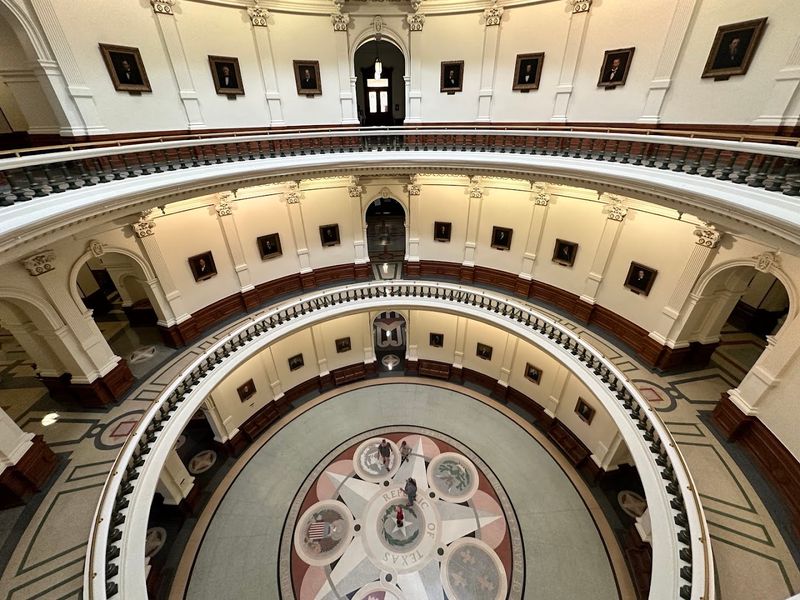
Most people walk into the rotunda and immediately look up, which is completely understandable. But one of the most memorable experiences in the entire building happens at ground level, and it involves nothing more than a whisper.
The rotunda creates a natural acoustic phenomenon known as a whispering gallery, where sound travels along the curved walls and can be heard clearly from one side to the other.
I tried it myself, and the effect is genuinely surprising. You lean close to the wall, say something quietly, and someone standing at the opposite curve hears it as if you were right next to them.
It is a simple trick of physics, but it feels almost magical in person. Kids love it, and honestly, adults do too, even if they try to act more casual about it.
The whispering gallery effect occurs because the dome’s curved surface acts like a parabolic reflector, bouncing sound waves around the perimeter instead of letting them scatter upward. It is an unintentional feature of the design, which makes it feel even more charming.
Architect Elijah Myers was not engineering an acoustic trick, he was building a beautiful rotunda, and the whispering gallery came along for the ride. It is one of those small discoveries that makes the Capitol feel like more than just a monument.
There are surprises hidden into this building that reward the curious visitor who slows down and pays attention rather than rushing through to check it off a list.
National Historic Landmark Status and the Big 1995 Restoration
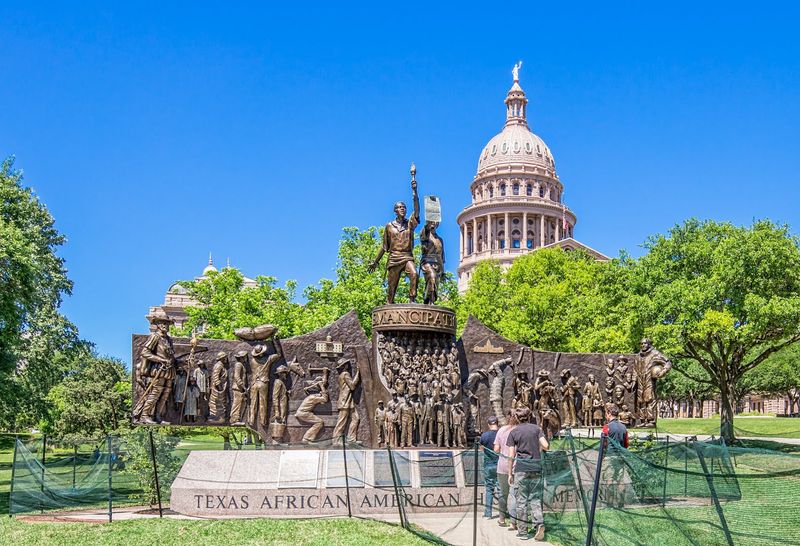
By the time the 1980s arrived, the Texas Capitol had been standing for nearly a century and the wear was starting to show.
The building was added to the National Register of Historic Places in 1970, and then designated a National Historic Landmark in 1986, both of which signaled that preservation needed to become a serious priority.
Those designations were well-earned and long overdue.
The restoration project that followed was one of the most ambitious in Texas history. A $75 million underground extension was completed in 1993, adding significant workspace without altering the Capitol’s iconic exterior.
Then came the full restoration of the 1888 building itself, finished in 1995 at a cost of around $200 million. Workers painstakingly repaired and cleaned the granite exterior, restored interior finishes, and brought the building’s systems up to modern standards while keeping its historical character intact.
The result is a Capitol that looks and feels remarkably close to what it must have been like when it first opened. The terrazzo floors gleam, the woodwork is rich and warm, and the whole building carries a sense of careful stewardship rather than frozen-in-time preservation.
Walking through it today, you would never guess how much work went into keeping it this way. That invisibility is actually the highest compliment you can pay a restoration project.
The goal is always to honor what was there before, not to impose something new, and the team behind the 1995 work absolutely understood that assignment.
Capitol View Corridors and Why the Skyline Bows to the Dome
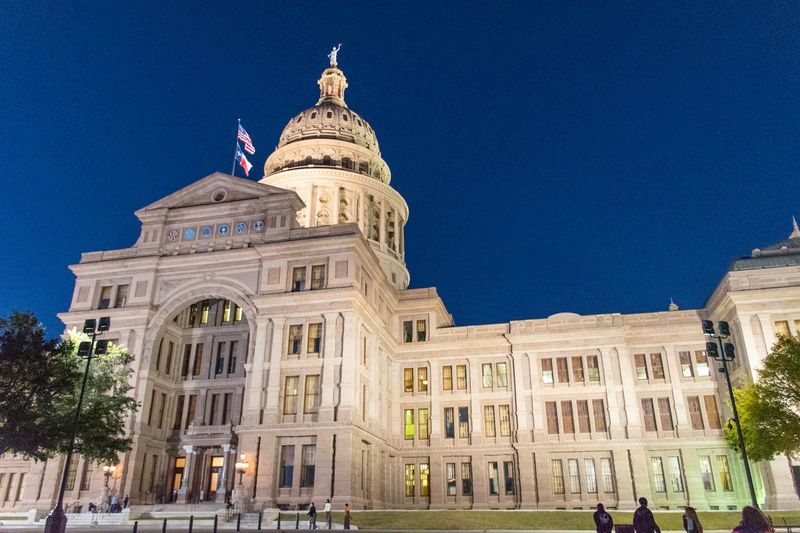
Austin is a city that has grown fast, with glass towers and new construction reshaping the skyline at a pace that can feel dizzying. But no matter how tall the surrounding buildings get, the Texas Capitol dome always holds its place in the view.
That is not by accident, it is by law. Capitol View Corridors are a set of city and state regulations that restrict the height of new construction in specific sight lines to preserve unobstructed views of the dome.
The idea behind Capitol View Corridors is straightforward: the Capitol belongs to everyone, and everyone should be able to see it. There are designated points throughout the city where the view of the dome must remain clear, and developers are required to design around those restrictions.
It creates an interesting tension between growth and preservation that Austin navigates constantly.
Standing on Congress Avenue and looking north toward the Capitol is one of the great urban views in the American South. The wide boulevard frames the building perfectly, with the dome rising at the end like a period at the close of a well-written sentence.
The protected corridors ensure that view does not disappear behind a glass tower sometime in the next decade. It is a civic decision that reflects genuine respect for history, and it pays off every single day for residents and visitors alike.
Some things are worth protecting not because they are fragile, but because they anchor a place to its own story.
Address: 1100 Congress Ave., Austin, TX 78701
