You come to this state park for the scenery, but you stay because the ground has so much to say. It once held Confederate prisoners, and later became a New Deal camp where workers left their own mark on history.
The remains of those days are still visible if you know where to look, old structures and quiet corners that feel heavier than the rest of the park. Walking through, you get the sense that this place has seen more than most.
It is beautiful, sure, but also a little haunting in a way that makes you stop and think. History books cover the big events, but being here lets you feel the smaller, stranger layers underneath.
Bring a good pair of walking shoes and a curiosity for the complicated past hiding beneath the trees.
The Surprising History of Goliad: More Than Just a Park
Most people expect a state park to offer trails, picnic tables, and maybe a swimming hole. Goliad State Park hands you all of that, then casually drops centuries of layered history on your lap like it is no big deal.
Located along the San Antonio River in south Texas, the park sits on land that has been occupied, fought over, and rebuilt more times than most places in the entire country. Spanish missionaries arrived here in the 1700s to establish one of the most productive cattle ranching missions in all of New Spain.
Later, the nearby Presidio La Bahia became a site of one of the most devastating events of the Texas Revolution.
Then, in the 1930s, a group of older war veterans arrived to reconstruct what time had crumbled. The park today is essentially a living archive.
Every stone wall, every shaded trail, and every old building tells a different chapter of Texas identity. History here does not feel like a museum display.
It feels like something that breathed, bled, and built itself back up again right in front of you.
Presidio La Bahia and the Prisoners Who Never Left
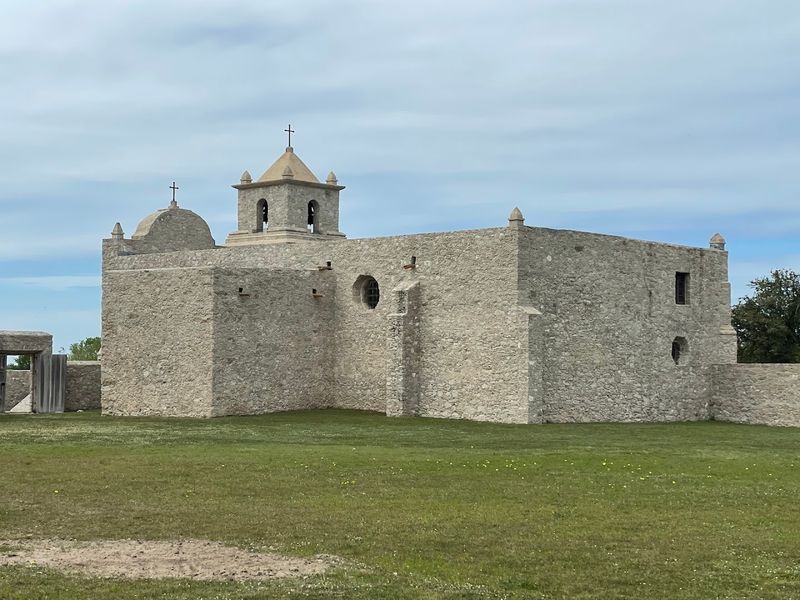
Right across the road from the park entrance sits one of the most dramatic landmarks in all of Texas. Presidio La Bahia is a fully preserved Spanish colonial fort, and its chapel walls once held hundreds of Texian soldiers as prisoners of war.
In March of 1836, Colonel James Fannin and nearly 400 of his men were captured by Mexican forces during the Texas Revolution. They were held inside the chapel of Presidio La Bahia for over a week, likely believing they would be treated as prisoners of war under accepted military rules.
On Palm Sunday, March 27, 1836, they were marched out and executed in what became known as the Goliad Massacre. It remains one of the deadliest single events of the Texas Revolution, second only to the fall of the Alamo.
The fort is not technically inside the state park, but the two sites are deeply connected. Visiting the park without crossing the road to see Presidio La Bahia feels like reading only half a story.
The chapel still stands, quiet and thick-walled, carrying the weight of what happened inside it.
The Goliad Massacre and the Cry That Changed Texas
“Remember the Alamo” gets all the fame, but there was a second battle cry that lit the fire under Sam Houston’s army just weeks later. “Remember Goliad” was shouted alongside it at the Battle of San Jacinto, where Texas won its independence from Mexico.
The Goliad Massacre happened because of a decree by Mexican President Santa Anna that ordered all foreign pirates taken with arms to be executed. Fannin’s men, many of whom were recent volunteers from the United States, were considered to fall under that order.
The execution was carried out swiftly, and the loss of nearly 400 men in a single morning was devastating to the Texian cause.
A memorial to Fannin and his soldiers stands near the park at Fannin Battleground State Historic Site, just a short drive away. The emotional weight of this history is part of what makes the Goliad area feel so different from other Texas destinations.
Grief and courage are baked into the soil here. Understanding the massacre gives the whole park a different texture, one that is harder to shake once you know it.
Mission Espiritu Santo: The Centerpiece of the Park
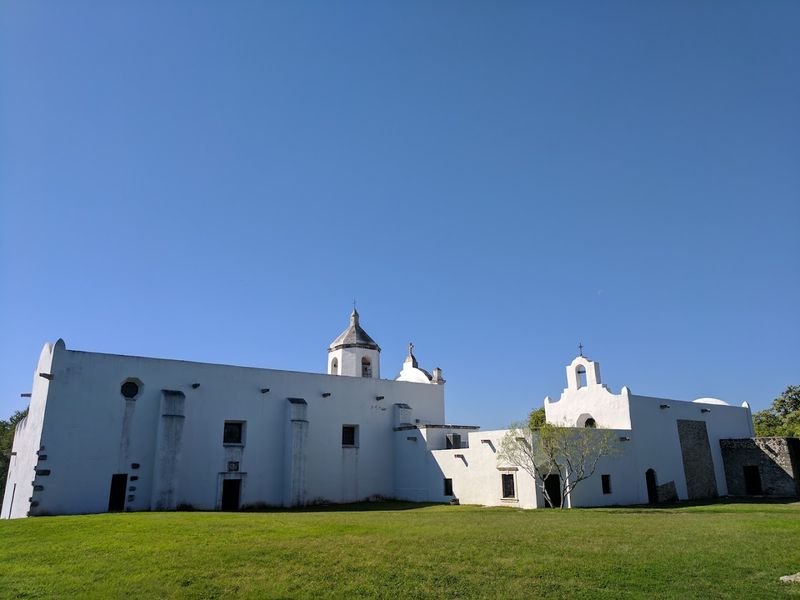
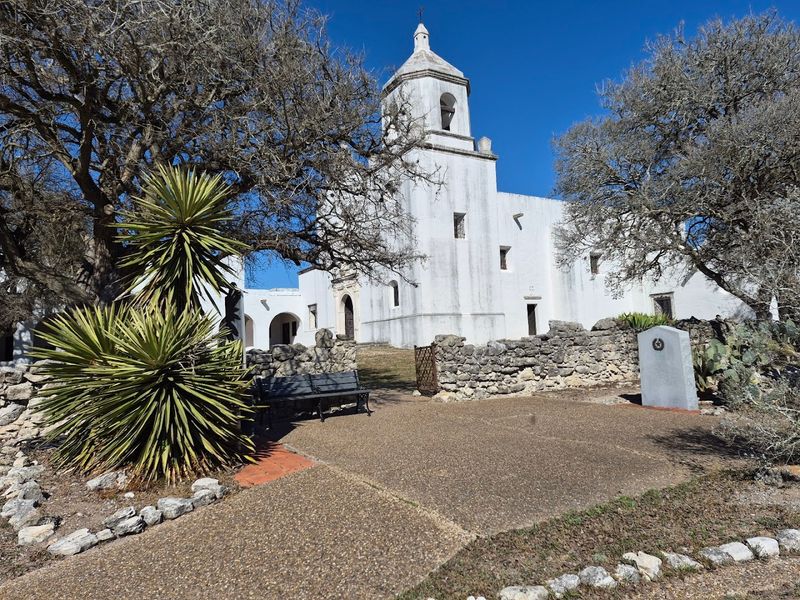
The first time you see Mission Espiritu Santo up close, the scale of it catches you off guard. This is not a crumbling ruin or a modest chapel.
It is a fully reconstructed Spanish colonial mission complex, complete with a church, granary, cloister, and workshop.
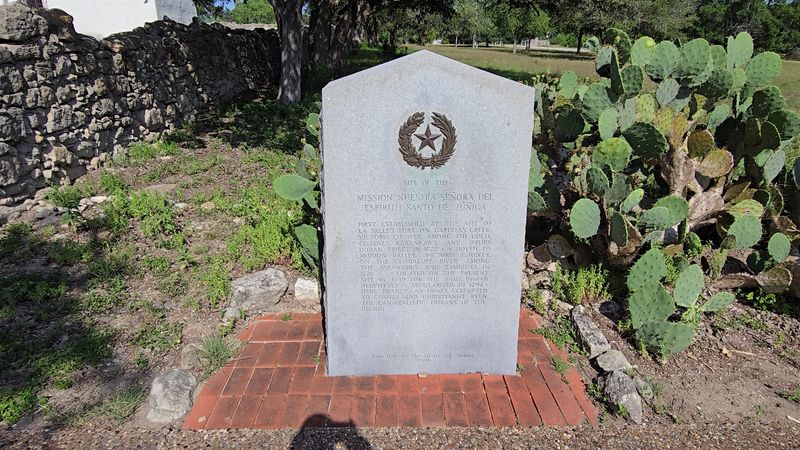
Mission Nuestra Senora del Espiritu Santo de Zuniga was originally established in 1722 and became one of the most economically significant missions in New Spain. At its peak, the mission managed enormous cattle herds that helped supply Spanish Texas with beef and leather.
The mission operated for over a century before it was eventually abandoned and began falling apart.
By the time the Civilian Conservation Corps arrived in the 1930s, the mission was essentially a pile of rubble. What you see today is the result of years of careful reconstruction by CCC workers who researched Spanish mission architecture and sourced stone from the site and a local quarry.
The attention to detail is remarkable. Roof tiles were fired on-site, and iron hinges were forged by hand in a workshop set up specifically for the project.
The mission is the heart of the park, and it earns that title completely.
The CCC Veterans Who Rebuilt It All
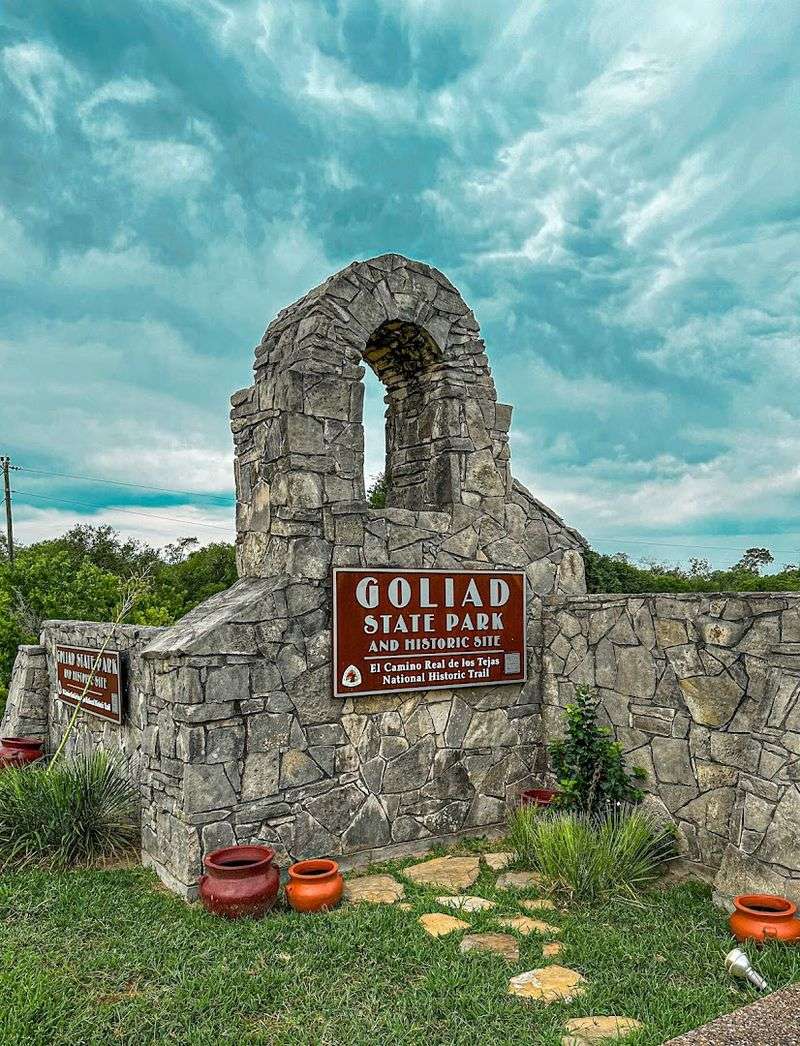
The Civilian Conservation Corps is usually associated with young men in their late teens and early twenties. Goliad was different, and that difference matters.
CCC Company 3822-V, the V standing for Veterans, was made up of older war veterans, many in their 40s, 50s, and even 60s. These were men who had already served their country in earlier conflicts and found themselves struggling during the Great Depression.
President Roosevelt’s New Deal gave them a second chance to contribute, this time by preserving and rebuilding a piece of Texas history. From 1935 to 1941, these veterans lived in barracks-style housing at the camp and worked on the mission reconstruction alongside other park improvements.
There is something quietly moving about that setup. Older men, shaped by hardship and war, carefully laying stones for a mission that had stood two centuries before them.
They were not just doing construction work. They were passing something forward.
The CCC veterans at Goliad left behind a legacy that draws visitors from across the state every year, and most of those visitors have no idea who built what they are admiring.
The Custodian’s Cottage That Started as a Testing Ground
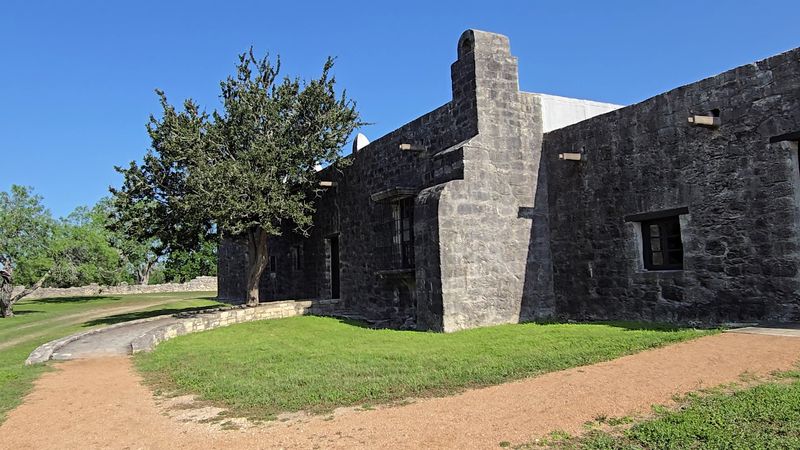
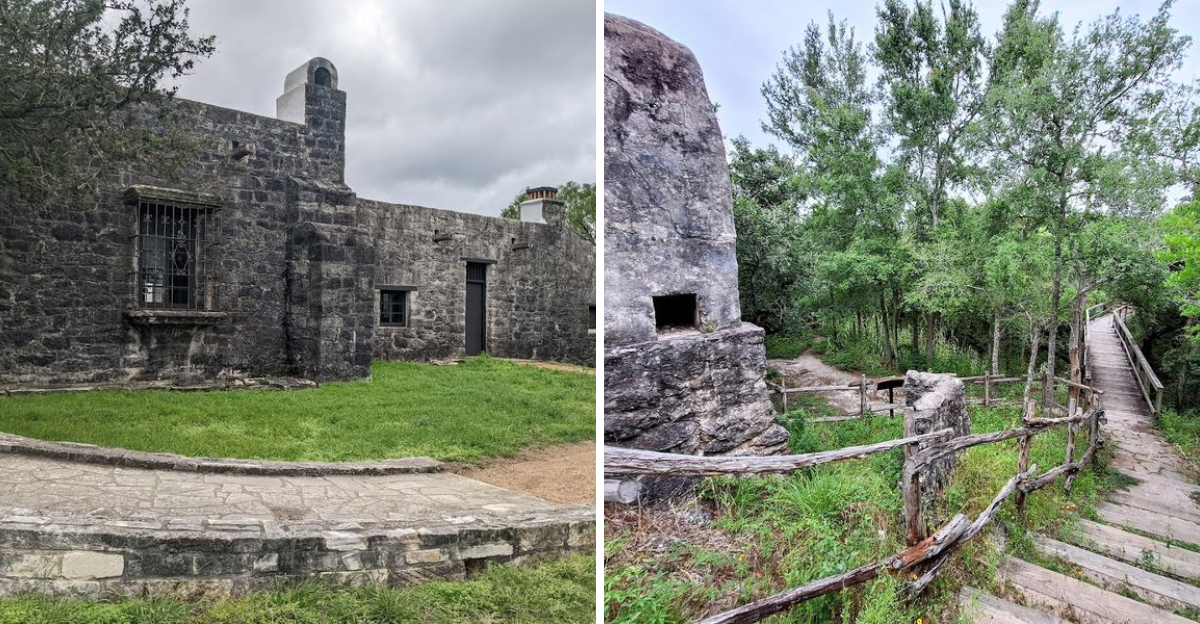
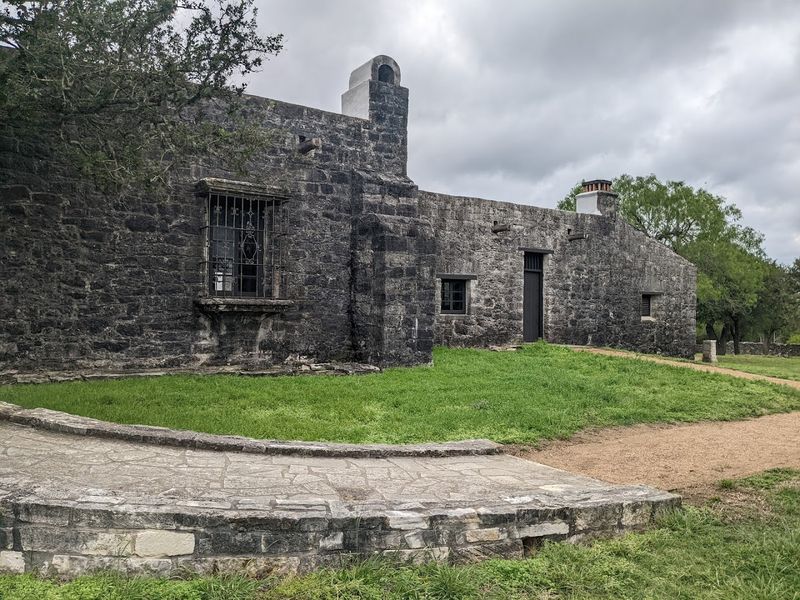
One of the most interesting buildings in the park almost looks like it belongs in a storybook. The small stone cottage near the park entrance was built between 1936 and 1937 by CCC workers, and it served a very specific and clever purpose before it ever housed anyone.
The cottage was constructed as an experimental studio. Workers used it to test the construction methods and craft techniques they planned to apply to the much larger mission reconstruction.
Roof tiles were fired in a kiln on-site. Iron door hinges were forged by hand in a temporary forge set up in the building.
Getting those techniques right on a small scale before applying them to the mission meant fewer costly mistakes and a more authentic finished product.
Today, the cottage operates as the El Camino Real de los Tejas Visitors Center. It is a great first stop when you arrive, offering context about the historic road that once connected Mexico City to the Spanish missions of east Texas.
The building itself is part of the story. Running your hand along those stone walls, you are touching something that was built by veterans who were figuring it all out as they went.
The National Register of Historic Places and Why It Matters
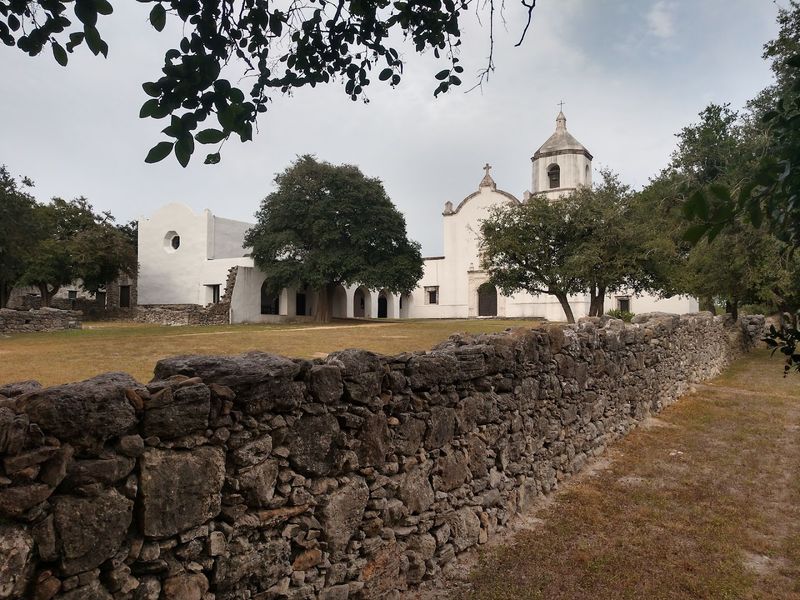
Not every state park earns a spot on the National Register of Historic Places, but Goliad did. The Goliad State Park Historic District was officially listed on March 12, 2001, recognizing the exceptional significance of its CCC-built structures and the reconstructed mission complex.
Being on the National Register is not just a formality. It means the site has been formally recognized as having historical, architectural, and cultural importance at a national level.
It also helps protect the structures from being altered or demolished without serious review. For a park like Goliad, where so much of what you see was built by a specific group of people during a specific chapter of American history, that protection matters enormously.
The listing covers the park headquarters, the custodian’s cottage, the mission reconstruction, and the other facilities the CCC veterans built during their six years at the site. Knowing that context changes how you walk through the park.
You stop seeing picnic tables and stone walls as just amenities. You start seeing them as artifacts, each one placed by someone who needed the work and took pride in doing it well.
That is a rare combination in any public space.
The San Antonio River and the Natural Side of the Park
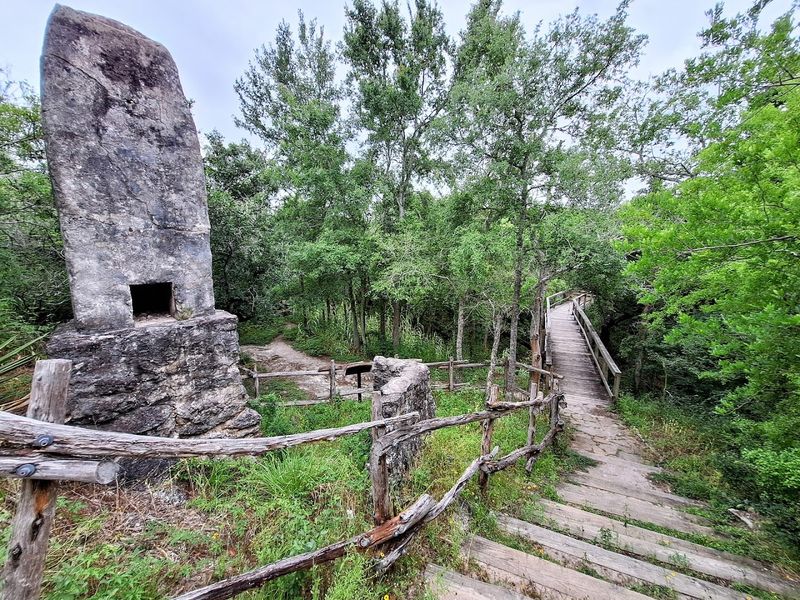
History is the main draw at Goliad, but the land itself deserves its own moment of appreciation. The park sits along a quiet stretch of the San Antonio River, and the contrast between the dense stonework of the mission and the soft movement of the water is genuinely beautiful.
Cypress trees line the riverbanks, their roots reaching into the slow current. The park has several trails that wind through this riparian landscape, giving you a chance to catch your breath between history lessons.
Bird watching here is excellent. The area sits along a migration corridor, and the mix of river habitat, open grassland, and old stone structures creates a layered environment that attracts a wide variety of species.
There are also campsites, picnic areas, and spots to simply sit and watch the river move. After spending time absorbing the weight of the Goliad Massacre and the CCC story, that quietness feels earned.
The natural setting is not just a backdrop for the history. It is part of why people kept coming back to this particular bend in the river, century after century, to build something new.
Camping and Outdoor Activities at Goliad State Park
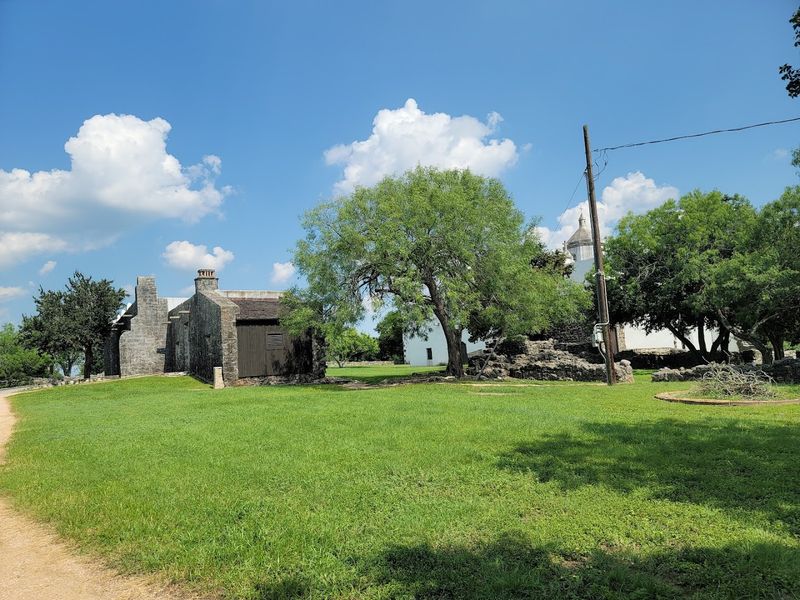
Spending a night or two at Goliad makes the whole experience feel more complete. The park offers a range of camping options, from sites with water and electricity to more basic spots for those who want something closer to the ground.
Waking up inside the park, with the mission just a short walk away and the river nearby, gives you a completely different sense of the place. The early morning light on the stone walls of the mission is something that photographs cannot really do justice.
It is the kind of quiet that makes you want to stay a little longer.
Beyond camping, the park has hiking trails that range from easy walks to more engaging routes through the natural landscape. Fishing is allowed along the river, and the picnic areas are well-maintained and shaded.
Families with kids tend to do really well here because there is enough variety to keep everyone interested. History-focused kids can dig into the mission and the CCC story, while the outdoor-oriented ones can explore the trails and the river.
It is a rare park that genuinely delivers on both fronts without feeling like it is stretching itself too thin.
Planning Your Visit to Goliad State Park
Getting to Goliad State Park is straightforward. The park is located at 108 Park Rd 6, Goliad, TX 77963, about two hours southeast of San Antonio and roughly three hours from Houston.
The drive through south Texas ranch country is scenic in its own flat, wide-open way.
The park is open year-round, though spring and fall tend to offer the most comfortable temperatures for exploring. Summer in south Texas gets genuinely hot, so early mornings are your best bet if you visit between June and September.
Bring water, sunscreen, and comfortable walking shoes because the mission complex involves a fair amount of walking on uneven stone surfaces.
Before you go, check the Texas Parks and Wildlife website for current hours, reservation availability, and any special events. The park occasionally hosts living history demonstrations and ranger-led programs that add another layer to the visit.
If you have time, plan to cross the road to Presidio La Bahia as well. The two sites together form a complete picture of this region’s extraordinary past.
Goliad is not the most famous park in Texas, but it might just be the most layered.
