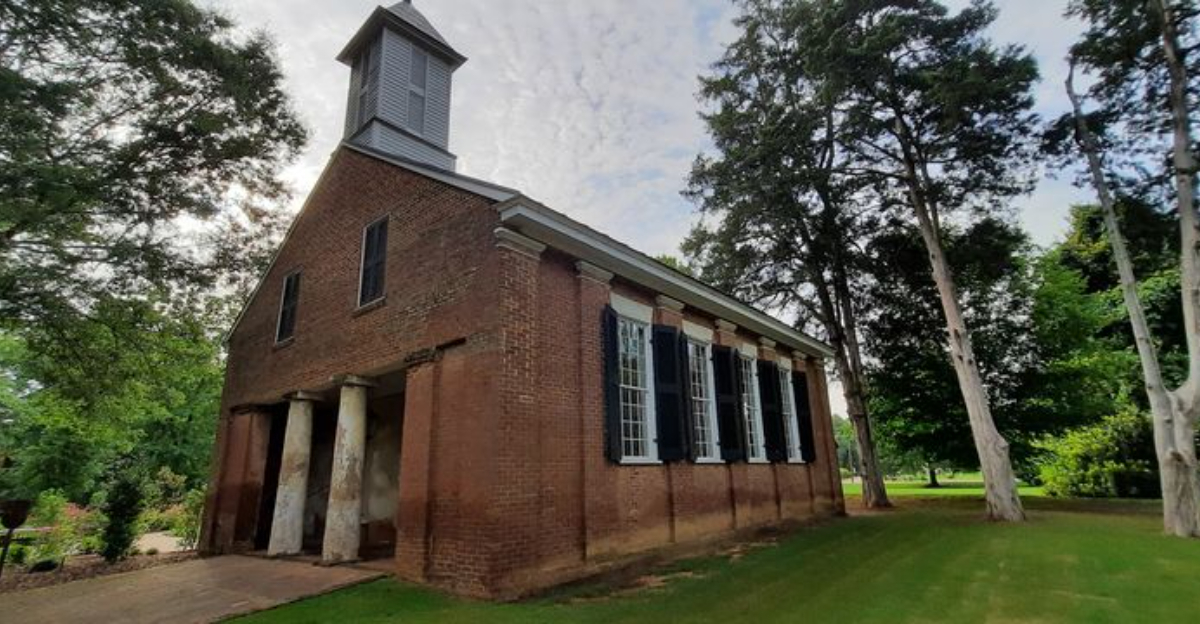
Mooresville, Alabama is one of those rare places where time seems to have forgotten to move forward. With fewer than 60 residents and streets lined with ancient oaks and 19th-century buildings, it feels less like a town and more like a living museum.
I find it hard to believe a place this well-preserved exists just off a major interstate in North Alabama. If you are looking for a weekend getaway that trades theme parks and tourist traps for genuine history and quiet charm, Mooresville might be exactly what you need.
From its presidential connections to its oldest post office still in operation, every corner of this tiny village has a story worth hearing.
Alabama’s Oldest Incorporated Town Predates Statehood Itself
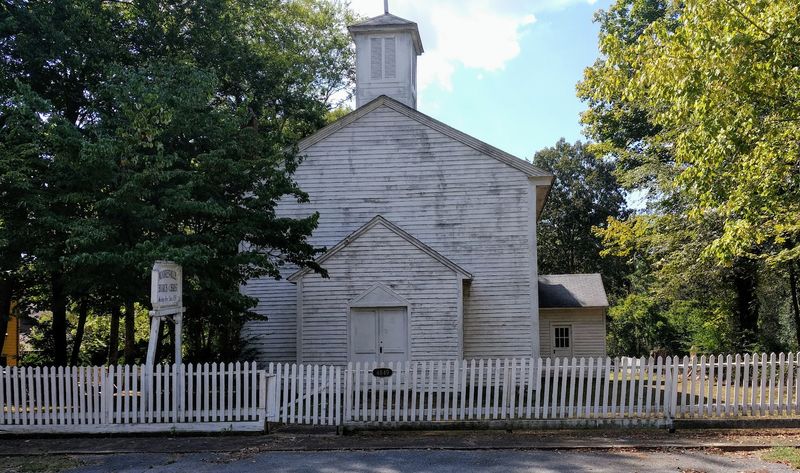
Most towns celebrate their history with a plaque or two. Mooresville goes a step further by simply existing as a nearly unchanged piece of early American life.
Incorporated on November 16, 1818, Mooresville actually predates Alabama’s statehood by a full year. That is not a typo.
Alabama was not officially admitted to the Union until December 14, 1819. Mooresville was already a recognized, functioning town before the state it sits in had a name on the map.
That kind of deep-rooted history is genuinely rare anywhere in the country, let alone in a village with fewer than 60 people.
Walking through Mooresville today, you can feel that age in the architecture and the quiet. The streets have barely changed since the early 1800s.
There are no big box stores, no fast food signs, and no neon lights. What you get instead is a streetscape that looks almost exactly as it did two centuries ago.
For history lovers, that is the whole point. You are not reading about the past in a textbook.
You are standing inside it. Mooresville sits in Limestone County, southeast of the intersection of Interstate 565 and Interstate 65, making it surprisingly easy to reach despite feeling worlds away from modern life.
The Entire Village Is Listed on the National Register of Historic Places
Not every historic building in America makes it onto the National Register of Historic Places. Getting an entire town listed is practically unheard of.
Mooresville has earned that distinction, and locals often call it Alabama’s Williamsburg for good reason.
Every structure, every lane, and every corner of this village carries protected historical significance. That means the homes you see are not reproductions or renovations dressed up to look old.
They are the real thing, maintained with care and respect for what they represent. It gives the whole place an authenticity that staged tourist attractions simply cannot replicate.
The designation also means Mooresville has been formally recognized as a place worth preserving for future generations. That kind of official acknowledgment speaks volumes about how remarkable this tiny community really is.
You will not find chain hotels or strip malls here because the town’s character has been deliberately protected.
When you walk through Mooresville, you are moving through a living document of early American settlement. The homes, the church, the post office, and the old stagecoach inn all tell a continuous story.
It is the kind of place where you slow down naturally because something interesting is always just a few steps away. Mooresville, Alabama rewards patient visitors who take the time to actually look around rather than rush through.
Presidential History Walks These Same Streets
Not many towns with a population under 60 can claim two connections to United States presidents. Mooresville can, and that alone makes it worth the drive.
Andrew Johnson, the 17th president, once lived in Mooresville as a young apprentice tailor before he found his way into politics.
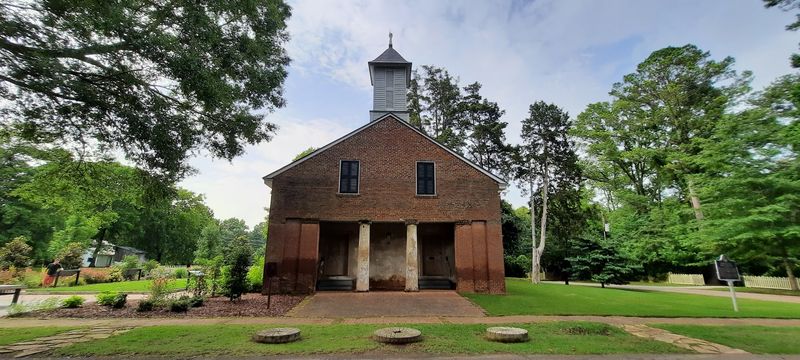
James A. Garfield, the 20th president, preached at the Mooresville Church of Christ during the Civil War.
The 1854 church still stands today, and standing inside it knowing Garfield once spoke from that same space is a genuinely humbling experience. History does not get much more personal than that.
These are not loosely connected legends or local myths. They are documented historical ties that give Mooresville a significance far beyond its size.
Most towns ten times larger cannot claim a single presidential connection. Mooresville has two, and they feel woven naturally into the fabric of the place rather than plastered onto a tourist brochure.
For anyone who enjoys American political history or just loves discovering unexpected stories in small places, this is a compelling reason to visit. The Mooresville Church of Christ at 165 Church Street, Mooresville, AL 35649 is open for visitors who want to see the space where Garfield once stood.
It is a quiet, meaningful stop that sticks with you long after you leave town.
Alabama’s Oldest Continually Operating Post Office Still Delivers
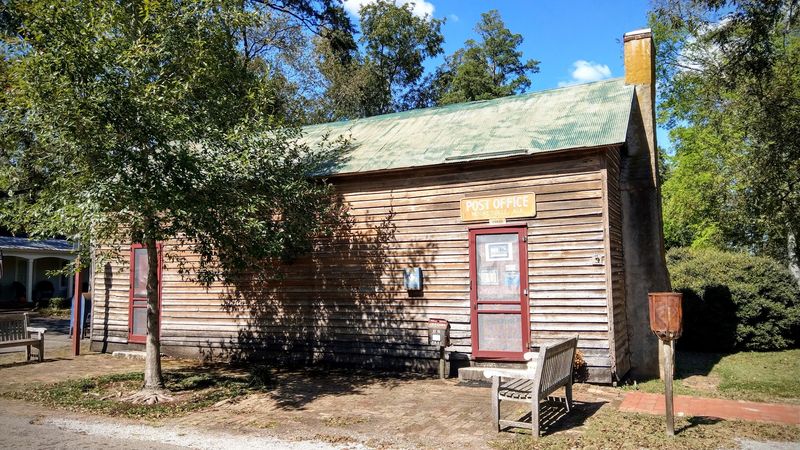
Some buildings are old. Some are historic.
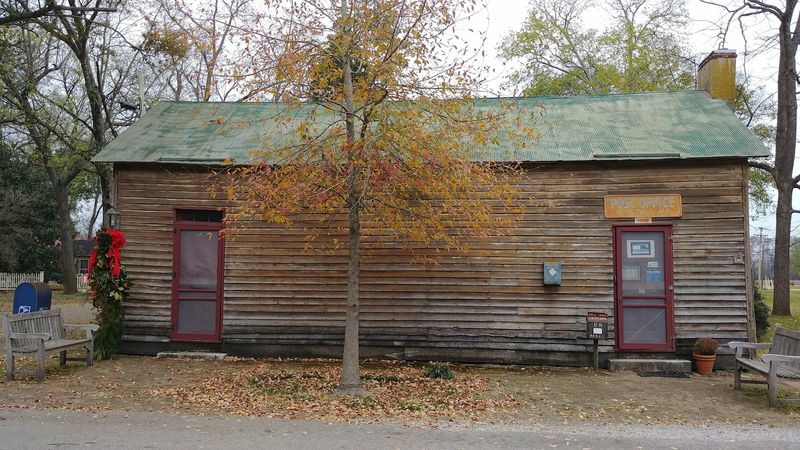
The Mooresville Post Office is both, and it has been working every single day since 1840. That makes it the oldest continually operating post office in the state of Alabama.
It is not a museum piece or a replica. People actually use it.
The post office is housed in a modest, charming brick building that looks exactly like what you would imagine a mid-19th-century mail stop to look like.
Walking up to the door and realizing that mail has been sorted and delivered from this same spot for nearly 185 years is one of those quietly mind-blowing moments you do not expect from a mini vacation.
Visitors often stop here just to send a postcard or a letter, knowing it carries a little extra meaning when it is stamped from the oldest post office in Alabama. It is a small gesture that connects you to everyone who has done the same thing here going back generations.
That kind of continuity is rare and genuinely special.
The post office is a perfect example of what makes Mooresville so different from other historic destinations. Nothing here is behind glass or roped off for viewing.
The history is functional and alive. You can touch it, use it, and be part of it.
That hands-on connection to the past is something most visitors remember long after the trip is over.
The Stagecoach Inn and Tavern Tells Stories from 1821
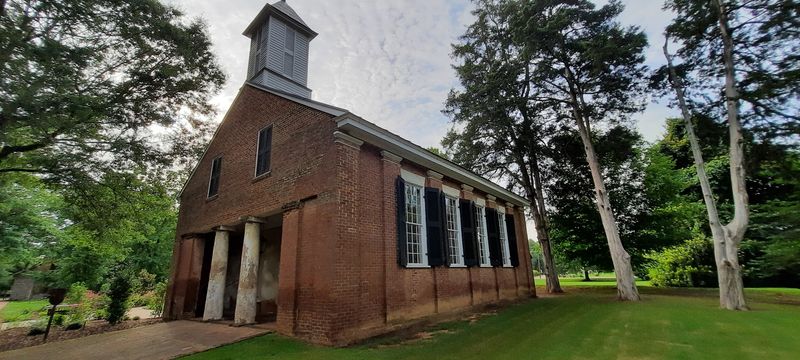
There is something about a building that has stood since 1821 that commands your full attention. The Stagecoach Inn and Tavern in Mooresville is one of those buildings.
Originally built to serve travelers passing through on horseback and by coach, it now functions as the town hall and a small museum.
Back in the early 1800s, Mooresville was a stop along a busy stagecoach route connecting the region. The inn would have been full of travelers, traders, and locals exchanging news from distant places.
Today the building still carries that energy, even in its quieter role as a civic and historical space.
The architecture alone is worth seeing up close. The original brickwork, the proportions of the windows, and the overall scale of the building reflect construction methods and design sensibilities from two centuries ago.
It is well-preserved without being over-restored, which means it still feels genuinely old rather than polished into a theme park version of itself.
Visiting the Stagecoach Inn gives you a tangible sense of what daily life in frontier-era Alabama actually looked like. This was not a glamorous place.
It was a working stop for working people moving through a young country still figuring itself out. That honest, unvarnished history is part of what makes Mooresville such a compelling place to spend an afternoon or a full weekend.
Self-Guided Walking Tours Make Exploring Easy and Relaxing
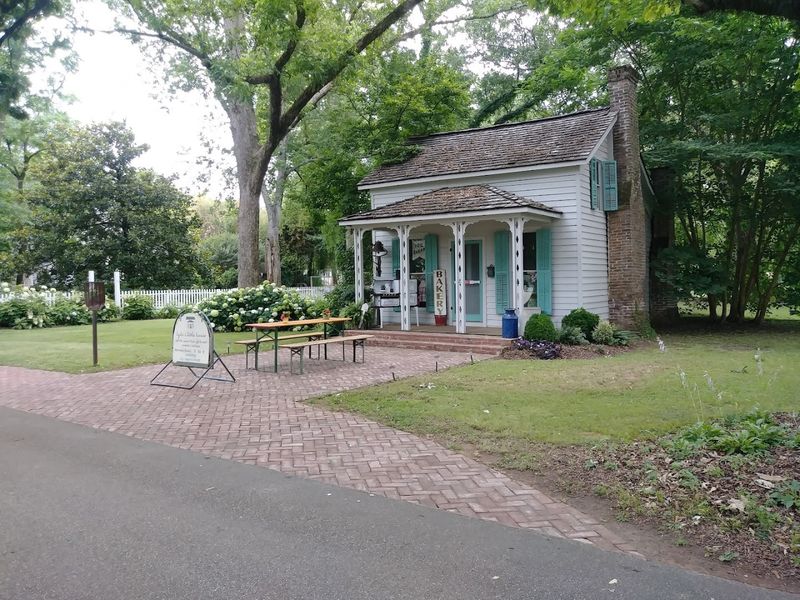
One of the best things about Mooresville is that you do not need a tour guide, a bus, or a reservation to enjoy it. The town is small enough to cover entirely on foot, and self-guided walking and bike tours let you move at your own pace.
That kind of freedom is rare in historical tourism.
Maps and guides are available to help visitors identify key buildings and learn about their significance. The town also hosts organized Saturdays in April Walking Tours for those who prefer a more structured experience with local context.
Either way, you are in control of how you spend your time here.
The streets are quiet, the sidewalks are shaded by old trees, and there is no pressure to rush. You can spend ten minutes at one building and an hour at the next if something catches your interest.
That unhurried rhythm is part of what makes Mooresville feel like a real escape from the pace of modern life.
For families, the walking tour format works especially well. Kids can explore freely without the usual museum rules about touching and noise.
Parents can explain history as they go, making it a genuinely educational outing that does not feel like homework. The Mooresville Bicentennial Garden is a lovely stop along the way, offering a peaceful green space that reflects the town’s deep pride in its long and well-documented history.
1818 Farms and Local Eateries Add Modern Charm to the Visit

History is the main draw in Mooresville, but the surrounding area offers some genuinely enjoyable modern stops that round out a perfect mini vacation.
Just outside the village, 1818 Farms, located at 24889 Lauderdale St, Mooresville, AL 35649, is a working farm experience with flower fields, farm animals, and a welcoming atmosphere that families absolutely love.
The name is a nod to Mooresville’s own founding year, which makes the connection feel intentional and meaningful.
Back in the village itself, Dogwood and Magnolia Bakery serves up fresh baked goods in a setting that fits right in with the historic surroundings. It is the kind of spot where you grab something sweet and sit outside for a while, watching the town exist at its own unhurried pace.
Lyla’s Little House offers old-style candy and ice cream that feels perfectly suited to a town that values things from the past.
These local spots are not tourist traps. They are small, community-rooted businesses that genuinely reflect the character of the area.
Supporting them is part of the experience, and they make the visit feel fuller and more satisfying than a purely historical tour alone might.
Mooresville also hosts a Holiday Progressive Dinner each year, which gives visitors a reason to plan a return trip. The combination of deep history, farm experiences, and local food makes this tiny Alabama town a surprisingly complete destination for a weekend getaway that feels both meaningful and fun.
