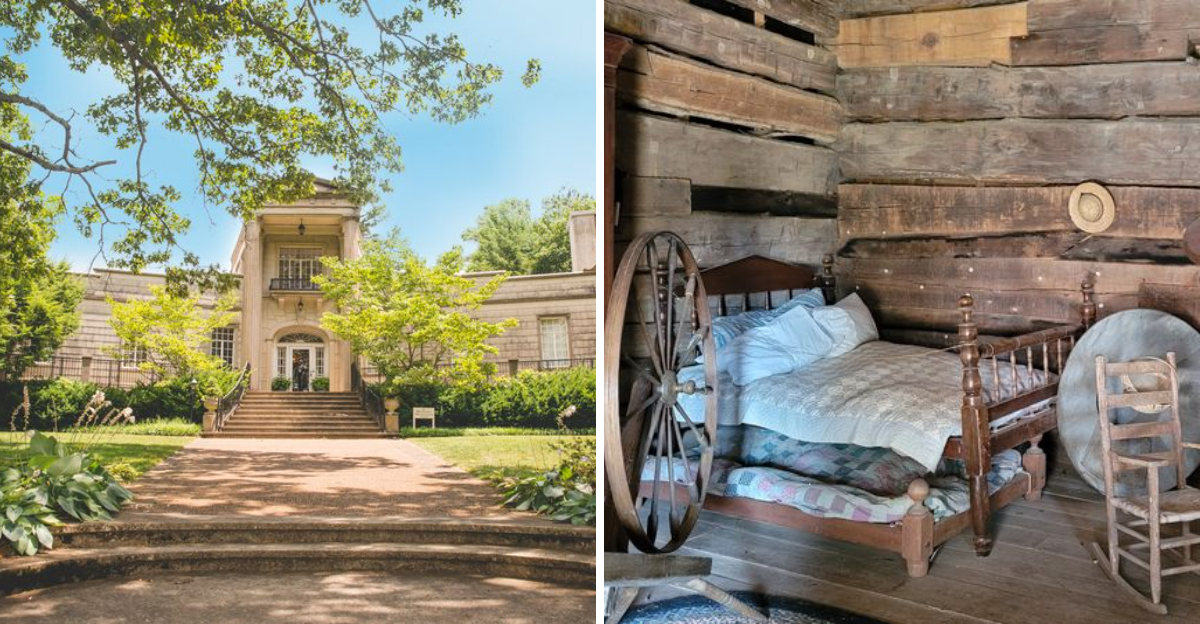
Most people driving through Huntsville never realize there is a fully preserved 19th-century village sitting on a mountaintop just minutes from the city. This mountaintop museum is the kind of place that genuinely surprises you, not just because of the sweeping views of the Tennessee Valley spread out below.
It began as one man’s eccentric vision and grew into Huntsville’s first museum, now spread across a large open-air landscape that blends history, nature, and restored buildings from another era. Walking through the site feels like stepping into a different time, with historic structures, wooded trails, and interpretive spaces all set against a dramatic backdrop.
Whether you are a local or visiting for the first time, it is the kind of experience that combines scenery and history in a way that makes the short drive upward feel well worth it.
The X-Shaped Burritt Mansion Is Unlike Any Historic Home You Have Seen
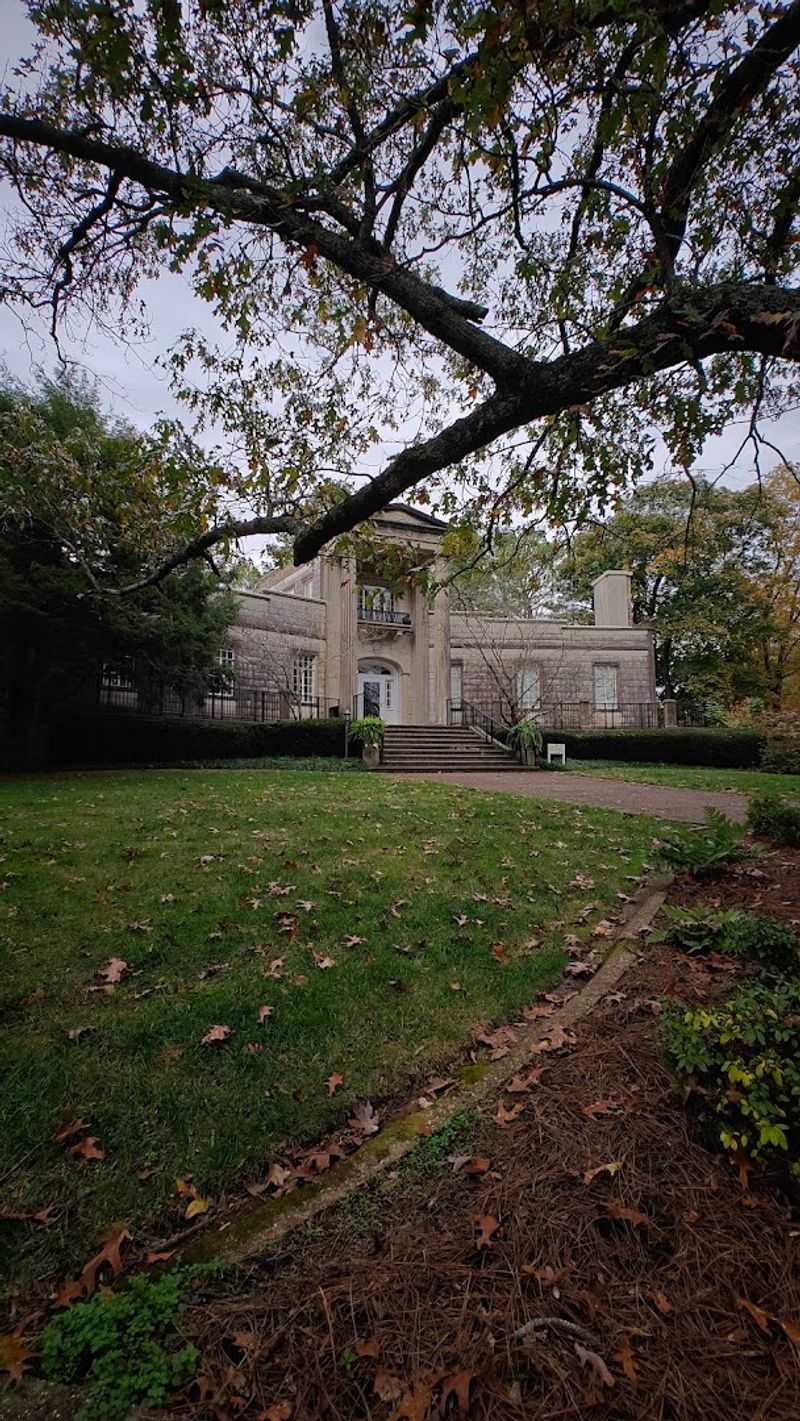
Most historic mansions follow predictable layouts, grand staircases and long hallways leading to formal rooms. Dr. William Henry Burritt had other ideas when he designed his home in 1938.
The result is a one-of-a-kind X-shaped structure that still catches visitors off guard the moment they see it.
The mansion was built with an eye toward innovation. Burritt originally used straw insulation, and after a fire, he rebuilt with concrete shingles and an asbestos-concrete exterior.
The unusual shape was not just for show. It was carefully planned to maximize natural airflow, pull in light from multiple directions, and give every room a view of the surrounding landscape.
Inside, the rooms reflect the personality of a man who lived by his own rules. Artifacts, furnishings, and exhibits tell the story of Burritt himself, a physician, world traveler, and forward thinker who willed his entire estate to the city of Huntsville.
Guided tours bring the space to life, and the docents who lead them tend to be genuinely passionate about the history they share. The mansion sits at 3101 Burritt Dr SE, Huntsville, AL 35801, and tours run Tuesday through Saturday from 9 AM to 5 PM.
For a building that is nearly 90 years old, it feels remarkably alive.
Panoramic Views of Huntsville From the Mountain Are Genuinely Breathtaking
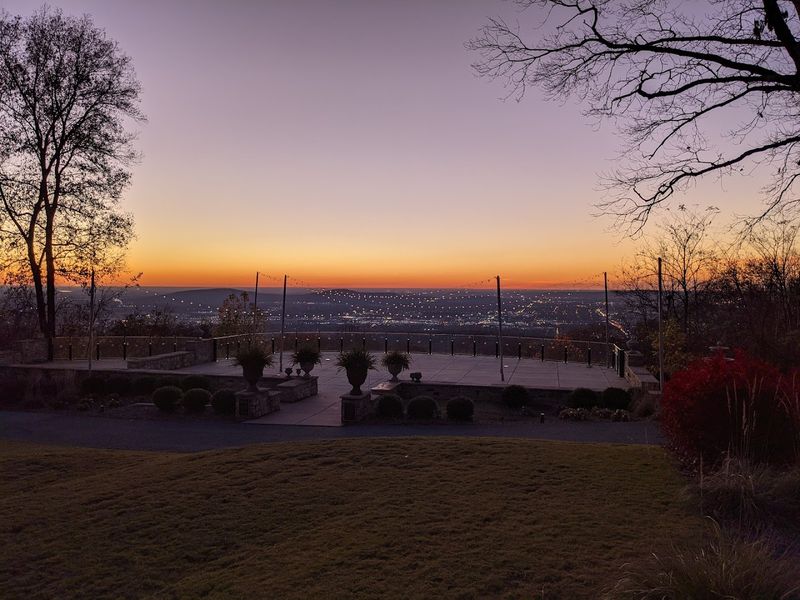
There is a reason locals keep coming back to Burritt on the Mountain even when they have already toured the cabins and the mansion. The views from the top of Round Top Mountain are the kind that make you stop talking mid-sentence.
On a clear day, the entire Tennessee Valley stretches out in every direction, and you can spot the Tennessee River, downtown Huntsville, and even NASA rocket test stands at Marshall Space Flight Center in the distance.
A dedicated 3,000-square-foot overlook called The View sits on the property and serves as one of the best vantage points in all of north Alabama. Photographers come specifically for golden hour shots from this spot.
Families spread out on the grass and just take it all in. It is the kind of place that makes you feel lucky to live in or visit this part of the state.
The overlook also hosts events throughout the year, including the City Lights and Stars Concert Series, which draws crowds who want to combine live music with one of the most scenic backdrops in Huntsville. Even a quiet Tuesday morning visit gives you the full effect.
Bring a camera, wear comfortable shoes for the short walk to the overlook, and plan to stay longer than you originally intended. The view has a way of holding your attention.
Authentic Log Cabins Let You Walk Through Alabama Life From the 1800s
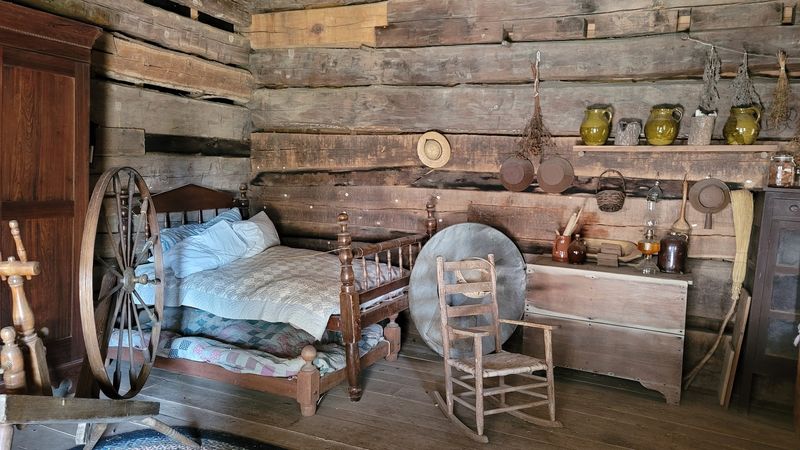
Walking into one of the restored log cabins at Burritt on the Mountain is a genuinely different experience from reading about history in a book. These are not reconstructions built to look old.
They are actual 19th-century structures that were carefully relocated and preserved on the property, each one carrying its own documented story.
The historic village includes the 1845 Meals House, the 1868 Smith-Williams House, the 1887 Balch House, and the Chandler House, a classic dogtrot design that was common across rural Alabama. An 1884 church originally from Madison, Alabama, also stands on the grounds.
Perhaps most remarkable is the Joel Eddins House, an 1810 log structure that holds the distinction of being the oldest documented log cabin in the entire state of Alabama.
Period interpreters dressed in 19th-century clothing move through the village and demonstrate skills that most people have never seen practiced in real life. Blacksmithing, spinning, and traditional farming techniques are just a few of the activities on display during living history programs.
Families with kids find this section especially engaging because children can actually interact with the space rather than just observe it. Each cabin is furnished with authentic antiques that paint a vivid picture of what daily rural life looked like for Alabama families more than 150 years ago.
Nature Trails Wind Past Coal Mines and Limestone Formations Worth Exploring
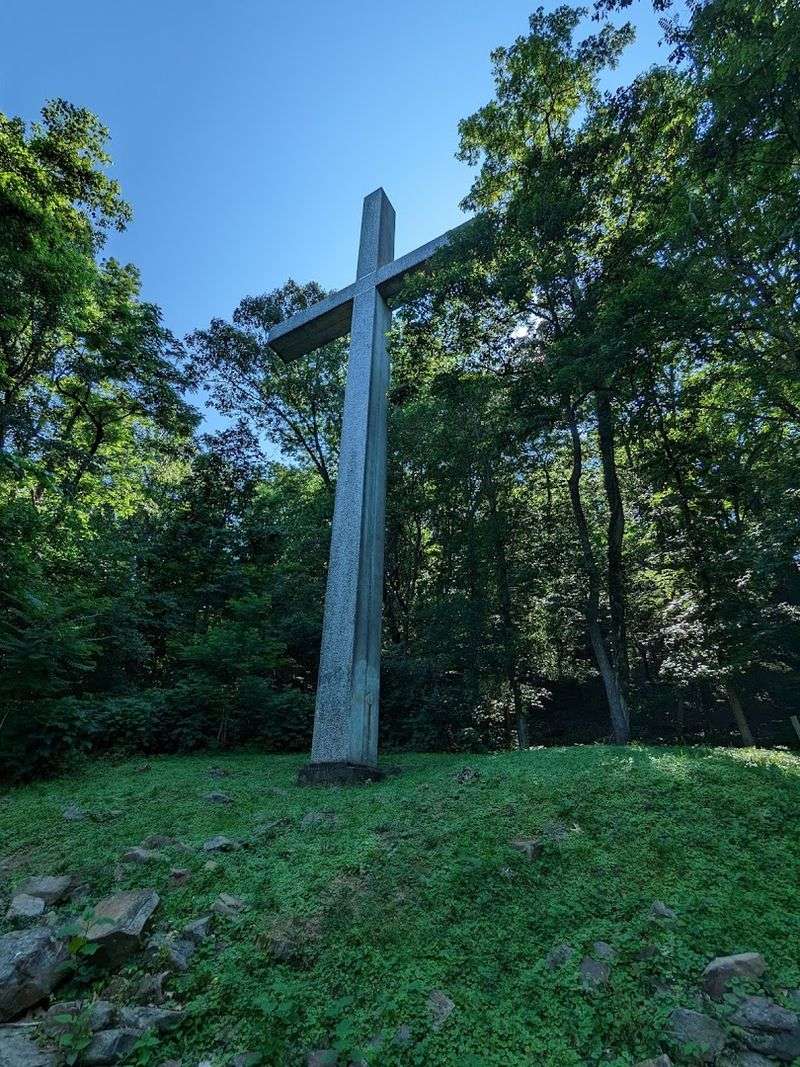
The 167 acres at Burritt on the Mountain include more than historic buildings and open overlooks. A network of well-maintained trails cuts through forested land that holds its own set of surprises.
Hikers moving through the wooded sections of the property will come across remnants of historic coal mines and exposed limestone rock formations that tell a geological story stretching back far longer than the 1800s.
The trails vary in difficulty, making them accessible for casual walkers and more experienced hikers alike. Birdwatchers have particular reason to visit, since the area is officially part of the Huntsville and Madison County Birding Trail.
The diverse tree canopy and rocky terrain create a habitat that attracts a wide variety of bird species throughout the year, and early morning visits tend to offer the best sightings.
After a morning on the trails, Monte Sano State Park sits just minutes away at 5105 Nolen Ave, Huntsville, AL 35801, offering additional hiking, camping, and picnic areas for visitors who want to extend their outdoor experience. The two properties complement each other naturally, and many visitors combine them into a full day outdoors.
Back at Burritt, the trails feel genuinely removed from the city below, even though you are only a short drive from downtown Huntsville. That combination of accessibility and quiet is harder to find than most people expect.
The McCurdy Barnyard Connects Families to Real Farm Animal History
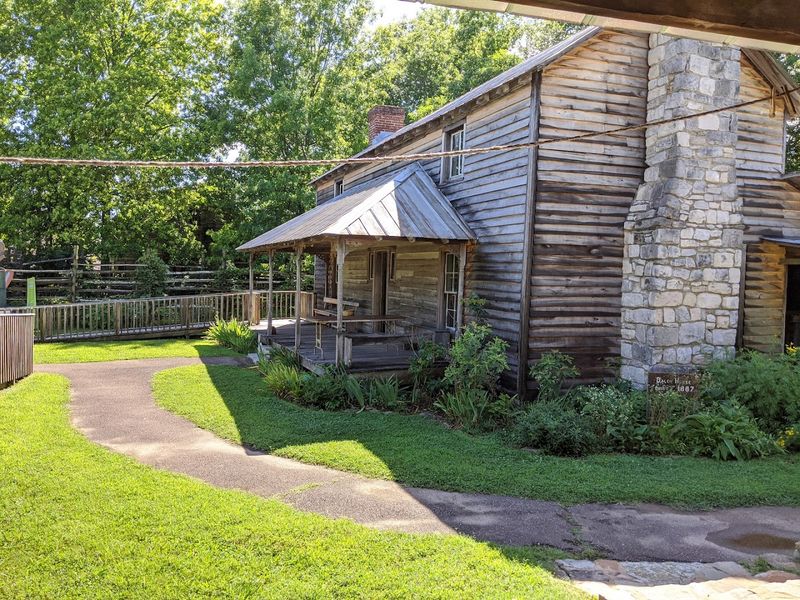
Not every museum can offer the experience of meeting a donkey face to face, but Burritt on the Mountain manages to make farm animals part of the educational story rather than just an attraction tacked on for children. The McCurdy Barnyard is a thoughtfully designed area where visitors encounter animals that played genuine roles in 19th-century farm life across Alabama and the broader Cumberland Plateau region.
Goats, donkeys, and chickens are among the animals you will find here, and the setting is designed to help visitors understand how these animals were used for labor, food, and daily survival on working farms. It is the kind of hands-on context that makes history tangible for younger generations who have only seen farm life in textbooks.
Children can get up close to these heritage breeds, learning about the daily chores and immense responsibilities that rural families managed generations ago. By blending living history with these live animals, the barnyard provides a vital window into the agricultural past of the region.
It grounds the entire mountain experience, reminding visitors that survival in the 1800s required a deep, daily partnership with nature and livestock.
The Rosenwald Schoolhouse Honors a Powerful Chapter in African American Education
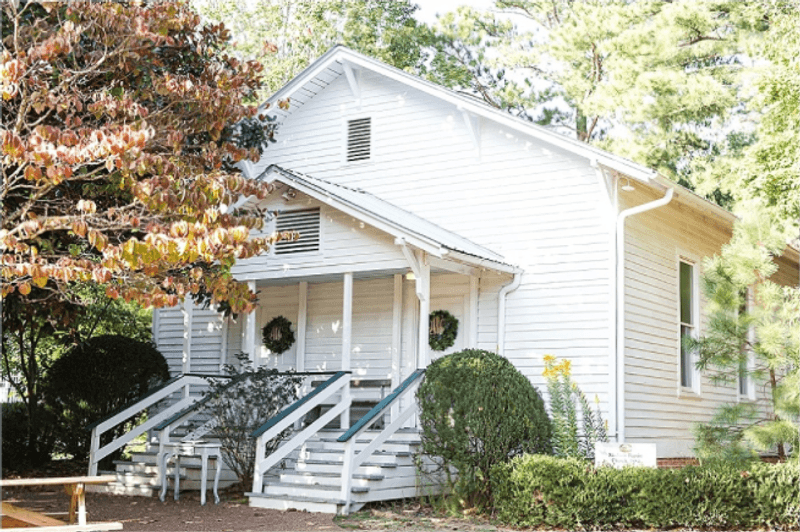
One of the most meaningful structures on the Burritt on the Mountain property is one that many first-time visitors do not expect to find. A replica of a four-room Rosenwald school stands on the grounds as a tribute to the network of schools built across the American South in the early 1900s to provide education to African American children during the era of segregation.
The Rosenwald School program was funded in part by Julius Rosenwald, a businessman and philanthropist who partnered with Booker T. Washington to build more than 5,000 schools across 15 states.
The replica at Burritt brings this history directly to visitors through immersive educational programs that recreate a 1918 school day experience. Students and school groups can participate in period-accurate lessons that make the realities of that era both accessible and impactful.
For adults visiting without children, the schoolhouse still delivers a genuinely moving experience. The context provided by interpreters and exhibits helps connect the building to the broader history of civil rights and community resilience in Alabama.
It is the kind of exhibit that earns its place in the larger story Burritt tells about 19th and early 20th century life in the region. Nearby, the Huntsville Museum of Art at 300 Church St SW, Huntsville, AL 35801, offers additional cultural programming that pairs well with a visit to Burritt.
Year-Round Events and Festivals Make Every Visit a Different Experience
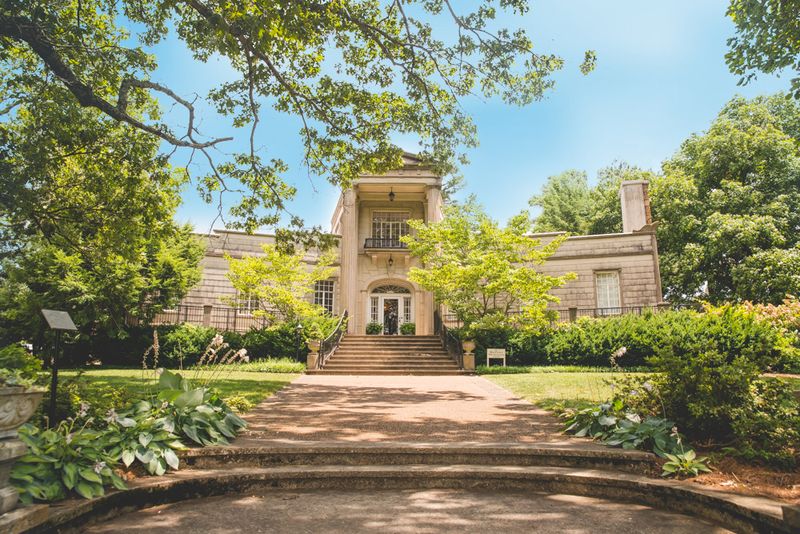
One visit to Burritt on the Mountain rarely feels like enough, partly because the place itself is so layered, and partly because the event calendar keeps changing what is on offer. The site hosts a rotating lineup of festivals, concerts, art exhibits, and seasonal celebrations that give both locals and repeat visitors fresh reasons to come back throughout the year.
The City Lights and Stars Concert Series is among the most popular recurring events, drawing crowds who want live music paired with those sweeping nighttime views of Huntsville. Seasonal festivals tied to harvest time, holiday celebrations, and living history weekends bring the historic village to life in ways that a standard self-guided visit cannot replicate.
Art exhibits rotate through the mansion and gallery spaces, connecting visual culture to the broader mission of preservation and education.
Children’s programs and homeschool resources add another layer of accessibility for families who want structured learning built around the site’s history. The variety means Burritt functions less like a static museum and more like a living cultural hub for the Huntsville community.
If you are planning a trip to the area, checking the event calendar at burrittonthemountain.com before you visit is well worth the two minutes it takes. For a meal before or after your visit, Cotton Row Restaurant at 100 N Side Square, Huntsville, AL 35801, offers a well-regarded dining experience in the heart of downtown, about ten minutes from the mountain.
