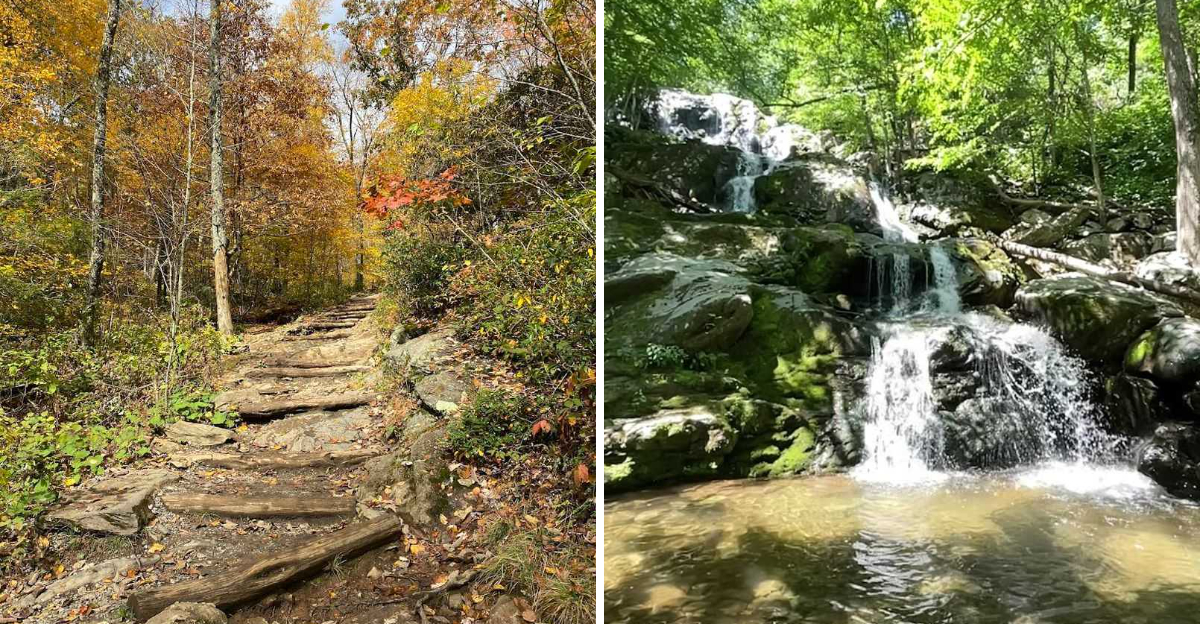
Some waterfalls require a long, gentle walk through the woods. This Virginia cascade requires something else entirely.
The trail is short, barely a mile, but it drops steeply down the mountainside. You will feel every step on the way back up, lungs burning and legs aching.
But the reward is worth it. Dark Hollow Falls tumbles over a series of rocky ledges, water bouncing and spraying, surrounded by moss and ferns that glow green in the filtered light.
I hiked down carefully, gripping roots and rocks, and stood at the base letting the mist cool my face. The sound of the water fills the whole gorge.
The hike back up is a workout, no way around it. But the falls stay with you long after you leave.
The Trail That Starts Easy and Gets Real Fast
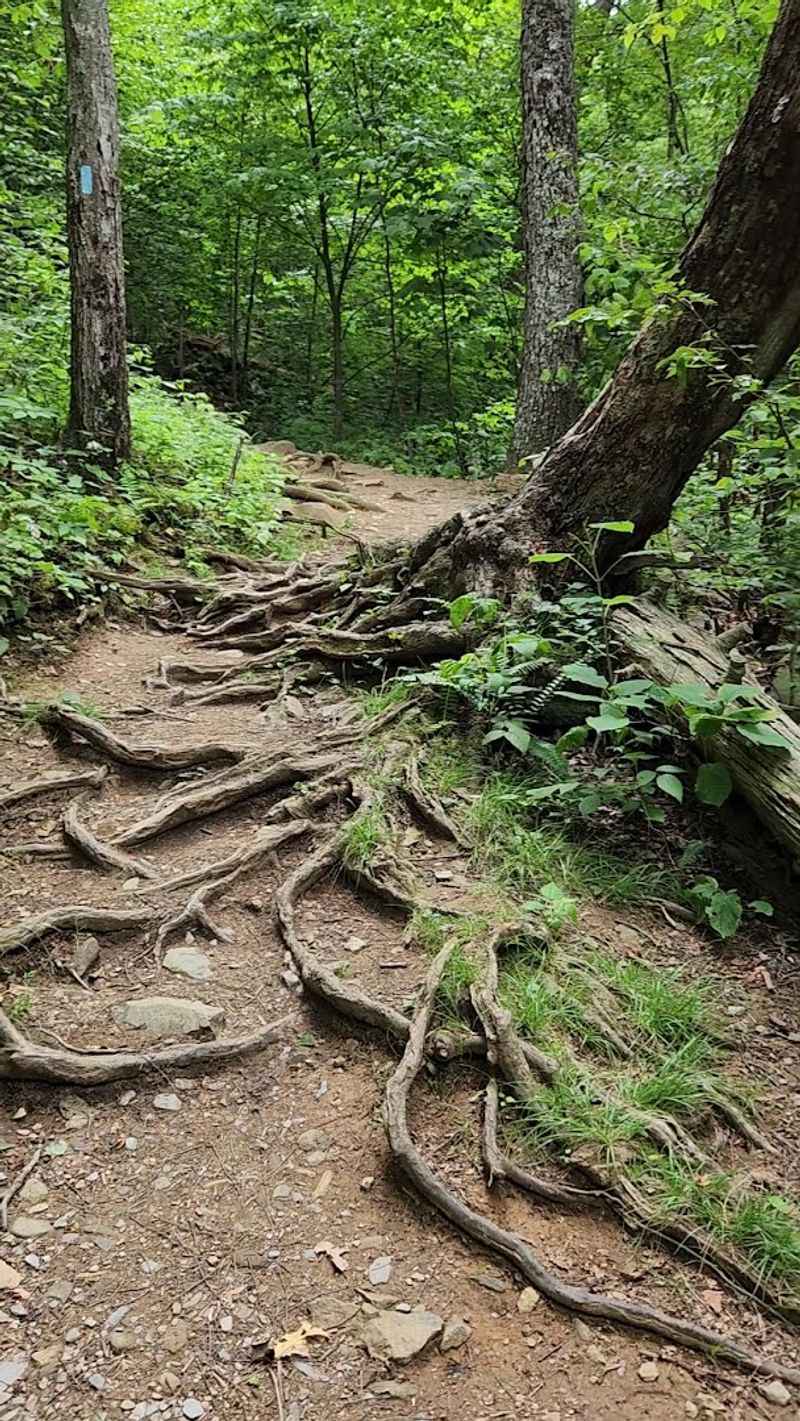
Going downhill to reach a waterfall sounds like the ultimate hiking deal, and for the first stretch of this trail, it absolutely is.
The path from the trailhead at milepost 50.7 on Skyline Drive eases you in with a gentle descent through thick forest, surrounded by towering hardwoods and the soft sound of water growing louder with every step.
Rocky terrain starts appearing underfoot fairly quickly, and log steps have been built into the steeper sections to keep you from sliding. The trail surface can be slippery when wet, so grip matters here.
I personally wore trail runners with solid tread, and even then, a few spots demanded full attention.
The real kicker is the return trip. What felt like a breezy downhill stroll transforms into a genuine cardio workout on the way back up.
The elevation gain on the return climb hovers around 440 feet, which does not sound like much until your legs are already tired from scrambling over rocks near the falls. Plan your energy accordingly, bring water, and take breaks without guilt.
The trail is well-marked and maintained, making navigation straightforward even for first-timers visiting Shenandoah National Park.
A 70-Foot Cascade That Earns Its Reputation
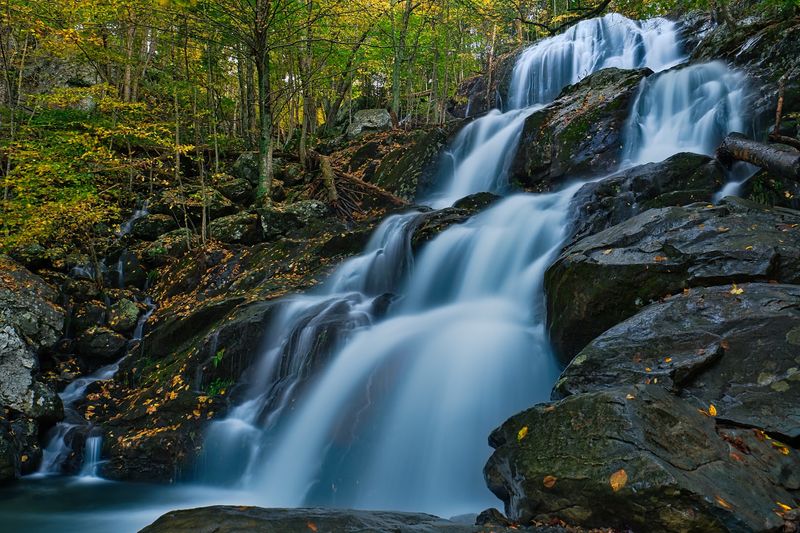
Standing at the base of Dark Hollow Falls for the first time is genuinely one of those moments where you stop mid-sentence and just stare. The water drops roughly 70 feet over layered metamorphic rock, creating a multi-tiered cascade that roars and mists and sparkles all at once.
The rock itself is remarkable. Ancient greenish-grey stone covered in thick velvet moss gives the falls a primordial, almost otherworldly quality.
Even on overcast days, the diffused light inside the hollow creates a soft, even glow that photographers absolutely love. My camera worked overtime down there.
Water flow does vary depending on recent rainfall, so timing your visit after a good rain storm will reward you with a thundering display. That said, the falls are fed partly by Hogcamp Branch stream, which keeps water moving even during drier stretches.
The upper section of the falls tends to be more impressive in sheer volume, while the lower section offers the most photogenic angles. Both views are worth your time, and spending a few extra minutes exploring different vantage points along the stream bank is completely worth it at Dark Hollow Falls.
What the Hogcamp Branch Stream Does to Your Soul
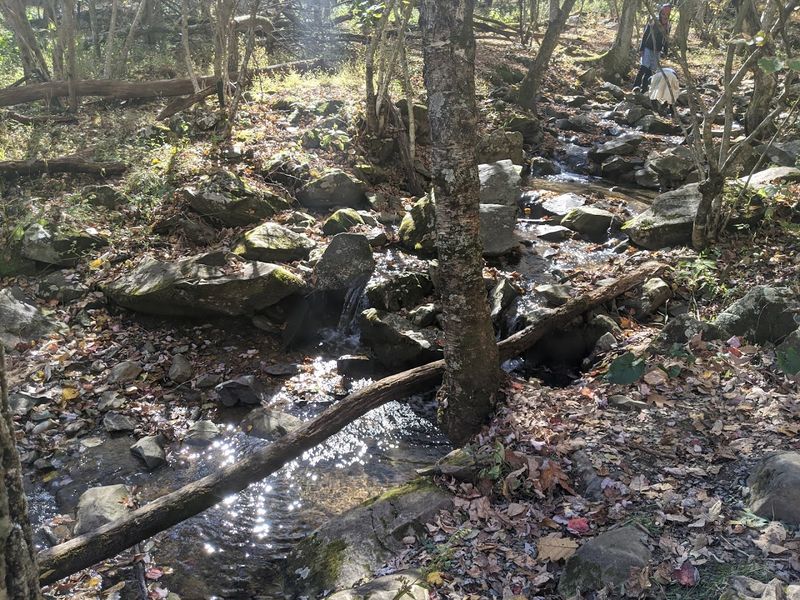
Long before you reach the main falls, the trail follows Hogcamp Branch stream, and that journey alongside the water is its own quiet reward.
The stream babbles and rushes over smooth stones, occasionally pooling into crystal-clear pockets that look almost too perfect to be real.
Multiple spots along the trail invite you to crouch down and touch the water. Cold does not even begin to describe it.
Even in the height of summer, the stream runs shockingly frigid, fed by natural springs higher up the mountain. A quick hand dip feels like a full reset after sweating through the descent.
Kids especially go wild for this part of the hike. The stream crossings are small and manageable, and the shallow pools are perfect for a quick foot soak if you packed water shoes.
Adults tend to linger here too, perching on flat rocks and soaking in the sound. There is something deeply calming about moving water in a shaded forest hollow, and Hogcamp Branch delivers that feeling in generous doses.
Virginia mountain streams have a particular magic, and this one channels it beautifully all the way down to the falls.
Upper Falls vs. Lower Falls and Why You Should See Both
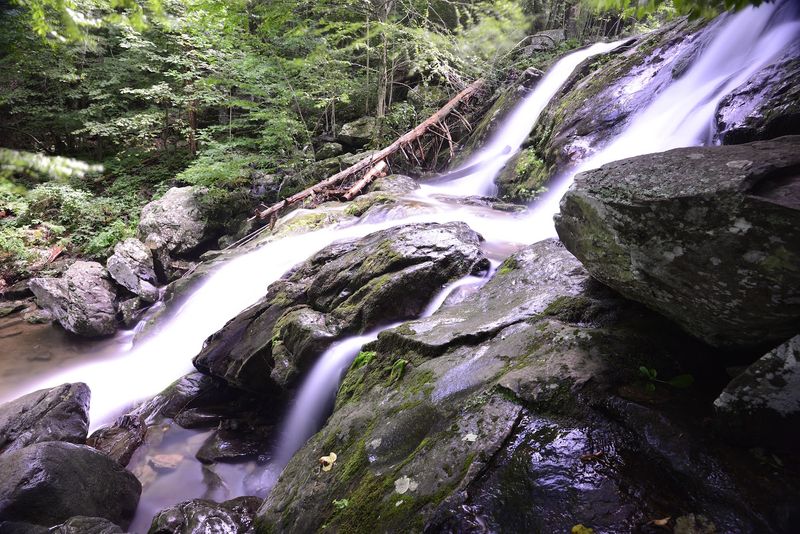
Most hikers reach the upper viewing area and call it a day, snapping a quick photo and heading back up. That is a perfectly reasonable choice, but pushing just a little further down to the lower outlook changes everything about the experience.
The upper falls command attention with their raw power and volume. Standing there, the sound is almost overwhelming in the best possible way.
Rock walls channel the water into a focused rush that bounces off the hollow walls and fills the entire space with noise and mist.
The lower falls, by contrast, feel more intimate and painterly. The water spreads slightly as it continues its descent, and the surrounding vegetation frames the scene in a way that feels almost composed.
Photography enthusiasts tend to favor this angle for its layered depth and natural framing. Fewer people make it this far, which means more breathing room and a calmer atmosphere overall.
Both sections together tell the full story of this waterfall, and skipping either one means missing half the picture. At Dark Hollow Falls in Shenandoah National Park, the extra steps down to the lower overlook are absolutely worth the additional climb back up.
The Photography Conditions That Make This Spot Legendary
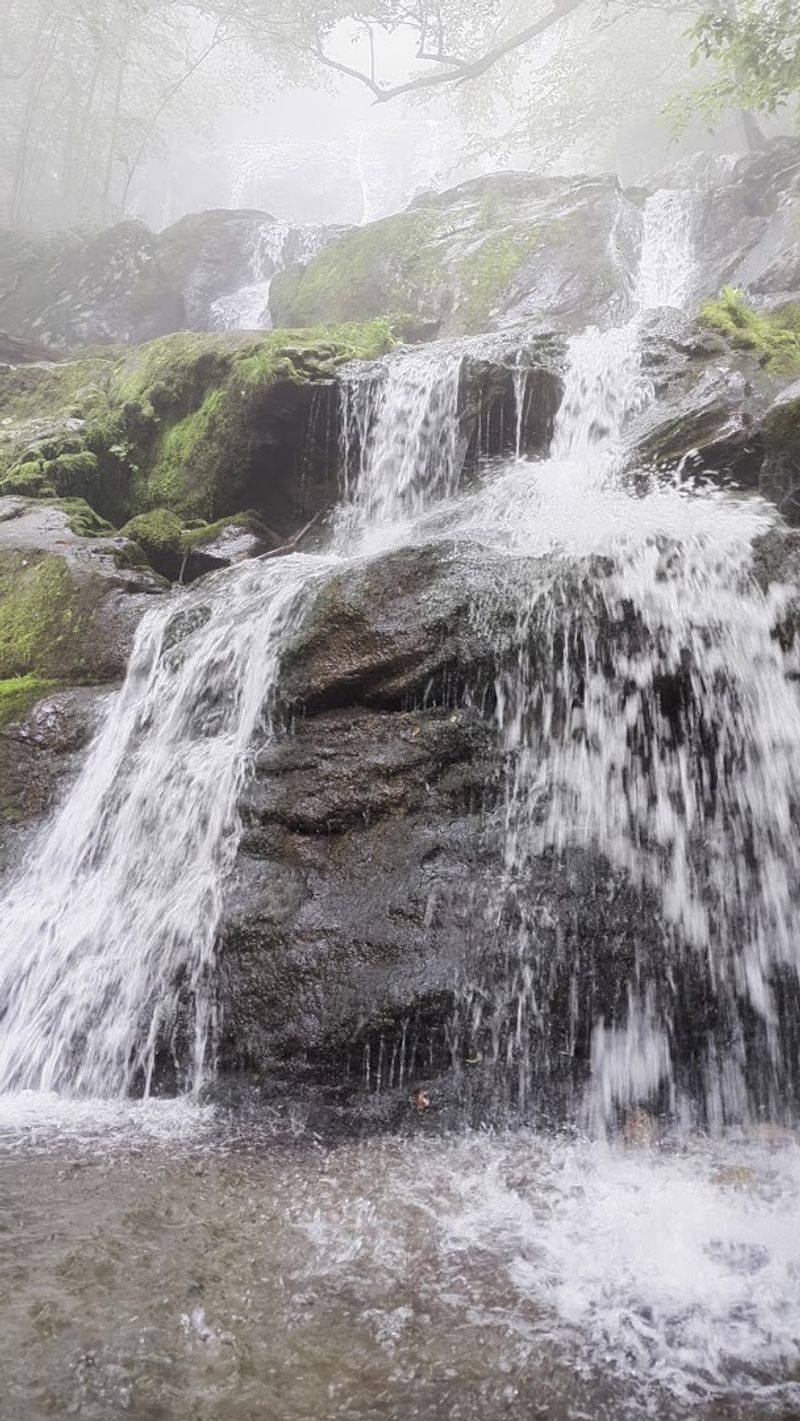
Photographers talk about Dark Hollow Falls the way foodies talk about a perfectly seasoned dish. The hollow itself acts as a natural light diffuser, blocking harsh direct sunlight and creating the kind of soft, even illumination that makes waterfalls look absolutely stunning in photographs.
Misty mornings are particularly spectacular. A thin veil of fog drifting through the trees combined with the spray from the falls creates a dreamy, almost cinematic atmosphere that no filter can replicate.
Arriving early on a cool morning in late spring or early autumn gives you the best combination of light, mist, and manageable crowd levels.
Getting the best shot requires a bit of positioning strategy. The safest and most rewarding camera angle involves working your way to a stable rock in the stream bed below the falls, rather than attempting the first steep scramble down the bank, which can be treacherous.
A wide-angle lens captures the full height of the cascade beautifully. Long exposure shots, even handheld with a steady stance, pick up the silky water motion that makes waterfall photography so satisfying.
Virginia mountain light has a particular quality in the early hours, and this hollow concentrates it perfectly.
Crowds, Timing, and the Art of Arriving Early
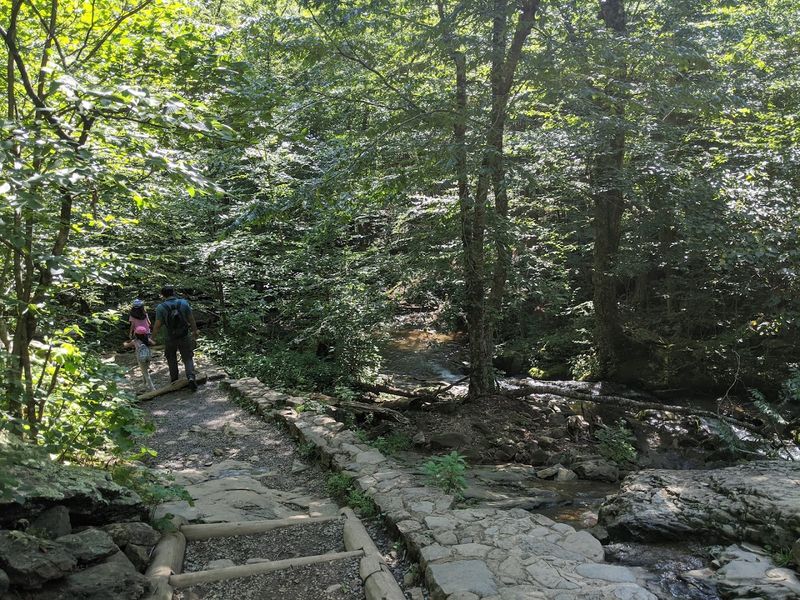
Let me be completely honest about something: this trail gets busy. Really busy.
Dark Hollow Falls sits near the Harry F. Byrd Visitor Center, making it one of the most accessible waterfall hikes in the entire park, and that convenience draws enormous crowds on weekends and holidays.
The parking lot at the trailhead is small, and by mid-morning on a summer Saturday it is full. Cars spill onto the road shoulder, and the trail itself can feel uncomfortably congested during peak hours.
The narrow path means frequent stops to let people pass in both directions, which disrupts the peaceful forest experience somewhat.
Arriving before 9 a.m. is genuinely transformative. The lot has open spaces, the trail is quiet, and the falls feel almost private.
Weekdays during shoulder seasons like late spring or early fall offer the sweet spot of good water flow, comfortable temperatures, and lighter foot traffic. Autumn visits reward hikers with blazing foliage that frames the cascade in spectacular warm tones.
Planning around the crowds at Shenandoah National Park is simply part of visiting a beloved Virginia landmark, and the payoff for an early start is enormous every single time.
Wildlife Encounters Along the Dark Hollow Trail
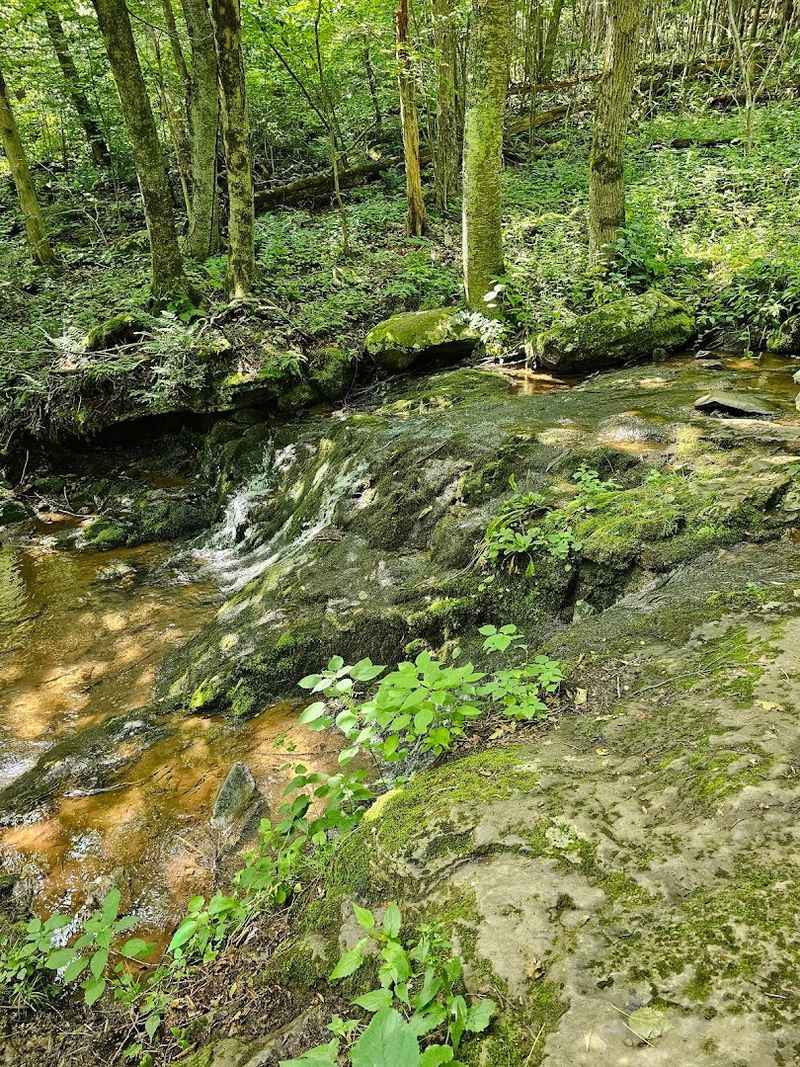
The trail to Dark Hollow Falls passes through prime wildlife habitat, and the forest corridor along Hogcamp Branch is genuinely alive in ways that go far beyond the waterfall itself. Deer appear with surprising regularity, often standing just off the trail with total indifference to passing hikers.
Black bears are present in Shenandoah National Park year-round, and sightings near this trail, while not common, do happen. Bobcats also roam the area, though spotting one requires serious luck and usually happens only at dawn or dusk.
Making noise on the trail and staying alert are standard practices that keep both hikers and animals comfortable.
Bird activity along the stream is particularly rich. The hollow’s moist, sheltered environment attracts species that favor dense woodland and running water, and the persistent sound of the stream makes it easy to hear birdsong without the background noise of open meadows.
Early morning hikes in spring are especially rewarding for anyone who enjoys listening to the forest wake up. Virginia’s mountain ecosystems support remarkable biodiversity, and the Dark Hollow trail puts you right in the middle of it.
Keep your eyes open, walk quietly near dawn, and the forest will surprise you.
Seasonal Magic and When the Falls Look Their Absolute Best
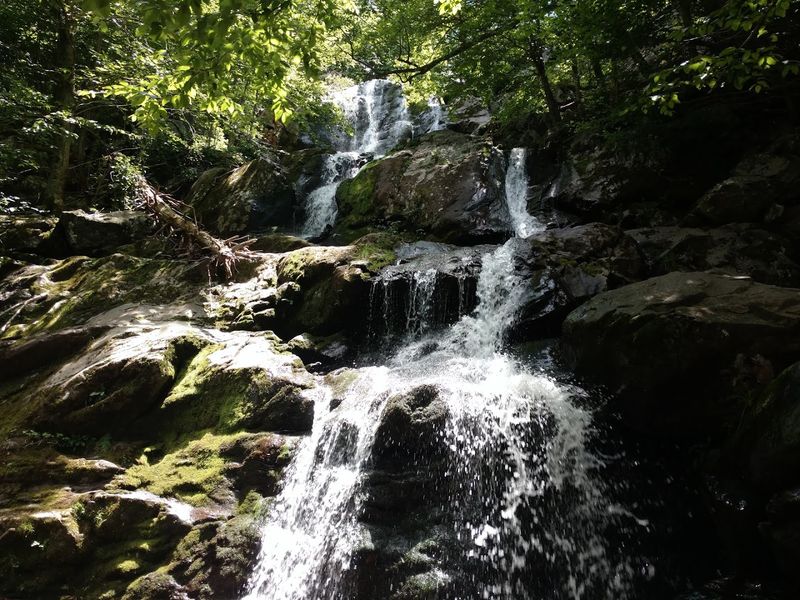
Every season hands Dark Hollow Falls a completely different costume, and somehow it looks great in all of them. Spring brings snowmelt and heavy rains that push the falls to their most powerful and dramatic state.
The water thunders down with serious force, and the surrounding vegetation erupts in fresh, vivid green that feels almost electric.
Summer softens the flow slightly but wraps the hollow in lush, layered greenery that creates a cool, shaded retreat from the heat outside the forest canopy. The stream pools are perfect for cooling off, and the steady sound of water makes the whole hollow feel like a natural air conditioner.
Autumn is arguably the showstopper season. Shenandoah National Park transforms into a riot of orange, red, and gold, and the contrast of bright foliage against the dark wet rock of the falls is genuinely breathtaking.
Winter visits are less common but reward the brave with ice formations along the cascade edges and a profound, hushed stillness that summer crowds never allow.
Each season at Dark Hollow Falls in Virginia offers something genuinely different, making repeat visits feel fresh rather than repetitive.
Pick your season based on your mood and go.
Trail Prep and Gear That Will Save Your Trip
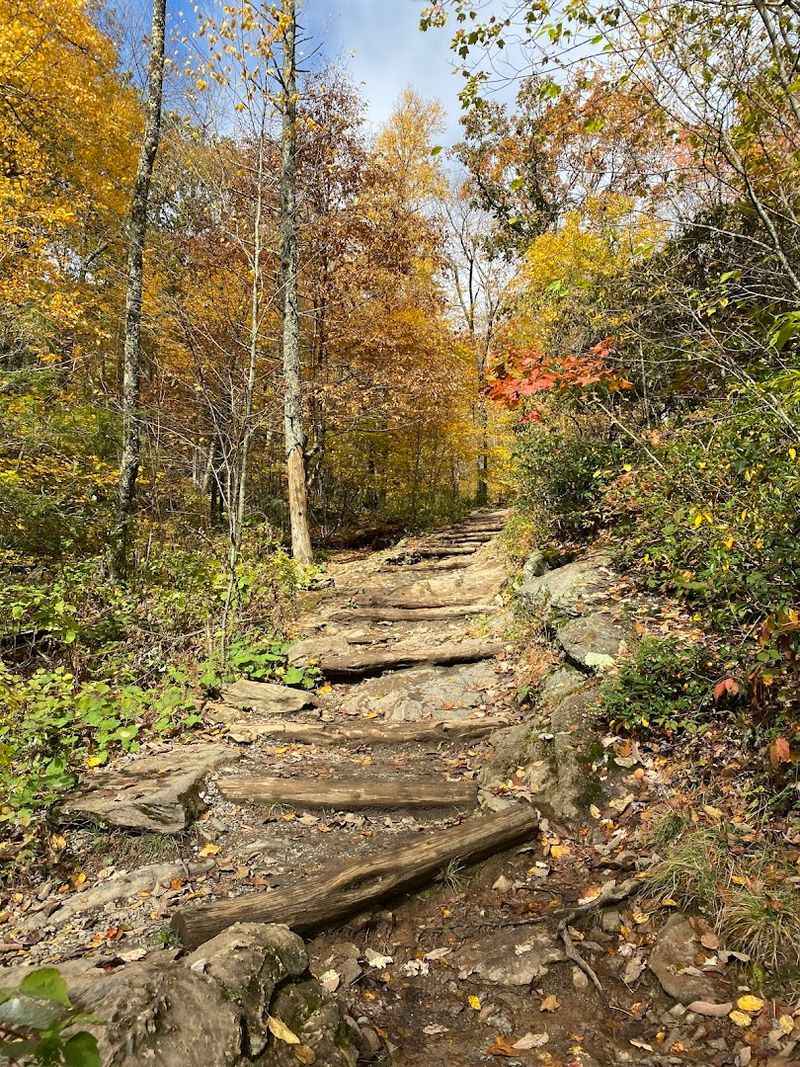
Showing up to Dark Hollow Falls in flip-flops is a choice that the trail will punish swiftly and without mercy. The rocky, uneven surface and steep return climb demand footwear with real ankle support and solid grip.
Trail running shoes work fine for fit, experienced hikers, but proper hiking boots are the smarter call for most people.
Trekking poles might feel like overkill for a 1.4-mile roundtrip hike, but on the wet, steep return section they earn their place in your pack immediately. The log steps built into the trail help, but between them the footing can be genuinely challenging, especially after rainfall.
Water is non-negotiable. The climb back up generates surprising heat even on cool days, and arriving at the top already dehydrated makes the experience far less enjoyable.
A small daypack with at least one water bottle, a light snack, and a basic first aid kit covers everything you realistically need. Layers are smart in shoulder seasons when the hollow can feel significantly cooler than the parking lot.
One last note specific to Dark Hollow Falls: pets are not permitted on this particular trail, so leave your dog at camp and explore the nearby pet-friendly Rose River Trail instead.
Getting There and Making the Most of Your Visit
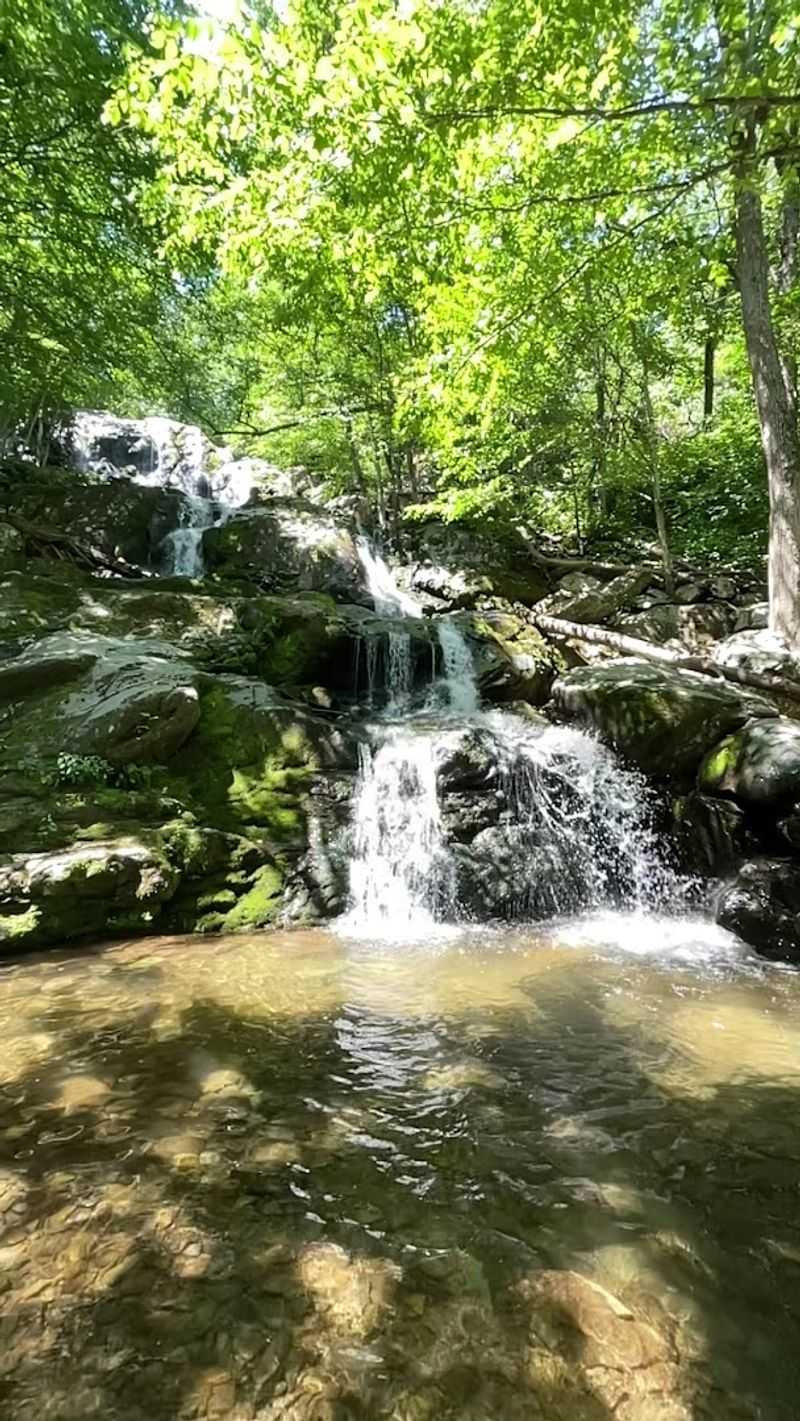
Reaching Dark Hollow Falls is straightforward once you are inside Shenandoah National Park. The trailhead sits at milepost 50.7 on Skyline Drive in the park’s Central District, with a dedicated parking lot right at the start.
The nearby Harry F. Byrd Visitor Center at milepost 51 serves as a useful orientation stop before or after your hike.
The official address for navigation purposes is Rose River Lane, Syria, VA 22743. Plugging that into your GPS gets you close, but following Skyline Drive signs within the park is the most reliable approach.
The park entrance fee applies, and passes are checked at the entrance stations.
Combining the Dark Hollow Falls hike with a drive along Skyline Drive makes for an incredibly full and satisfying Virginia mountain day. The 105-mile road offers overlooks, picnic areas, and additional trailheads at virtually every mile marker.
After returning from the falls, grabbing a spot at one of the meadow overlooks with a snack and watching the Blue Ridge light shift across the valley is a genuinely perfect way to close out the adventure.
Shenandoah National Park rewards those who take their time, and Dark Hollow Falls is the ideal centerpiece of any visit to this stunning Virginia landscape.
