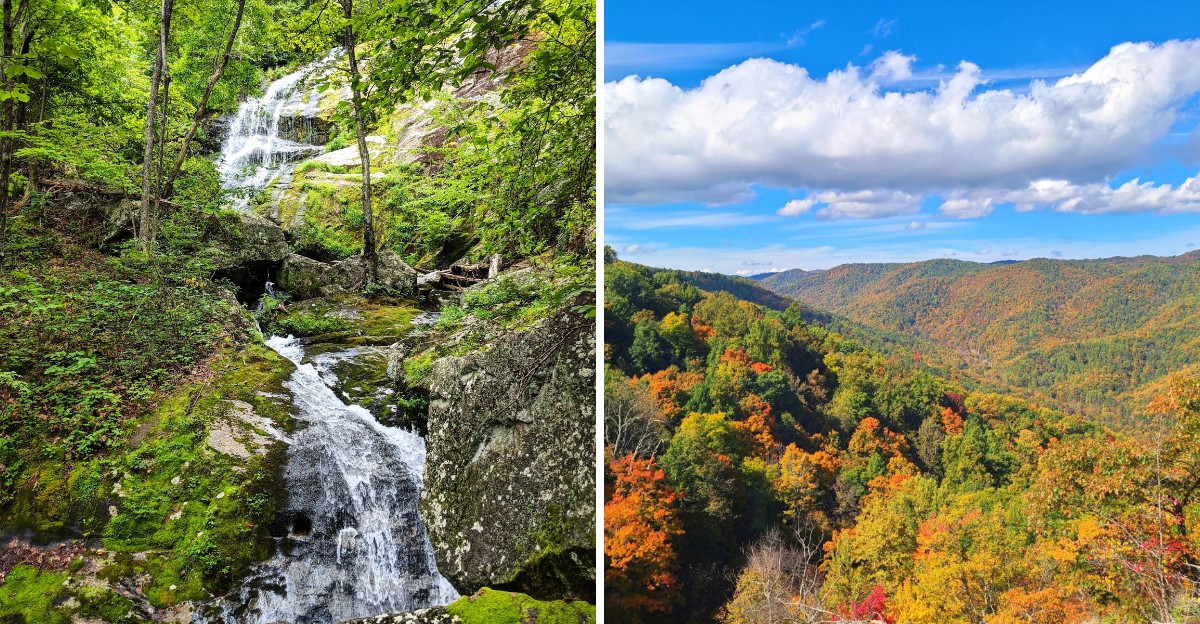
Climbing this trail is not a casual stroll. This Virginia waterfall hike climbs wooden steps through a shaded forest, gaining elevation with every turn.
The stairs are well-maintained, but there are a lot of them, and your legs will feel it. The good news is that the forest keeps you cool, and the sound of water gets louder with every step.
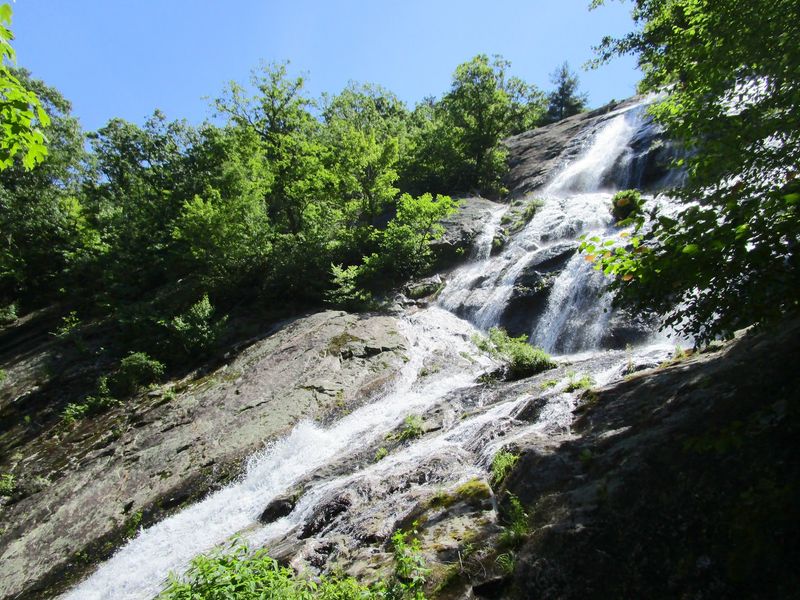
The falls themselves are worth the effort, a tall cascade that tumbles down a rocky face. There are viewing platforms along the way, so you can stop and catch your breath while taking in the scenery.
It is the kind of hike that feels like an accomplishment when you reach the top. Virginia has plenty of waterfall trails, but this one offers a climb that makes the reward feel earned.
The Paved Opening Act Everyone Can Enjoy
Right from the trailhead, the path plays nice. The first stretch is paved and gently inclined, running roughly five hundred feet to a viewing platform where the lower cascade puts on its first show.
Strollers roll it. Wheelchairs manage it.
Grandparents who swore they were done with hiking suddenly find themselves standing in front of a waterfall without breaking a sweat.
Water slides down a broad slab of rock here, splitting and rejoining, throwing cool air back at you even in August. The sound arrives before the view does, which is half the fun.
Plenty of people stop right here, and honestly, no shame in that. The payoff to effort ratio is absurdly good.
But look up. The gorge keeps climbing, and so does the trail, and the drops waiting above are taller and wilder than this opening number.
Crabtree Falls builds like a good album. Track one hooks you, then the rest of the mountain unfolds.
Bring a camera and take the easy shot first. You will want proof of how green everything looks before the climb steals your breath and your attention.
Wooden Steps That Turn A Mountainside Into A Staircase
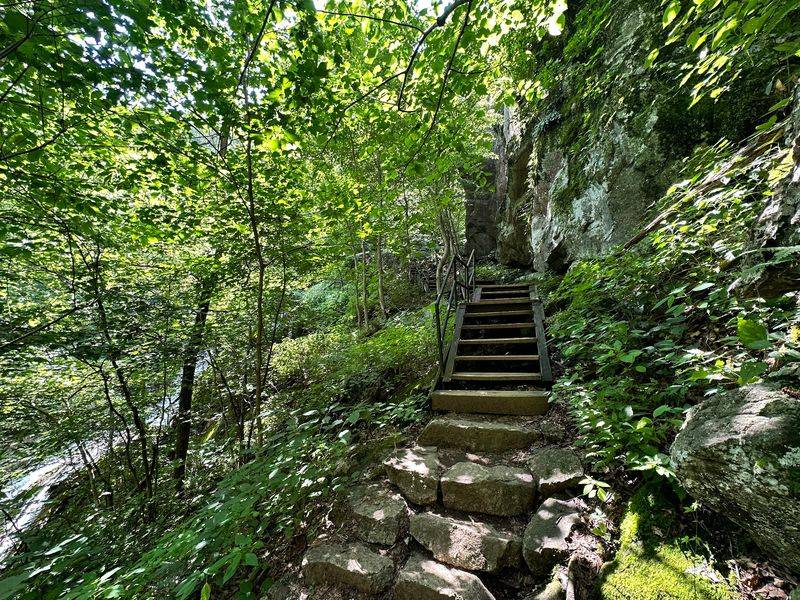
Steepness is the trail’s personality, and the builders answered it with carpentry. Wooden staircases appear exactly where the slope turns rude, complete with handrails that you will grip without meaning to.
Stone steps take over in other spots, set into the hillside like something out of an old mountain legend. The mix keeps your feet guessing in the best way.
Shade covers nearly all of it. Hardwoods lean over the route, so even midsummer climbs stay reasonably cool, with sunlight arriving in scattered patches.
Switchbacks do the heavy lifting between staircases, zigzagging up and giving your lungs short breaks. Benches show up at smart intervals, and using them is not cheating.
Roots and rocks stud the dirt sections once the pavement ends, so shoes with real grip matter more than fashion here.
The creek stays close the whole way, a constant soundtrack that muffles conversation and makes the forest feel enormous.
Somewhere around the third staircase, you stop counting steps and just climb. That is when the hike quietly becomes one of the best in Virginia.
Overlooks That Keep Handing Out Rewards
Most waterfall hikes give you one prize at the end. Not this one.
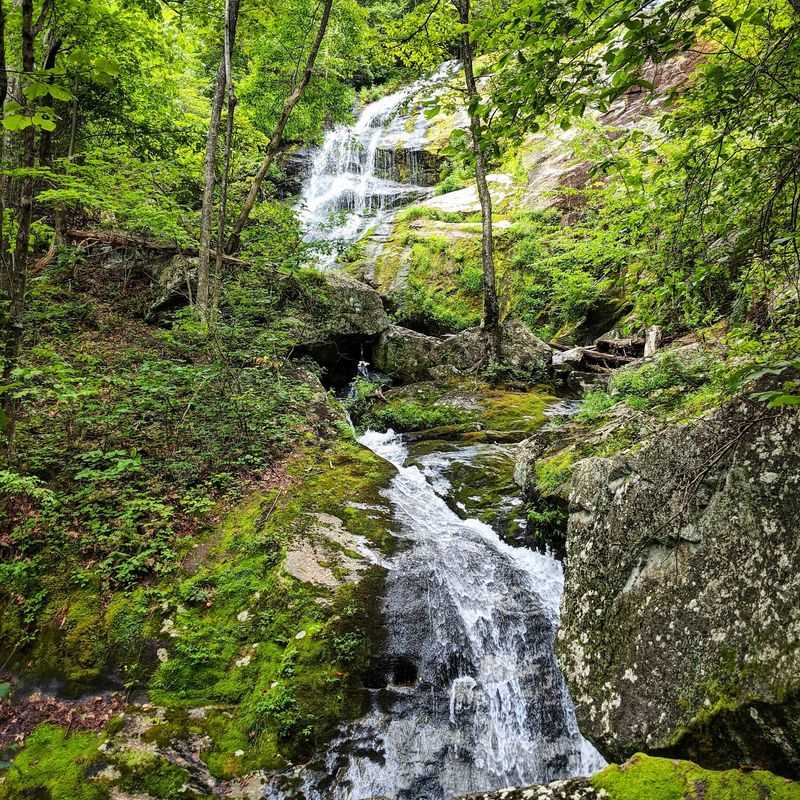
Somewhere between six and eight distinct viewpoints line the route, each one framing a different section of the same long cascade. The effect is bizarre and delightful, like meeting the same person in different outfits.
One drop slides sideways across bare rock. Another plunges into a dark pool.
A third fans out wide and lacy before vanishing behind rhododendron.
Railings mark the official spots, and staying behind them is not optional. Wet rock here is genuinely dangerous, and the smooth slabs are slicker than they look.
Between overlooks, glimpses of white water flash through the trees. You hear the falls constantly even when you cannot see them, which builds anticipation better than any trail sign could.
Mile markers count your progress, and the final cascade view arrives around the 1.4 mile point. Many people turn around there feeling thoroughly satisfied.
The generosity of the layout is what sets Crabtree Falls apart from other Virginia cascades. Effort gets paid out in installments, not one lump sum at the summit.
The Climb Is No Joke So Pace Yourself
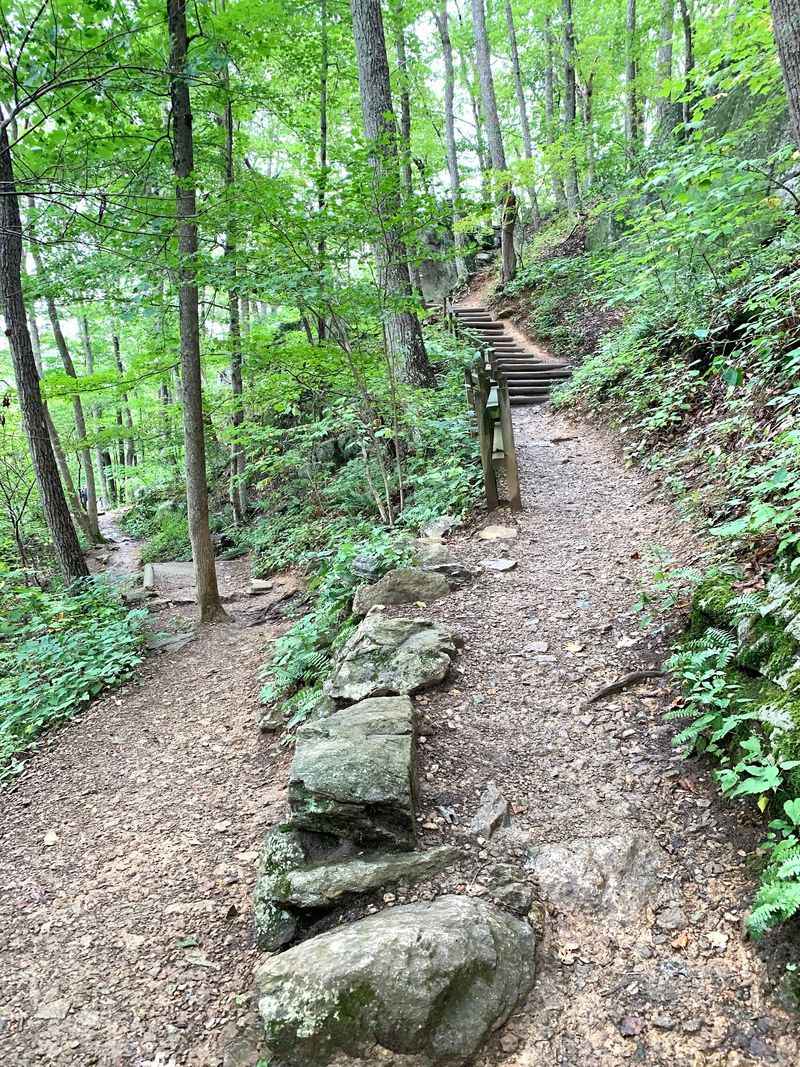
Let’s be straight about the numbers. Roughly 1.7 miles one way, with elevation gain in the neighborhood of a thousand feet.
Out and back lands you near 3.4 miles total.
Fit hikers knock it out in two hours. Anyone stopping at every overlook with snacks and photos should budget closer to three.
Steep sections come in bursts rather than one endless grind, which makes the whole thing feel moderate instead of brutal. Flatter stretches between climbs let your heart rate settle.
Footing deserves respect. Past the paved portion, the trail turns rocky, occasionally muddy after rain, and studded with roots that grab careless toes.
Slip resistant soles are the single best gear decision you can make. Water is the second, especially on warm days when the shade still cannot save you.
Cell service basically evaporates in the gorge and only reappears near the top, so tell someone your plan before you start.
Small children absolutely do this hike. Take the benches, take your time, and Crabtree Falls rewards patience far more than speed.
Summit Views Over The Tye River Valley
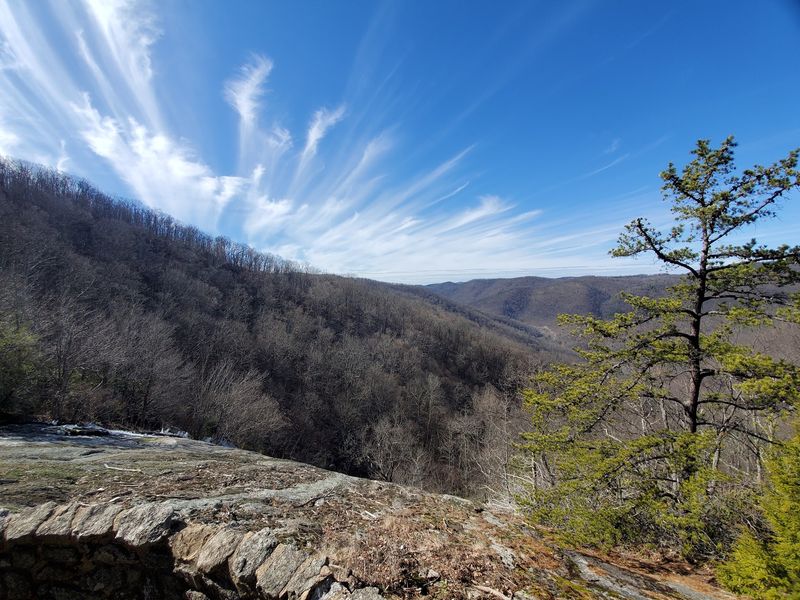
Push past the last cascade marker and the forest opens up. The top of the trail sits near the 1.7 mile point, where the creek slips over the lip of the mountain.
Ridge after ridge of the Blue Ridge stacks up in front of you, fading from deep green to hazy blue. The valley floor spreads out far below, patched with farmland and forest.
Flat rocks near the top make natural picnic seating. Unpacking lunch here feels like the most reasonable decision you have made all week.
Wind moves differently at this elevation, cooler and steadier, carrying the sound of water from somewhere below your feet.
Stay well back from the stream edge up here. The rock above a drop is exactly as unforgiving as it sounds, and there is no second attempt.
Many hikers stop at the 1.4 mile viewpoint and never see this. Adding that extra stretch is the difference between a nice walk and a memory.
Virginia hands out few summit views this easily earned, and the climb down suddenly feels like a victory lap.
Autumn Turns The Gorge Into A Color Explosion
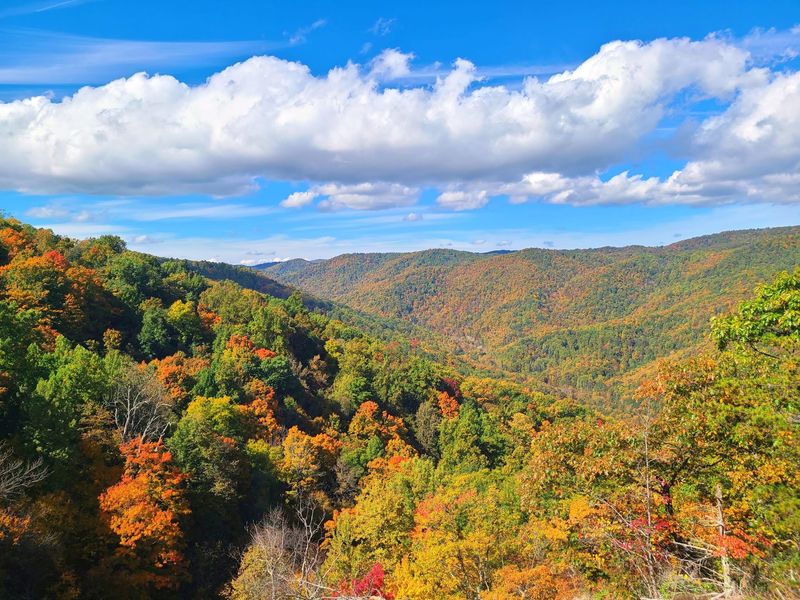
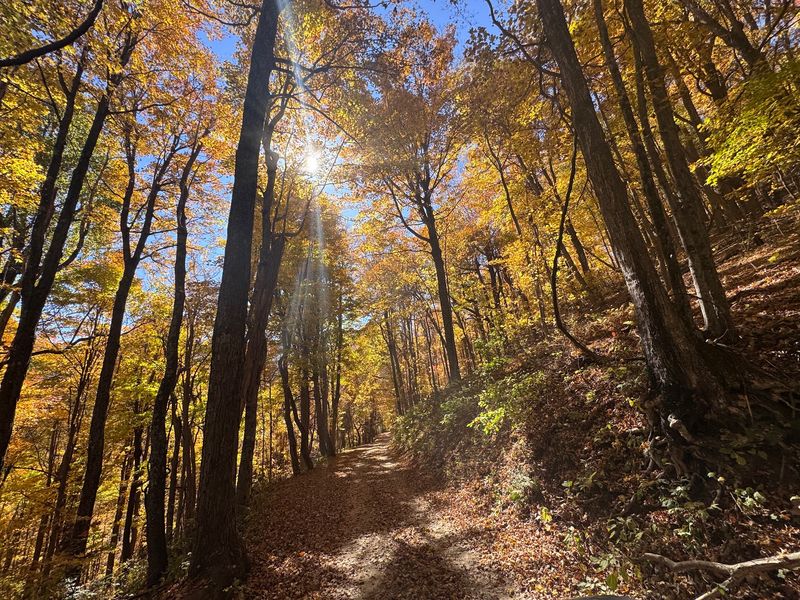
Late October is when the whole place shows off. Maples, oaks, and hickories flip to orange and crimson, and the gorge lights up like someone turned a dial.
Third or fourth week of the month usually hits peak, though mountain weather never signs contracts. Higher elevations turn first, so color creeps downhill as the days go by.
Water levels tend to run lower in fall, which changes the falls from thundering to graceful. Less volume, more visible rock, and honestly a completely different photograph.
Crowds arrive with the leaves. Weekday mornings stay pleasantly quiet while Saturdays fill the lots fast, so an early start pays real dividends.
Fallen leaves hide wet rock and roots, adding a sneaky layer of difficulty to the descent. Slow feet, happy ankles.
Cooler air makes the climb far more comfortable than a humid July attempt, and the shade that felt welcome in summer now glows gold overhead.
If you only visit Crabtree Falls once, aim for these few weeks. The combination of color, crisp air, and open sightlines is hard to top anywhere in Virginia.
Winter Strips The Trees And Reveals Secret Drops
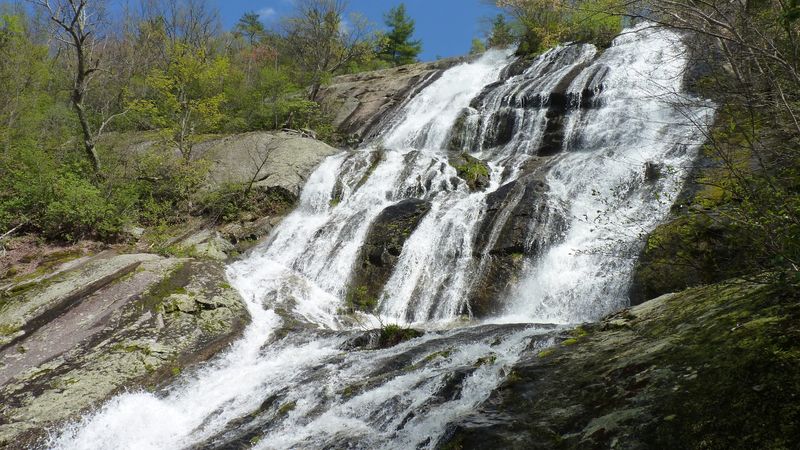
Counterintuitive but true. The cold months might deliver the best views of the entire cascade.
With foliage gone, sections of the falls that hide behind summer greenery suddenly stand fully exposed. You see how the water threads down the mountainside as one continuous ribbon rather than separate scenes.
Sound travels differently too. Without leaves to soften it, the rush of water carries sharp and clear through bare woods.
Ice becomes the wildcard. Frozen patches form on steps and stone, particularly in shaded switchbacks, and traction devices turn a sketchy climb into a manageable one.
Flow can run thinner in deep winter, though freeze and thaw cycles sometimes build spectacular ice formations along the rock face.
Layers matter more than usual. The climb heats you up fast, then the summit wind cools you down just as quickly.
Solitude is the quiet bonus. Winter weekdays here can feel like a private forest, with only the creek making noise.
Late winter into early spring splits the difference, offering strong water flow with the leaves still holding off. Smart timing for anyone chasing the full picture.
Parking Restrooms And The Practical Stuff
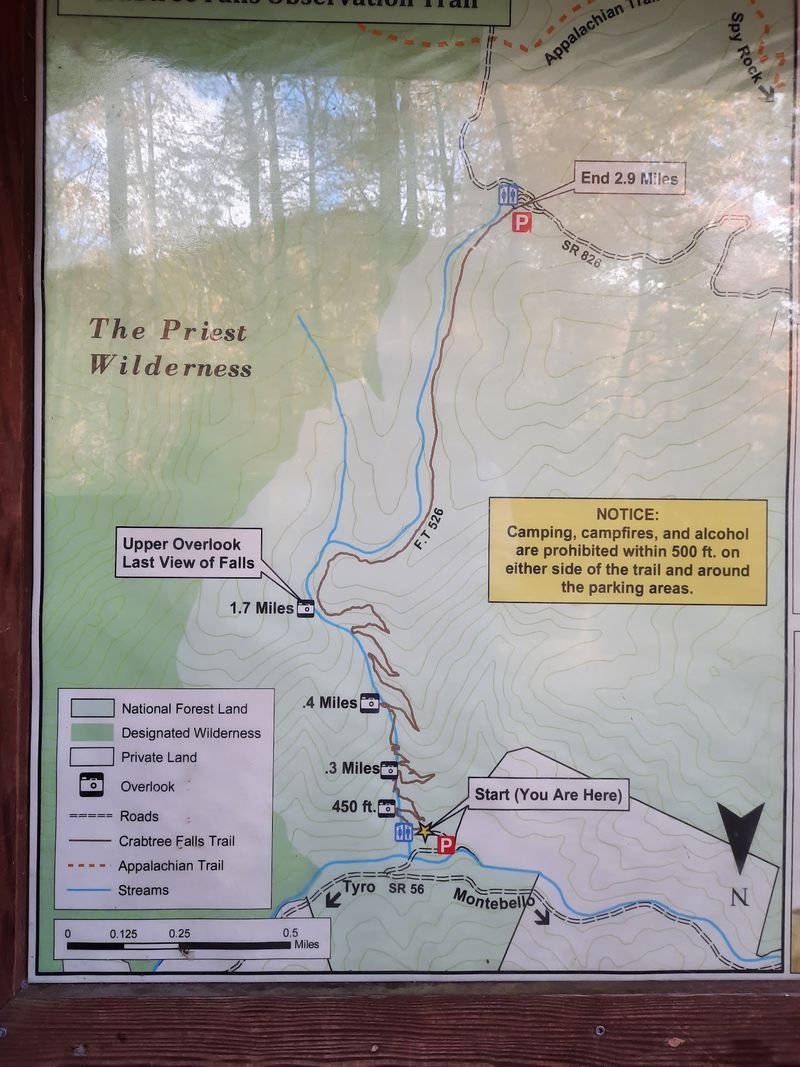
Logistics here are refreshingly simple. A day use parking fee applies per vehicle, and the payment setup has occasionally gone offline, so tucking small bills into your pocket saves hassle.
Two lots serve the trailhead. If envelopes have run out at the first pay station, keep driving to the second one where supplies are often restocked.
Basic restroom facilities sit near the parking area. Nothing fancy, but genuinely appreciated before a thousand foot climb.
Space fills up on holiday weekends and peak leaf days. Arriving before mid morning is the reliable move.
GPS signal drops as you wind into the mountains, so pay close attention to road signage on the way in rather than trusting your phone.
An emergency phone stands at the trailhead, a useful detail in a gorge where cell coverage disappears almost immediately.
Trail signs and mileage posts are well maintained throughout, making navigation nearly foolproof once you start walking.
Crabtree Falls sits within the George Washington National Forest, and the whole site is open around the clock, though hiking these steps after dark is a hard no.
Snakes Mud And Other Trail Companions
Copperheads live here. So do harmless water snakes, and both enjoy sunning themselves on warm rock near the creek.
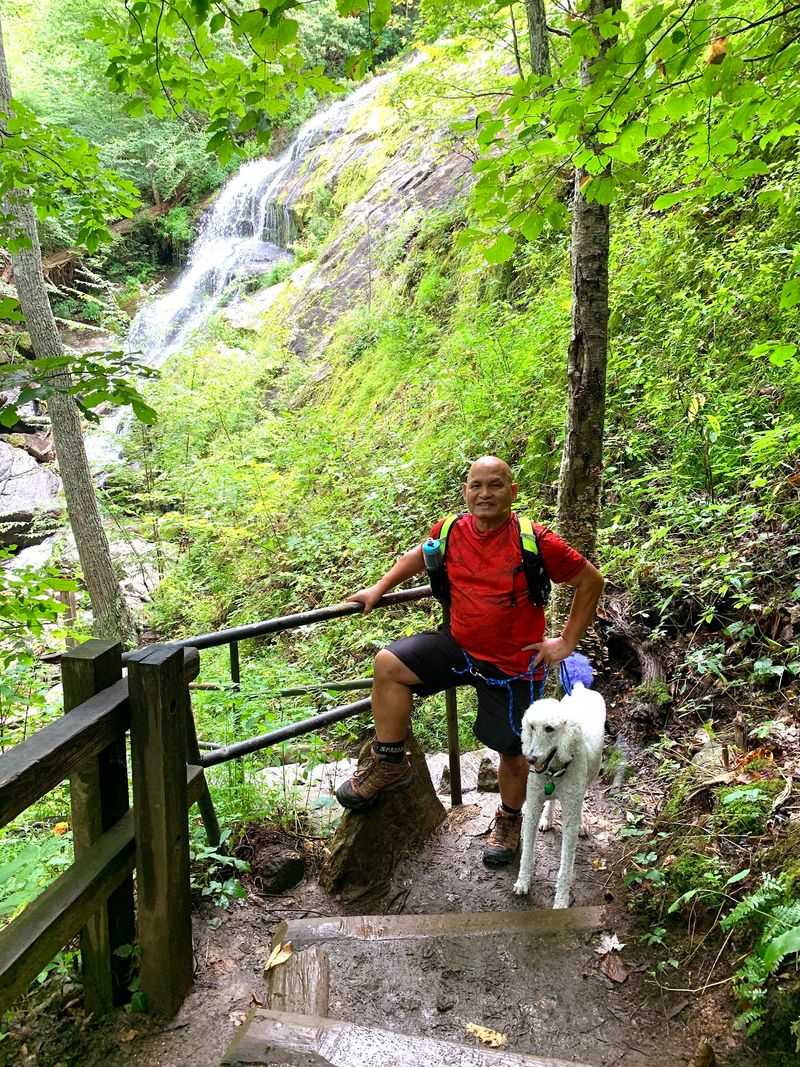
Keeping dogs leashed protects them from exactly that kind of encounter, and the steep stairs are much easier to manage with a short lead anyway.
Mud arrives after rain and sticks around in the shaded sections. Some folks lean into it and rinse off at a creekside spot on the way down.
Side paths tempt you toward the water in a few places where you can safely dip your feet. Choose calm, flat spots well away from any drop.
Rhododendron thickets crowd the lower trail, and moss coats nearly every boulder, giving the whole gorge a damp, ancient feel.
Birdsong competes with the creek, and in spring, wildflowers push through the leaf litter along the switchbacks.
Pack out everything you bring in. The leave no trace habit keeps this stretch of Virginia forest open and unspoiled.
Wildlife sightings are part of the charm at Crabtree Falls, as long as you watch where you step and give everything room.
Making A Full Day Of It In Nelson County
Nobody drives all this way for one waterfall and calls it quits. The surrounding corner of the Blue Ridge is packed with reasons to linger.
The Blue Ridge Parkway runs close by, and the Appalachian Trail crosses the Tye River valley nearby for anyone wanting a second walk.
Primitive campsites sit up the mountain along Crabtree Falls Highway, reachable via a rough road with creek crossings that demand real ground clearance. Not a family sedan situation.
Camping stays have a fourteen day limit, and the upper falls trailhead has its own small gravel lot up there.
Drive times from Charlottesville, Lynchburg, and Staunton all sit comfortably under two hours, making this an easy day trip from several Virginia bases.
Pack lunch. The summit rocks make a better dining room than most restaurants with a view.
You will find Crabtree Falls at 10636 Crabtree Falls Hwy, Tyro, VA 22976, tucked along Route 56 in Nelson County.
Lace up something with grip, throw water in a pack, and go see whether the climb changes your mind about Virginia waterfalls.
