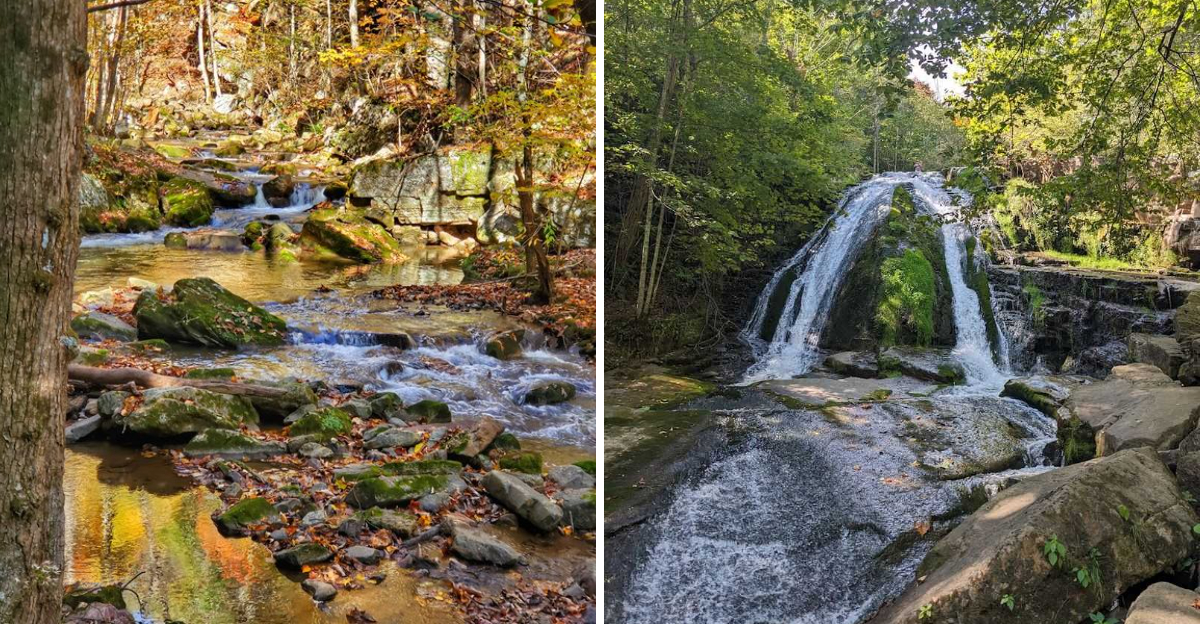
You come for the waterfall, but you stay for the history. That is how this Virginia trail works.
The cascade is beautiful, falling over rocks into a clear pool that invites you to sit and stare. But along the path, tucked into the woods, there is something unexpected.
A furnace from the 1800s, built to process iron, now standing silent and rusted, slowly being reclaimed by the forest. I stood there trying to imagine the heat, the noise, the workers who spent their days feeding that hungry fire.
The waterfall is the main attraction, and it deserves the attention. But the furnace is the reason I kept thinking about this place long after I left.
The Trail That Packs a Serious Punch
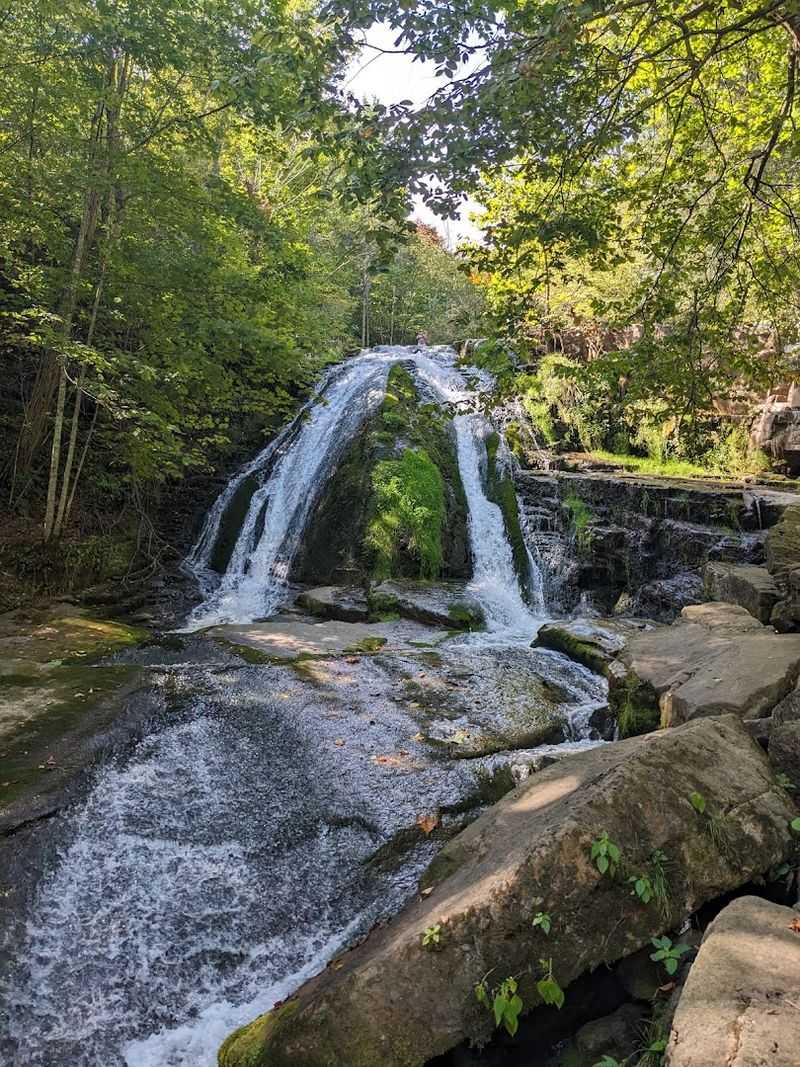
Not every trail earns a reputation this quickly, but Roaring Run Falls has built one that keeps growing. The loop measures roughly 1.5 to 1.7 miles, making it short enough for a casual morning outing yet rich enough to feel genuinely rewarding when you finish.
Two distinct paths form the loop, each offering a completely different experience. The Streamside Trail hugs Roaring Run Creek, treating walkers to a near-constant soundtrack of rushing water, small cascades, and mossy rock formations at every turn.
The Woodland Trail, meanwhile, climbs gently through the trees and leads directly to the historic furnace.
Wooden bridges, boardwalk sections, and well-placed stairs make the route surprisingly polished for a national forest trail. I found the clockwise direction slightly easier on the legs, though both directions deliver jaw-dropping scenery.
Families with young kids regularly tackle this loop without any trouble. Virginia has no shortage of scenic hikes, but few manage to balance accessibility with pure visual impact quite the way this one does.
Meet the 30-Foot Cascade That Steals Every Show
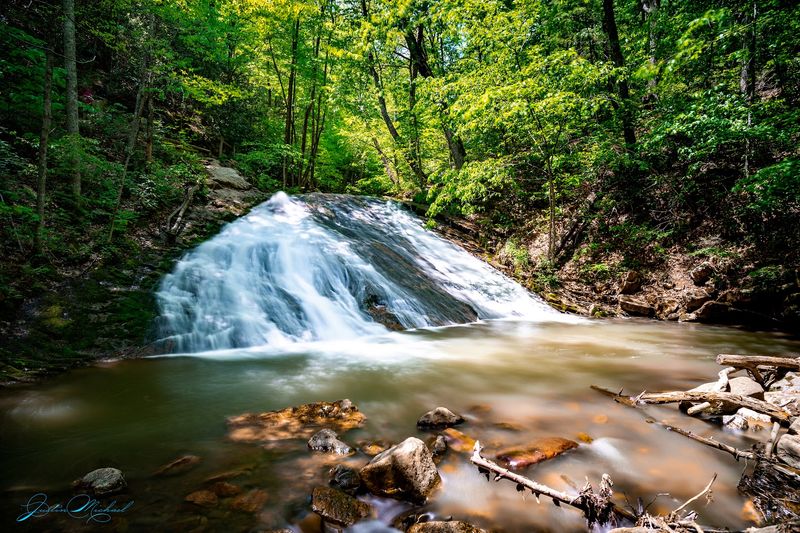
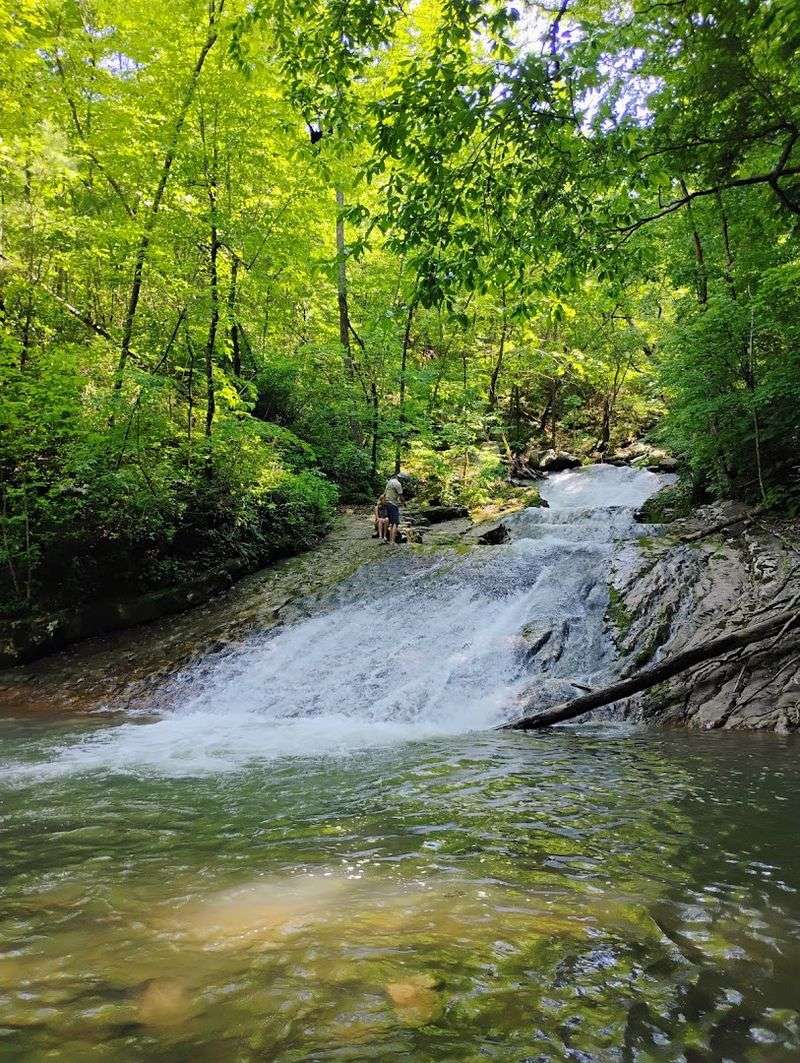
Standing at the base of Roaring Run Falls for the first time genuinely stops you in your tracks. The main cascade drops a full 30 feet over layered rock, sending a fine mist curling through the surrounding air and coating nearby boulders in a permanent sheen of green moss.
After a good rainfall, the volume of water pouring over that ledge transforms the falls into something almost theatrical. The roar alone is enough to drown out conversation, which honestly feels like part of the experience.
On drier days, the falls settle into a gentler curtain of water that still photographs beautifully from almost every angle.
Natural rock formations near the base create shallow pools perfect for cooling tired feet. Some sections of the creek above the main falls feature smooth, angled rock surfaces that act as natural slides, adding a playful dimension to the visit.
Roaring Run Falls earns its name with zero exaggeration, and the payoff at trail’s end is absolutely worth every step taken to reach it.
A Furnace Built in the 1800s That Still Stands Tall
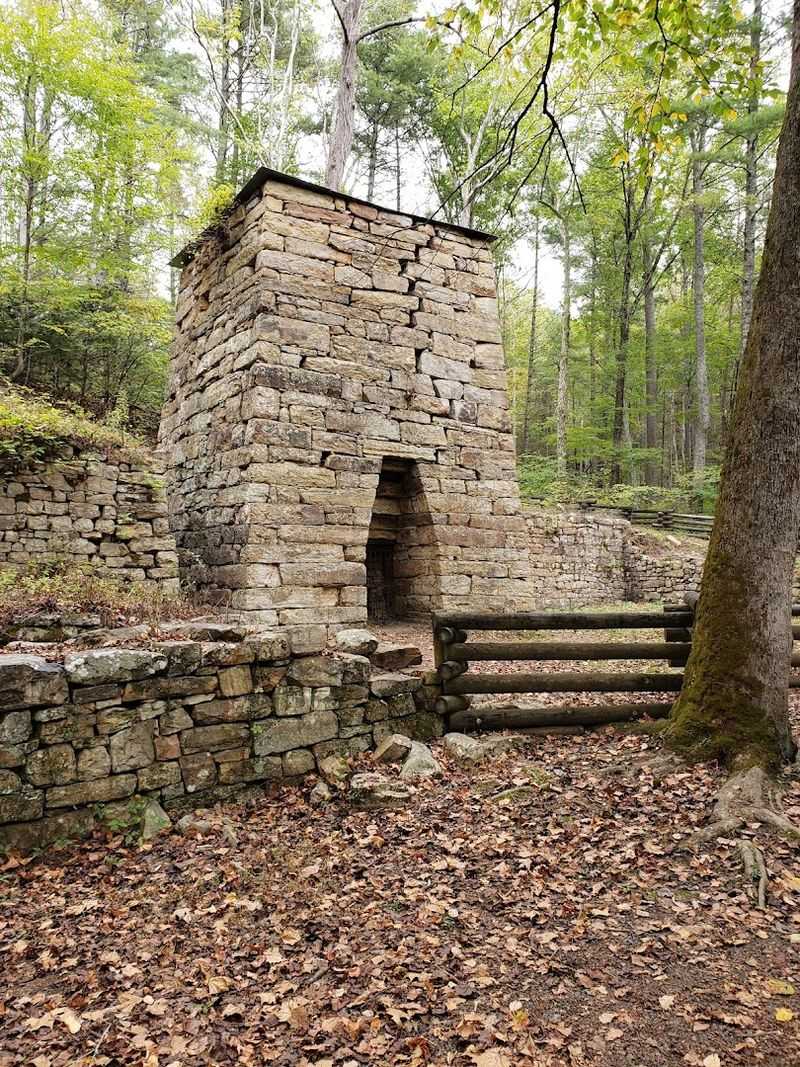
Few things in the Virginia wilderness hit quite as hard as rounding a forest bend and suddenly facing a towering stone structure that looks like it belongs in a fantasy novel. The Roaring Run Furnace was constructed between 1832 and 1840, rebuilt in 1845, and fired up again during the early years of the Civil War.
Built from locally quarried stone, this hot-blast charcoal furnace smelted iron ore into pig iron using a combination of limestone, charcoal, and waterwheels that powered massive bellows. The finished pig iron went on to become railroad tracks, tools, and weapons, including cannonballs for the Confederacy.
What makes the structure so remarkable today is its near-complete preservation. The stonework remains largely intact, giving a vivid sense of the industrial scale once operating in this quiet forest.
An informational kiosk at the site breaks down the entire smelting process in clear, engaging language. Roaring Run Furnace holds the distinction of being the only site within the George Washington and Jefferson National Forest listed on the National Register of Historic Places, a title it wears with considerable pride.
The Environmental Cost Behind the Iron Age
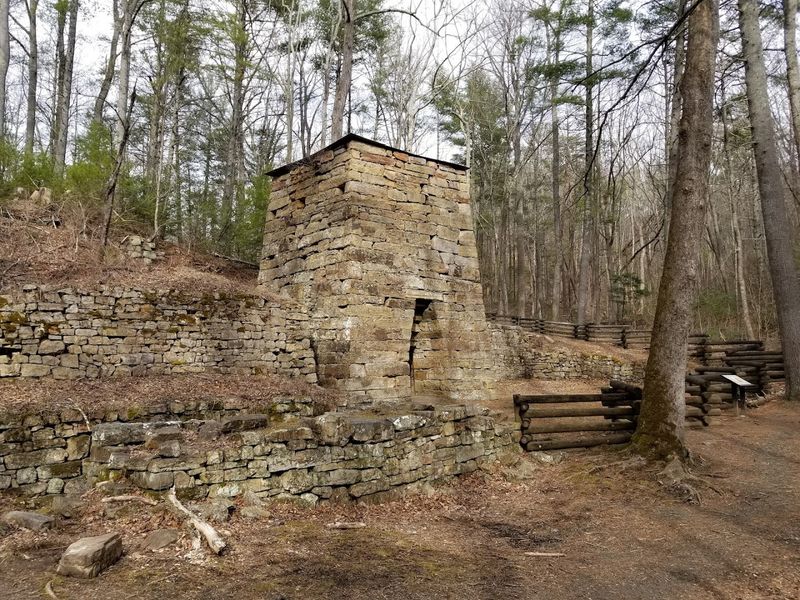
Here is a fact that genuinely reframes how you look at the surrounding forest: the Roaring Run Furnace consumed roughly one full acre of trees every single day to produce enough charcoal for smelting operations. Processing that number takes a moment to sink in properly.
The forest you walk through today represents centuries of regrowth from that intensive industrial era. Virginia’s Blue Ridge landscape proved both a resource and a casualty of the iron industry, with vast stretches of woodland cleared to feed furnaces like this one across the region.
The trees standing tall along the trail now are, in a very real sense, the comeback story.
Understanding that history adds a layer of meaning to every mossy log and towering oak visible from the path. The waterwheels that powered the furnace’s bellows drew their energy directly from Roaring Run Creek, making the same stream you follow on the Streamside Trail an essential piece of industrial machinery.
Nature and industry were deeply intertwined here, and the landscape still carries quiet evidence of that complicated relationship.
The Streamside Trail Is Pure Magic on Foot
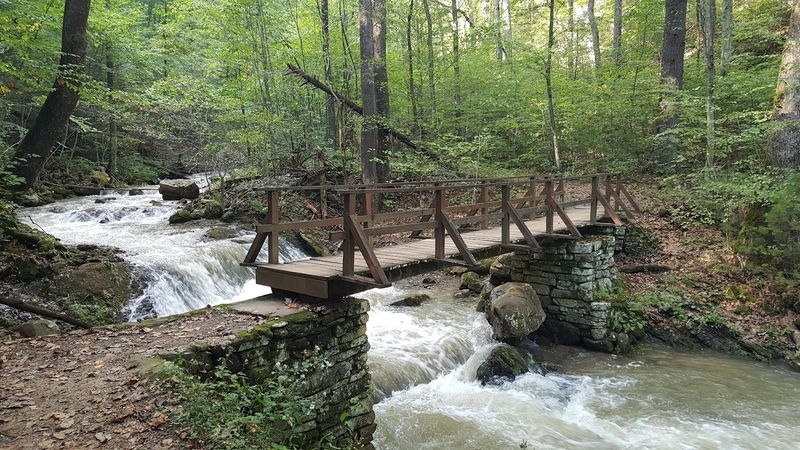
Choosing the Streamside Trail first is, in my honest opinion, the correct call every single time. The path runs parallel to Roaring Run Creek for much of its length, offering an almost continuous display of small waterfalls, cascades, and crystal-clear pools that beg you to slow down and linger.
Wooden footbridges cross the creek at several points, each one framing a postcard-worthy view of the water below. The sound design alone is extraordinary: rushing water, birdsong, and the occasional wind moving through the canopy above create a natural soundtrack that no playlist could replicate.
Rock formations along the creek vary from flat slabs perfect for sitting to sculpted boulders draped in thick green moss. The trail surface stays relatively smooth and well-maintained, with occasional roots and rocks keeping things interesting without becoming genuinely challenging.
Spring and early summer bring wildflowers to the creek banks, adding splashes of color to an already stunning corridor. Virginia really does produce some spectacular creek-side scenery, and Roaring Run Creek delivers some of the state’s finest right along this trail.
Family-Friendly Doesn’t Mean Boring Here
Plenty of trails claim to be family-friendly while secretly being quite the ordeal with small children in tow. Roaring Run Falls actually delivers on the promise, offering a loop short enough to hold a kid’s attention without requiring a search-and-rescue operation by the end.
The combination of running water, small rock slides, bridges to cross, and a genuine medieval-looking stone furnace gives younger hikers constant stimulation. There is always something new appearing around the next bend, which keeps the dreaded “are we there yet” question largely at bay.
Parents appreciate the clearly marked trails, picnic tables near the trailhead, and vault toilet facilities available on-site.
The Roaring Run Falls area sits within the George Washington and Jefferson National Forest, meaning the surrounding scenery provides a genuinely wild backdrop without requiring a backcountry expedition to reach. Dogs on leashes are welcome along the trail, making the outing inclusive for four-legged family members as well.
Few spots in Virginia manage to satisfy both history-loving adults and adventure-hungry kids with equal enthusiasm, but this one genuinely pulls it off.
What the Informational Kiosk Reveals at the Trailhead
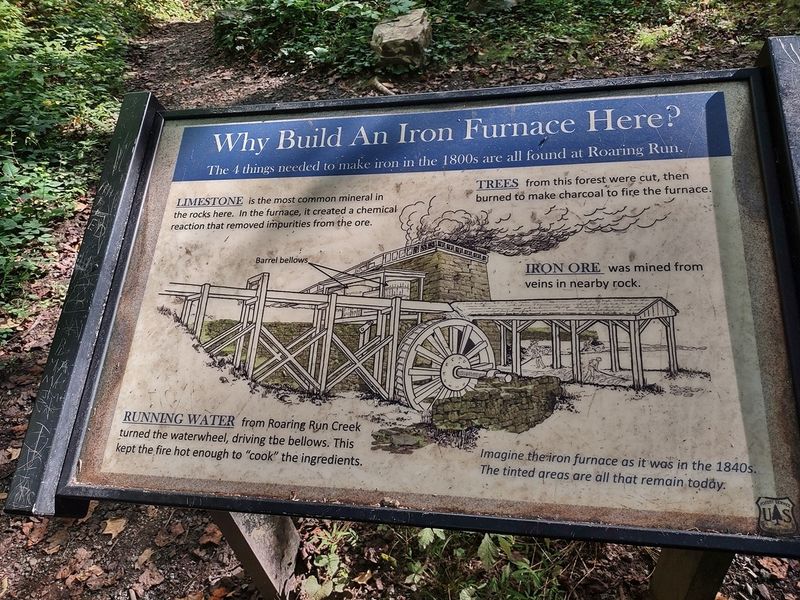
Skipping the trailhead kiosk would be a genuine mistake, and most people who read it say the same thing afterward. The information board near the parking area lays out the entire history of the Roaring Run Furnace operation in clear, digestible language that genuinely enhances everything you see further along the trail.
Learning how waterwheels connected to bellows, how charcoal was produced in massive quantities, and how pig iron became essential wartime material gives the stone furnace structure a completely different weight when you eventually stand before it. Context transforms a pile of old rocks into a powerful piece of American industrial history.
The kiosk also orients first-time visitors to the two trail options, helping people decide which direction to tackle the loop. Arriving at Roaring Run Falls without reading the board first means missing the interpretive layer that makes this site genuinely special rather than just visually pretty.
Virginia has many beautiful natural spots, but this one offers something rarer: a place where scenic beauty and documented history occupy exactly the same ground.
Seasonal Splendor All Year Long
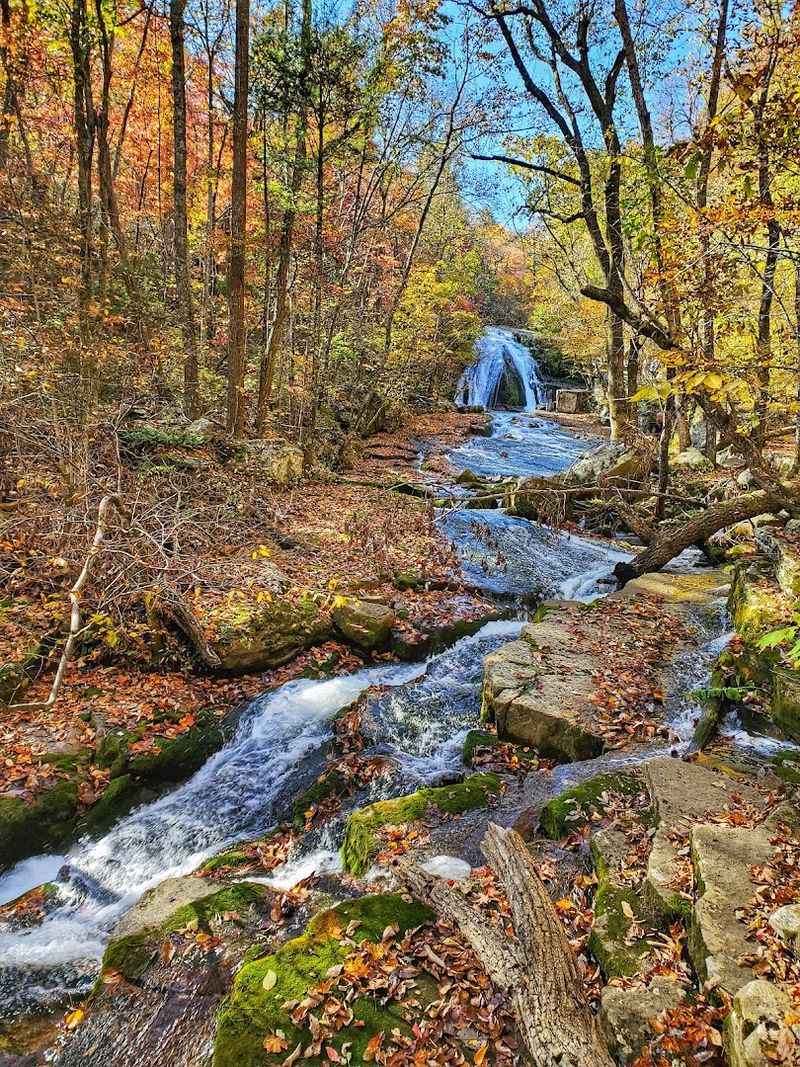
Picking a single best season to visit Roaring Run Falls is genuinely difficult because the area puts on a compelling show across every month of the year. Spring delivers rushing water swollen with snowmelt and wildflowers dotting the creek banks in cheerful bursts of color.
Summer brings lush green canopy overhead, cooler air near the falls, and the irresistible temptation to wade into the creek pools after a warm hike. Autumn absolutely transforms the corridor into something extraordinary, with orange, red, and gold leaves framing the white cascade in a combination that photographers plan trips specifically to capture.
Winter visits carry their own quiet magic, especially when ice formations develop along the rock faces near the falls and the bare trees open up longer sightlines through the forest. The trail remains accessible in most winter conditions, though checking ahead for any weather-related closures is always sensible.
Each season essentially offers a different version of Roaring Run Falls, which explains why many people who discover this Virginia gem end up returning multiple times throughout the year rather than treating it as a one-time outing.
Wildlife Encounters Along the Creek Corridor
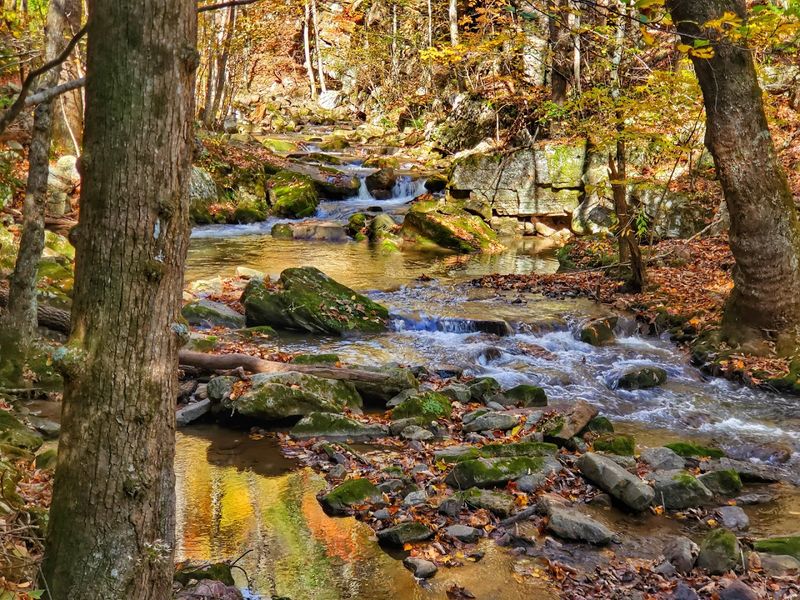
The George Washington and Jefferson National Forest is not a tame suburban park, and the wildlife along the Roaring Run corridor reflects that fact rather enthusiastically. Black bears have been spotted just off the trail, a reminder that this is genuine wilderness operating on its own schedule regardless of how accessible the hike feels.
White-tailed deer are practically guaranteed sightings, particularly during the drive into the area along the winding approach road. The creek itself supports aquatic life including native fish species, and bird activity in the canopy above ranges from common woodland species to more elusive sightings that make birders particularly happy.
Staying aware of surroundings, keeping dogs leashed, and making reasonable noise while hiking all contribute to safe, respectful wildlife encounters. The creek corridor creates a natural wildlife highway through the forest, concentrating animal activity along the water’s edge in ways that make casual observation surprisingly easy.
Roaring Run Falls sits within a living, breathing ecosystem that reminds every person on the trail that the natural world here was not arranged for human convenience but simply allows us to pass through on good behavior.
Getting There and Planning Your Visit
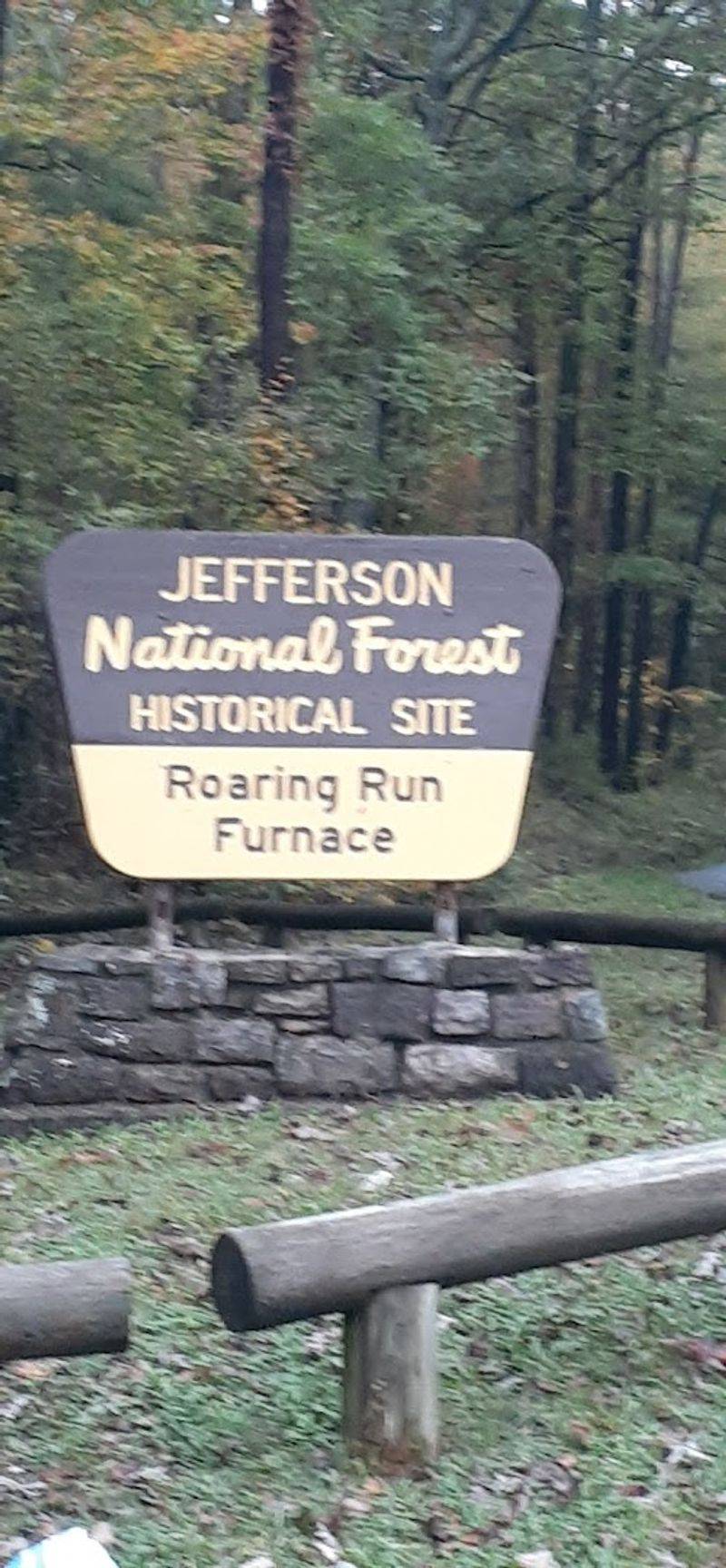
Roaring Run Falls sits in Botetourt County, Virginia, roughly 15 minutes from the small town of Eagle Rock and under an hour from Roanoke. The address for navigation purposes is 450 Roaring Run Rd, Eagle Rock, VA 24085, and GPS handles the route reliably from most directions.
Parking at the trailhead is free, spacious enough for multiple vehicles, and conveniently located near the vault toilet facilities and picnic tables. No entry fee applies, which makes the outing genuinely accessible for families watching their budgets without sacrificing quality of experience.
Arriving earlier in the day pays off in terms of parking availability and trail solitude, particularly on holiday weekends when the site draws larger crowds from across the region. Bringing adequate water matters more than many people expect on what looks like a short trail, especially during warmer months.
Fuel up before arriving since gas stations are sparse in the immediate surrounding area. Virginia’s Blue Ridge region rewards explorers willing to venture slightly off the main highway corridors, and Roaring Run Falls stands as one of the most satisfying destinations that patience and a full gas tank can deliver.
