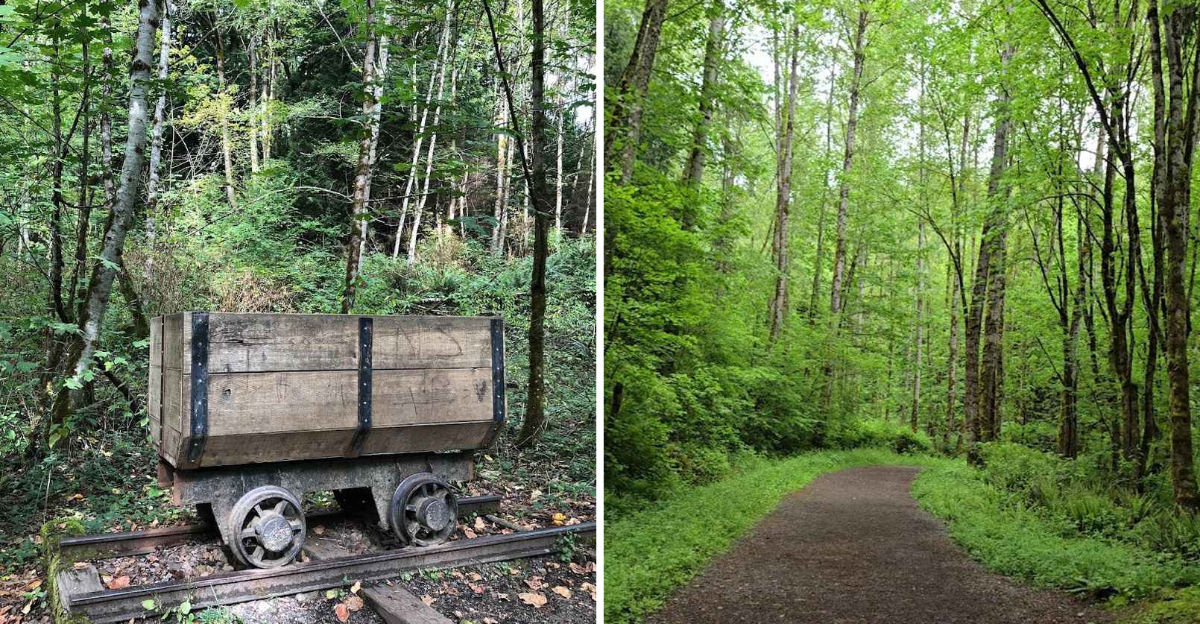
There is something about Red Town that settles in the moment you arrive, subtle at first, then impossible to ignore. The forest rises thick and green around the trail, yet the atmosphere feels heavier than the landscape suggests, as if the trees are holding onto old echoes.
What once was a busy coal mining settlement now exists as a quiet pocket inside Cougar Mountain Regional Wildland Park, just outside Newcastle, Washington. Footsteps land softly on worn paths where machinery once rumbled and workers moved through long days underground.
Nothing here is loud anymore, yet the absence of sound feels almost like its own presence, stretching between the trees and the abandoned foundations. It creates a strange contrast, where nature has reclaimed everything, but history still feels close enough to touch.
Stories from hikers often describe it as a place where silence feels slightly out of place, as if something unseen is still listening. That feeling lingers as you move deeper into the trail, where moss-covered remnants hint at a past that once shaped the hillside.
Red Town becomes less about what remains and more about what can still be felt, a quiet meeting point between forest and forgotten industry.
The Coal Mining Roots That Built Red Town
Red Town did not get its name from anything mysterious. The houses built for coal miners and their families were painted red, a simple color choice that ended up defining an entire neighborhood’s identity for generations.
It was one of several distinct communities within the broader Newcastle mining area, alongside Finn Town and Rainbow Town, each painted a different color so workers could easily find their way home after long shifts underground.
Newcastle’s coal operations were serious business. At their peak in the 1870s, the mines were producing up to 100 tons of coal every single day.
A dedicated railroad line connected the town to Lake Washington, moving coal efficiently to regional markets and keeping the local economy alive and loud.
The whole operation eventually wound down as coal demand shifted and cheaper sources emerged elsewhere. What remained was a hillside full of memories, overgrown foundations, and trails that now lead curious visitors through what was once a thriving working-class community.
Understanding this history makes every step through the forest feel heavier and more meaningful than a typical hike.
Red Town Trailhead: Your Gateway Into the Past
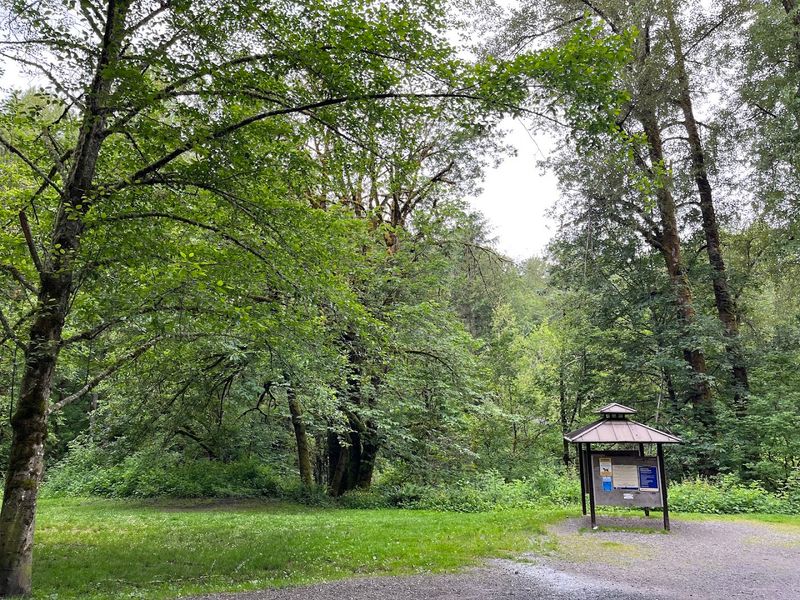
The Red Town Trailhead sits off Newcastle-Golf Course Road, and it is easy to miss if you are not looking for it. There is no grand entrance, no dramatic archway, just a modest parking area and a trail that disappears into the dense green of Cougar Mountain Regional Wildland Park.
That understated beginning actually adds to the experience rather than taking away from it.
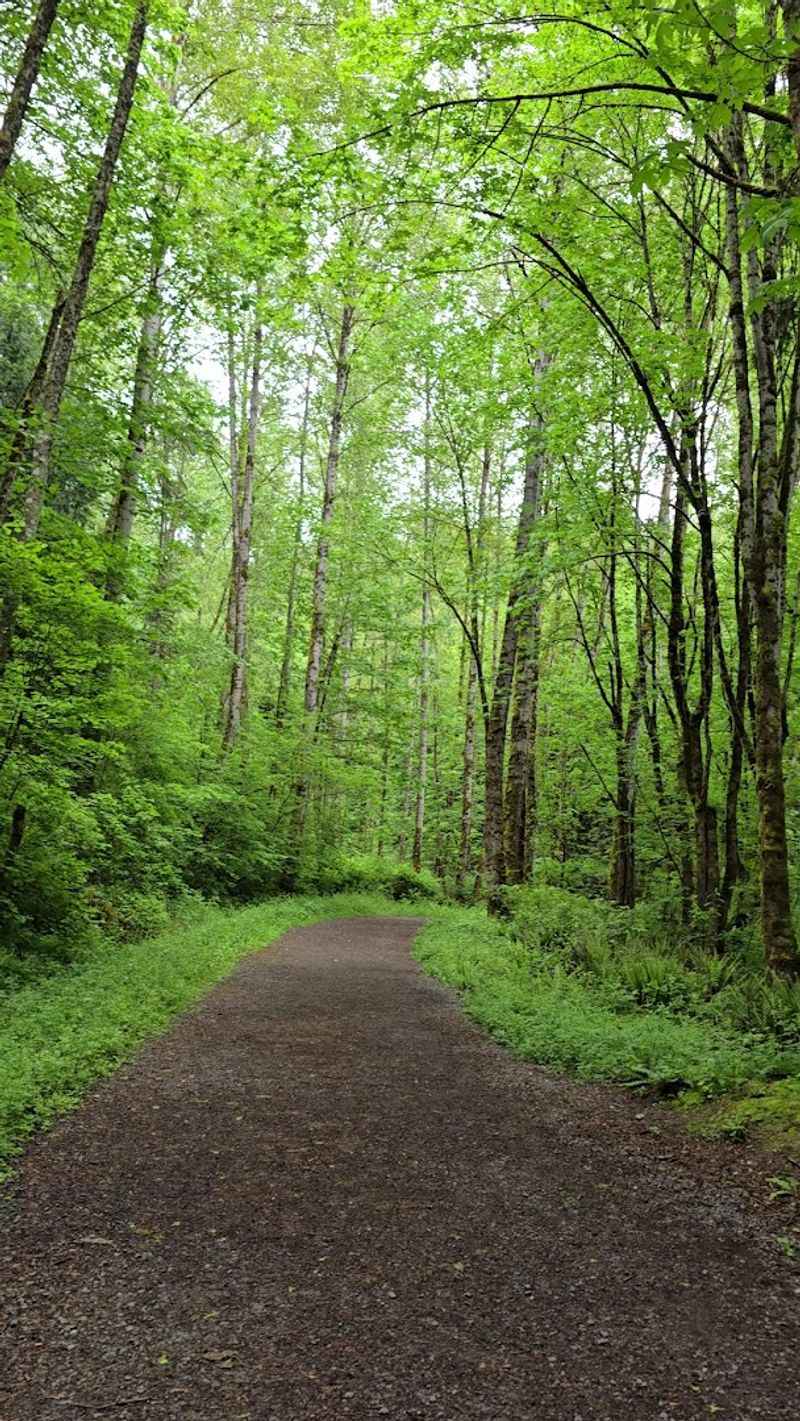
Once you step onto the trail, the forest closes in quickly. The canopy is thick here, and even on bright days, the light filters down in soft, broken patches.
The ground is soft underfoot, and the sounds of the outside world fade faster than you might expect.
I appreciated how the trail eases you in gradually, almost like the forest is giving you time to adjust your mindset before the real discoveries begin. Interpretive signs appear at key points along the route, offering historical context without overwhelming the experience.
Comfortable walking shoes are a must, and bringing water is smart since the trails can stretch longer than they appear on a basic map. The trailhead itself is free to access and open to the public year-round.
Cougar Mountain Park and the Layers Beneath the Trees
Cougar Mountain Regional Wildland Park is not your average nature preserve. Spread across more than 3,000 acres in the Issaquah Alps, it holds one of the most layered histories of any public land in King County.
Most visitors come for the trails and the trees, but beneath the moss and roots lies evidence of a community that once thrived here with remarkable energy.
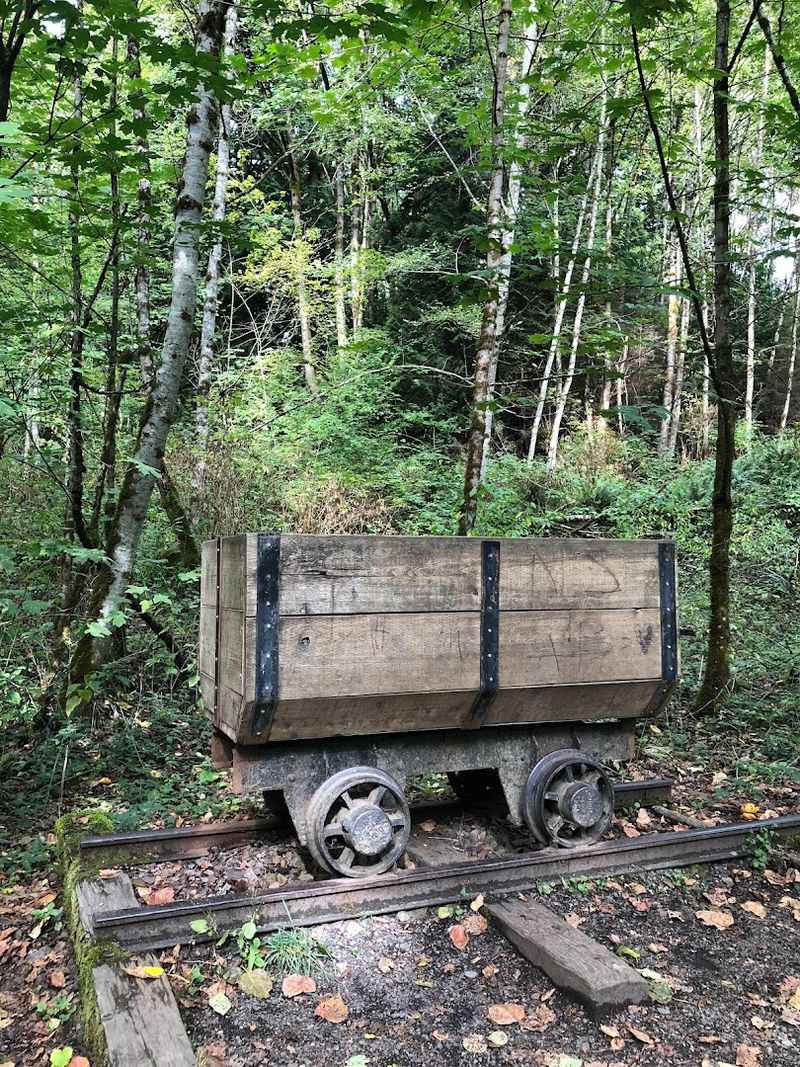
The park preserves mining-era structures, old roadbeds, and artifacts that have been slowly reclaimed by the forest over the past century. Foundations peek out from between ferns.
Rusted metal pieces rest in hollows where buildings once stood. The whole place has a texture that purely natural parks simply do not have.
Rangers and trail volunteers have done solid work maintaining interpretive content throughout the park, so even solo visitors can piece together the story without a guided tour. The park also connects to a broader trail network, meaning you can spend half a day here easily.
Families with kids tend to love it because there is always something to spot or wonder about. Nature and history rarely blend this seamlessly in a single accessible location.
The Baima House and What Survival Looks Like in Wood and Stone
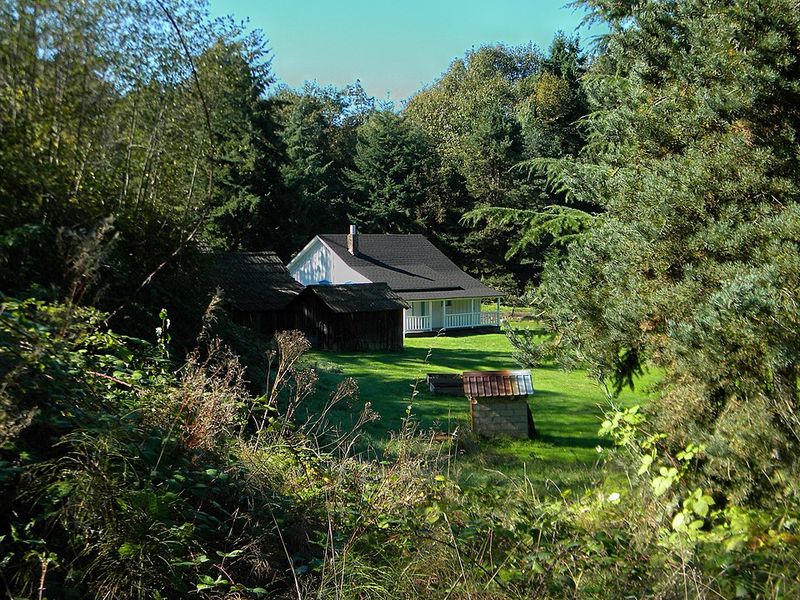
One of the most tangible connections to Newcastle’s human story is the Baima House, built in the early 1900s and still standing within the park boundaries. It is a rare survivor.
Most structures from the mining era were torn down, burned, or simply collapsed under the weight of time, but this one held on.
Seeing the Baima House in person is a different experience from reading about it. The building has a quiet stubbornness to it, like it decided long ago that it was not going anywhere.
The surrounding vegetation has grown tall and close, giving the structure an almost secretive quality, tucked away from the main trail like it is waiting to be rediscovered.
It is a good reminder that ghost towns are not always dramatic ruins. Sometimes history survives in ordinary structures that simply outlasted everything around them.
The Baima House is not flashy, but it carries weight. For anyone interested in regional architecture or pioneer-era construction, it is worth the extra steps off the main path to find it.
Bring a camera, but also just take a moment to stand there and let the quiet do its thing.
The Nike Missile Site: Cold War Echoes in a Coal Town Forest
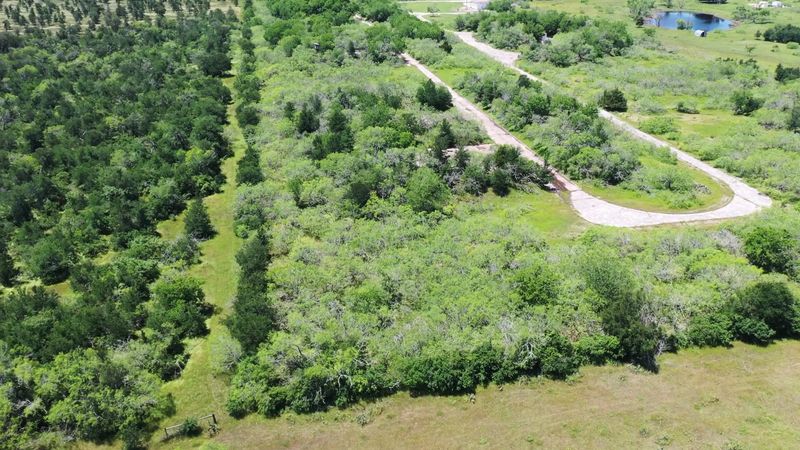
Red Town’s history does not stop with coal. Hidden deeper within Cougar Mountain Park is something that feels almost surreal next to the mining relics: a Cold War era Nike Missile site.
The United States military installed these surface-to-air missile batteries around major cities during the 1950s as part of a nationwide air defense network, and this one was positioned to help protect the Seattle area.
Stumbling across concrete bunkers and launch infrastructure in the middle of a forested ghost town is genuinely disorienting in the best possible way. The juxtaposition is hard to process at first.
You are looking at remnants of two completely different eras of American anxiety, one industrial and economic, the other geopolitical and nuclear, layered on the same hillside.
The site is not fully restored or interpreted, which actually makes it more interesting for curious visitors who enjoy piecing things together themselves. It is the kind of discovery that makes a hike feel like genuine exploration rather than just exercise.
Cold War history enthusiasts will find the site fascinating, and even casual visitors tend to stop longer than they planned once they realize what they are looking at. History has a way of compounding here.
Newcastle Cemetery, Lake Boren, and the Legend Beneath the Water
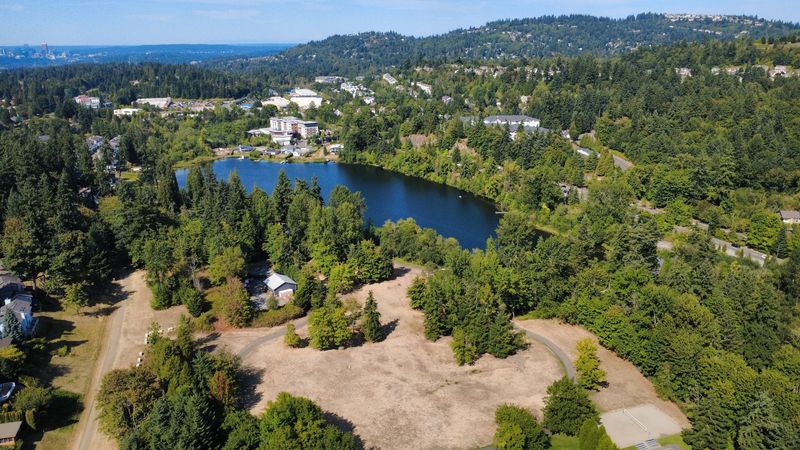
Near Lake Boren, the original Newcastle cemetery sits as one of the most quietly affecting spots in the entire area. The headstones mark the lives of miners, families, and community members who built something real out of raw wilderness and hard labor.
It is a small cemetery by most standards, but it holds a presence that is hard to shake once you have visited.
Lake Boren itself has its own peculiar story attached to it. Local legend claims that a locomotive once fell into the lake and has never been recovered, still resting somewhere at the bottom of those dark waters.
No one seems to know exactly when or how it happened, and that ambiguity is part of what keeps the story alive.
Whether or not the locomotive legend is true, it adds a layer of mystery to an already atmospheric location. Lake Boren Park is also the site of Newcastle Days, an annual community event held each September that brings residents and history enthusiasts together.
The Newcastle Historical Society typically sets up a booth to share archival materials and stories. It is a genuinely warm community gathering that connects the living town to its complicated, coal-dusted past in a way that feels honest and grounded.
