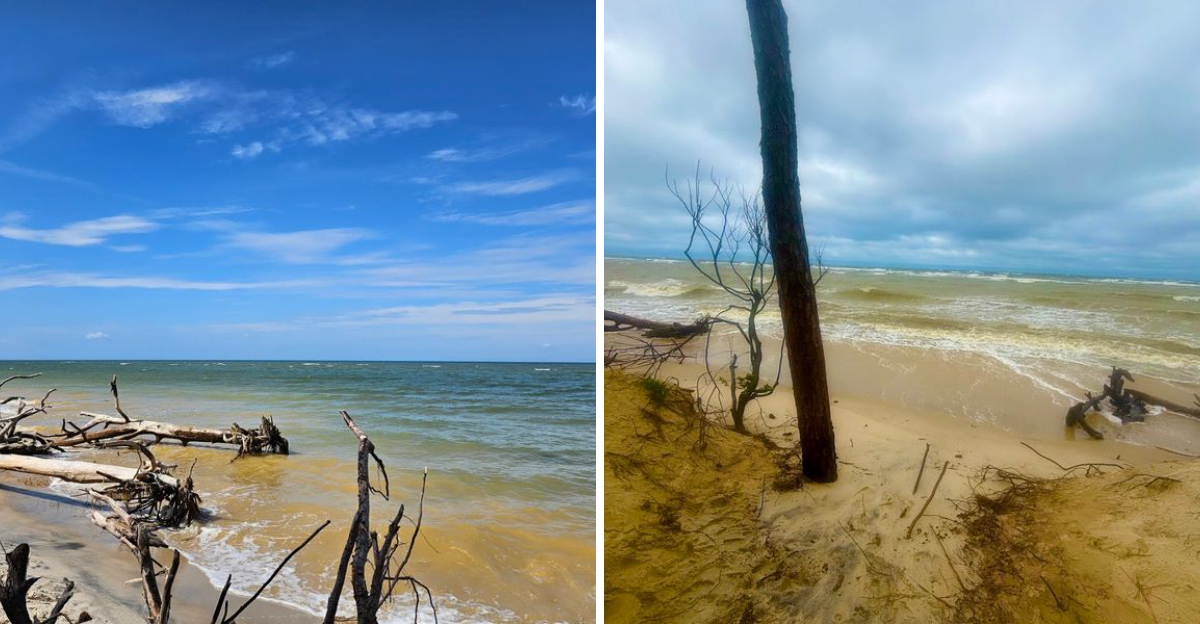
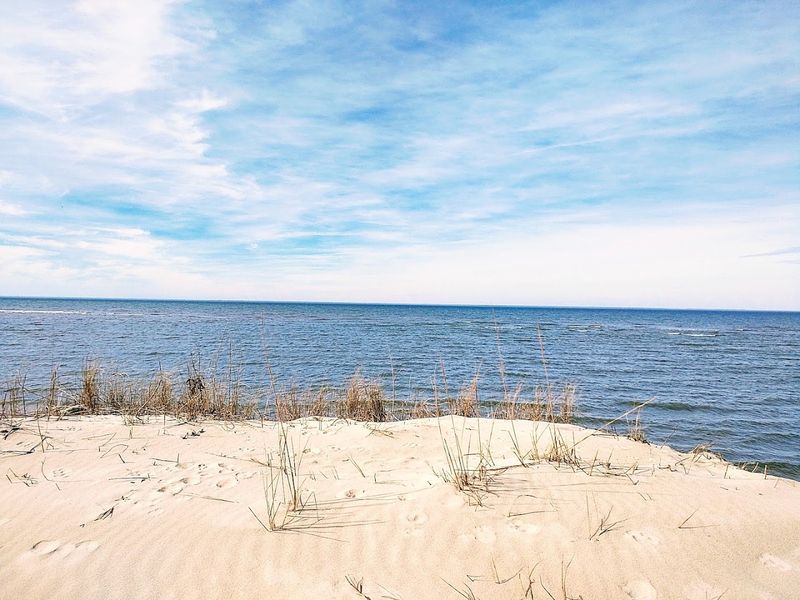
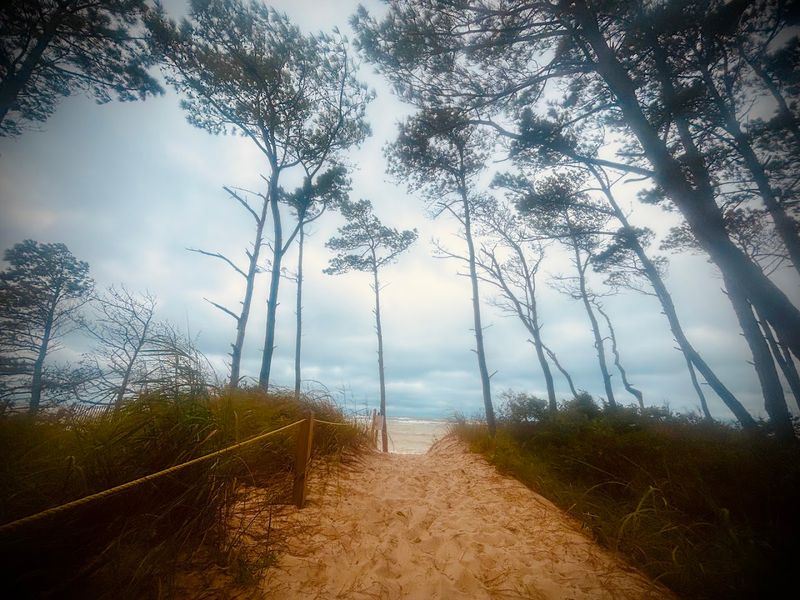
You walk through the trees and the world opens up. The dunes rise high, covered in grass and scattered with shells.
The beach stretches out, empty, wild, and raw. This wild and rugged coastal forest is actually Virginia’s last truly untamed beach, a place where nature is still in charge.
I hiked the trail on a breezy morning and found myself alone on the sand, just waves and wind. The dunes are dramatic, the views are wide, and the silence is complete.
The preserve is not easy to find, and that is the point. Virginia has plenty of beaches, but this one is for people who want solitude.
Stepping Into a World the Modern Age Forgot
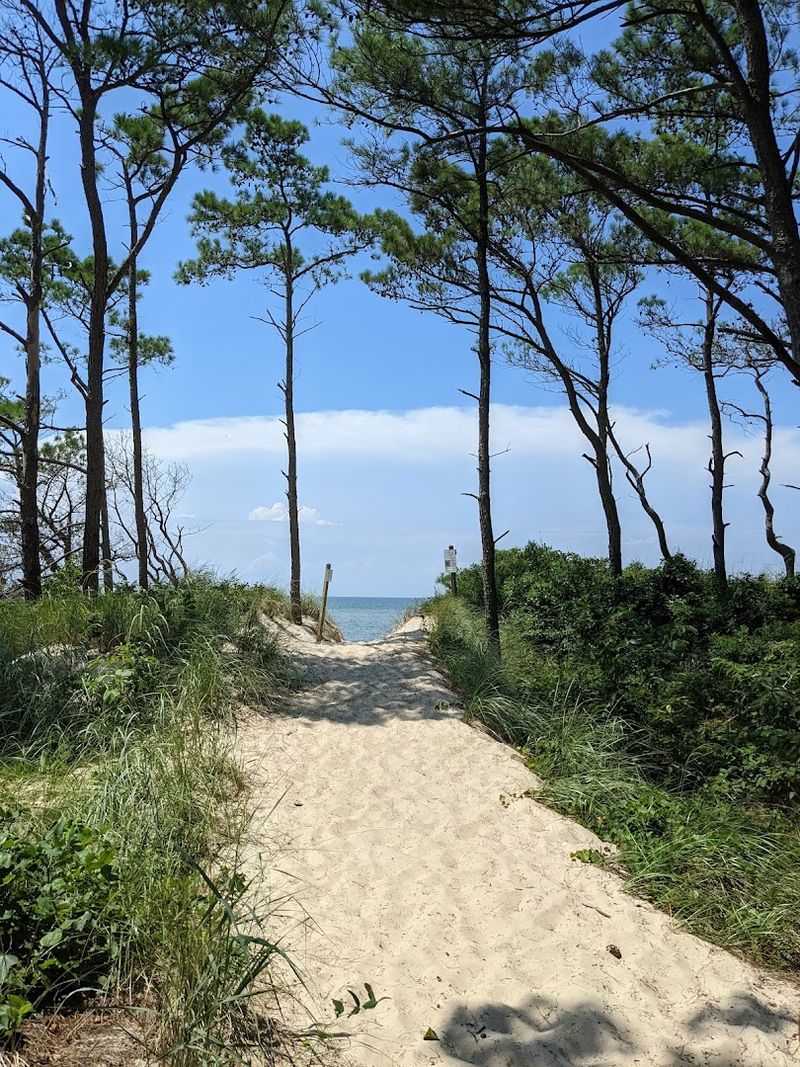
Some places hit differently the moment you arrive. The second I turned off the road and found the small trailhead at Savage Neck Dunes Natural Area Preserve, the outside world simply evaporated.
No beach bars, no souvenir shops, no umbrella rentals. Just a narrow sandy trail disappearing into a thick, whispering maritime forest.
Virginia’s Eastern Shore has a quieter, wilder personality than the rest of the state’s coastline, and this preserve captures that spirit perfectly. The air smells of salt and pine, and the only soundtrack is birdsong layered over the distant rhythm of bay waves.
It is the kind of place that resets something deep inside you.
The preserve stretches across nearly 300 acres of protected land, managed by the Virginia Department of Conservation and Recreation. Every inch of it feels deliberately, beautifully left alone.
Reaching the shoreline requires a walk, and that walk is half the magic. You earn the view here, and earning it makes it taste so much sweeter when the Chesapeake Bay finally opens up before you.
Sand Dunes That Actually Make Your Jaw Drop
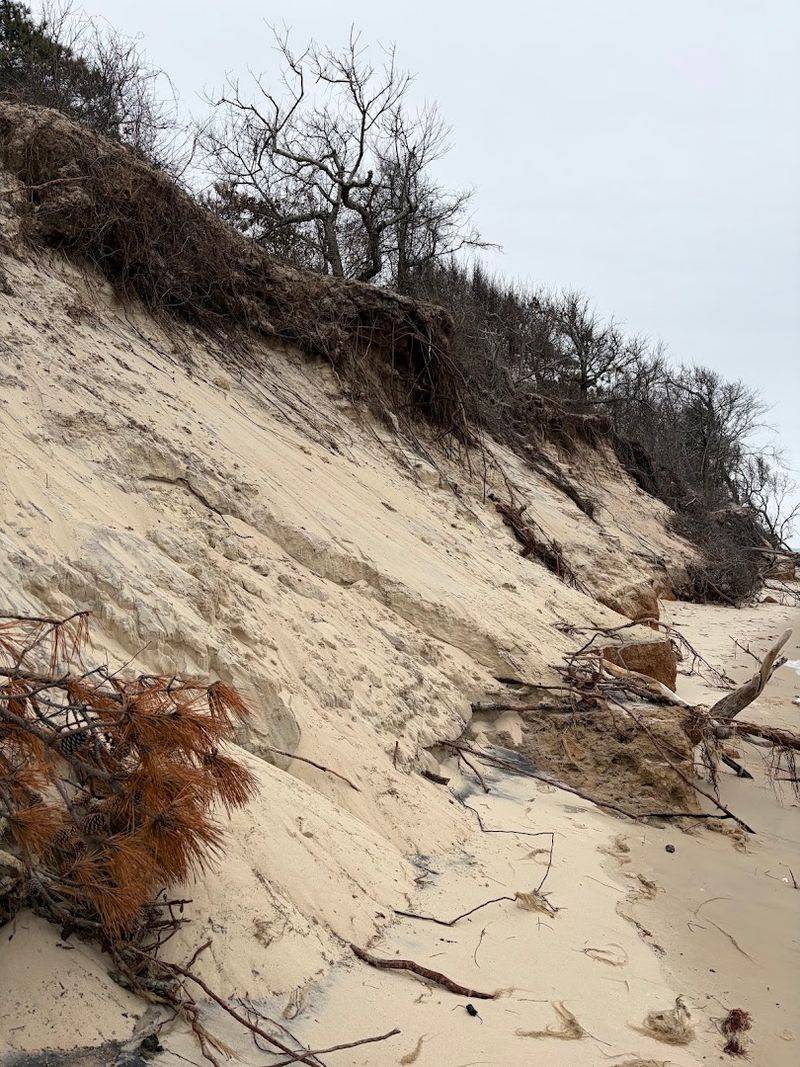
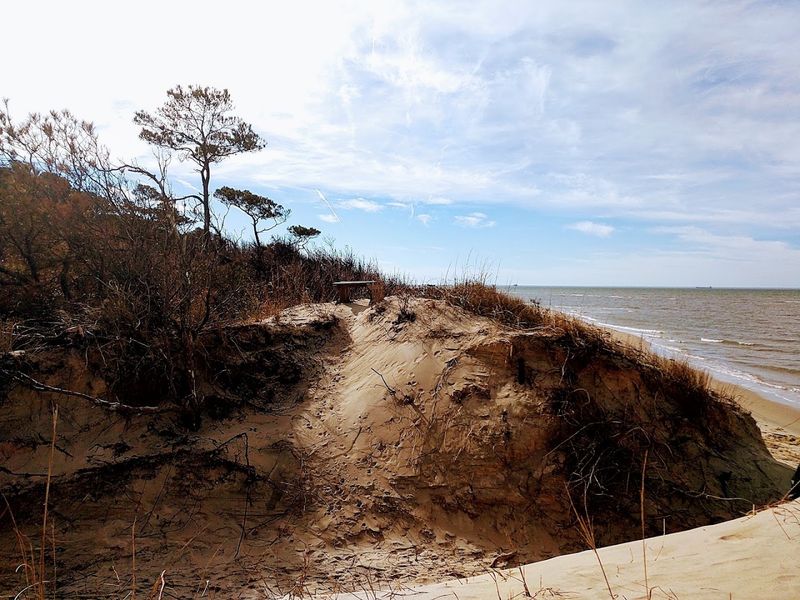
Not every sand dune earns a reaction, but the ones here genuinely do. Rising dramatically from the landscape, some of these sandy giants reach nearly 50 feet above the bay, making them among the tallest natural points on Virginia’s entire Eastern Shore.
Standing at the base of a secondary dune and craning your neck upward is a surprisingly humbling experience.
What makes these formations so fascinating is their age and layered history. Primary dunes sit closer to the water, younger and more restless, constantly shaped by wind and tide.
Behind them, the older secondary dunes rise taller and more settled, draped in beach grass, wax myrtle, and sassafras that anchor the sand in place.
Between the dune ridges, hidden swales create their own quiet micro-worlds, sheltering specialized plant communities that thrive in those low, sheltered pockets. I spent a good chunk of time just wandering between dune ridges, marveling at how the landscape kept shifting.
Savage Neck Dunes Natural Area Preserve has a geological drama to it that no photograph fully captures. You simply have to go and feel the scale yourself.
A Maritime Forest That Feels Like Another Planet
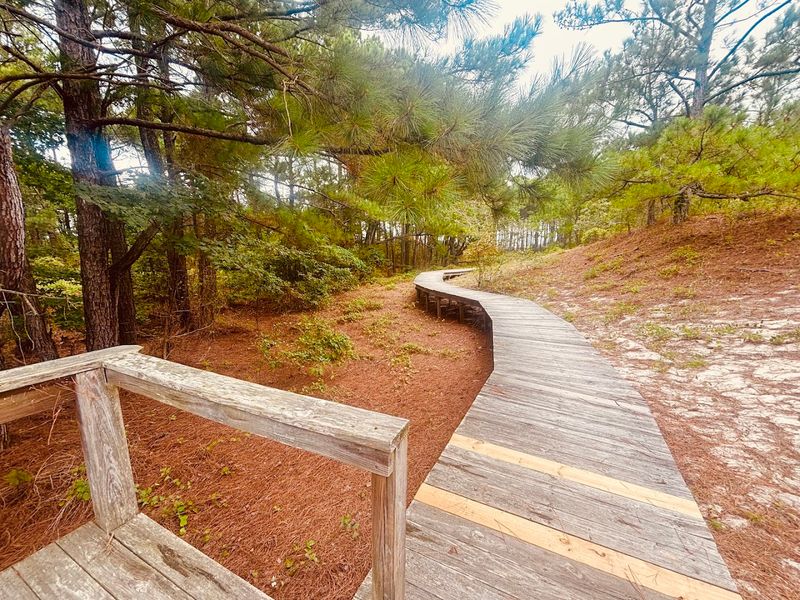
Most people think of a beach and picture open sky and flat sand. The maritime forest at Savage Neck Dunes Natural Area Preserve flips that expectation completely on its head.
Stepping into this woodland is like entering a cathedral built entirely by wind and salt spray. The trees grow low and sculpted, shaped over decades by the relentless coastal elements into forms that feel almost architectural.
Coastal pines dominate the canopy, their trunks twisted and textured, creating a moody, atmospheric corridor along the trails. Beneath them, a rich understory of shrubs and groundcover plants fills every available space.
The interplay of light through the canopy throws constantly shifting patterns across the sandy forest floor, making every step feel like a new photograph waiting to happen.
Virginia’s Eastern Shore doesn’t get nearly enough credit for this kind of wild, layered beauty. The maritime forest here isn’t just scenery.
It is a functioning, thriving ecosystem protecting the dunes and the shoreline behind it. Walking through it feels genuinely immersive, far removed from any typical beach experience.
It is moody, gorgeous, and unlike anything else on the Virginia coast.
Custis Pond and the Freshwater Surprise
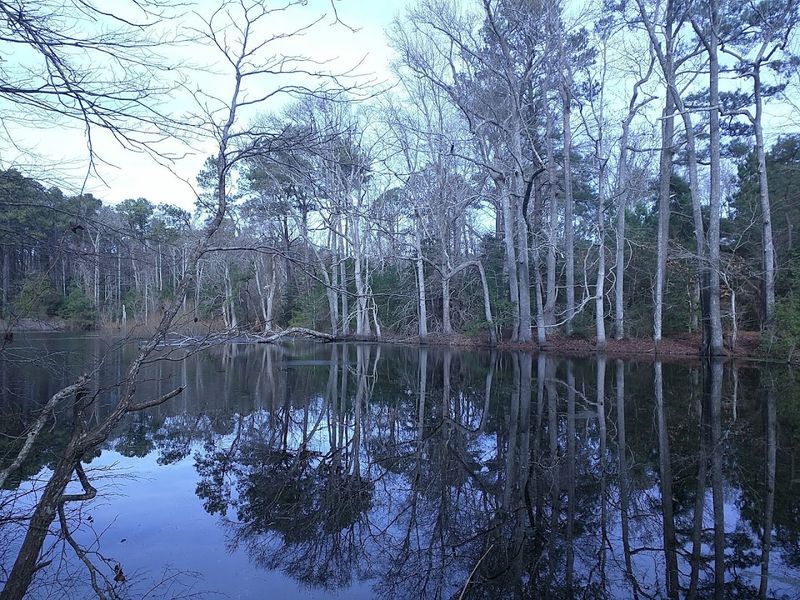
Nobody expects to find a freshwater pond tucked between towering sand dunes and a saltwater bay. Custis Pond is exactly that kind of delightful surprise.
Spanning roughly 4.6 acres, it sits as one of only a handful of naturally occurring interdune ponds found anywhere on Virginia’s Eastern Shore, making it genuinely rare in both ecological and geographical terms.
The pond supports a surprisingly vibrant community of wildlife. Green tree frogs call out from the reedy edges, southern painted turtles bask on any available log, and dragonflies skim the glassy surface in lazy loops.
On a calm morning, the water reflects the surrounding vegetation so perfectly that you almost feel like you are looking at a painting rather than a real place.
I paused here for longer than I planned, just watching the pond do its quiet, living thing. There is something deeply satisfying about finding a freshwater oasis in the middle of a coastal dune system.
Savage Neck Dunes Natural Area Preserve keeps revealing new layers the further you explore, and Custis Pond is one of its most charming hidden chapters. Bring patience and binoculars for this stop.
The Rare Beetle That Calls This Beach Home
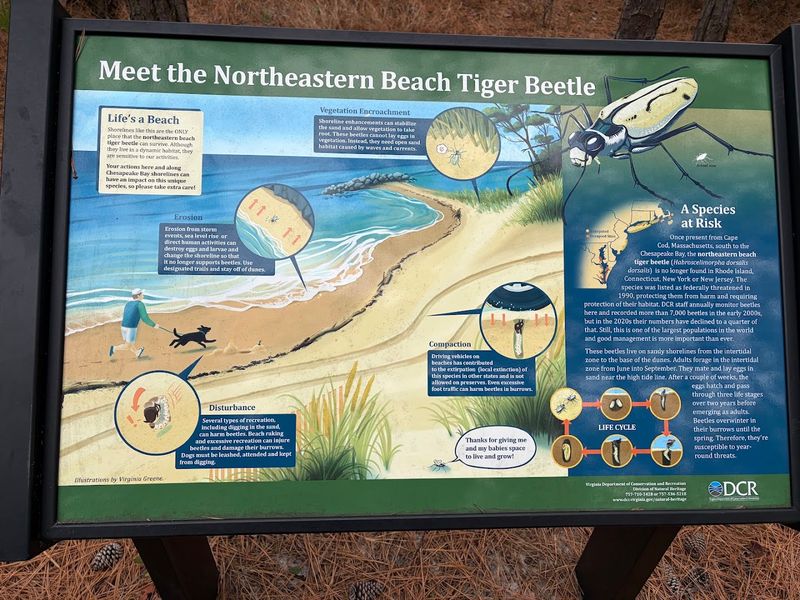
Not many beaches can claim a federally threatened insect as one of their star residents, but Savage Neck Dunes Natural Area Preserve absolutely can. The northeastern beach tiger beetle, a small but spectacular creature with iridescent markings, depends on undisturbed sandy shorelines to survive.
This preserve supports the largest known population of this beetle in existence, which is a genuinely remarkable conservation achievement.
These beetles are fast, agile, and surprisingly hard to spot unless you know what you are looking for. They dart across the open sand near the waterline, hunting smaller invertebrates with impressive speed.
Their survival depends entirely on the kind of pristine, undeveloped beach habitat that Savage Neck Dunes still provides. Development, off-road vehicles, and foot traffic in sensitive zones can devastate beetle populations quickly.
Knowing this adds a whole new dimension to walking along the shoreline here. Every step feels a little more intentional, a little more respectful.
Virginia has made a serious commitment to protecting this habitat, and the beetle population reflects that effort. Staying on marked trails and avoiding disturbing the sand near the waterline is not just good manners.
It is genuinely vital conservation work.
Birding Paradise on the Atlantic Flyway
Fall migration turns Savage Neck Dunes Natural Area Preserve into one of the most exciting birding spots on the entire Atlantic Flyway. After a cold front passes through in September or October, the maritime shrubland practically vibrates with neo-tropical warblers, tanagers, and thrushes making their long journey south.
I barely made it ten steps from the parking area before I had to stop and just listen to the layered chorus of species moving through.
Raptors add a thrilling upper dimension to the spectacle. Peregrine Falcons cut sharp silhouettes against the sky, while Cooper’s Hawks weave between the tree lines with practiced precision.
Osprey and various shorebird species work the bay edge throughout the warmer months, giving year-round birders plenty of reasons to return repeatedly.
Even if you are not a dedicated birder, the sheer volume of wildlife activity here is infectious. Virginia’s Eastern Shore sits at a geographic sweet spot for migration, and this preserve amplifies that advantage by offering undisturbed habitat.
Pack binoculars, move quietly, and resist the urge to check your phone. The real show is happening in the branches and sky above you, and it is absolutely worth every moment of attention.
The Chesapeake Bay Shoreline That Feels Like a Secret
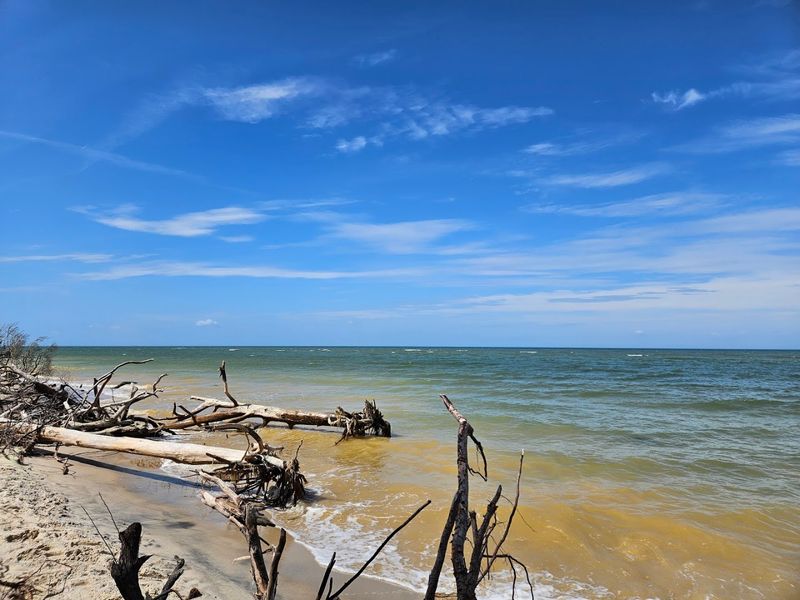
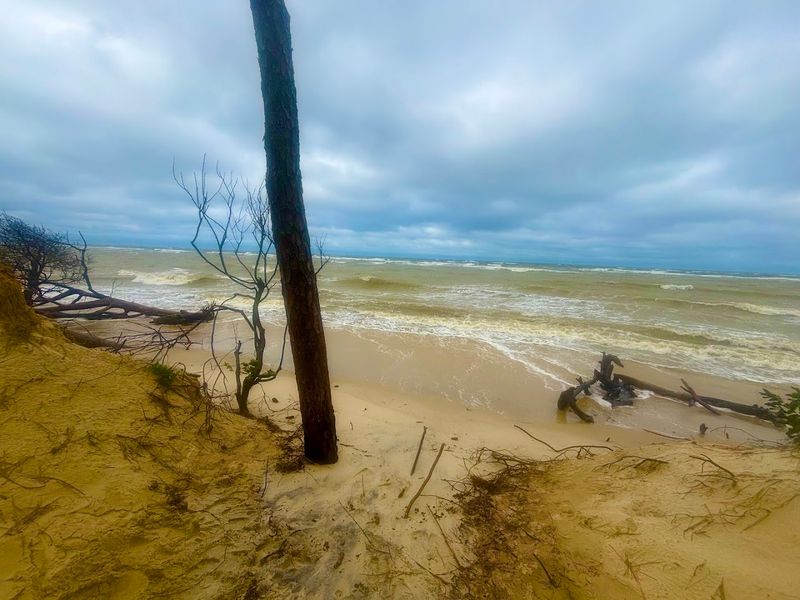
After walking the Beach Trail through forest and over dunes, the Chesapeake Bay shoreline arrives like a reward you genuinely earned. The beach here is quiet, wide at low tide, and scattered with weathered driftwood that gives it a raw, untouched character completely different from any developed beach in Virginia.
No lifeguard stands, no rental chairs, no crowds fighting over prime real estate.
The water is remarkably shallow, extending outward in gentle, sandy flats that make wading an effortless pleasure. Families with young kids particularly love this aspect, as the calm bay waters lack the heavy surf of ocean-facing beaches.
The shoreline stretches in both directions, offering plenty of space to walk, explore, and simply exist without feeling hemmed in.
Timing matters here. Low tide reveals the broadest stretch of beach and the most accessible shoreline, so checking a tide chart before heading out is genuinely important advice.
High tide can reduce the beach to a very narrow strip. I arrived close to low tide and had what felt like the entire bay to myself.
Savage Neck Dunes Natural Area Preserve delivers a beach experience that is genuinely different, genuinely peaceful, and genuinely unforgettable.
Seasonal Magic and When to Plan Your Visit
Every season brings a completely different personality to Savage Neck Dunes Natural Area Preserve, and honestly, none of them disappoint. Summer delivers warm bay water and long golden hours of daylight, perfect for leisurely beach walks and wildlife watching in the early morning before the heat peaks.
Arriving at first light in July or August rewards you with cool air, calm water, and almost guaranteed solitude.
Autumn is arguably the most spectacular time to visit. The maritime forest shifts into warm amber and russet tones, the migration birding reaches peak intensity, and the oppressive summer humidity finally retreats.
October mornings here carry a crispness that makes every breath feel restorative. The crowds, already thin, essentially vanish.
Spring brings its own quiet charm, with wildflowers pushing through the sandy soil and resident bird species beginning their nesting activity. Winter visits are peaceful to the point of being almost meditative, offering stark, beautiful landscapes and the occasional surprise of waterfowl on the bay.
Virginia’s Eastern Shore has a year-round appeal that most visitors completely overlook. Savage Neck Dunes rewards every season with something genuinely worth the drive, so there is truly no wrong time to make the trip.
Practical Trail Tips for a Smooth Adventure
Getting the most out of a visit to Savage Neck Dunes Natural Area Preserve takes a little advance planning, but nothing complicated. The preserve has three marked trails, each offering a slightly different experience of the landscape.
The Beach Trail is the main event, an easy out-and-back route leading directly to the Chesapeake Bay shoreline through a gorgeous sequence of habitats.
Parking is intentionally limited to just eight spaces, which keeps the preserve from being overwhelmed but also means arriving early is genuinely important on weekends and summer days. There are no restrooms, no water stations, and no trash facilities on site.
Bringing your own water and packing out everything you bring in is not optional. It is the baseline expectation for anyone entering a protected natural area.
Dogs are welcome on leash, which is both great news for pet owners and a necessary rule protecting the sensitive beetle habitat along the shoreline. Insect repellent is a smart addition to your pack, particularly during summer months when biting insects patrol the forest edges aggressively.
Comfortable, closed-toe shoes handle the sandy trails far better than sandals. Go prepared, respect the rules, and Savage Neck Dunes Natural Area Preserve will absolutely deliver the goods.
Finding Savage Neck Dunes and Making It Yours
Savage Neck Dunes Natural Area Preserve sits near Cape Charles, Virginia, a charming small town on the southern tip of the Eastern Shore that deserves its own exploration before or after your preserve visit. The drive out to the preserve winds through quiet rural roads flanked by farmland and woodland, giving you a lovely preview of the Eastern Shore’s unhurried pace.
The address is 2186 Savage Neck Drive, Cape Charles, VA 23310. Navigation apps will get you close, but paying attention to the road signs near the end of the route is worthwhile.
The trailhead is modest and easy to miss if you are moving too fast, which honestly fits the personality of the place perfectly. Slow down and you will find it.
Cape Charles itself offers wonderful dining, historic architecture, and a genuinely lovely beach of its own for those wanting to extend the trip into a full weekend. The combination of town and preserve creates a perfect Eastern Shore itinerary.
Virginia keeps surprising me with places like this, destinations that reward curiosity and punish complacency. Savage Neck Dunes Natural Area Preserve is the kind of place you tell your closest friends about and secretly hope the crowds never discover.
