What do you get when the greatest inventor in history bets millions on a mountain of low-grade rock?
A colossal financial failure that you can now hike through.
In the 1890s, Thomas Edison poured a massive chunk of his own fortune into a sprawling iron mining complex on a mountain.
He built a town, employed hundreds of workers, and filled buildings with his inventions to crush and separate the stubborn ore.
The whole operation was a technological marvel that ultimately went bust, undone by cheaper ore from elsewhere.
Today, the forest has reclaimed most of it, leaving behind crumbling foundations, eerie flooded pits, and even rust-proof iron briquettes scattered on the trails.
Hiking here is like walking through a ghost story of ambition. New Jersey sure knows how to turn a bankrupt dream into a fascinating adventure.
A Pioneering Spirit’s Grand Ambition
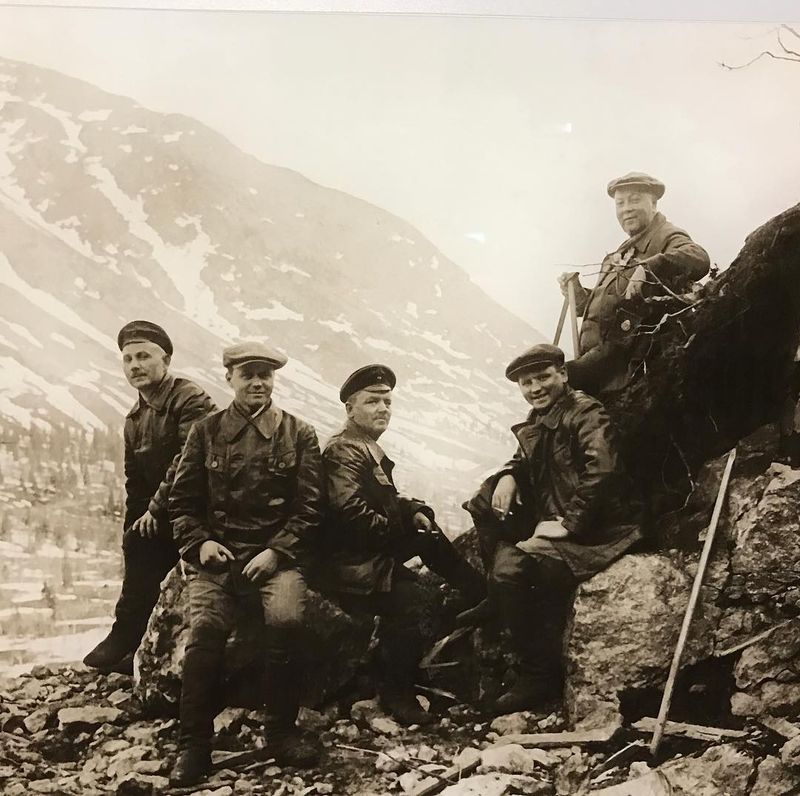
Few people realize that the man who gave us the lightbulb also spent years trying to pull iron out of a New Jersey mountain. In the late 1800s, Thomas Edison set his sights on what is now the Edison section of Sparta Township, acquiring vast tracts of land across five existing mines.
His goal was breathtaking in scope: build a massive processing plant that could transform low-grade iron ore into marketable briquettes using a patented magnetic separation method.
He didn’t just build a factory. Edison effectively constructed an entire community around the operation, complete with houses, a post office, general stores, a blacksmith shop, and a train station.
Over seven hundred miners, tradesmen, and their families called this mountain home at the height of operations.
Walking the trails today, the scale of that ambition becomes clearer with every step. The forest has grown thick and lush over the old footprints of that community.
Each foundation stone peeking through the underbrush tells a quiet story of extraordinary human effort and unstoppable industrial drive.
The Mammoth Machine That Shook the Mountain
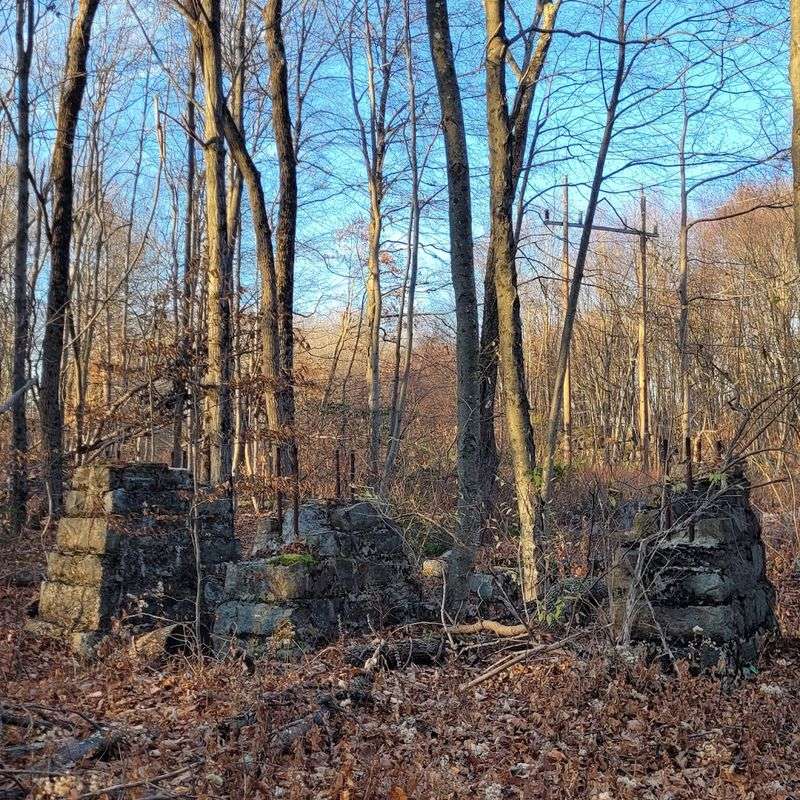
The sheer engineering audacity of Edison’s processing plant is still staggering to think about, even standing among its quiet ruins. At the heart of the operation was a seven-story separator tower packed with hundreds of electromagnets designed to pull iron particles from finely crushed rock.
Giant rollers reduced raw ore to a powder so fine it could drift through the air like smoke.
At peak production, nearly five hundred workers kept this machine thundering around the clock. The noise alone must have been something otherworldly, a constant grinding roar filling the valley from dawn until well past dark.
The physical demands on the workforce were relentless, matched only by the mechanical demands on equipment that constantly buckled under the strain.
Abrasive dust clogged the magnetic separators repeatedly, forcing shutdowns and costly repairs that bled the budget dry. Hiking past the remaining foundations, you can almost feel the weight of that struggle embedded in the old stone.
It rewards patience, this place, revealing more history the longer you linger on the trail.
Edison’s Fortune Fades Into the Hillside
Two million dollars of Edison’s own money poured into this mountain, and that figure doesn’t even account for what additional investors contributed.
For a man of his era, that represented a staggering personal financial commitment, not just a business bet but a genuine belief that he could reshape the entire American iron industry.
He wasn’t dabbling here. He was all in.
Then fate delivered a gut punch that no amount of genius could counter. Vast, high-grade iron ore deposits were discovered in Minnesota’s Mesabi Range right as Edison was finally getting his process to work efficiently.
The Mesabi ore sat near the surface, rich in iron, and could be extracted for roughly three dollars per ton.
Edison had managed to reduce his production cost to about four dollars and seventy-five cents per ton, but the gap was impossible to close. The market flooded with cheaper ore almost overnight, and the mine’s economic foundation simply collapsed beneath it.
The mountain absorbed the loss quietly, and the forest began its long, patient work of reclaiming everything Edison left behind.
Trails That Wind Through Living History
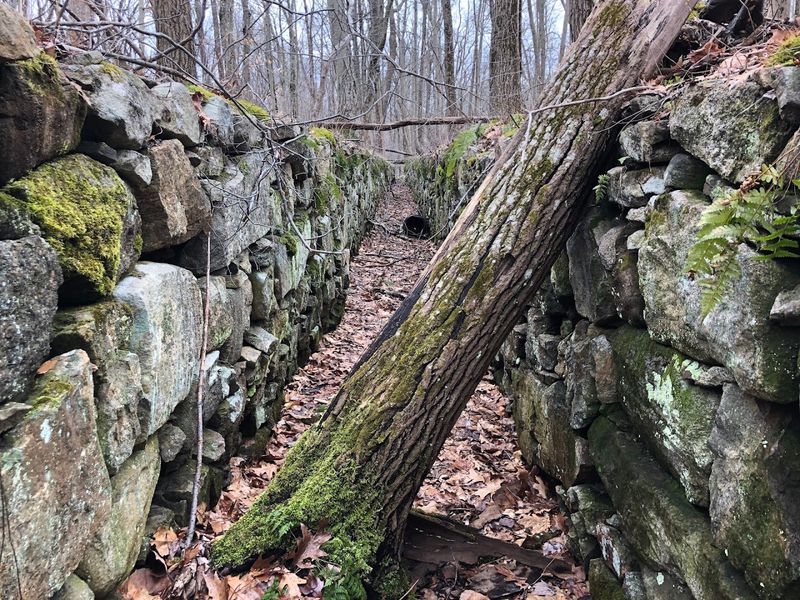
There’s a particular thrill that comes from hiking a trail where the landscape itself is the exhibit.
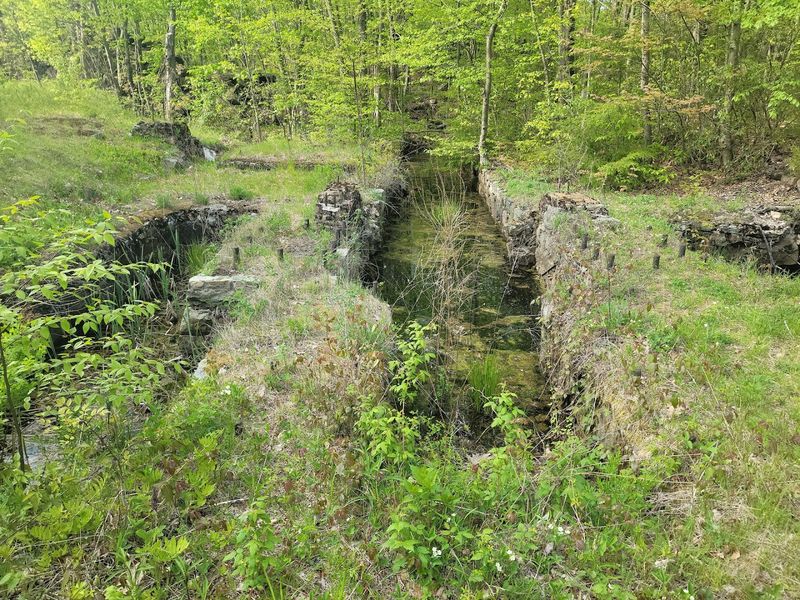
The paths here don’t just pass through pretty woods; they thread through the physical skeleton of Edison’s operation, past old railroad beds, sunken depressions where structures once stood, and stone walls half-buried under decades of leaf litter.
Every turn feels like a small discovery.
The trails range from relatively easy walks along old rail grades to steeper climbs that reward effort with dramatic views and fascinating geological features. Rocky footing is part of the deal, so high-ankle boots are genuinely worth the extra effort to lace up before you start.
Fall visits add a layer of sensory beauty, though colorful leaves can hide trip hazards on the path.
Packing a solid lunch matters on a hike like this. A hearty sandwich, some fruit, and something crunchy to snack on while resting near an old foundation transforms a simple walk into a proper outing.
The trail doesn’t rush you, and neither should you.
The Quarry That Still Stops You Cold
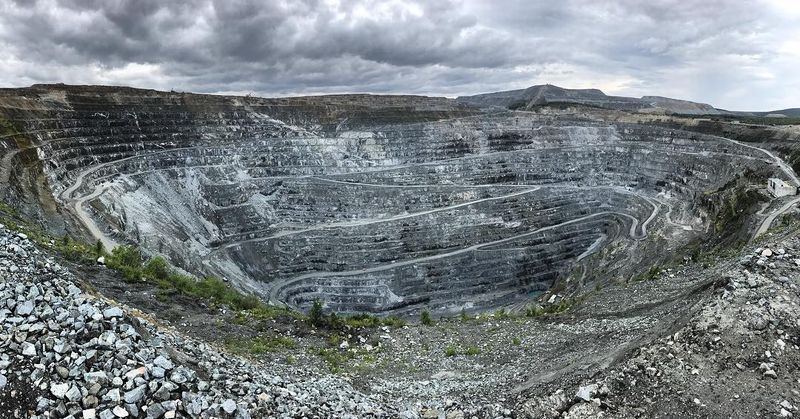
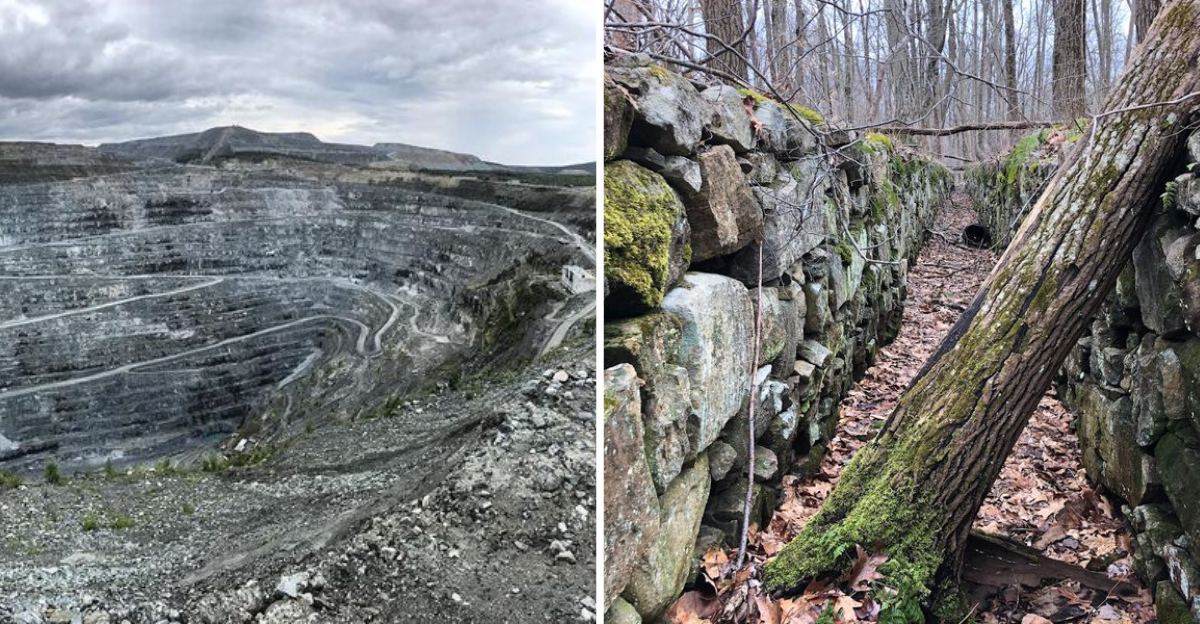
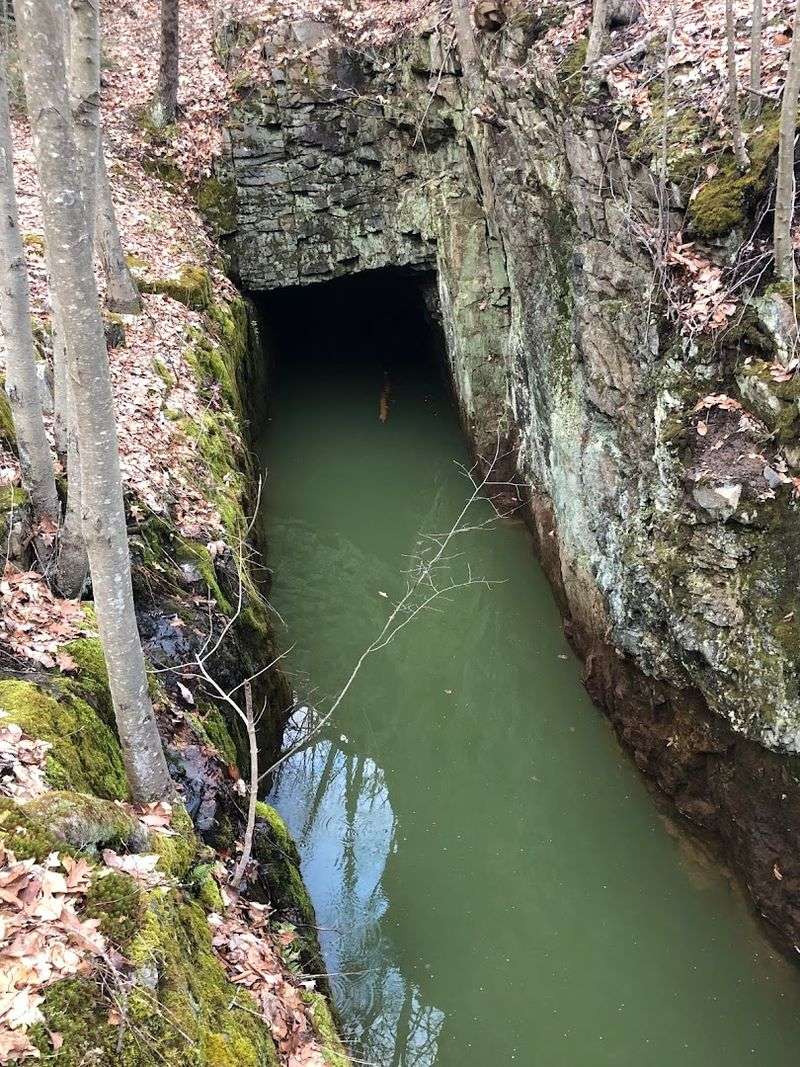
Nothing quite prepares you for the moment the quarry comes into view. The ground simply drops away into an enormous excavation, the rock walls weathered to soft grays and greens, the bottom partially filled with water that glows an almost unnatural shade of blue-green.
It’s stunning and a little eerie all at once, the kind of sight that makes you stop mid-step.
This is where the raw iron-bearing rock was blasted and hauled out by the ton, day after day, for years. The scale of the removal is viscerally apparent standing at the edge, and the thought of the human labor required to create this void is genuinely humbling.
Nature has softened the edges considerably, but the power of what happened here still radiates from the rock.
The water pooling at the bottom carries that vivid coloration from minerals in the surrounding geology, and staying well outside any fenced areas around the quarry is absolutely essential for safety. Settle onto a flat rock nearby, unpack a thermos of something warm, and just sit with it for a while.
Nature Reclaims What Industry Left Behind
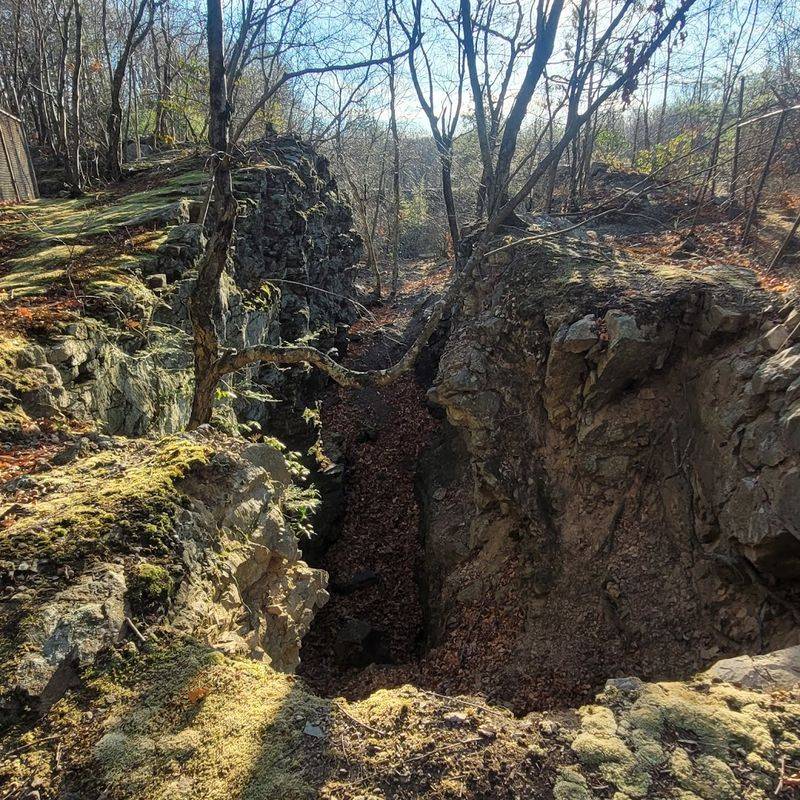
The Sparta Mountain Wildlife Management Area has quietly turned one of Edison’s greatest failures into one of New Jersey’s most intriguing natural spaces. Dense mixed forest now covers what was once a noisy, dust-choked industrial zone, and the transformation is genuinely astonishing.
Birds call from tree canopies that tower above foundations no one has touched in over a century.
The resilience on display here is almost defiant. Trees have pushed through concrete, roots have pried apart stone walls, and the whole mountain has gone back to being a mountain with remarkable efficiency.
Wetland areas like the Edison Bog have formed in low-lying sections, creating habitat for a surprising variety of wildlife.
Hiking through this reclaimed landscape carries a particular emotional quality that’s hard to name precisely. It feels like witnessing something private, a slow and patient process of healing that doesn’t need an audience but welcomes one anyway.
A quiet snack break in a sunny clearing, with nothing but birdsong and rustling leaves for company, feels like a genuine privilege out here.
Remnants That Speak Without Words
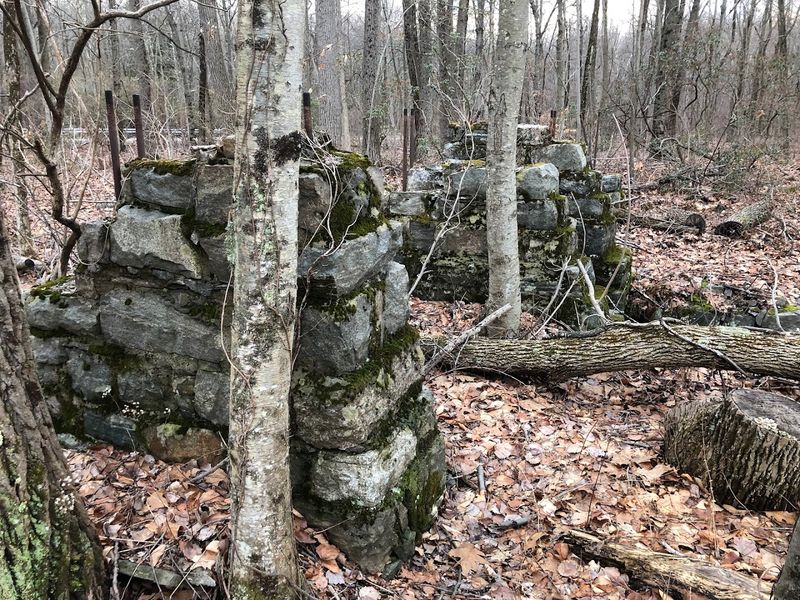
Scattered throughout the trails, remnants of Edison’s operation surface in unexpected ways that keep the hike perpetually interesting. Old foundations rise from the forest floor like architectural ghosts, their original purposes now open to interpretation.
Crumbling walls, rusted metal fragments, and carefully laid stonework appear around bends in the trail with a quiet regularity that rewards attentive hikers.
Some of the more dramatic remnants suggest the enormous scale of the structures that once stood here. The base of what was clearly a massive building, the footprint of a long-demolished engine house, a perfectly laid stone wall disappearing into a hillside.
These fragments are tangible connections to the hundreds of workers who built and maintained this place with their hands.
Staying outside fenced areas is genuinely important, not just as a rule but as common sense given the condition of some structures. The open mine shafts and unstable ground in restricted zones are real hazards.
Respecting those boundaries keeps the experience safe and ensures the site remains accessible for everyone who comes here looking to connect with this remarkable slice of industrial history.
The Magnetic Secret Hidden in the Rocks
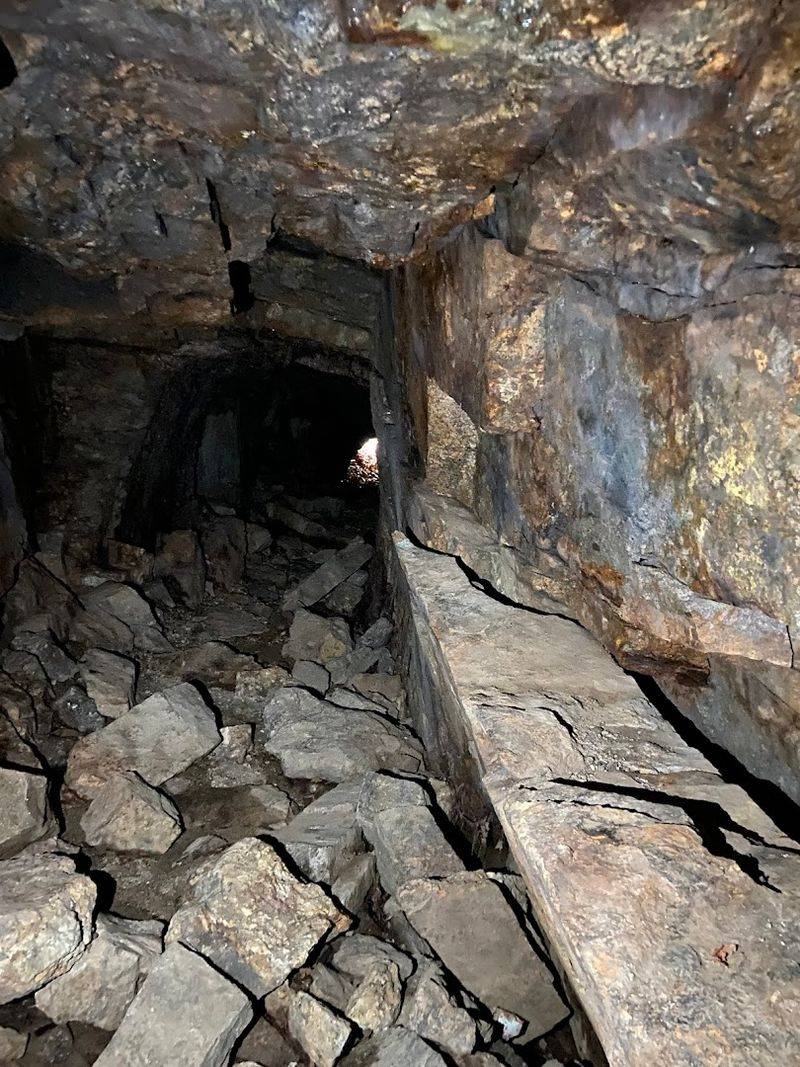
Bringing a magnet to the Edison Mine trails is one of those small tips that transforms the whole experience from a pleasant hike into something genuinely interactive.
The magnetite ore that Edison spent years trying to process is still scattered throughout the landscape, and a simple refrigerator magnet is enough to feel its pull when held near certain rocks along the path.
That little tug is a direct connection to the scientific principle that drove Edison’s entire operation. He believed that magnetism could separate iron from worthless rock efficiently enough to compete with traditional mining, and in a purely technical sense, he was right.
The process worked. The economics just didn’t cooperate.
The New Jersey Highlands contain some of the oldest exposed rock on the continent, pre-Cambrian formations over 542 million years old that have been holding onto their iron content since long before humans existed to want it.
Feeling that magnetic pull for yourself, out on the trail with forest all around, gives the whole story a satisfying physical dimension that no historical marker can fully replicate.
A Legacy Beyond the Balance Sheet
Edison reportedly shrugged off the financial disaster of the mine with characteristic pragmatism, noting that he could always find work as a telegrapher if things got truly dire. That attitude, more than the loss itself, says everything about the man.
Failure was data, not defeat, and he moved directly from the ruins of the iron mine into pioneering improvements in Portland cement production using the very sand his crushers had produced as a byproduct.
The Edison Mine site today carries that same spirit of quiet persistence. A commemorative plaque at the trailhead parking area marks the history, and the trails themselves serve as a living archive of one of America’s most audacious industrial experiments.
This is a place that rewards curiosity, patience, and a good pair of boots. Come with snacks, come with a magnet, and come with a willingness to let the forest tell its story at its own pace.
Address: Edison Rd, Sparta, NJ 07871
