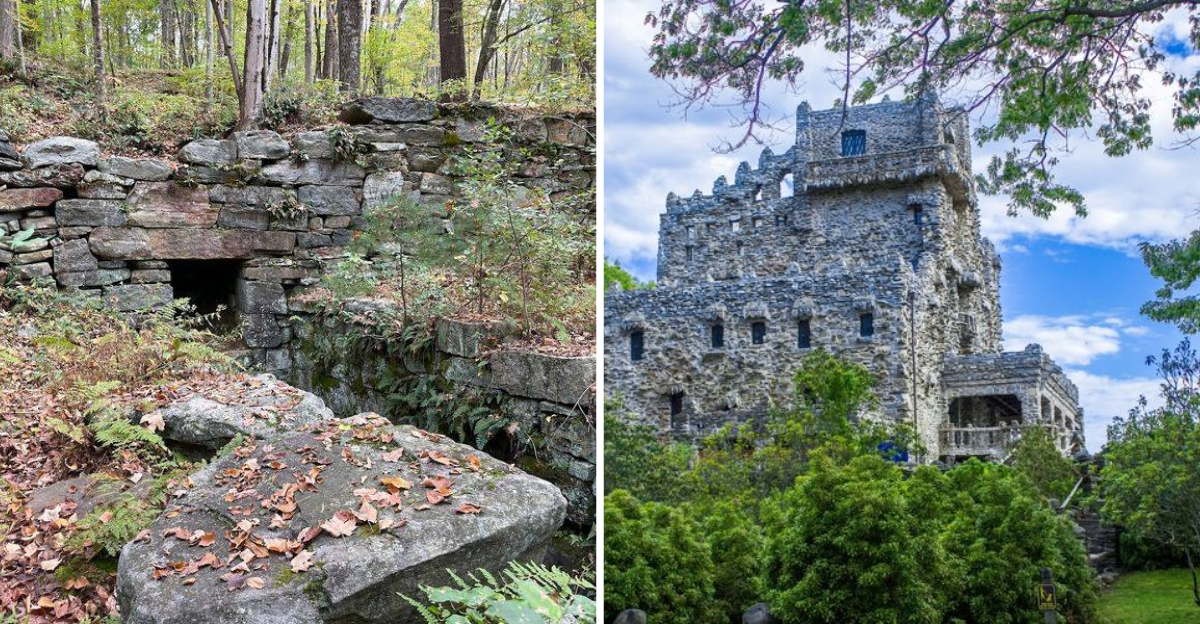
Connecticut hides history in plain sight. Tucked behind tree lines.
Swallowed by decades of overgrowth. Crumbling stone walls deep in the forest hit you with that electric mix of wonder and curiosity.
Old New England carries a haunted beauty. Ghost towns sleep beneath tangled roots.
Abandoned prisons rust behind padlocked gates. Iron furnaces stand silent where fire once roared.
These forgotten places are not piles of rubble. They are chapters of real American history waiting to be read.
Every ruin tells a story. Ambition carved into stone.
Hardship etched into rusted iron. Time marching forward while these places stayed behind.
A broken window still catches the sunset. A cell door still creaks in the wind.
A furnace stack still points skyward like a grave marker for industry’s golden age. If you love history with a chill, mystery with mud on your boots, and discovery hiding around every overgrown bend, Connecticut’s wild ruins are calling.
Grab a flashlight. Watch your step.
Listen closely. The past does not whisper here.
It lingers.
1. Mine Hill Preserve, Roxbury
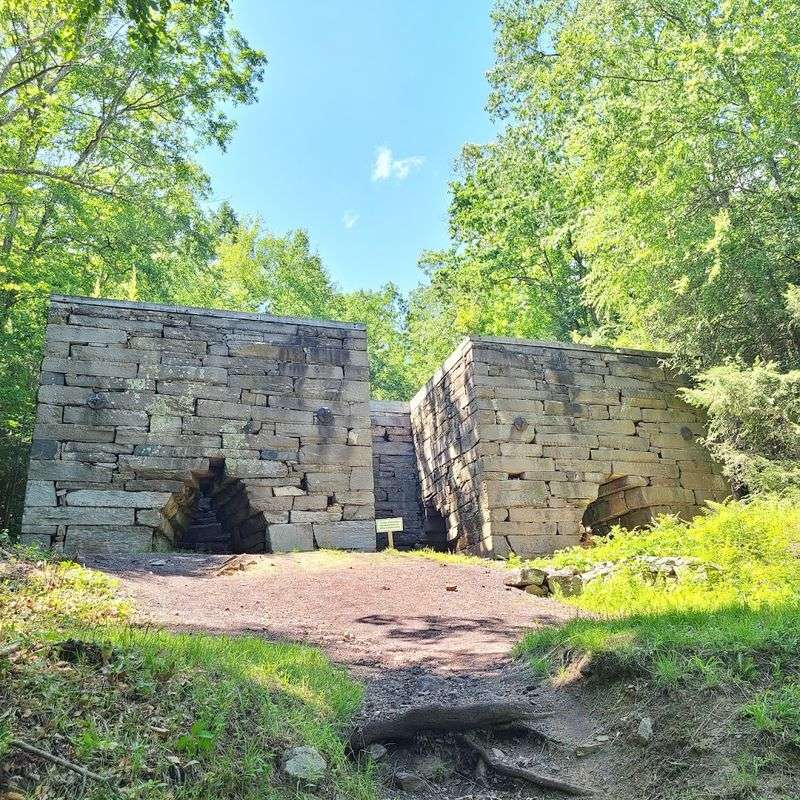
There is something almost cinematic about the moment you round a bend on the trail at Mine Hill Preserve and the old blast furnace suddenly looms into view. The stonework is massive, far bigger than you expect, and the forest has crept right up to its edges like it is slowly reclaiming what was taken from it.
This 360-acre preserve in Roxbury holds the ghostly bones of a 19th-century iron smelting complex that once roared with industrial ambition. The site includes roasting ovens, old mine shafts, and the remnants of the ghost town of Chalybes, a community that simply vanished when the iron industry collapsed.
Trails wind through the property at a manageable pace, making it accessible for most hikers. Interpretive signs along the way help piece together the story of what life looked like here during the height of production.
The air feels different inside the preserve, cooler and heavier somehow, like the land remembers its own past. It is the kind of place that rewards slow, curious walkers who are not in any rush to leave.
2. Gay City State Park, Hebron
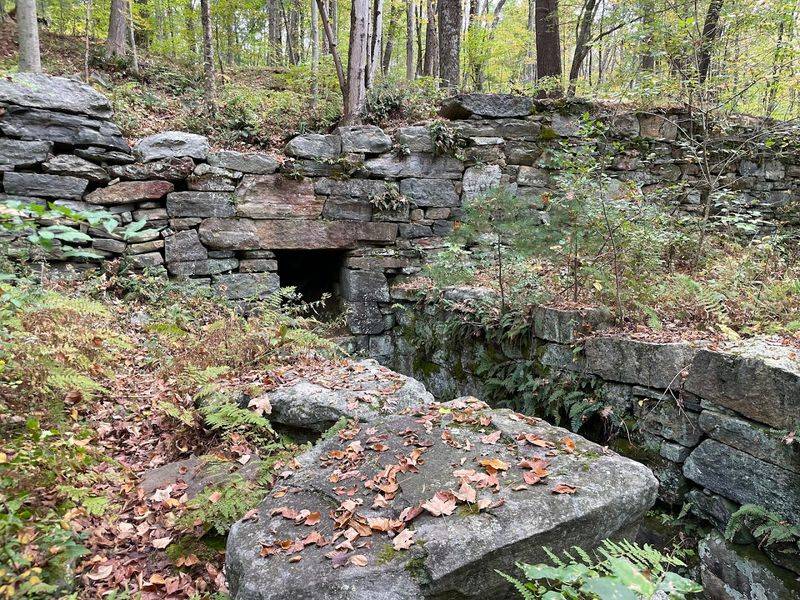
Gay City does not feel like a state park at first. It feels like a forest with secrets, which is exactly what it is.
Named after the Gay family who helped found the settlement in the late 1700s, this area was once a buzzing mill community with a blacksmith shop, a woolen mill, and dozens of families living out their daily lives along the Blackledge River.
By the mid-1800s, the town had completely collapsed. The residents drifted away, the buildings crumbled, and the forest moved in to cover the evidence.
Today, hikers can trace the outlines of old mill foundations half-buried in the earth, their stones worn smooth and green with lichen.
The trails here are genuinely enjoyable, looping through quiet woodland and past a swimming pond that still draws visitors on warm summer days. The contrast between the peaceful natural setting and the underlying ghost town history gives the whole park a layered, slightly eerie quality that keeps you thinking long after you have left.
Gay City is proof that even the most ordinary-looking forest trail can be hiding something extraordinary just beneath the surface.
3. Dudleytown, Cornwall
Few places in Connecticut carry as much folklore weight as Dudleytown, a name that has been whispered in ghost story circles for generations. Tucked deep in the Dark Entry Forest near Cornwall, this abandoned colonial settlement earned the nickname ‘Village of the Damned’ thanks to a long string of tragedies, mysterious deaths, and tales of madness that plagued its early residents.
The history here is genuinely dark without any embellishment needed. Several families who settled Dudleytown in the 1700s experienced a run of misfortunes so consistent that locals began attributing them to a curse on the Dudley family name, which stretched back to England.
It is worth knowing upfront that Dudleytown is not open to the public. The Dark Entry Forest Association, which owns the land, has closed access due to years of trespassing and vandalism that damaged what little remained of the site.
Visiting without permission is illegal. That said, the legend and history of Dudleytown are freely available through books, documentaries, and local historical societies, and learning about this place from a respectful distance is its own kind of fascinating journey through Connecticut’s darker past.
4. Old New-Gate Prison and Copper Mine, East Granby
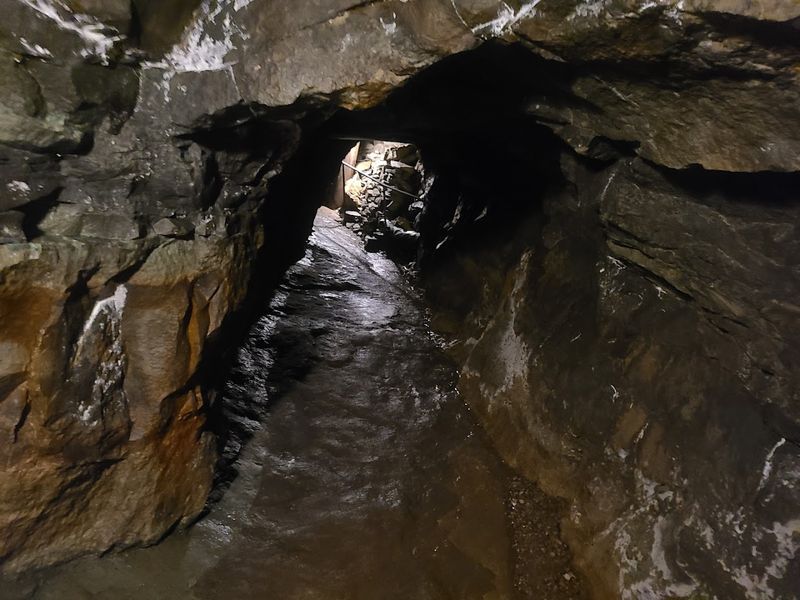
Somewhere between a history lesson and a genuine adventure, Old New-Gate Prison and Copper Mine sits in East Granby as one of the most unusual historic sites in all of New England. The copper mine was first worked in the early 1700s, making it one of the earliest copper mines in the American colonies.
When the mine proved unprofitable, Connecticut officials had a creative and rather grim idea: turn it into a prison.
In 1776, New-Gate became Connecticut’s first state prison, using the dark underground mine shafts as cells. Prisoners were lowered into the earth and kept in conditions that were, by any standard, brutal.
The site later held British loyalists during the Revolutionary War, adding another layer of historical significance to an already remarkable place.
Today, visitors can tour the ruins of the prison buildings above ground and descend into the actual mine tunnels below. The underground experience is genuinely striking, cool, shadowy, and full of the kind of atmosphere you cannot manufacture.
The site is managed as a state museum and opens seasonally, so checking ahead before visiting is a smart move.
Address: 115 Newgate Road, East Granby, Connecticut
5. Gillette Castle State Park, East Haddam
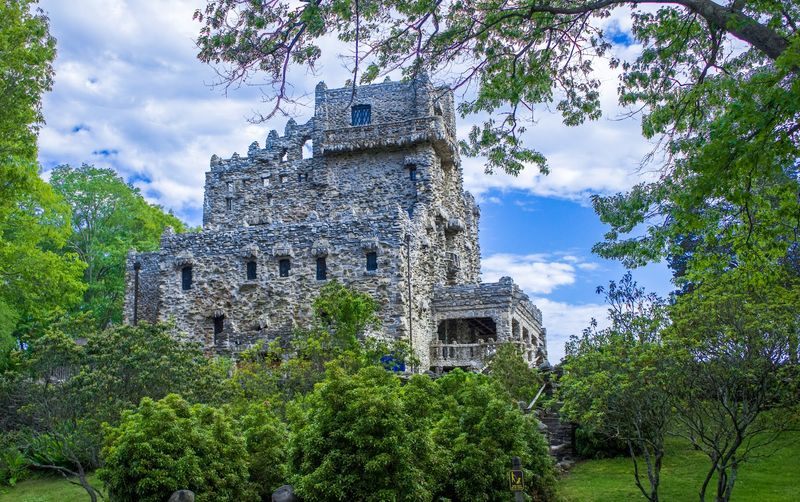
Built by an eccentric actor and not a medieval lord, Gillette Castle is the kind of place that makes you do a double-take the first time you see it. William Gillette, famous for his theatrical portrayal of Sherlock Holmes in the early 1900s, commissioned this fortress-like stone mansion atop a ridge above the Connecticut River between 1914 and 1919.
He designed nearly every detail himself, from the hand-carved wooden door latches to the miniature railroad that once wound around the property.
Gillette was deeply protective of his creation and famously stipulated in his will that it should never fall into the hands of any blithering saphead. The state of Connecticut eventually took ownership, preserving it as a public park and museum.
The castle is not exactly a ruin in the traditional sense, but sections of the estate and grounds have that weathered, time-worn quality that places it firmly in the spirit of forgotten grandeur. The views from the hilltop are spectacular, looking out over the river and the tree-covered hills of the Connecticut River Valley.
Trails around the grounds make for a relaxed and scenic half-day outing that history lovers and casual visitors alike tend to enjoy enormously.
Address: 67 River Road, East Haddam, Connecticut
6. Bara-Hack, Pomfret
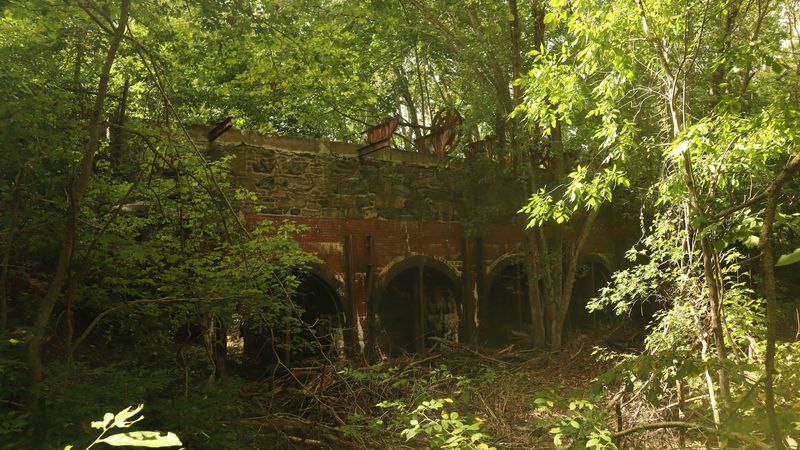
Hidden in the woods of Pomfret lies Bara-Hack, a Welsh name meaning ‘the breaking of bread,’ and the ghost of a small farming village that vanished sometime in the 19th century. The settlement was founded in the late 1700s by Welsh and English settlers and survived for only a few generations before the community dissolved and the land was abandoned to the trees.
What makes Bara-Hack particularly compelling is the small cemetery that remains on the site, with headstones still legible among the roots and fallen leaves. Stone foundations from homes and outbuildings are scattered across the forest floor, giving the area a quiet, sunken quality as if the land exhaled and swallowed everything whole.
Local legend has added a ghostly reputation to Bara-Hack over the years, with stories of unexplained sounds and apparitions reported by visitors. Whether you believe in that sort of thing or not, the atmosphere of the place is undeniably affecting.
Getting there requires some navigation through private and semi-public land, so researching access points and trail conditions beforehand is strongly recommended. For those who do make the trip, Bara-Hack rewards the effort with a genuinely rare glimpse of a place that time simply forgot.
7. Hearthstone Castle, Danbury
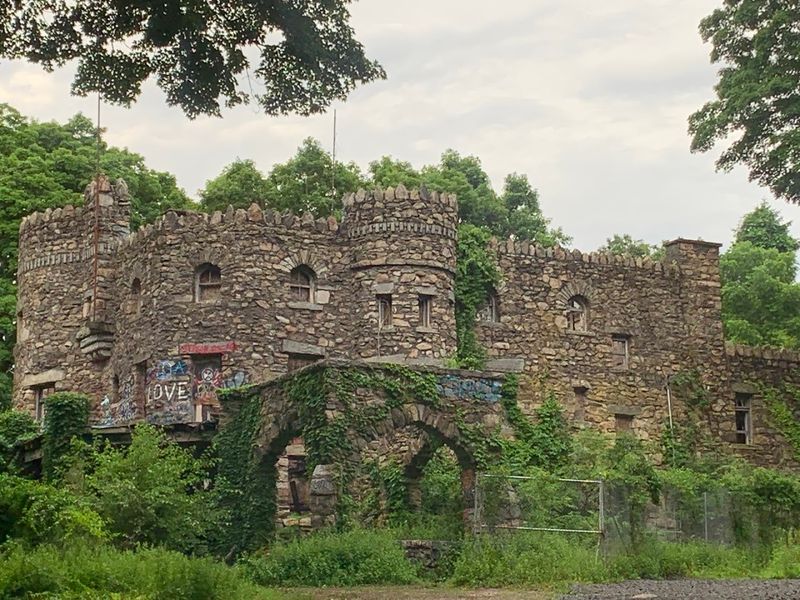
Perched inside Tarrywile Park in Danbury, Hearthstone Castle is the kind of ruin that looks like it wandered out of a fairy tale and forgot to go back. Built in 1899 as a private estate for a wealthy New York family, this Gothic-style stone structure was later donated to the city and spent decades slowly deteriorating inside the park’s 722 acres of trails and woodland.
The castle’s towers, arched windows, and thick stone walls are still impressively intact in places, which makes exploring the exterior genuinely exciting. It is the sort of structure that photographers, history enthusiasts, and curious hikers all find equally compelling, each drawn in for completely different reasons.
Restoration efforts have been ongoing for years, with community groups working to stabilize and eventually restore the structure. The interior is closed for safety reasons, but the grounds around it are open and the exterior views are well worth the walk from the park’s main trailhead.
The surrounding park is beautiful in its own right, with gentle trails winding through meadows and mixed forest. Hearthstone Castle feels like a discovery every time, even if you have been to Tarrywile Park a dozen times before and somehow never noticed it hiding in the trees.
Address: 70 Southern Boulevard, Danbury, Connecticut
8. Beckley Furnace Industrial Monument, North Canaan
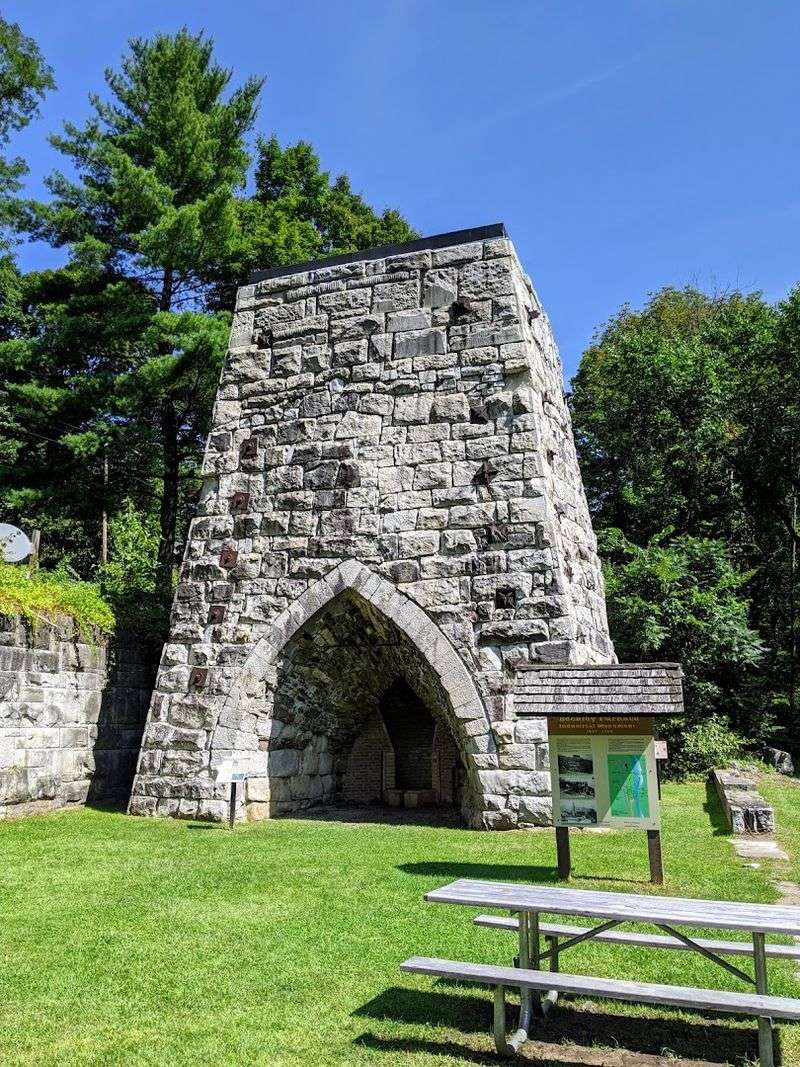
Not every ruin is wrapped in mystery and ghost stories. Some are simply monuments to the raw industrial power that shaped early America, and Beckley Furnace in North Canaan is exactly that kind of place.
Built in 1847 along the Blackberry River, this blast furnace was one of the last operating iron furnaces in Connecticut and remained active until 1919, making it a remarkably long-lived piece of industrial heritage.
The furnace structure itself is imposing up close, a massive stone and brick construction that once consumed enormous quantities of local ore, charcoal, and limestone to produce iron for tools, machinery, and railroad equipment. The riverside setting adds a peaceful contrast to the industrial scale of the architecture.
Connecticut designated Beckley Furnace as an industrial monument in 1966, and a small park has been developed around the site to allow public access. Walking the grounds gives a real sense of what 19th-century industrial production looked like on a local scale, far removed from the giant factory complexes of larger cities.
The Blackberry River rushing nearby makes the whole setting feel alive in a way that balances the weight of the furnace’s silent, hulking presence. It is a stop that sneaks up on you and stays with you longer than expected.
Address: Lower Road, North Canaan, Connecticut
