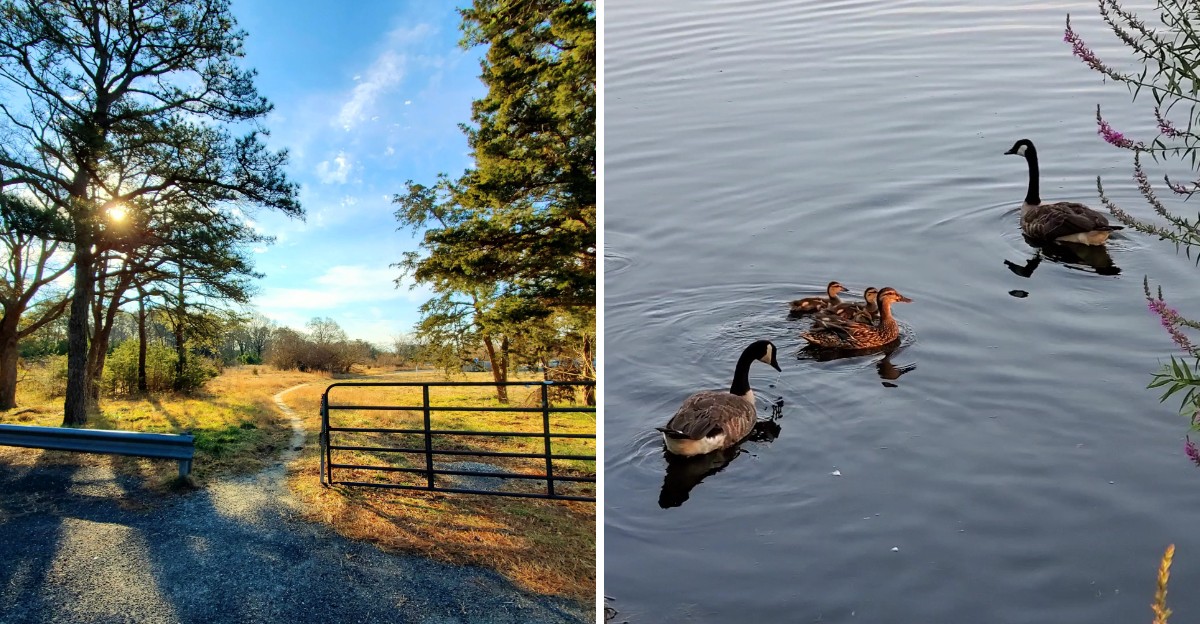
A farm became a wildlife haven? Well, that’s quite the plot twist.
What was once working farmland has taken on a completely different life, with wetlands, fields, and winding paths now giving wildlife room to roam.
New Jersey has plenty of nature preserves, but this one has a backstory that makes the scenery even more interesting.
The landscape may look like it has always belonged to birds and other wild creatures, yet its past tells a very different story.
Today, you can wander through the changing habitat and spot plenty of signs that nature has happily taken over.
Ah, it’s funny how quickly the wild can reclaim a place once people step back.
The result is an unexpected escape where a former farm has become a surprisingly lively corner of the New Jersey landscape.
A Golf Course That Traded Its Greens For Wilderness
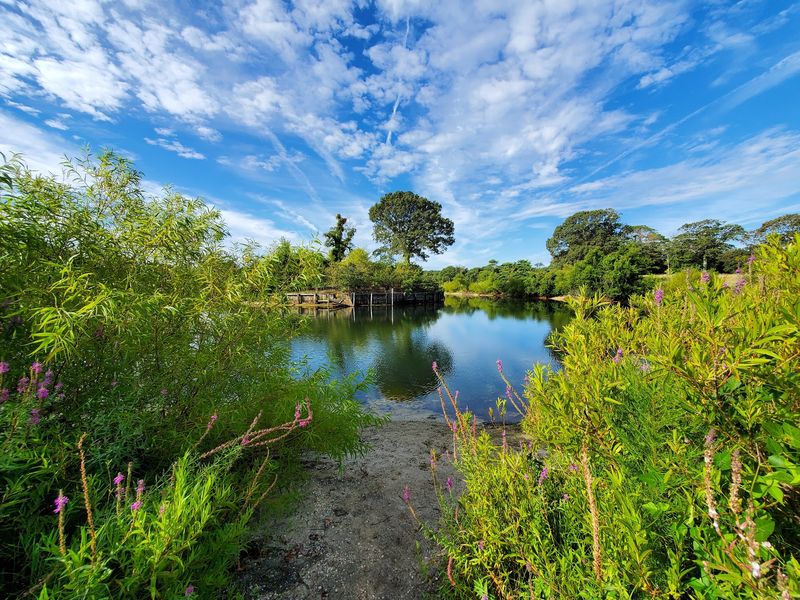
Hard to believe, but the rolling meadows and thickets here were once clipped fairways. The 253-acre Ponderlodge Golf Course was purchased in 2006 through the New Jersey Green Acres Program, and the land became part of a protected wildlife area.
The old buildings are gone now. What remains is a landscape slowly rewriting itself, with native growth blurring the edges of what used to be tidy turf.
More than a decade of restoration work shaped that change, guided by people who planted forests, dug wetlands, and seeded grasslands where mowers once hummed.
You can still read the bones of the old course if you look carefully, especially in the gentle swells of ground and the odd, perfectly round pond.
That mix of past and present gives Cox Hall Creek WMA its slightly surreal charm. It feels engineered and wild at the same time, a place where human intention and natural stubbornness ended up working together instead of against each other.
Renewal, in physical form.
Birdwatching Along The Atlantic Flyway
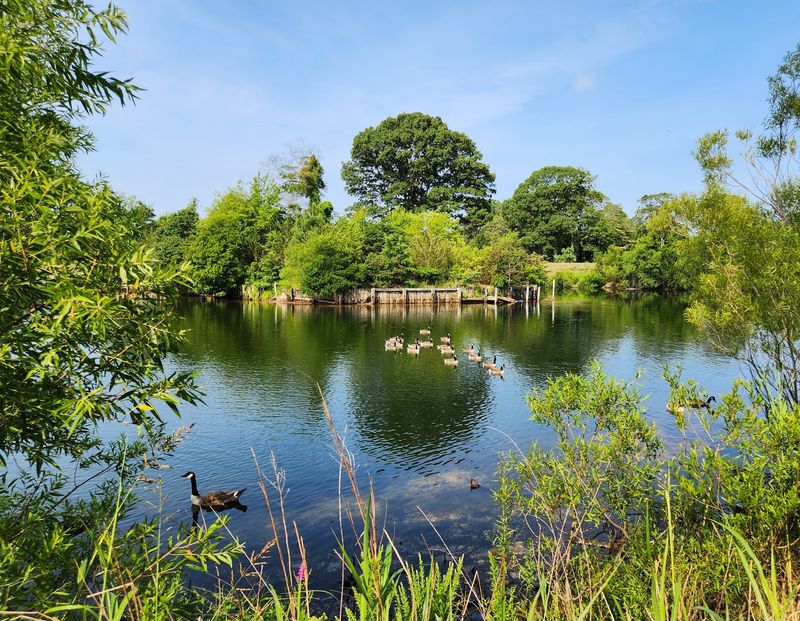
Birders talk about Cape May with a certain reverence, and a few minutes here explains why. The peninsula sits along the Atlantic Flyway, one of the great migratory routes on the continent.
Millions of birds funnel through this corner of the state each spring and fall, from tiny songbirds to broad-winged raptors. They need somewhere to rest and refuel before or after crossing the Delaware Bay, and this preserve offers exactly that.
Bring binoculars, even cheap ones. Woodpeckers hammer away at trunks while warblers flicker through the canopy like scraps of colored paper caught in a breeze.
Osprey are regular company overhead, sometimes hovering before dropping toward the water with startling precision. Species such as the Louisiana Waterthrush and Winter Wren have been recorded on the property too.
My advice? Go slowly and stop often.
Standing still for five minutes usually reveals twice as many birds as walking for twenty, and the soundtrack alone is worth the pause.
Habitats Stitched Together Like A Patchwork Quilt
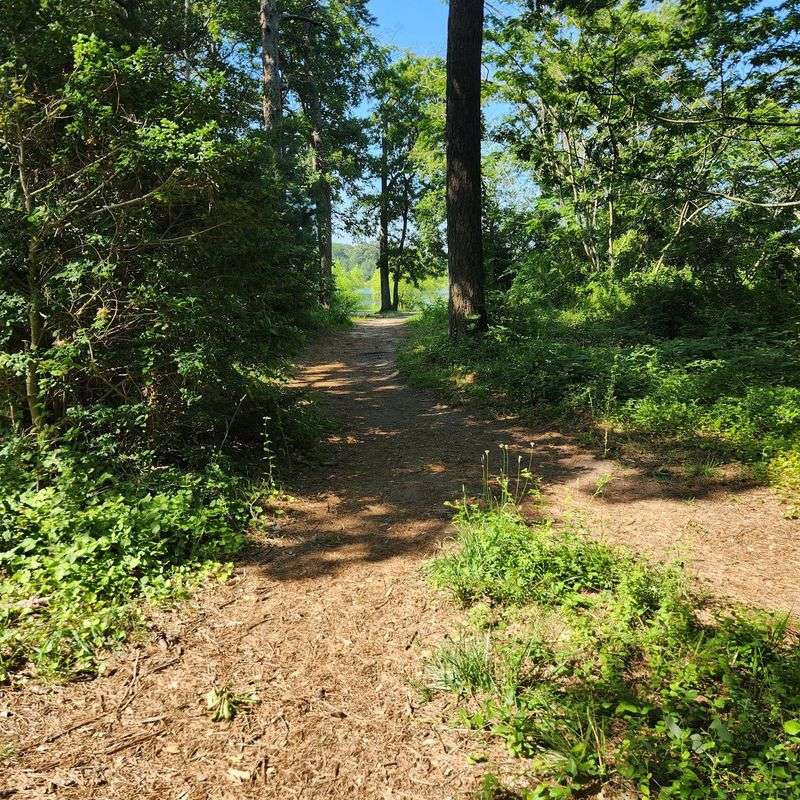
Variety is the real headline here. Across roughly 322 acres of coastal habitat, the land shifts from shady woods to open scrub to meadows humming with insects, often within a few hundred steps.
None of it happened by accident. The restoration plan called for about 140 acres of forest, 15 acres of wetlands, and 22 acres of grasslands, each type chosen to support different creatures.
Even the brush piles have a job, sheltering small animals and giving nesting birds a safe tangle to hide in. Once you know that, those messy heaps of branches start looking intentional rather than neglected.
Walkers who pay attention will notice how quickly the soundscape changes. Woodland sections feel hushed and cool, while the meadows buzz and click with grasshoppers on warm afternoons.
Mature oaks scattered through the property give the tree-curious plenty to admire. Bring a field guide if that is your thing, because the mix rewards a slow, curious eye.
Quiet Hours Beside Ponderlodge Pond
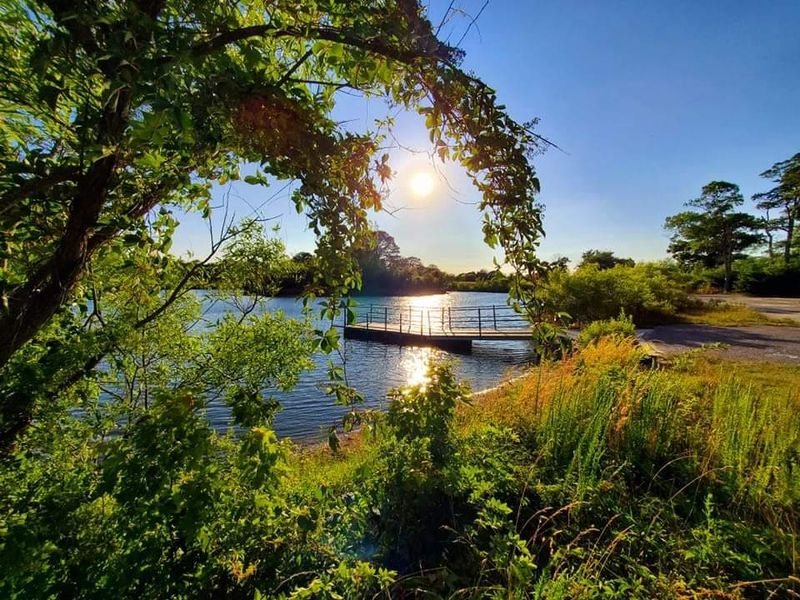
Round a bend in the trail and the trees open onto water. Ponderlodge Pond, also called Flynn’s Pond, covers roughly eight acres and sits near the heart of the preserve.
Its surface mirrors the sky so cleanly that clouds seem to float underfoot on still mornings. Ripples spread out now and then, hinting at whatever is moving below.
Anglers know this spot well. The pond is stocked with trout in spring and also holds bass, bluegill, catfish, and pickerel, which makes it a friendly place to practice casting.
A wooden dock with benches stretches out over the water, and it might be the best seat on the property. Sit there long enough and you will hear the soft slap of water against the shoreline mixing with birdsong from the trees behind you.
Purple wildflowers crowd parts of the bank in summer. Dragonflies patrol the edges like tiny helicopters, which never stops being entertaining.
Old Cart Paths Turned Into Easy Walking Trails
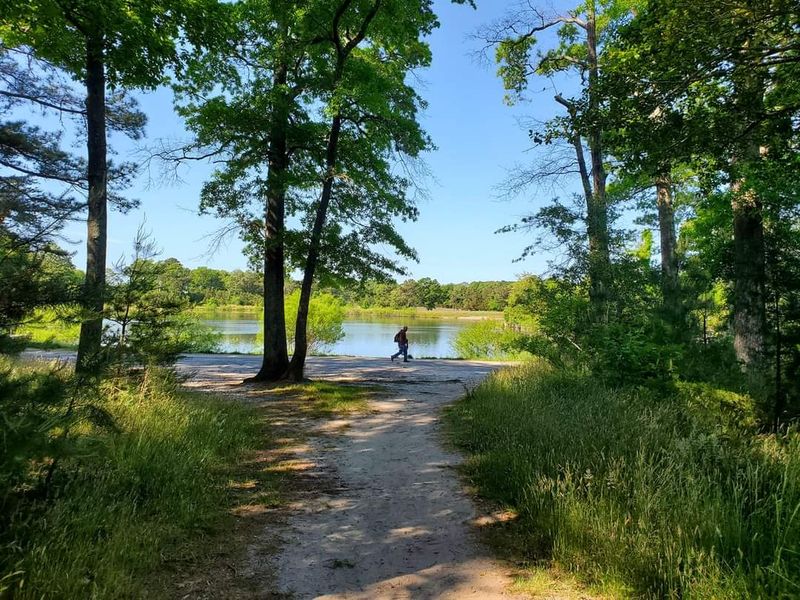
Here is the detail that makes this place genuinely unusual: the trails are old golf cart paths. Roughly four miles of them curve through woods, meadows, and past a scattering of ponds.
Because they are paved and mostly flat, walking is easy for just about everyone. Strollers roll fine, bikes work well on many stretches, and joggers get a smooth loop without hills to fight.
Some sections turn sandy or gravelly, shaded by pines and mature hardwoods. Color-coded markers help you keep track of which loop you are on, which I appreciated more than I expected.
Interpretive signs pop up along the way with notes about the plants and animals nearby. One explains vernal ponds, those temporary pools that vanish in summer yet matter enormously to amphibians.
Two parking lots serve this New Jersey property, one conveniently close to the pond. Pack your own drinking water, since facilities out here are minimal by design.
An Outdoor Classroom For Backyard Gardeners
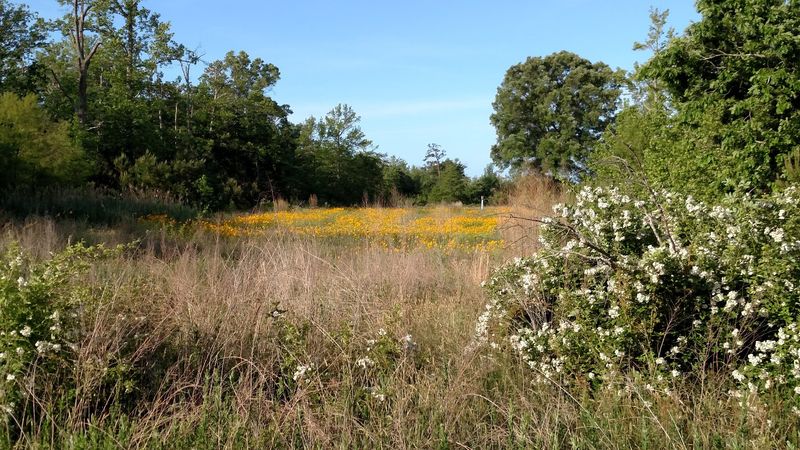
Gardeners will find unexpected inspiration along these paths. The property doubles as a Backyard Habitat Demonstration Site, showing visitors how to build wildlife-friendly spaces at home.
Small demonstration areas display forested habitat, scrub-shrub cover, and beds full of nectar-producing plants. Signs explain what each feature does and which creatures benefit from it.
It is a clever setup because the lessons scale down. You may not have 300 acres, but a corner of a yard planted with the right natives can still feed butterflies and shelter sparrows.
Watching bees work a patch of blooms while reading about why those blooms were chosen makes the whole idea click. Theory and proof, standing side by side.
Families with curious kids get a lot out of this section. Questions come fast, and the signs usually have the answers ready.
Honestly, I left with a mental shopping list of plants and a vague plan to dig up part of my lawn. Small steps count.
Frogs, Turtles, And The Busy Life Of Small Ponds
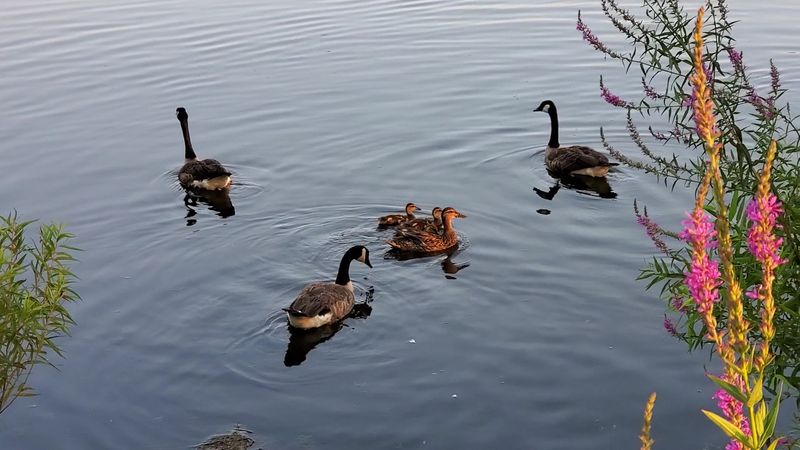
Old water hazards found a second career. The various ponds and pockets of water across the property add up to about 9.6 acres, and they are absolutely stuffed with life.
Turtles line up on logs like they are queuing for something, sliding off with a plop the moment you get close. Frogs supply the background chorus, sometimes loud enough to drown out the birds.
Muddy edges reward patient watching. Dragonflies skim the surface, small fish dart in the shallows, and the occasional heron stalks through the reeds without making a sound.
Children tend to love this part best, and it is easy to see why. Everything is close to eye level and constantly moving.
What amuses me is the irony of it all. Features designed to frustrate golfers now function as thriving little wetlands, proof that nature will take any opening it is given and run with it.
Keep a respectful distance and let the wildlife set the terms.
Seasons That Change The Cast Of Characters
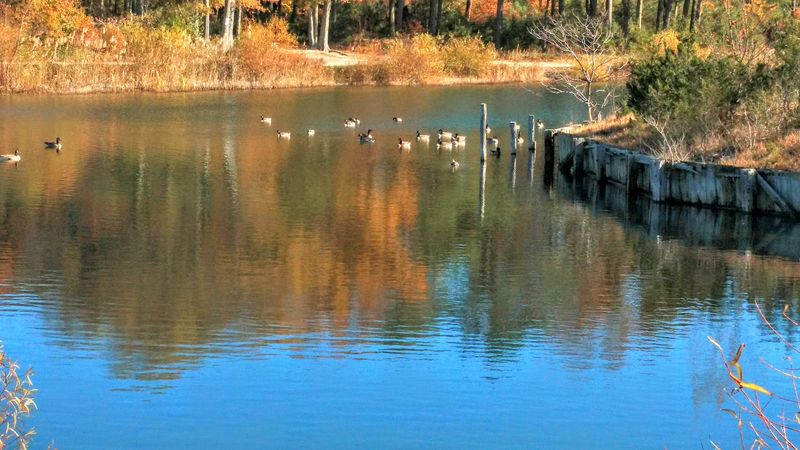
Timing changes everything at this preserve. Mid-May brings a burst of spring migrants, while September into October delivers the autumn rush of birds heading south.
During those peak weeks the woods feel crowded in the best possible way, with new species turning up from one day to the next. Regular visitors talk about it like a shifting calendar rather than a fixed destination.
Summer has its own draw. Meadows fill in, a sunflower field has bloomed here in past seasons, and dragonflies take over the pond margins.
Winter strips things back to bare branches and open sightlines, which actually makes spotting birds easier. Fewer leaves, fewer people, more space to think.
My honest recommendation is to visit twice in one year and notice how little the second trip resembles the first. The paths stay the same while everything around them rearranges itself.
Early mornings tend to be the liveliest. Evenings are lovely too, though bugs can show up in warm months.
Room For Families, Dogs, And Slow Wandering
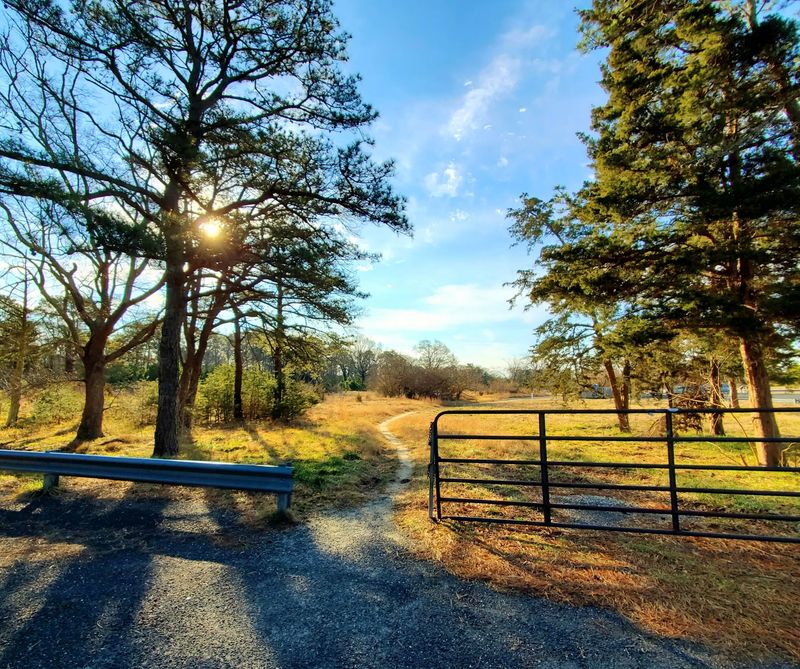
Few nature spots manage to feel this welcoming without feeling busy. Smooth paths, shaded benches, and a dock over the water give everyone somewhere comfortable to land.
Leashed dogs are a common sight here, trotting alongside walkers on the old asphalt loops. Keep the leash on and keep an eye out for stray fishing debris near the water’s edge.
Families spread out easily. Kids can ride bikes on the flat sections while grown-ups stroll behind at a slower pace, and picnicking near the lake is a popular way to end an afternoon.
Joggers seem to favor early hours, when the air is cool and the paths are nearly empty. Photographers linger longer, which makes sense given how much wildlife passes through.
Restroom facilities are limited, so plan accordingly and bring water. Part of the property is open to hunting in certain seasons, which is worth checking before you go.
Otherwise, just wander. That is really the whole point.
A Peaceful Alternative To The Crowded Shore
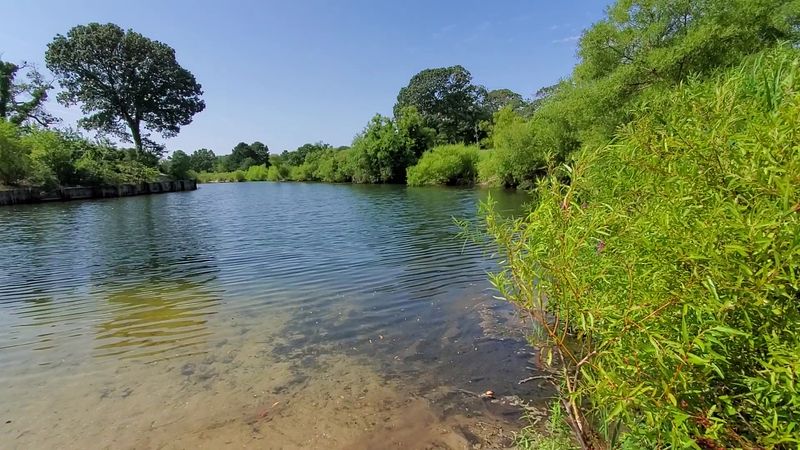
Cape May County gets busy in warm months, and that is part of the appeal of this particular escape. Just a short drive from the beaches, the noise drops away almost completely.
No boardwalk soundtrack, no scramble for parking. Just birdsong, wind in the oaks, and the occasional splash from the pond.
Visitors staying nearby often use it as a reset button between beach days, somewhere to stretch their legs without fighting for space. The contrast between packed sand and empty woodland trails is pretty striking.
Hours run daily, generally from morning through late afternoon, so plan around daylight rather than assuming round-the-clock access. Sunrise light on the water is spectacular if you can manage an early start.
Everything about Cox Hall Creek WMA feels unhurried, which is exactly why it sticks with you. New Jersey has plenty of famous outdoor spots, yet this one earns its quiet reputation honestly.
You can find it at Cox Hall Creek WMA, 5 Shawmont Ave, Villas, NJ 08251..
