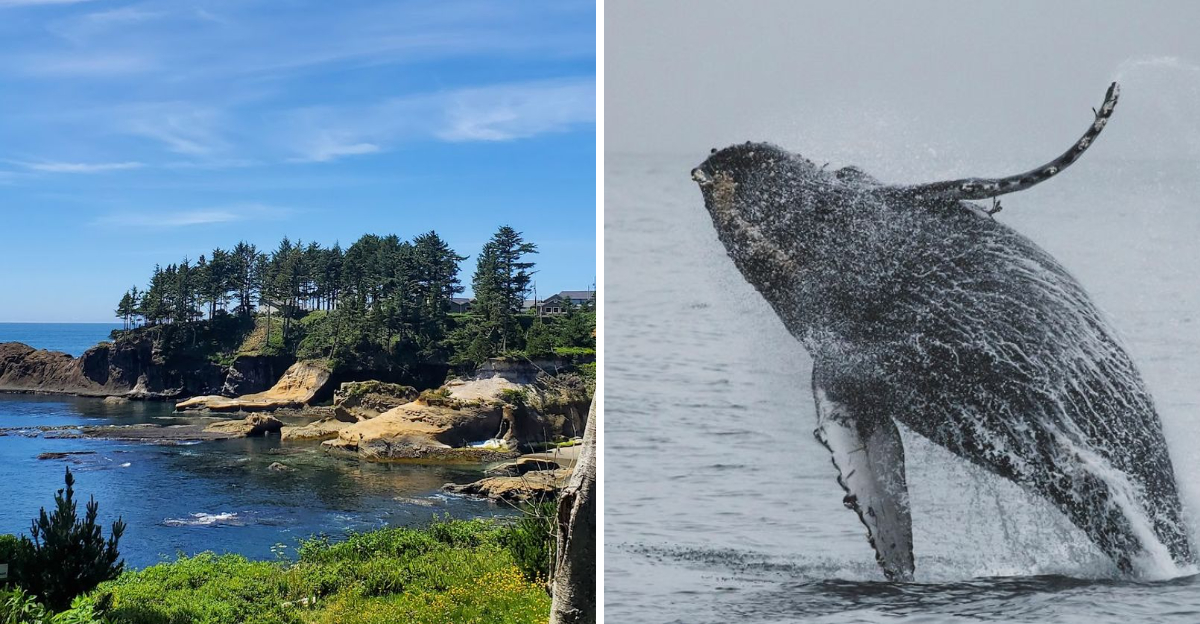
Two hundred gray whales feeding just twenty feet from the shore sounds like a nature documentary lie. But this little Oregon town delivers that magic on a regular basis without any special effects needed.
Most people drive past on the main highway without realizing what they are missing just below the guardrail. I stood on the seawall and watched a whale surface so close I could see its barnacles clearly.
The spray from their blows drifted right onto my jacket like a salty little souvenir from the encounter. Oregon really said let’s put one of the best whale watching spots in a town you can blink and miss.
Mothers and calves stay close to the rocks while they feed safely away from open ocean dangers. Binoculars help but honestly your naked eyes will do just fine from this perfect viewpoint.
The town is small and charming and completely unfussy about all the natural wonder happening in its front yard. Pull over next time because the whales are waiting and they do not care about your schedule at all.
The World’s Smallest Navigable Harbor
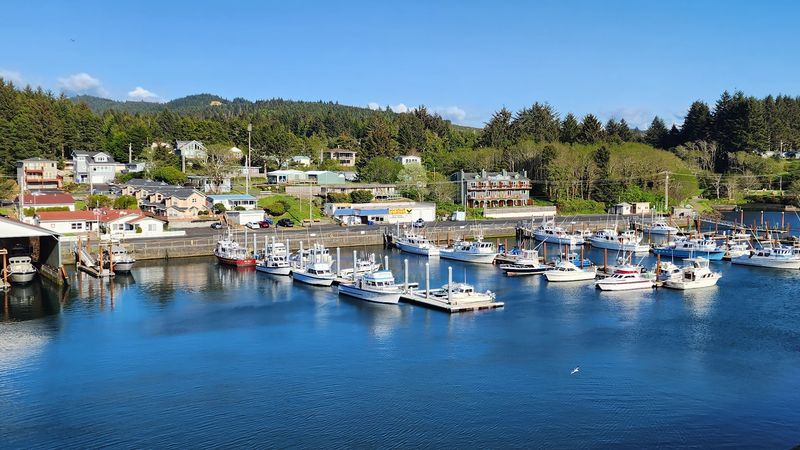
Standing at the edge of Depoe Bay’s harbor feels oddly surreal. The whole thing is just six acres, yet it functions as a working harbor with real boats coming and going through a narrow channel cut into the basalt rock.
It holds the title of the world’s smallest navigable harbor. That is not a local legend.
It is a verified, well-documented fact that gives this little town a surprisingly big identity.
Watching a fishing vessel squeeze through that tight channel is genuinely exciting. The gap between the rocks looks almost too narrow.
Somehow, the captains thread it with calm confidence every single time.
The harbor sits right along Highway 101, so you can watch all of this from the sidewalk. No ticket needed.
No hiking required. Just stop, lean on the railing, and let the whole scene unfold in front of you.
Gray Whale Watching From the Seawall
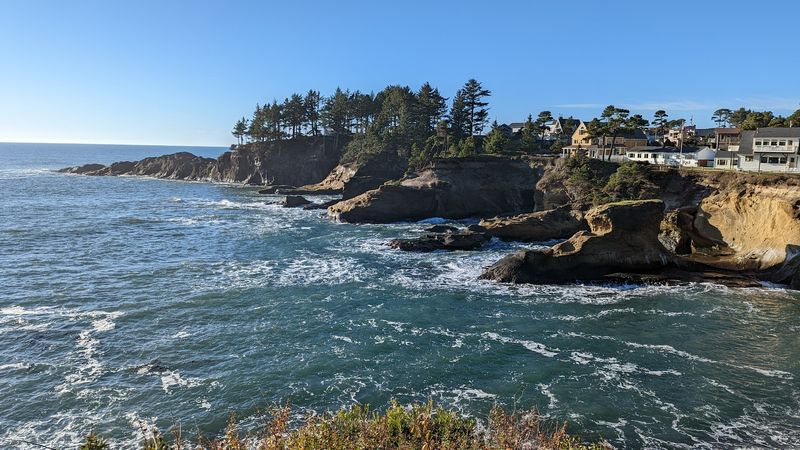
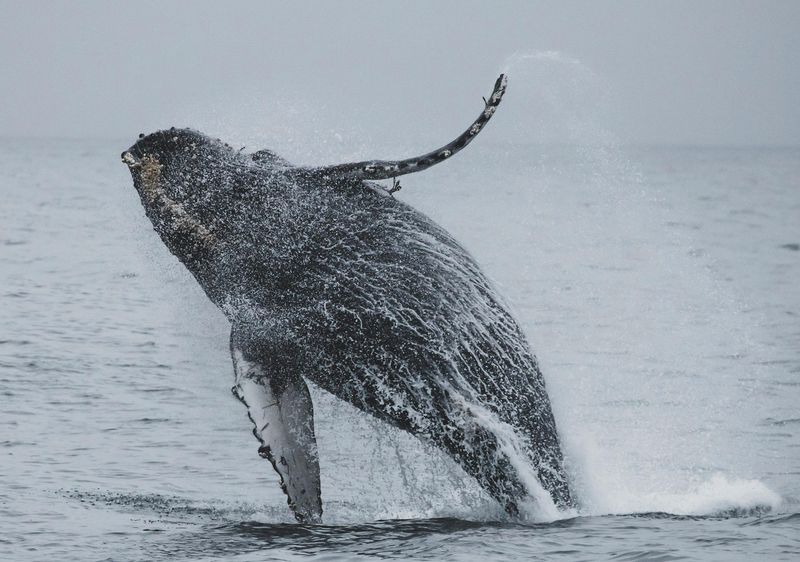
Nothing quite prepares you for a gray whale surfacing 20 feet away. I was standing on the seawall when a spout shot up right below me.
My stomach dropped in the best possible way.
Depoe Bay sits along the Pacific gray whale migration route. Around 200 whales take up seasonal residence here.
They feed in the shallow, nutrient-rich waters just offshore throughout much of the year.
The seawall runs right along Highway 101 through town. It is probably the most accessible whale watching spot in the entire country.
You park, walk a few steps, and the whales are just there.
Spring migration peaks around March and April. Resident whales stick around through summer, which makes spontaneous sightings pretty common.
Binoculars help, but honestly, sometimes you do not need them at all.
The Whale Watching Center on the Seawall
Right on the seawall, there is a free state-run facility dedicated entirely to whale watching. The Oregon State Parks Whale Watching Center is a small building with big windows.
Every one of those windows faces the ocean.
Trained volunteers called Whale Watching Spoken Here guides staff the center during peak seasons. They help visitors spot whales and explain what they are seeing.
It turns a cool experience into an educational one.
The center is especially busy during the twice-yearly Whale Watch Weeks. These happen around spring break and winter solstice.
Rangers and volunteers make sure nobody misses a spout.
Even outside those special weeks, the building stays open regularly. Interpretive displays inside explain gray whale behavior and migration patterns.
It is a surprisingly rich resource tucked into a very small space.
Address: Whale Watching Center, 119 SW Highway 101, Depoe Bay, Oregon
Spouting Horns Along the Rocky Coastline
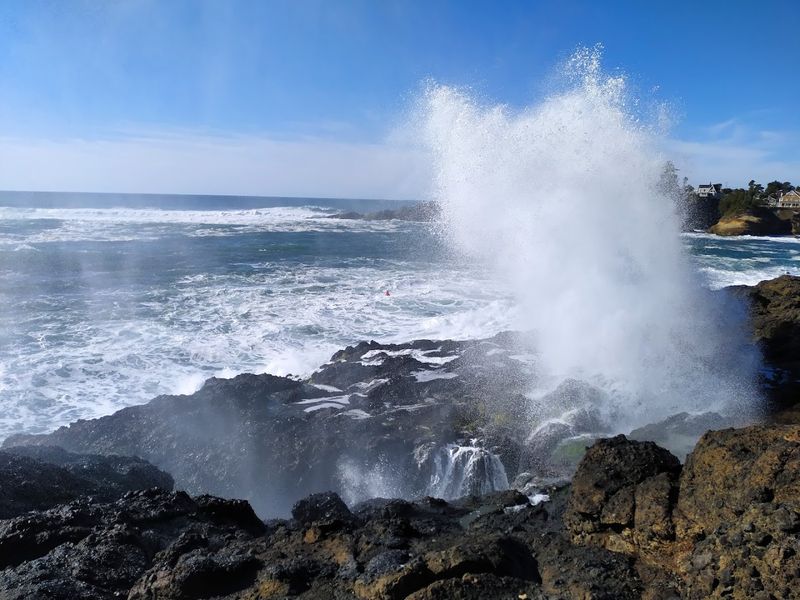
Depoe Bay has a geological party trick. Blowholes carved into the basalt cliffs shoot seawater high into the air when waves roll in just right.
Locals call them the spouting horns.
The spray can shoot 40 feet or higher during rough surf. On a windy day, you will feel the mist from yards away.
The sound is a deep, hollow boom that you feel more than hear.
These natural blowholes sit along the seawall walkway, making them incredibly easy to reach. No trail, no effort.
Just walk along the wall and listen for the boom.
Timing matters a little. Larger swells create the most dramatic displays.
But even on calm days, the blowholes push up enough water to make you step back instinctively.
Kids absolutely love this spot. Adults do too, even if they pretend to be more composed about it.
The spouting horns are genuinely one of the most fun natural features on the Oregon coast.
Whale Cove and the Scenic Overlook
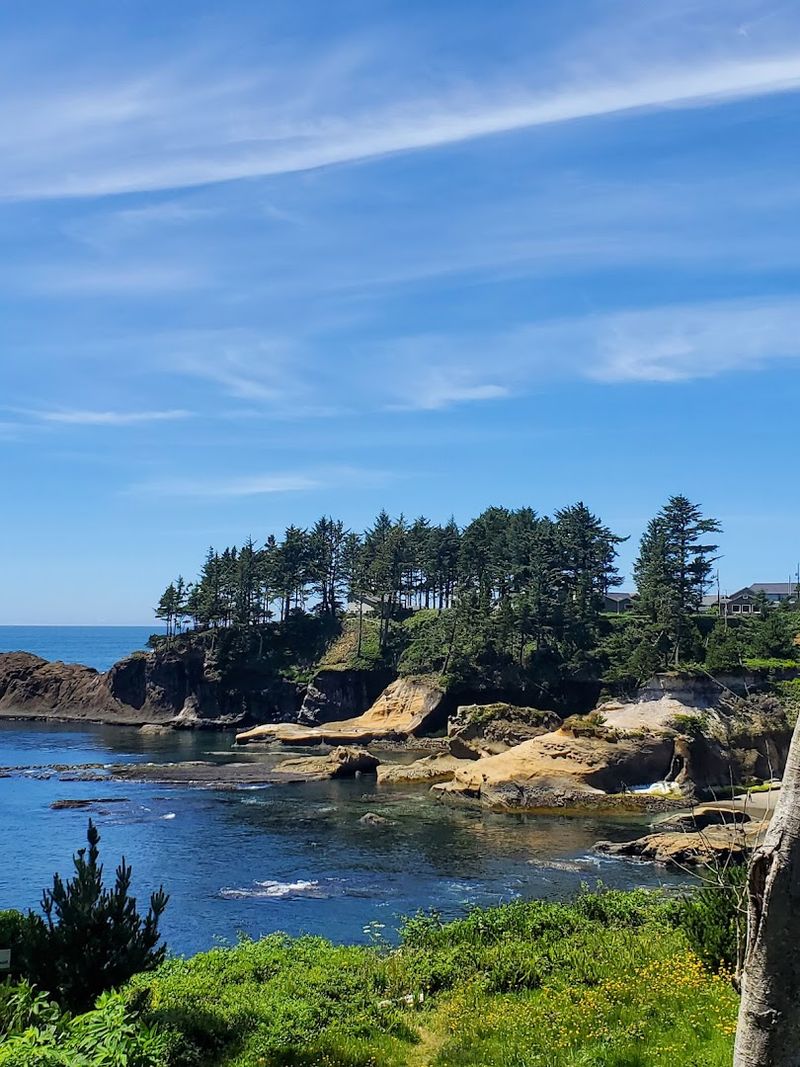
Just south of town, Whale Cove pulls you off the highway with almost no warning. A small pullout appears on the right.
Then the view opens up and everything stops.
The cove is a protected semicircle of calm water ringed by green headlands. The color of the water shifts depending on the light.
Sometimes it goes almost teal, which feels impossibly beautiful for the Pacific Northwest.
It is a short walk from the parking area to the overlook. The trail is not strenuous at all.
You get a sweeping view of the cove and the open ocean beyond it within just a few minutes.
Gray whales sometimes rest in the cove. Sea lions have been spotted here too.
The cove is protected, so the water stays calmer than the open coast.
Photographers love this spot during golden hour. The light hits the headlands in a way that makes every shot look like it was planned.
Bring a camera. You will use it.
Trolling for Salmon on a Charter Boat
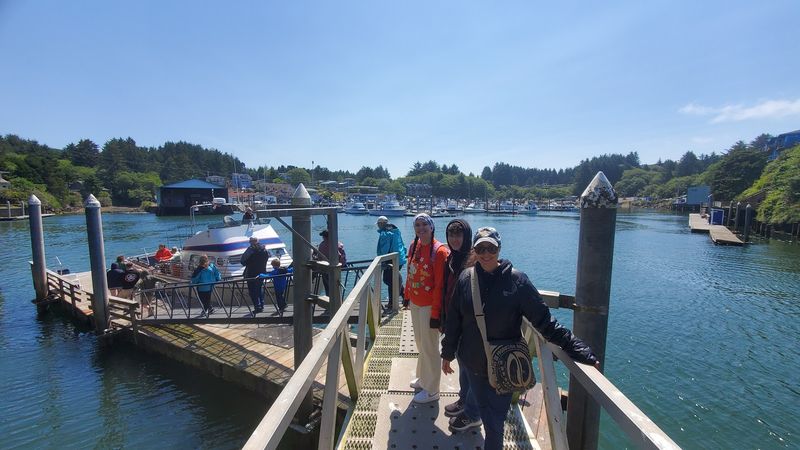
The charter fishing scene in Depoe Bay punches well above its weight. Several outfitters run trips right out of that tiny harbor.
Watching the boats exit through the narrow channel before heading into open water is exciting before you even cast a line.
Chinook and coho salmon are the main targets depending on the season. Bottom fishing trips go after rockfish and lingcod.
Both types of trips attract serious anglers and first-timers alike.
The captains here know these waters deeply. They have been navigating the same stretch of Pacific for years.
That experience shows in the way they read the water and move to find fish.
Half-day and full-day trips are available through multiple operators. Most charter companies are clustered right near the harbor.
You can book ahead or sometimes walk up and find space on a departure.
Even if you come back empty-handed, the ride itself is worth it. The coastline looks completely different from the water.
Rocky Creek State Scenic Viewpoint
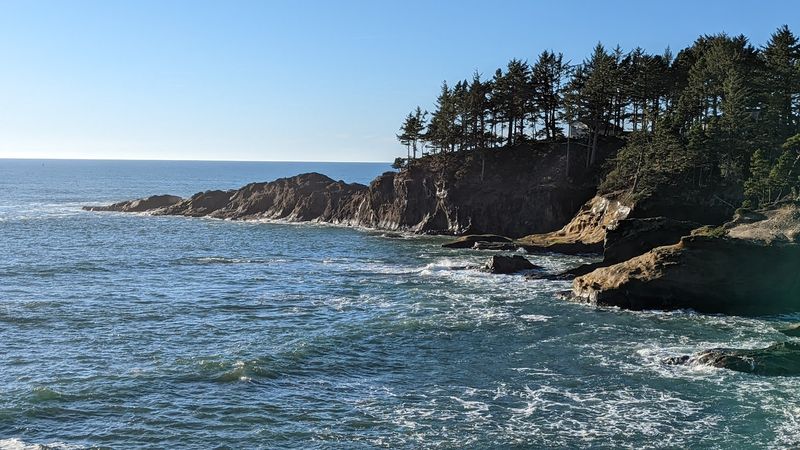
A couple of miles south of Depoe Bay, Rocky Creek State Scenic Viewpoint sits right on the edge of the coast. Most drivers pass it without noticing.
That is their loss.
The viewpoint offers a wide, unobstructed look at the Pacific. Grassy bluffs drop sharply to rocky shoreline below.
The wind here is almost always present, and somehow that makes it feel more alive.
Picnic tables dot the area, making it a good stop for lunch. There are no crowds, no entry fees, and no fuss.
Just open sky and ocean as far as you can see.
Gray whales have been spotted from this viewpoint during migration. The elevation gives you a different angle than the seawall.
Sometimes that height is exactly what you need to catch a spout in the distance.
It is the kind of place that feels like a secret even though it is right off the highway. A five-minute stop here can completely reset your mood.
The Tiny But Mighty Depoe Bay Bayfront
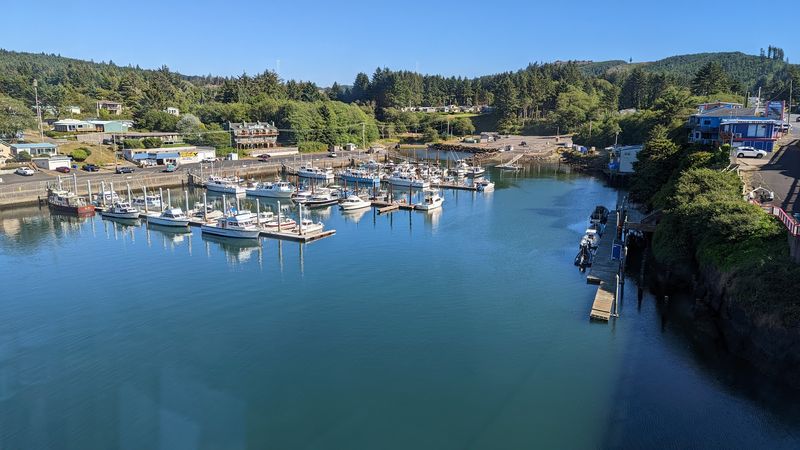
Depoe Bay’s bayfront is short enough to walk end to end in about ten minutes. That sounds like a limitation.
It is actually a feature.
Small shops line the main strip. Whale-themed everything fills the windows.
Gift shops, tackle stores, and a few food spots sit shoulder to shoulder along the seawall side of Highway 101.
The whole strip has a casual, unhurried energy. Nobody is rushing anywhere.
Visitors lean against railings and stare at the water. It feels like the town was designed for slow mornings.
Local seafood is the obvious draw for food. Clam chowder shows up in multiple spots and varies quite a bit from place to place.
Trying more than one version is completely justified.
The bayfront also connects directly to the whale watching center and the spouting horns. Everything in Depoe Bay is within walking distance of everything else.
That compactness is part of what makes it so charming and so easy to enjoy.
Otter Rock and Devil’s Punchbowl State Natural Area
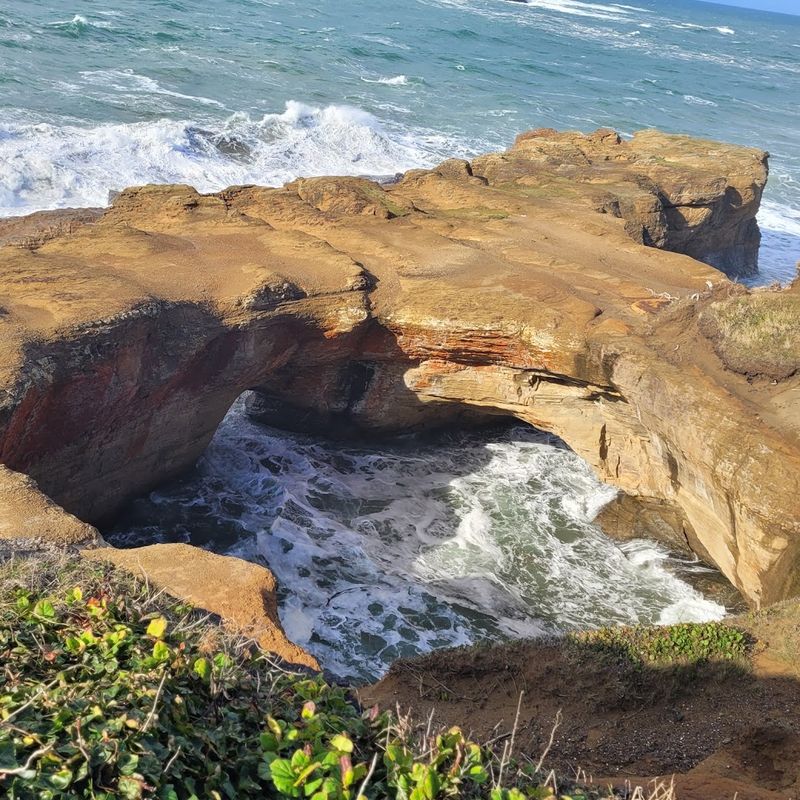
A short drive north of Depoe Bay sits one of the most dramatic geological features on the Oregon coast. Devil’s Punchbowl is a collapsed sea cave that now forms a bowl-shaped rock formation.
Waves pour in through gaps in the walls and churn inside like a natural cauldron.
The viewpoint above gives you a direct look down into the bowl. Watching the water surge in and out is hypnotic.
During high surf, the whole thing roars and foams in a way that feels almost theatrical.
A small beach sits just north of the formation. Tide pooling here is excellent during low tide.
Sea stars, anemones, and small crabs appear in the rocky pools.
The area is part of a state natural area, so it is protected and well-maintained. Parking is easy.
The walk to the viewpoint is minimal.
Address: Devil’s Punchbowl State Natural Area, 89013 First Street, Otter Rock, Oregon
Cape Foulweather and the Wind That Named It
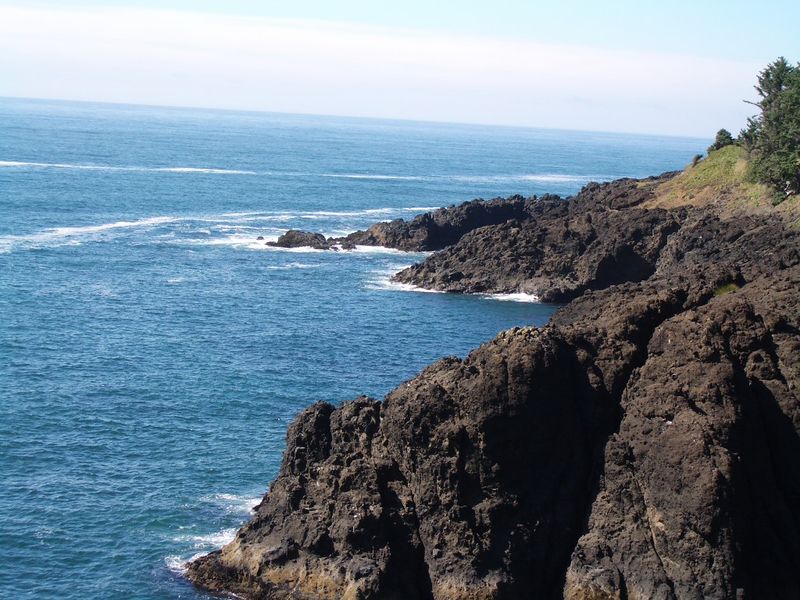
Captain James Cook named Cape Foulweather in 1778. He encountered rough conditions here and the name stuck.
Standing at the viewpoint today, it is easy to understand why.
The cape juts into the Pacific at about 500 feet above sea level. Wind hits you the moment you step out of the car.
It is the kind of wind that makes you lean into it to stay upright.
The view from the top is enormous. On clear days, you can see the coastline stretching for miles in both directions.
Fog rolls in and out quickly, which adds a moody, unpredictable quality to the whole experience.
A gift shop and small viewpoint area sit at the top. It is a popular stop for visitors driving the 101 corridor.
Most people linger longer than they planned.
Gray whales pass by this headland during migration. The elevation makes spotting spouts a little easier.
Bring a jacket regardless of what the forecast says. The cape earns its name regularly.
