A locked gate usually means keep out. But sometimes it means keep everyone else out. That is a huge difference. Most trails are crowded, loud, and full of Bluetooth speakers.
This one hands you a literal key like you are in a secret society. No ranger. No ticket booth. Just you, a piece of metal, and a whole lot of trust.
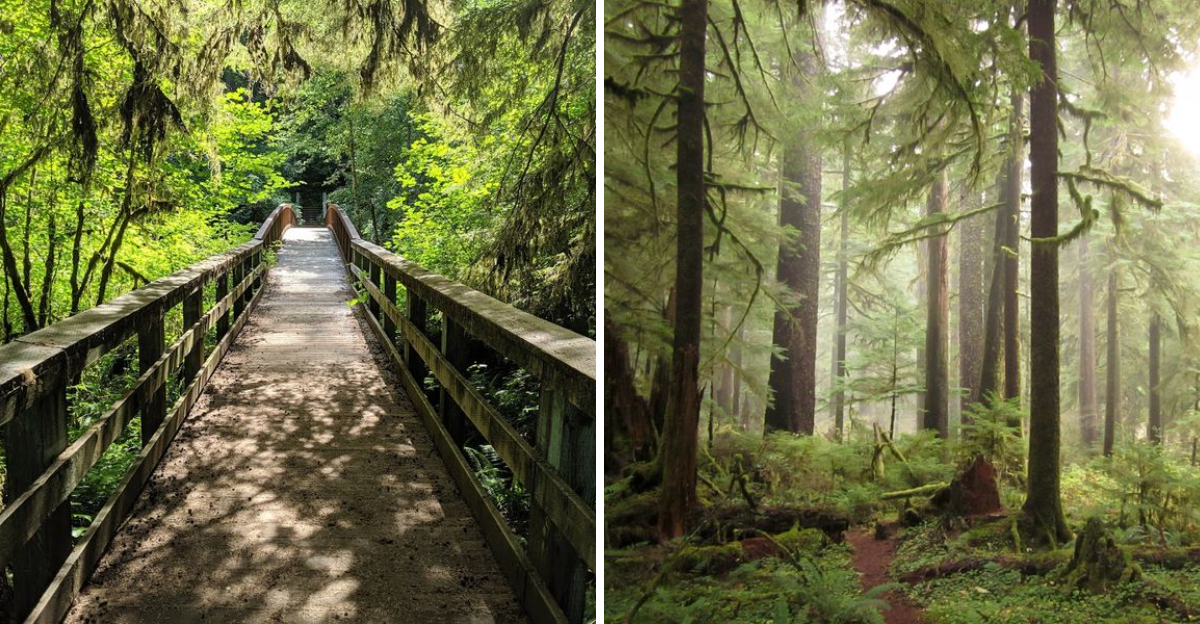
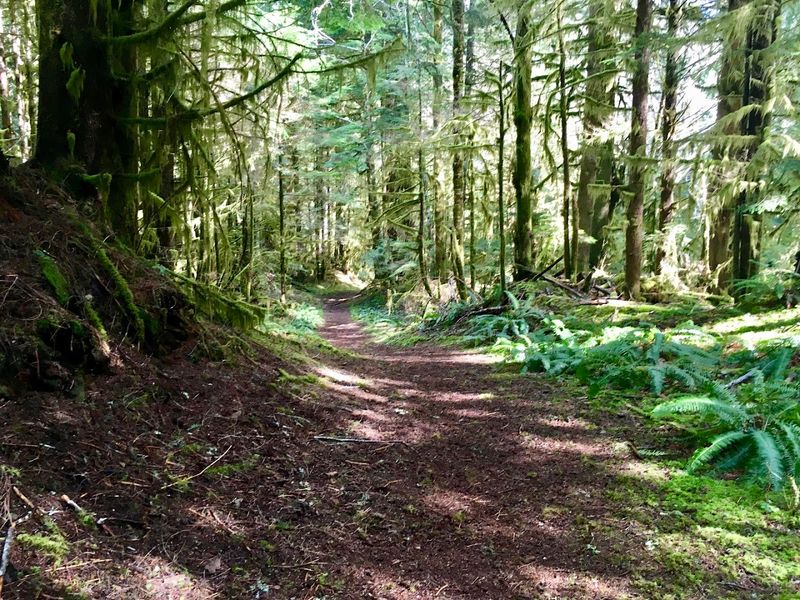
The boardwalk floats through an ancient forest that feels forgotten by time. Moss hangs everywhere.
The trees are so big they make you feel small in a good way. You will unlock the gate, walk in, and immediately understand why privacy is the real luxury.
Just do not lose the key.
The Key System That Keeps This Place Special
Not every trail in Oregon asks you to borrow a key before you walk it. Valley of the Giants does, and that single detail changes everything about the experience.
The Bureau of Land Management manages access through a locked gate system. Visitors must contact the BLM Salem District office ahead of time to arrange key pickup.
That small step filters out casual drop-ins and keeps the forest quieter than most.
It sounds like extra hassle at first. But think about what that means once you actually get there.
You arrive to a place that is not overrun. The trail feels personal.
You are not shuffling behind a crowd or waiting for someone to move out of a photo spot.
The key system is a quiet kind of genius. It protects the forest without closing it off completely.
It rewards the people who plan ahead and put in the effort. That earned feeling follows you the whole way around the loop, and it makes every giant tree feel like a private discovery.
Ancient Douglas Firs That Redefine Big
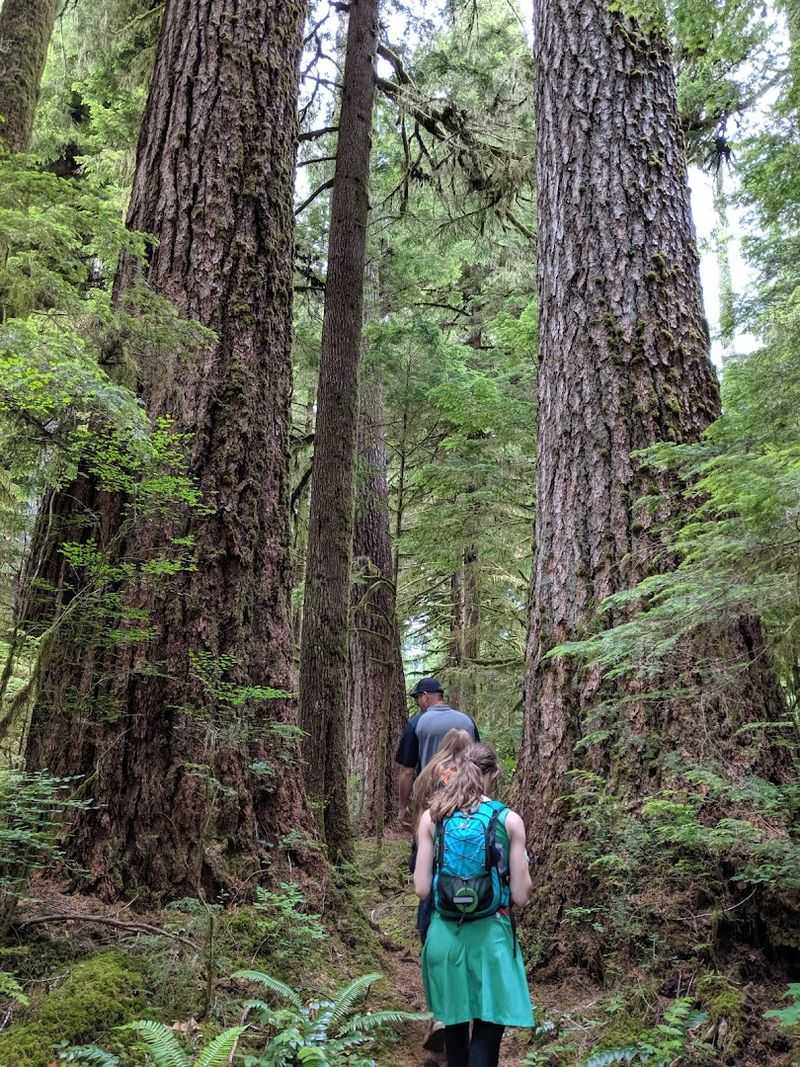
The trees here are not just large. They are the kind of large that stops your feet mid-step and makes your brain work harder to process what it is seeing.
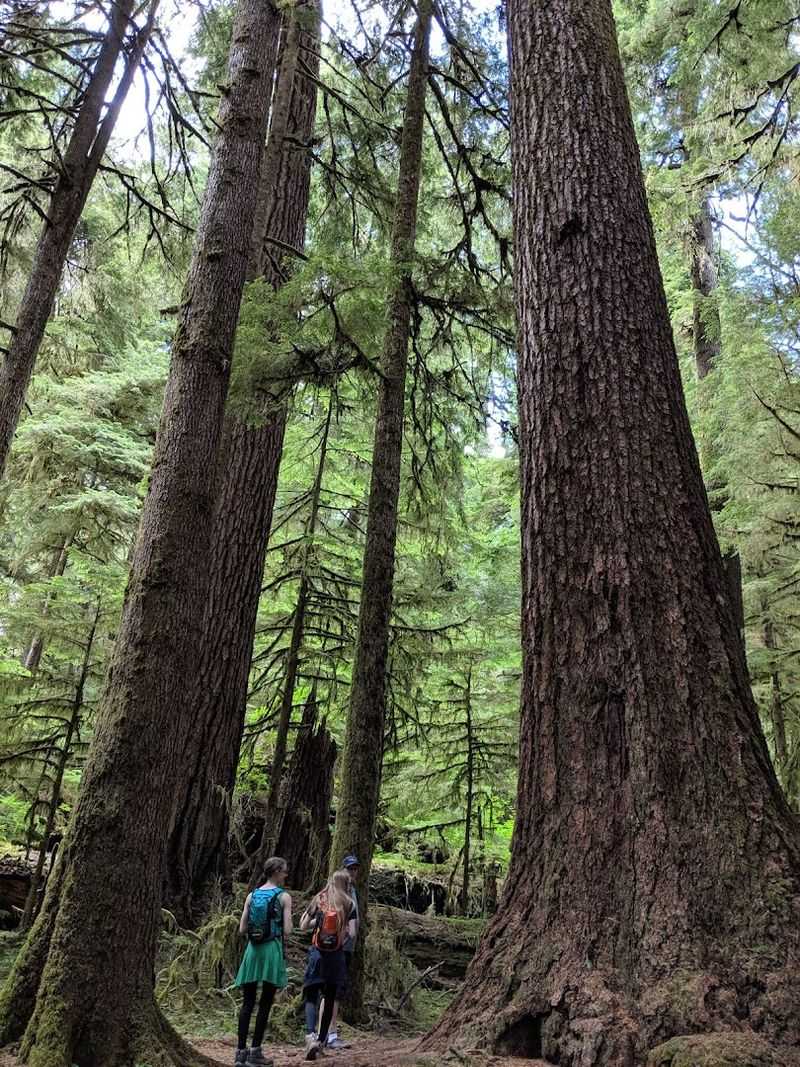
Some of the Douglas firs in this 51-acre grove are over 400 years old. Their trunks are wider than most living rooms.
The bark is deeply furrowed, covered in thick green moss, and cool to the touch even on warm days.
One of the largest Douglas firs in Oregon once stood here. It fell in 1981.
Even gone, its legacy shapes how people talk about this forest. The trees that remain are still jaw-dropping by any standard.
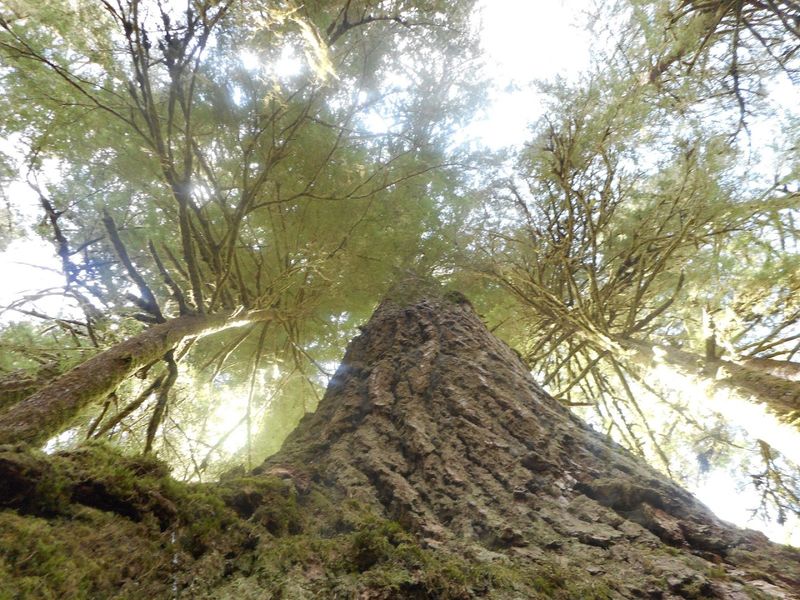
Standing at the base of one of these giants and looking straight up is a genuinely humbling moment. The canopy closes in above you like a cathedral ceiling.
Light filters through in soft, shifting patches. There is a stillness here that does not exist in younger forests.
These trees have been growing since before the United States existed as a country.
The Long Drive That Is Part of the Adventure
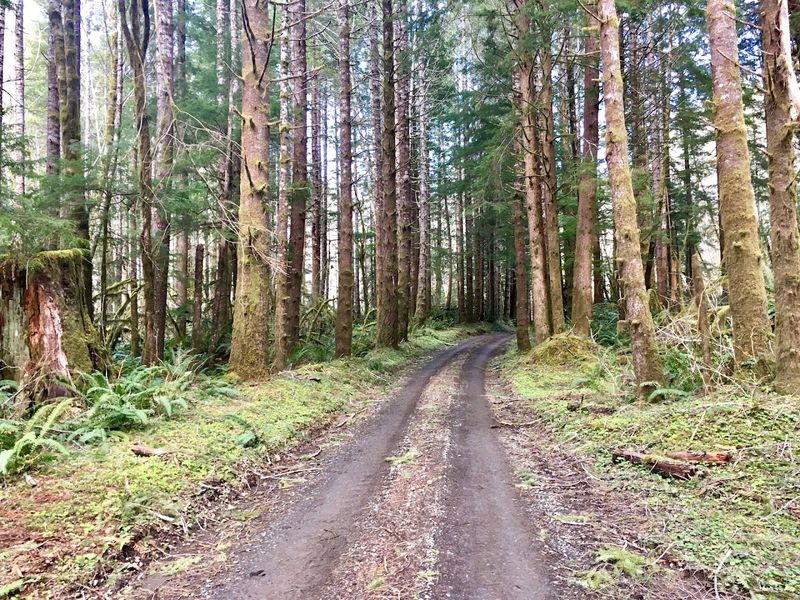
Getting to Valley of the Giants is not a quick detour. The drive from Falls City takes roughly 90 minutes on gravel logging roads that wind deep into the Coast Range.
It is slow, sometimes bumpy, and completely beautiful.
The roads pass through active timber land. You share the route with logging trucks at times, so staying alert matters.
A vehicle with decent ground clearance makes the trip more comfortable, though people have made it in standard cars.
Do not trust GPS navigation for this route. Google Maps has led people to dead ends and locked gates more than once.
The BLM provides written directions from their Salem office, and those are the ones to follow. Orange VOG marker signs along the route help confirm you are on track.
The drive itself is scenic in a raw, unpolished way. Rivers appear alongside the road.
Moss-covered hillsides rise steeply on both sides. By the time the trailhead comes into view, the long drive has already started to feel like the right kind of warm-up for what comes next.
A Boardwalk and Trail Loop Built for Close Encounters
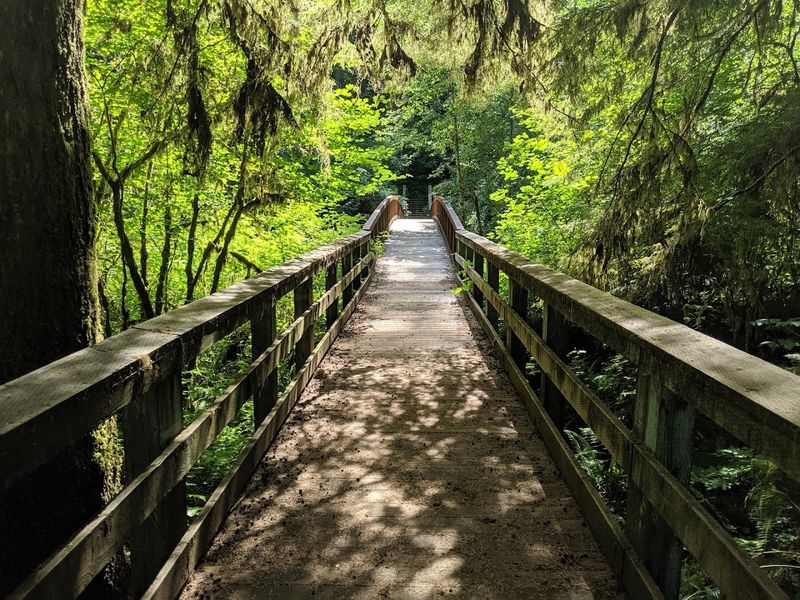
The trail at Valley of the Giants runs about 1.3 miles in a loop. Short on paper, but rich in experience from the first step to the last.
The path drops down into the valley first, which means you earn your way back out at the end. Some sections are steep and rooted.
After rain, the trail gets slippery, so solid footwear is a smart choice. The BLM has maintained the trail well enough that most capable hikers can manage it.
Five small bridges cross water along the route. Each one offers a different view of the forest floor and the streams below.
The bridges are simple and sturdy, fitting naturally into the landscape without feeling overdone.
The boardwalk sections bring you right up close to the base of the largest trees. There is no keeping a comfortable distance here.
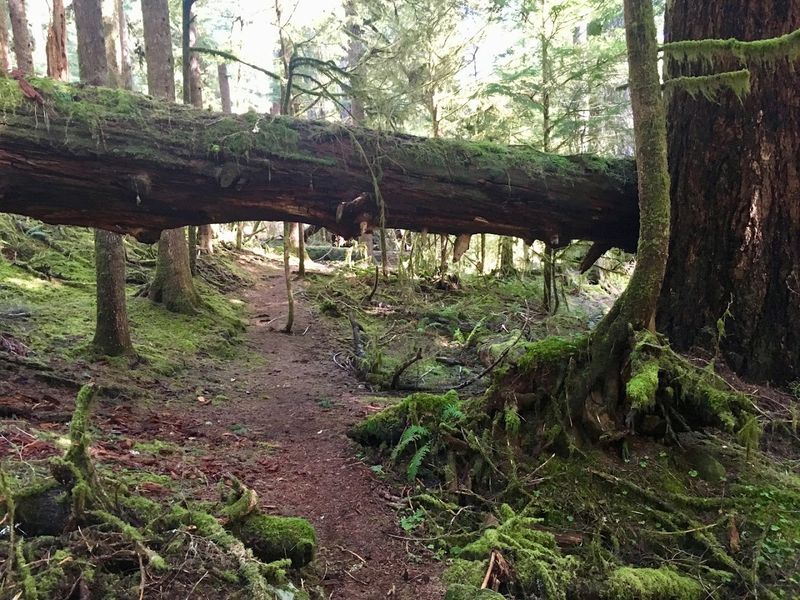
You are in the forest, not observing it from a safe path. Roots cross the trail.
Fallen giants lie beside it. The whole loop feels like a slow, deliberate conversation with one of the oldest living places in the Pacific Northwest.
The Siletz River Crossing That Sets the Mood
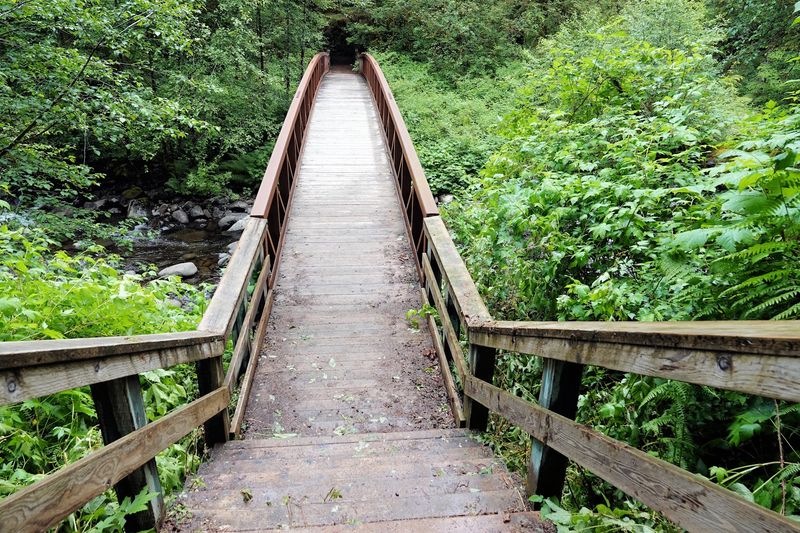
Early into the hike, the trail leads you down to the Siletz River and across a steel footbridge. That crossing is a moment worth pausing for.
The river runs cold and clear over rounded stones. The sound of moving water fills the canyon below the bridge.
Looking upstream, the forest walls close in on both sides in deep, layered green. It feels removed from the modern world in a way that is hard to describe but very easy to feel.
Years ago, a fallen old-growth log served as the crossing. That log is long gone now, replaced by the engineered steel bridge that stands there today.
The new bridge is practical and safe. But knowing the history adds a layer of texture to the moment.
Crossing the Siletz marks a kind of threshold in the hike. The valley opens up on the other side, and the biggest trees begin to appear.
What It Actually Feels Like Inside the Grove
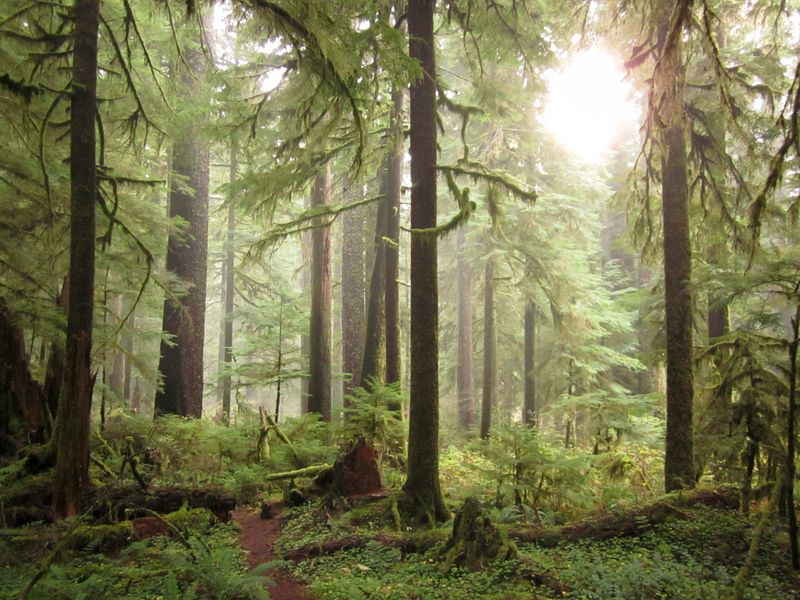
Walking into the old-growth grove at Valley of the Giants produces a feeling that is hard to prepare for. The scale shifts in a way your eyes take a moment to accept.
The canopy is so high above that individual branches become hard to distinguish. The trunks near the base are wider than cars.
Moss covers everything, bark, rocks, fallen logs, even the soil itself. The air smells thick and alive, like the forest is breathing around you.
Sunlight barely reaches the ground in most spots. The light that does filter through arrives in pale green and gold patches that move slowly as the canopy shifts.
It is dim and cool even on bright days.
People often describe this forest as spiritual or timeless, and standing inside it, those words stop feeling dramatic. The silence is not empty.
It is full of small sounds, water, wind in the high canopy, birds moving through the understory.
Wildlife That Calls This Forest Home
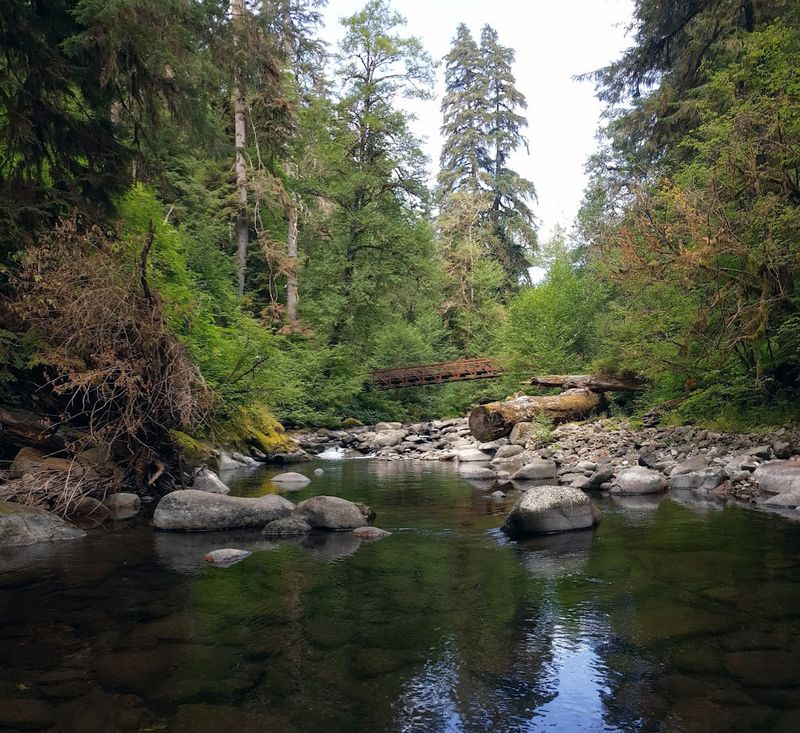
Valley of the Giants is not just a tree destination. The forest and surrounding land support a range of wildlife that hikers sometimes encounter along the trail.
Elk move through the area regularly. Spotting a Roosevelt elk standing among the massive firs is the kind of moment that does not need a filter or a caption.
It simply lands. The animals are large, quiet, and completely at home in a way that reminds you who the real residents here are.
Birds are active throughout the grove. The forest is dense enough to support species that need old-growth habitat, including woodpeckers working high on the snags above the trail.
Listening carefully while walking adds a whole new dimension to the hike.
The Siletz River corridor also supports fish and other riparian wildlife. The entire ecosystem feels intact here in a way that is increasingly rare across the Coast Range.
Most of the surrounding land has been logged at some point.
How to Plan Your Visit Without Getting Lost
Planning a trip to Valley of the Giants takes more preparation than most Oregon hikes. The reward is absolutely there, but the logistics need attention before you leave home.
Start by contacting the BLM Salem District office. They provide written directions and arrange key access for the gate.
Their phone number is listed on the official BLM website. Download offline maps before leaving cell range, because service disappears well before you reach the trailhead.
Follow the BLM directions from Falls City. Cross the bridge in town, stay straight, and watch for orange VOG marker signs along the route.
Those small signs are your confirmation that you are on the right road. Do not rely on Google Maps for this leg of the journey.
Pack food and water for the full day. There are no bathrooms at the trailhead and no services anywhere along the route.
Start early enough to complete the drive and hike well before sunset.
Why the Remoteness Is Actually the Point
Some people arrive at Valley of the Giants frustrated by the distance and the confusing roads. Most of those same people leave understanding exactly why it is this hard to reach.
The remoteness is not a flaw in the experience. It is the experience.
Every mile of gravel road, every fork in the logging track, every moment of uncertainty about the route, it all adds up to a sense of arrival that easier trails cannot replicate.
When you finally park and step out, the quiet hits immediately. No highway noise.
No crowds. Just the forest doing what it has been doing for centuries.
That quiet feels earned in a way that a paved parking lot and a busy trailhead never could.
The drive back is its own reward too. At night, the stars above the logging roads are extraordinary.
The sky opens up above the clear-cuts in a way it cannot inside the canopy.
The Lasting Impression This Place Leaves Behind
Most hikes fade from memory within a few weeks. Valley of the Giants is not that kind of hike.
The images stay sharp for a long time after the visit ends.
There is something about being surrounded by trees that predate modern history. These firs were already old when explorers first mapped this coastline.
They survived storms, fires, and the logging that cleared most of the surrounding Coast Range. Standing among them feels like a quiet act of witnessing.
People who visit often describe the experience as humbling or calming. Some use stronger words.
The forest has a way of making human timescales feel very small without making you feel insignificant. It is a rare combination.
The effort required to get here adds meaning to the memory. You did not stumble across this place.
You planned, you drove, you borrowed a key, and you walked down into a valley where the trees are older than the nation itself. That story belongs to you in a way that easy destinations rarely do.
Valley of the Giants earns its place in memory honestly.
