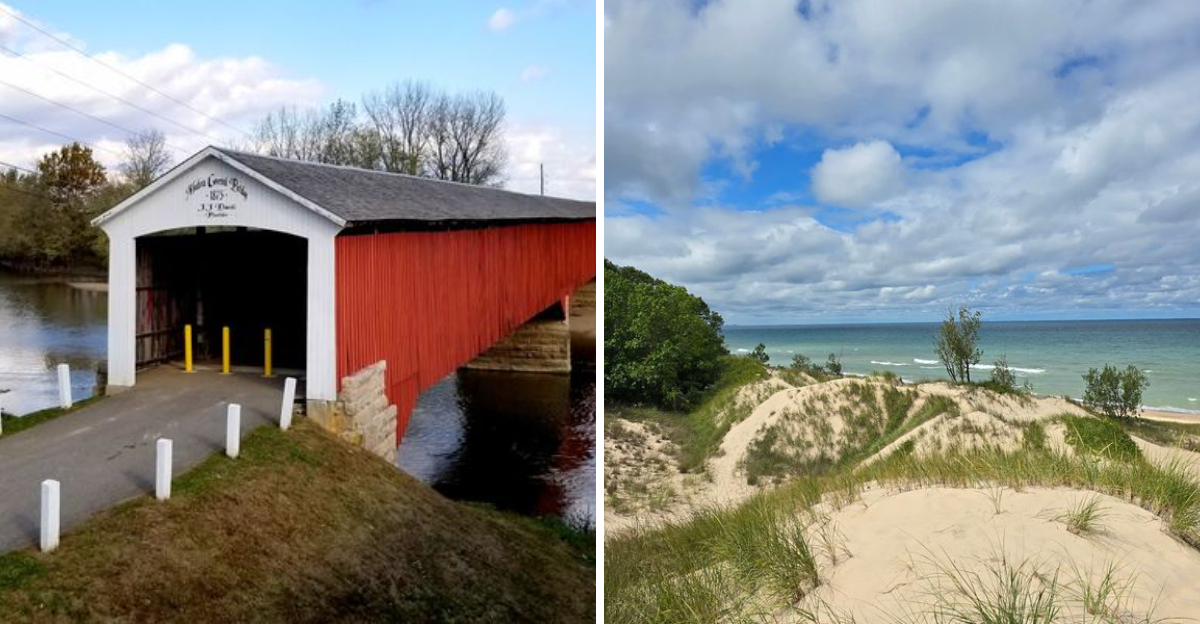
I’ll be honest with you. I spent years thinking Indiana was just cornfields and interstate exits, and I almost missed some of the most jaw-dropping places I’ve ever visited.
Once I started poking around beyond the usual tourist spots, I found underground rivers, wolf sanctuaries, and a candy castle that genuinely made me feel like a kid again. Indiana has this quiet confidence about it, like it knows something you don’t, and it’s just waiting for you to figure it out.
These ten day trips are the ones most people drive right past without knowing what they’re missing, and every single one of them is worth clearing your schedule for.
1. Rotary Jail Museum, Crawfordsville
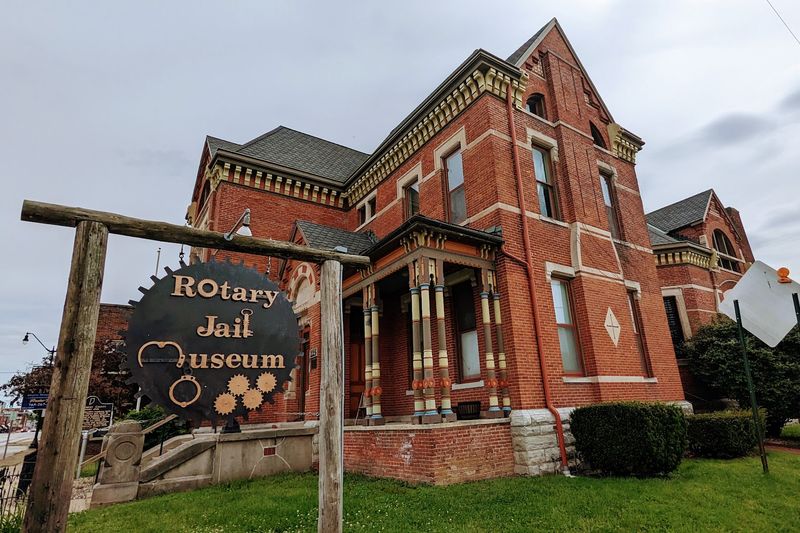
Most people have never been inside a jail that literally spins. The Rotary Jail Museum in Crawfordsville is home to one of only three remaining rotary jails in the entire country, and it is genuinely one of the strangest and most fascinating buildings you will ever walk through.
Built in 1882, the jail features a two-story cylindrical cage that rotates on a central axis, meaning guards could control prisoner access to individual cells without ever unlocking a single door.
The design was patented by William Brown and Benjamin Haugh, who believed it would make jails safer and more efficient. In practice, it turned out to be a bit of a nightmare, since the rotating mechanism sometimes trapped prisoners’ limbs.
The jail stopped being used as a correctional facility in 1973, and today it operates as a museum with incredibly knowledgeable staff who walk you through every detail.
Crawfordsville itself is a charming small town worth exploring. General Lew Wallace, who wrote Ben-Hur, lived here, and his study is preserved nearby at 200 Wallace Ave. Grab lunch at Café Rosenberg on Green Street before heading in.
The museum is located at 225 N Washington St, Crawfordsville, IN 47933. Admission is affordable, and the whole visit takes about an hour and a half.
Bring your camera because every angle of that spinning cage is worth photographing.
2. Wolf Park, Battle Ground
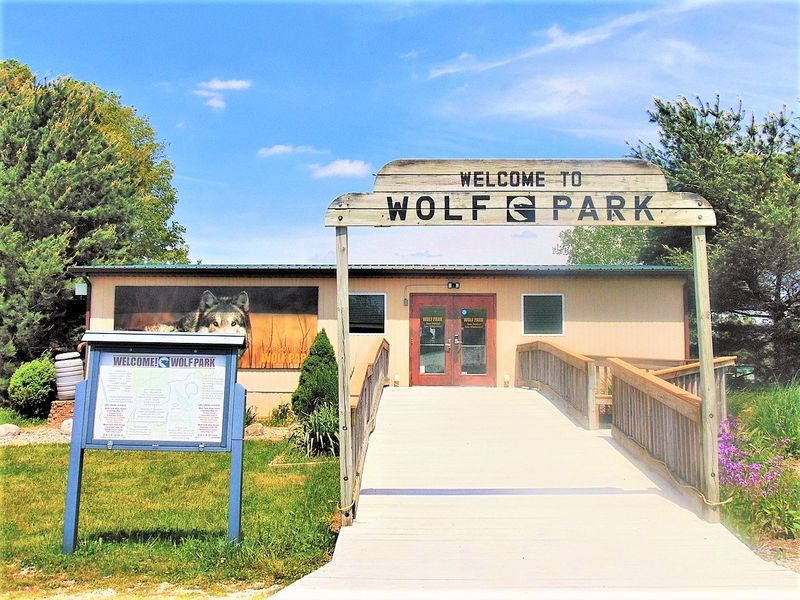
There is something unforgettable about watching a gray wolf move. Wolf Park in Battle Ground, Indiana gives you the rare chance to observe wolves up close in a setting that feels nothing like a zoo.
Founded in 1972, this non-profit educational facility sits on sprawling land and is home to gray wolves, red foxes, gray foxes, and bison, all species native to Indiana’s natural history. The wolves here are socialized to humans, which means you can actually watch them interact naturally without barriers ruining your view.
The park runs guided tours where staff explain wolf behavior, pack dynamics, and conservation efforts in real detail. One of the most popular programs is Howl Night, held on Friday and Saturday evenings, where visitors howl together and the wolves howl back.
It sounds silly until it actually happens, and then it becomes one of those moments you talk about for years. Reservations are required, so plan ahead before you go.
Wolf Park is located at 4004 E 800 N, Battle Ground, IN 47920, just outside of Lafayette. After your visit, the nearby city of Lafayette has great options for food and exploration.
Bistro 501 on Main Street is a popular local spot for dinner. The whole experience feels more like a wildlife encounter than a typical attraction, and for anyone who loves animals or the outdoors, it is absolutely worth the drive.
3. Jug Rock Nature Preserve, Shoals
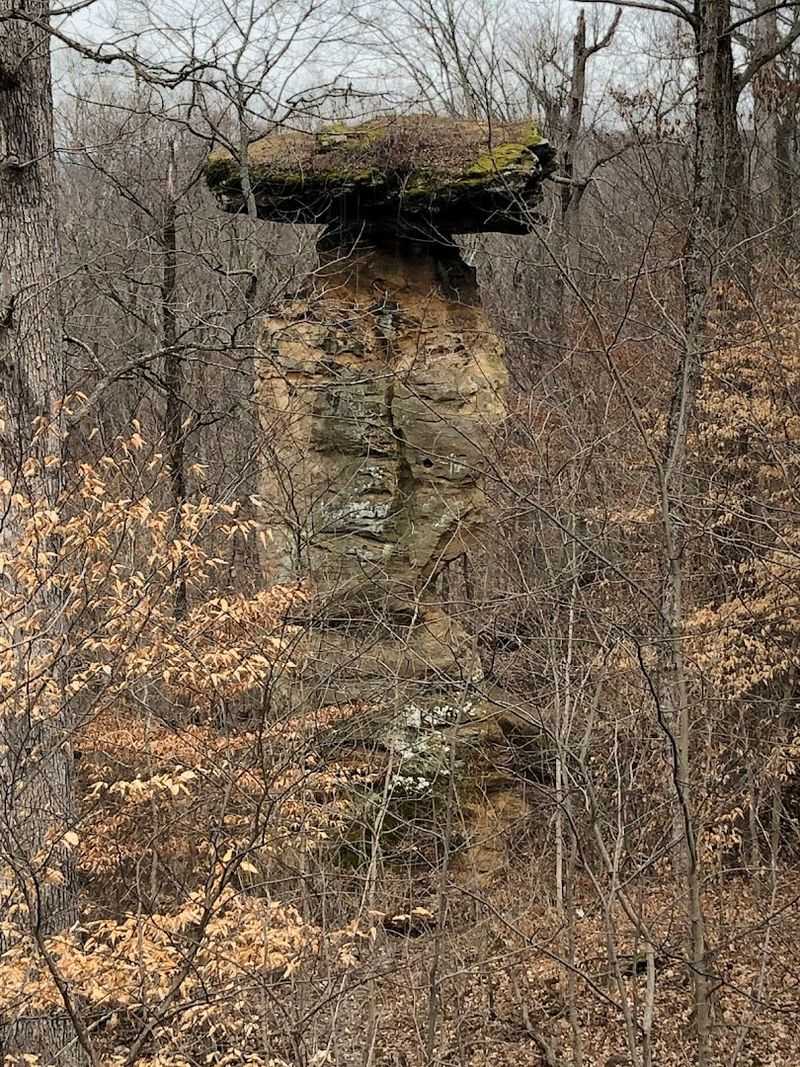
Imagine a giant stone jug sitting in the middle of the Indiana woods, nearly 60 feet tall, carved entirely by nature over millions of years. That is exactly what Jug Rock is, and it holds an impressive record as the largest free-standing table rock formation east of the Mississippi River.
Located near Shoals in Martin County, this geological wonder is the kind of thing that stops you in your tracks the moment it comes into view through the trees.
The hike to reach Jug Rock is short and family-friendly, making it accessible for most age groups. The trail winds through quiet forest before opening up to a clearing where the formation rises dramatically from the earth.
The rock itself is made of sandstone, shaped by centuries of erosion that stripped away the surrounding material while leaving this stubborn column standing. It is oddly majestic in the best possible way.
Jug Rock sits along US-50 near Shoals, IN 47581, and there is no admission fee to visit the preserve. While you are in the area, the nearby Shoals town square has a few local spots worth checking out for a quick bite.
Martin County is also home to Hindostan Falls, another underrated natural attraction just a short drive away. Pairing both stops makes for a full and rewarding day out in a part of Indiana most people completely overlook.
Go on a weekday and you may have the whole place to yourself.
4. Seven Pillars of the Mississinewa, Peru
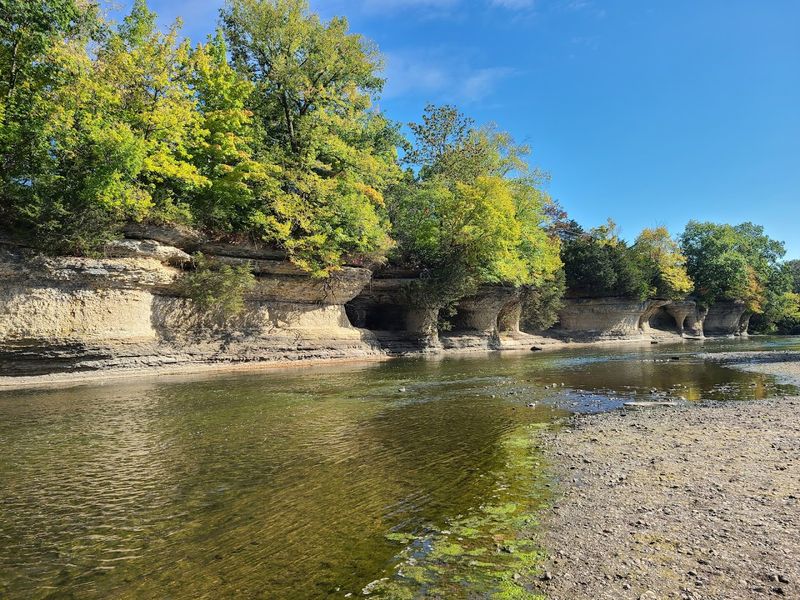
Not many people know that Indiana has its own version of dramatic limestone pillars carved by a river over thousands of years. The Seven Pillars of the Mississinewa are a series of towering limestone formations that rise along the banks of the Mississinewa River near Peru, Indiana.
They have a quiet, almost ancient energy about them, and standing at the water’s edge looking up at those carved rock faces feels genuinely awe-inspiring.
The formations were created by centuries of water erosion eating away at the softer limestone, leaving behind these dramatic vertical columns. The area has historical significance as well.
Miami Nation chief Frances Slocum, also known as Maconaquah, is closely tied to this region, and the nearby Frances Slocum State Recreation Area honors her memory and the deep Native American heritage of the land. The whole area carries a sense of history that adds weight to the natural beauty.
The Seven Pillars are accessible off Mississinewa Rd and W 400 S near Peru, IN 46970. There is a small parking area and a short path to reach the best viewing spots along the river.
Peru itself is a charming town with a surprisingly rich circus heritage, as it was once the winter home of several major American circuses. The International Circus Hall of Fame at 3076 Circus Lane is worth a quick stop if you have extra time.
Bring a picnic and make an afternoon of it.
5. Medora Covered Bridge, Medora
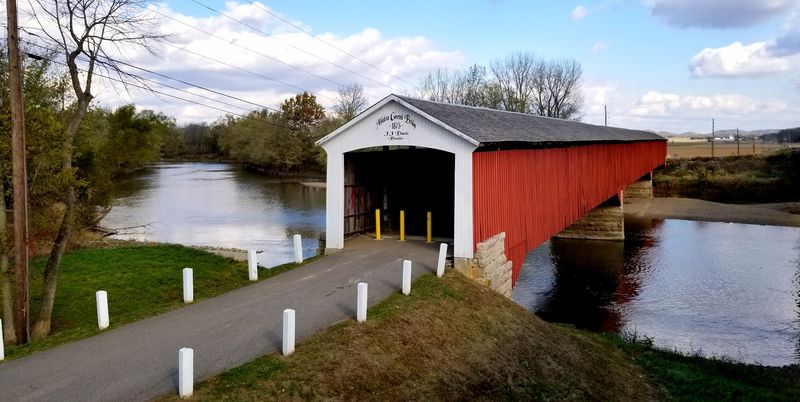
Indiana has more covered bridges than almost any other state, but Medora Covered Bridge is in a category all its own. Built in 1875, it is the longest covered bridge in the entire state of Indiana, stretching 434 feet across the East Fork of the White River.
There is something quietly romantic and genuinely impressive about a wooden bridge that long, and seeing it for the first time feels like stumbling into a painting.
The bridge is a multiple-span Burr arch truss design, which is part of what allowed it to reach such an unusual length. For decades it carried vehicle traffic, but today it is preserved as a pedestrian landmark and historic site.
Walking across it gives you a real sense of 19th century craftsmanship. The wooden interior muffles sound and filters light in a way that feels almost cathedral-like, especially on a bright afternoon.
Medora Covered Bridge sits along State Rd 235 near Medora, IN 47260 in Jackson County. The surrounding area is peaceful and rural, perfect for a slow afternoon drive.
The nearby town of Brownstown has local diners worth trying if you need lunch. Jackson-Washington State Forest is also close by and offers hiking and camping for those who want to extend the day.
This is the kind of spot that locals love but rarely think to mention to visitors, which makes finding it feel like a personal discovery every single time.
6. Bluespring Caverns Park, Bedford
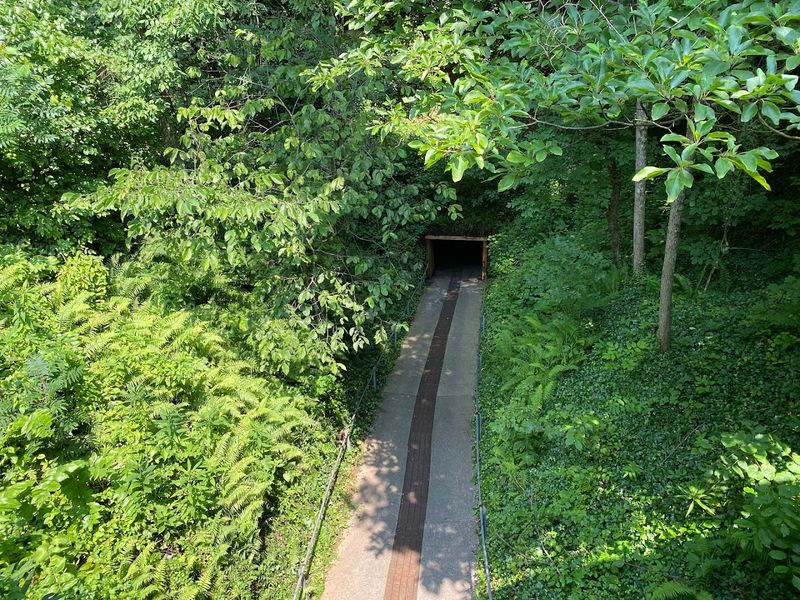
Somewhere beneath the rolling hills of southern Indiana, a river flows in total darkness. Bluespring Caverns near Bedford is home to the longest navigable underground river in the United States, and touring it by boat is one of the most genuinely otherworldly experiences the state has to offer.
The tour lasts about an hour, and you spend most of it gliding silently through cavern passages that took millions of years to form.
What makes Bluespring especially memorable is the wildlife. Because the cave has been sealed off from light for so long, the creatures living in it have adapted in remarkable ways.
Blind cavefish, eyeless crayfish, and cave salamanders all inhabit the Myst’ry River, and guides point them out as you float past. The temperature inside stays a constant 52 degrees year-round, so bring a light jacket even in summer.
The park is located at 1459 Blue Springs Cavern Rd, Bedford, IN 47421, and is open from mid-March through the end of October. Bedford itself is known as the Limestone Capital of the World and has fascinating quarry history worth exploring nearby.
Spring Mill State Park, about 20 minutes away, is another excellent stop to pair with your cavern visit. Families with kids especially love Bluespring because it hits that perfect balance of educational and genuinely exciting.
Book your tour tickets online in advance during peak summer months to avoid long waits at the gate.
7. Mounds State Park, Anderson
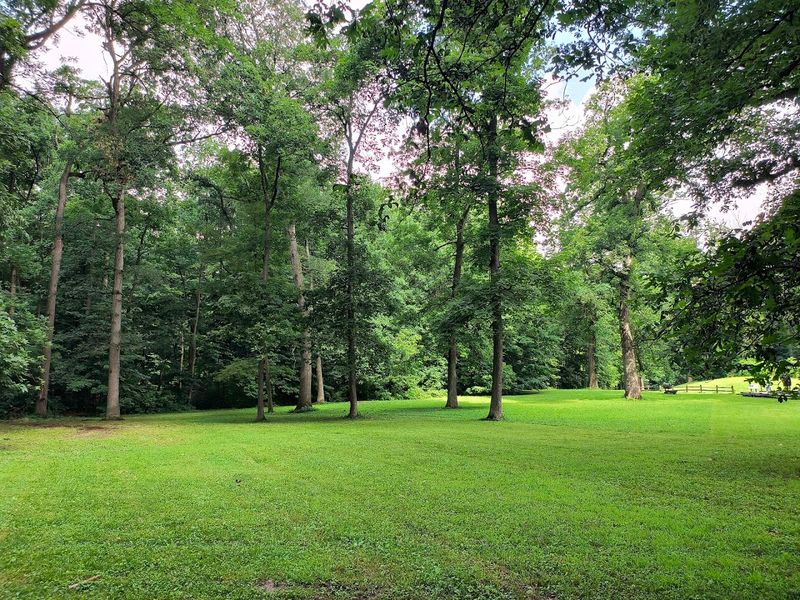
Long before Indiana was a state, the Adena and Hopewell peoples were building ceremonial earthworks across this land that still stand today. Mounds State Park in Anderson preserves ten of these ancient earthen mounds, the largest of which is a massive circular enclosure nearly a quarter mile in diameter.
Walking among them feels like reading a history book written entirely in landscape, and it is the kind of place that makes you stop and think about the full depth of human presence on this continent.
The Great Mound, the most prominent structure in the park, was likely used for ceremonial and astronomical purposes. Researchers have found that certain features align with the winter solstice sunrise, suggesting the people who built it had a sophisticated understanding of the sky.
The park also has excellent hiking trails, a river beach along the White River, and a campground for those who want to stay overnight.
Mounds State Park is located at 4306 Mounds Rd, Anderson, IN 46017, just east of Indianapolis and easy to reach from most parts of the state. The park’s interpretive center does a good job of providing context for what you are seeing without being dry or overly academic.
Anderson itself has a handful of local restaurants worth trying after your hike. Parking requires a state park sticker or a daily fee.
Plan to spend at least two to three hours here to really absorb everything the trails and mounds have to offer.
8. Santa’s Candy Castle, Santa Claus

There is a town in Indiana called Santa Claus, and yes, it has a post office that cancels your holiday mail with a Santa Claus postmark. But the real gem of this tiny town is Santa’s Candy Castle, a quirky, colorful shop that has been delighting visitors since 1935.
It is one of the oldest themed attractions in the United States, and walking through its doors feels like stepping into a holiday fantasy that somehow exists all year long.
The castle was originally built as part of a larger Santa Claus Land development, which eventually evolved into Holiday World and Splashin’ Safari, one of Indiana’s most popular theme parks. The candy castle itself survived the decades and still operates as a working candy store filled with nostalgic treats, fudge, novelty gifts, and Christmas-themed goods that make it nearly impossible to leave empty-handed.
The architecture alone is worth photographing.
Santa’s Candy Castle is located at 15499 N State Rd 162, Santa Claus, IN 47579. The town is small but surprisingly rich in charm, with the Santa Claus Museum and Village nearby at 41 N Christmas Blvd offering more local history.
Holiday World is right down the road if you want to make a full family day of it. Southern Indiana’s Lincoln Hills region surrounds the area with beautiful scenery for the drive in.
This is one of those places that sounds almost too quirky to be real until you are actually standing there, candy in hand, grinning like a kid.
9. Cataract Falls State Recreation Area, Spencer
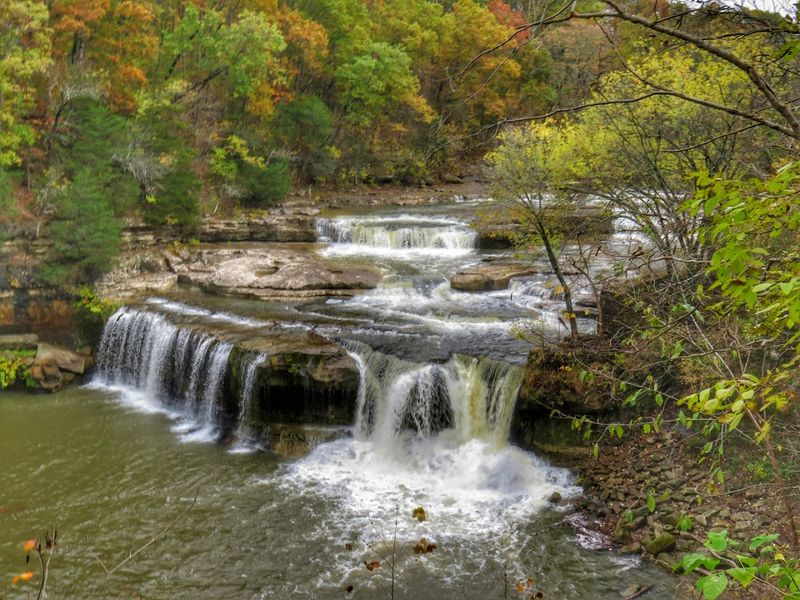
Indiana is not exactly famous for waterfalls, which is exactly why Cataract Falls catches people so off guard. Located near Spencer in Owen County, Cataract Falls is the largest waterfall by volume in the entire state, and it is genuinely impressive.
The falls come in two sections, an upper and a lower cascade, both tumbling over wide limestone shelves into pools below. After a good rain, the roar of the water carries through the trees well before you even see it.
The upper falls drop about 18 feet and span roughly 86 feet across, making them a dramatic sight in any season. Spring is particularly spectacular when snowmelt and rain push the flow to its peak.
The area sits within the Cagles Mill Lake State Recreation Area, which adds swimming, fishing, and boating to the list of things you can do on the same trip. Trails connect the upper and lower falls with a pleasant walk through mature hardwood forest.
Cataract Falls is located at 10510 N Cataract Rd, Spencer, IN 47460. The drive through Owen County is scenic and unhurried, passing through rolling farmland and small towns.
Spencer itself has a charming courthouse square with local shops and eateries worth exploring. McCormick’s Creek State Park, Indiana’s first state park, is just a few miles away and pairs perfectly with a Cataract Falls visit.
This is a day trip that delivers far more than most people expect from a landlocked Midwestern state, and the waterfall photos alone make the drive worthwhile.
10. Indiana Dunes State Park, Chesterton
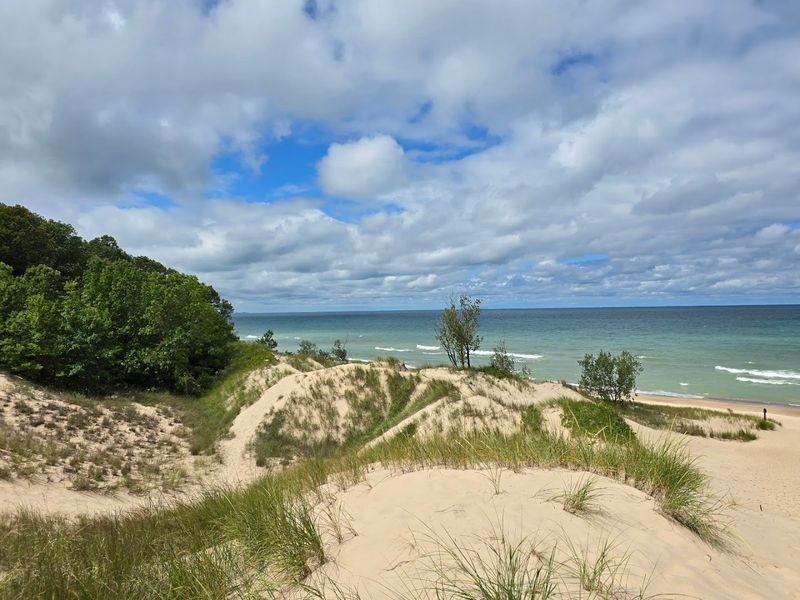
Most people picture ocean beaches when they think of sand dunes, but Indiana has some of the most dramatic dune landscapes in the entire Midwest sitting right along the southern shore of Lake Michigan. Indiana Dunes State Park in Chesterton is the crown jewel of the region, featuring towering sand dunes, miles of beach, and a surprisingly diverse ecosystem that has fascinated ecologists for over a century.
Henry Cowles, considered one of the founders of plant ecology, conducted groundbreaking research here in the early 1900s.
The park’s Trail 8, known as the Three Dunes Challenge, climbs the three highest dunes in succession and rewards hikers with panoramic views of the lake that feel almost surreal given that you are in Indiana. Mount Tom, the tallest dune in the park, rises about 192 feet above lake level.
Beyond the dunes, the park contains bogs, swamps, prairies, and forests all within a remarkably compact area, which is why scientists call it an ecological crossroads.
Indiana Dunes State Park is located at 1600 N 25 E, Chesterton, IN 46304, about an hour from Chicago and easily accessible from most of northern Indiana. The nearby Indiana Dunes National Park expands the experience even further with additional trails and beaches.
Chesterton’s charming downtown has great coffee shops and local restaurants for a post-hike meal. Go on a clear weekday morning in late spring or early fall for the best combination of weather, crowd levels, and scenery.
This one genuinely earns its place on any Indiana bucket list.
