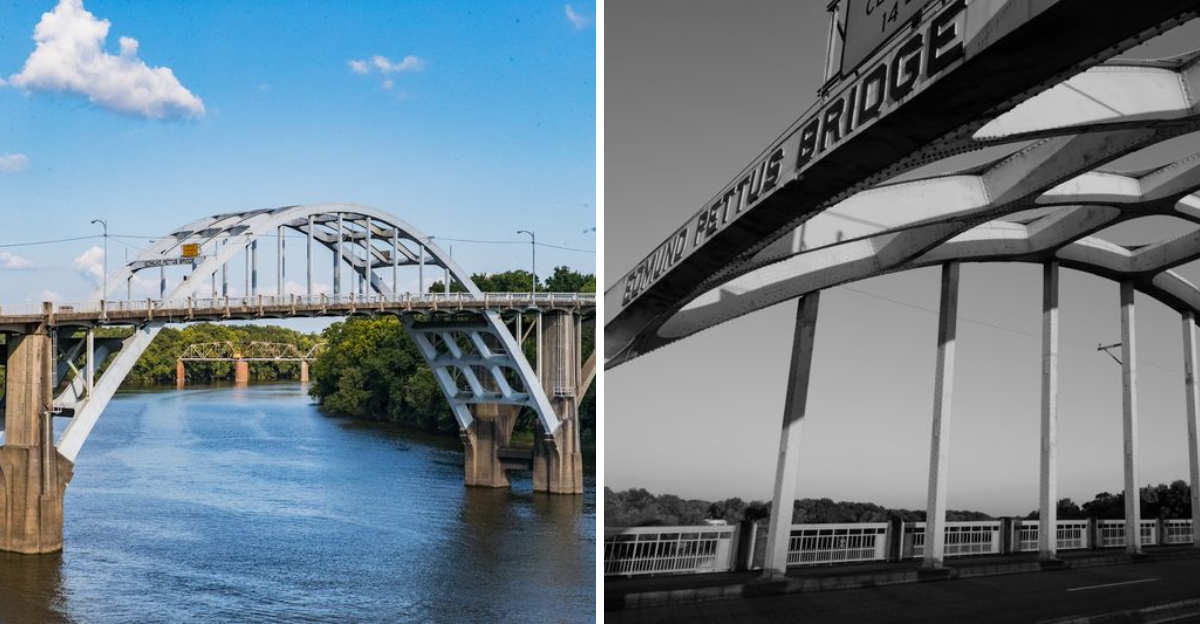
Most people who cross this historic bridge in Selma, Alabama do so quietly, almost reverently, as if they can still feel the weight of what happened here. The bridge spans the Alabama River, but it represents far more than steel and concrete.
It is one of the most significant landmarks in American civil rights history, known for the events that brought national attention to the struggle for voting rights. Today, it stands as a powerful reminder of both the violence that occurred there and the movement it helped galvanize.
Understanding its story changes the way you see not only Selma, Alabama, but the broader history of American democracy and the ongoing fight for equal rights.
The Disturbing Truth Behind the Bridge’s Name
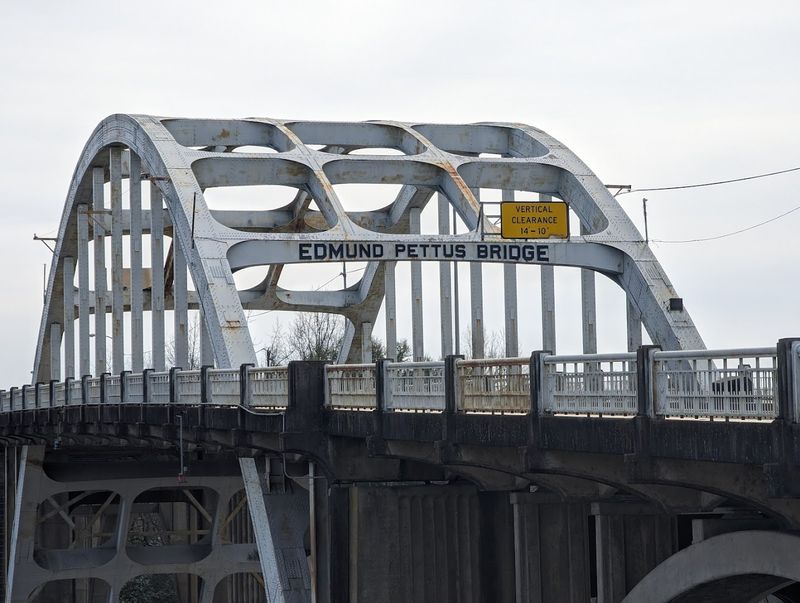
Most visitors walk across the Edmund Pettus Bridge without ever stopping to ask who Edmund Pettus actually was. That question leads to one of the most uncomfortable truths embedded right into the name of a national landmark.
Edmund Winston Pettus was not a celebrated hero of justice or a beloved Alabama statesman in any simple sense.
He was a Confederate general during the Civil War. He later became a United States Senator representing Alabama.
Most strikingly, he served as a Grand Dragon of the Alabama Ku Klux Klan, one of the highest leadership positions in that violent white supremacist organization.
The bridge was named after him in 1940, decades after his death, and many historians believe the naming carried a deliberate message about who held power in Selma. The choice was not accidental or innocent.
It was a statement planted in concrete and steel, meant to remind Black residents of Selma exactly where they stood in the social order of the time.
Today, the name remains a source of serious debate. Advocates have pushed for years to rename the bridge after civil rights icon John Lewis, who was beaten on it during Bloody Sunday.
The conversation around the name forces every visitor to confront the uncomfortable reality that history is not always packaged neatly. Sometimes the darkness is written right on the sign.
John Lewis and the Courage That Defined a Generation
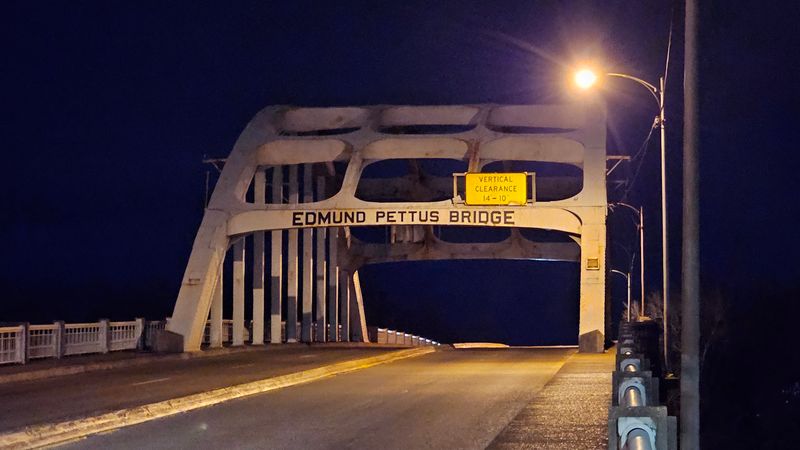
Few names are more closely tied to the Edmund Pettus Bridge than John Lewis. He was just 25 years old on Bloody Sunday, already a seasoned civil rights organizer and chairman of the Student Nonviolent Coordinating Committee.
He helped lead the march that day knowing full well the danger that waited on the other side of that bridge.
When the troopers attacked, Lewis was among the first to be struck. He suffered a fractured skull from a club blow to the head.
Photographs of him lying on the pavement became some of the most widely published images of the entire civil rights era. Rather than retreating from activism after that day, he kept going.
Lewis went on to participate in the third and successful march from Selma to Montgomery just weeks later.
He later served in the United States Congress for more than three decades, representing Georgia and becoming one of the most respected voices for civil rights and democracy in American political history.
He called the Edmund Pettus Bridge the place where he found his life’s purpose.
Visiting the bridge today means standing where Lewis stood, looking out at the same river he saw before the clubs came down. That kind of connection to real human courage is rare.
It is the sort of thing that makes a place feel genuinely sacred, even without any formal ceremony surrounding it.
How Voter Suppression Made Selma the Center of the Fight
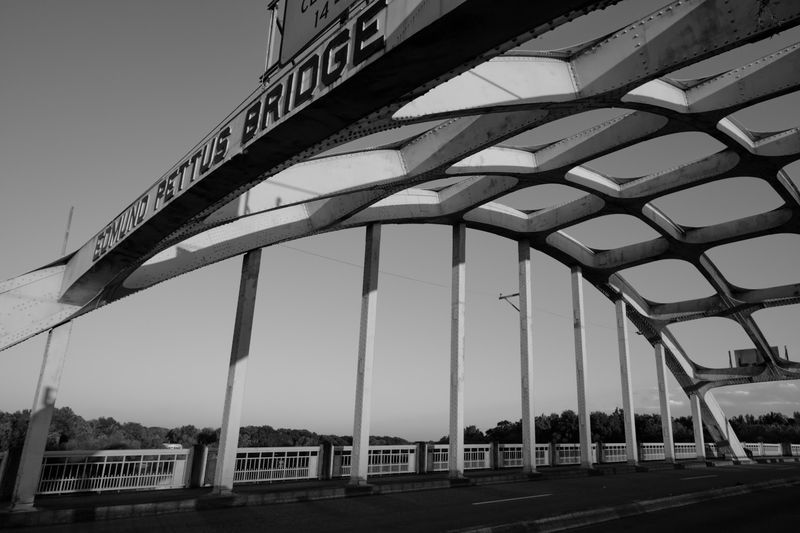
Selma was not chosen randomly as the starting point for the march to Montgomery.
Activists with the Southern Christian Leadership Conference and the Student Nonviolent Coordinating Committee selected it precisely because Dallas County, where Selma sits, had one of the worst voter registration records in the entire South.
At the time, Black residents made up more than half of Dallas County’s population. Yet fewer than 2 percent of eligible Black voters were actually registered.
The barriers were deliberate and relentless. Registrars would ask impossible literacy test questions, change requirements without notice, or simply turn people away without explanation.
Local law enforcement under Sheriff Jim Clark was also known for its particular brutality toward anyone who pushed back against the system. Clark’s deputies had beaten and arrested voting rights activists repeatedly in the months before Bloody Sunday.
The climate of fear in Selma was real and constant.
By choosing Selma, organizers knew they were walking into one of the most hostile environments in the country. They also knew that the contrast between peaceful marchers and violent resistance would be impossible for the national press to ignore.
That strategic decision turned out to be exactly right. The brutality witnessed on the Edmund Pettus Bridge put the specific injustice of voter suppression on television screens across America in a way that abstract statistics never could have accomplished.
Bloody Sunday and the Violence That Shocked a Nation
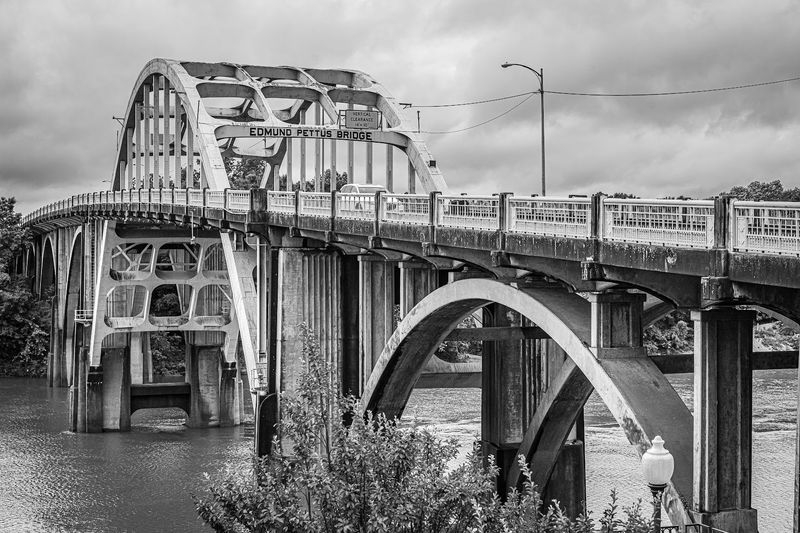
March 7, 1965 is a date seared into American civil rights history. On that Sunday morning, roughly 600 peaceful protesters gathered in Selma, Alabama, preparing to march to the state capital of Montgomery to demand voting rights for Black Americans.
What followed on the Edmund Pettus Bridge became known forever as Bloody Sunday.
As the marchers reached the crest of the bridge and began their descent toward the far side, they were met by a wall of Alabama state troopers and local law enforcement. The officers wore helmets and carried clubs.
Some rode on horseback. There was no negotiation, no warning, no chance to retreat.
Troopers charged into the crowd with clubs swinging and tear gas billowing through the air. Marchers were knocked to the ground, trampled, and beaten in full view of television cameras that broadcast the images across the country that same evening.
More than 50 people were hospitalized, including a young organizer named John Lewis who suffered a fractured skull.
The footage stunned millions of Americans who had no idea this level of state-sanctioned brutality was being used against citizens exercising their constitutional right to peaceful assembly. Bloody Sunday did not just wound the marchers on that bridge.
It cracked open the conscience of a country and forced a reckoning that could no longer be ignored or delayed.
Three Attempts to March and What Each One Cost
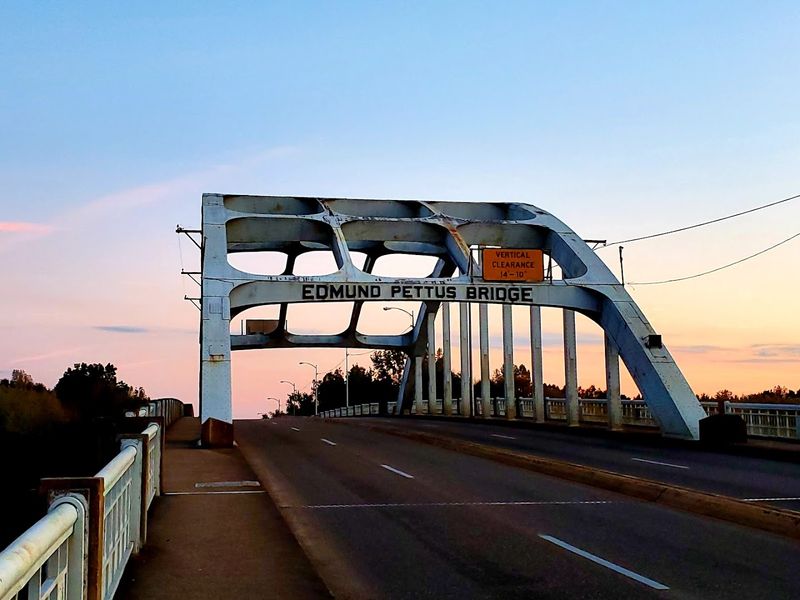
Most people know about Bloody Sunday, but fewer realize the bridge was the site of not one but three separate attempts to march from Selma to Montgomery. Each attempt carried its own weight of danger, negotiation, and determination.
Together they tell a story of persistence that goes far beyond a single dramatic moment.
The second march happened just two days after Bloody Sunday, on March 9, 1965. Martin Luther King Jr. led over 2,000 marchers back to the bridge.
When they reached the line of troopers again, King made the controversial decision to turn the march around rather than risk another violent attack. Some activists felt betrayed.
Others understood the legal and strategic complications unfolding behind the scenes.
The third march began on March 21, 1965, this time with federal protection ordered by President Lyndon B. Johnson after a federal judge ruled that the march was constitutionally protected.
Around 3,200 marchers set out from Selma and walked the full 54 miles to Montgomery over five days. By the time they reached the state capital, the crowd had grown to roughly 25,000 people.
Those 54 miles were not symbolic miles. They were walked under a real sky, through real Alabama heat, by people who had already been beaten once and came back anyway.
The Edmund Pettus Bridge was the starting line for all three attempts, and crossing it today carries the memory of every step that followed.
The Voting Rights Act and the Law That Followed the March
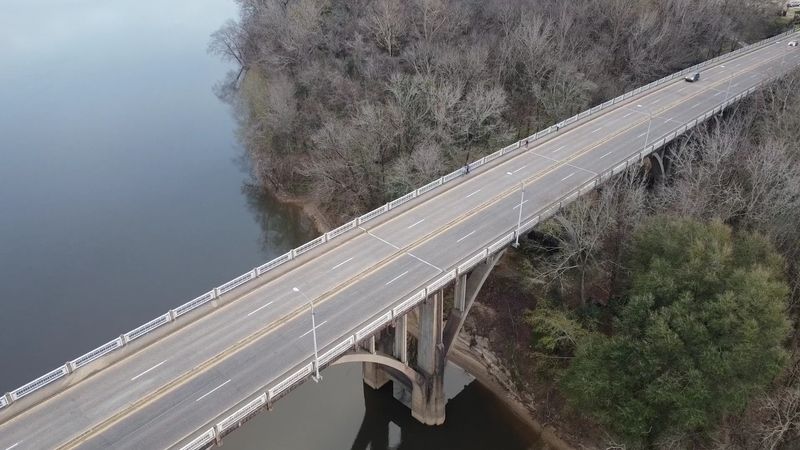
When the footage of Bloody Sunday aired on national television, the reaction was immediate and fierce. Millions of Americans who had been largely removed from the daily reality of racial violence in the South suddenly could not look away.
The images of unarmed marchers being beaten by law enforcement while crossing a bridge lit a fire under Congress that months of lobbying had not managed to ignite.
President Lyndon B. Johnson addressed Congress just eight days after Bloody Sunday, on March 15, 1965.
In a nationally televised speech, he called for the passage of a strong voting rights bill. He borrowed the words of the civil rights movement itself, declaring to Congress and the country that the cause of equal voting rights was something America must overcome.
The Voting Rights Act of 1965 was signed into law on August 6, 1965, less than five months after Bloody Sunday. The law prohibited racial discrimination in voting and gave the federal government real authority to enforce those protections.
It led to a dramatic increase in Black voter registration across the South within just a few years.
The Edmund Pettus Bridge did not just witness history. It helped make it.
The violence that occurred on its surface became the moral argument that no legislator could dismiss. Every vote cast by a Black American in the years that followed carried a direct connection back to what happened in Selma that March morning.
The Bridge as a Living Symbol of Modern Civil Rights Struggles
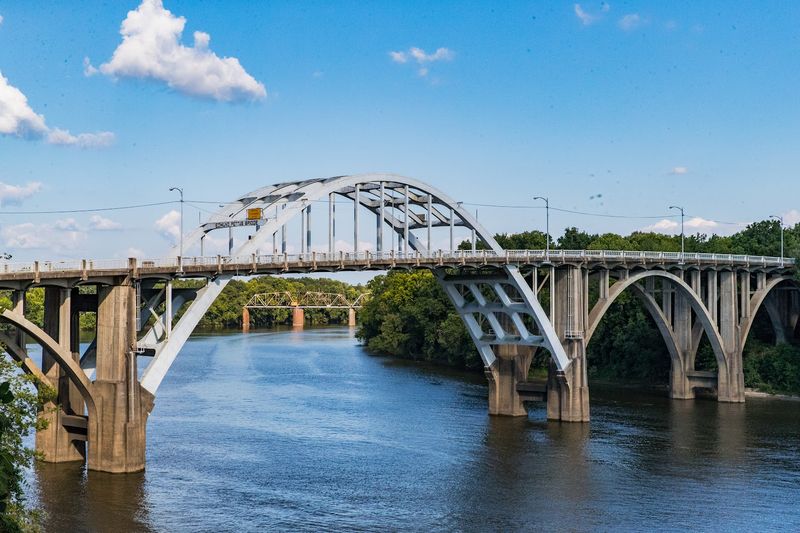
History did not stop at the Edmund Pettus Bridge in 1965. The bridge has continued to serve as a gathering place for civil rights activism in the decades since, and its symbolic power has not faded with time.
If anything, recent years have brought new urgency back to the foot of this bridge.
Every year in early March, Selma hosts the Bridge Crossing Jubilee, a commemoration of Bloody Sunday that draws civil rights veterans, elected officials, students, and community members from across the country.
The event includes a ceremonial walk across the bridge and serves as both a tribute to the past and a call to action for the present.
It is one of the most emotionally powerful public gatherings in the American South.
More recently, the bridge has been the site of protests connected to modern voting rights battles, including pushback against redistricting decisions that activists argue dilute Black political power in Alabama.
The connection between the 1965 march and today’s fights over fair representation is not metaphorical.
It is direct and ongoing.
Nearby, the National Voting Rights Museum and Institute at 6 United States Highway 80, Selma, AL 36703, sits at the foot of the bridge and offers exhibits that connect the historical struggle to current events. The Selma Interpretive Center on Water Avenue also provides essential context.
Walking the bridge without visiting at least one of these sites means leaving Selma with only half the story.
