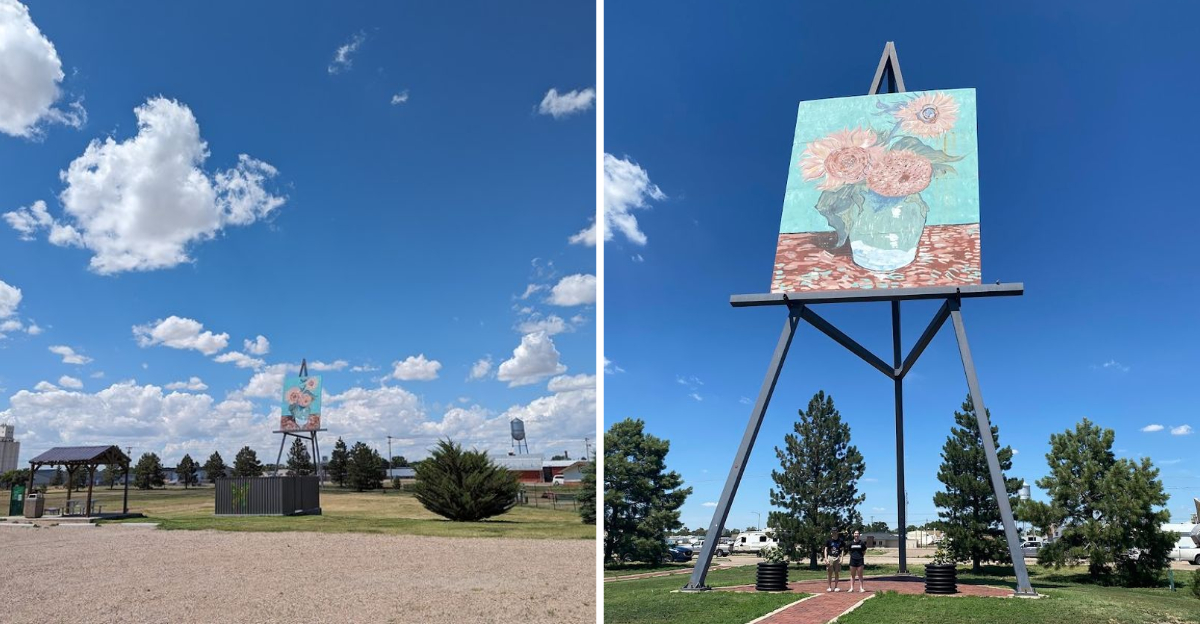
Somewhere along the flat, endless stretch of interstate in western Kansas, something enormous and unexpected rises from the prairie sky. A massive steel easel holding a giant painting right there in the middle of sunflower country. The easel stands eighty feet tall.
The painting measures twenty four by thirty two feet. The whole structure weighs around forty thousand pounds.
Engineers built it to handle relentless Kansas winds, with anchor bolts sunk thirty feet into the ground. The painting came down once for restoration, which is where the legend of the flying painting got its start. This is the kind of place that makes a long road trip feel genuinely worth the detour.
The Vision Behind the Van Gogh Project
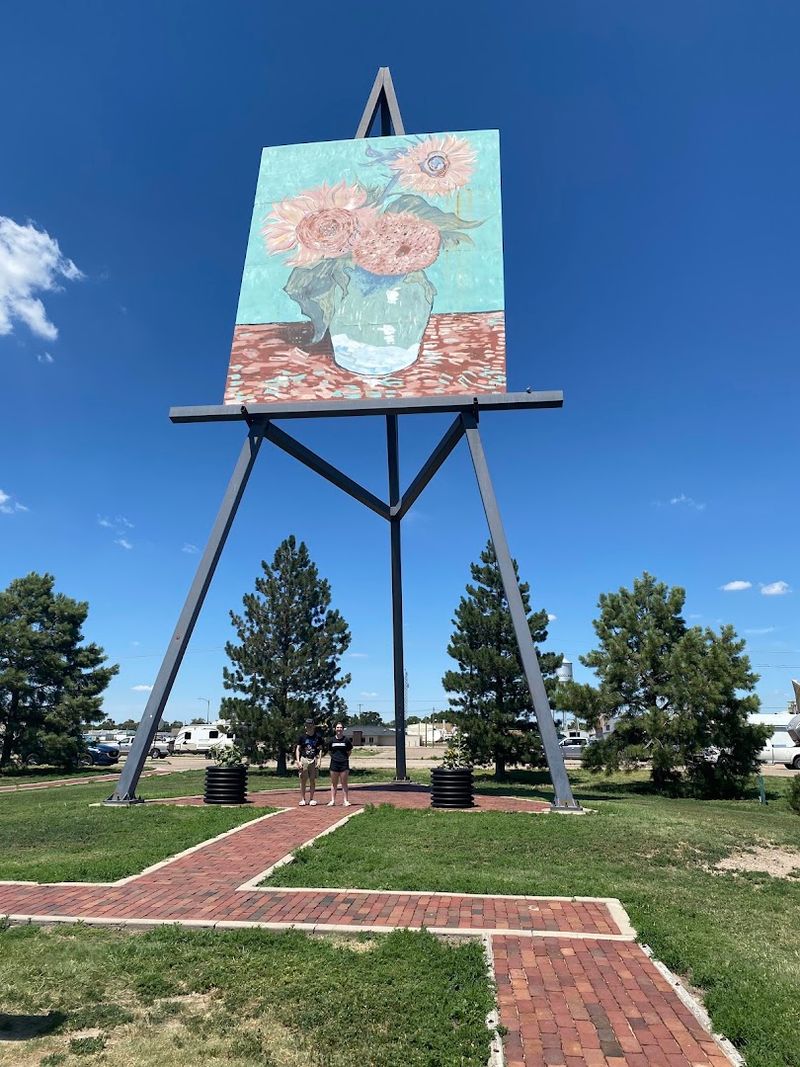
Canadian artist Cameron Cross had a bold idea: reproduce all seven of Vincent Van Gogh’s sunflower paintings on giant easels and scatter them across different countries. The result is called The Van Gogh Project, and Goodland’s easel is the third installation in this global series.
Kansas was chosen specifically because of the region’s deep connection to sunflower agriculture, which made it a natural fit for a painting celebrating Van Gogh’s most iconic subject.
Cross isn’t just recreating pretty pictures. He’s building landmarks that connect local culture to world-class art in a way that feels genuinely thoughtful.
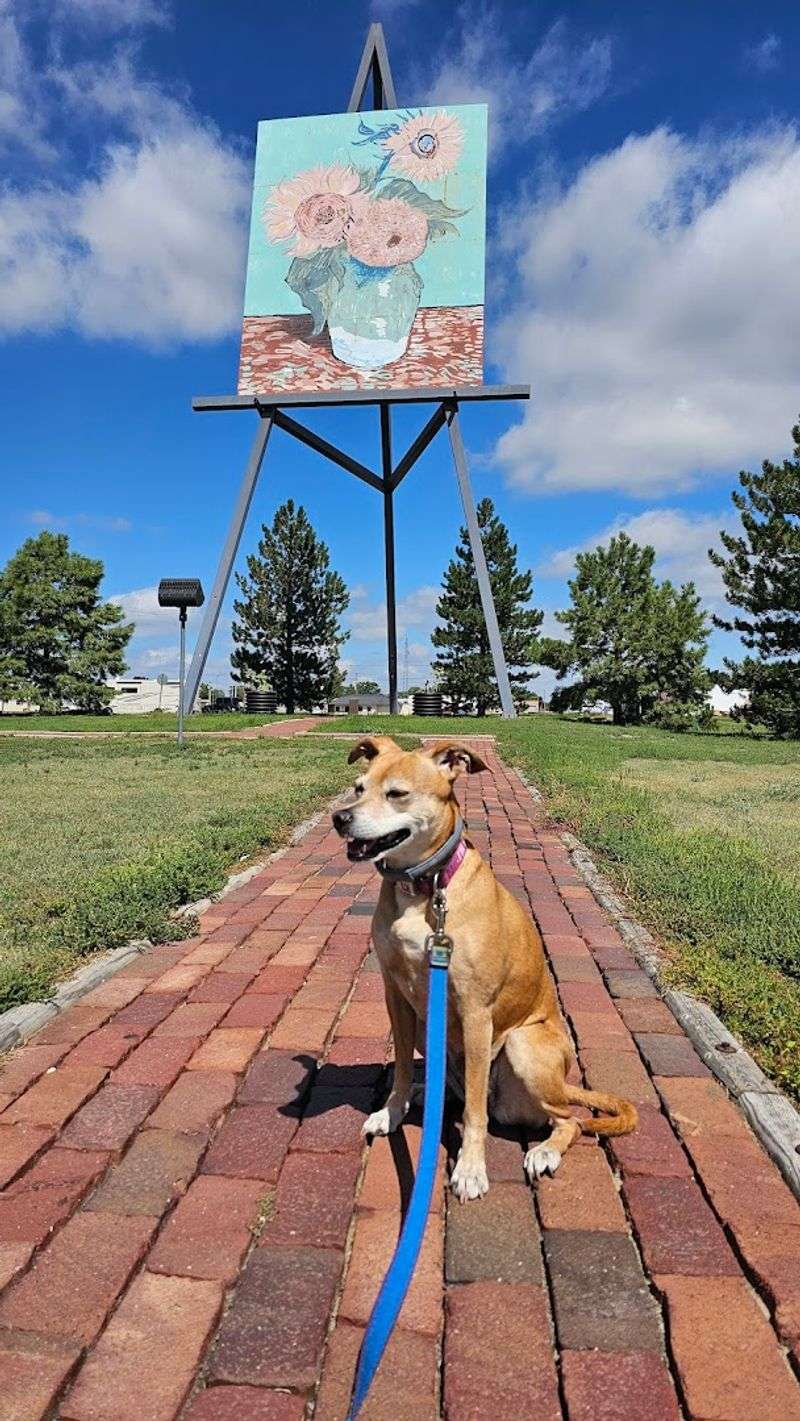
The painting on display here is a reproduction of “Three Sunflowers in a Vase,” one of Van Gogh’s most beloved works. Seeing it scaled up to 24 by 32 feet changes the way you experience the original composition entirely.
The project also serves as a reminder that art doesn’t have to live only in museums. It can stand in a park in a small Kansas town, greeting road-trippers at any hour of the day or night.
That accessibility is a big part of what makes this stop so memorable and worth adding to any cross-country route.
The easel itself becomes part of the art, an 80 foot steel frame that feels monumental against the wide open sky. Standing beneath it, you realize how small you are and how big a painting can be when someone decides to think beyond gallery walls.
That shift in perspective is exactly what Cross was after.
An 80-Foot Steel Giant Built to Last
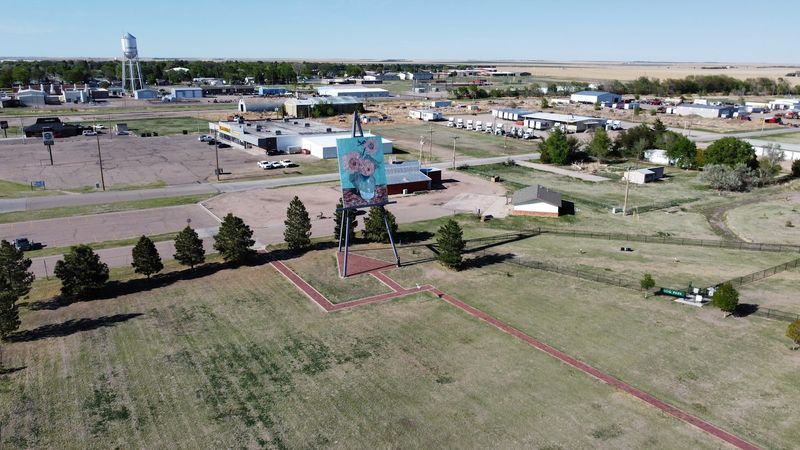
The sheer size of this thing hits you before you even park the car. The steel easel stands 80 feet tall, which is roughly the height of an eight-story building.
It was engineered to hold a painting that measures 24 by 32 feet, and the entire structure, easel and painting combined, weighs somewhere between 40,000 and 45,000 pounds. That’s not a typo.
The design wasn’t thrown together casually. Engineers built it to handle a wind load of 38 pounds per square foot, which matters a lot out here on the Kansas plains where gusts can be relentless.
The base is anchored by 24 three-foot-long anchor bolts sunk into cement pilings that reach 30 feet underground. Nothing about this structure is accidental or flimsy.
Getting up close and craning your neck to take it all in is a genuinely humbling experience. The steel frame is solid, the construction is precise, and the whole thing has a quiet confidence about it, like it knows it belongs here.
Visitors often underestimate the scale until they’re actually standing at the base, and that moment of surprise is honestly one of the best parts of the stop.
Children tilt their heads all the way back and let out a quiet wow. Adults do the same but try to hide it.
The easel casts a long shadow across the grass in late afternoon, and for a moment, the painting looks like it is glowing against the sky. You do not forget that image easily.
It stays with you down the road, even after the flat horizon takes over again.
The Painting Itself: Plywood, Fiberglass, and Industrial Grit
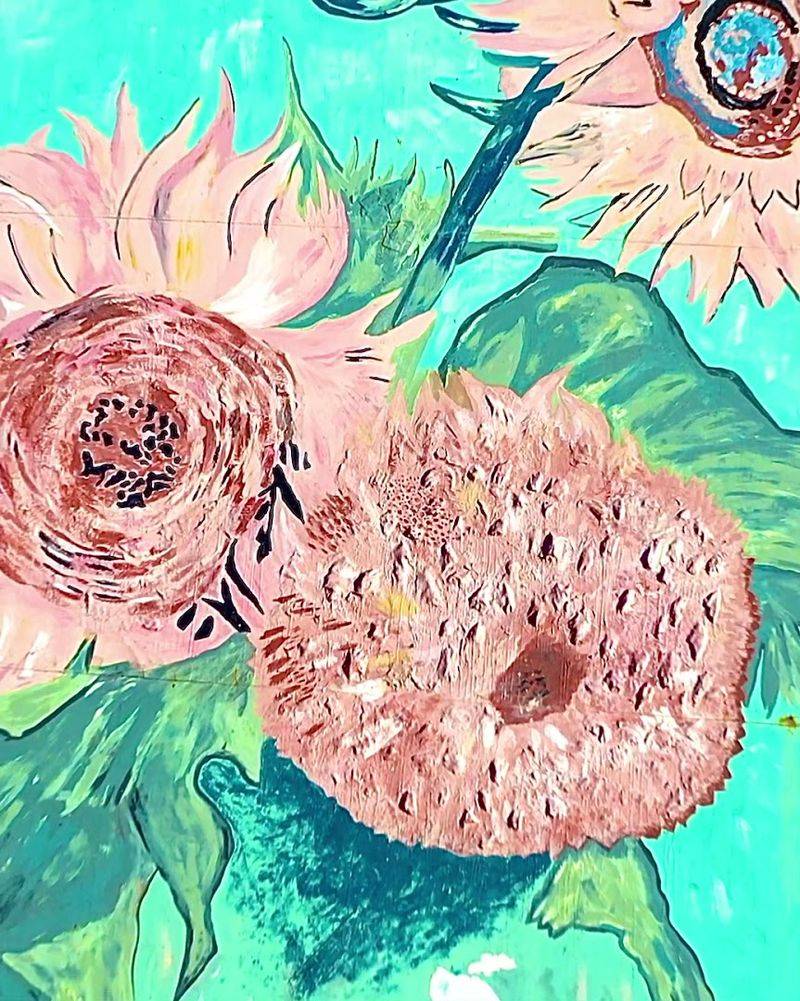
Most people assume a painting this large must be made from canvas, but the reality is far more practical and honestly more impressive. The painting is constructed from 24 sheets of standard 4-by-8-foot plywood, layered with two coats of one-ounce matte fiberglass and finished with an industrial gel coat.
It’s less art studio and more shipyard, which is exactly what the Kansas climate demands.
The paint itself is industrial acrylic urethane enamel, the kind typically used on ships and heavy machinery that endure extreme weather. Around ten coats were applied to build up the color depth and protect against UV damage.
The result is a surface tough enough to handle scorching summers, freezing winters, and everything in between without fading into something unrecognizable.
Over 500 high-performance self-tapping screws hold the painting firmly to the steel frame. When artist Cameron Cross returned in 2012 to repair weather damage, the painting was temporarily removed for maintenance, which gave the town a brief look at the bare easel.
That restoration work ensured the colors stayed vivid and the structure remained sound for future visitors rolling through on I-70.
Kansas Winds and the Legend of the Flying Painting
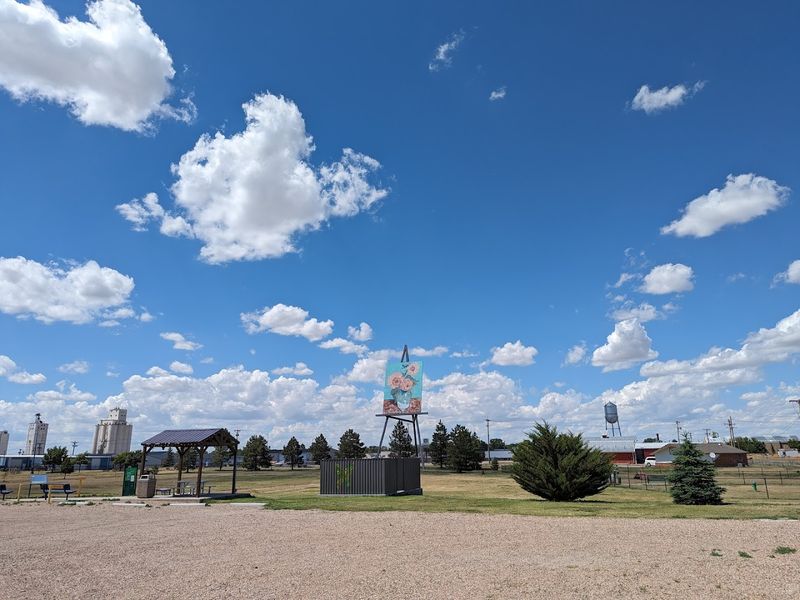
The title of this article raises a fair question: does the painting actually fly off in the wind? The short answer is no, not exactly.
The structure was specifically engineered to resist powerful gusts, with deep anchor bolts and a wind load rating built right into the original design. But Kansas winds are no joke, and the painting has needed attention over the years because of weather-related wear.
In 2012, the painting was removed temporarily for restoration after the harsh northwest Kansas climate took a visible toll on the surface. That temporary removal is likely where the legend of the “flying painting” gets its dramatic flair.
The idea of a 24-by-32-foot panel being lifted off an 80-foot easel by prairie winds is the kind of image that sticks in your mind, even if the engineering says otherwise.
There’s something poetic about a giant piece of art facing down the same relentless winds that shaped this landscape for centuries. The painting came back after restoration looking refreshed and bold, and the easel stood firm through it all.
That tension between fragile art and brutal weather is part of what gives this roadside stop a story worth telling long after you’ve driven away.
When the wind really kicks up, you can hear the structure groan just a little, a sound that makes you glance up and wonder. The painting holds.
It always holds. But that small moment of doubt, that brief flicker of possibility, is exactly what keeps the legend alive.
Every gust writes a new sentence in the story.
Pioneer Park: More Than Just a Photo Stop
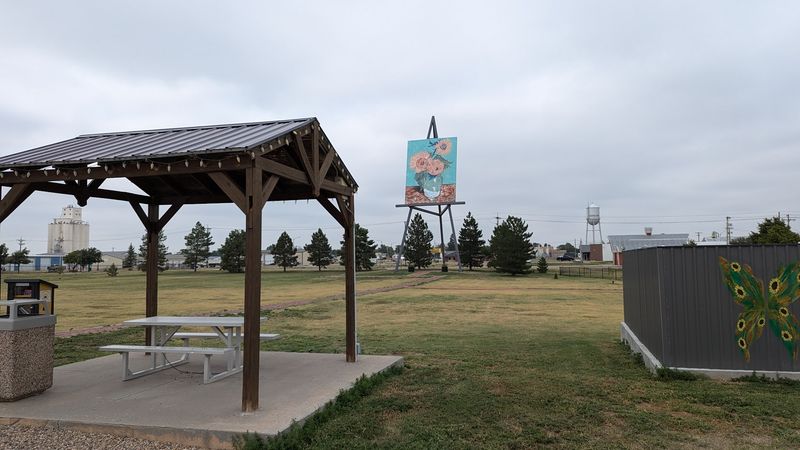
Pioneer Park, where the easel lives, is a genuinely pleasant place to spend 20 or 30 minutes. There’s a brick walking path that leads from the parking area right up to the base of the structure, and informational signs along the way explain the history of the easel and The Van Gogh Project.
A visitor log book sits at the site, and signing it feels like a small but satisfying ritual.
Travelers with dogs will be happy to know there are two separate dog parks on the grounds, one for small breeds and one for larger dogs. It’s a thoughtful touch for road-trippers who’ve had their pets cooped up in the car for hours.
There are also benches scattered around the area, perfect for sitting down and actually looking at the painting without rushing.
The welcome center on site adds another layer of comfort, especially for those stopping in during a long drive. The whole park has a clean, well-maintained feel that shows the community takes genuine pride in this attraction.
A tiny book exchange tucked into the area is a fun little bonus that gives the spot a neighborhood charm you don’t usually find at roadside landmarks.
Why This Stop Belongs on Your I-70 Road Trip
I-70 through Kansas has a reputation for being one of the more monotonous stretches of American highway, and that reputation isn’t entirely unfair. But Goodland sits right along that corridor, and the World’s Largest Easel is the kind of exit that genuinely breaks the rhythm.
It’s open 24 hours, free to visit, and takes maybe 15 to 20 minutes if you’re just stretching your legs and snapping photos.
The site has earned a 4.6-star rating from hundreds of visitors, and the consistent praise centers on the same things: the surprising scale, the well-kept grounds, and the simple joy of seeing something this weird and wonderful in the middle of the plains. It doesn’t demand much from you, which is exactly the point.
Sometimes the best roadside stops are the ones with zero pressure.
Goodland itself has a relaxed small-town energy with a few eating spots and places to stay if you want to linger longer. The easel fits perfectly into that vibe, a little eccentric, quietly proud, and completely genuine.
If you’re passing through and skip the exit, you’ll probably think about it for the rest of the drive and wish you’d just pulled off.
Address: 1901-1917 Cherry Ave, Goodland, KS 67735
