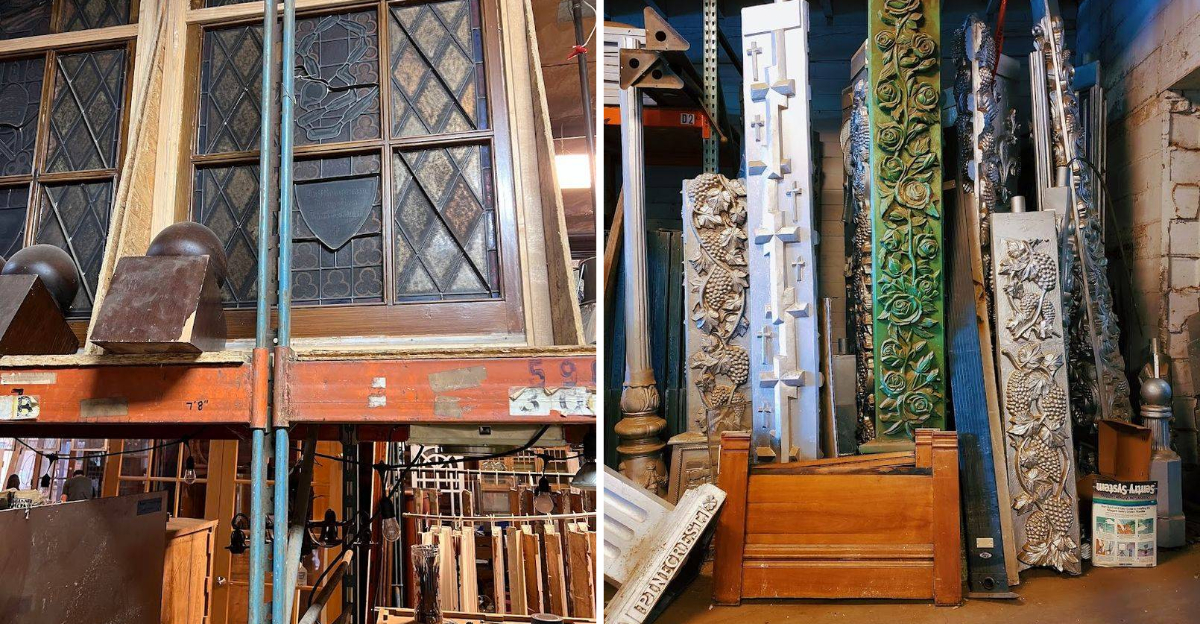
When a church closes, most of what is inside ends up in a dumpster. The stained glass.
The wooden pews. The doors that have welcomed generations of families.
But one spot in Minnesota decided that was a waste. They started collecting the best parts of old churches and giving them a second life. A warehouse filled with donated pieces.
Altars. Pulpits.
Baptismal fonts. Doors that weigh more than your car.
I walked through aisles of stained glass windows leaning against the wall, each one tagged with the name of the church it came from. A man bought a pew for his cabin. A couple picked out a cross for their garden.
Minnesota finds beauty in old things. This place gives church parts a second chance to be admired.
A Family Business Built on Saving History
Minnesota’s Herman Bauer did not set out to build a landmark. He just did not want good things to get thrown away.
Starting in 1960, he began deconstructing homes and structures slated for demolition, carefully pulling out doors, windows, hardware, and anything else worth saving before the bulldozers moved in.
His three sons, Chuck, Jeff, and Russ, eventually joined the business and helped grow it into something much larger than a simple salvage operation. Over the decades, Bauer Brothers became the go-to destination for contractors, restoration enthusiasts, antique collectors, and curious locals who just wanted to see what was hiding inside that giant building on North 2nd Street.
The family approach shaped everything about the store. Donna Bauer responded personally to online reviews.
Scott Bauer, who later took over management, sent detailed replies to customer concerns and worked hard to improve the experience. That kind of personal investment is rare in retail and even rarer in a warehouse that spans nearly a city block.
What makes the origin story genuinely moving is the reason behind it. Salvaging was never just about profit.
It was about recognizing that old buildings hold irreplaceable craftsmanship, and that once something gets buried in a landfill, it is gone forever. That philosophy turned a small family operation into the largest architectural salvage store in the five-state area, a title that took decades of hard, dusty, and very physical work to earn.
Church Treasures That Found a Second Home
Some of the most breathtaking things inside Bauer Brothers came straight from old churches. Stained glass windows, church pews, carved wooden altars, and even organ pipes have passed through that warehouse over the years, each one carrying the weight of decades of Sunday mornings and quiet prayers.
When a congregation closes or a historic church gets demolished, those sacred objects need somewhere to go. Bauer Brothers became that somewhere.
Rather than ending up in a dumpster, a hand-carved pew might find its way into a dining room, or a set of organ pipes might become a dramatic focal point in someone’s living space.
The stained glass pieces were always a crowd favorite. Shoppers would hold them up toward whatever light was available in the warehouse, watching colors bloom across their hands and faces.
There is something genuinely moving about that moment, realizing you are holding a piece of a building where people gathered for generations.
Church salvage also attracted a very specific kind of buyer: the person restoring an old home who needs architectural details that match a certain era, or the artist looking for raw materials with real history baked in. Those buyers understood that what they were purchasing was not just an object.
It was a fragment of community memory, now available for someone new to carry forward into a completely different life.
The Warehouse Experience: Part Museum, Part Maze
Nobody walks through Bauer Brothers quickly. The place simply does not allow it.
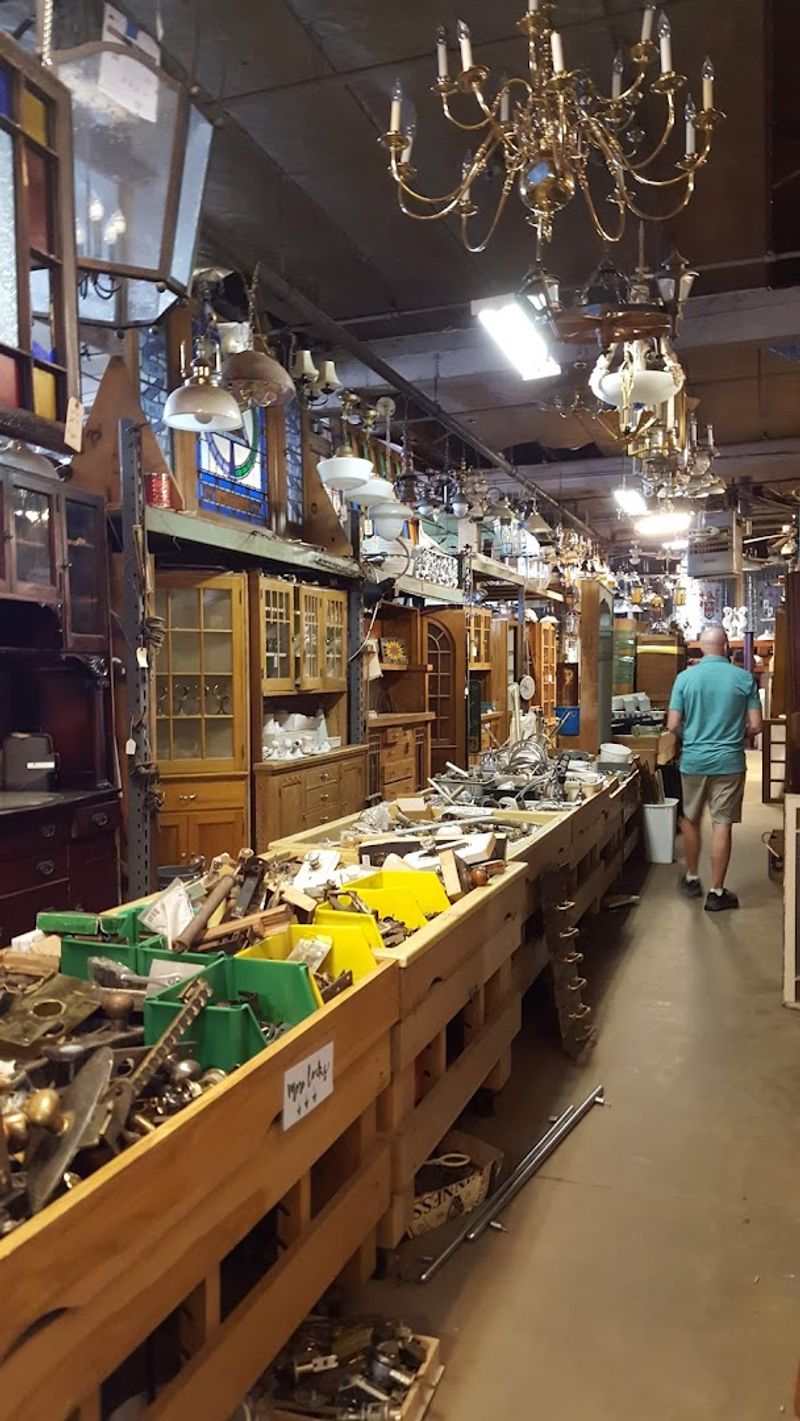
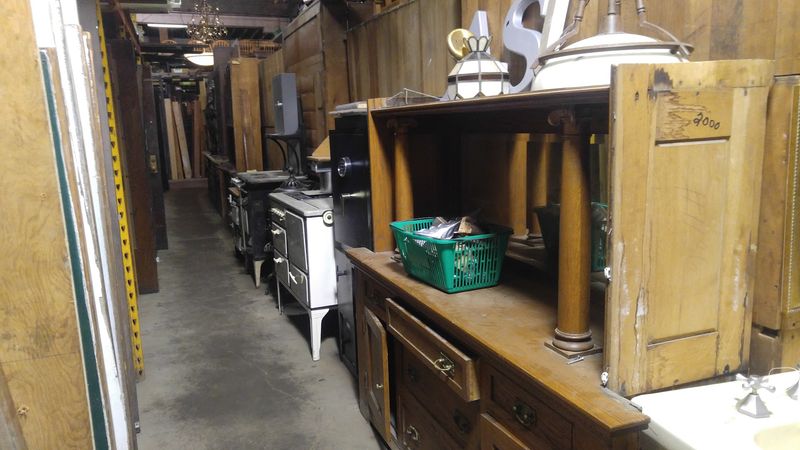
With 93,000 square feet spread across multiple floors and wings, the warehouse operates more like a labyrinth than a store, and that is a big part of its charm.
Customers consistently described visits as treasure hunts. One moment you are looking at a stack of reclaimed doors, and the next you have somehow ended up in a room full of vintage radiators and structural steel from the 1800s.
There is no clean logic to the layout, which means every corner has the potential to surprise you.
Comfortable shoes are a genuine necessity here. So is time.
Experienced visitors would block off a full afternoon and still feel like they had missed something on the way out. The sheer density of objects means that a piece you completely overlooked on one visit might catch your eye perfectly on the next.
The lighting was admittedly uneven in parts of the building, and not every section had clear signage. But those quirks were also part of the atmosphere.
It felt less like a polished retail environment and more like exploring an enormous attic that happened to belong to all of Minneapolis at once. Regular shoppers loved that feeling and kept coming back specifically because no two visits ever felt exactly the same.
Stained Glass, Radiators, and Clawfoot Tubs
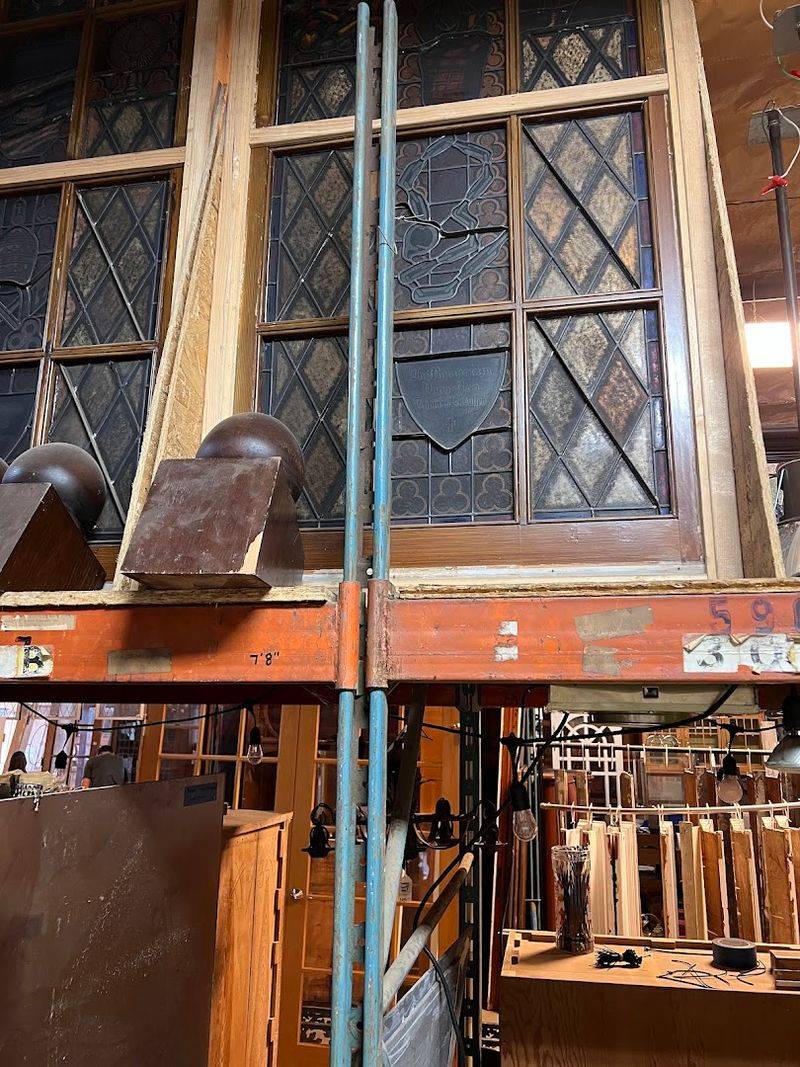
The inventory at Bauer Brothers was genuinely staggering in its variety. Clawfoot tubs sat next to radiators that once heated century-old homes.
Antique light fixtures dangled overhead while rows of vintage cabinetry lined the walls below. It was the kind of selection that made restoration projects feel suddenly possible.
Owners of older Victorian homes were especially loyal customers. Finding period-appropriate hardware, door knobs, transom windows, and original-style fixtures is nearly impossible at a regular hardware store.
Bauer Brothers filled that gap in a way that no online marketplace quite replicates, because you could actually touch, measure, and examine everything in person.
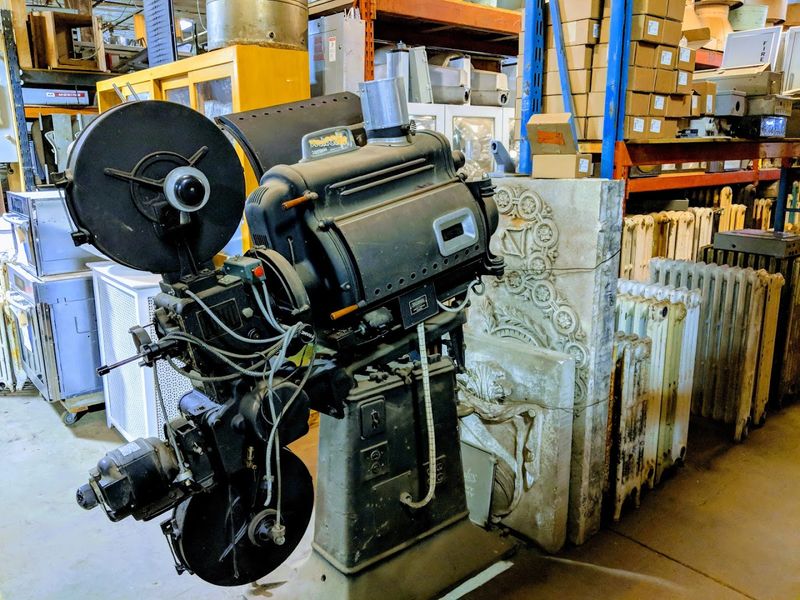
Cast iron radiators were a particular specialty. The warehouse carried a wide range of sizes and styles, making it a reliable stop for anyone heating an older home and needing to replace or expand their system.
Those radiators were heavy, beautiful, and built to last another hundred years.
The clawfoot tubs always drew attention from first-time visitors who were not even planning to buy one. They have that effect.
Something about seeing a genuine antique tub, still solid and functional after a century of use, makes you start mentally rearranging your bathroom. The items here were not just old.
They were well-made in ways that modern mass production rarely matches, and that quality was visible the moment you put your hands on them.
Reclaimed Wood and Structural Steel From Another Era
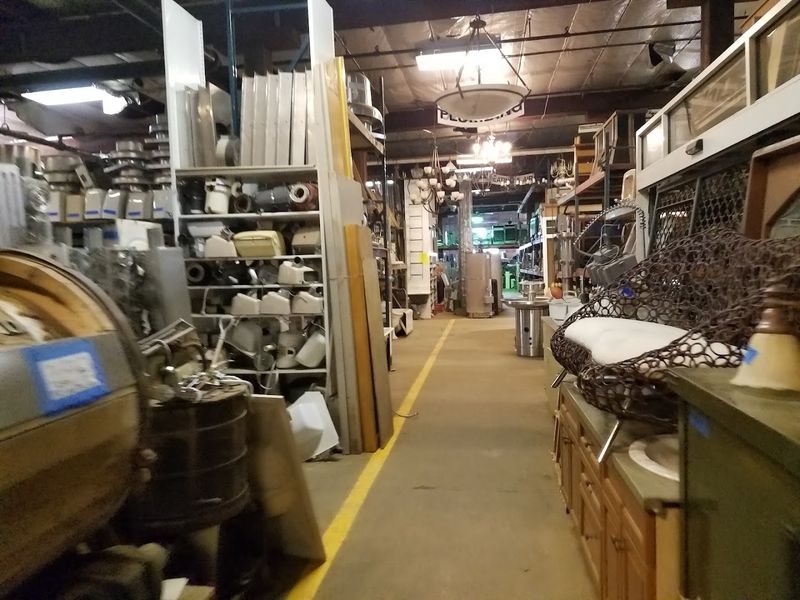
There is something deeply satisfying about reclaimed wood. The grain tells a story that freshly milled lumber simply cannot.
Bauer Brothers carried reclaimed wood spanning materials from the 1800s all the way through the 2000s, offering builders and designers a range of textures and ages that made every project feel genuinely unique.
Structural steel was another surprising find. I-beams, heavy-duty posts, and industrial-grade metal from demolished buildings gave contractors and DIY builders access to materials that would be extremely difficult to source elsewhere.
A few customers specifically mentioned picking up steel components for renovation projects, clearly pleased with both the quality and the fact that the material was being reused rather than scrapped.
The environmental angle mattered to a lot of shoppers. Buying reclaimed wood or steel meant keeping usable material out of a landfill while also getting something with real character.
That combination of sustainability and aesthetics drew a younger crowd of buyers who cared about where their building materials came from.
Working with reclaimed materials does require patience. Pieces are not uniform, measurements vary, and some items need repair before they are ready to use.
But for anyone who has ever finished a project using genuinely old materials, the result has a warmth and authenticity that no new product can replicate. Bauer Brothers made that kind of work accessible to people across the region for over six decades.
A Go-To Resource for Historic Home Restoration
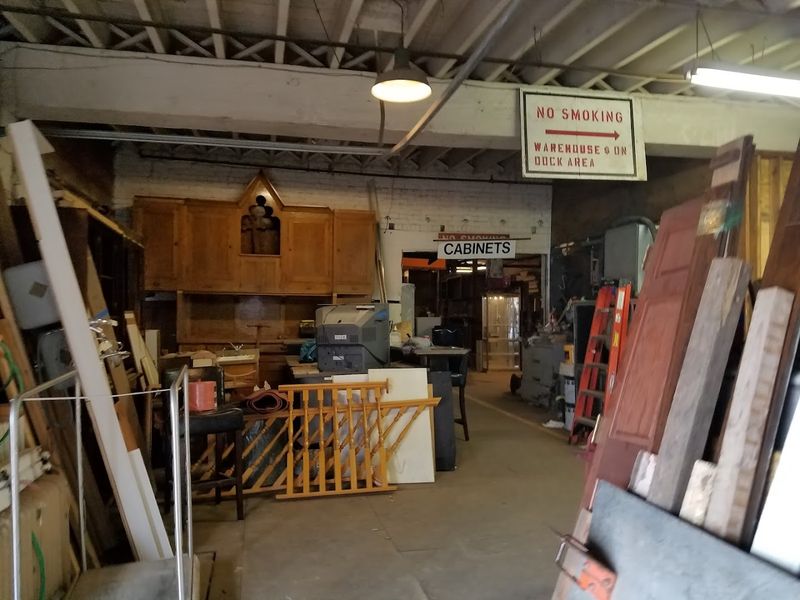
Restoring an old home is one of the most rewarding and frustrating projects a person can take on. The rewarding part is easy to explain.
The frustrating part usually comes down to one thing: finding parts that actually match what was originally there.
Bauer Brothers solved that problem for a lot of people. Owners of Victorian homes, craftsman bungalows, and early twentieth-century buildings found the warehouse invaluable because it carried the exact kinds of hardware, windows, doors, and fixtures that were common in those eras.
Getting a replacement transom window or a matching set of original-style hinges from a regular supplier is nearly impossible. Getting them from Bauer Brothers was just a matter of showing up and looking.
Staff knowledge made a real difference here. Experienced employees could point customers toward the right section of the warehouse and often knew what was in stock without needing to check a computer.
That kind of institutional knowledge only comes from years of handling the same inventory, and it saved shoppers an enormous amount of time.
This Minnesota spot also attracted people doing smaller projects. Replacing a single door knob, finding a specific size of cabinet pull, or tracking down a period-appropriate light switch plate were all legitimate reasons to visit.
No project was too small. The warehouse had boxes of individual hardware pieces scattered throughout, and digging through them was genuinely enjoyable once you got into the rhythm of the place.
The End of an Era and What Comes Next
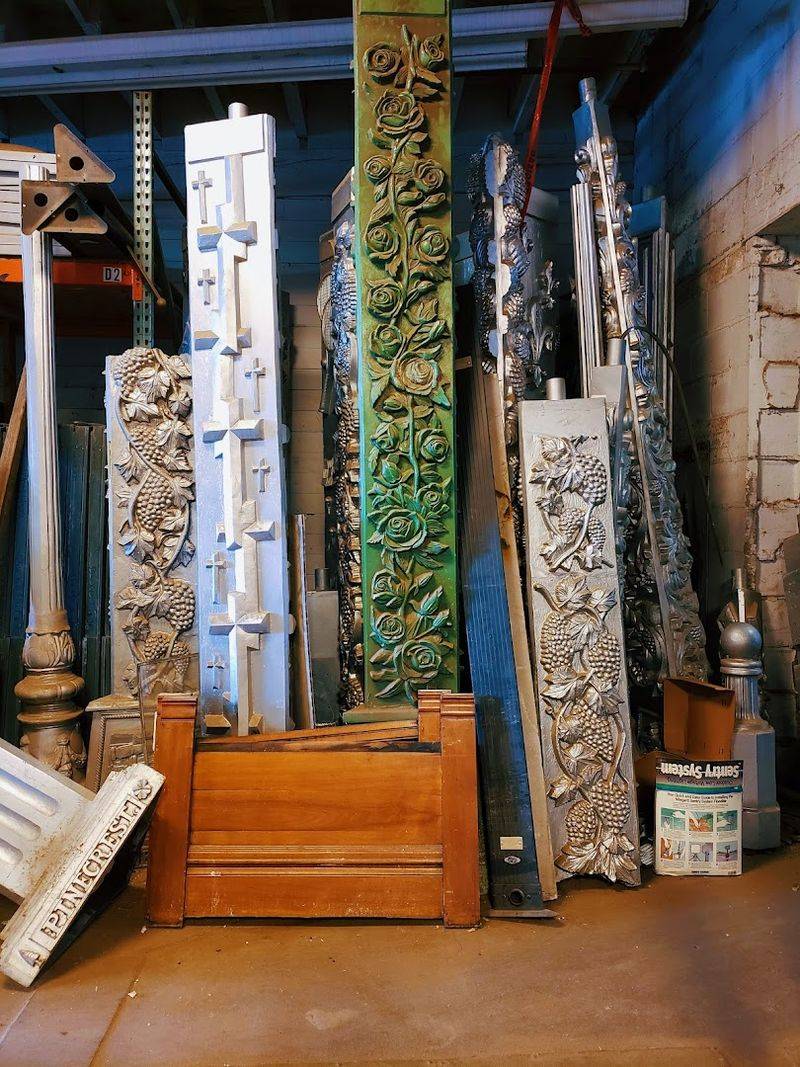
Bauer Brothers Salvage announced its closure, with the final date set for May 7, 2026. The remaining inventory will be liquidated through an online auction running from May 22 to June 3, 2026.
For anyone who has loved this place, that news lands with real weight.
CEO Scott Bauer cited challenges with operating at scale and frustrations with the broader business environment in Minneapolis as reasons for the decision. Whatever the full story behind the closure, the result is the same: a 65-year-old institution that saved irreplaceable pieces of architectural history is shutting its doors for good.
The loss extends beyond the building itself. Places like Bauer Brothers create a kind of community around shared appreciation for old things.
Restoration enthusiasts, collectors, designers, and casual explorers all found common ground inside that warehouse. That informal gathering point is not easy to replace once it disappears.
The online auction does offer one final opportunity for people to bring a piece of Bauer Brothers history home. Whether it is a stained glass panel from an old church, a cast iron radiator, or a handful of antique door hardware, each item carries the story of the people who made it, the building that housed it, and the family that kept it safe for decades.
Some places earn their legacy quietly, and Bauer Brothers did exactly that.
Address: 2432 N 2nd St, Minneapolis, MN 55411
