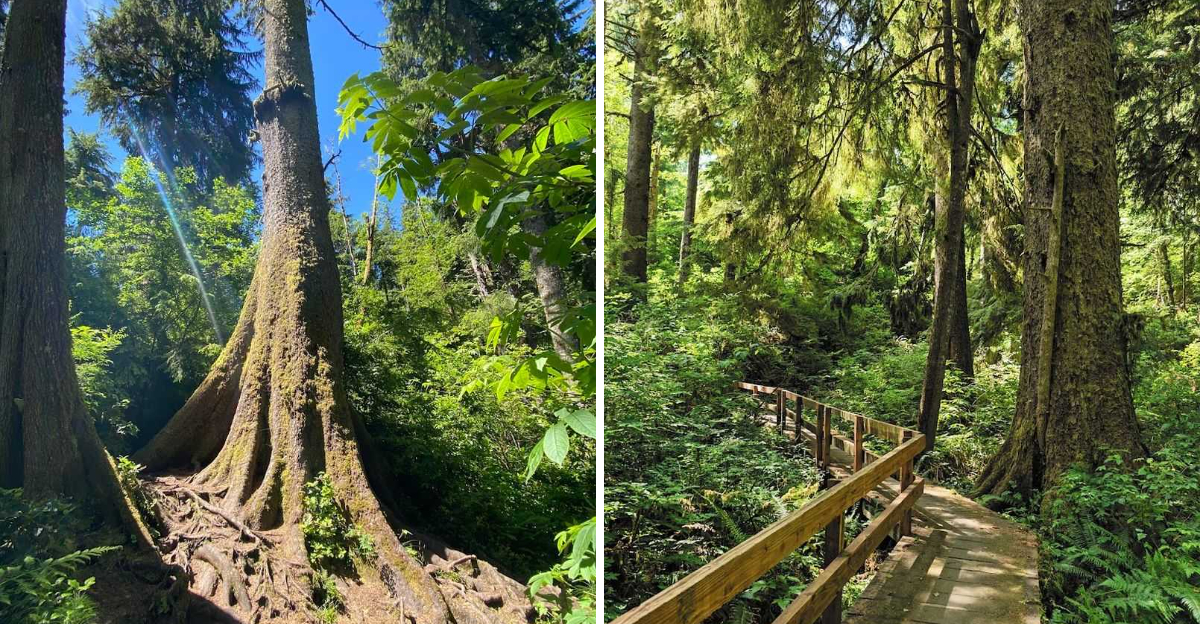
A tree that was already old when your great great grandparents were born. That is the kind of math that makes your brain hurt.
This one sits on a hill above a small coastal town, watching everything happen below like a quiet boss. The trail is short but steep. Your legs will complain. Ignore them.
When you finally reach the top, the spruce opens up like a living cathedral. Branches stretch sideways instead of straight up.
Moss drips from every limb. You can stand underneath the canopy and feel completely covered, like the tree is holding an umbrella just for you.
People hug it. You will want to hug it too.
Do not be embarrassed. The tree has seen weirder things in its 300 years.
You stand there breathing the damp, green air and realize some things are worth the climb. This is one of them.
What Is Cathedral Tree Trail and Where Is It
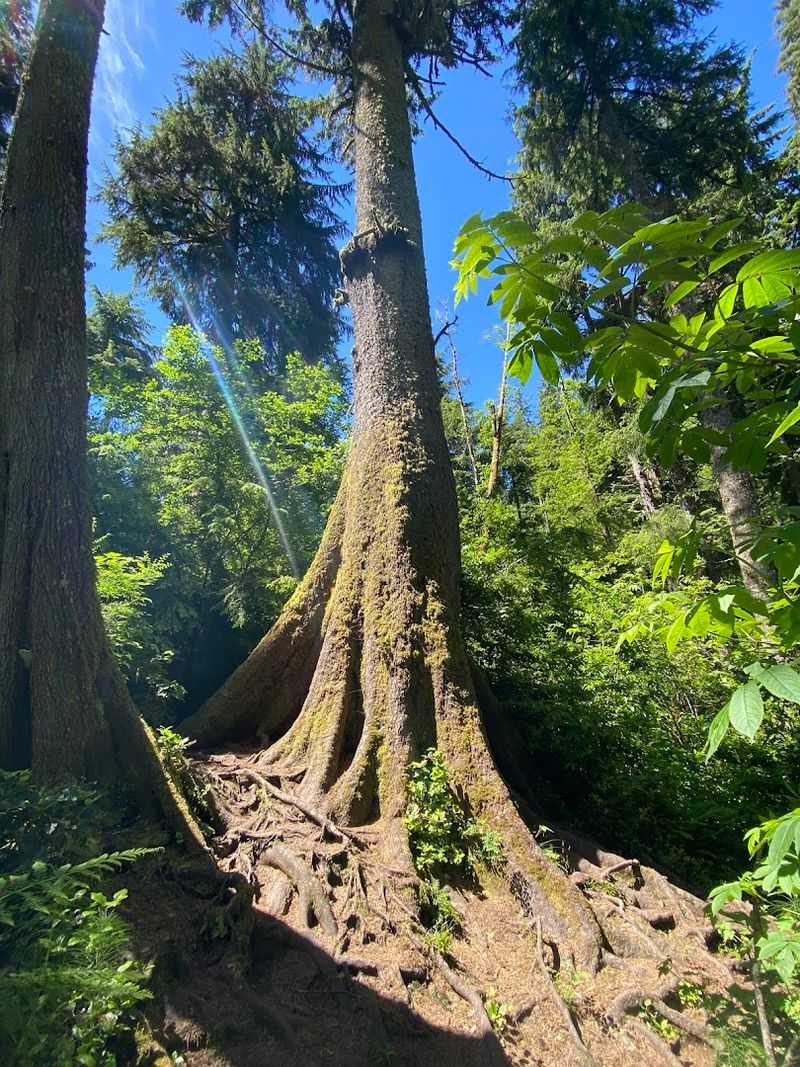
Most people come to Astoria for the ocean views and the famous column on the hill. Not everyone realizes there is a forested hiking trail winding right through the hillside below it.
Cathedral Tree Trail is a short hiking path located in Astoria, Oregon. It starts near Irving Avenue and climbs through a thick coastal forest before reaching its star attraction, a massive old-growth Sitka spruce known as the Cathedral Tree.
The trail is roughly one mile round trip from the Irving Street entrance. Some hikers connect it all the way up to the Astoria Column, which adds distance and elevation.
It sits at coordinates 46.1817674, -123.8170539, right in the hills above town.
The name fits perfectly. Walking under the towering canopy feels like stepping into a quiet, green cathedral.
Moss drapes every surface. The air smells clean and earthy.
It is the kind of place that makes you forget you are just minutes from a busy coastal highway.
The Ancient Sitka Spruce at the Heart of the Trail
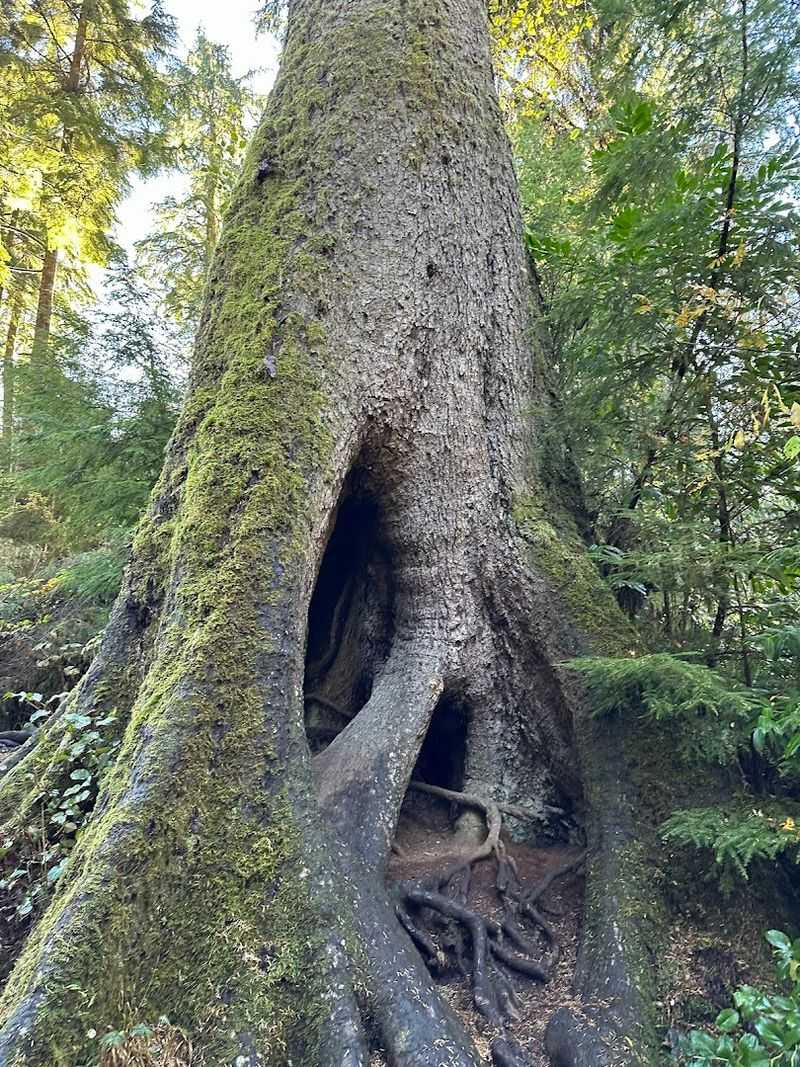
Standing in front of the Cathedral Tree for the first time is a genuinely humbling experience. This Sitka spruce is estimated to be around 300 years old, and it looks every bit its age.
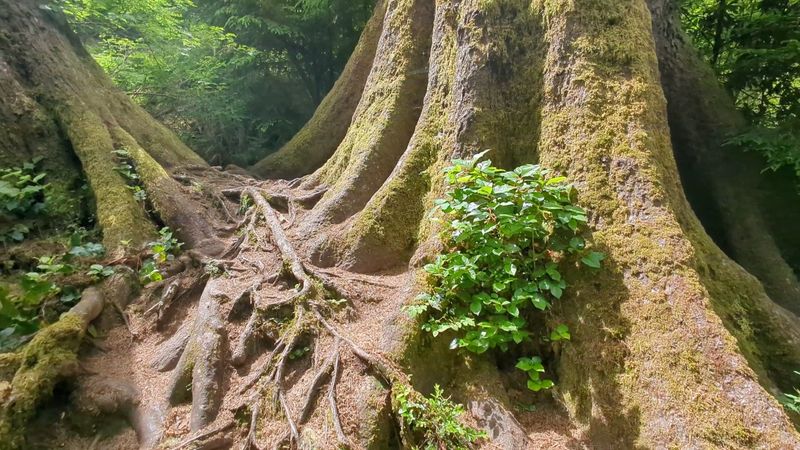
The trunk is enormous. You can actually crouch down and walk through a gap at its base, which hikers find endlessly entertaining.
The roots spread wide and dramatic, gripping the forest floor like ancient fingers.
Sitka spruces are native to the Pacific Northwest coast and can live for centuries. This particular tree has survived storms, logging operations, and the full sweep of Oregon coastal history.
It was already old when Lewis and Clark passed through this region.
One visitor described it beautifully, saying the tree felt like a wise old hermit, solitary but full of quiet knowledge. That description sticks.
Up close, the Cathedral Tree has a presence that photographs cannot fully capture. It rewards the short uphill climb completely.
How Difficult Is the Hike Really
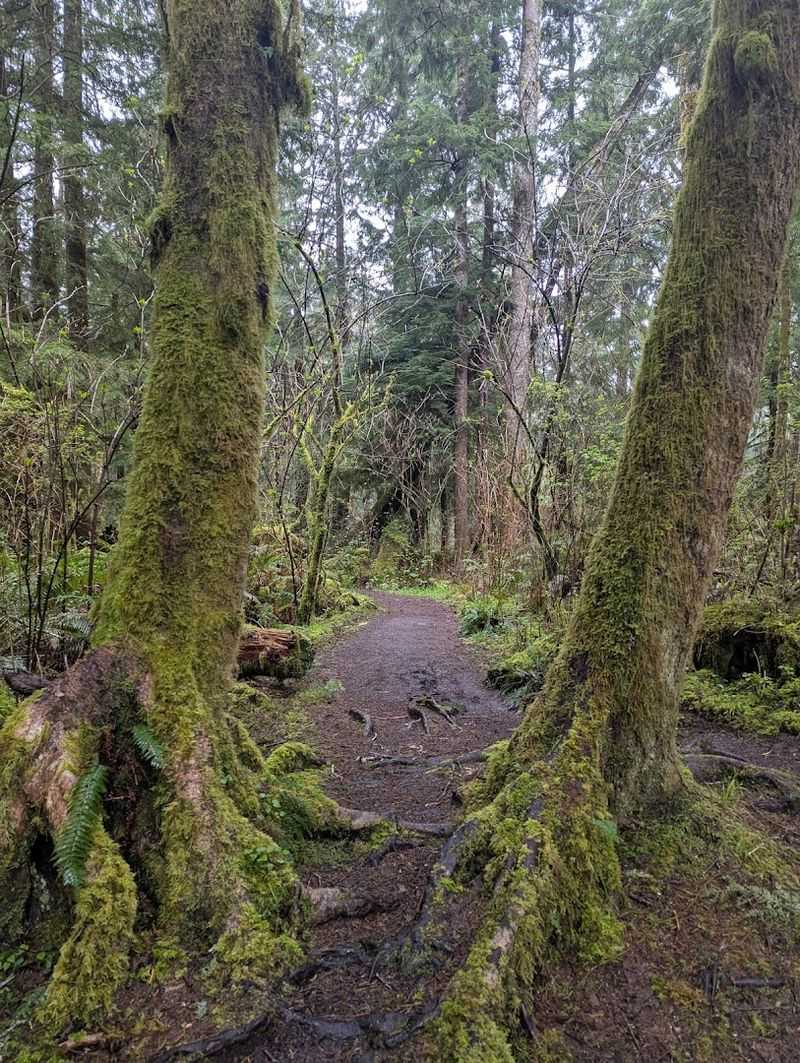
The trail has an easy-to-moderate rating, but that depends on the conditions. After rainfall, certain sections get slippery and muddy fast.
The Pacific Northwest does not hold back on moisture.
From the Irving Street entrance, the wide gravel path climbs steadily uphill. It is not a brutal climb, but your legs will feel it.
Kids can handle it fine, and older hikers manage it comfortably at a relaxed pace.
The steepest section comes early. Once you push past that initial incline, the trail levels out a bit and becomes more of a pleasant forest walk.
Tree roots cross the path in places, so watching your footing matters.
One visitor mentioned their kids enthusiastically documented a dad slipping on the slick sections. Apparently that counts as entertainment.
Wear shoes with solid grip, especially outside of summer. Mud boots are not overkill here.
The round trip takes most people between 40 minutes and one hour, including time to admire the tree.
What to Expect on the Trail Itself
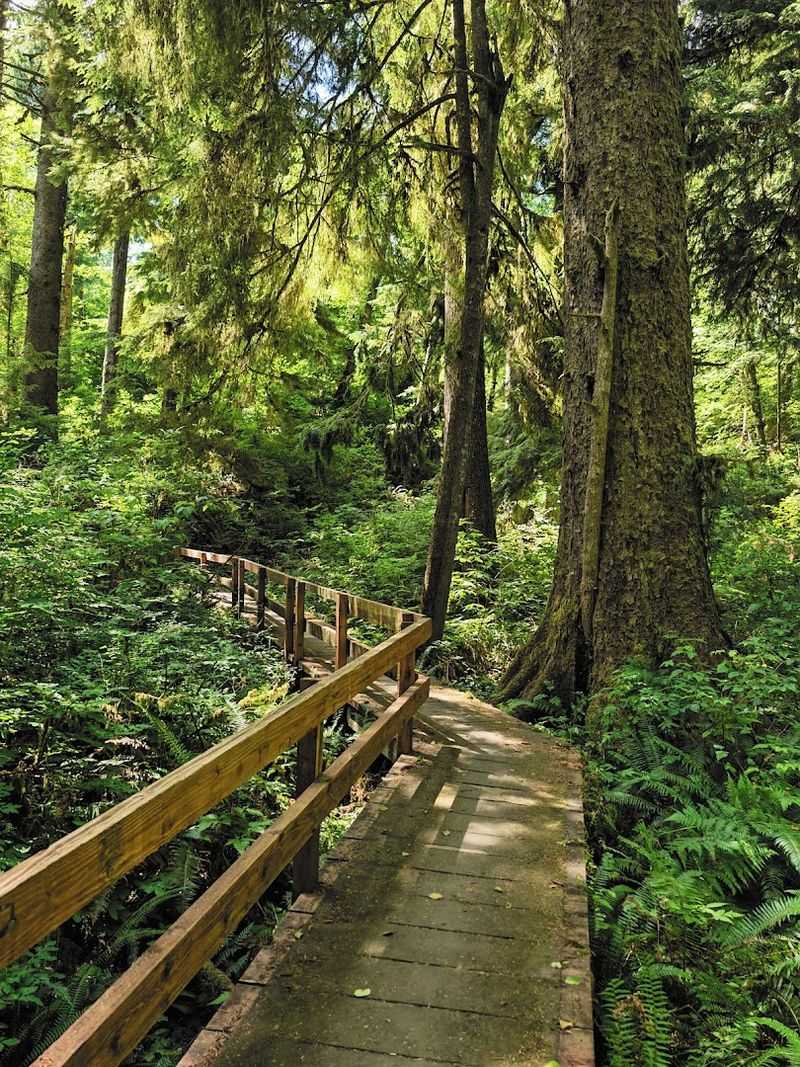
The moment you step onto the trail, the noise of the town fades. It is surprisingly quiet in there, even on a busy tourist day.
The canopy closes over you quickly and everything turns green.
Moss covers the rocks, the logs, and most of the tree bark. Lichen hangs in pale threads from branches overhead.
The forest floor is lush with ferns and low shrubs. It feels genuinely wild for something so close to town.
One of the unexpected highlights is the banana slugs. These bright yellow creatures appear along the path regularly, and kids go absolutely wild trying to spot them.
Counting slugs becomes a legitimate trail game.
Deer have been spotted grazing calmly near the path. Birds call from somewhere up in the canopy.
The trail is not busy in the way a popular beach trail would be. It has a calm, almost secretive atmosphere.
Parking and Trail Access Tips
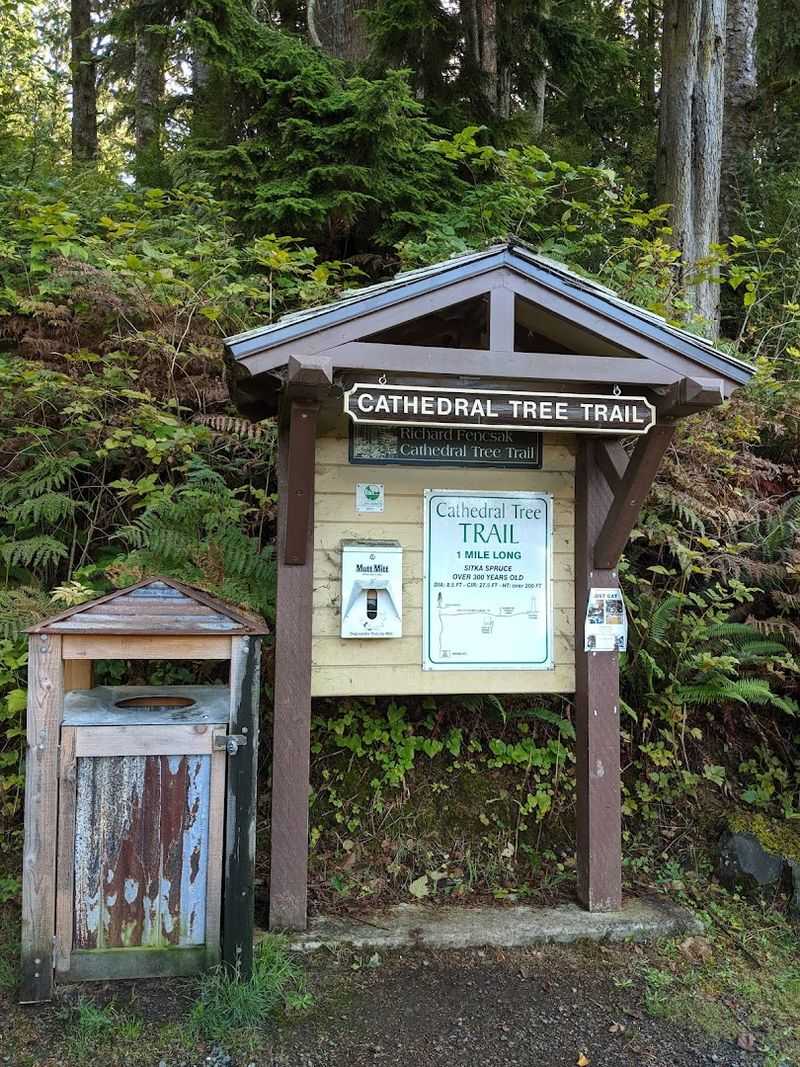
Parking at Cathedral Tree Trail is limited. The street near the Irving Avenue entrance has potholes and fits only a small number of cars.
Going early in the morning helps a lot.
Some hikers skip the street parking entirely by starting at the Astoria Column parking area at the top of the hill. That route approaches the tree from above rather than below.
The Column charges a small parking fee, which some visitors prefer to avoid by using street parking lower down.
The trailhead itself is not always easy to spot for first-time visitors. Signage is minimal in places.
Looking up the coordinates beforehand, 46.1817674, -123.8170539, saves confusion. One visitor got genuinely lost without a map and relied entirely on cell service to navigate out.
Cell service in the area is generally decent, which is reassuring. Still, downloading an offline map before you go is a smart move.
The trail is short, but the forest is thick enough to feel disorienting if you wander off the main path.
Best Time of Year to Visit
Astoria sits on the Oregon coast, which means rain is a regular companion for most of the year. The trail is open year-round, but the experience changes dramatically with the seasons.
Summer offers the driest conditions and the easiest footing. The forest is lush and vibrant.
Fog rolls through in the mornings, which gives the whole place a moody, atmospheric quality that feels very Pacific Northwest.
Winter and spring visits mean mud, slippery roots, and wet everything. That said, the forest looks extraordinary when it is soaking wet.
Moss glows bright green. Droplets hang from every branch.
One hiker visited at dusk in cool weather and described the tree as having a faint glow from the dew and low light. That kind of experience is hard to replicate in July.
March tends to be especially muddy. Autumn brings cooler air and quieter crowds.
Any season works if you dress for it. Waterproof footwear and a light rain layer are the two things worth packing every time.
Connecting the Trail to the Astoria Column
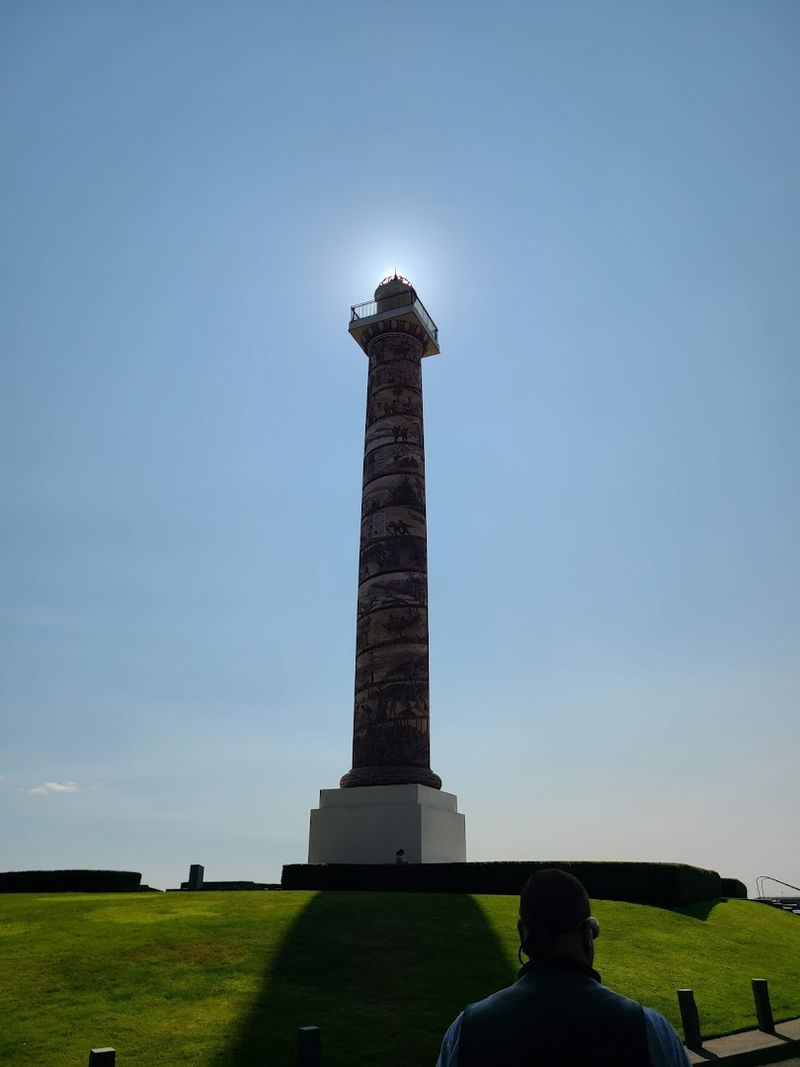
One of the most satisfying things about this trail is where it leads if you keep going. The Cathedral Tree is the midpoint highlight, but the path continues all the way up to the Astoria Column.
The Column sits at the top of Coxcomb Hill and offers panoramic views of the Columbia River, the Pacific coast, and the surrounding forest. It is one of Astoria’s most recognized landmarks.
Combining both stops into one hike makes for a full and rewarding morning.
One visitor completed the loop from the Column to the tree and back in about 53 minutes at a slow pace with plenty of photo stops. That gives a realistic sense of the full distance and effort involved.
The trail connects these two very different experiences beautifully. One is ancient and quiet, rooted in the forest.
The other is a painted tower with sweeping views. Together they tell a lot about what makes Astoria such a layered, interesting place to spend a day.
Wildlife and Nature Along the Path
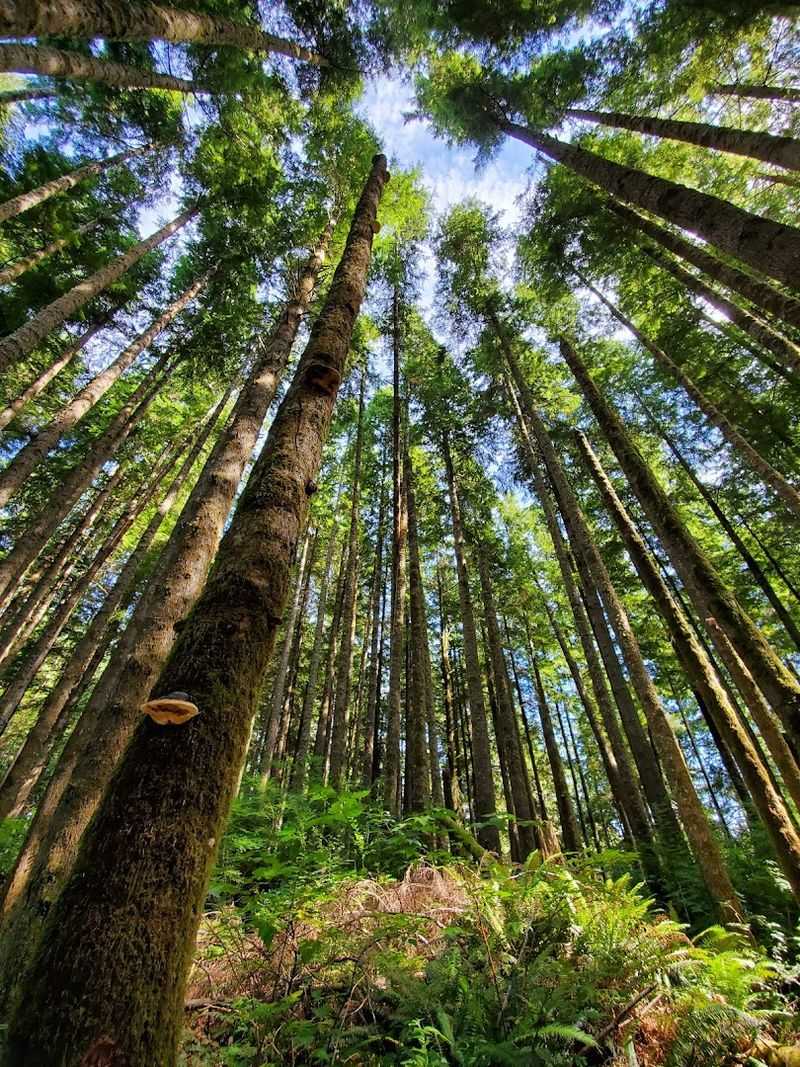
The forest along this trail is genuinely alive. It is not the kind of manicured park path where nature feels staged.
Things move, call, and crawl here in the best possible way.
Deer appear regularly, sometimes just off the trail, grazing without much concern for passing hikers. Spotting one feels like a small gift.
Birds are constant background noise, though spotting them through the thick canopy takes patience.
The banana slugs deserve their own mention again. These slow-moving, bright yellow creatures are native to the Pacific Northwest and appear throughout the trail.
They are harmless and surprisingly charming. Kids especially seem to find them magnetic.
The variety of plant life is striking too. One visitor who got lost ended up spending the whole time photographing the flora and fauna, and even called that the best part of an otherwise frustrating experience.
Mosses, ferns, lichens, and old-growth bark textures give the forest a texture and richness that rewards slow walking. Rushing through it would be a genuine waste.
Is It Worth the Trip for Tourists
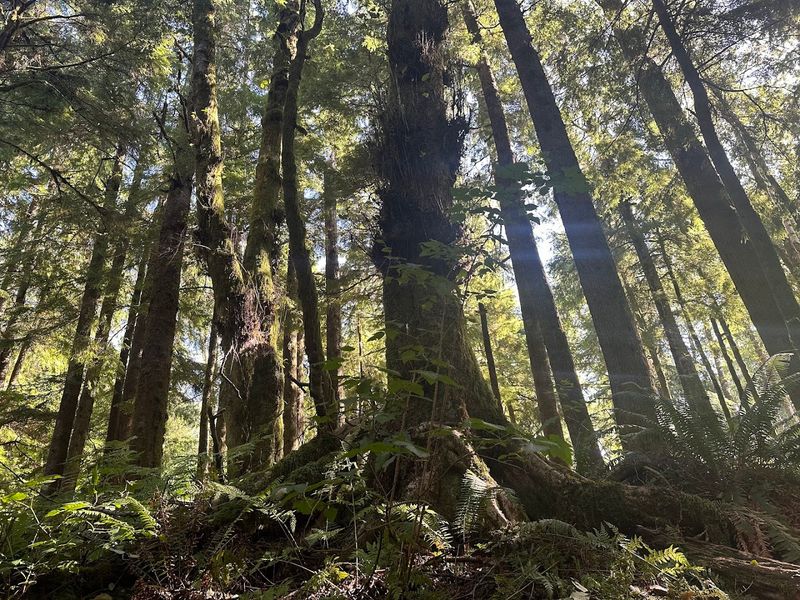
Opinions on this trail split along one clear line: locals and repeat visitors tend to love it, while tourists who expect a dramatic spectacle sometimes feel underwhelmed. Knowing what you are walking into makes all the difference.
The Cathedral Tree is not a theme park attraction. It is a quiet, ancient tree in a real forest above a real town.
The reward is proportional to how much you slow down and pay attention. Rushing to the tree, snapping a photo, and leaving misses the point entirely.
For families with kids, it is genuinely excellent. Short enough to hold attention, wild enough to feel like an adventure, and full of small discoveries like slugs, deer, and mossy logs to climb.
Dogs are welcome on the trail too, which earns it extra points with pet owners.
For hikers who want sweeping views and big mileage, this trail alone will not deliver. But as part of a day that also includes the Astoria Column and the waterfront, it fits in perfectly.
Tips for Making the Most of Your Visit
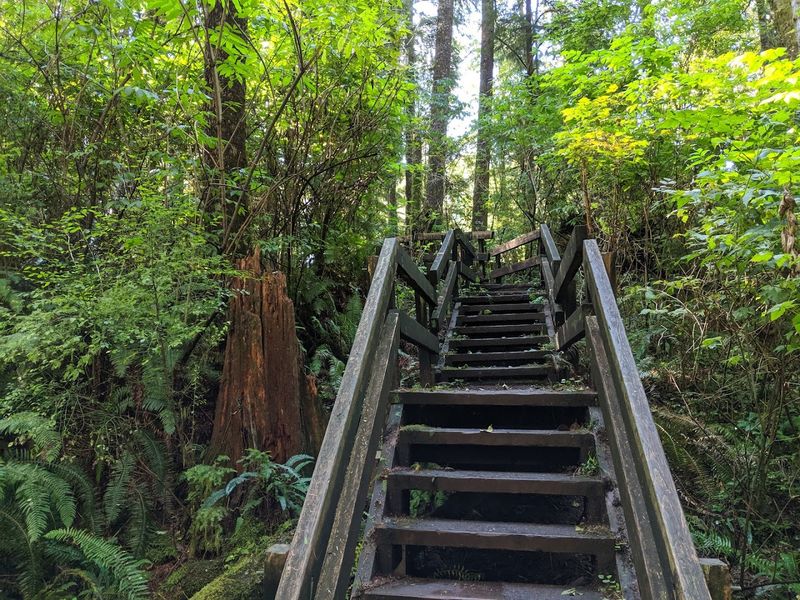
A few practical things make this hike noticeably better. Waterproof shoes or mud boots are the top priority outside of dry summer months.
The trail gets slick, and regular sneakers will not thank you.
Arrive early if possible. The trail is quiet by nature, but limited parking and the proximity to the Astoria Column means midday can get busier.
Early morning light in the forest is also genuinely beautiful. Fog moves through the trees in a way that feels almost cinematic.
Walk slowly. This is not a trail that rewards rushing.
The Cathedral Tree is the goal, but the journey through the forest is equally worthwhile. Look down for slugs, up for birds and sideways for deer.
Bring a fully charged phone with an offline map loaded. The signage on the trail is not always clear, and one wrong turn can add confusion quickly.
The forest is thick. Cell service is generally available, but having a backup map costs nothing and saves stress.
Enjoy every quiet, mossy step of it.
Address: Cathedral Tree Trail, Astoria, OR 97103
