My legs were burning by step 400. My pride was hurting by step 600.
But when I finally reached that narrow summit, I completely forgot every complaint.
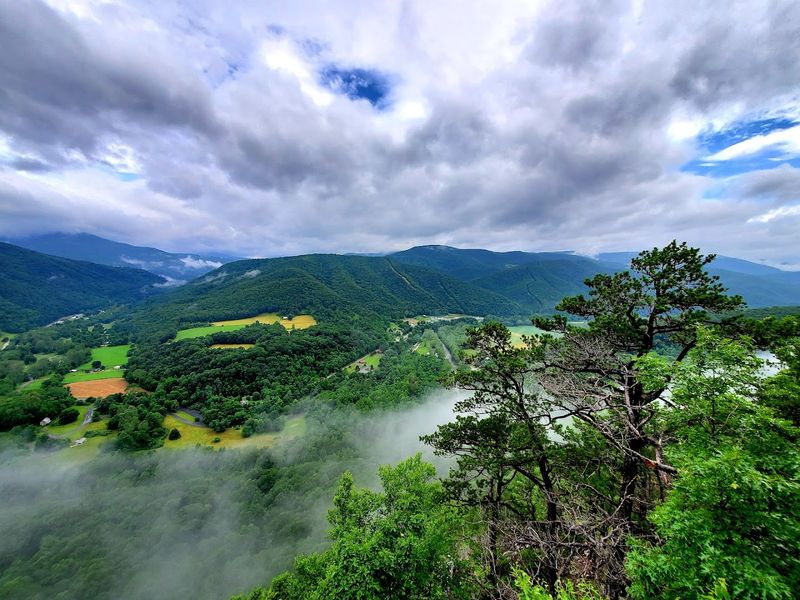
The valley spread out below like a green quilt someone forgot to fold, and the wind hit my face in a way that felt like a high five from nature itself.
This hike is not easy.
Nine hundred feet of elevation gain in a short distance means you will stop to catch your breath. Probably more than once.
But here is the truth. Every time you pause, the view gets better.
West Virginia knows how to reward effort, and this rocky spine of a trail delivers one of those rare moments where you just stand there quiet and grateful.
Your turn to earn that view?
Where the Adventure Officially Begins
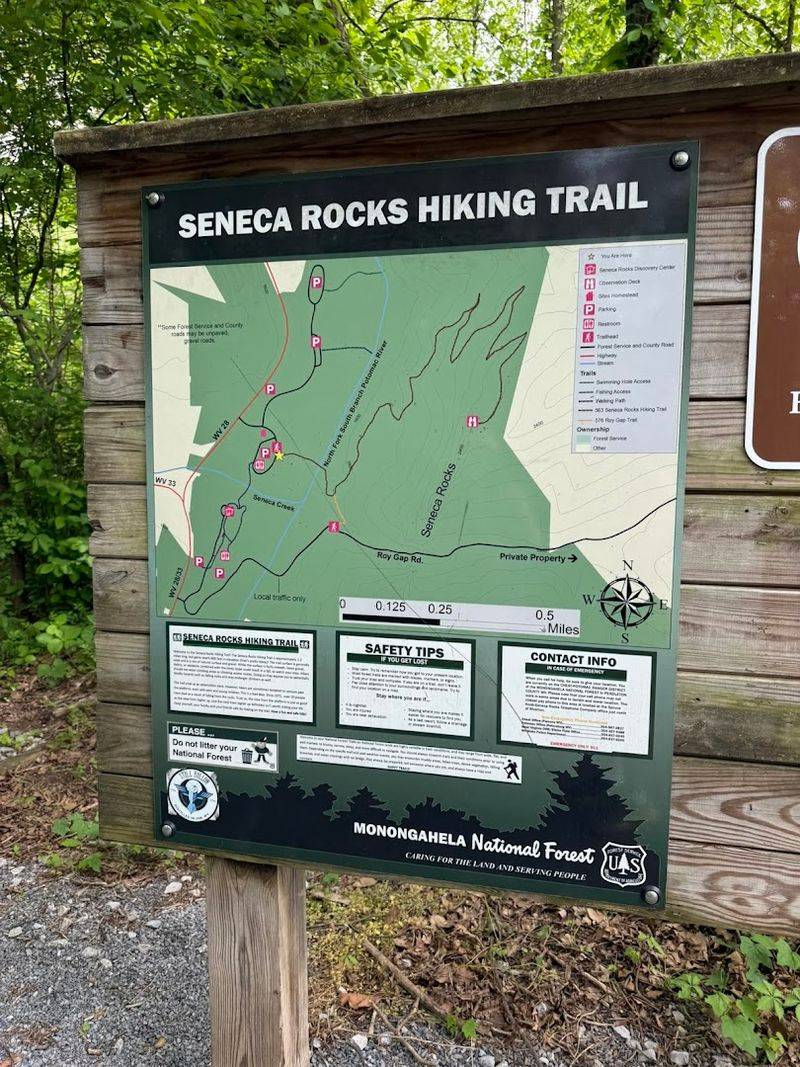
Pulling into the parking area at Seneca Rocks feels like arriving at the base of something ancient and slightly intimidating. The massive quartzite fins tower above the valley floor, visible even before you lace up your boots.
Free parking and a large lot mean you rarely have to circle around hunting for a spot.
The trail officially kicks off near the Seneca Rocks Discovery Center, where interpretive signs give you a quick geology lesson before the real climbing starts.
A wooden footbridge crosses Seneca Creek, and that crossing feels like a small ceremony, a moment where casual sightseeing becomes a genuine mountain adventure.
Cell service disappears almost immediately after you leave the parking area, so download your maps ahead of time. Restrooms are available near the trailhead, which is a welcome convenience before a 900-foot climb.
The trail is open daily from 5 AM to 9 PM, giving early risers a golden opportunity to catch sunrise light on those dramatic rock formations.
The Geology Story Written in Stone
Few hiking destinations come with a geology story this dramatic. Seneca Rocks is made of Tuscarora quartzite, a rock that formed roughly 440 million years ago from ancient ocean sediments that got compressed, folded, and eventually shoved skyward by tectonic forces.
The result is a jagged fin of stone rising nearly 900 feet above the North Fork River valley floor.
Interpretive signs along the trail break this story down in a way that actually sticks with you. Reading about how these formations developed while looking straight up at them creates a genuinely jaw-dropping perspective shift.
The rock has a pale, almost silvery quality in certain light that makes it look otherworldly against the green hillsides.
Understanding the geology also helps explain why Seneca Rocks became such a beloved destination for technical rock climbers. The quartzite provides excellent friction and natural hand holds.
For hikers who stick to the official trail, the geology is still a constant companion, visible in every exposed outcrop and rocky switchback underfoot.
Earning Every Single Foot of Elevation
The trail wastes no time getting to business. Within the first half mile, the path begins its serious ascent through a canopy of oaks, pines, and rhododendrons that keep things shaded and cool even on warm days.
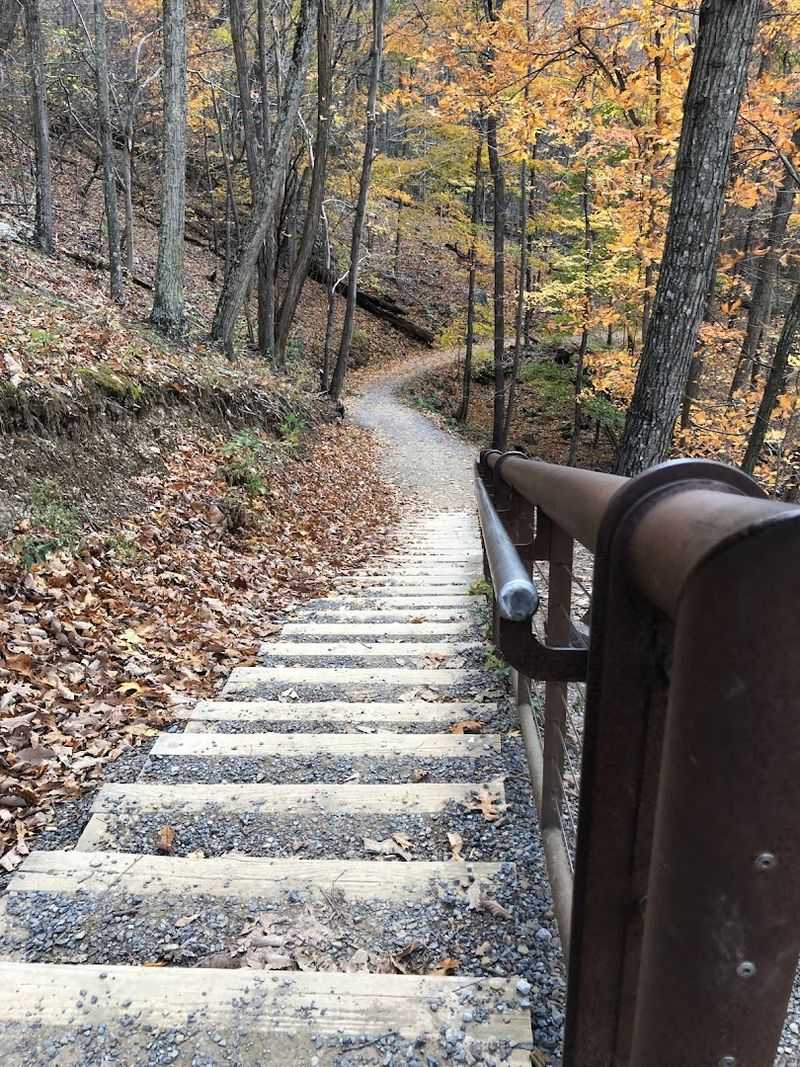
Wooden steps have been built into the steepest sections, which your knees will quietly appreciate.
The switchbacks are well-engineered, cutting back and forth across the slope to manage the elevation gain without sending you straight up a cliff face. That said, this is not a stroll.
The trail climbs between 700 and 1,000 feet over roughly 1.3 to 1.5 miles, and the steeper sections will get your heart pumping in a hurry.
Taking your time pays off here. Pausing to catch your breath also gives you a chance to spot white-tailed deer moving through the understory or listen for the distinctive call of a peregrine falcon riding thermals above the rocks.
The forest is genuinely alive, and rushing through it means missing the best parts of the experience before you even reach the top.
World War II History Hiding on the Mountainside
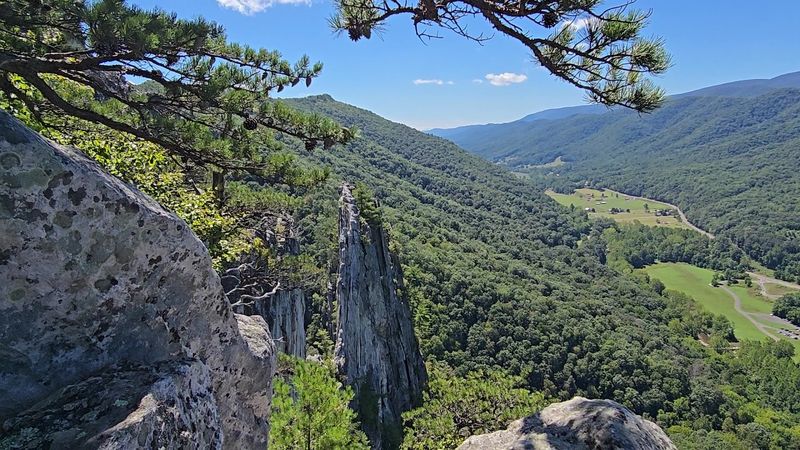
Here is a fact that stops most hikers mid-step: between 1943 and 1944, the U.S. Army used Seneca Rocks as a training ground for low-altitude mountain operations during World War II.
Soldiers practiced technical climbing on these very rocks in preparation for combat in the rugged terrain of Europe.
That history adds an entirely different emotional layer to the climb. Every steep section you power through was once a training exercise for men heading into war.
The mountain that feels challenging for a weekend hike was a proving ground for soldiers who needed to trust their skills with their lives on the line.
Interpretive signs along the trail reference this history, connecting the landscape to the broader story of American military preparation. It is a reminder that wild places carry human stories as well as natural ones.
Knowing this history makes the summit feel earned in a way that goes beyond the physical effort. Seneca Rocks is not just a beautiful hike.
It is a place where the land and history are permanently woven together.
Wildlife Encounters Along the Forest Trail

The trail through the forest below the summit is genuinely alive with wildlife, and paying attention pays off in memorable sightings.
White-tailed deer are common in the lower wooded sections, especially in early morning hours when the trail is quiet and the light is still soft through the canopy.
Wild turkeys occasionally cross the path with the kind of confident, unhurried energy that suggests they know exactly who owns this forest. Up near the rocky summit zone, peregrine falcons are the real showstoppers.
These birds nest in the cliffs and can often be seen riding thermal currents above the rocks, their silhouettes sharp against the sky.
Rhododendrons line much of the trail, and when they bloom in late spring and early summer, the lower sections of the hike transform into something almost impossibly beautiful.
The mix of oak, pine, and flowering shrubs creates a layered ecosystem that changes with every hundred feet of elevation gained.
Bringing a small pair of binoculars makes the wildlife viewing significantly more rewarding, especially if falcon spotting is on your personal agenda.
Your First Taste of the Summit
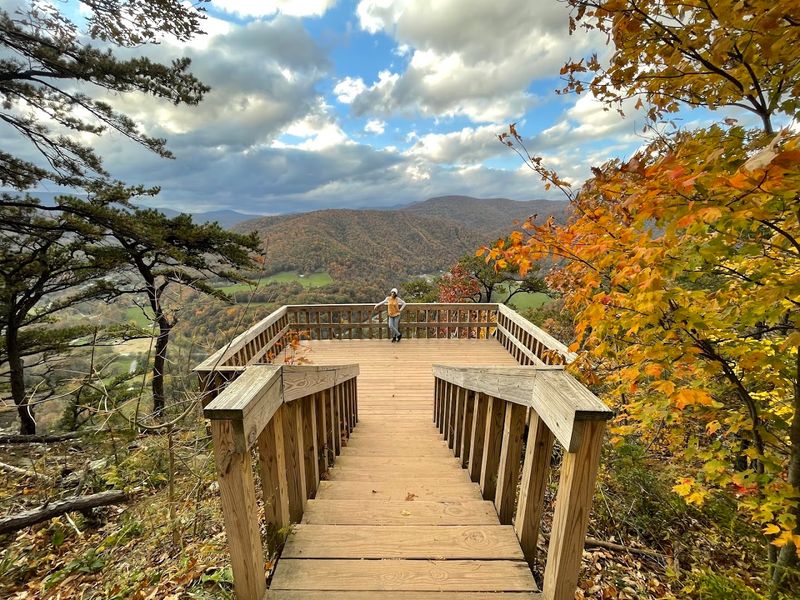
Reaching the observation platform at the top of the official trail feels like unlocking a reward you genuinely worked for.
The platform sits near the summit of Seneca Rocks and offers sweeping panoramic views across the North Fork River valley and the layered ridges of the surrounding Monongahela National Forest.
The valley below looks almost impossibly green in summer, with the river catching light between the hills. In autumn, the whole scene turns into a patchwork of red, orange, and gold that makes every photograph look like it was professionally edited.
The platform gives you a safe, stable place to stand and absorb all of it without worrying about footing.
Most hikers spend a good chunk of time here, eating snacks, resting tired legs, and just staring out at the view in comfortable silence. The round trip from the trailhead takes roughly two to three hours at a comfortable pace.
Carrying enough water is essential since there are no refill stations along the trail, and the climb will have you reaching for that bottle more than you expect.
For Those Who Want More
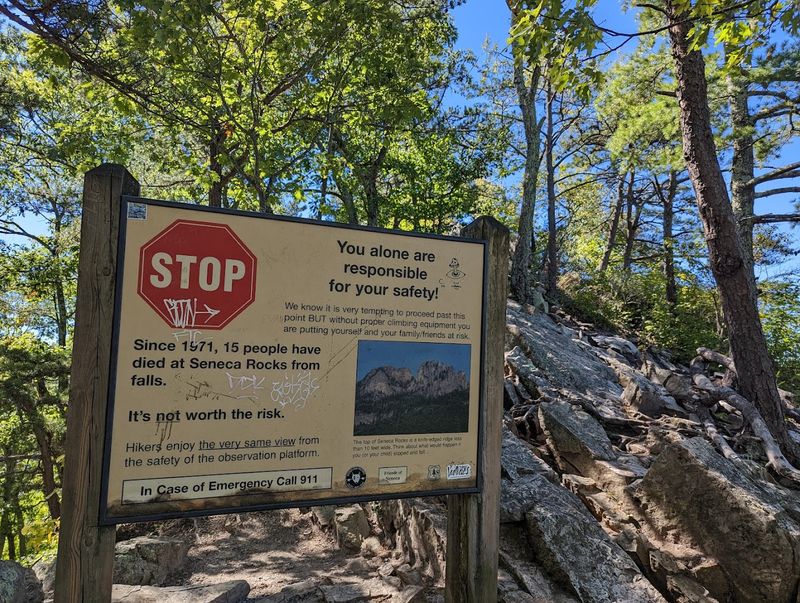
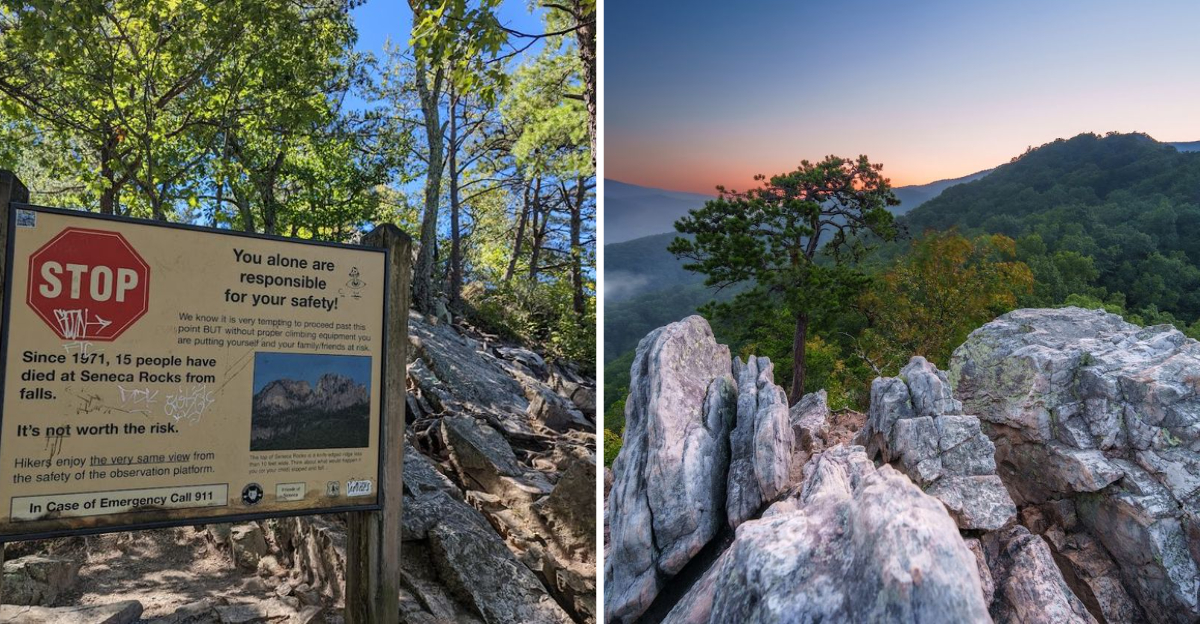
Past the observation platform, a warning sign marks the point where the official trail ends and personal judgment takes over.
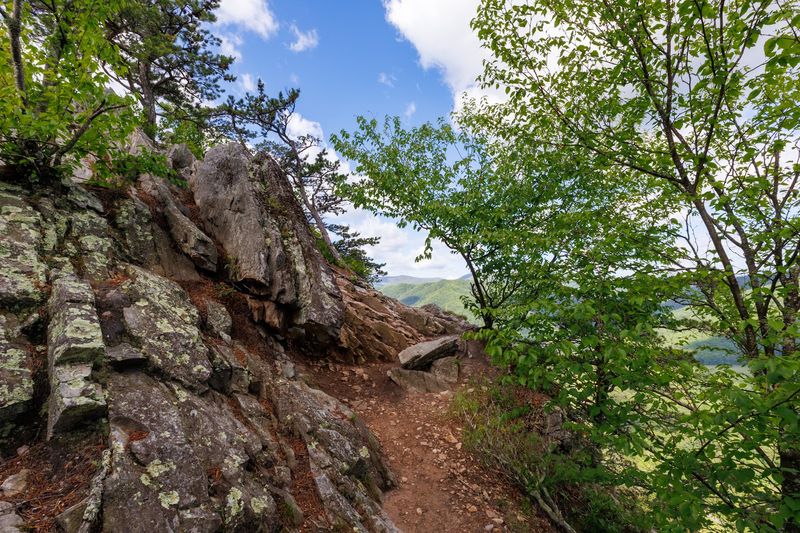
Beyond that sign, the terrain shifts into exposed rock scrambling on the quartzite fins themselves, and the views from up there are on a completely different level from anything the platform offers.
This section is genuinely not for everyone. The rock can be slippery when wet, the drops are significant, and proper footwear with solid grip is absolutely non-negotiable.
Dry conditions and a clear head are the minimum requirements for attempting it responsibly. The mountain has seen serious accidents in this zone, and the warning signs exist for very good reasons.
For those who are comfortable with exposure and have appropriate experience, the scramble rewards with a perspective that feels surreal. The narrow ridge of rock with open air on both sides creates a sensation that is hard to put into words.
Going up in dry conditions with sturdy hiking boots and a healthy respect for the terrain makes the experience both thrilling and manageable. Just know your limits before you step past that sign.
The Best Time to Make the Climb
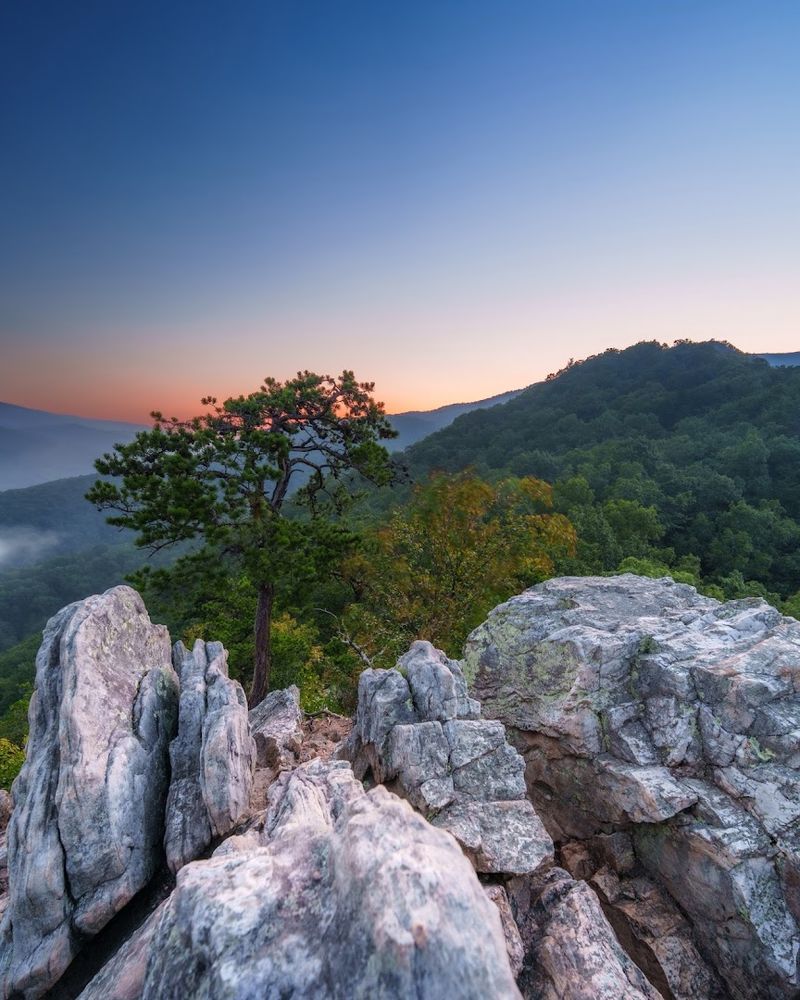
Autumn transforms Seneca Rocks from a beautiful hike into something that genuinely stops you in your tracks.
The surrounding Monongahela National Forest ignites in shades of red, burnt orange, and deep gold, and the rocky summit provides the perfect elevated vantage point to take all of it in at once.
Fall is widely considered the best season for this hike, and the combination of cooler temperatures and vibrant color makes a compelling argument for timing your visit between late September and early November.
The air is crisp and clear, which also means better long-distance visibility from the observation platform.
Those distant mountain ridges that might be hazy in summer come into sharp focus on a cool October morning.
Weekends in peak foliage season can bring more visitors to the trailhead, so arriving early takes advantage of the quiet morning hours and the best light for photography.
The trail opens at 5 AM, which means a sunrise hike during peak fall color is absolutely within reach for motivated early risers.
Few experiences in West Virginia compare to watching autumn light hit those pale quartzite fins.
Practical Tips for Making the Most of Your Visit
A few practical details make the difference between a smooth visit and a frustrating one.
Cell service is essentially nonexistent from the parking lot through most of the trail, so downloading offline maps before you leave home is a genuine necessity rather than just a good idea.
Telling someone your hiking plan before you head out is always smart when service is unavailable.
The trailhead is open daily from 5 AM to 9 PM, and arriving early on busy weekends secures a good parking spot and gives you a quieter experience on the trail. The large parking area is free, which is a welcome detail.
Restrooms are available near the trailhead, though supplies like toilet paper are not always guaranteed, so packing a small personal kit is worth the minimal effort.
Sturdy hiking boots with ankle support make the rocky switchbacks and summit area significantly more comfortable and safe. Layering clothing for changeable mountain weather is also practical, especially in spring and fall.
The hike takes roughly two to three hours round trip at a steady pace, making it an accessible adventure that fits comfortably into a single day trip from many surrounding areas.
Address: Seneca Rocks, WV 26884.
