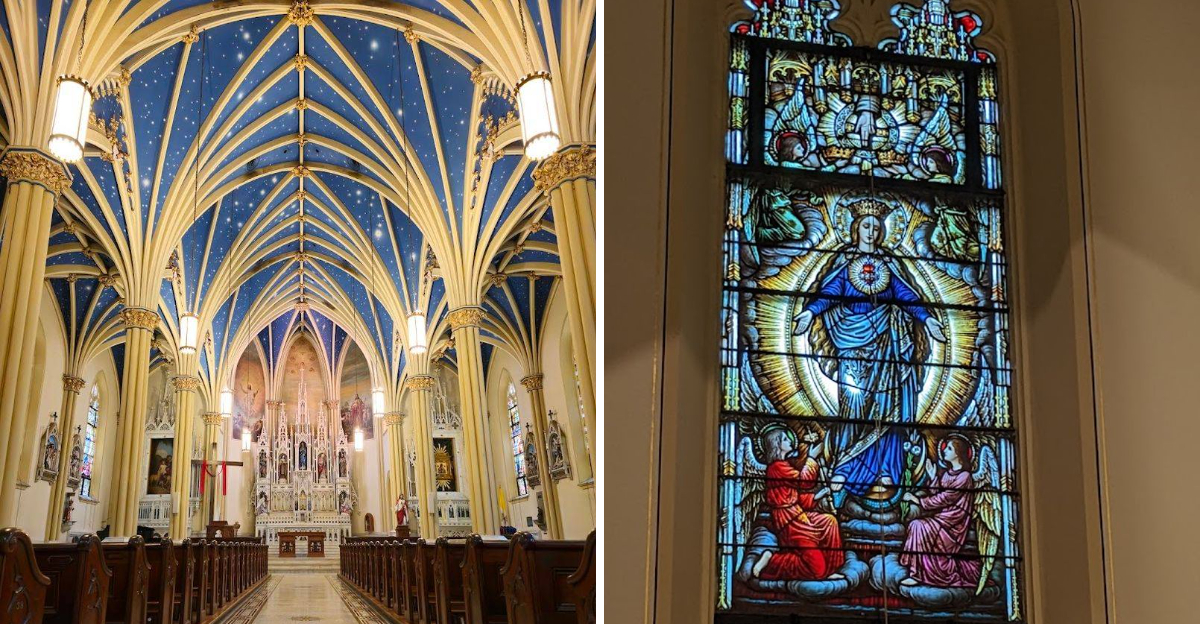
You do not have to be religious to appreciate a truly beautiful building. This Maryland church proves that.
Centuries old, with stunning architecture and a peaceful presence that stops you in your tracks. The stained glass glows when the sun hits just right.
The ceilings soar overhead, making you feel small in the best way. History lives in these walls, from the old bricks to the quiet pews.
Tourists wander in to take photos and end up sitting for a while just soaking it in. Locals get married here, say goodbye to loved ones here, and find quiet moments of peace here.
That is the beauty of a landmark like this. Whether you pray or not, you cannot deny the beauty and the calm it brings.
The Gothic Revival Architecture That Stops You in Your Tracks
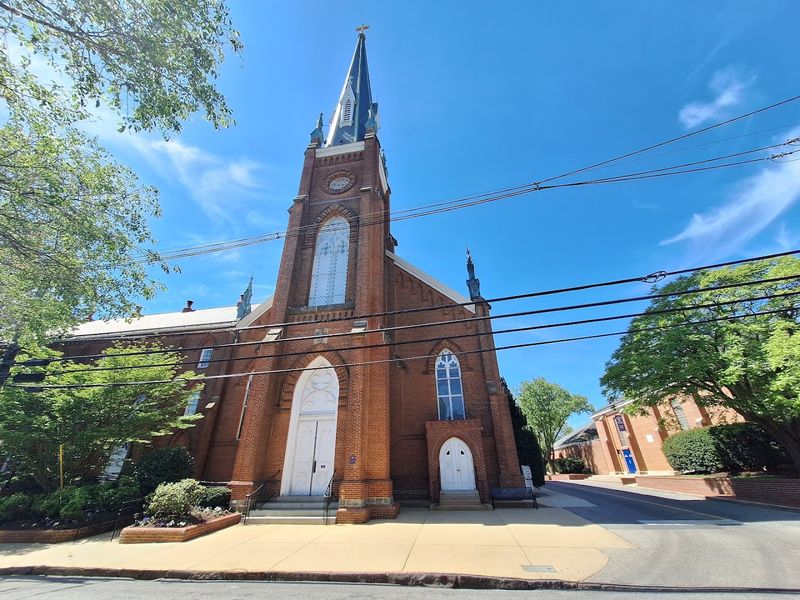
The first thing you notice about St. Mary’s Parish is the steeple. It punches right through the Annapolis skyline, and depending on where you are in the city, you can spot it from blocks away.
That kind of presence is not an accident.
Architect Louis L. Long designed the current church building in the Gothic Revival style, and construction ran from 1858 to 1860.
The dedication came in 1860, right on the edge of one of the most turbulent periods in American history. It feels almost remarkable that such a detailed, carefully crafted structure came together during that era.
Gothic Revival architecture was hugely popular in mid-19th century America, especially for religious buildings. The style borrows heavily from medieval European cathedrals, emphasizing verticality, pointed arches, and an overall sense of reaching skyward.
St. Mary’s captures all of that energy without feeling overblown or theatrical.
The brick exterior has a solidity and warmth to it that you do not always find in Gothic-style buildings. Up close, the craftsmanship becomes even more apparent.
Every detail feels considered, from the proportions of the windows to the way the steeple tapers upward with quiet confidence.
At roughly 7,000 square feet, the sanctuary is substantial without being overwhelming. It fits its surroundings perfectly, anchoring the Duke of Gloucester Street block with a calm authority.
Whether you are an architecture enthusiast or just someone who appreciates a genuinely beautiful building, the exterior alone makes the trip worthwhile.
A History Rooted in the Very Founding of Catholic Maryland
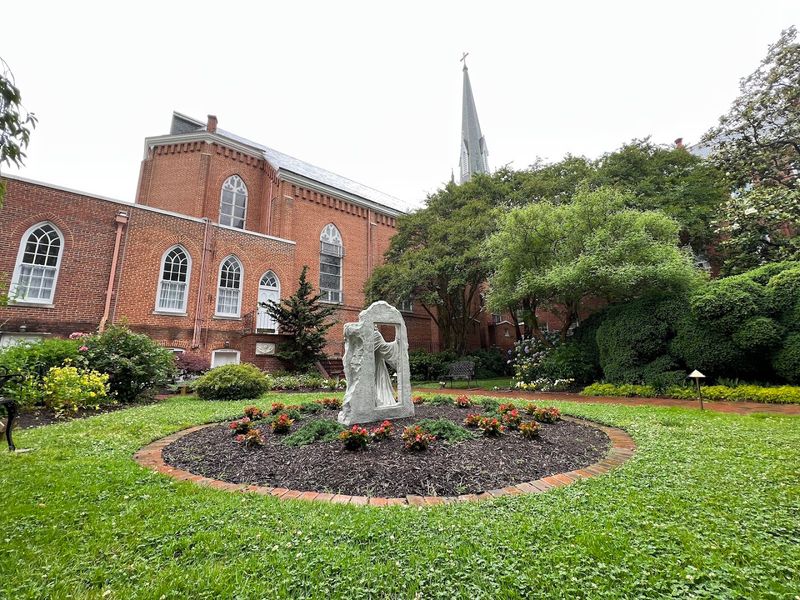
Few parishes in Maryland can trace their roots as far back as St. Mary’s, and the story behind this place is genuinely fascinating. A Catholic mission existed on this site as early as 1822, making it one of the oldest Catholic presences in the Annapolis area.
The first St. Mary’s Church opened in 1823. It was a small, one-room brick building, modest by any measure, but meaningful in ways that go far beyond its size.
The land itself was provided by Mary Anne Caton Patterson, the granddaughter of Charles Carroll of Carrollton, whose name carries enormous weight in American Catholic history.
Carroll was the only Catholic signer of the Declaration of Independence, a detail that adds a remarkable layer of significance to this entire property. His home, the Carroll House, stands on the same grounds.
That connection between the founding of the nation and the founding of this parish is not something you can easily brush past.
By 1852, Carroll’s four granddaughters had donated the property to the Redemptorists, a Catholic religious order. The permanent parish was formally established by the Redemptorist Fathers in 1853.
That transition from a small mission chapel to a full parish reflects both the growth of the Catholic community in Annapolis and the deep commitment of the families who shaped its early years.
Knowing this backstory before you walk through the doors changes how the whole place feels. The history is not just decorative here.
It is structural.
The Blue Vaulted Ceilings That Make the Interior Unforgettable
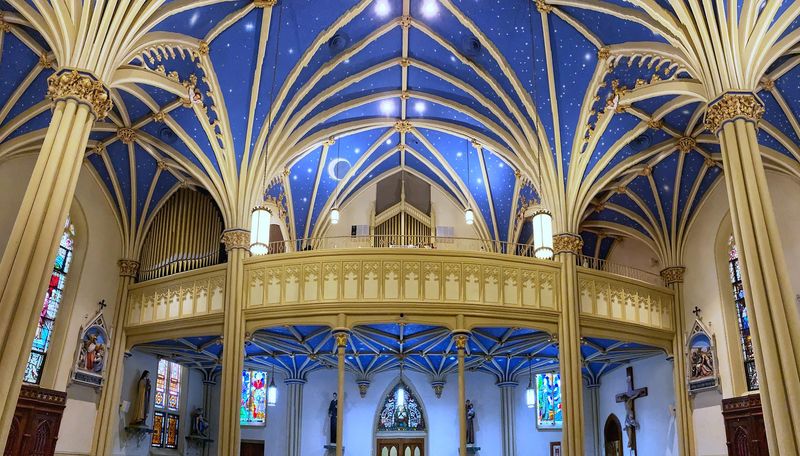
Stepping inside St. Mary’s for the first time, the ceiling is what gets you. The blue vaulted ceilings stretch overhead in a way that makes the space feel both enormous and somehow intimate at the same time.
It is one of those interiors that genuinely earns the word breathtaking.
The long nave pulls your eye straight toward the altar, and the arched ceilings above amplify that sense of forward movement. Gothic architecture is specifically designed to do this, to guide attention and create a feeling of elevation, both physical and spiritual.
At St. Mary’s, it works exactly as intended.
The color of those ceilings deserves its own mention. The blue is rich without being heavy, and it catches the light in a way that shifts subtly depending on the time of day.
Morning light through the stained-glass windows casts everything in a slightly different tone than afternoon sun, so the space never quite looks the same twice.
The combination of the arched ceilings, the long nave, and the carefully placed windows creates a rhythm inside the church that feels almost musical. Each element reinforces the others.
Nothing feels out of place or added as an afterthought.
For anyone who loves historic interiors, this is the kind of space that rewards slow, quiet attention. Sit in one of the wooden pews for a few minutes and just look upward.
The craftsmanship that went into creating this environment over 160 years ago still feels very much alive.
The Hand-Painted Altarpiece and the Art That Fills Every Corner
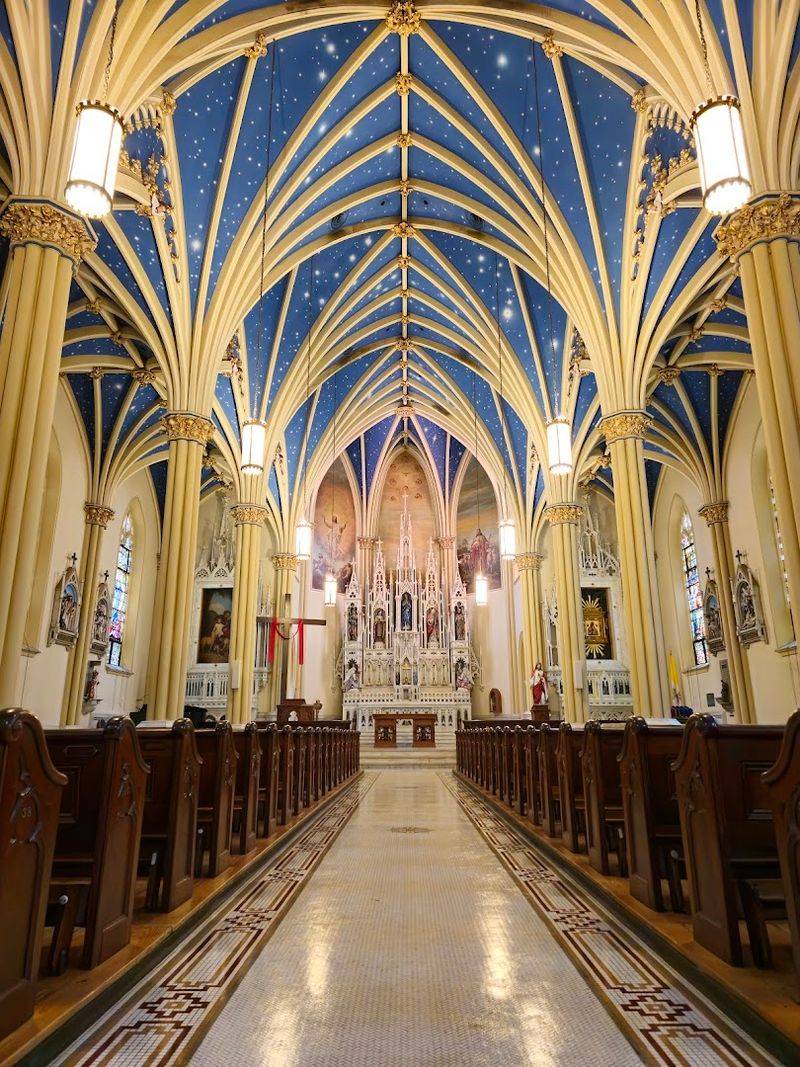
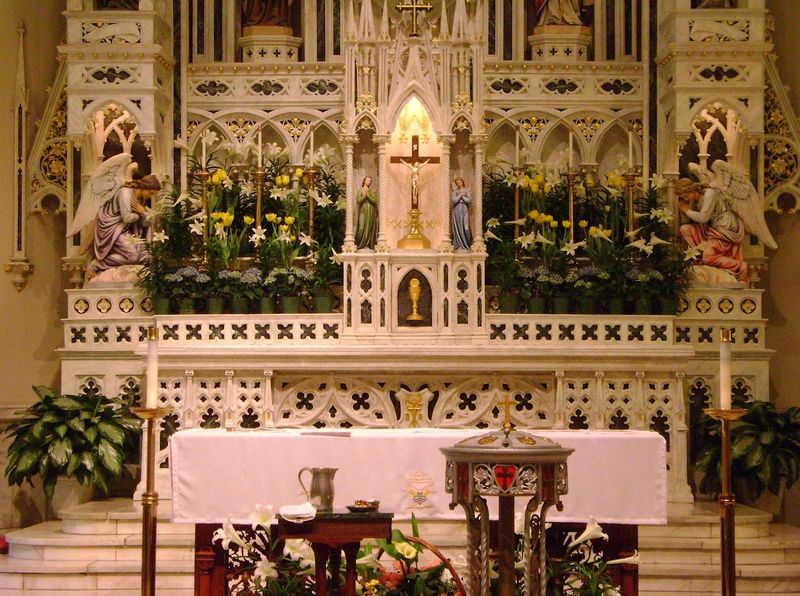
The altarpiece at St. Mary’s is one of the most remarkable pieces of religious art I have personally seen in a parish church setting. It was hand-painted by Redemptorist brothers, and that origin story adds a layer of meaning that you can almost feel when you stand in front of it.
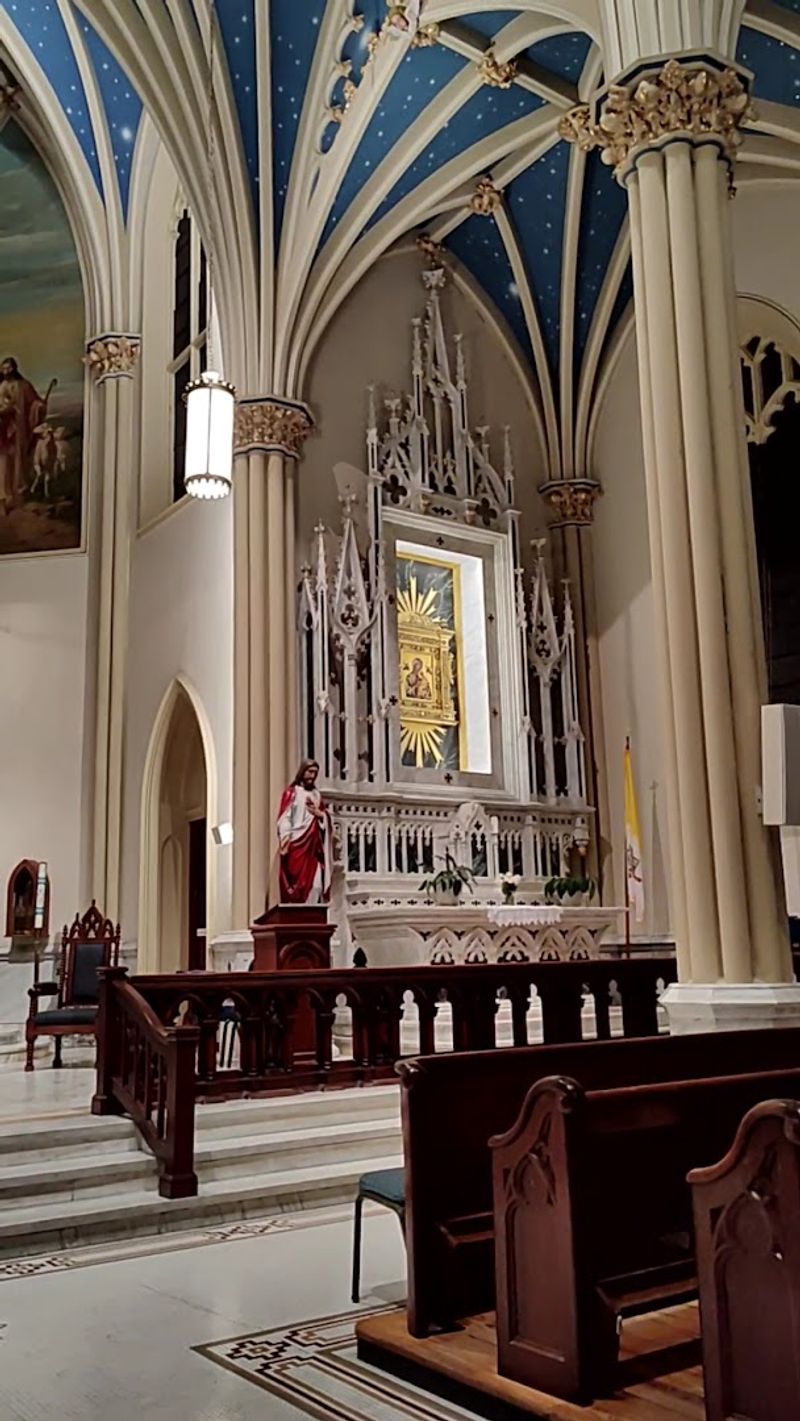
Five religious statues adorn the altarpiece, surrounded by frescoes depicting the Ascension of Jesus, the Descent of the Holy Spirit, and The Good Shepherd. These are not small, understated images.
They are vivid and detailed, painted with the kind of care and precision that speaks to genuine devotion rather than simple decoration.
The quality of the work is striking for a parish church. Redemptorist brothers were known for their skilled craftsmanship across multiple arts, and the altarpiece here is a clear example of that tradition.
Every brushstroke feels deliberate.
Beyond the altarpiece, the church is filled with colorful stained-glass windows that illustrate stories of faith across their many panels. The light filtering through those windows changes the entire mood of the interior at different hours of the day.
Early morning visits are particularly special for this reason.
There is also a shrine dedicated to Our Mother of Perpetual Help, a beloved devotional image in the Redemptorist tradition. The shrine is hidden into the church with a quiet reverence that suits the overall atmosphere perfectly.
All of these artistic elements together create an interior that feels genuinely layered and alive, not like a museum, but like a place that has been loved for a very long time.
The Carroll House Connection and Its Place in American History
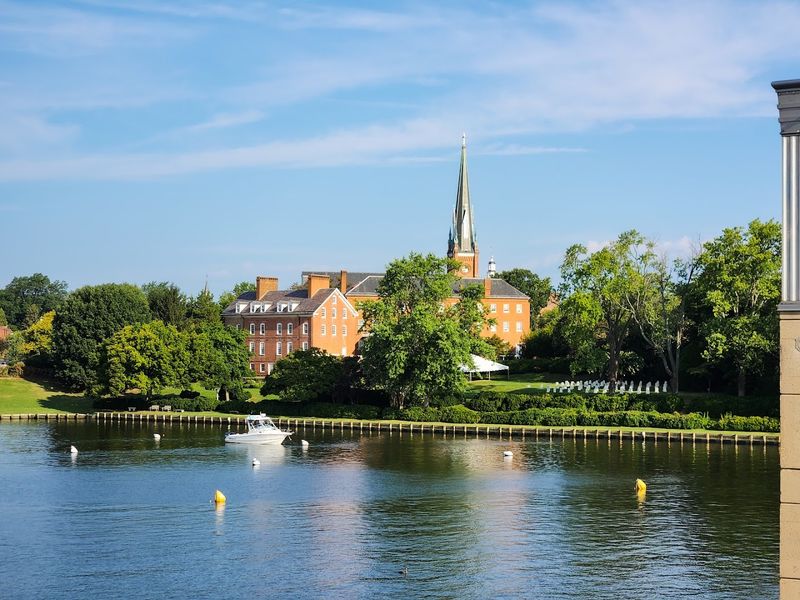
Most people visiting Annapolis know the name Charles Carroll of Carrollton, but not everyone realizes that his birthplace and longtime home sits right on the grounds of St. Mary’s Parish. That fact alone gives this property a historical weight that very few religious sites in the country can match.
Carroll was the only Catholic signer of the Declaration of Independence, a distinction that made him both celebrated and, at times, a symbol of how Catholic Americans fit into the broader story of the new nation.
His presence in Annapolis was significant, and the Carroll House reflects that significance in its scale and location.
After Carroll’s death, his granddaughters became the stewards of the property. In 1852, they donated the land to the Redemptorists, setting the stage for the permanent parish that would follow.
That act of generosity shaped the entire trajectory of Catholic life in Annapolis for generations.
The Carroll House itself is a separate historic structure on the same grounds, and its proximity to the church creates a kind of living history campus right in the middle of the city.
Walking between the two buildings, you get a tangible sense of how faith, family, and civic identity were deeply intertwined in early American life.
The property as a whole is listed on the National Register of Historic Places and sits within the Colonial Annapolis Historic District, a National Historic Landmark District. That level of official recognition tells you something about how seriously this place is regarded by historians and preservationists alike.
The Surprising Musical Legacy Tied to the Naval Academy
Here is a detail about St. Mary’s Parish that most visitors do not know, and it tends to get a genuine reaction when you share it. In 1906, Charles A.
Zimmerman composed the music for “Anchors Aweigh” right here at this church.
Zimmerman was the church’s organist and also served as the bandmaster for the United States Naval Academy. The Naval Academy is just a short distance from St. Mary’s, and the connection between the two institutions runs deep through this particular story.
“Anchors Aweigh” went on to become one of the most recognized military marching songs in American history.
That a piece of music so firmly associated with naval tradition was born in a Catholic parish church is the kind of historical footnote that makes you appreciate how interconnected communities can be.
Zimmerman was clearly a man of multiple worlds, equally at home in the sacred space of St. Mary’s and the formal setting of the Naval Academy.
The parish’s relationship with the Naval Academy did not stop with Zimmerman. St. Mary’s served as the only nearby location where Catholic midshipmen from the Academy could attend Mass, and that arrangement continued until 1947.
For decades, the church was a spiritual home for young sailors in training, adding yet another dimension to its already layered identity.
That combination of religious history and military heritage gives St. Mary’s a uniquely American character. It is not just a beautiful church.
It is a place where different threads of the national story came together in genuinely unexpected ways.
Education and Community, Over 160 Years of Parish Life
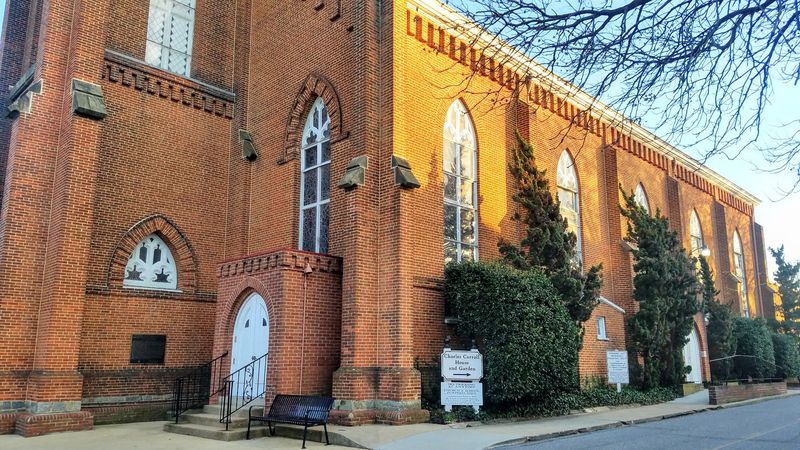
A church that has been serving a community for over 170 years inevitably becomes more than just a place of worship, and St. Mary’s Parish is a perfect example of that kind of deep, layered community presence. Education has been central to parish life here almost from the very beginning.
St. Mary’s Elementary School opened in 1862, just two years after the current church building was dedicated. That timeline speaks to how seriously the parish took its responsibility to the families it served.
A high school also became part of the parish’s educational footprint over time, extending that commitment across generations of Annapolis families.
Today, the parish serves over 5,000 families in the Annapolis area. That is a substantial community by any measure, and it reflects both the historical importance of St. Mary’s and its continued relevance in modern Annapolis.
A parish of that size carries significant weight in the social and civic fabric of the city.
The Redemptorist Fathers, who formally established the parish in 1853, have a long tradition of community engagement and outreach. Their influence shaped not just the physical campus but the culture of service that has defined St. Mary’s across different eras.
Visiting the grounds, you get a sense of how much life happens here beyond Sunday Mass. The property feels active and purposeful in a way that reflects an institution still very much engaged with the people around it.
History is present everywhere, but so is the unmistakable energy of a community that is still growing.
The Stained-Glass Windows and the Stories They Tell
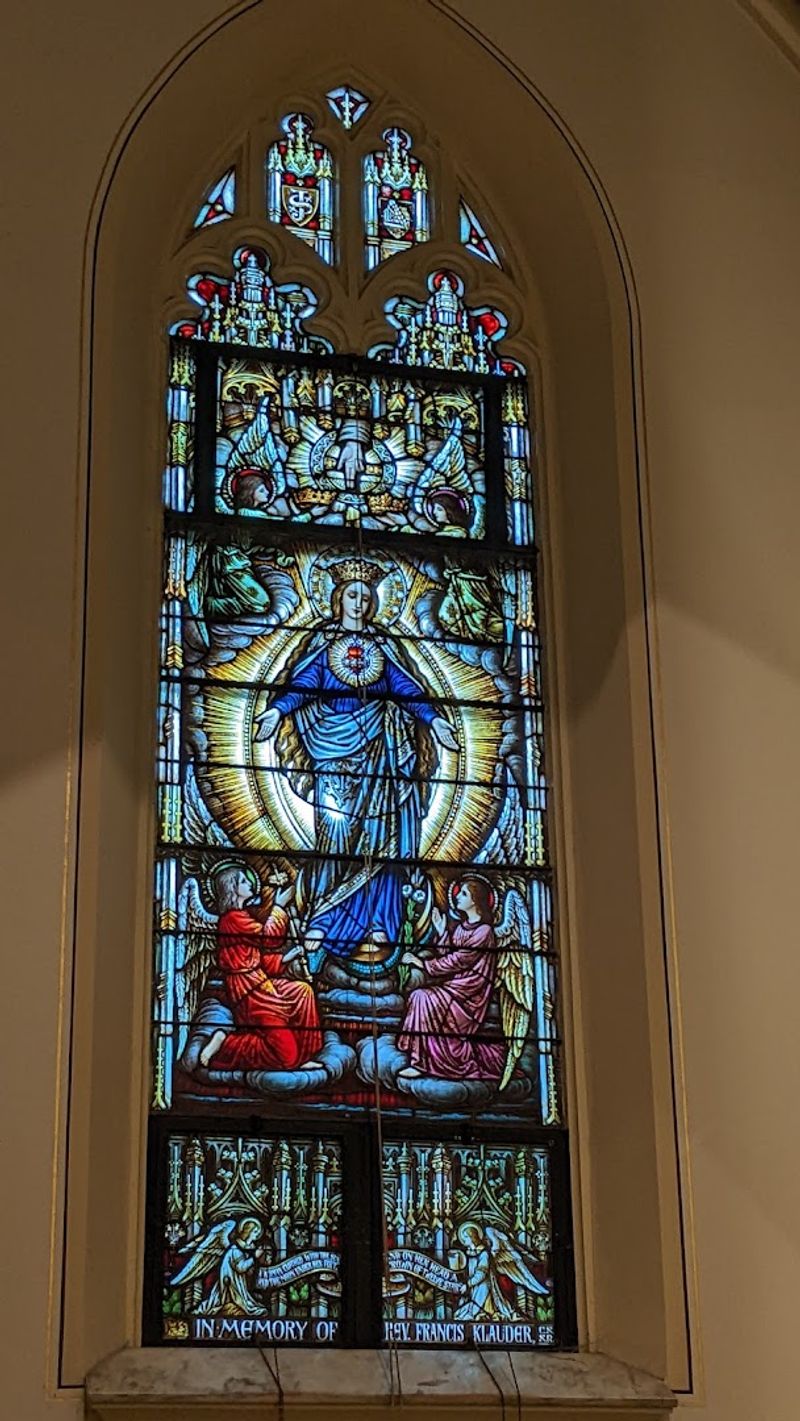
Stained-glass windows in a historic church are never just decorative, and the ones at St. Mary’s are particularly worth your attention. Each window tells a story, and taken together they create a visual narrative that runs along the walls of the entire sanctuary.
The colors are rich and varied, with deep blues, warm reds, and golden ambers appearing throughout. When sunlight pushes through them on a clear day, the effect on the interior is genuinely dramatic.
The light shifts and pools across the wooden pews and stone floors in ways that feel almost choreographed.
Religious stained glass has a long tradition of serving as visual scripture, a way of communicating stories of faith to people who might not have had access to written texts. At St. Mary’s, that tradition is fully honored.
The windows illustrate scenes and figures from Catholic tradition with a clarity and expressiveness that holds up even to a modern eye.
What makes these windows particularly special in the context of St. Mary’s is how they interact with the blue vaulted ceilings above. The color palette of the windows and the ceiling feel coordinated, even if that coordination happened organically over many decades of additions and restorations.
Taking time to move slowly along the nave and look at each window individually is one of the best ways to experience the interior of the church. There is no rush here.
The space invites that kind of quiet, unhurried attention, and the windows reward it generously. Each panel offers something slightly different if you give it a moment.
Visiting St. Mary’s Parish, What to Know Before You Go
Planning a visit to St. Mary’s Parish is straightforward, and the church’s location in the heart of Annapolis makes it easy to combine with other stops in the city. Duke of Gloucester Street is a walkable, historically rich area, and the church sits within easy reach of many of Annapolis’s other notable landmarks.
The grounds include both the church and the historic Carroll House, so budget enough time to take in both. A rushed visit will leave you feeling like you missed something.
Give yourself at least an hour, more if you want to sit quietly inside the sanctuary and really absorb the interior.
The church is an active parish, so it is worth checking the schedule before you arrive to make sure you are not visiting during a Mass or private event. Respectful, quiet visits during open hours are generally welcomed at historic parishes like this one.
Annapolis as a whole rewards slow exploration, and the neighborhood around St. Mary’s is no exception. The Colonial Annapolis Historic District surrounds the church with streets that have barely changed in character since the 18th century.
That context makes the visit feel even more meaningful.
Whether you are drawn by the architecture, the history, the art, or simply the atmosphere of a genuinely old and well-loved place, St. Mary’s delivers on every level. It is the kind of landmark that reminds you why some places deserve to be visited in person rather than just admired in photographs.
Address: 109 Duke of Gloucester St, Annapolis, MD 21401.
