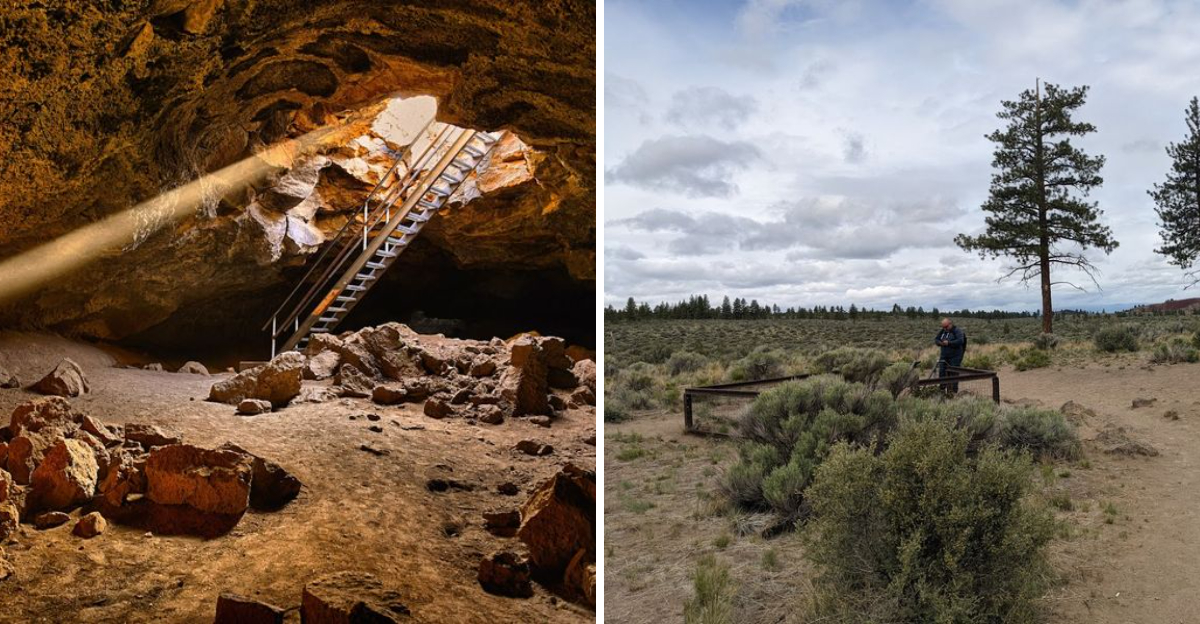
A rugged Oregon trail suddenly drops you into something that feels like another world entirely. This hike doesn’t just go through nature – it slips beneath it, into an underground lava tube carved by ancient volcanic forces.
I didn’t expect the transition from forest light to deep volcanic darkness to feel so dramatic, but it changes everything in an instant. The air turns cooler, the sound shifts, and every step echoes through narrow stone corridors shaped thousands of years ago.
There’s a raw, almost otherworldly energy down here, like the earth is still remembering how it was formed. I kept moving slowly, letting my eyes adjust to the strange beauty hidden underground.
It’s the kind of experience that makes the surface world feel very far away once you climb back out.
What Boyd Cave Actually Is (And Why It Exists)
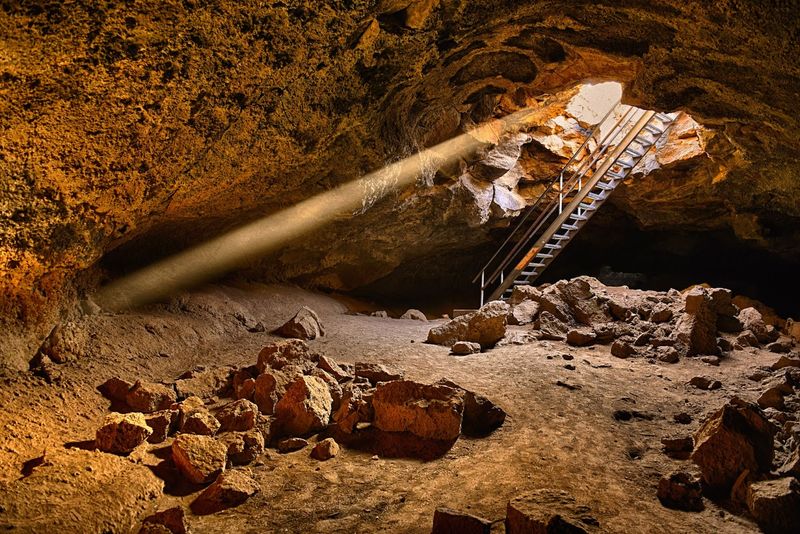
Long before Bend became a hotspot for outdoor lovers, a river of molten lava carved something extraordinary beneath the Oregon landscape. Boyd Cave is a lava tube, which means it formed when the outer layer of a lava flow cooled and hardened while the hot liquid inside kept moving.
Once the lava drained out, it left behind a long, hollow tunnel underground.
This geological process happened thousands of years ago, and the results are still perfectly preserved today. The cave sits within the Newberry National Volcanic Monument area, a region shaped almost entirely by volcanic forces.
Walking through it feels like stepping inside the earth itself. The walls are rough and dark, the ceiling arches overhead in unexpected ways, and the air smells faintly of dust and cool stone.
It is a completely natural structure, untouched and unlit, which makes it feel genuinely wild.
Getting There: The Drive Out on China Hat Road
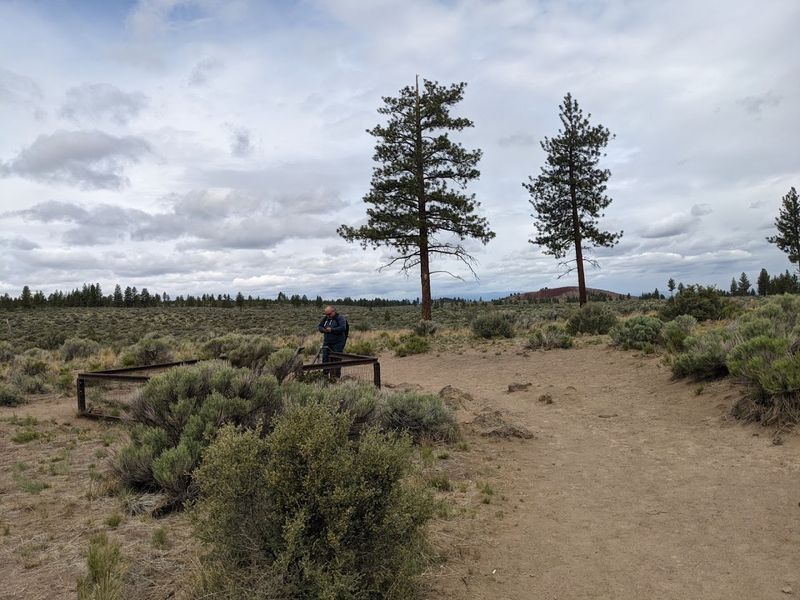
The drive out to Boyd Cave is part of the experience. You head south from Bend on Highway 97, then turn onto China Hat Road, a long gravel and dirt road that cuts through open high desert forest.
The road is bumpy in spots but totally manageable in a regular car when conditions are dry.
Keep an eye on the surroundings as you drive. The landscape shifts from town to tall pines to wide open scrubland pretty quickly.
It feels remote, which adds to the sense of adventure before you even park.
The cave entrance is roughly 20 to 30 minutes from central Bend. There is a small parking area at the trailhead, and the cave opening is shockingly close, maybe 50 feet from where you park.
A short fenced area marks the spot. First-timers often drive right past it because it looks so unassuming from the outside.
The Staircase Entrance: Your First Taste of the Underground
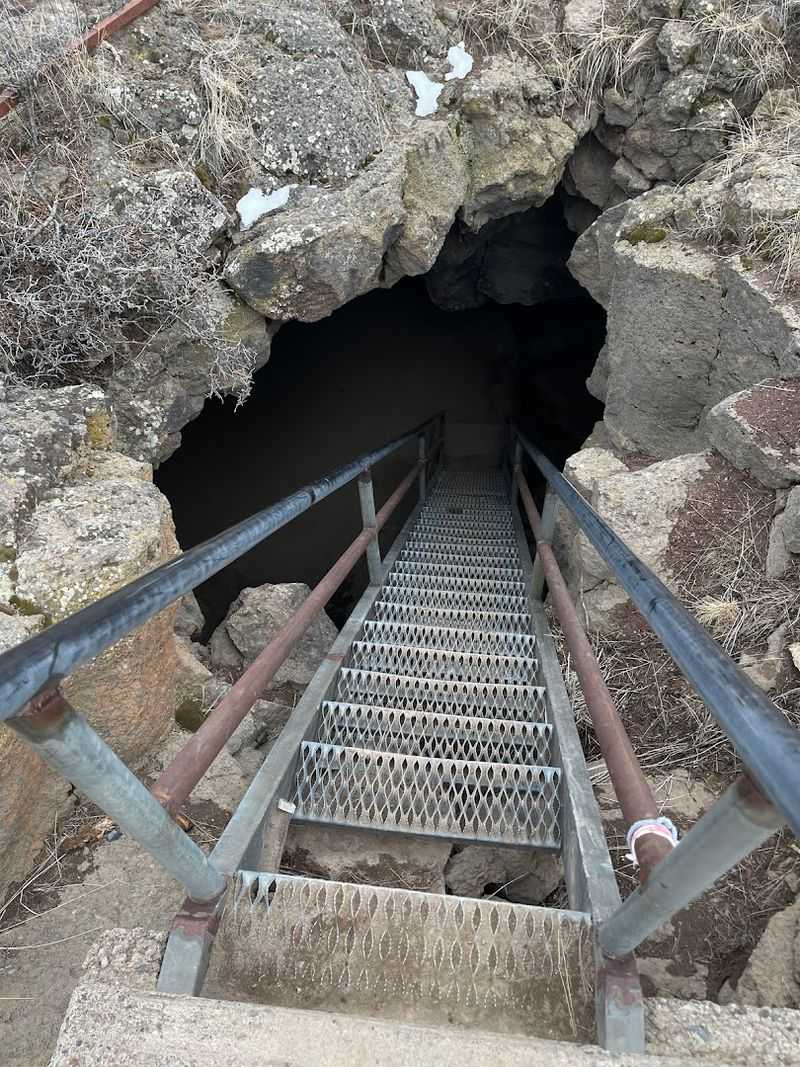
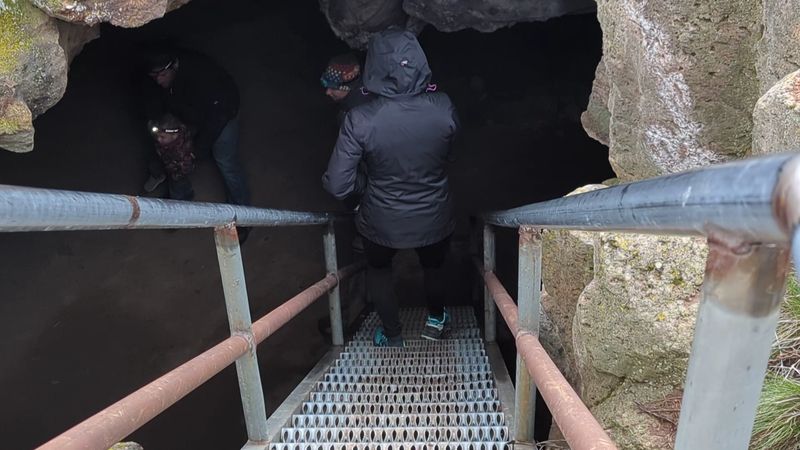
The moment you spot the steel staircase dropping into the ground, something shifts in your stomach. It is narrow, a little steep, and has handrails on both sides.
The steps are manageable, but they can get slippery, especially near the bottom where moisture tends to collect.
Going down slowly and carefully is the right move. As soon as you take the first few steps, the temperature drops noticeably.
On a hot summer day, that cold air rising up from below feels incredible, almost like the cave is breathing.
Once your feet hit the cave floor, your eyes start adjusting to the dark. The ceiling above you is rough volcanic rock.
The space opens up more than expected right at the base of the stairs. Most people pause here for a moment, just taking it in.
That first look down the long dark tunnel ahead is genuinely exciting.
Gear Up Right: What to Bring Before You Go Down
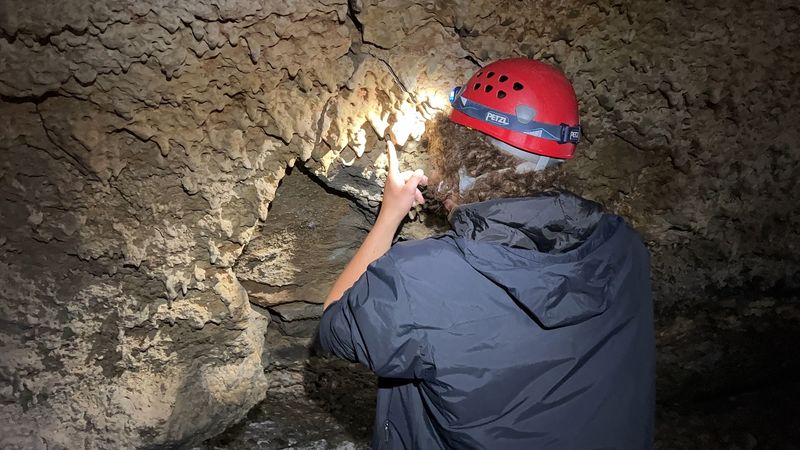
Packing the right gear makes a huge difference inside Boyd Cave. The number one priority is light.
Multiple sources are strongly recommended. A headlamp keeps your hands free, and a handheld flashlight gives you a backup.
Once you move past the entrance area, it is completely pitch black.
Warm layers are equally important. The cave stays cold year round, hovering around 40 degrees Fahrenheit regardless of what the weather is doing outside.
A hoodie is the minimum. A proper jacket is better.
Gloves are not a bad idea either.
Footwear matters more than people expect. The cave floor is uneven volcanic rock, and it can be painful underfoot in sneakers.
Sturdy hiking boots with solid soles are the right call. A helmet is worth considering too, since the ceiling drops in places and bumping your head on jagged rock is no fun.
There are no restroom facilities at the site, so plan accordingly before leaving town.
Inside the Cave: What the First Section Feels Like
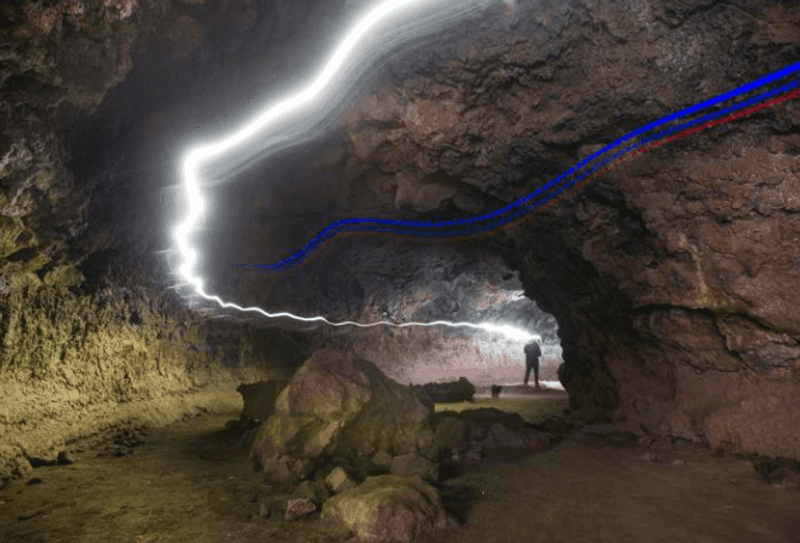
The first stretch of Boyd Cave is surprisingly spacious. After the staircase, the tunnel opens into a wide, walkable passage where most people can stand fully upright.
The walls are layered with dark basalt, and the floor is covered in loose rocks and fine volcanic dust.
That dust is real. It kicks up with every step, especially if you are moving through with a group.
People with sensitive lungs might want to bring a light dust mask, just in case.
The air is still and quiet in a way that feels unusual. Sound behaves differently underground.
Your footsteps echo, your voice carries strangely, and the silence between sounds feels heavier than normal. Shining a flashlight along the walls reveals incredible texture, ripples and ridges left behind by the ancient lava flow.
Every few feet the ceiling height changes, sometimes dramatically. It keeps you alert and curious.
The cave does not feel threatening in this section, just deeply interesting.
The Tighter Sections: Crouching, Crawling, and Keeping Cool
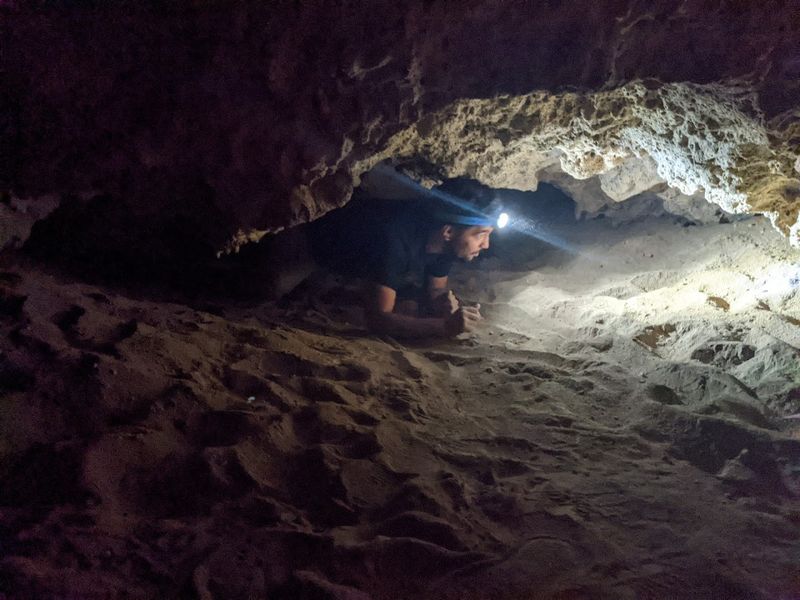
Further into the cave, things get more physical. The ceiling drops in certain sections, and you have to crouch to keep moving forward.
It happens gradually, so you adjust without much drama at first.
Then comes the crawl section. There is a point where the only way forward is on your hands and knees, moving through a low passage over uneven rock.
It opens back up on the other side, but getting through requires some nerve. For anyone even slightly claustrophobic, this part can feel intense.
There is no shame in turning back before you reach it.
For those who push through, the reward is a larger chamber on the other side that feels earned in a real way. The cave keeps going well beyond what most visitors explore.
The tunnel does not end abruptly. It just keeps going, darker and quieter with every step.
Temperature and Climate: Dressing Smart for the Underground
Boyd Cave maintains a consistent temperature underground, sitting around 40 degrees Fahrenheit no matter the season. That means even on a scorching August afternoon in Bend, stepping inside feels like opening a walk-in refrigerator.
It is genuinely refreshing at first.
After 20 or 30 minutes underground though, that cold starts to creep in. Fingers go stiff.
Shoulders tense up. The chill becomes less refreshing and more persistent.
Layering up before you go down is the smart move, not something to do once you are already cold.
Summer visitors often show up in shorts and tank tops, expecting a quick peek. Those same visitors are usually the ones who turn back earliest.
A hoodie or light fleece is the bare minimum. A wind-resistant jacket on top is better.
Gloves help more than most people expect. The cave does not warm up the longer you stay.
If anything, it feels colder the deeper you go.
Wildlife and the Quiet World Below
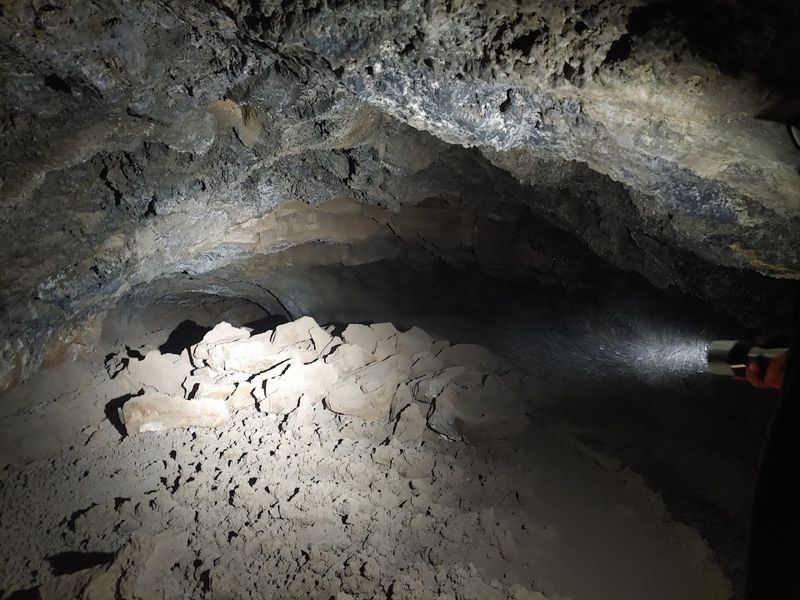
Boyd Cave is a living cave in the truest sense. The underground environment supports its own quiet ecosystem, even if you rarely see much of it during a visit.
Bats are known to use lava tubes in this region for roosting, though spotting one inside Boyd Cave is not guaranteed.
The cave floor itself hosts tiny organisms that thrive in cold, dark, and dusty conditions. It is easy to overlook them entirely, but the ecosystem down here is real and worth respecting.
Staying on the main path and avoiding touching formations protects the cave for future visitors.
The silence underground is its own kind of presence. There are no birds, no wind, no ambient noise from the world above.
Just the sound of your own breathing and the crunch of rock underfoot. That stillness can feel meditative or slightly unnerving, depending on your personality.
Some people describe losing track of time inside Boyd Cave. The longer you stay, the more the surface world fades from memory.
Visiting With Kids, Dogs, and First-Time Cavers
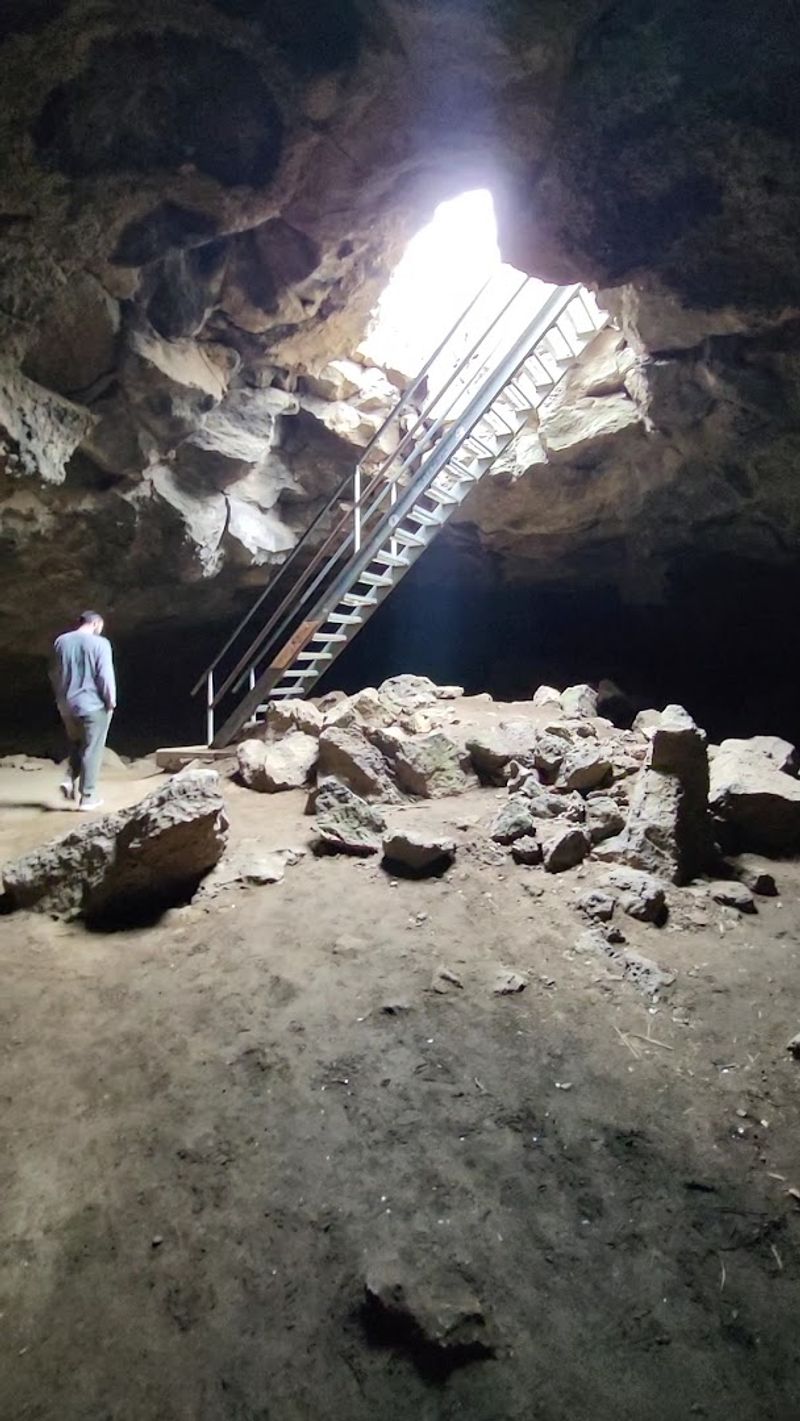
Boyd Cave is surprisingly accessible for beginners and families, at least for the first portion of the cave. The entrance section is wide enough for kids to walk comfortably, and the initial stretch does not require any scrambling.
Young children who are curious and comfortable in the dark tend to love it.
Dogs are welcome, which is a genuine bonus for pet owners. Keep in mind that the uneven terrain can be tricky for smaller dogs, and the crawl section is not realistic for most pets.
Turning back at the right point is perfectly fine. The cave does not require a full exploration to feel rewarding.
First-time cavers often find Boyd Cave to be the perfect introduction to spelunking. It is free, uncrowded, and does not require any technical equipment or experience.
The challenge scales naturally. Go as far as feels comfortable, then head back.
Nobody is keeping score. Families with young kids have reported great experiences even when they only explored the first third of the cave.
The adventure starts the moment you hit that staircase.
Tips for Making the Most of Your Boyd Cave Visit
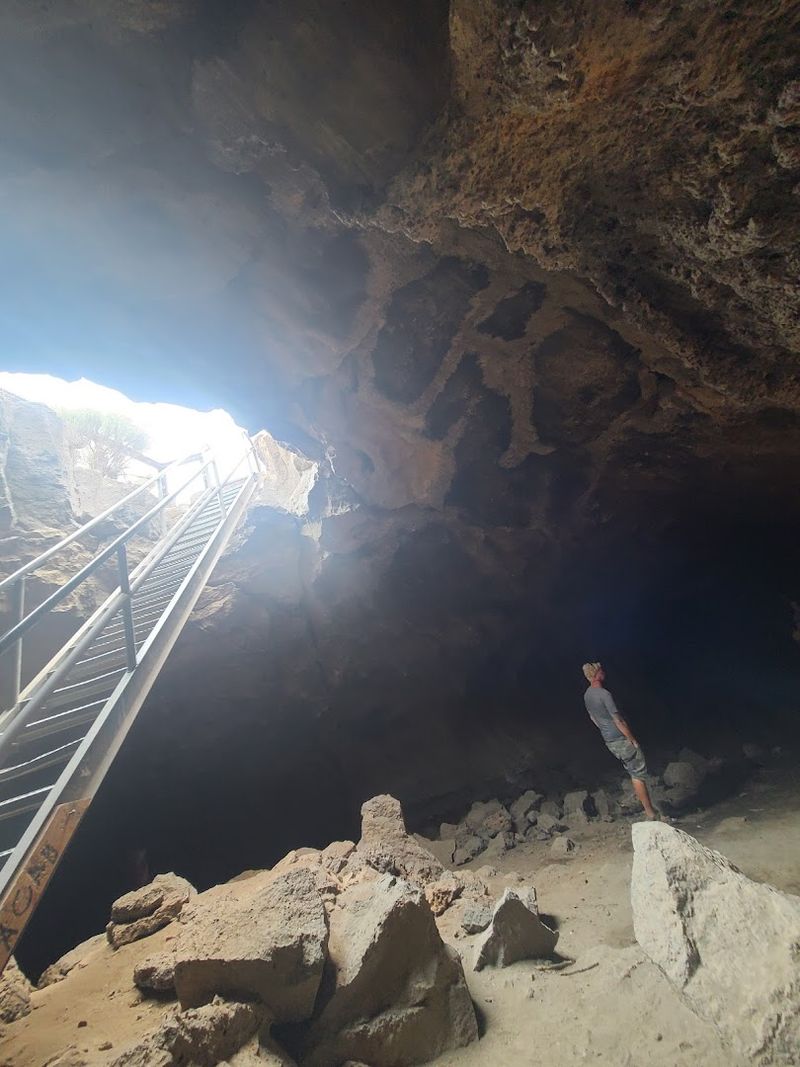
A few simple habits make the Boyd Cave experience significantly better. Arriving with fully charged devices matters more than it sounds.
Phone flashlights die fast in the cold, and being stuck in pitch black underground is not the fun kind of adventure.
Going on a weekday gives you more space. Weekend visits bring more traffic, though the cave is rarely packed the way popular trails in the area can get.
Early morning visits tend to be the quietest. The cave is open year round, so winter visits are possible, though the staircase gets icy and extra caution is needed on the way down.
Bring a bag for your trash. There are no facilities at the site, no bins, no bathrooms, and no staff.
Leave it cleaner than you found it. The cave has dealt with some graffiti issues in the past, and keeping it pristine matters for everyone who visits after you.
A quick tip for photography: use a phone flashlight held from behind the subject to light up the cave walls beautifully. The results are genuinely stunning and worth the extra effort.
