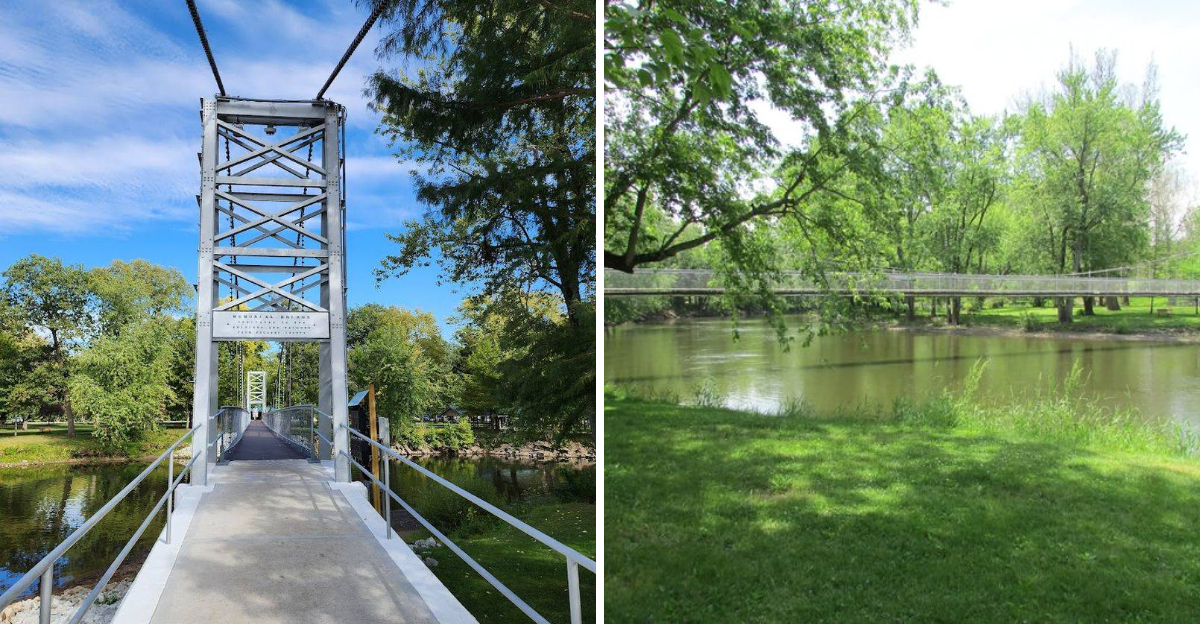
Some places carry more weight than they appear to hold. I first heard about a historic swinging footbridge in a small Indiana town from a local who mentioned it almost casually, as if everyone already knew about it.
But once I looked into it, I realized this 100-year-old crossing over a quiet river is far more than just a scenic walkway. Built in 1923 and dedicated to local soldiers and sailors who served in wars from the Civil War through World War I, it stands as a quiet but powerful tribute hiding in plain sight.
There is something about the way it blends history with such a peaceful setting that makes it linger with you a little longer. If you have never made the trip out there, this might be the reason that finally gets you there.
A Living Memorial With Deep Roots in Pulaski County History
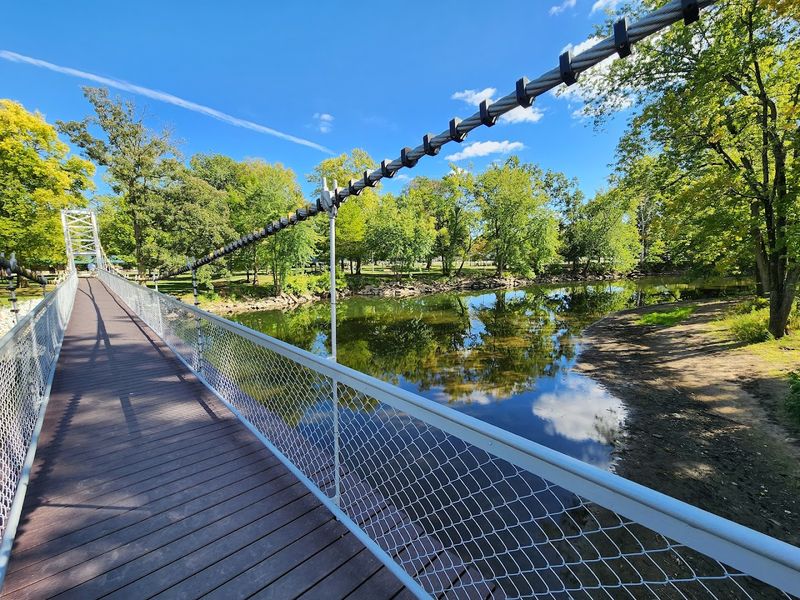
Not every memorial looks like a monument. The Winamac Memorial Swinging Bridge was dedicated on July 4, 1923, making its centennial a milestone that the entire county had reason to celebrate.
It was built specifically to honor the soldiers and sailors from Pulaski County who served their country in wars ranging from the Civil War to World War I.
That dedication date was no accident. Choosing Independence Day as the moment to unveil a bridge honoring veterans was a deliberate act of community pride.
The bridge became a symbol of gratitude woven directly into the landscape of Winamac, connecting two parks while carrying the names and memory of those who served.
What makes this place feel different from a typical war memorial is how accessible it is. You walk across it.
You feel it move slightly beneath your feet. That physical connection to something built in honor of real people from this very county creates a kind of quiet reverence that a stone monument in a courtyard simply cannot replicate.
For anyone with family roots in Pulaski County, crossing this bridge feels personal in a way that is hard to put into words but easy to feel the moment your feet touch the wooden deck.
Engineering That Has Outlasted a Century of Indiana Floods
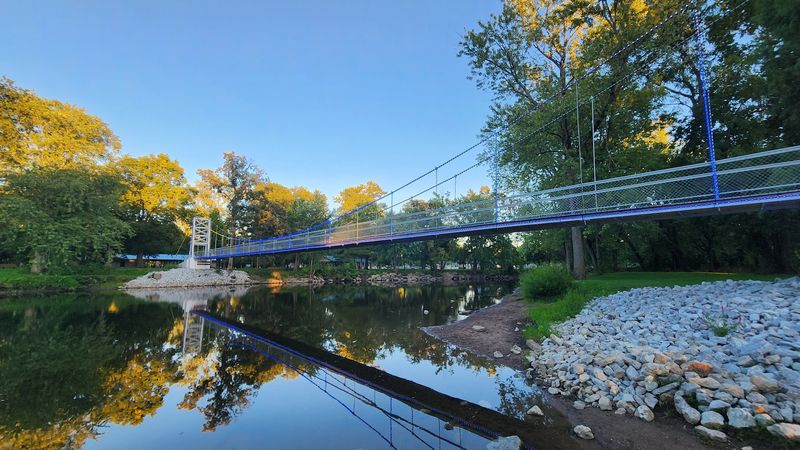
When the bridge was designed and built in 1923, the engineers behind it were thinking ahead. The structure stretches 200 feet across the Tippecanoe River and measures 5 feet wide, supported by two steel towers standing approximately 30 feet high and embedded firmly in concrete bases.
Two steel suspension cables, each 1.5 inches in diameter, run from tower to tower and hold the deck in place through vertical suspender cables.
That design was not just about looks. The elevated deck was intentionally planned to remain above floodwaters, which anyone familiar with Indiana river country knows is a very real concern.
The Tippecanoe River has seen its share of high water over the decades, and this bridge has endured it all without losing its purpose or its structural integrity.
What I find genuinely impressive is that early 20th-century engineers solved a practical problem with a design that also turned out to be beautiful. The graceful arc of the cables, the height of the towers, and the gentle sway of the deck all feel intentional in the best way.
Visiting gives you a real appreciation for what skilled builders accomplished with the tools and materials available to them a hundred years ago. It is a reminder that thoughtful engineering and lasting craftsmanship are not modern inventions.
They were alive and well in Winamac long before most of us were born.
Centennial Celebrations That Brought the Whole Town Together
Turning 100 is worth celebrating, and Winamac did exactly that in 2023. The centennial of the Memorial Swinging Bridge brought a rededication ceremony and a wave of community energy that reminded everyone why this landmark matters.
The event was not just a look back at the past. It was a declaration that this bridge still belongs to the people of Pulaski County.
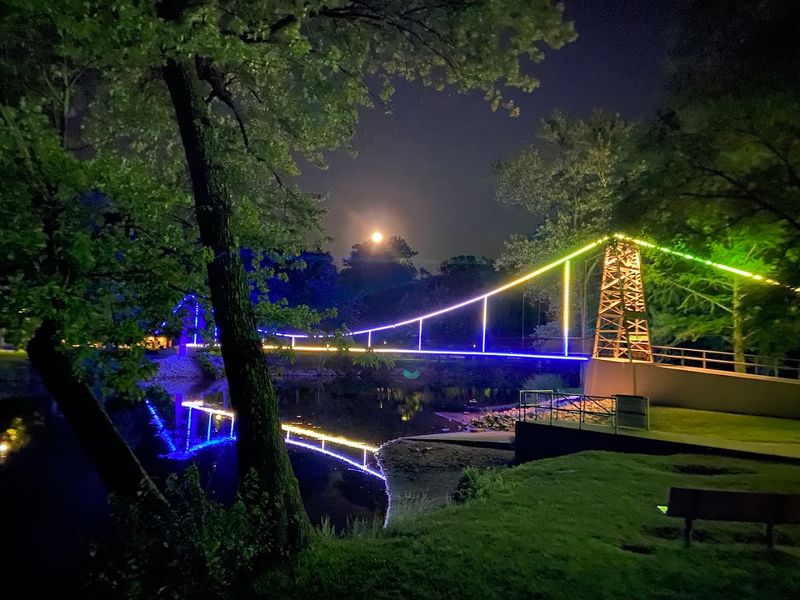
One of the most talked-about additions from the centennial year was the installation of a professional LED lighting system. Thousands of waterproof LED lights were added to the bridge, transforming it into something genuinely spectacular after dark.
The system allows for color changes to mark holidays and special occasions, meaning the bridge can glow red, white, and blue for the Fourth of July or shift to other colors for different community events throughout the year.
Seeing the bridge lit up at night against the dark water of the Tippecanoe River is one of those experiences that catches you off guard with how striking it is. I had not expected a small-town footbridge to stop me in my tracks, but the centennial lighting does exactly that.
The celebration also served as a reminder that local landmarks do not preserve themselves. They survive because communities decide they are worth saving, and Winamac clearly made that decision with enthusiasm and intention during its 100th anniversary year.
Where Two Parks Meet Across the Tippecanoe River
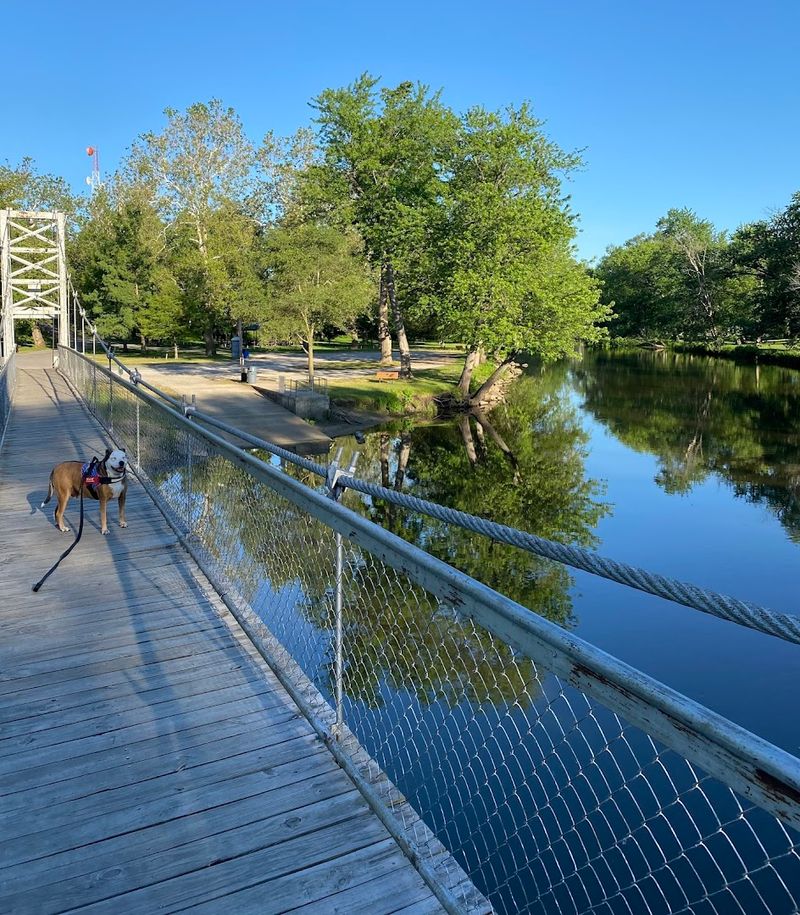
Geography matters when it comes to how a place feels, and the location of the Winamac Memorial Swinging Bridge is part of what makes it so enjoyable to visit. The bridge connects Winamac Town Park on one side with Artesian Well Park on the other, creating a natural loop for walkers, families, and anyone who just wants a peaceful afternoon outdoors in a genuinely pretty setting.
Winamac Town Park offers open green space, picnic areas, and room for kids to run around, while Artesian Well Park on the opposite bank adds its own quiet character. Together, the two parks and the bridge between them create a corridor along the Tippecanoe River that feels like a small gift tucked into the middle of town.
It is the kind of place where locals walk their dogs in the morning and families spread out blankets on weekend afternoons.
What I appreciate most about this setup is how the bridge makes the parks feel connected rather than separate. You are not just visiting a bridge.
You are stepping into a whole riverside environment that invites you to slow down and stay a while. For anyone visiting Winamac from out of town, this park-to-park crossing is a perfect introduction to the easy, unhurried character of small-town Indiana life along one of the state’s most storied rivers.
The address for Veterans Memorial Swinging Bridge is E Main St, Winamac, IN 46996.
Preservation Efforts That Prove Community Pride Is Real
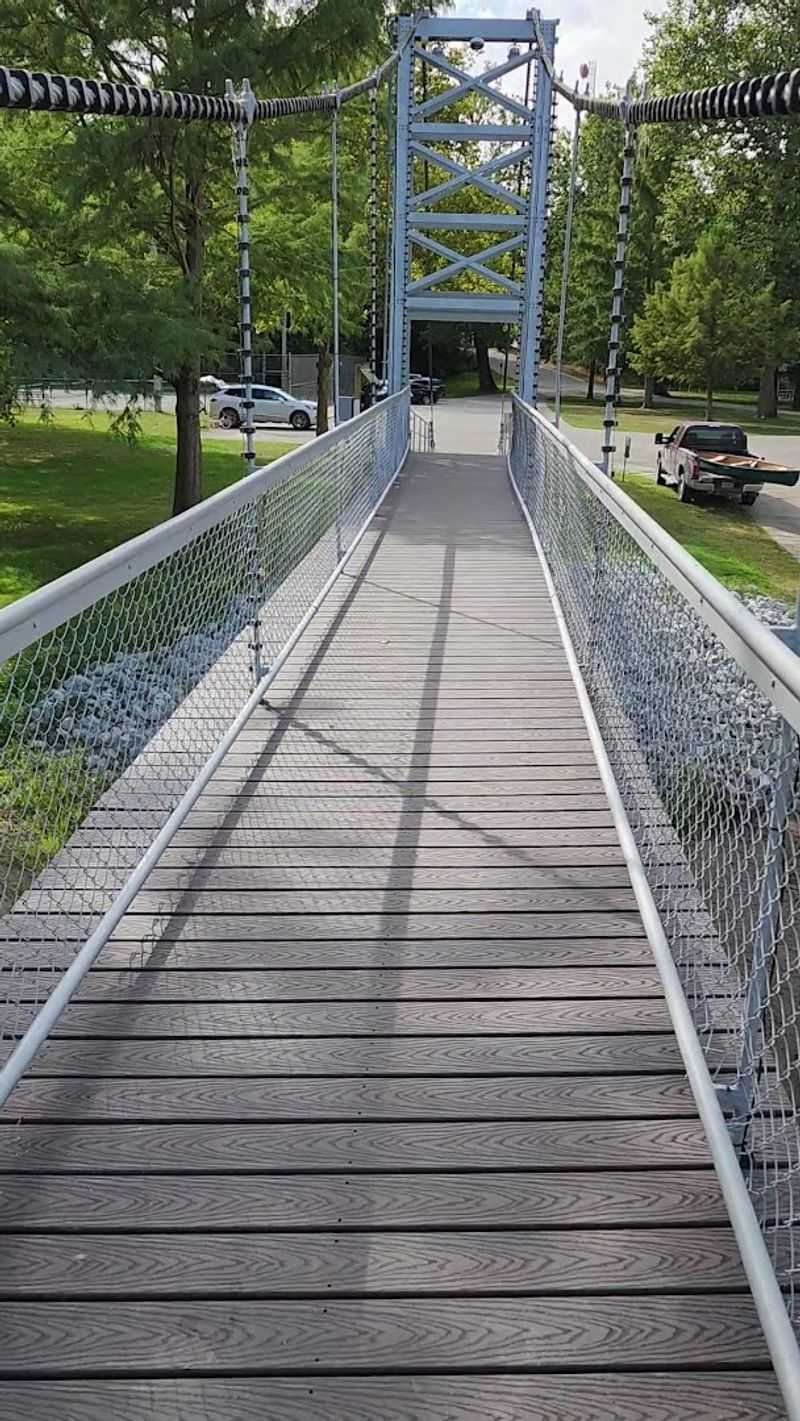
Old bridges do not survive a century by accident. The Winamac Memorial Swinging Bridge has made it to 100-plus years because real people put in real effort to keep it standing, safe, and beautiful.
Renovations over the years have included re-decking the bridge with fresh wood planks and repainting the steel structure, work that maintains both its safety and its visual appeal.
Those kinds of projects do not happen without community investment, and that investment says something meaningful about how Pulaski County residents feel about this place. It would have been easy at various points over the decades to let the bridge deteriorate or to replace it with something purely functional.
Instead, the community chose to preserve it, recognizing that a structure with this much history deserves more than a cost-benefit calculation.
There is something genuinely moving about that commitment. When a town decides that a 100-year-old footbridge honoring its veterans is worth maintaining across generations, it reflects a set of values that goes beyond nostalgia.
It speaks to how communities define themselves and what they choose to pass forward to the next generation. If you ever feel cynical about whether small towns still care about their history, a visit to Winamac and this bridge has a way of quietly changing your mind.
The work done here is evidence that civic pride is not just a phrase. It is a practice, and Winamac practices it consistently.
An Outdoor Classroom for Early 20th-Century Engineering and Local History
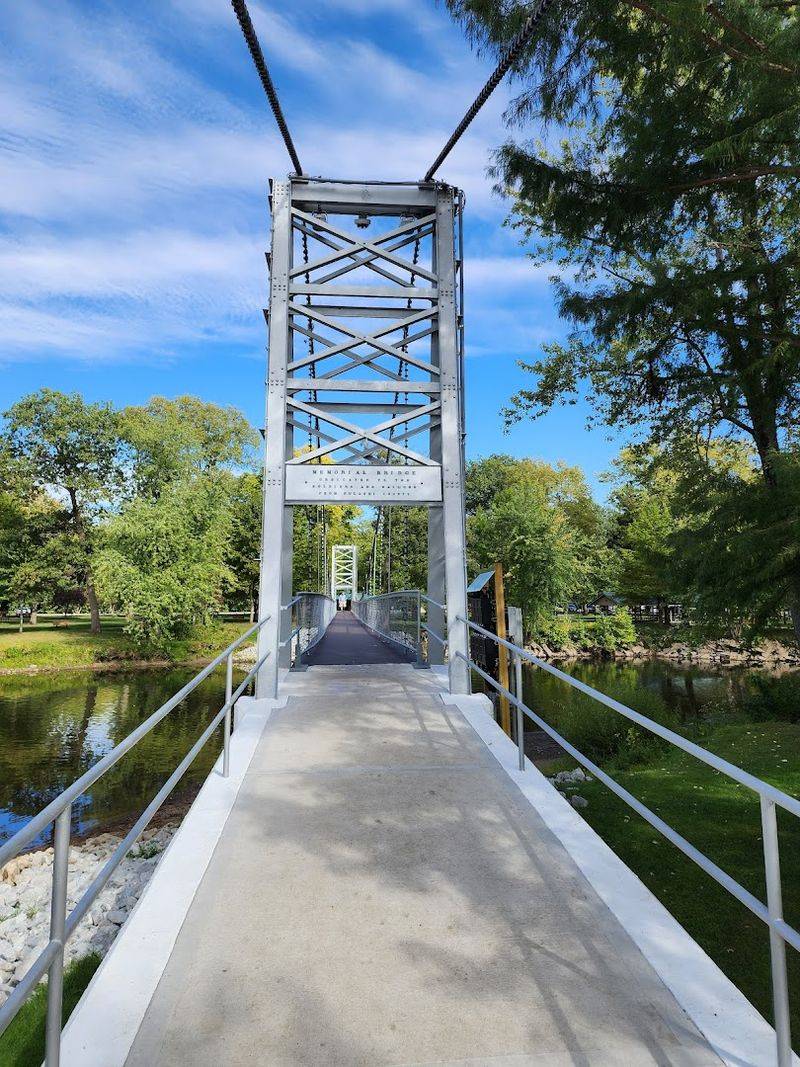
Most history lessons happen indoors, which is exactly why the Winamac Memorial Swinging Bridge offers something school textbooks simply cannot. Walking across a bridge built in 1923 using suspension engineering that was already proven and purposeful gives you a hands-on understanding of how early 20th-century builders thought about both function and form.
You are not reading about it. You are standing on it.
For students, families, or anyone curious about Indiana history, the bridge opens up conversations about Pulaski County’s role in the wars it was built to commemorate. The Civil War, World War I, the communities that sent men off to fight and then honored them with this structure when they returned.
That kind of local history has a texture and immediacy that broader national narratives sometimes miss.
Beyond the military history, the bridge itself is a study in practical engineering. Understanding how suspension cables distribute weight, why the towers needed to be 30 feet tall, and how the deck was designed to flex without breaking are all concepts that come alive when you are physically on the structure.
Teachers, homeschool families, and curious adults alike will find plenty to explore here. It is the kind of place where a simple walk turns into a genuine learning experience without anyone having to try very hard to make it educational.
The bridge teaches by simply existing and inviting you to pay attention to it.
Scenic Views and a Natural Setting Worth the Drive to Winamac
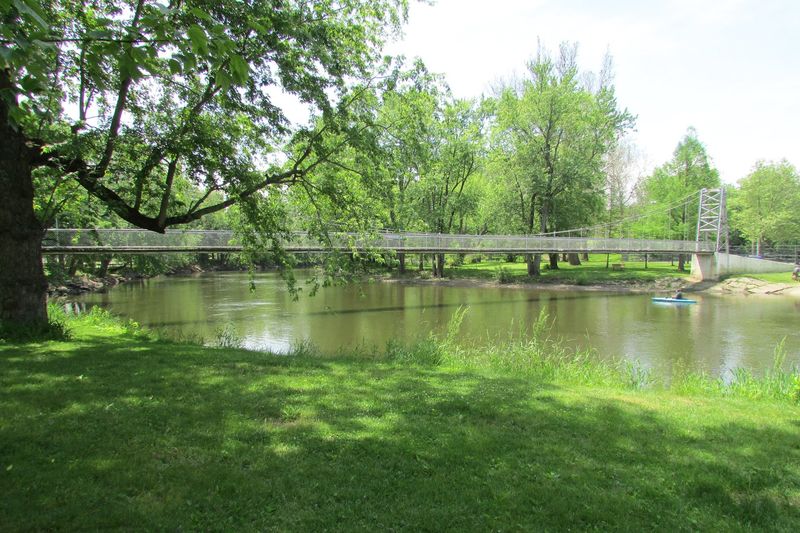
Even setting aside the history and the engineering, the Winamac Memorial Swinging Bridge earns a visit on pure scenery alone. The Tippecanoe River below is the kind of Indiana waterway that reminds you how beautiful this state can be when you get away from the highway and into the quieter corners.
Looking down from the bridge deck at the water moving beneath you has a calming effect that is hard to manufacture anywhere else.
The surrounding landscape shifts beautifully with the seasons. Spring brings fresh green along the riverbanks and the sound of birds returning.
Summer fills the parks on both sides with families and the easy energy of warm Indiana afternoons. Fall turns the tree canopy into something worth photographing seriously, and the bridge itself becomes a natural foreground for those shots.
Even winter has its own stark appeal when the river runs cold and quiet below the steel cables.
Photographers, nature lovers, and people who simply need a place to breathe for an hour will all find what they are looking for here. If you want to make a full day of the area, Pulaski County has additional outdoor spaces worth exploring nearby.
The Winamac Fish and Wildlife Area, located at 8514 West US Highway 35, Winamac, IN 46996, offers trails, wetlands, and wildlife viewing not far from the bridge. The combination makes for a genuinely rewarding day outdoors in one of Indiana’s underrated corners.
