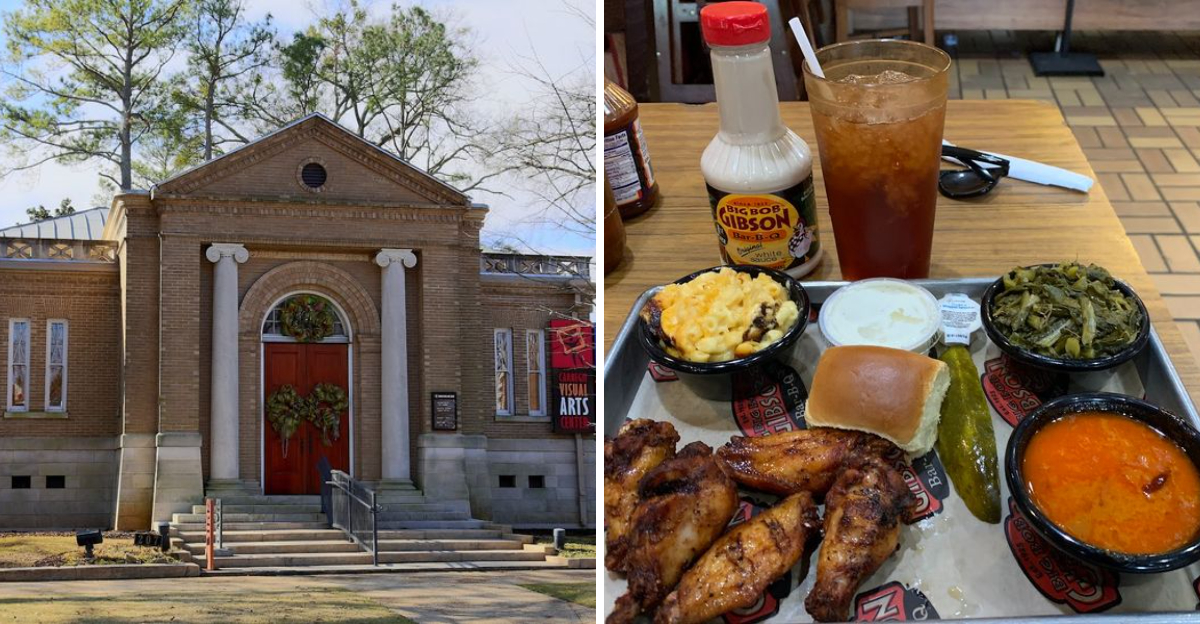
I never expected a small city in northern Alabama to stop me in my tracks, but Decatur did exactly that. Sitting along the banks of Wheeler Lake on the Tennessee River, this place carries a quiet confidence that only comes from doing something better than almost anyone else for nearly a century.
We are talking about barbecue so good it has made national headlines, earned world championships, and built a legacy that most cities twice its size would envy. If you love real, slow-smoked, pit-fired BBQ, Decatur is not just worth the drive.
It might be the most important food destination in America you have never seriously considered.
Big Bob Gibson Bar-B-Q and Its Century-Long Legacy
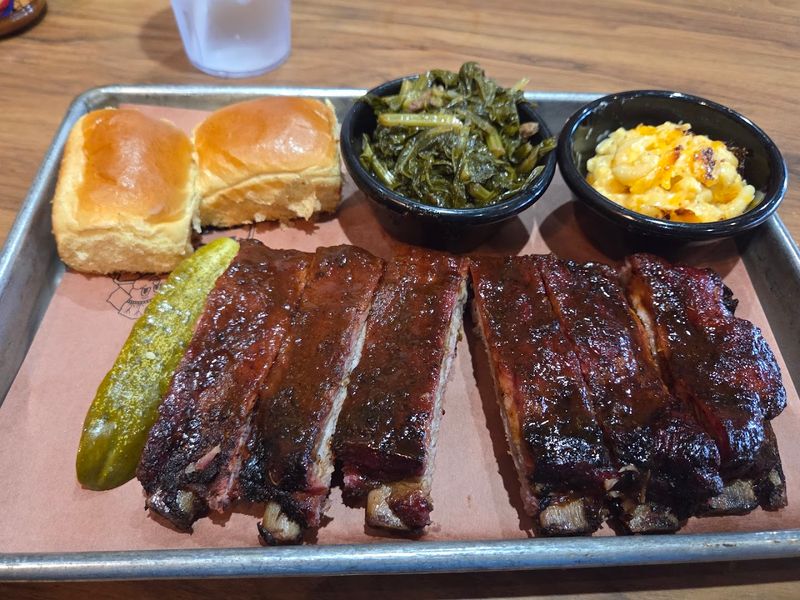
Some restaurants serve food. Big Bob Gibson Bar-B-Q, located at 1715 6th Avenue SE in Decatur, serves history on every plate.
Founded in 1925 by Robert “Big Bob” Gibson, this place has been slow-smoking meats over hickory-fired brick pits for nearly a century, making it one of the oldest continuously operating barbecue restaurants in the entire country.
Big Bob himself was a railroad worker who started cooking in his backyard, digging a pit and inviting neighbors to eat. Word spread fast, and what started as a backyard tradition became a legendary institution.
The restaurant has changed locations over the decades but never changed what matters most: the method, the wood, the patience, and the pride.
Walking through the door feels like stepping into a place that knows exactly who it is. There are no gimmicks here, no trendy menu items trying to chase a moment.
Just honest, wood-fired barbecue that has outlasted trends, recessions, and generations of competition. For anyone serious about American BBQ history, this address is as important as any landmark in the country.
It is the kind of place that reminds you why some traditions are worth protecting at all costs.
World Championship Competition BBQ That Proves the Point
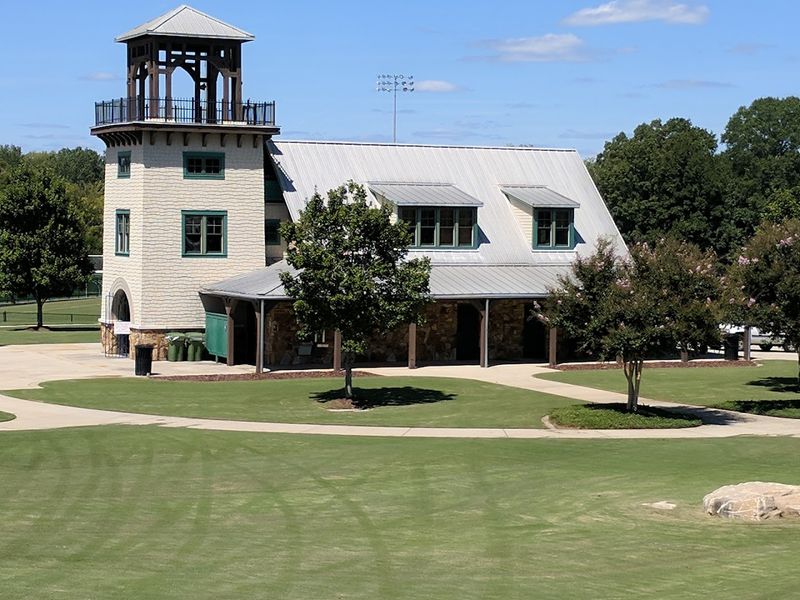
Winning one world barbecue championship is impressive. Winning more than ten is a statement that cannot be argued with.
The Big Bob Gibson competition cooking team, guided by executive chef Chris Lilly, has done exactly that, collecting multiple world titles including victories at the prestigious Memphis in May competition, widely considered the Super Bowl of American BBQ.
The team has also taken home numerous Best Sauce awards at the American Royal International Barbecue Sauce Contest, one of the most competitive sauce events in the country. These are not small regional ribbons.
These are the kinds of wins that put a city on the culinary map permanently. And they all trace back to a backyard pit in Decatur, Alabama.
What those championships mean for visitors is simple: you are not eating at a place that claims to be great. You are eating at a place that has proven it, repeatedly, against the best pitmasters in the world.
Chris Lilly has also authored a widely respected BBQ cookbook that has brought Decatur’s techniques to home cooks across the country. The competition legacy adds a layer of credibility to every meal served here that no amount of marketing could manufacture.
When you eat here, you are tasting championship-level craft.
The Invention That Changed American BBQ Forever
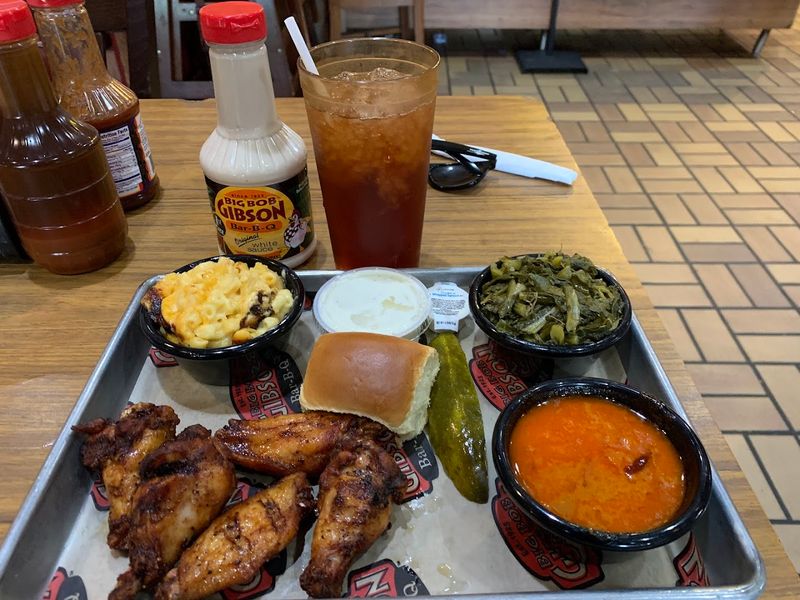
Before the 1920s, nobody had ever seen a white barbecue sauce. Then Big Bob Gibson changed everything.
He mixed mayonnaise, apple cider vinegar, black pepper, and a few closely guarded ingredients into a tangy, creamy condiment that he slathered over whole smoked chickens fresh off the pit. That sauce, now known as Alabama White Sauce, became one of the most distinctive regional flavors in American food culture.
What makes it so special is how well it works. The acidity cuts through the richness of smoked meat, the creaminess coats every bite, and the pepper gives it a sharp, lingering finish.
It is not sweet like a Kansas City sauce or thick like a Texas-style rub. It is something entirely its own, born right here in Decatur, Alabama, and nowhere else.
Food historians and BBQ enthusiasts point to Alabama White Sauce as one of the most original contributions any single region has made to American cooking. You can now find versions of it bottled in grocery stores across the country.
But tasting it where it was invented, on chicken that just came off a hickory pit, is a completely different experience. That first bite tells you everything you need to know about why Decatur belongs in the BBQ conversation at the highest level.
National Media Attention That Keeps Coming Back
Not every great local restaurant gets noticed beyond its zip code. Decatur’s BBQ scene is different.
Big Bob Gibson Bar-B-Q has been featured by the Food Network, the Travel Channel, The New York Times, Food and Wine magazine, and Southern Living, among many others. That kind of consistent national coverage over multiple decades does not happen by accident.
Each feature brings a new wave of visitors who arrive already convinced they are about to eat something extraordinary. And consistently, those visitors leave agreeing that the reputation was earned.
There is something powerful about a place that keeps getting rediscovered by journalists, food critics, and television producers who all reach the same conclusion independently.
For someone planning a trip from Indiana or anywhere outside the Deep South, that media trail is actually useful. It means there is a rich archive of reviews, interviews, and stories that help you understand what you are walking into before you ever arrive.
The coverage also confirms that Decatur is not just a regional gem hiding from the world. It is a place the world has already found, written about extensively, and keeps returning to.
That kind of sustained national attention is one of the clearest signals that a food destination is genuinely worth your time and your road trip miles.
Slow-Smoking Over Hickory the Old-Fashioned Way

There is a reason the words “low and slow” are treated like gospel in serious BBQ circles. Rushing smoked meat is like rushing a good story.
You end up with something flat and forgettable. At Big Bob Gibson Bar-B-Q, the commitment to slow-smoking over hickory-fired brick pits has never wavered, not in the 1930s, not in the 1970s, and not today.
Hickory wood burns hot and produces a dense, slightly sweet smoke that penetrates deep into the meat over hours of cooking. The result is a bark on the outside, a smoke ring just beneath the surface, and tender, juicy meat all the way through.
It is a process that cannot be faked or fast-tracked without losing everything that makes it worth eating in the first place.
Watching the process, even from a distance, gives you a new appreciation for what skilled pitmasters actually do. This is not cooking in any ordinary sense.
It is closer to a craft, one that requires reading fire, managing airflow, knowing when wood needs to be added, and trusting instincts built over years of practice. Decatur’s dedication to this method is part of what separates its BBQ from the imitation versions that pop up in cities trying to cash in on the trend.
The real thing takes time, and here, they have always been willing to give it that.
Five Generations of Family Ownership and Unbroken Tradition
Most restaurants do not survive five years. Making it through five generations of family ownership while preserving the original recipes and cooking methods is something so rare it almost defies belief.
Big Bob Gibson Bar-B-Q has done exactly that, passing the business and its traditions down through the Gibson family since 1925.
Each generation has had to make a choice: modernize and risk losing what made the place special, or hold the line and trust that the original vision was right. Time and again, the family chose tradition.
That consistency is not stubbornness. It is confidence rooted in nearly a century of proof that the original approach works better than any shortcut.
For visitors, that generational continuity means something tangible. The sauce recipe you taste today connects directly to what Big Bob himself created in the 1920s.
The pit method has been refined but never abandoned. There is a living thread of family memory and culinary knowledge running through every meal served here, and that is genuinely rare in American food culture.
Most food trends cycle through and disappear. What Big Bob Gibson started has only grown deeper roots with time.
Eating here is not just a meal. It is a small act of participation in one of the longest-running family food stories in the American South.
A Full BBQ Scene Beyond the Famous Name
Big Bob Gibson gets most of the headlines, and rightfully so. But Decatur’s barbecue culture runs deeper than one restaurant, and that is what makes the city a genuine BBQ destination rather than just a one-stop pilgrimage.
Places like Moe’s Original BBQ at 1329 Beltline Road SW, Smokey C’s Barbeque and Wings at 1820 Central Parkway SW, and LawLers Barbecue at 1919 Beltline Road SW each bring their own personality to the local scene.
Scruggs Barbeque and Whitt’s Barbecue also carry loyal followings among locals who have their own strong opinions about where the best plate in town actually comes from. That kind of healthy local debate is a sign of a real food culture, not a manufactured one.
When a small city has multiple serious contenders for the title of best BBQ, you know the standards across the board are high.
Spending a full day or two in Decatur and sampling across several spots gives you a genuine education in Northern Alabama BBQ style.
The Wheeler Wildlife Refuge at 2700 Refuge Headquarters Road offers a beautiful outdoor reset between meals, and the Cook Museum of Natural Science at 412 Cook Avenue adds a family-friendly stop to round out the visit.
Decatur rewards the curious traveler who takes the time to look beyond the obvious and eat their way through the whole picture.
