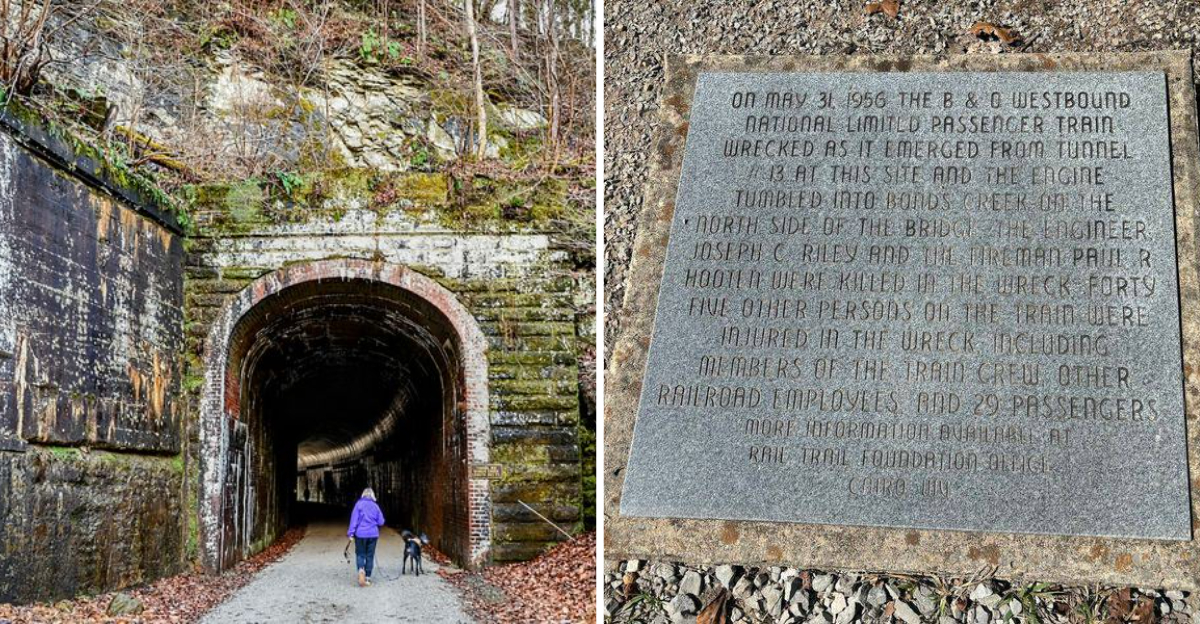
There are places that make you feel like history is standing right next to you, breathing down your neck in the best possible way.
Walking into a 170-year-old tunnel carved through a West Virginia hillside while knowing something truly terrible once happened just beyond its exit is a special kind of thrill.
My palms were a little sweaty, not from the hike, but from the stories.
A rock slide, a passenger train, a bridge over a creek, and a number that has haunted this spot ever since.
If you have ever wondered why some tunnels deserve their own legends, Tunnel 13 on the North Bend Rail Trail is about to answer that question in a way you will not forget.
The History Behind Tunnel 13 and Why It Got Its Name
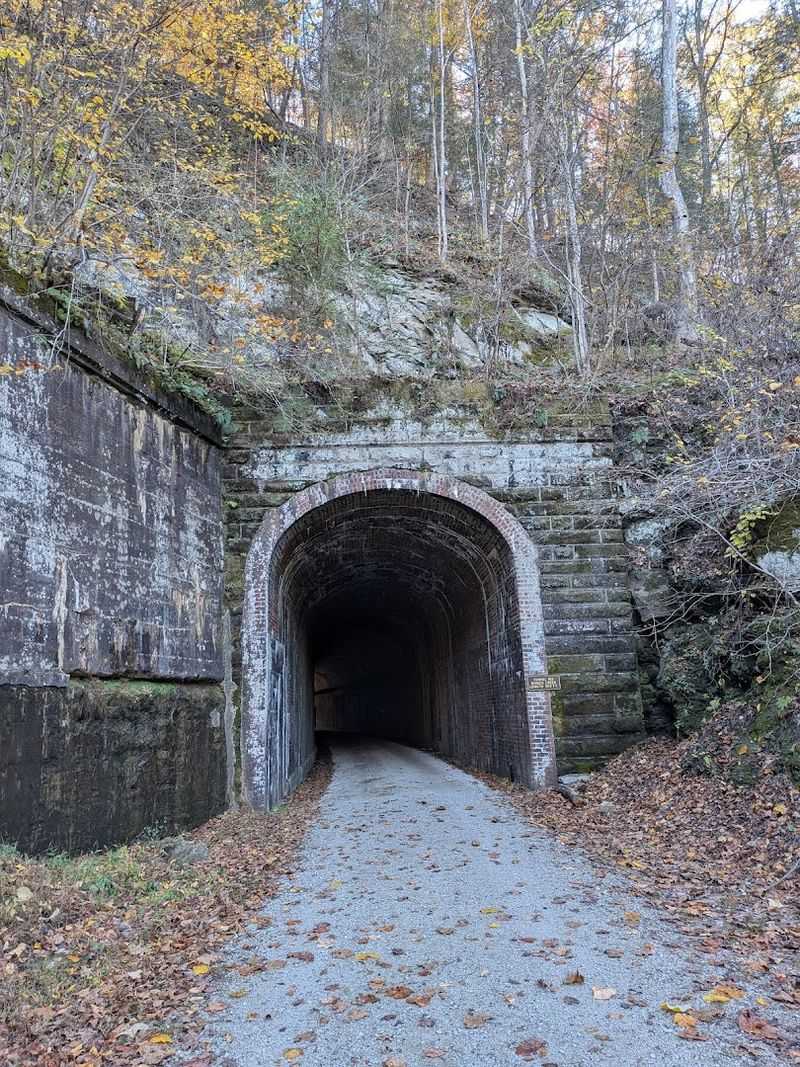
Built between 1853 and 1854, this tunnel was part of the Baltimore and Ohio Railroad corridor long before it became a trail. The number 13 was simply its sequential designation along the line.
Nobody thought much about it at first.
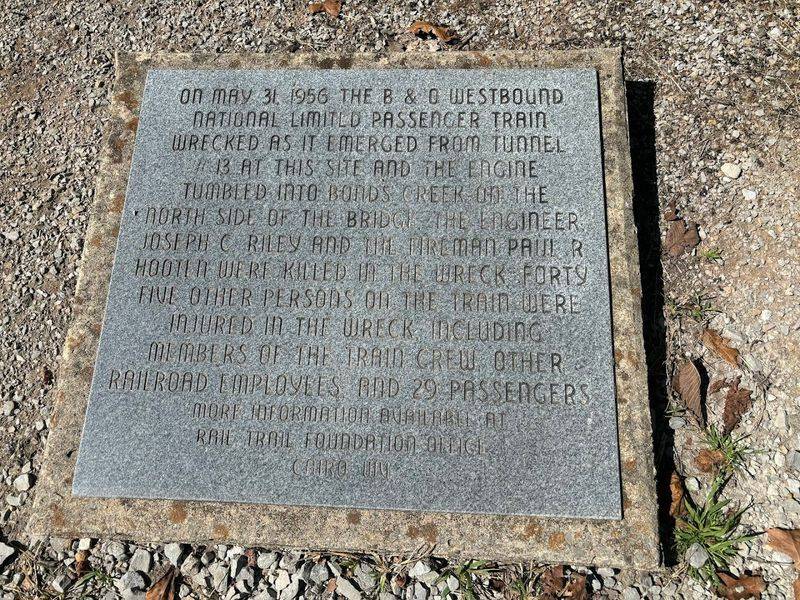
Then came Memorial Day, May 31, 1956. The westbound B&O National Limited passenger train exited the tunnel and hit a rock slide that had partially blocked the tracks just around a blind curve.
The crew had no time to stop. The engine derailed and plunged off a bridge into Bonds Creek below, killing engineer Joseph C. Riley and fireman Paul R. Hooten.
That single catastrophic moment transformed a routine tunnel number into something much heavier. Forty-five to forty-nine people were injured that day.
Another train had passed through just an hour earlier with no issues. The rock slide appeared suddenly and silently.
After the crash, the name “Unlucky Tunnel 13” stuck, and it has never really let go of this quiet West Virginia hillside.
Getting to Tunnel 13 from the North Bend State Park Trailhead
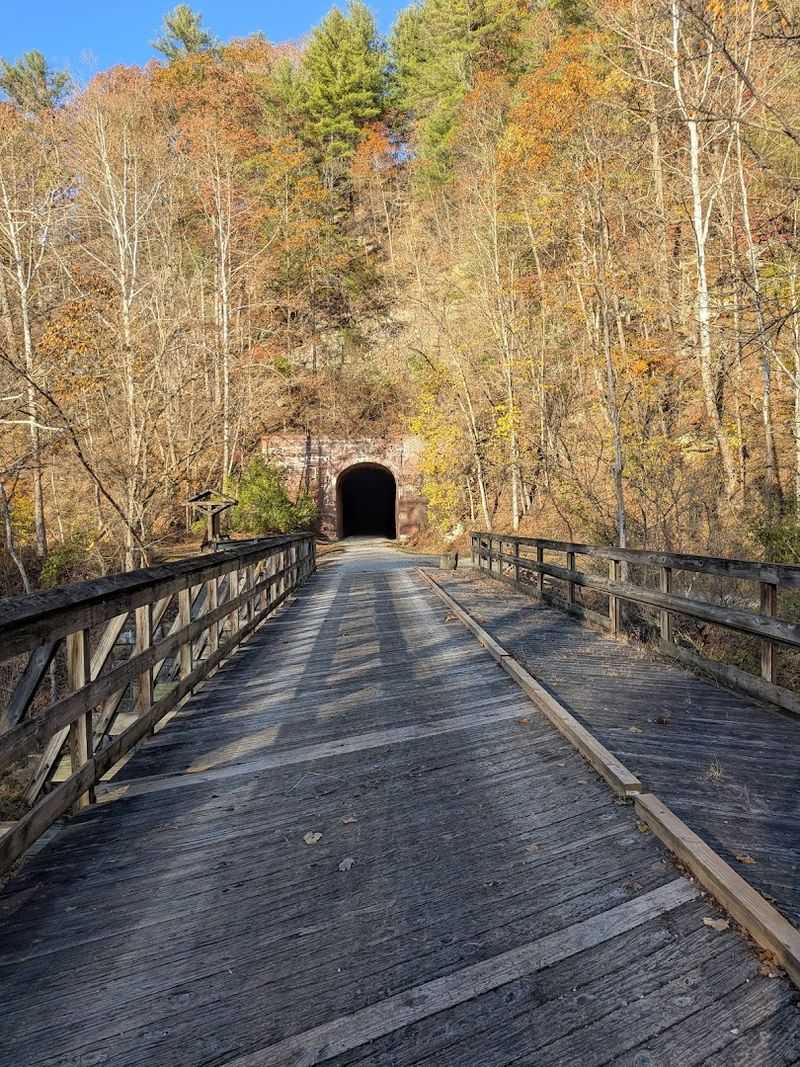
Starting the walk from the North Bend State Park nature center area feels like the most natural entry point into this whole adventure. There is a parking lot, an amphitheater, and enough trail signage to keep you pointed in the right direction.
Tunnel 13 is one of the first tunnels you encounter heading out, which means the payoff comes early.
The trail surface is well-maintained and wide enough for walkers, cyclists, and horseback riders all at once. On a good morning, you might share the path with all three.
The mix of trail users gives the whole experience a lively, communal energy that feels genuinely welcoming.
Before leaving the trailhead, pack enough food and water for the round trip. There are no shops or food stops along this stretch of the trail.
A good sandwich, some fruit, and a solid water bottle are all you really need to make this outing feel complete and comfortable from start to finish.
What the Tunnel Actually Looks and Feels Like Inside
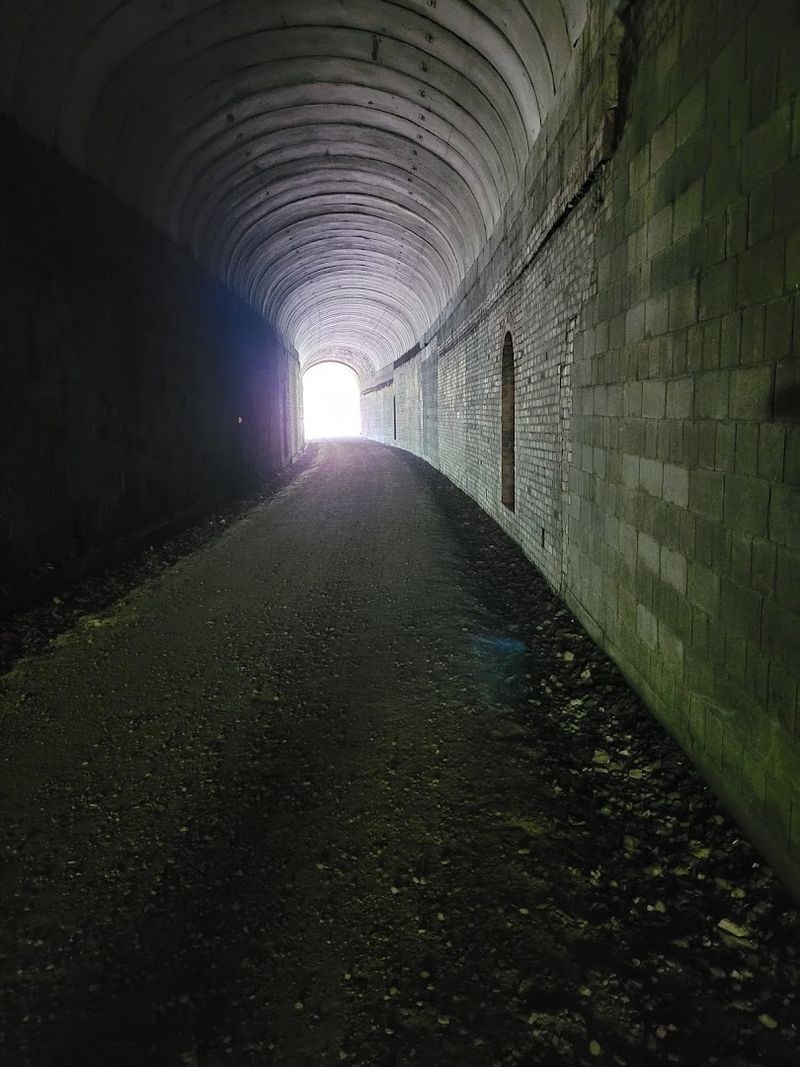
Stepping inside Tunnel 13 is a sensory shift that happens fast. The temperature drops noticeably, the sounds from outside go muffled, and the light shrinks to two small circles, one behind you and one ahead.
The slight curve of the tunnel means you cannot see all the way through at once, which adds a layer of mystery that is hard to shake.
At 352 to 353 feet long, it is not an endless tunnel, but it is long enough to feel genuinely isolated in the middle. The stone walls are in remarkably good condition for a structure that is well over 150 years old.
Running your hand along the masonry, you can feel the craftsmanship of mid-1800s railroad construction.
A flashlight or headlamp is strongly recommended. The darkness in the center section is real darkness, not the dim twilight kind.
Going in unprepared means stumbling on uneven ground, and that is nobody’s idea of a good trail memory. Prepared visitors consistently walk out smiling.
The Bonds Creek Bridge That Connects the Story to the Scenery
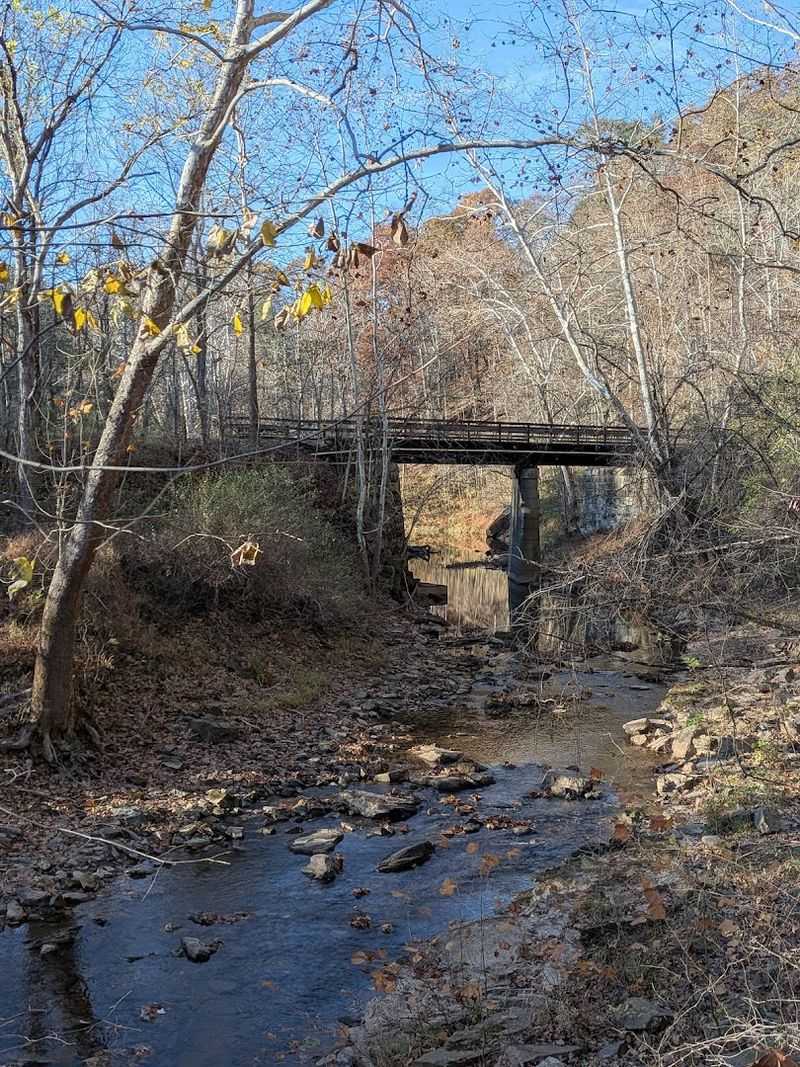
Crossing the bridge over Bonds Creek to reach Tunnel 13 is one of those small trail moments that quietly earns its place in your memory. The creek below is clear and calm, running over smooth stones through a narrow wooded valley.
It looks almost too peaceful given what happened just above it in 1956.
That contrast between the gentle creek and the violent history of the train crash is part of what makes this spot so compelling. The engine from the National Limited plunged off a bridge and into this creek.
Standing above the water now, it is easy to feel the weight of that fact settling in.
The bridge itself is easy to cross and well-maintained. Pausing in the middle for a moment to look both up and downstream gives you a fuller sense of the geography.
The hillsides rise steeply on both sides, and the tunnel entrance appears just beyond, framed by trees and stone. It is a genuinely beautiful approach to a genuinely haunted spot.
The Rock Slide That Changed Everything on Memorial Day 1956
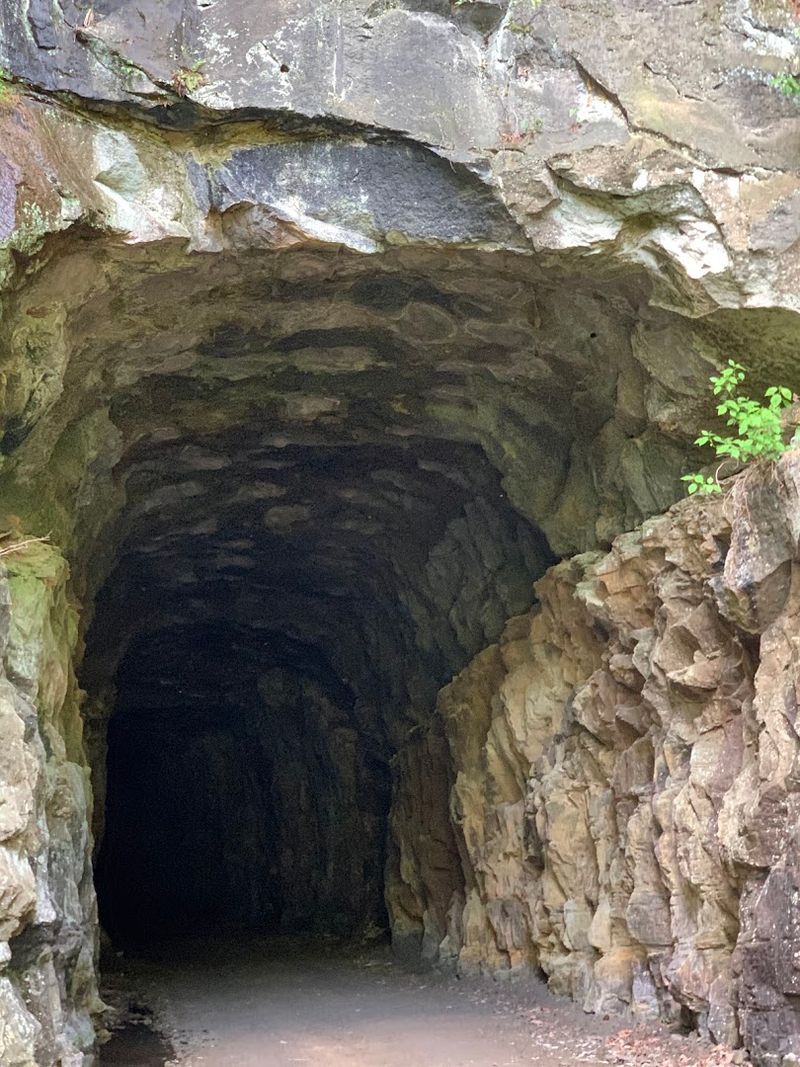
The rock slide that caused the 1956 crash did not announce itself. It appeared on the tracks just beyond the curve at the exit of Tunnel 13, leaving the crew of the National Limited with zero reaction time.
That blind curve, which still exists today, is a key part of why the disaster unfolded the way it did.
Another train had passed through the same tunnel only an hour before the crash, and the tracks were completely clear at that point. The slide happened in that narrow window of time between trains.
That kind of timing feels almost impossible, and yet it happened on a holiday weekend with a full passenger load on board.
Two crew members, engineer Joseph C. Riley and fireman Paul R. Hooten, lost their lives. Dozens more were injured.
The event left a permanent mark on the local memory of this corridor. Visiting the tunnel exit side and looking at the surrounding hillside gives you a visceral understanding of just how vulnerable that stretch of track really was.
Paranormal Claims and the Legend of the Phantom Train
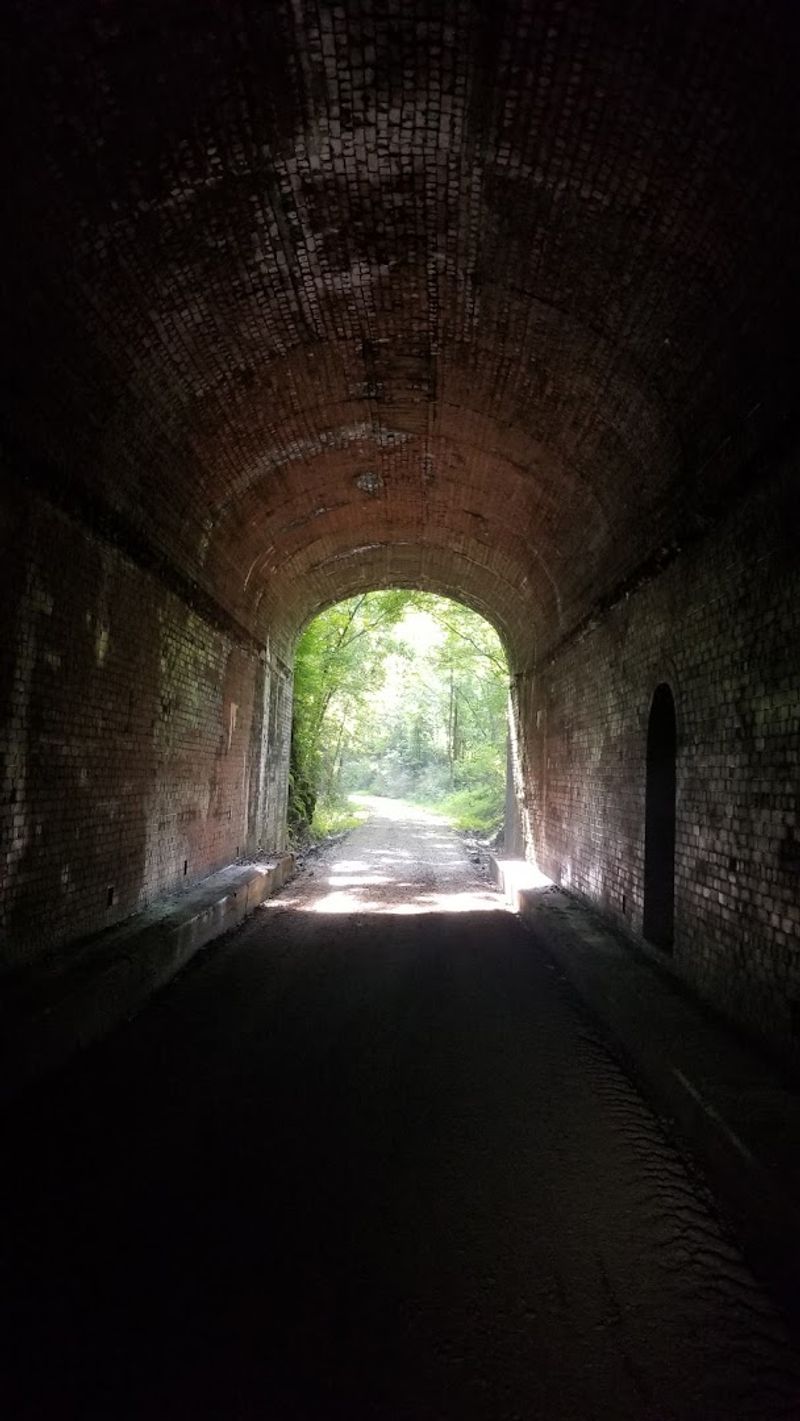
Decades after the tracks were removed and the trail took over, strange stories started circulating about Tunnel 13. Visitors have reported hearing screaming, footsteps, and the sound of voices coming from inside the tunnel when no one else is around.
Some claim to have heard what sounds like a train approaching, complete with rumbling and a distant whistle.
A few people have reportedly seen lights moving inside the tunnel that do not match any known source. Whether you believe in the paranormal or not, there is something undeniably atmospheric about a curved, dark tunnel with a tragic history attached to it.
The imagination fills in gaps that daylight cannot fully erase.
The tunnel is open 24 hours, which means night visits are technically possible for those feeling adventurous. Most people stick to daylight hours, and honestly, the tunnel is plenty atmospheric even in broad sunshine.
The legend of the phantom train has given Tunnel 13 a second life as a local ghost story staple, layered right on top of its very real and very documented history.
The B&O Railroad Legacy Along the North Bend Rail Trail
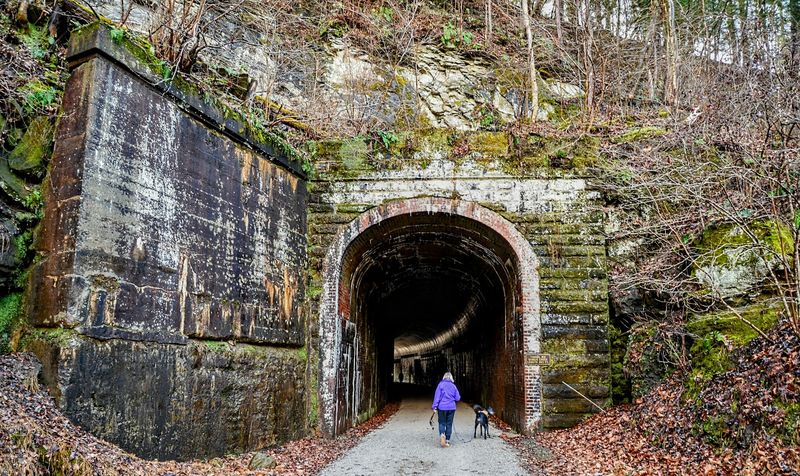
The North Bend Rail Trail follows the old Baltimore and Ohio Railroad corridor through Ritchie County and beyond, covering around 72 miles of converted track bed.
The B&O was one of the oldest and most significant railroads in American history, and this stretch of trail preserves that legacy in a tangible, walkable form.
Tunnel 13 was constructed in 1853 and 1854 as part of the original B&O expansion westward. The tunnel was later modified in the early 1960s as part of a B&O clearance project, making it taller and wider to accommodate larger freight loads.
Those modifications are still visible if you know what to look for in the stonework near the portal.
Walking this trail means walking through genuine American railroad history. The old towns along the route, the bridges, the tunnels, and the gentle curves of the grade all tell the story of a transportation network that shaped this region.
Tunnel 13 is one of the most historically layered stops along the entire corridor, and it rewards curious visitors generously.
Biking Through Tunnel 13 and What Makes It Unique on Two Wheels
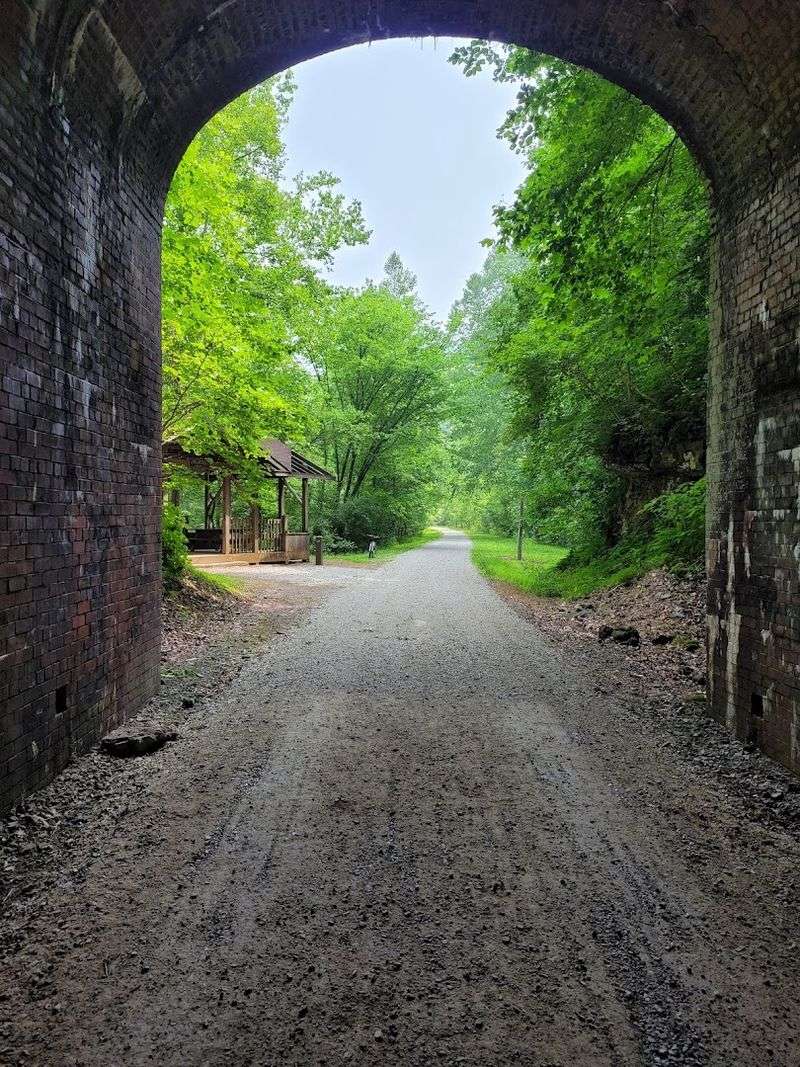
Riding a bike through Tunnel 13 is a completely different experience from walking it. The slight curve means you are pedaling toward a wall of darkness before the far exit circle of light gradually appears.
That short stretch of blind riding, even on a gentle grade, gets the heart rate up in a way that is more fun than frightening.
The trail accommodates mountain bikes and hybrid bikes comfortably along most of its length. Past certain sections the surface gets rougher, but the tunnel stretch itself is solid and rideable without technical skill.
A good headlight mounted to the handlebars is essential, both for safety and for reading the trail surface inside.
The elevation changes, curves, and multiple tunnels along the full North Bend Rail Trail route make it a genuinely exciting cycling destination in the Mid-Atlantic region.
Tunnel 13 is often the first tunnel riders encounter heading out from North Bend State Park, which means it sets the tone for the whole ride.
That first dark plunge through a 170-year-old tunnel tends to hook people immediately.
Why Tunnel 13 Stays With You Long After You Leave
Some places leave a mark that has nothing to do with how long you spent there. Tunnel 13 is one of those places.
You can walk through it in under five minutes, but the combination of its age, its history, its darkness, and the creek valley waiting on the other side creates something that lingers well past the drive home.
The 1956 crash is not just a footnote here. It is woven into the physical landscape in a way that makes the tunnel feel alive with meaning.
Knowing that the blind curve at the exit was the exact spot where a train ran out of time gives every step through that darkness a kind of quiet gravity.
Coming out the other side into the light and looking down at Bonds Creek, the whole story snaps into focus. This is a place where history, nature, and a little bit of the unexplained all share the same few hundred feet of trail.
That is rare. That is worth the trip.
Address: North Bend Rail-Trail, Ellenboro, WV 26346
